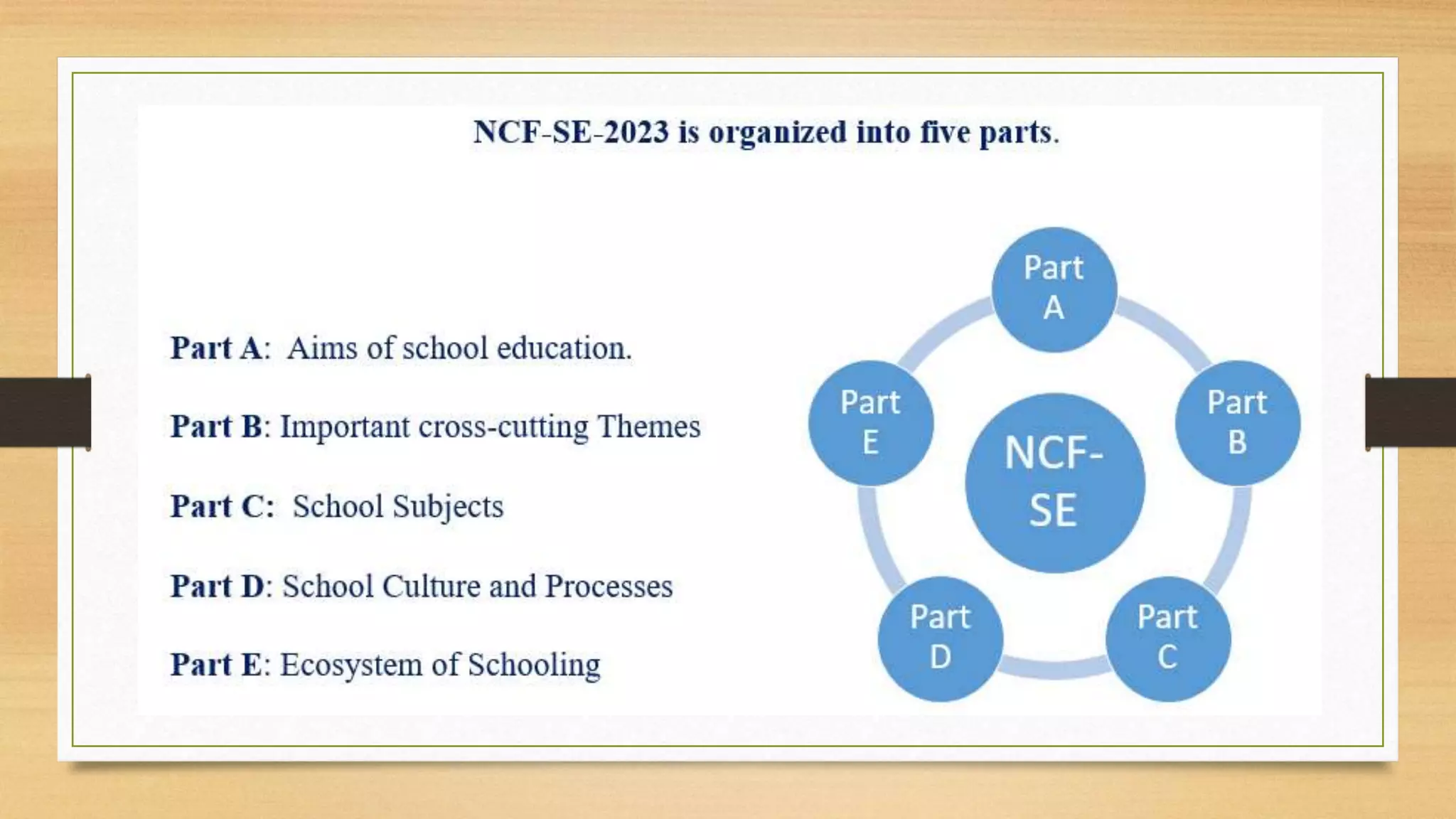
NCF-SE-2023 ( National Curriculum Framework School Education
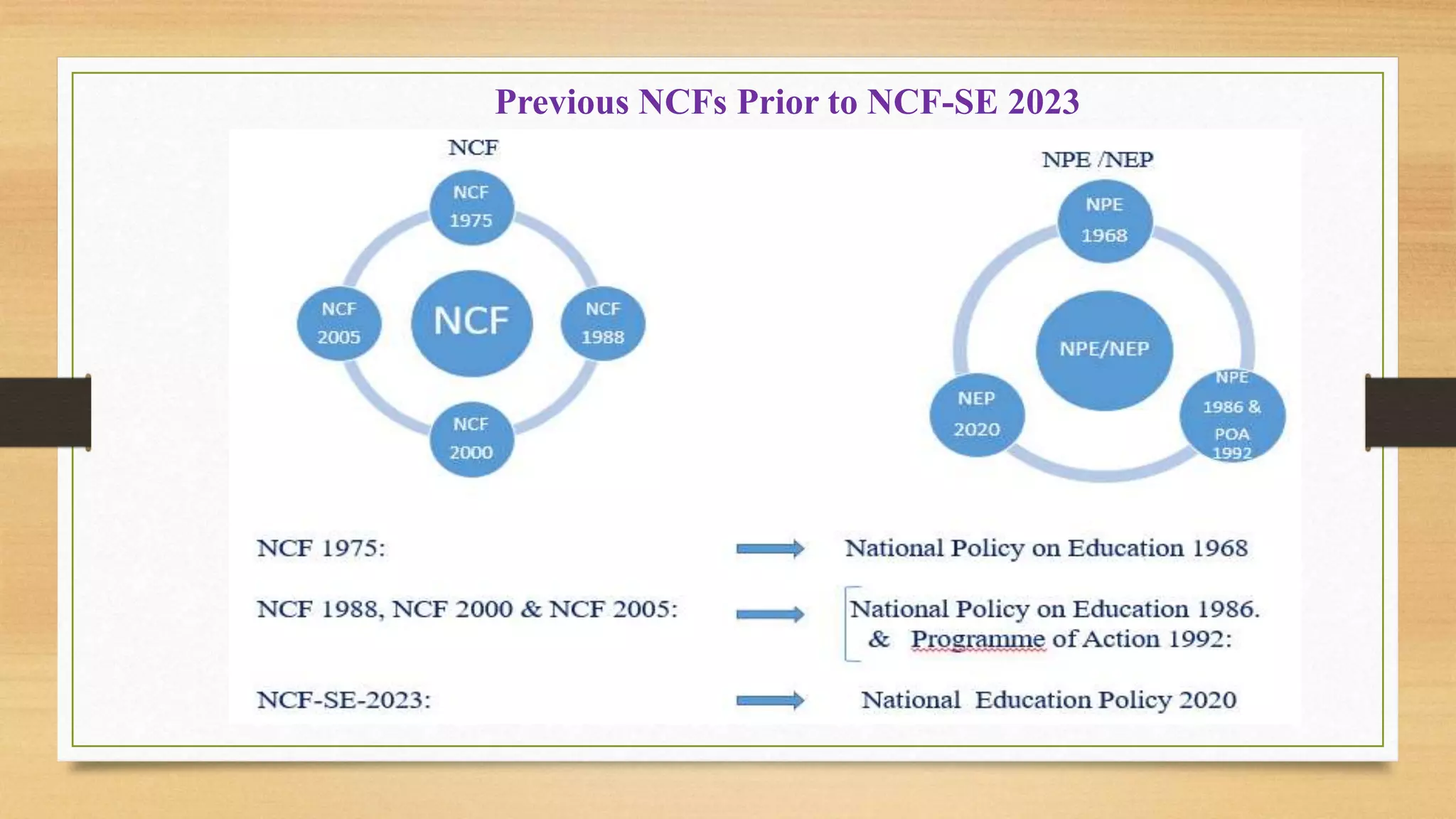
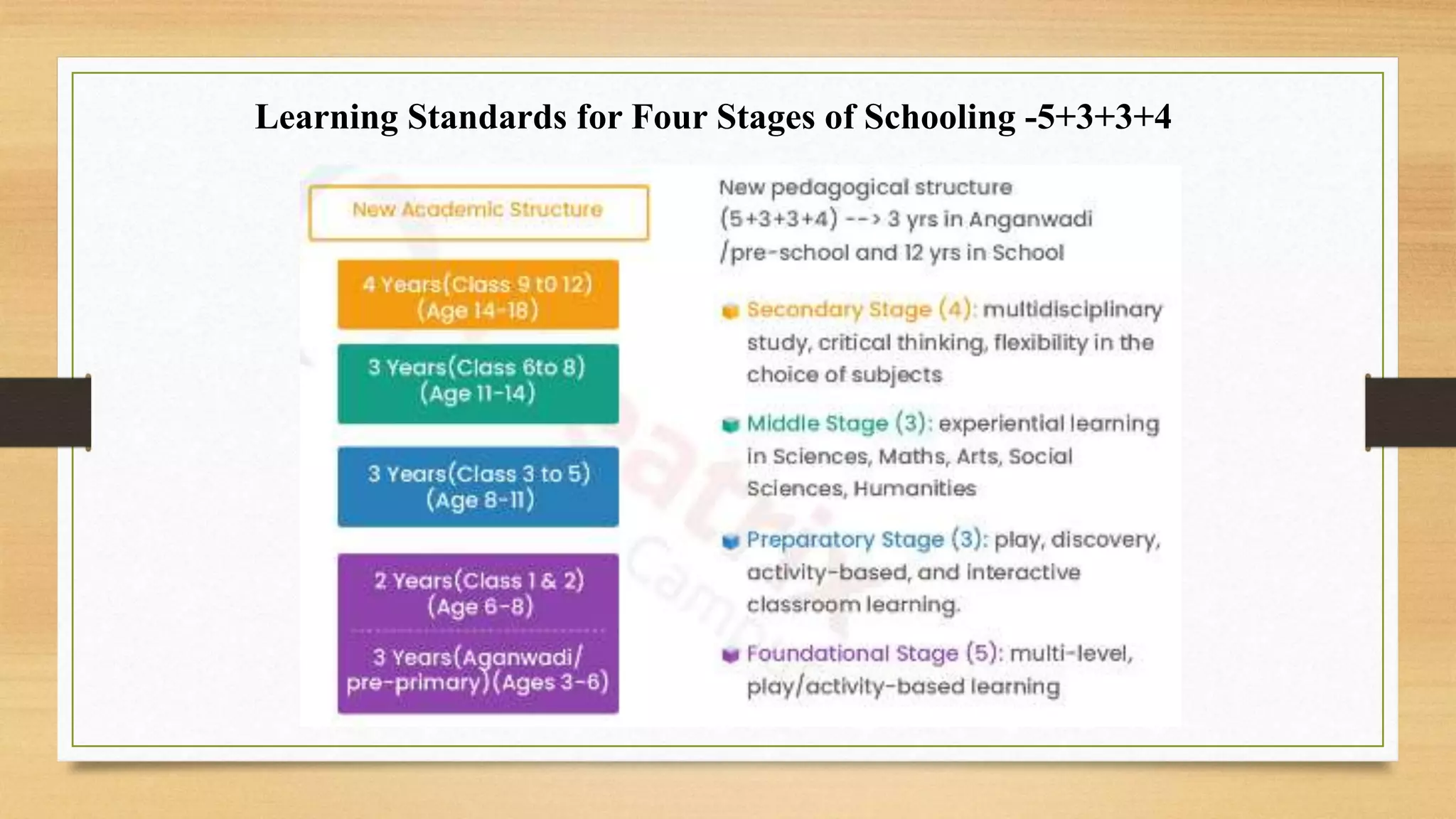
The National Curriculum Framework for School Education 2023 (NCF-SE 2023) was released on August 23, 2023 after being submitted to the Education Minister on July 29. It integrates the National Curriculum Framework for Foundational Stage 2022 for ages 3-8. The NCF-SE 2023 outlines the curriculum structure according to the 5+3+3+4 model recommended by the National Education Policy 2020. It divides schooling into four stages - Foundational (3-8 years), Preparatory (8-11 years), Middle (11-14 years), and Secondary (14-18 years). The document provides learning standards and curricular areas for each stage with an emphasis on multilingualism
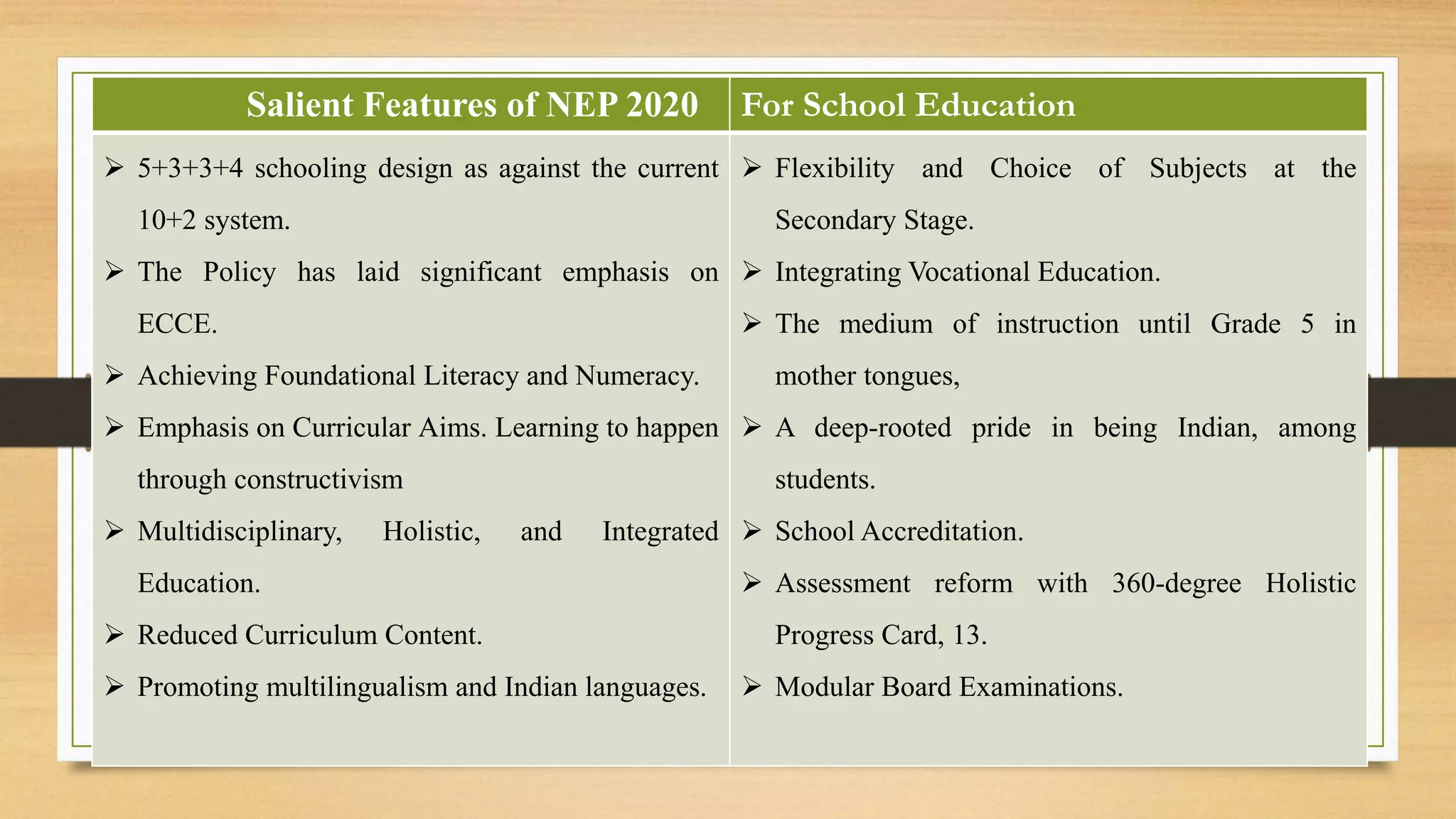
The pre-draftof the NCF-SE- placed for public
comment on 6 April 2023.
Dr. K. Kasturirangan, Chairman, National Steering
Committee for National Curriculum Frameworks.
NCF-SE-2023 submitted to Education Minister,
GOI on 29th July 2023.
NCF-SE was released on 23rd August 2023.
NCF-FS- 2022 ( for ages between 3- 8) released on
10th October 2022.
NCF-FS 2022 is Integrated in NCF-SE 2023.
3.
Salient Features ofNEP 2020 For School Education
5+3+3+4 schooling design as against the current
10+2 system.
The Policy has laid significant emphasis on
ECCE.
Achieving Foundational Literacy and Numeracy.
Emphasis on Curricular Aims. Learning to happen
through constructivism
Multidisciplinary, Holistic, and Integrated
Education.
Reduced Curriculum Content.
Promoting multilingualism and Indian languages.
Flexibility and Choice of Subjects at the
Secondary Stage.
Integrating Vocational Education.
The medium of instruction until Grade 5 in
mother tongues,
A deep-rooted pride in being Indian, among
students.
School Accreditation.
Assessment reform with 360-degree Holistic
Progress Card, 13.
Modular Board Examinations.
Curriculum Guidelines
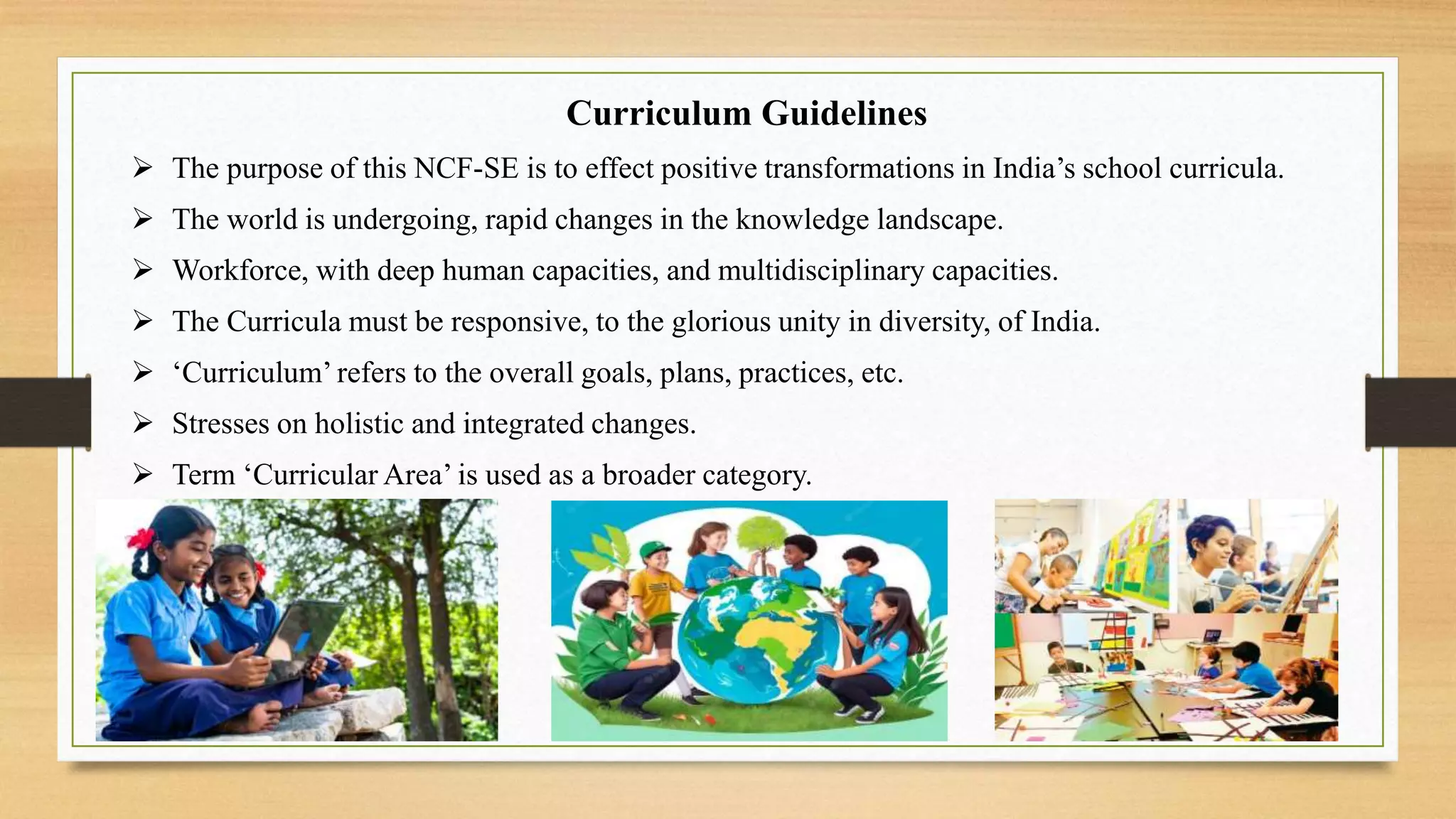
Thepurpose of this NCF-SE is to effect positive transformations in India’s school curricula.
The world is undergoing, rapid changes in the knowledge landscape.
Workforce, with deep human capacities, and multidisciplinary capacities.
The Curricula must be responsive, to the glorious unity in diversity, of India.
‘Curriculum’ refers to the overall goals, plans, practices, etc.
Stresses on holistic and integrated changes.
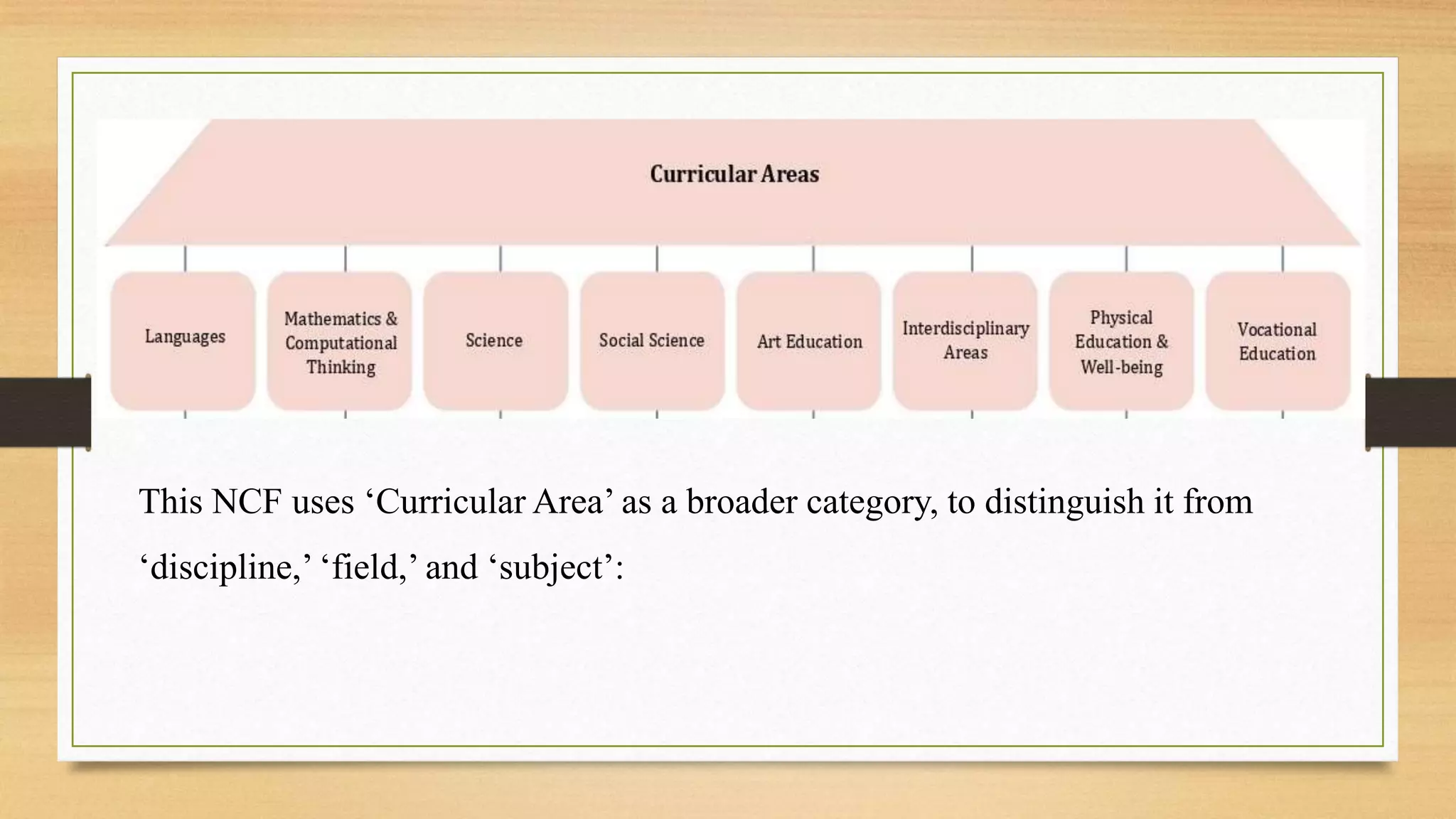
Term ‘Curricular Area’ is used as a broader category.
8.
This NCF uses‘Curricular Area’ as a broader category, to distinguish it from
‘discipline,’ ‘field,’ and ‘subject’:
9.
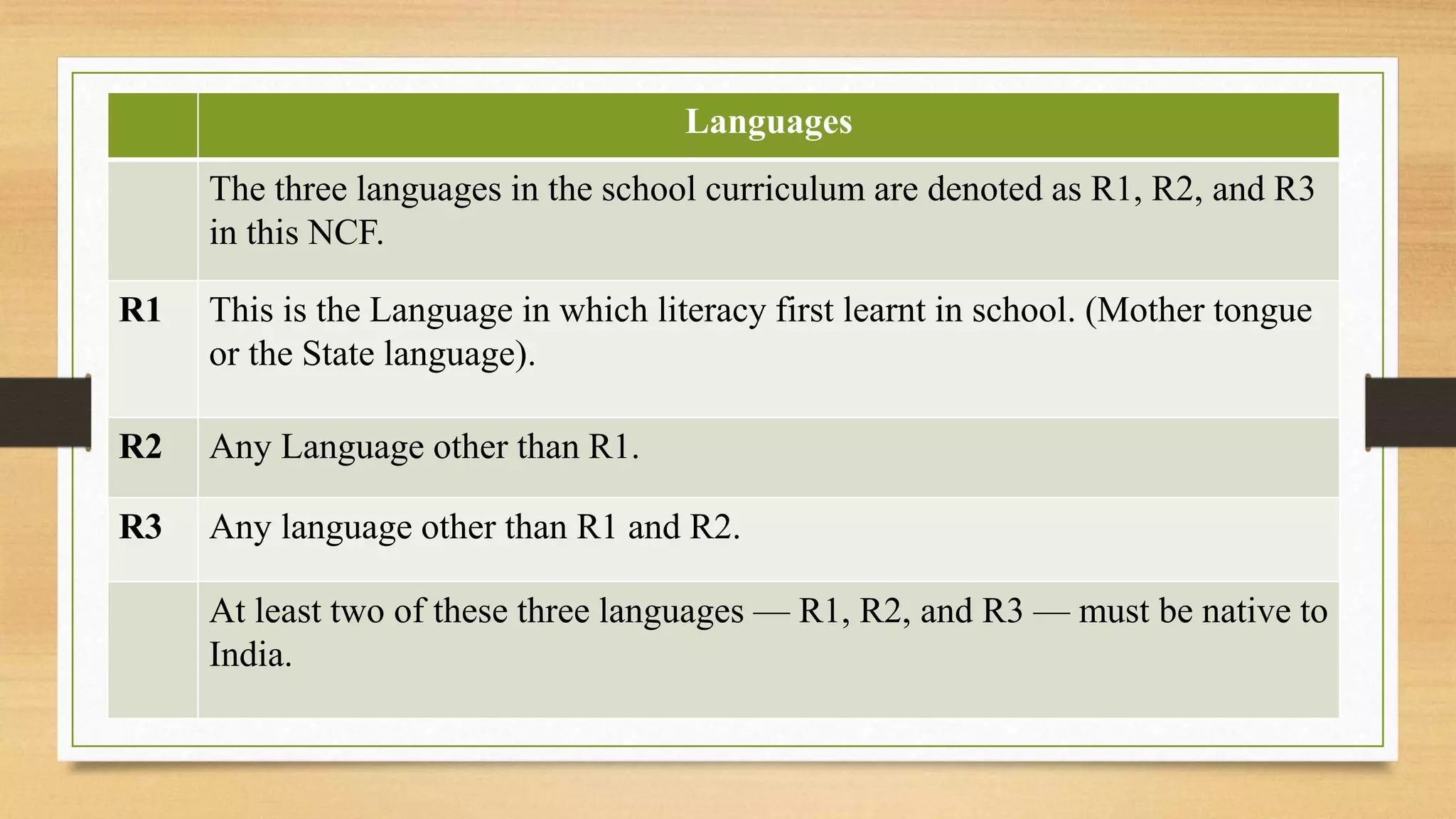
Languages
The three languagesin the school curriculum are denoted as R1, R2, and R3
in this NCF.
R1 This is the Language in which literacy first learnt in school. (Mother tongue
or the State language).
R2 Any Language other than R1.
R3 Any language other than R1 and R2.
At least two of these three languages — R1, R2, and R3 — must be native to
India.
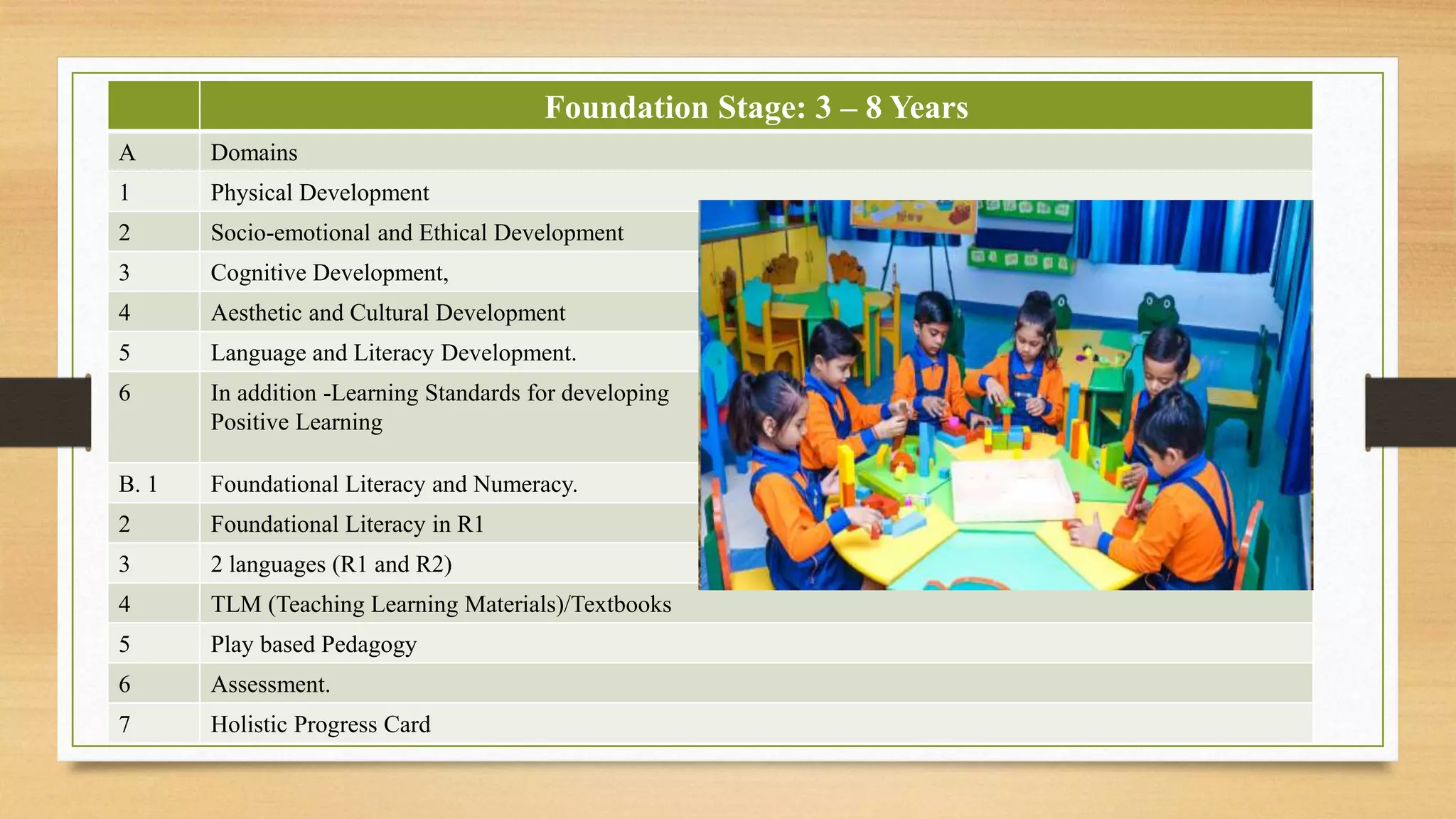
Foundation Stage: 3– 8 Years
A Domains
1 Physical Development
2 Socio-emotional and Ethical Development
3 Cognitive Development,
4 Aesthetic and Cultural Development
5 Language and Literacy Development.
6 In addition -Learning Standards for developing
Positive Learning
B. 1 Foundational Literacy and Numeracy.
2 Foundational Literacy in R1
3 2 languages (R1 and R2)
4 TLM (Teaching Learning Materials)/Textbooks
5 Play based Pedagogy
6 Assessment.
7 Holistic Progress Card
13.
Preparatory Stage -8- 11 years
1 2 Languages- R1 & R2
2 Mathematics Education
3 Art Education,
4 Physical Education, and
5 The World Around Us
(as an interdisciplinary area of study).
6 Work and pre-vocational skills are included as part of The World Around Us
curriculum.
7 Assessments: Short Formal Written Assessments, Teacher’s Observation of
Students work, Regular Formative Assessments,
14.
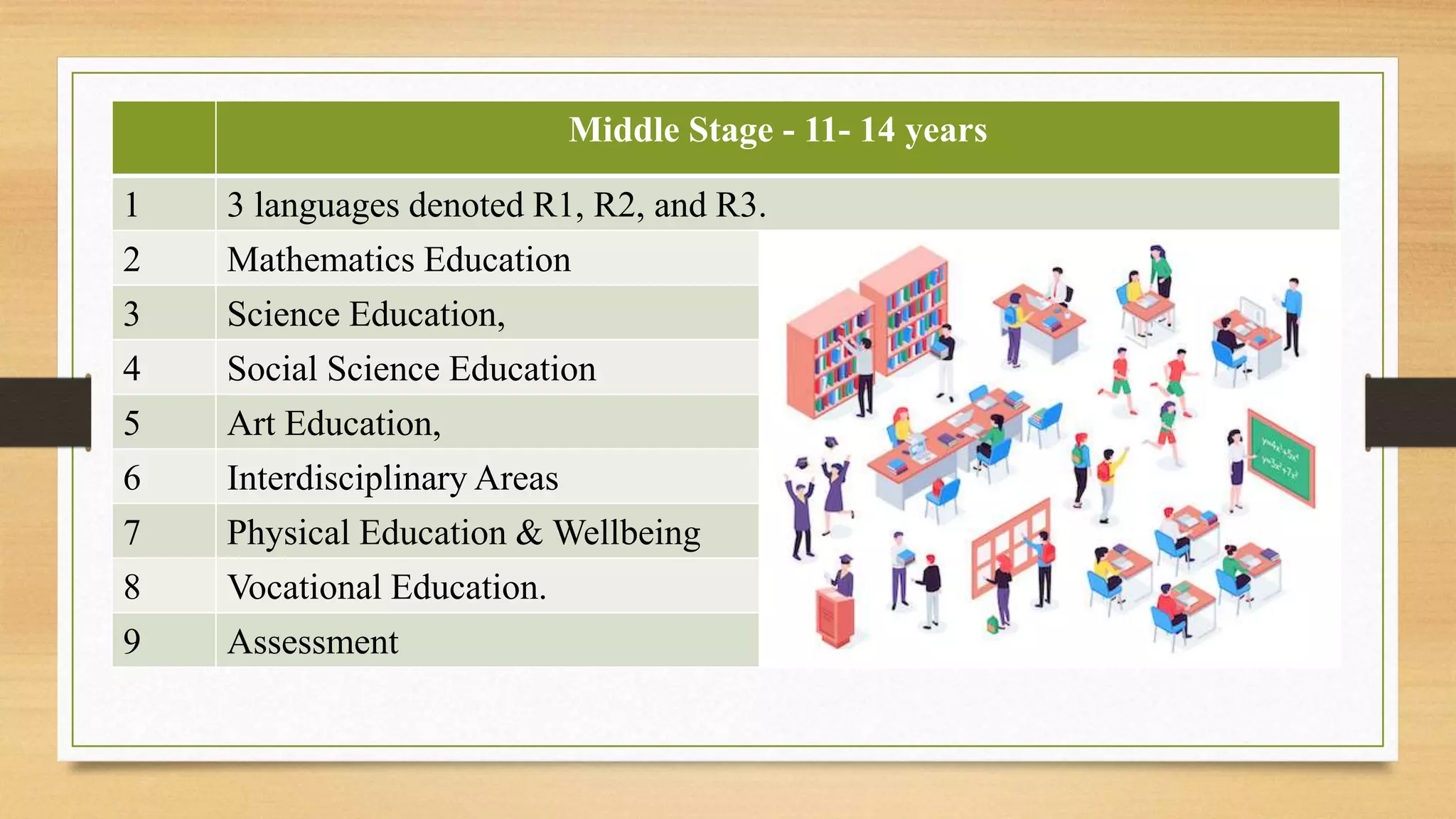
Middle Stage -11- 14 years
1 3 languages denoted R1, R2, and R3.
2 Mathematics Education
3 Science Education,
4 Social Science Education
5 Art Education,
6 Interdisciplinary Areas
7 Physical Education & Wellbeing
8 Vocational Education.
9 Assessment
Implications for Schoolsand Boards of Examinations:
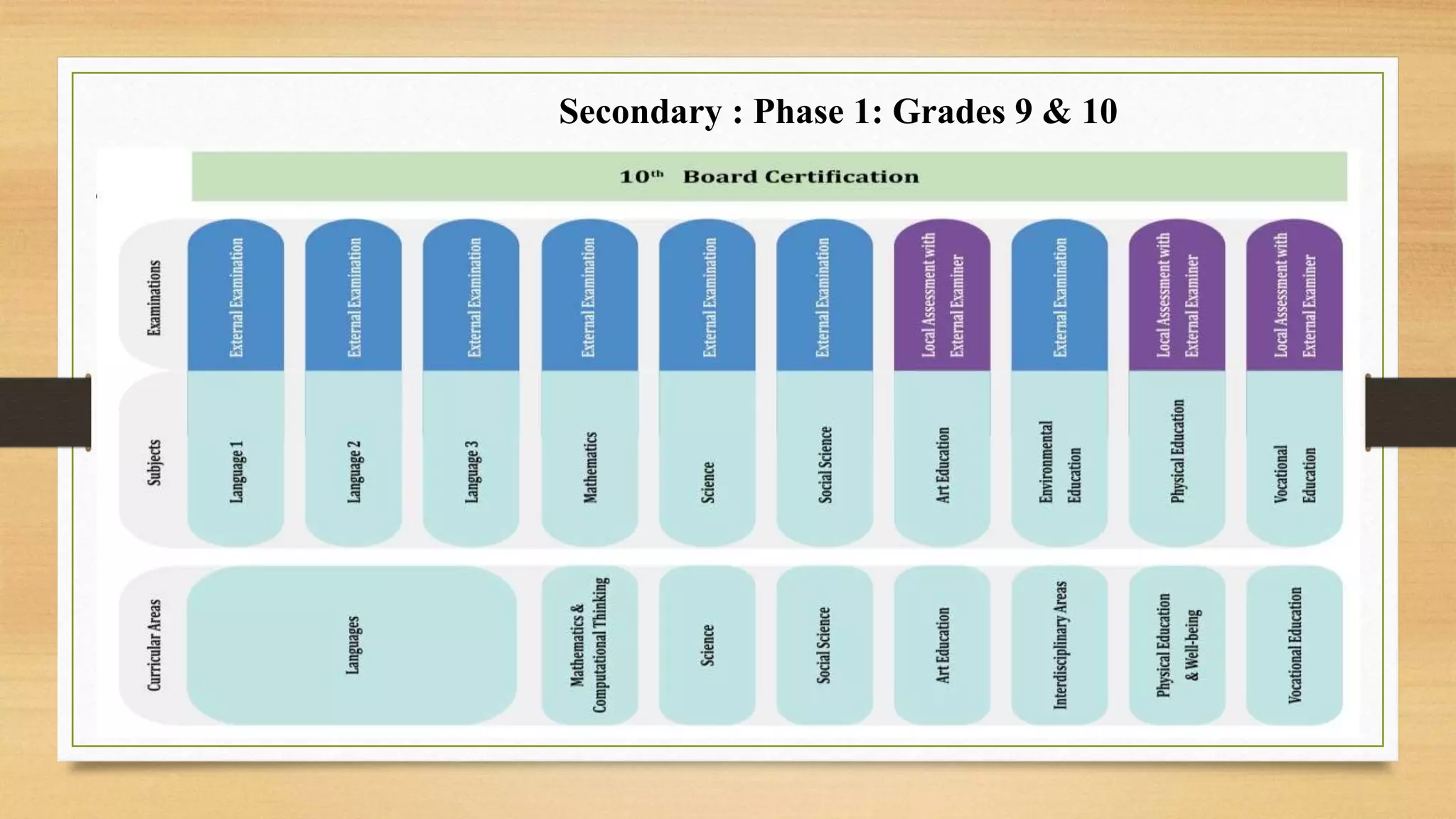
a. 10 Curricular Areas for Grade 10 right from the beginning of the implementation of this NCF. 2 languages for
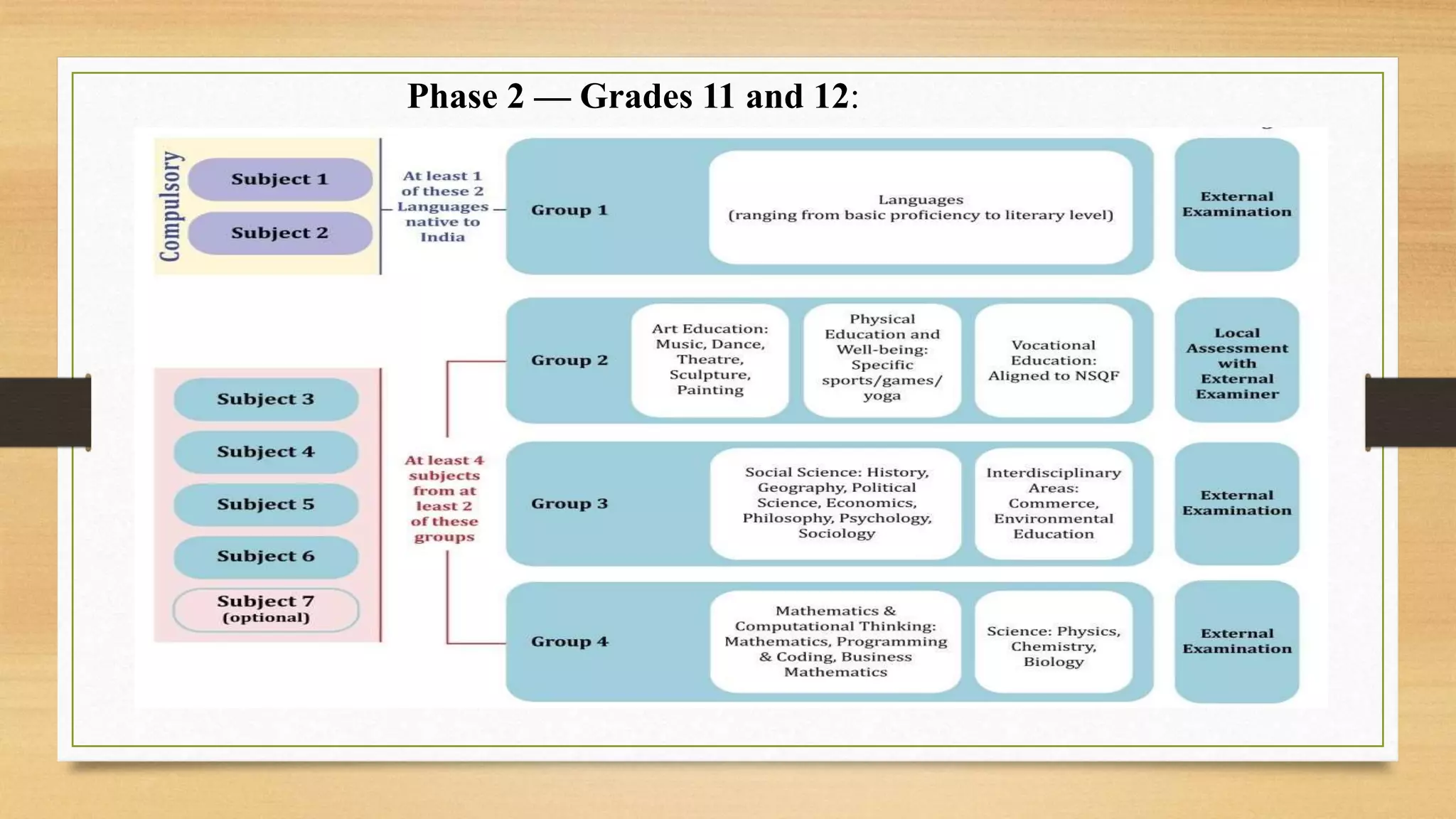
Grades 11-12 from the beginning of the implementation of this NCF.
b. All Board examinations must move towards becoming ‘easier’ without any compromise on assessing genuine
learning.
c. Schools should be prepared to offer subjects from at least two groups amongst Groups 2, 3, and 4
immediately. Within 5 years, schools should be ready to offer subjects from all four Groups.
d. Within 10 years, schools should offer many more subjects covering all Curricular Areas, and students should
study subjects across all four Groups.
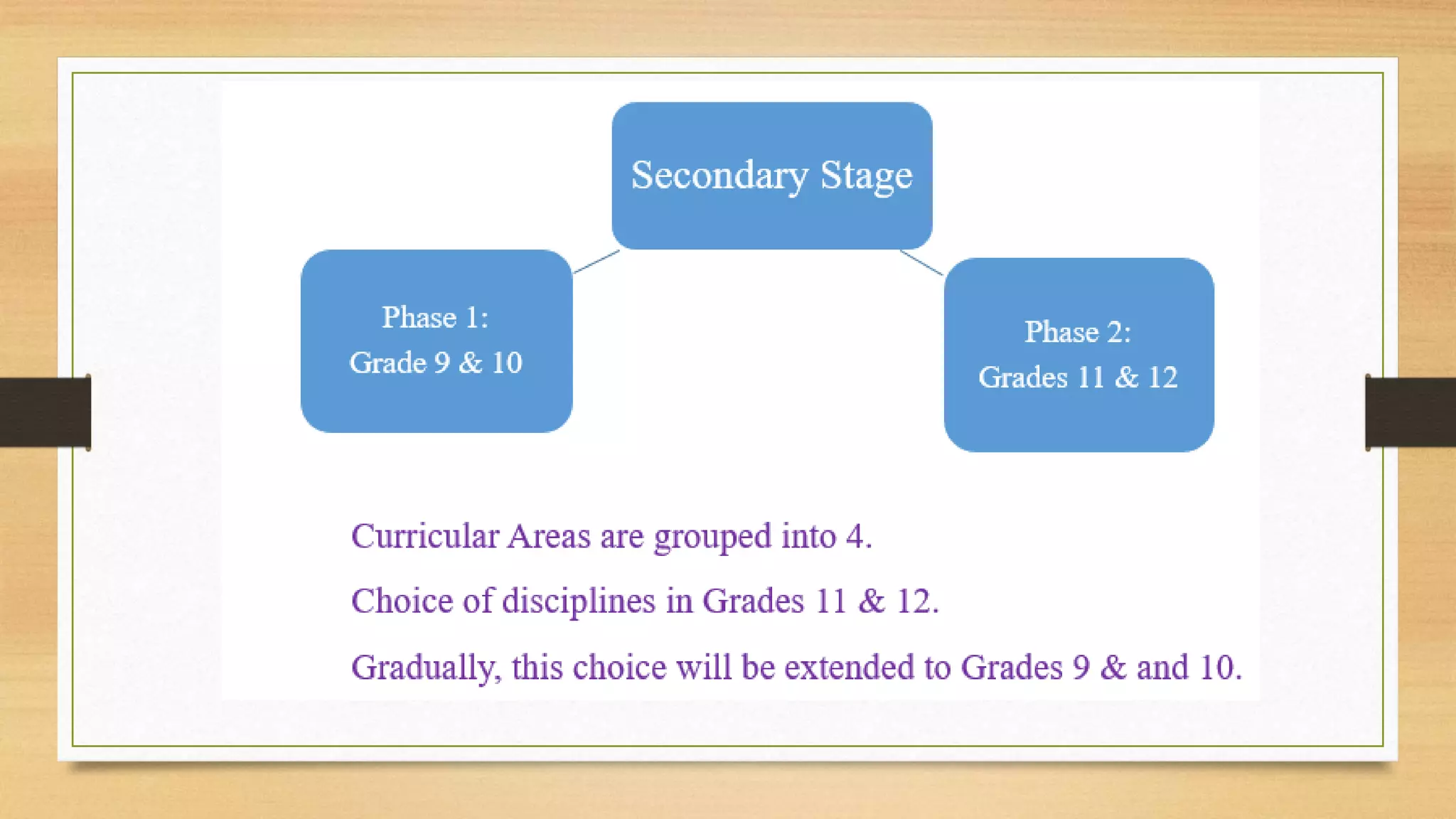
e. The Secondary Stage has been divided into two Phases — Grades 9 and 10, and Grades 11 and 12.
f. In 10 years, a single Secondary Stage, where students have choice and flexibility right from Grade 9,
g. Study in annual and two-year patterns should move to a semester and/or annual design.
h. In ten years, Boards of Examination should be prepared to offer certification through modular examinations.