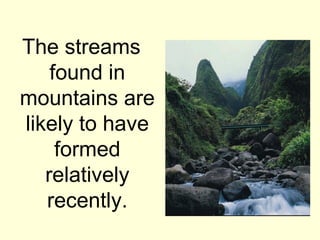


The streams
    found in
mountains are
likely to have
     formed
   relatively
   recently.
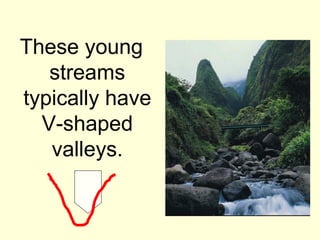
These young
   streams
typically have
  V-shaped
   valleys.
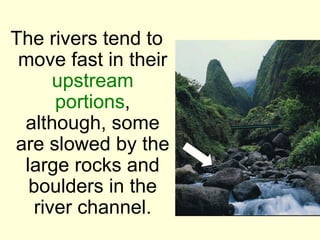
The rivers tend to
 move fast in their
      upstream
      portions,
 although, some
are slowed by the
 large rocks and
  boulders in the
   river channel.
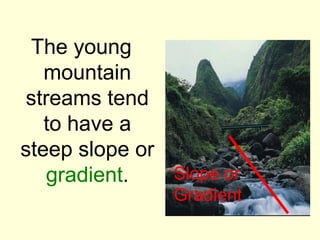
The young
   mountain
 streams tend
   to have a
steep slope or
    gradient.  Slope or
                Gradient
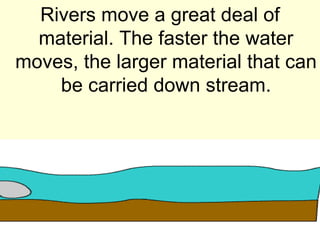
Rivers move a great deal of
  material. The faster the water
moves, the larger material that can
    be carried down stream.
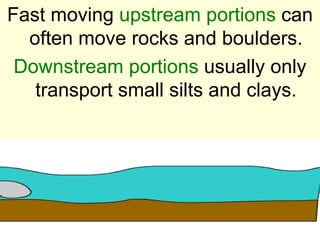
Fast moving upstream portions can
  often move rocks and boulders.
 Downstream portions usually only
   transport small silts and clays.
This process tends to sort materials
              by size.
 Have you ever wondered why we
  have so much silt and clay in our
                soil?
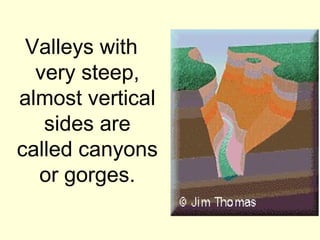
Valleys with
  very steep,
almost vertical
   sides are
called canyons
  or gorges.
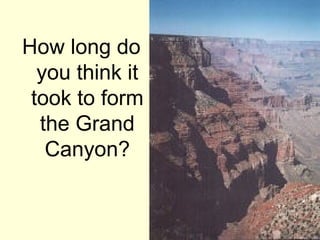
How long do
  you think it
 took to form
  the Grand
   Canyon?
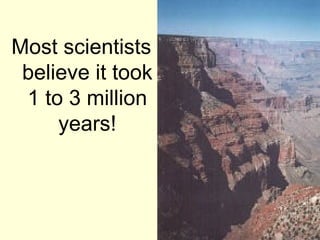
Most scientists
 believe it took
 1 to 3 million
     years!
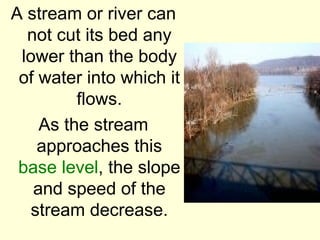
A stream or river can
  not cut its bed any
 lower than the body
 of water into which it
         flows.
    As the stream
    approaches this
 base level, the slope
   and speed of the
  stream decrease.
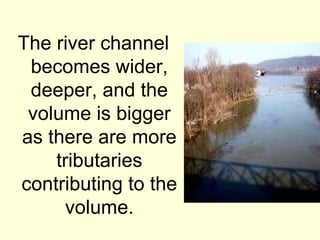
The river channel
 becomes wider,
 deeper, and the
 volume is bigger
as there are more
    tributaries
contributing to the
      volume.
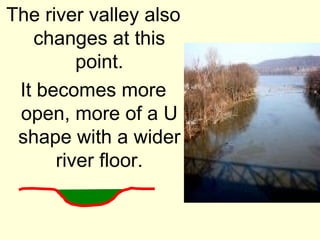
The river valley also
   changes at this
         point.
 It becomes more
 open, more of a U
 shape with a wider
      river floor.
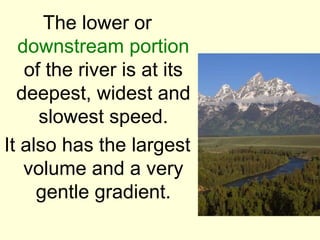
The lower or
  downstream portion
   of the river is at its
  deepest, widest and
     slowest speed.
It also has the largest
   volume and a very
     gentle gradient.
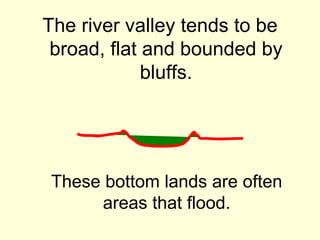
The river valley tends to be
 broad, flat and bounded by
             bluffs.


 These bottom lands are often
      areas that flood.
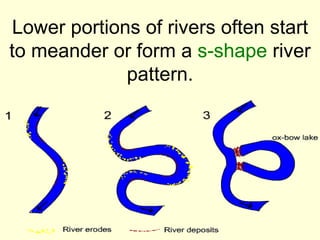
Lower portions of rivers often start
to meander or form a s-shape river
             pattern.
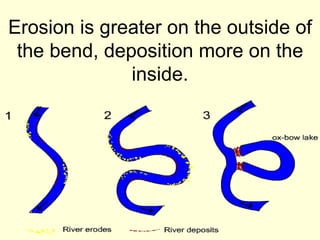
Erosion is greater on the outside of
 the bend, deposition more on the
              inside.
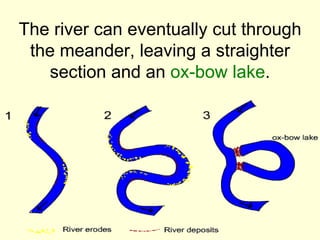
The river can eventually cut through
 the meander, leaving a straighter
   section and an ox-bow lake.
To view an animation of this
process click on this web site.
 http://www.school-portal.co.uk/GroupDownloadFile.asp?file=21606
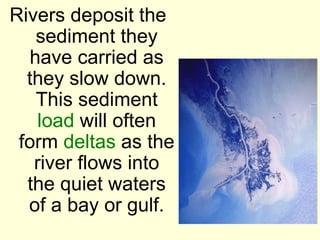
Rivers deposit the
    sediment they
   have carried as
  they slow down.
    This sediment
    load will often
 form deltas as the
   river flows into
  the quiet waters
  of a bay or gulf.
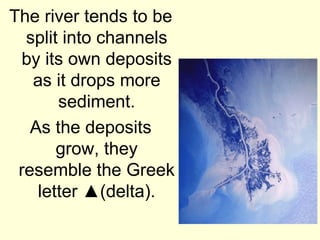
The river tends to be
  split into channels
 by its own deposits
   as it drops more
       sediment.
   As the deposits
       grow, they
 resemble the Greek
    letter ▲(delta).
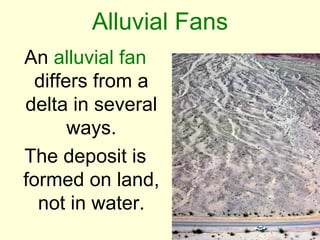
Alluvial Fans
An alluvial fan
  differs from a
delta in several
       ways.
The deposit is
formed on land,
  not in water.
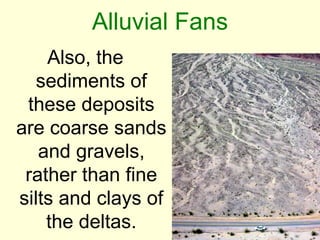
Alluvial Fans
    Also, the
   sediments of
 these deposits
are coarse sands
   and gravels,
 rather than fine
silts and clays of
    the deltas.
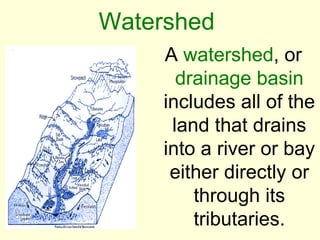
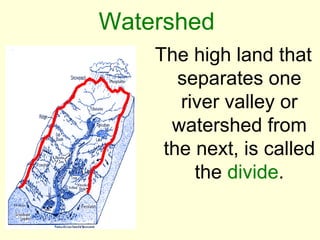
Watershed
     A watershed, or
       drainage basin
     includes all of the
      land that drains
     into a river or bay
      either directly or
         through its
         tributaries.
Watershed
    The high land that
       separates one
       river valley or
      watershed from
     the next, is called
         the divide.
Naturalists at Large: Rivers watersheds

Naturalists at Large: Rivers watersheds

  • 2.
    The streams found in mountains are likely to have formed relatively recently.
  • 3.
    These young streams typically have V-shaped valleys.
  • 4.
    The rivers tendto move fast in their upstream portions, although, some are slowed by the large rocks and boulders in the river channel.
  • 5.
    The young mountain streams tend to have a steep slope or gradient. Slope or Gradient
  • 6.
    Rivers move agreat deal of material. The faster the water moves, the larger material that can be carried down stream.
  • 7.
    Fast moving upstreamportions can often move rocks and boulders. Downstream portions usually only transport small silts and clays.
  • 8.
    This process tendsto sort materials by size. Have you ever wondered why we have so much silt and clay in our soil?
  • 9.
    Valleys with very steep, almost vertical sides are called canyons or gorges.
  • 10.
    How long do you think it took to form the Grand Canyon?
  • 11.
    Most scientists believeit took 1 to 3 million years!
  • 12.
    A stream orriver can not cut its bed any lower than the body of water into which it flows. As the stream approaches this base level, the slope and speed of the stream decrease.
  • 13.
    The river channel becomes wider, deeper, and the volume is bigger as there are more tributaries contributing to the volume.
  • 14.
    The river valleyalso changes at this point. It becomes more open, more of a U shape with a wider river floor.
  • 15.
    The lower or downstream portion of the river is at its deepest, widest and slowest speed. It also has the largest volume and a very gentle gradient.
  • 16.
    The river valleytends to be broad, flat and bounded by bluffs. These bottom lands are often areas that flood.
  • 17.
    Lower portions ofrivers often start to meander or form a s-shape river pattern.
  • 18.
    Erosion is greateron the outside of the bend, deposition more on the inside.
  • 19.
    The river caneventually cut through the meander, leaving a straighter section and an ox-bow lake.
  • 20.
    To view ananimation of this process click on this web site. http://www.school-portal.co.uk/GroupDownloadFile.asp?file=21606
  • 21.
    Rivers deposit the sediment they have carried as they slow down. This sediment load will often form deltas as the river flows into the quiet waters of a bay or gulf.
  • 22.
    The river tendsto be split into channels by its own deposits as it drops more sediment. As the deposits grow, they resemble the Greek letter ▲(delta).
  • 23.
    Alluvial Fans An alluvialfan differs from a delta in several ways. The deposit is formed on land, not in water.
  • 24.
    Alluvial Fans Also, the sediments of these deposits are coarse sands and gravels, rather than fine silts and clays of the deltas.
  • 25.
    Watershed A watershed, or drainage basin includes all of the land that drains into a river or bay either directly or through its tributaries.
  • 26.
    Watershed The high land that separates one river valley or watershed from the next, is called the divide.