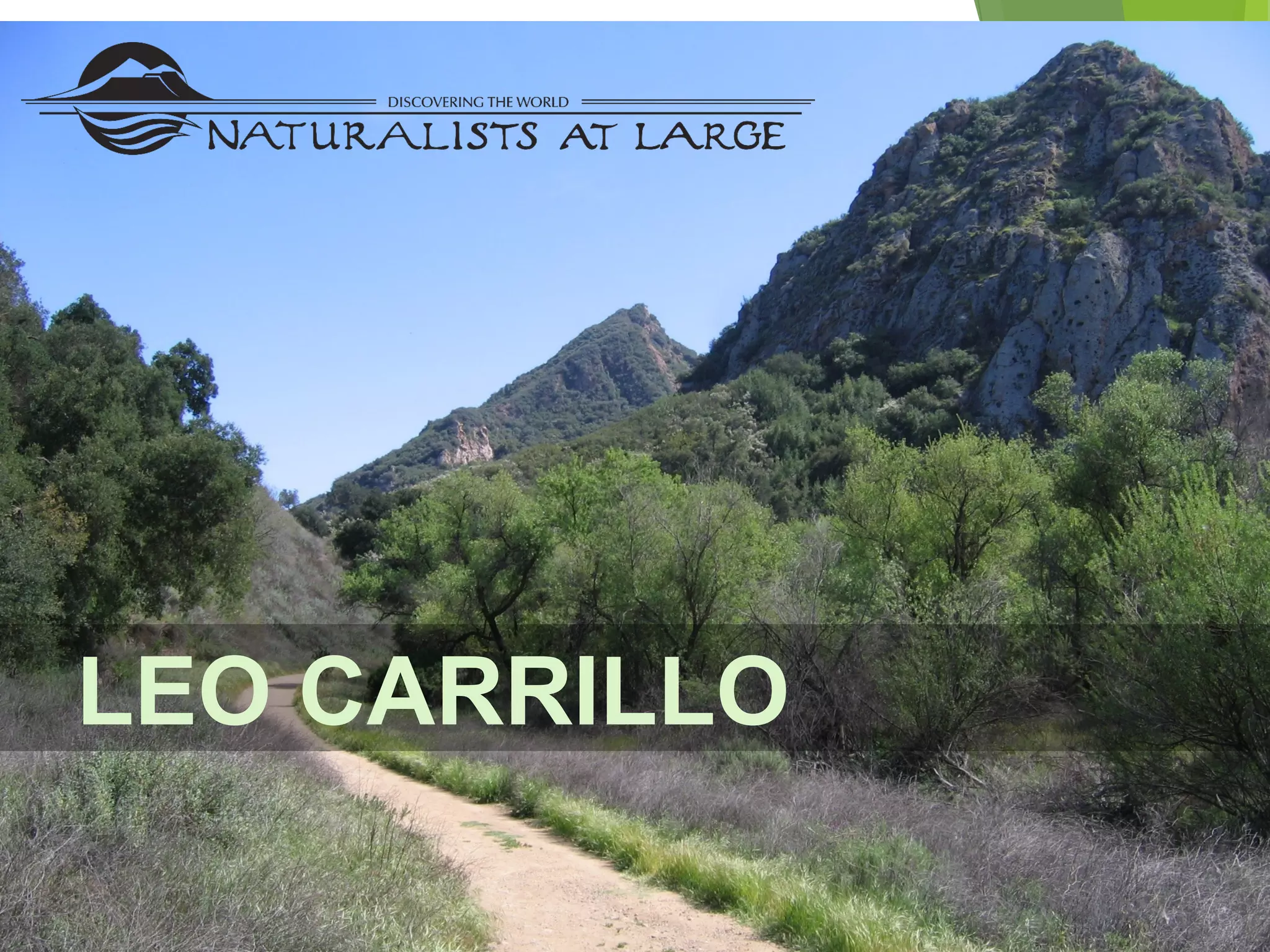
LEO CARRILLO
WE WORK WITH
Charter Schools
Montessori Schools
Public Schools
Waldorf Schools
Independent Schools
Over 300 schools
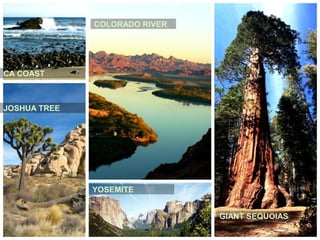
We introduce thousands of students a year to
diverse environments including...
CA COAST
JOSHUA TREE
COLORADO RIVER
YOSEMITE
GIANT SEQUOIAS
OUR FOCUS
We work with each school every step
of the way to identify their outdoor
education goals and then tailor a
program to meet those specific
needs.
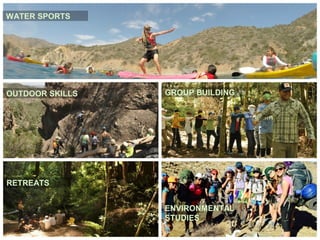
Topics that we can focus on include…
WATER SPORTS
OUTDOOR SKILLS
ENVIRONMENTAL
STUDIES
GROUP BUILDING
RETREATS
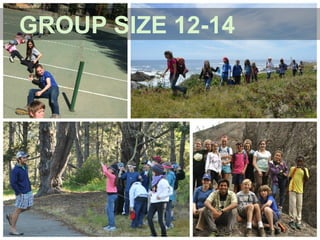
GROUP SIZE 12-14
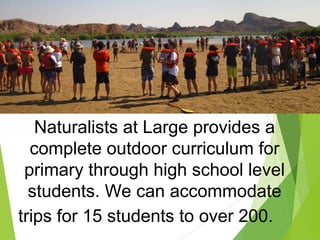
Naturalists at Large provides a
complete outdoor curriculum for
primary through high school level
students. We can accommodate
trips for 15 students to over 200.
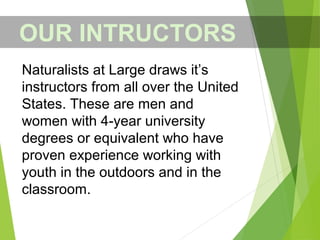
OUR INTRUCTORS
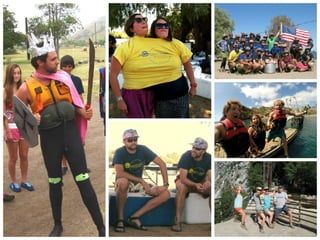
Naturalists at Large draws it’s
instructors from all over the United
States. These are men and
women with 4-year university
degrees or equivalent who have
proven experience working with
youth in the outdoors and in the
classroom.
All of our instructors are CPR and
Wilderness First Aid Certified. Many of
them hold advanced certifications such
as Wilderness Emergency Medical
Technician, Wilderness First
Responders and Wilderness
Advanced First Aid.
INSTRUCTOR CERTS
Ambulance: 15 minutes
Medivac Helicopter: 10-20 minutes
RESPONSE TIMES
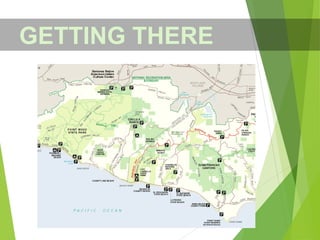
GETTING THERE
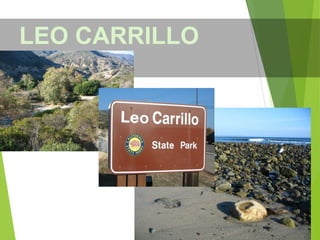
LEO CARRILLO
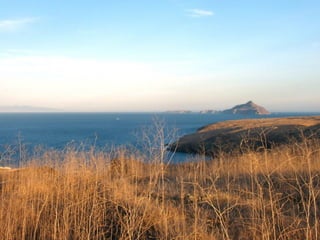
The Santa Monica Mountains are
one of the last remaining
examples of a relatively
undisturbed Mediterranean-type
ecosystem in the world. A unique
climate, diverse topography, and
other factors create a complex
assemblage of vegetation types.
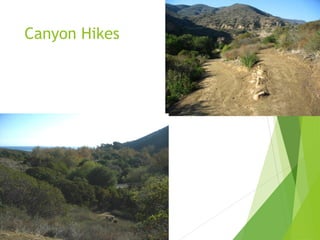
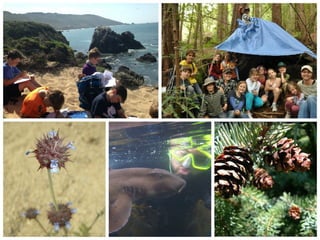
Canyon Hikes
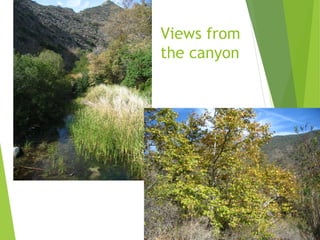
Views from
the canyon
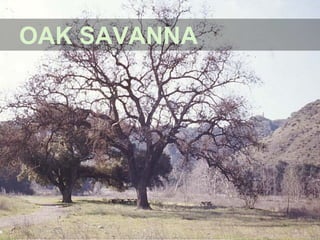
OAK SAVANNA
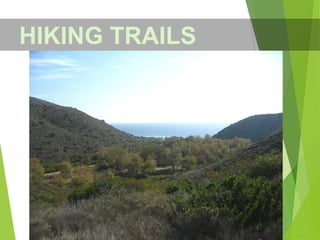
HIKING TRAILS
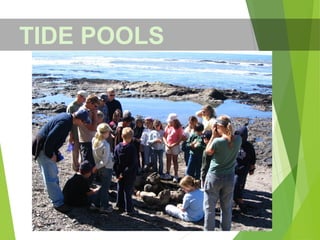
TIDE POOLS
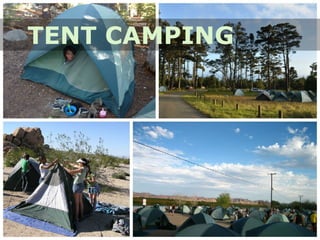
TENT CAMPING
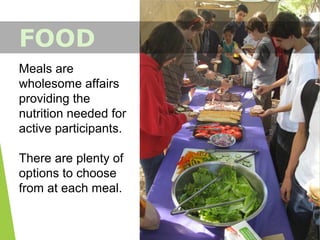
Meals are
wholesome affairs
providing the
nutrition needed for
active participants.
There are plenty of
options to choose
from at each meal.
FOOD
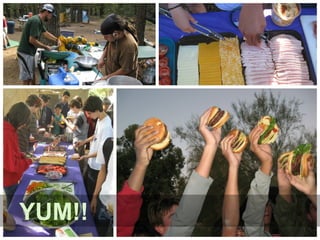
Program meals offer vegetarian food options.
For those with specific needs due to allergies or
personal reasons, we suggest discussion with
your faculty AND Naturalists at Large.
Naturalists at Large can help guide those with
special diets to supplement their meals in ways
which everyone can most easily manage.
ALLERGIES AND SPECIAL
FOOD NEEDS
YUM!!
THINGS WE TEACH CAN
INCLUDE…
Exploration of fresh water streams.
Introduction to comparative ecosystems.
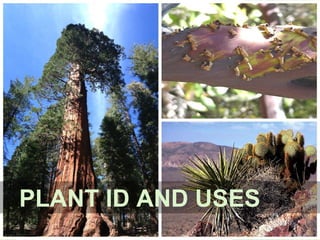
Plant identification and their uses.
Local wildlife observation and animal
behavior.
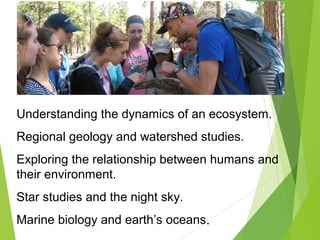
Understanding the dynamics of an ecosystem.
Regional geology and watershed studies.
Exploring the relationship between humans and
their environment.
Star studies and the night sky.
Marine biology and earth’s oceans.
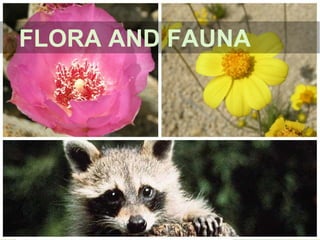
FLORA AND FAUNA
PLANT ID AND USES
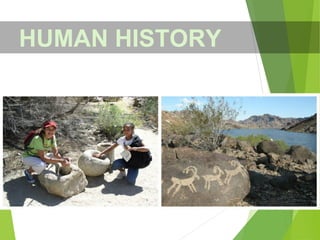
HUMAN HISTORY
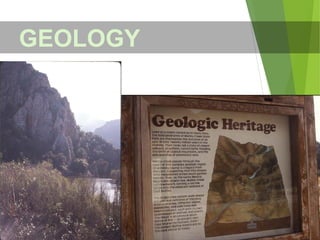
GEOLOGY
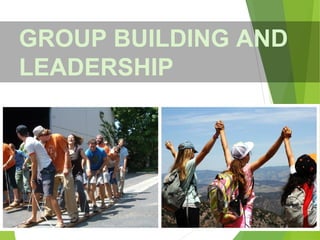
GROUP BUILDING AND
LEADERSHIP
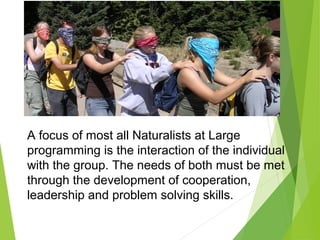
A focus of most all Naturalists at Large
programming is the interaction of the individual
with the group. The needs of both must be met
through the development of cooperation,
leadership and problem solving skills.
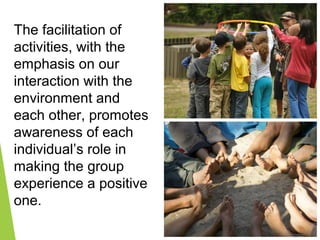
The facilitation of
activities, with the
emphasis on our
interaction with the
environment and
each other, promotes
awareness of each
individual’s role in
making the group
experience a positive
one.
OTHER ACTIVITIES
Andy Goldworthy style Art Projects
Fun Games
Reflective Activities and
Journalizing
Stretching and Yoga
Animal Tracking
Map and Compass Orienteering
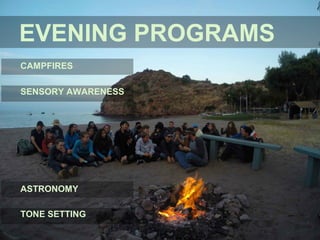
EVENING PROGRAMS
CAMPFIRES
SENSORY AWARENESS
ASTRONOMY
TONE SETTING
Day 1
9:30 Arrive on site at Leo Carrillo
PC/Faculty meeting
Whole group orientation and game
Students will spend the day exploring the area while hiking
Split into trail groups and begin activities. Groups will head down trail
with approximately 10 minute stagger.
Lunch on the trail (Students are bringing their own lunches)
4:15 Groups begin to arrive at Group Camp
Site orientation
4:40 Set up tents
5:00 Faculty supervised free time
First aid duty
5:30 All adult meeting
5:50 Emergency drill
6:00 Dinner
7:30 Evening program: short hike, astronomy and night awareness
9:00 Students released to Faculty for the evening
9:30 In tents/ lights out
10:00 Quiet
Day 2
7:45 Breakfast line up
8:00 Breakfast
Make and take lunch
9:00 Meet in trail groups and hike down to the beach.
Spend the day exploring and learning. Focus on stream science,
journalizing, natural history, introduction to local plants and animal science.
Tide pooling based on tide times
Morning Stream Science Groups 1-3
Afternoon Stream Science Groups 4-5
Lunch will be on the trail by groups
5:00 Faculty supervised free time
First aid duty
6:00 Dinner
7:30 Skit prep in trail groups
8:00 Evening Program: Campfire with skits and s’mores
9:00 Students released to Faculty for the evening
9:30 In tents/ lights out
10:00 Quiet
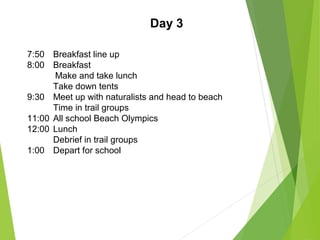
Day 3
7:50 Breakfast line up
8:00 Breakfast
Make and take lunch
Take down tents
9:30 Meet up with naturalists and head to beach
Time in trail groups
11:00 All school Beach Olympics
12:00 Lunch
Debrief in trail groups
1:00 Depart for school
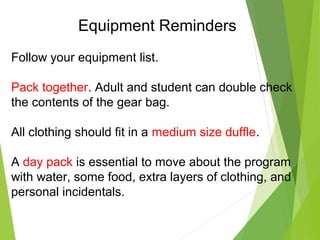
Equipment Reminders
Follow your equipment list.
Pack together. Adult and student can double check
the contents of the gear bag.
All clothing should fit in a medium size duffle.
A day pack is essential to move about the program
with water, some food, extra layers of clothing, and
personal incidentals.
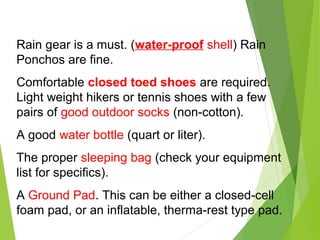
Rain gear is a must. (water-proof shell) Rain
Ponchos are fine.
Comfortable closed toed shoes are required.
Light weight hikers or tennis shoes with a few
pairs of good outdoor socks (non-cotton).
A good water bottle (quart or liter).
The proper sleeping bag (check your equipment
list for specifics).
A Ground Pad. This can be either a closed-cell
foam pad, or an inflatable, therma-rest type pad.
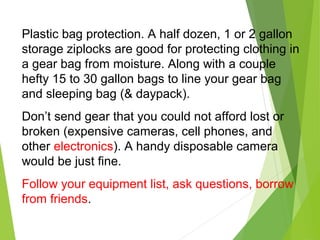
Plastic bag protection. A half dozen, 1 or 2 gallon
storage ziplocks are good for protecting clothing in
a gear bag from moisture. Along with a couple
hefty 15 to 30 gallon bags to line your gear bag
and sleeping bag (& daypack).
Don’t send gear that you could not afford lost or
broken (expensive cameras, cell phones, and
other electronics). A handy disposable camera
would be just fine.
Follow your equipment list, ask questions, borrow
from friends.
Allergies,
Medications, and
Special Dietary
Needs
Ask us about…
For more information
check us out at …

Naturalists at Large Leo carrillo 2017

  • 1.
  • 2.
    WE WORK WITH CharterSchools Montessori Schools Public Schools Waldorf Schools Independent Schools Over 300 schools We introduce thousands of students a year to diverse environments including...
  • 3.
    CA COAST JOSHUA TREE COLORADORIVER YOSEMITE GIANT SEQUOIAS
  • 4.
    OUR FOCUS We workwith each school every step of the way to identify their outdoor education goals and then tailor a program to meet those specific needs. Topics that we can focus on include…
  • 5.
  • 6.
  • 7.
    Naturalists at Largeprovides a complete outdoor curriculum for primary through high school level students. We can accommodate trips for 15 students to over 200.
  • 8.
    OUR INTRUCTORS Naturalists atLarge draws it’s instructors from all over the United States. These are men and women with 4-year university degrees or equivalent who have proven experience working with youth in the outdoors and in the classroom.
  • 10.
    All of ourinstructors are CPR and Wilderness First Aid Certified. Many of them hold advanced certifications such as Wilderness Emergency Medical Technician, Wilderness First Responders and Wilderness Advanced First Aid. INSTRUCTOR CERTS
  • 11.
    Ambulance: 15 minutes MedivacHelicopter: 10-20 minutes RESPONSE TIMES
  • 12.
  • 13.
  • 14.
    The Santa MonicaMountains are one of the last remaining examples of a relatively undisturbed Mediterranean-type ecosystem in the world. A unique climate, diverse topography, and other factors create a complex assemblage of vegetation types.
  • 16.
  • 17.
  • 18.
  • 19.
  • 20.
  • 21.
  • 22.
    Meals are wholesome affairs providingthe nutrition needed for active participants. There are plenty of options to choose from at each meal. FOOD
  • 23.
    Program meals offervegetarian food options. For those with specific needs due to allergies or personal reasons, we suggest discussion with your faculty AND Naturalists at Large. Naturalists at Large can help guide those with special diets to supplement their meals in ways which everyone can most easily manage. ALLERGIES AND SPECIAL FOOD NEEDS
  • 24.
  • 25.
    THINGS WE TEACHCAN INCLUDE… Exploration of fresh water streams. Introduction to comparative ecosystems. Plant identification and their uses. Local wildlife observation and animal behavior.
  • 26.
    Understanding the dynamicsof an ecosystem. Regional geology and watershed studies. Exploring the relationship between humans and their environment. Star studies and the night sky. Marine biology and earth’s oceans.
  • 27.
  • 28.
  • 29.
  • 30.
  • 31.
  • 32.
    A focus ofmost all Naturalists at Large programming is the interaction of the individual with the group. The needs of both must be met through the development of cooperation, leadership and problem solving skills.
  • 33.
    The facilitation of activities,with the emphasis on our interaction with the environment and each other, promotes awareness of each individual’s role in making the group experience a positive one.
  • 34.
    OTHER ACTIVITIES Andy Goldworthystyle Art Projects Fun Games Reflective Activities and Journalizing Stretching and Yoga Animal Tracking Map and Compass Orienteering
  • 35.
  • 37.
    Day 1 9:30 Arriveon site at Leo Carrillo PC/Faculty meeting Whole group orientation and game Students will spend the day exploring the area while hiking Split into trail groups and begin activities. Groups will head down trail with approximately 10 minute stagger. Lunch on the trail (Students are bringing their own lunches) 4:15 Groups begin to arrive at Group Camp Site orientation 4:40 Set up tents 5:00 Faculty supervised free time First aid duty 5:30 All adult meeting 5:50 Emergency drill 6:00 Dinner 7:30 Evening program: short hike, astronomy and night awareness 9:00 Students released to Faculty for the evening 9:30 In tents/ lights out 10:00 Quiet
  • 38.
    Day 2 7:45 Breakfastline up 8:00 Breakfast Make and take lunch 9:00 Meet in trail groups and hike down to the beach. Spend the day exploring and learning. Focus on stream science, journalizing, natural history, introduction to local plants and animal science. Tide pooling based on tide times Morning Stream Science Groups 1-3 Afternoon Stream Science Groups 4-5 Lunch will be on the trail by groups 5:00 Faculty supervised free time First aid duty 6:00 Dinner 7:30 Skit prep in trail groups 8:00 Evening Program: Campfire with skits and s’mores 9:00 Students released to Faculty for the evening 9:30 In tents/ lights out 10:00 Quiet
  • 39.
    Day 3 7:50 Breakfastline up 8:00 Breakfast Make and take lunch Take down tents 9:30 Meet up with naturalists and head to beach Time in trail groups 11:00 All school Beach Olympics 12:00 Lunch Debrief in trail groups 1:00 Depart for school
  • 40.
    Equipment Reminders Follow yourequipment list. Pack together. Adult and student can double check the contents of the gear bag. All clothing should fit in a medium size duffle. A day pack is essential to move about the program with water, some food, extra layers of clothing, and personal incidentals.
  • 41.
    Rain gear isa must. (water-proof shell) Rain Ponchos are fine. Comfortable closed toed shoes are required. Light weight hikers or tennis shoes with a few pairs of good outdoor socks (non-cotton). A good water bottle (quart or liter). The proper sleeping bag (check your equipment list for specifics). A Ground Pad. This can be either a closed-cell foam pad, or an inflatable, therma-rest type pad.
  • 42.
    Plastic bag protection.A half dozen, 1 or 2 gallon storage ziplocks are good for protecting clothing in a gear bag from moisture. Along with a couple hefty 15 to 30 gallon bags to line your gear bag and sleeping bag (& daypack). Don’t send gear that you could not afford lost or broken (expensive cameras, cell phones, and other electronics). A handy disposable camera would be just fine. Follow your equipment list, ask questions, borrow from friends.
  • 43.
  • 44.
    For more information checkus out at …