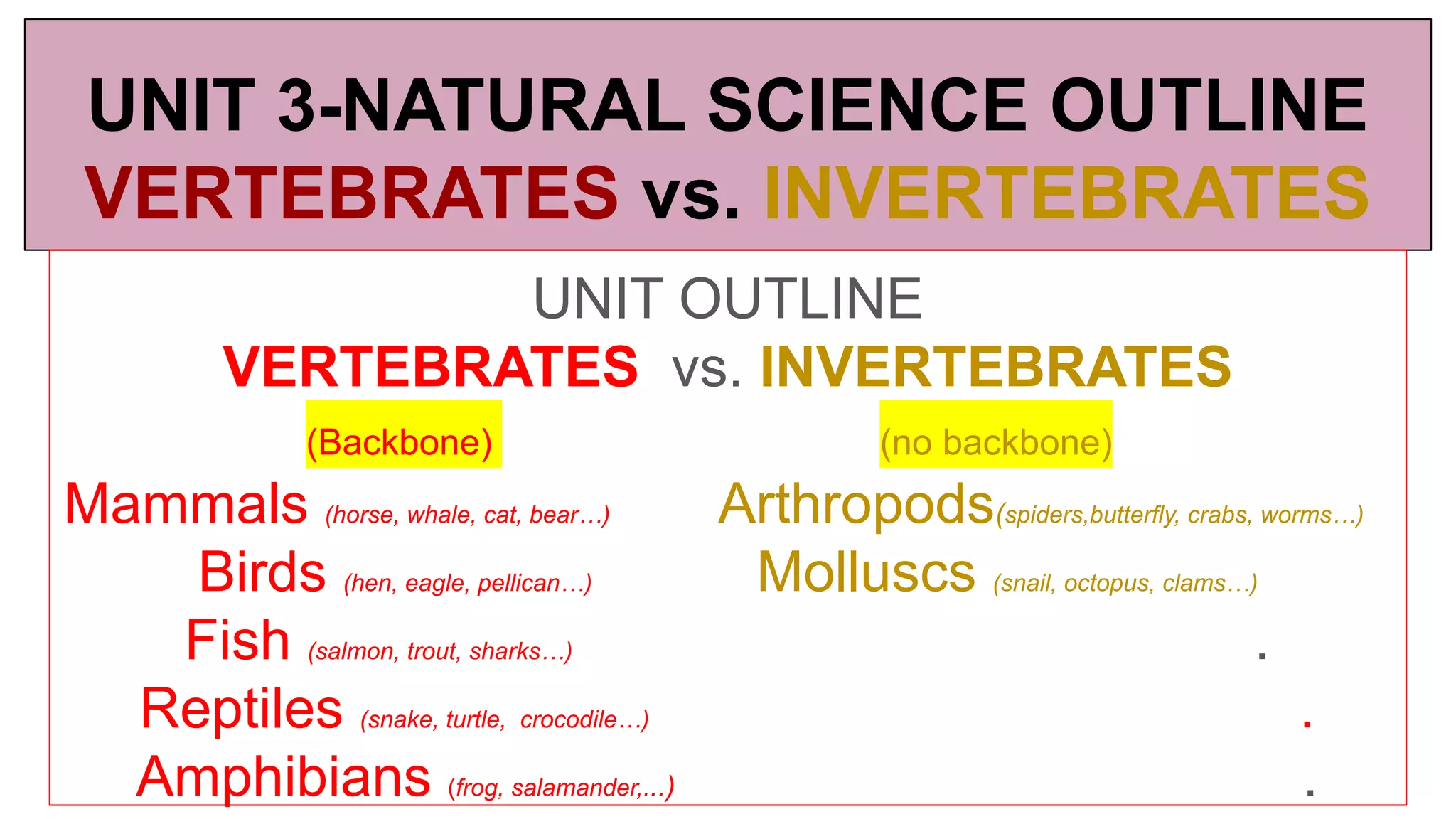
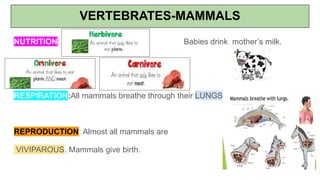
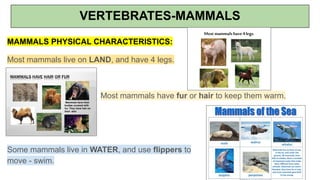
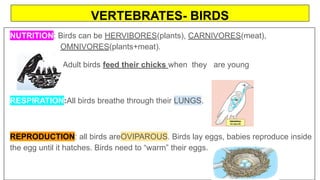
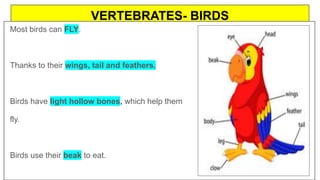
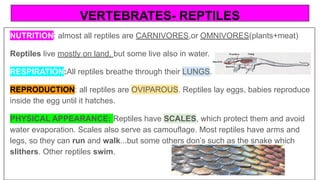
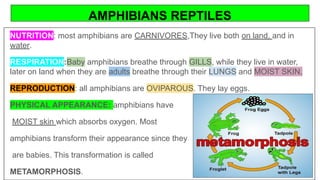
This document outlines the key differences between vertebrates and invertebrates. It provides details on the nutrition, respiration, reproduction, and physical characteristics of five vertebrate groups: mammals, birds, reptiles, fish and amphibians. Mammals are distinguished by giving birth to live young, having fur or hair, and nursing their young. Birds lay eggs, have feathers, hollow bones and beaks. Reptiles have scales, lay eggs and include snakes, lizards and turtles. Amphibians undergo metamorphosis from aquatic youth to terrestrial adults and have moist skin.