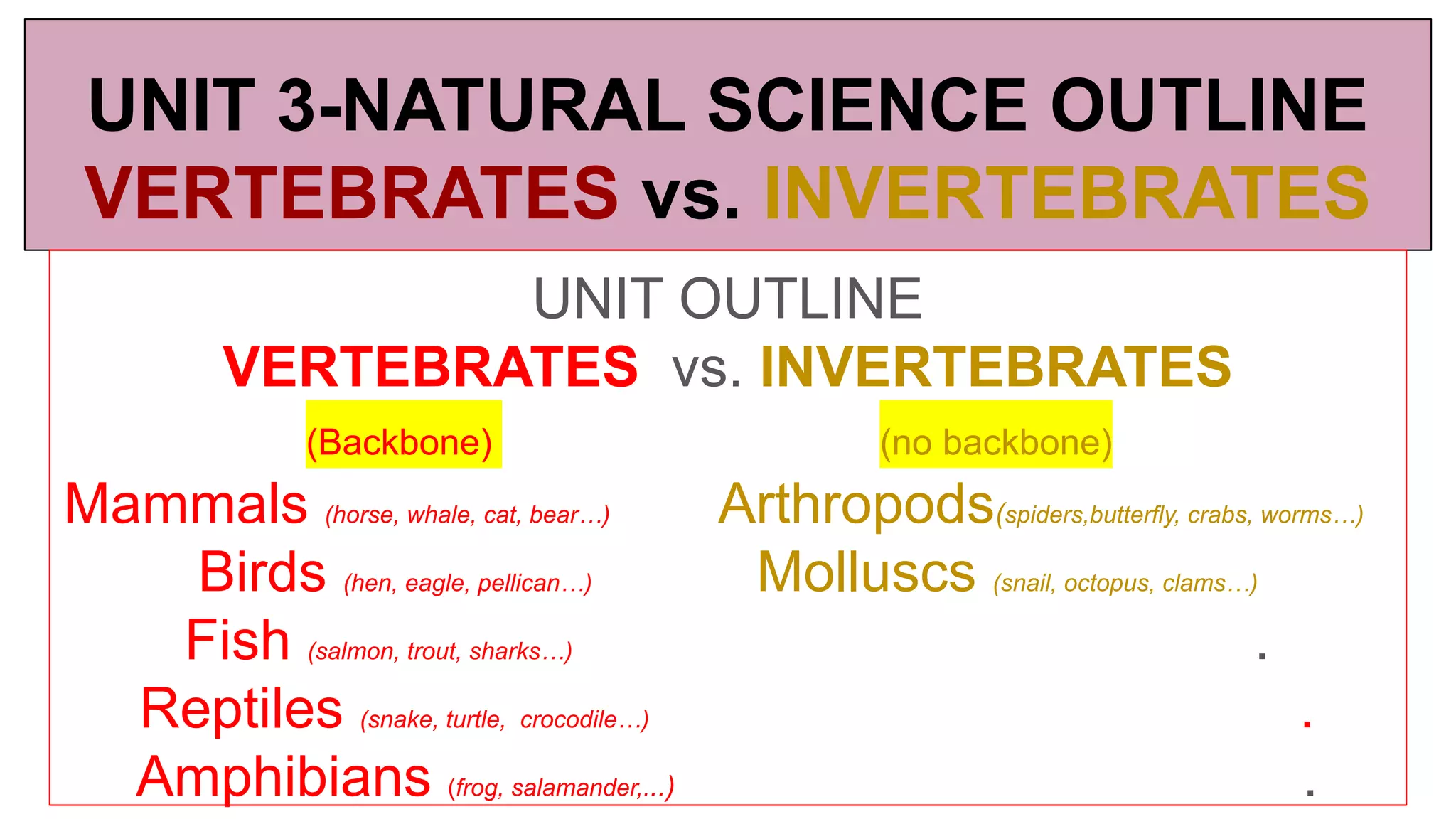
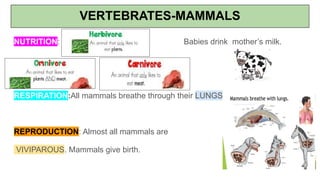
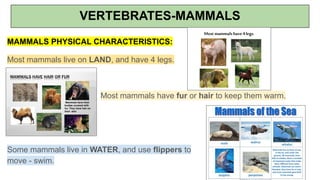
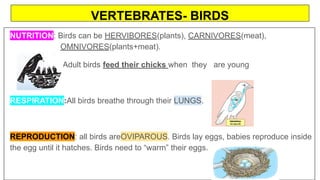
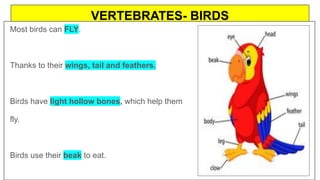
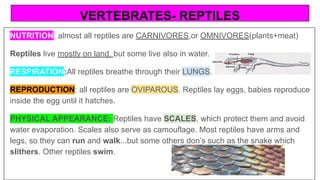
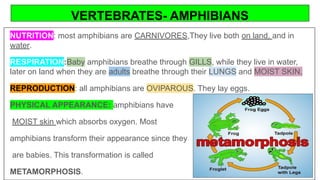
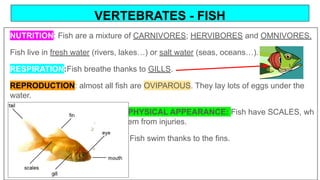
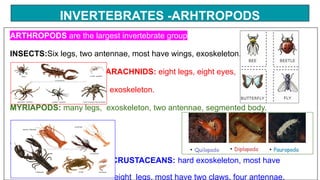
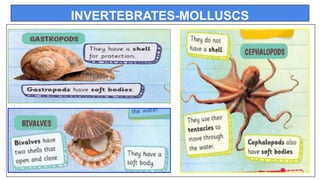
This document provides an outline comparing vertebrates and invertebrates. It begins by listing the main vertebrate groups - mammals, birds, fish, reptiles, and amphibians - and describing some of their key physical characteristics and life processes. It then discusses mammals in more depth, covering their nutrition, respiration, reproduction, and physical traits. Similar deeper dives are provided for birds, reptiles, amphibians and fish. The document then shifts to invertebrates, noting they are the largest animal group and can live on land or water. It closes by defining arthropods and molluscs as the major invertebrate sub-groups.