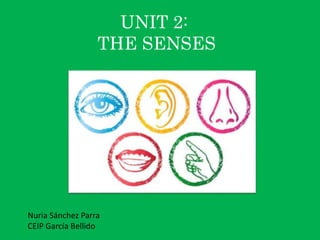
UNIT 2: 
THE SENSES 
Nuria Sánchez Parra 
CEIP García Bellido
VOCABULARY 
• Senses……sentidos 
• Sight……vista 
• Organ ……órgano 
• Made up ……formado 
• Eyeball ……globo ocular 
• Protect……proteger 
• Eyebrows……cejas 
• Eyelashes ……pestañas 
• Eyelids……párpados 
• When ……cuando 
• Hard ……duro/a/os/as 
• Shell……concha, capa 
• Arrive……llegar 
• Iris……iris 
• Pupil……pupila 
• Afterwards……después 
• Pass……pasar 
• Lens……cristalino 
• Which……el cual, la cual 
• Focus……enfocar 
• Image ……imagen 
• Retina……retina 
• Opening ……abertura 
• Bottom ……fondo
• Travel……viajar 
• Brain ……cerebro 
• Optic nerve……nervio óptico 
• Main ……principal 
• Hearing……sentido del oído 
• Ear……oreja 
• Touch……tacto 
• Include……incluir 
• Ear canal……conducto auditivo 
• Receive……recoger, recibir 
• Sound……sonido 
• Middle ear……oído medio 
• Eardrum ……martillo 
• Small bones……cadena de huesescillos 
• Change into……transformar 
• Vibrations……vibraciones 
• Inner ear……oído interno 
• Cochlea ……caracol 
• Auditory nerve……nervio auditivo 
• Impulses……impulsos 
• Outer ear……oído externo 
• Touch……tacto 
• Skin ……piel 
• Layer……capa 
• Epidermis……epidermis 
• Dermis……dermis 
• Knocking……golpes 
• Heat ……calor 
• Pressure ……presión 
• Contain……contener 
• Fat ……grasa
• Against ……contra 
• Hypodermis……hipodermis 
• Smell……olfato 
• Pituitary gland……pituitaria 
• Inside ……en el interior de 
• Sweet……dulce 
• Taste……sentido del gusto 
• All around……por todas partes 
• Taste buds……papilas gustativas 
• Flavors……sabores 
• Salty……salado 
• Bitter……amargo 
• Acid ……ácido 
• Nostrils……fosas nasales
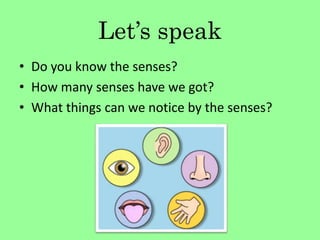
Let’s speak 
• Do you know the senses? 
• How many senses have we got? 
• What things can we notice by the senses?
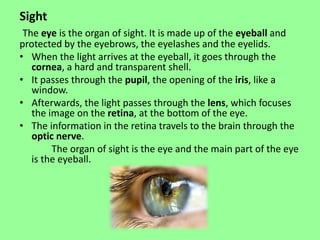
Sight 
The eye is the organ of sight. It is made up of the eyeball and 
protected by the eyebrows, the eyelashes and the eyelids. 
• When the light arrives at the eyeball, it goes through the 
cornea, a hard and transparent shell. 
• It passes through the pupil, the opening of the iris, like a 
window. 
• Afterwards, the light passes through the lens, which focuses 
the image on the retina, at the bottom of the eye. 
• The information in the retina travels to the brain through the 
optic nerve. 
The organ of sight is the eye and the main part of the eye 
is the eyeball.
SIGHT 
VIDEO
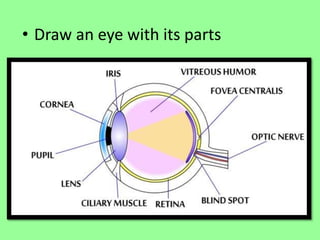
• Draw an eye with its parts
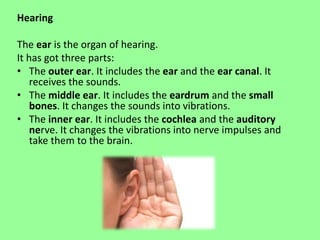
Hearing 
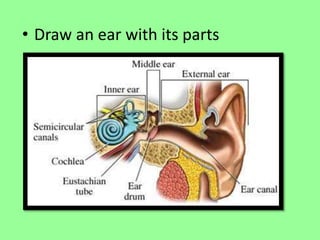
The ear is the organ of hearing. 
It has got three parts: 
• The outer ear. It includes the ear and the ear canal. It 
receives the sounds. 
• The middle ear. It includes the eardrum and the small 
bones. It changes the sounds into vibrations. 
• The inner ear. It includes the cochlea and the auditory 
nerve. It changes the vibrations into nerve impulses and 
take them to the brain.
HEARING 
VIDEO
• Draw an ear with its parts
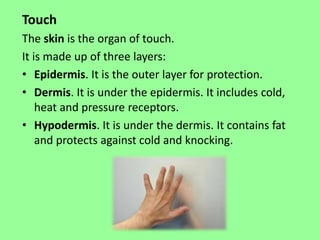
Touch 
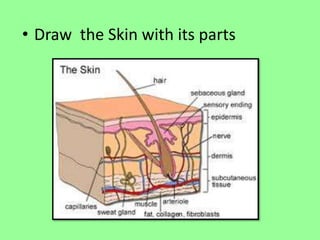
The skin is the organ of touch. 
It is made up of three layers: 
• Epidermis. It is the outer layer for protection. 
• Dermis. It is under the epidermis. It includes cold, 
heat and pressure receptors. 
• Hypodermis. It is under the dermis. It contains fat 
and protects against cold and knocking.
TOUCH 
VIDEO
• Draw the Skin with its parts
Smell 
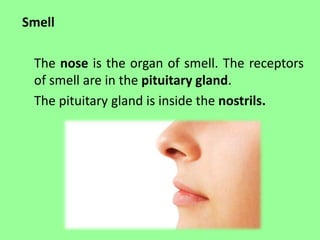
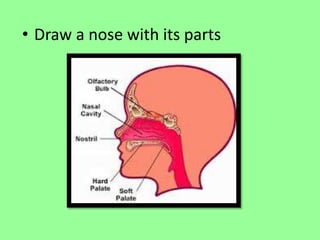
The nose is the organ of smell. The receptors 
of smell are in the pituitary gland. 
The pituitary gland is inside the nostrils.
SMELL 
VIDEO
• Draw a nose with its parts
Taste 
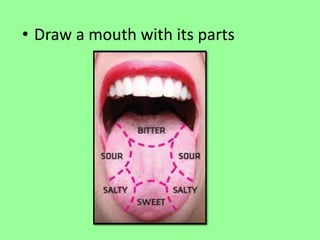
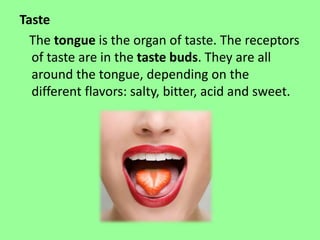
The tongue is the organ of taste. The receptors 
of taste are in the taste buds. They are all 
around the tongue, depending on the 
different flavors: salty, bitter, acid and sweet.
TASTE 
VIDEO
• Draw a mouth with its parts
Unit 2 6th: The senses

Unit 2 6th: The senses

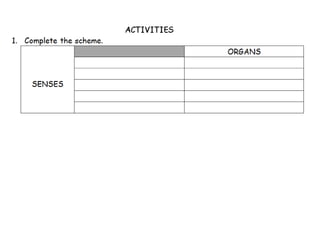
  • 1.
    UNIT 2: THESENSES Nuria Sánchez Parra CEIP García Bellido
  • 2.
    VOCABULARY • Senses……sentidos • Sight……vista • Organ ……órgano • Made up ……formado • Eyeball ……globo ocular • Protect……proteger • Eyebrows……cejas • Eyelashes ……pestañas • Eyelids……párpados • When ……cuando • Hard ……duro/a/os/as • Shell……concha, capa • Arrive……llegar • Iris……iris • Pupil……pupila • Afterwards……después • Pass……pasar • Lens……cristalino • Which……el cual, la cual • Focus……enfocar • Image ……imagen • Retina……retina • Opening ……abertura • Bottom ……fondo
  • 3.
    • Travel……viajar •Brain ……cerebro • Optic nerve……nervio óptico • Main ……principal • Hearing……sentido del oído • Ear……oreja • Touch……tacto • Include……incluir • Ear canal……conducto auditivo • Receive……recoger, recibir • Sound……sonido • Middle ear……oído medio • Eardrum ……martillo • Small bones……cadena de huesescillos • Change into……transformar • Vibrations……vibraciones • Inner ear……oído interno • Cochlea ……caracol • Auditory nerve……nervio auditivo • Impulses……impulsos • Outer ear……oído externo • Touch……tacto • Skin ……piel • Layer……capa • Epidermis……epidermis • Dermis……dermis • Knocking……golpes • Heat ……calor • Pressure ……presión • Contain……contener • Fat ……grasa
  • 4.
    • Against ……contra • Hypodermis……hipodermis • Smell……olfato • Pituitary gland……pituitaria • Inside ……en el interior de • Sweet……dulce • Taste……sentido del gusto • All around……por todas partes • Taste buds……papilas gustativas • Flavors……sabores • Salty……salado • Bitter……amargo • Acid ……ácido • Nostrils……fosas nasales
  • 5.
    Let’s speak •Do you know the senses? • How many senses have we got? • What things can we notice by the senses?
  • 6.
    Sight The eyeis the organ of sight. It is made up of the eyeball and protected by the eyebrows, the eyelashes and the eyelids. • When the light arrives at the eyeball, it goes through the cornea, a hard and transparent shell. • It passes through the pupil, the opening of the iris, like a window. • Afterwards, the light passes through the lens, which focuses the image on the retina, at the bottom of the eye. • The information in the retina travels to the brain through the optic nerve. The organ of sight is the eye and the main part of the eye is the eyeball.
  • 7.
  • 8.
    • Draw aneye with its parts
  • 9.
    Hearing The earis the organ of hearing. It has got three parts: • The outer ear. It includes the ear and the ear canal. It receives the sounds. • The middle ear. It includes the eardrum and the small bones. It changes the sounds into vibrations. • The inner ear. It includes the cochlea and the auditory nerve. It changes the vibrations into nerve impulses and take them to the brain.
  • 10.
  • 11.
    • Draw anear with its parts
  • 12.
    Touch The skinis the organ of touch. It is made up of three layers: • Epidermis. It is the outer layer for protection. • Dermis. It is under the epidermis. It includes cold, heat and pressure receptors. • Hypodermis. It is under the dermis. It contains fat and protects against cold and knocking.
  • 13.
  • 14.
    • Draw theSkin with its parts
  • 15.
    Smell The noseis the organ of smell. The receptors of smell are in the pituitary gland. The pituitary gland is inside the nostrils.
  • 16.
  • 17.
    • Draw anose with its parts
  • 18.
    Taste The tongueis the organ of taste. The receptors of taste are in the taste buds. They are all around the tongue, depending on the different flavors: salty, bitter, acid and sweet.
  • 19.
  • 20.
    • Draw amouth with its parts