BY: SWETA MAURYA
NATURAL
PIGMENTS
CONTENT:
• Natural Pigments
• Classification
• Structure Elucidation
• Synthesis
Natural Pigments
Classification
• Type
Structure Elucidation
• Cyanin
• Pelargonin
• Flavonols
• Quercetin
Synthesis
• β-Carotin
• Porphyrins
• Haemin
• Chlorophyll
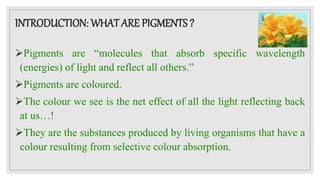
INTRODUCTION: WHAT ARE PIGMENTS ?
Pigments are “molecules that absorb specific wavelength
(energies) of light and reflect all others.”
Pigments are coloured.
The colour we see is the net effect of all the light reflecting back
at us…!
They are the substances produced by living organisms that have a
colour resulting from selective colour absorption.
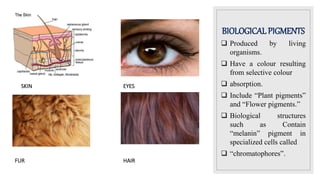
BIOLOGICALPIGMENTS
 Produced by living
organisms.
 Have a colour resulting
from selective colour
 absorption.
 Include “Plant pigments”
and “Flower pigments.”
 Biological structures
such as Contain
“melanin” pigment in
specialized cells called
 “chromatophores”.
SKIN EYES
FUR HAIR
PIGMENTCOLOUR V/S
STRUCTURAL
COLOUR
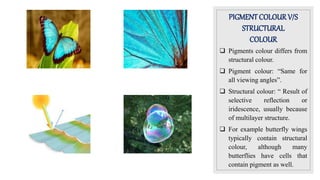
 Pigments colour differs from
structural colour.
 Pigment colour: “Same for
all viewing angles”.
 Structural colour: “ Result of
selective reflection or
iridescence, usually because
of multilayer structure.
 For example butterfly wings
typically contain structural
colour, although many
butterflies have cells that
contain pigment as well.
TYPES OF BIOLOGICAL PIGMENTS
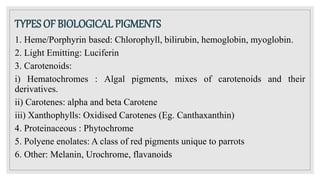
1. Heme/Porphyrin based: Chlorophyll, bilirubin, hemoglobin, myoglobin.
2. Light Emitting: Luciferin
3. Carotenoids:
i) Hematochromes : Algal pigments, mixes of carotenoids and their
derivatives.
ii) Carotenes: alpha and beta Carotene
iii) Xanthophylls: Oxidised Carotenes (Eg. Canthaxanthin)
4. Proteinaceous : Phytochrome
5. Polyene enolates: A class of red pigments unique to parrots
6. Other: Melanin, Urochrome, flavanoids
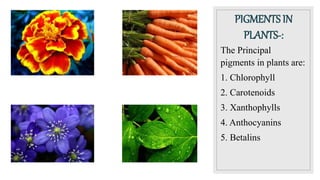
PIGMENTS IN
PLANTS-:
The Principal
pigments in plants are:
1. Chlorophyll
2. Carotenoids
3. Xanthophylls
4. Anthocyanins
5. Betalins
PRIMARY FUNCTION OF PIGMENTS IN
PLANTS:-
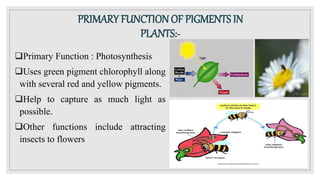
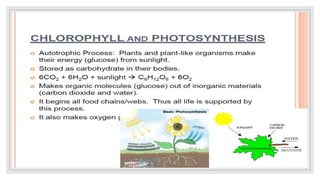
Primary Function : Photosynthesis
Uses green pigment chlorophyll along
with several red and yellow pigments.
Help to capture as much light as
possible.
Other functions include attracting
insects to flowers
Primary pigment in plant
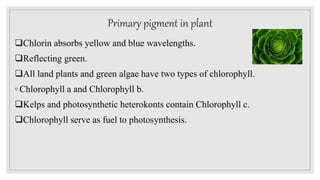
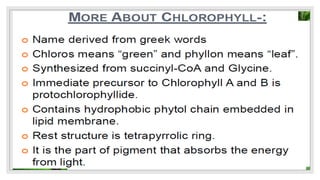
Chlorin absorbs yellow and blue wavelengths.
Reflecting green.
All land plants and green algae have two types of chlorophyll.
◦ Chlorophyll a and Chlorophyll b.
Kelps and photosynthetic heterokonts contain Chlorophyll c.
Chlorophyll serve as fuel to photosynthesis.
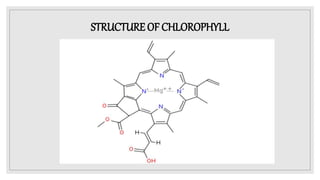
STRUCTURE OF CHLOROPHYLL
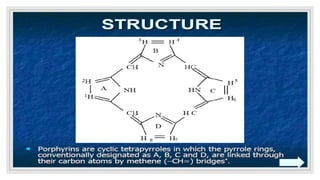
PORPHYRINS
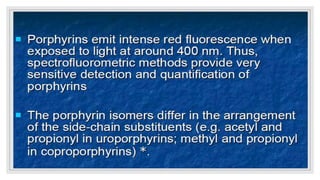
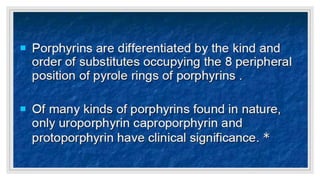
Synthesis of porphyrins occurs in animals
for haem production and in plants for
chlorophyll production.
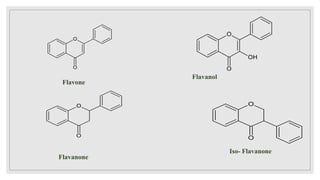
Flavanol
Flavone
O
O
O
O
OH
O
O
Flavanone
O
O
Iso- Flavanone
THANKYOU

Natural Pigments.pptx

  • 1.
  • 2.
    CONTENT: • Natural Pigments •Classification • Structure Elucidation • Synthesis
  • 3.
    Natural Pigments Classification • Type StructureElucidation • Cyanin • Pelargonin • Flavonols • Quercetin Synthesis • β-Carotin • Porphyrins • Haemin • Chlorophyll
  • 4.
    INTRODUCTION: WHAT AREPIGMENTS ? Pigments are “molecules that absorb specific wavelength (energies) of light and reflect all others.” Pigments are coloured. The colour we see is the net effect of all the light reflecting back at us…! They are the substances produced by living organisms that have a colour resulting from selective colour absorption.
  • 5.
    BIOLOGICALPIGMENTS  Produced byliving organisms.  Have a colour resulting from selective colour  absorption.  Include “Plant pigments” and “Flower pigments.”  Biological structures such as Contain “melanin” pigment in specialized cells called  “chromatophores”. SKIN EYES FUR HAIR
  • 6.
    PIGMENTCOLOUR V/S STRUCTURAL COLOUR  Pigmentscolour differs from structural colour.  Pigment colour: “Same for all viewing angles”.  Structural colour: “ Result of selective reflection or iridescence, usually because of multilayer structure.  For example butterfly wings typically contain structural colour, although many butterflies have cells that contain pigment as well.
  • 7.
    TYPES OF BIOLOGICALPIGMENTS 1. Heme/Porphyrin based: Chlorophyll, bilirubin, hemoglobin, myoglobin. 2. Light Emitting: Luciferin 3. Carotenoids: i) Hematochromes : Algal pigments, mixes of carotenoids and their derivatives. ii) Carotenes: alpha and beta Carotene iii) Xanthophylls: Oxidised Carotenes (Eg. Canthaxanthin) 4. Proteinaceous : Phytochrome 5. Polyene enolates: A class of red pigments unique to parrots 6. Other: Melanin, Urochrome, flavanoids
  • 8.
    PIGMENTS IN PLANTS-: The Principal pigmentsin plants are: 1. Chlorophyll 2. Carotenoids 3. Xanthophylls 4. Anthocyanins 5. Betalins
  • 9.
    PRIMARY FUNCTION OFPIGMENTS IN PLANTS:- Primary Function : Photosynthesis Uses green pigment chlorophyll along with several red and yellow pigments. Help to capture as much light as possible. Other functions include attracting insects to flowers
  • 10.
    Primary pigment inplant Chlorin absorbs yellow and blue wavelengths. Reflecting green. All land plants and green algae have two types of chlorophyll. ◦ Chlorophyll a and Chlorophyll b. Kelps and photosynthetic heterokonts contain Chlorophyll c. Chlorophyll serve as fuel to photosynthesis.
  • 11.
  • 28.
  • 29.
    Synthesis of porphyrinsoccurs in animals for haem production and in plants for chlorophyll production.
  • 33.
  • 34.