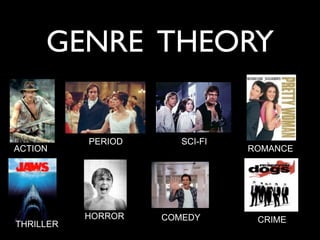
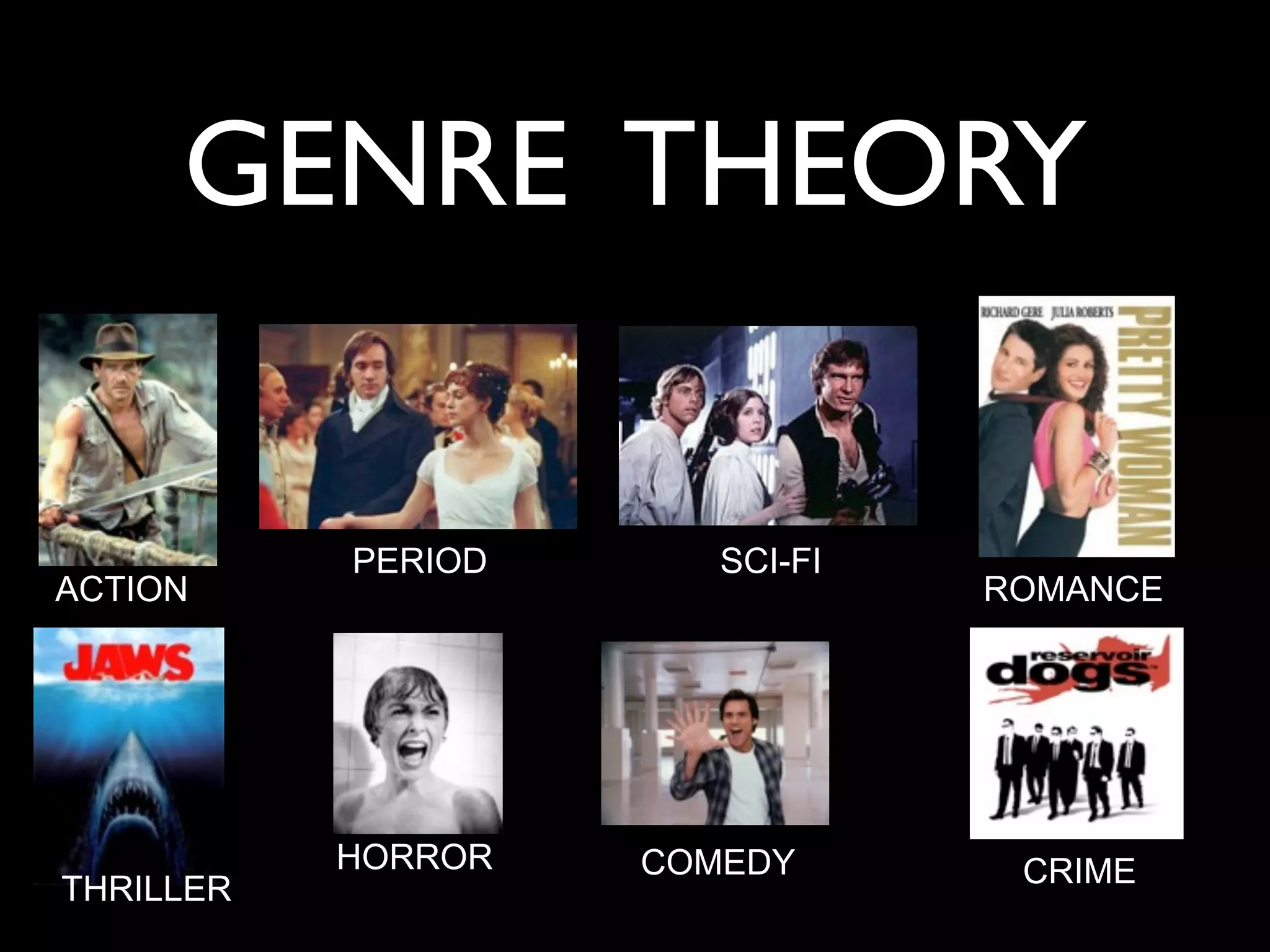
GENRE THEORY

           PERIOD      SCI-FI
ACTION                          ROMANCE


           HORROR   COMEDY       CRIME
THRILLER
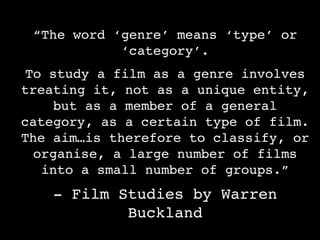
“The word ‘genre’ means ‘type’ or
            ‘category’.
To study a film as a genre involves
treating it, not as a unique entity,
    but as a member of a general
category, as a certain type of film.
The aim…is therefore to classify, or
 organise, a large number of films
   into a small number of groups.”
    - Film Studies by Warren
            Buckland
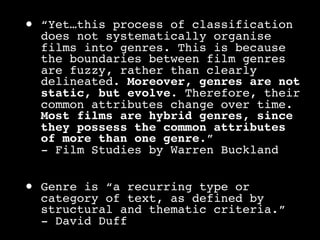
•   “Yet…this process of classification
    does not systematically organise
    films into genres. This is because
    the boundaries between film genres
    are fuzzy, rather than clearly
    delineated. Moreover, genres are not
    static, but evolve. Therefore, their
    common attributes change over time.
    Most films are hybrid genres, since
    they possess the common attributes
    of more than one genre.”
    - Film Studies by Warren Buckland


•   Genre is “a recurring type or
    category of text, as defined by
    structural and thematic criteria.”
    - David Duff
•   Genre Theory places a text in
    relation to other texts, and the
    context in which it’s consumed.
•   It is used in studying “non literary
    texts; notably film and media”
    - David Duff
Iconography often helps to define a
  genre.
•   Yet there are many ways of
    categorising media texts beyond the
    usual: western, action, romance etc
•   Many genres, such as Horror, depend
    on shared cultural values rather than
    a common time/setting or fixed
    iconography.
•   Genre helps both audiences and
    institutions to make decisions about
    what they want to see and what they
    want to make to supply that demand.

•   Each genre has its own conventions
    which evolve over time (Duff) - its
    not fixed which was the traditional
    literary view.

•   “Genre is not... simply ‘given’ by the
    culture: rather, it is in a constant
    process of negotiation and change”
    - David Buckingham 1993

•   Changes in genre reflects changes in
    society and our values.
•   “Different genres specify
    different ‘contracts’ to be
    negotiated between the text and
    the reader” (Livingstone).
•   This knowledge of the conventions
    can be both positive and negative
    for the producers as it can lead
    to passive viewing from the
    audience. However producers can
    use the audiences expectations to
    their advantage by manipulating
    the conventions to make new
    hybrid genres.
•   “The same text can belong to
    different genres in different
    countries or times.”
    - John Hartley
•   “Genres are instances of
    repetition and difference...
    difference is absolutely
    essential to the economy of
    genre: mere repetitions would
    not attract an audience.”
    - Steve Neale 1980
Music Video
•   Genre conventions I’ve used: lip-syncing, editing to
    the beat, engagement with audience, artist/character
    shown, music playing, some form of narrative/message

•   The genre I’m working in is romantic, however it is
    moving away from conventions by looking at the break
    up and not the ‘falling in love’ part of romance.

•   My video conforms to some conventions of a romance
    by including a couple in love (these portions making
    up the flashbacks) which builds audience
    expectations for the video. But then the rest of the
    video subverts the conventions by showing a strong
    single female who is moving on from the
    relationship. It plays with the conventions by
    showing her in similar conventions used in romantic
    videos and then showing herself happy in them on her
    own.
•   “Genre creates expectations that
    condition our responses. The
    familiarity of the genre enables
    each spectator to anticipate and
    predict what will appear in
    them. Genre sets up hopes and
    promises and brings pleasure if
    these hopes and promises are
    fulfilled.”
    - Film Studies by Warren
    Buckland
Uses and Gratifications:
   Audience Pleasures
1.    Recognising conventions due to familiarity

2.    Emotional pleasures linked to different genres

3.    Cognitive satisfaction - problem solving,
     predicting. Pleasure comes from realising these
     predictions/ expectations

4. Noticing manipulated genres, shifting our
     expectations

5. Judging characters
6. Sharing experience of genres with other people
     that enjoy it - creates a community.
Audience reception
 •   The preferred reading of my
     text is that the audience
     will enjoy the subverting of
     the conventions and see it
     as an interesting look at
     female representation and a
     new way at looking at the
     romance genre - making them
     feel positive about
     themselves.
Criticisms of Genre
Genre is a great way of helping define different methods of
communicating to the audience and provides boundaries and guidelines
as well as shorthand for both producers, institutions and audiences
in terms of creating and consuming media. However genres can get
tired and be stifling for creators who want to experiment outside the
rigid boxes set out for them. Yet without a ‘genre’ to conform to
they would find hard to find funding or to sell their product to
audiences who require genre to understand and choose their media.
Audiences are made up of individuals and are no longer passively
consuming media such as described in the Hypothermic Needle theory
almost a century ago. They interact with their media and, as evident
in Web 2.0, are often the producers themselves. They understand media
language and how media is made now and so the constricting boundaries
of genre can be hard to work around, to make it clear to everyone
what you are trying to make. By trying to pigeon hole everything into
genre specific boxes many fail to see the art behind the product.
Institutions are less enthused to take risks and so the cycle will
continue as each side of the process will continue to have
expectations which both sides will continue to provide for the other
in order to sell the products.

Genre Theory

  • 1.
    GENRE THEORY PERIOD SCI-FI ACTION ROMANCE HORROR COMEDY CRIME THRILLER
  • 2.
    “The word ‘genre’means ‘type’ or ‘category’. To study a film as a genre involves treating it, not as a unique entity, but as a member of a general category, as a certain type of film. The aim…is therefore to classify, or organise, a large number of films into a small number of groups.” - Film Studies by Warren Buckland
  • 3.
    “Yet…this process of classification does not systematically organise films into genres. This is because the boundaries between film genres are fuzzy, rather than clearly delineated. Moreover, genres are not static, but evolve. Therefore, their common attributes change over time. Most films are hybrid genres, since they possess the common attributes of more than one genre.” - Film Studies by Warren Buckland • Genre is “a recurring type or category of text, as defined by structural and thematic criteria.” - David Duff
  • 4.
    Genre Theory places a text in relation to other texts, and the context in which it’s consumed. • It is used in studying “non literary texts; notably film and media” - David Duff Iconography often helps to define a genre. • Yet there are many ways of categorising media texts beyond the usual: western, action, romance etc • Many genres, such as Horror, depend on shared cultural values rather than a common time/setting or fixed iconography.
  • 5.
    Genre helps both audiences and institutions to make decisions about what they want to see and what they want to make to supply that demand. • Each genre has its own conventions which evolve over time (Duff) - its not fixed which was the traditional literary view. • “Genre is not... simply ‘given’ by the culture: rather, it is in a constant process of negotiation and change” - David Buckingham 1993 • Changes in genre reflects changes in society and our values.
  • 6.
    “Different genres specify different ‘contracts’ to be negotiated between the text and the reader” (Livingstone). • This knowledge of the conventions can be both positive and negative for the producers as it can lead to passive viewing from the audience. However producers can use the audiences expectations to their advantage by manipulating the conventions to make new hybrid genres.
  • 7.
    “The same text can belong to different genres in different countries or times.” - John Hartley • “Genres are instances of repetition and difference... difference is absolutely essential to the economy of genre: mere repetitions would not attract an audience.” - Steve Neale 1980
  • 8.
    Music Video • Genre conventions I’ve used: lip-syncing, editing to the beat, engagement with audience, artist/character shown, music playing, some form of narrative/message • The genre I’m working in is romantic, however it is moving away from conventions by looking at the break up and not the ‘falling in love’ part of romance. • My video conforms to some conventions of a romance by including a couple in love (these portions making up the flashbacks) which builds audience expectations for the video. But then the rest of the video subverts the conventions by showing a strong single female who is moving on from the relationship. It plays with the conventions by showing her in similar conventions used in romantic videos and then showing herself happy in them on her own.
  • 9.
    “Genre creates expectations that condition our responses. The familiarity of the genre enables each spectator to anticipate and predict what will appear in them. Genre sets up hopes and promises and brings pleasure if these hopes and promises are fulfilled.” - Film Studies by Warren Buckland
  • 10.
    Uses and Gratifications: Audience Pleasures 1. Recognising conventions due to familiarity 2. Emotional pleasures linked to different genres 3. Cognitive satisfaction - problem solving, predicting. Pleasure comes from realising these predictions/ expectations 4. Noticing manipulated genres, shifting our expectations 5. Judging characters 6. Sharing experience of genres with other people that enjoy it - creates a community.
  • 11.
    Audience reception • The preferred reading of my text is that the audience will enjoy the subverting of the conventions and see it as an interesting look at female representation and a new way at looking at the romance genre - making them feel positive about themselves.
  • 12.
    Criticisms of Genre Genreis a great way of helping define different methods of communicating to the audience and provides boundaries and guidelines as well as shorthand for both producers, institutions and audiences in terms of creating and consuming media. However genres can get tired and be stifling for creators who want to experiment outside the rigid boxes set out for them. Yet without a ‘genre’ to conform to they would find hard to find funding or to sell their product to audiences who require genre to understand and choose their media. Audiences are made up of individuals and are no longer passively consuming media such as described in the Hypothermic Needle theory almost a century ago. They interact with their media and, as evident in Web 2.0, are often the producers themselves. They understand media language and how media is made now and so the constricting boundaries of genre can be hard to work around, to make it clear to everyone what you are trying to make. By trying to pigeon hole everything into genre specific boxes many fail to see the art behind the product. Institutions are less enthused to take risks and so the cycle will continue as each side of the process will continue to have expectations which both sides will continue to provide for the other in order to sell the products.

Editor's Notes