
Narrative Grammar
Persuasively Telling Your Client’s Story

Tabitha Martin
-Peter Elbow, “Reflections on Academic Discourse” (emphasis mine)

What is Narrative?
“story requires that the speaker remove
himself for the telling’s duration from
the alignment he would maintain in
ordinary conversational give and
take, and for this period of narration
maintain another footing, that of
narrator”
(emphasis mine)

Story-telling
Goffman, Erving. “Footing.” Forms of Talk. 1981
“The Plot Thickens: The Appellate Brief as Story”
Kenneth D. Chestek
2007

Example Case:
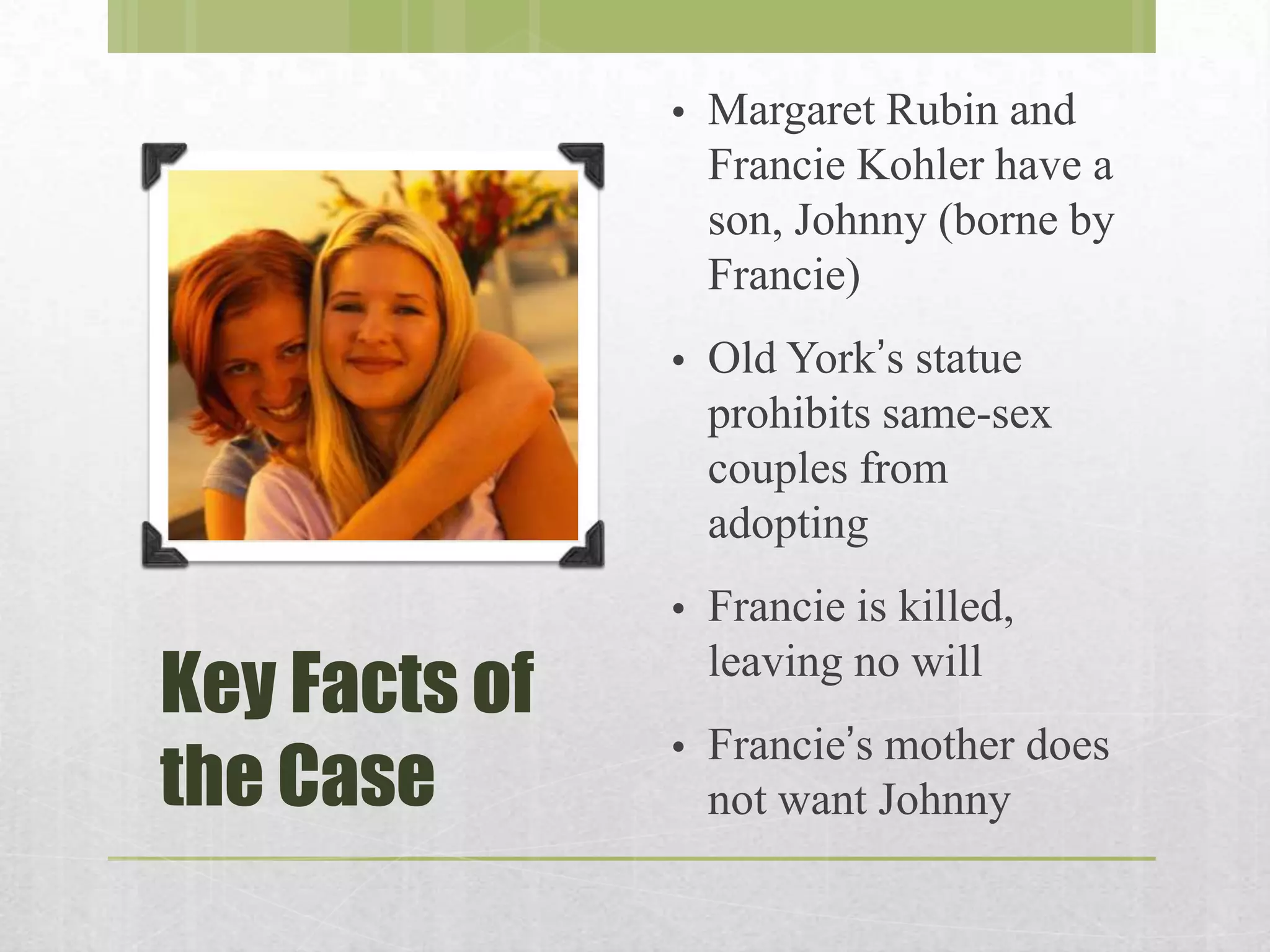
Margaret and Francie
•

•

Old York’s statue
prohibits same-sex
couples from
adopting

•

Key Facts of
the Case

Margaret Rubin and
Francie Kohler have a
son, Johnny (borne by
Francie)

Francie is killed,
leaving no will

•

Francie’s mother does
not want Johnny
Narrative

Communication

Margaret Rubin and
Francie Kohler only
wanted a child.

We argue that
Margaret Rubin and
Francie Kohler only
wanted a child.

Are you telling a story or making
an argument?

Which has more power?
Margaret and
Francie were
devoted to their
dream

…the couple
could not have
been happier

Do you have sensation words in
your story?

State of Mind
Kuroda, S-Y. “Where Epistemology, Style, and Grammar
Meet: A Case Study from Japanese.” 1973
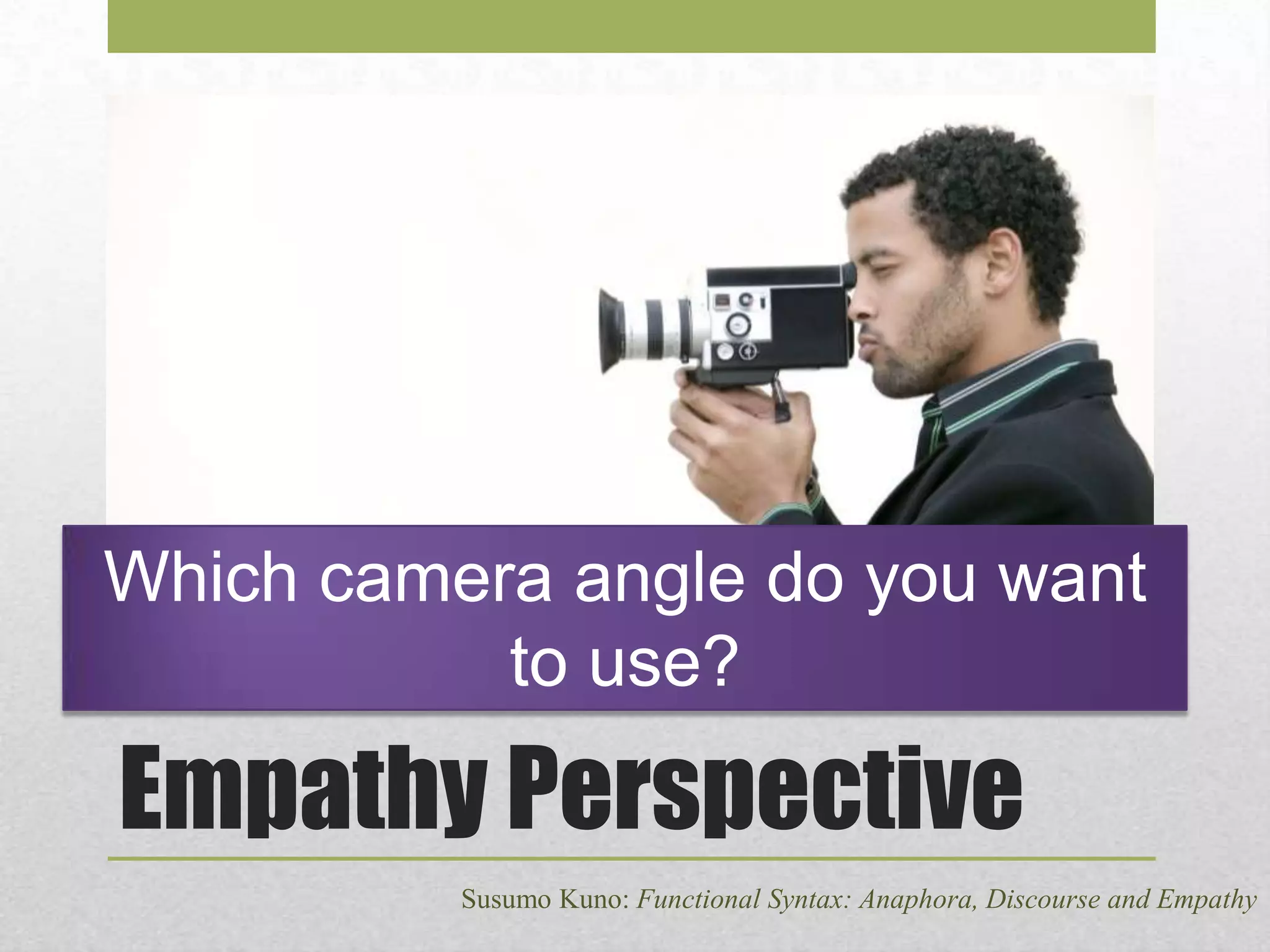
Which camera angle do you want
to use?

Empathy Perspective
Susumo Kuno: Functional Syntax: Anaphora, Discourse and Empathy
Empathy resides with the subject
of the sentence.
How many sentences start
with your client?

Syntactic Prominence Principle
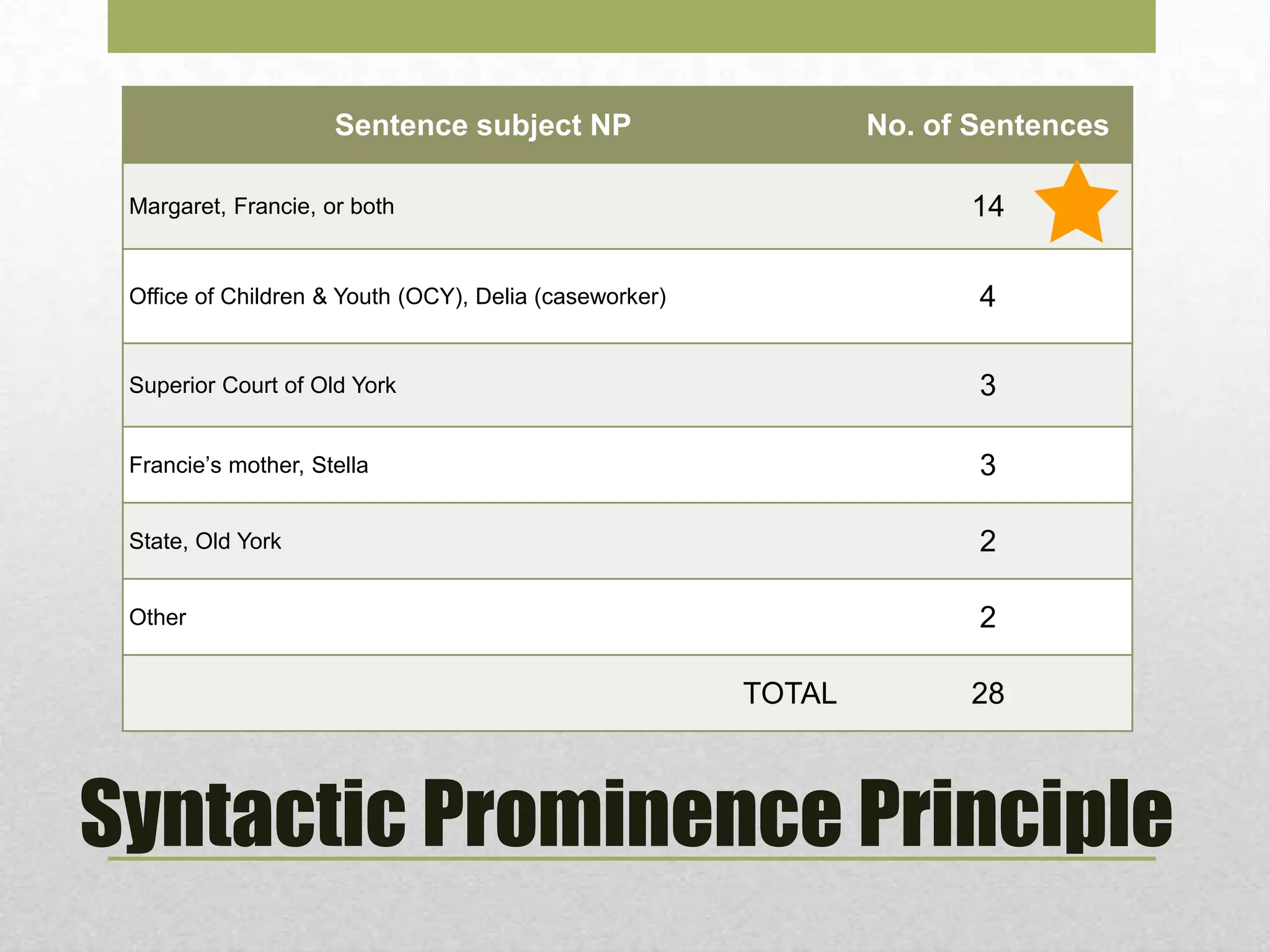
Sentence subject NP

No. of Sentences

14

Margaret, Francie, or both

Office of Children & Youth (OCY), Delia (caseworker)

4

Superior Court of Old York

3

Francie’s mother, Stella

3

State, Old York

2

Other

2

TOTAL

28

Syntactic Prominence Principle
Parentheticals

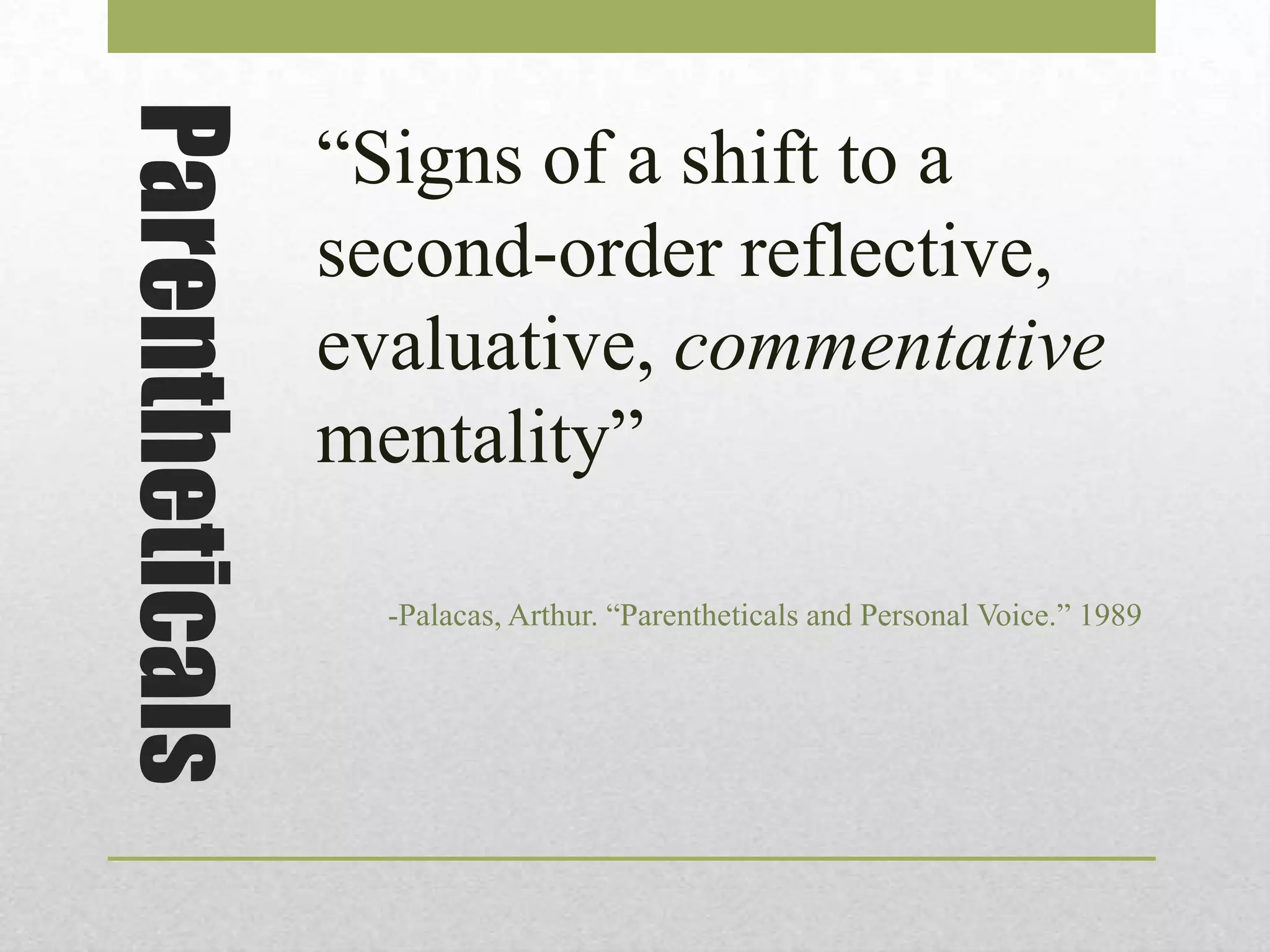
“Signs of a shift to a
second-order reflective,
evaluative, commentative
mentality”
-Palacas, Arthur. “Parentheticals and Personal Voice.” 1989
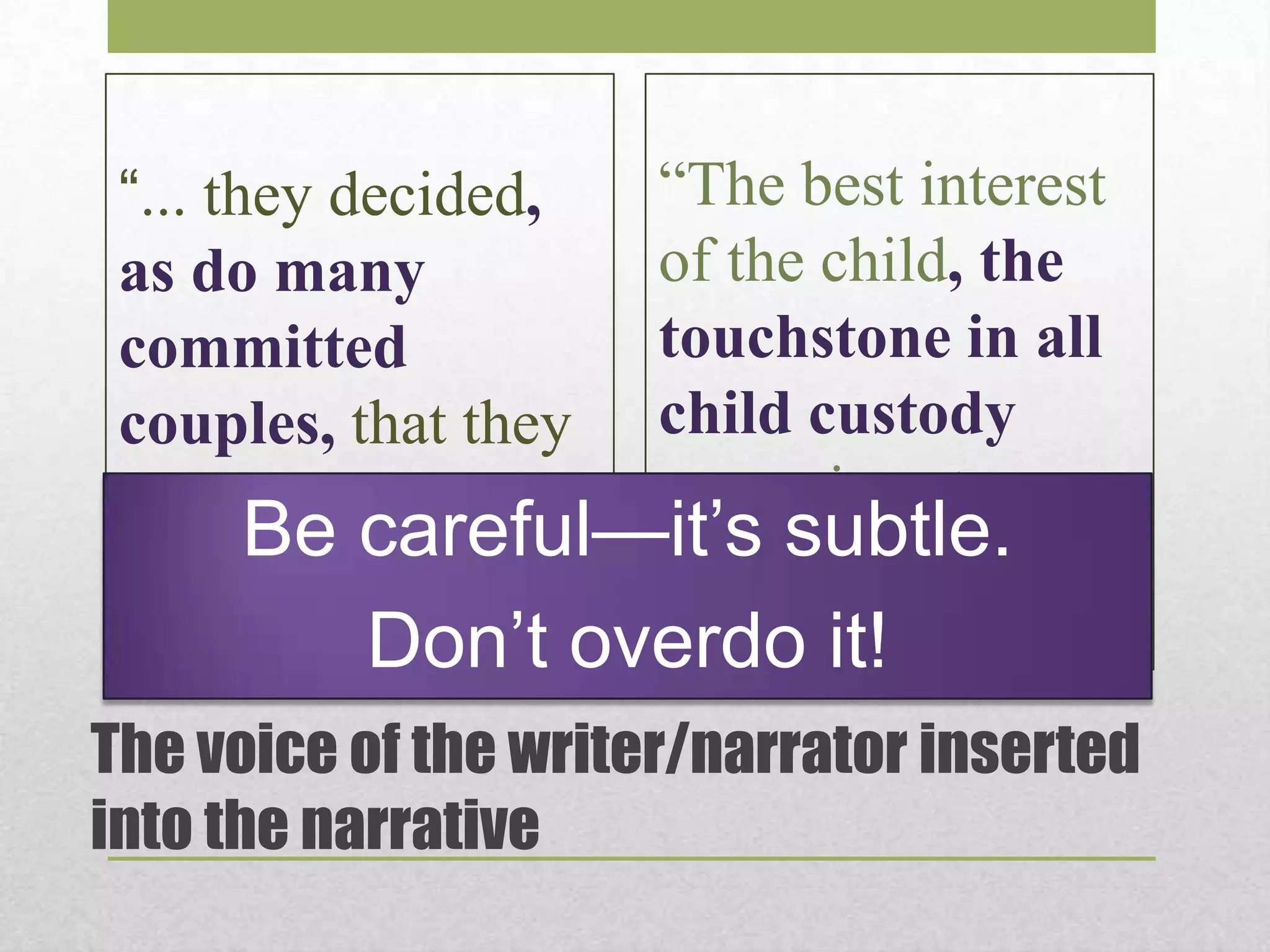
“The best interest
“... they decided,
of the child, the
as do many
touchstone in all
committed
couples, that they child custody
cases, is not even
wanted to raise a
Be careful—it’s subtle.
mentioned.”
family.”

Don’t overdo it!

The voice of the writer/narrator inserted
into the narrative
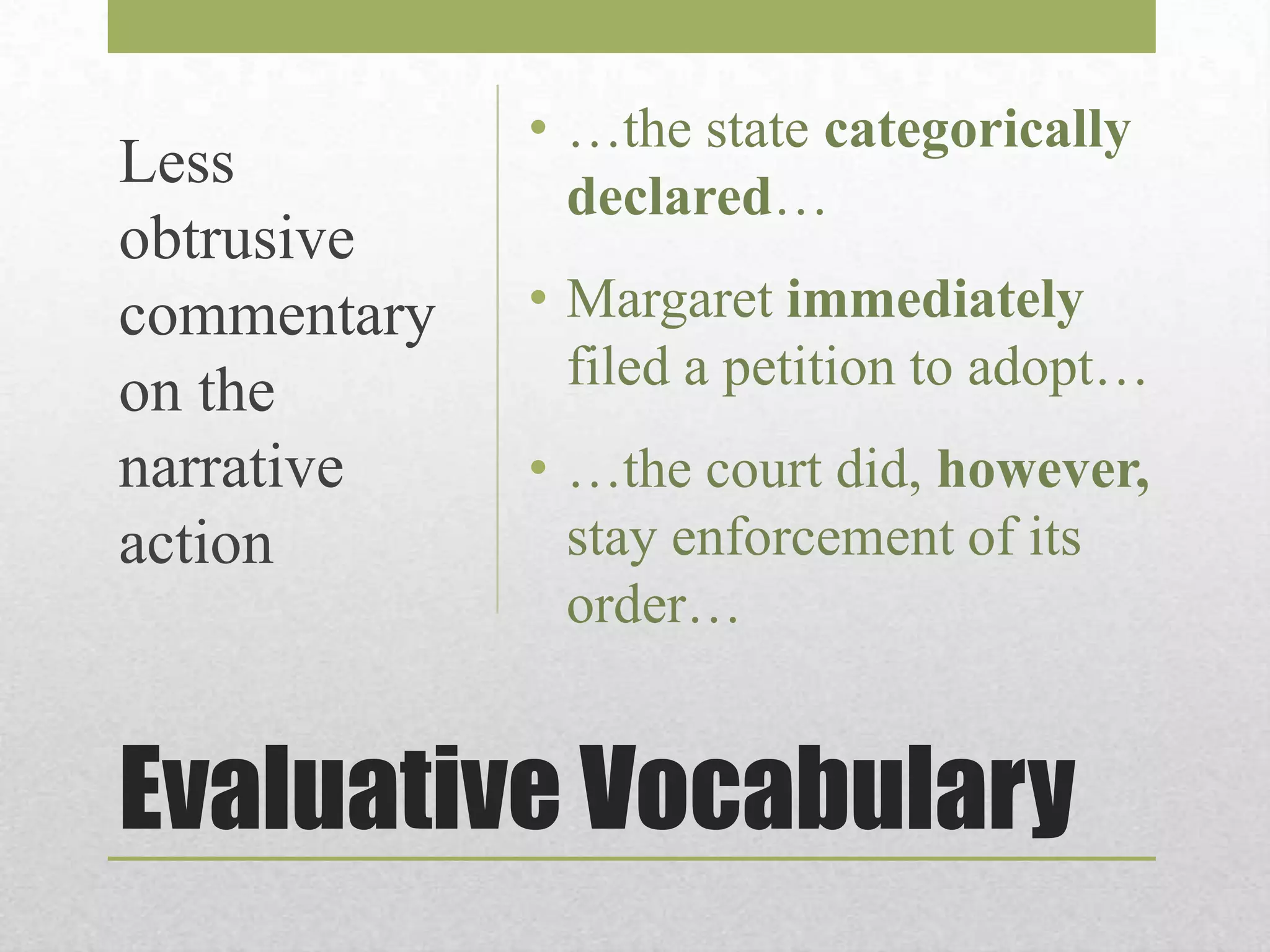
Less
obtrusive
commentary
on the
narrative
action

• …the state categorically
declared…

• Margaret immediately
filed a petition to adopt…
• …the court did, however,
stay enforcement of its
order…

Evaluative Vocabulary
• State of Mind
• Empathy
• Subject-focused
• Parentheticals
• Evaluative
Vocabulary

Narrative Grammar workshop

  • 1.
    Narrative Grammar Persuasively TellingYour Client’s Story Tabitha Martin
  • 2.
    -Peter Elbow, “Reflectionson Academic Discourse” (emphasis mine) What is Narrative?
  • 3.
    “story requires thatthe speaker remove himself for the telling’s duration from the alignment he would maintain in ordinary conversational give and take, and for this period of narration maintain another footing, that of narrator” (emphasis mine) Story-telling Goffman, Erving. “Footing.” Forms of Talk. 1981
  • 4.
    “The Plot Thickens:The Appellate Brief as Story” Kenneth D. Chestek 2007 Example Case: Margaret and Francie
  • 5.
    • • Old York’s statue prohibitssame-sex couples from adopting • Key Facts of the Case Margaret Rubin and Francie Kohler have a son, Johnny (borne by Francie) Francie is killed, leaving no will • Francie’s mother does not want Johnny
  • 6.
    Narrative Communication Margaret Rubin and FrancieKohler only wanted a child. We argue that Margaret Rubin and Francie Kohler only wanted a child. Are you telling a story or making an argument? Which has more power?
  • 7.
    Margaret and Francie were devotedto their dream …the couple could not have been happier Do you have sensation words in your story? State of Mind Kuroda, S-Y. “Where Epistemology, Style, and Grammar Meet: A Case Study from Japanese.” 1973
  • 8.
    Which camera angledo you want to use? Empathy Perspective Susumo Kuno: Functional Syntax: Anaphora, Discourse and Empathy
  • 9.
    Empathy resides withthe subject of the sentence. How many sentences start with your client? Syntactic Prominence Principle
  • 10.
    Sentence subject NP No.of Sentences 14 Margaret, Francie, or both Office of Children & Youth (OCY), Delia (caseworker) 4 Superior Court of Old York 3 Francie’s mother, Stella 3 State, Old York 2 Other 2 TOTAL 28 Syntactic Prominence Principle
  • 11.
    Parentheticals “Signs of ashift to a second-order reflective, evaluative, commentative mentality” -Palacas, Arthur. “Parentheticals and Personal Voice.” 1989
  • 12.
    “The best interest “...they decided, of the child, the as do many touchstone in all committed couples, that they child custody cases, is not even wanted to raise a Be careful—it’s subtle. mentioned.” family.” Don’t overdo it! The voice of the writer/narrator inserted into the narrative
  • 13.
    Less obtrusive commentary on the narrative action • …thestate categorically declared… • Margaret immediately filed a petition to adopt… • …the court did, however, stay enforcement of its order… Evaluative Vocabulary
  • 14.
    • State ofMind • Empathy • Subject-focused • Parentheticals • Evaluative Vocabulary

Editor's Notes

  • #3 We can generally recognize the difference between a “communicative act”—which takes place between a first-person “I” speaker and a second-person “you” hearer—and a STORY—a “narrative act”– whose aim is to relate a point of view. In English, we often find that the constructs are quite implicit: that we recognize their effects without noticing their form. We are going to talk about those forms today: how to see them and use them in your own writing in order to draw in your reader to your client’s story, i.e. try to get them to experience that story, similar to how a fiction writer involves you in a novel.
  • #7 Back to communication vs. narrative in writing: The first sentence is from the example brief. Notice how when it’s contrasted with the second sentence, you can recognize the narrative quality of it and the contrast shows how much more powerful it is persuasively. The second sentence takes the force of wanting away from Margaret and Francie, and places the emphasis on the argument that they wanted a child.
  • #8 Kuroda used his native Japanese to easily illustrate the differences in the use of adjectives that show emotion or sensation: there is no grammatical way to use such adj with a 2nd or 3rd person pronoun in Japanese--because then the speaker would be representing the “feeler”--which is what a storyteller does: represents the character (writer “puts on” the persona and “feels”). The legal writer tries to act as storyteller-- to bring the experience of his “characters” closer to the reader. Make your client a living, feeling human being.
  • #9 The role of the persuasive writer is like that of a movie director, deciding which is the best perspective from which to tell the story. Where writers grammatically place their “cameras” influence where the reader’s empathy will most likely lie.He outlines various linguistic principles that support this idea. Three of them are particularly relevant to us in our writing.
  • #10 FIRSTThe writer gives “syntactic prominence” to the person that he wants the reader to empathize with. Empathy resides with the subject of the sentence.
  • #11 In the example brief, a full HALF of the sentences start with the empathetic subjects.
  • #12 Commenting on the action--the contrast of the interruptive quality of the narrator’s “voice” brings the narrative quality more sharply into focus.TWO KINDS: If you’ve heard me talk about commas, you’ve probably heard me talk about interruptive parentheticals. There are also adverbial & adjectival parenthetical structures.
  • #14 Subtle way that the narrator/writer can “direct” the emotional effect on the readerEVALUATIVE ADVERBS*grammatically unnecessary; persuasively significant*