Lost in Translation:
Grammatical Errors of Non-Native English
Writers in First-Year Composition
Kristina Floyd
Dawn Lombardi
Tabitha Martin

University of Akron Student Innovation Symposium
April 11, 2013
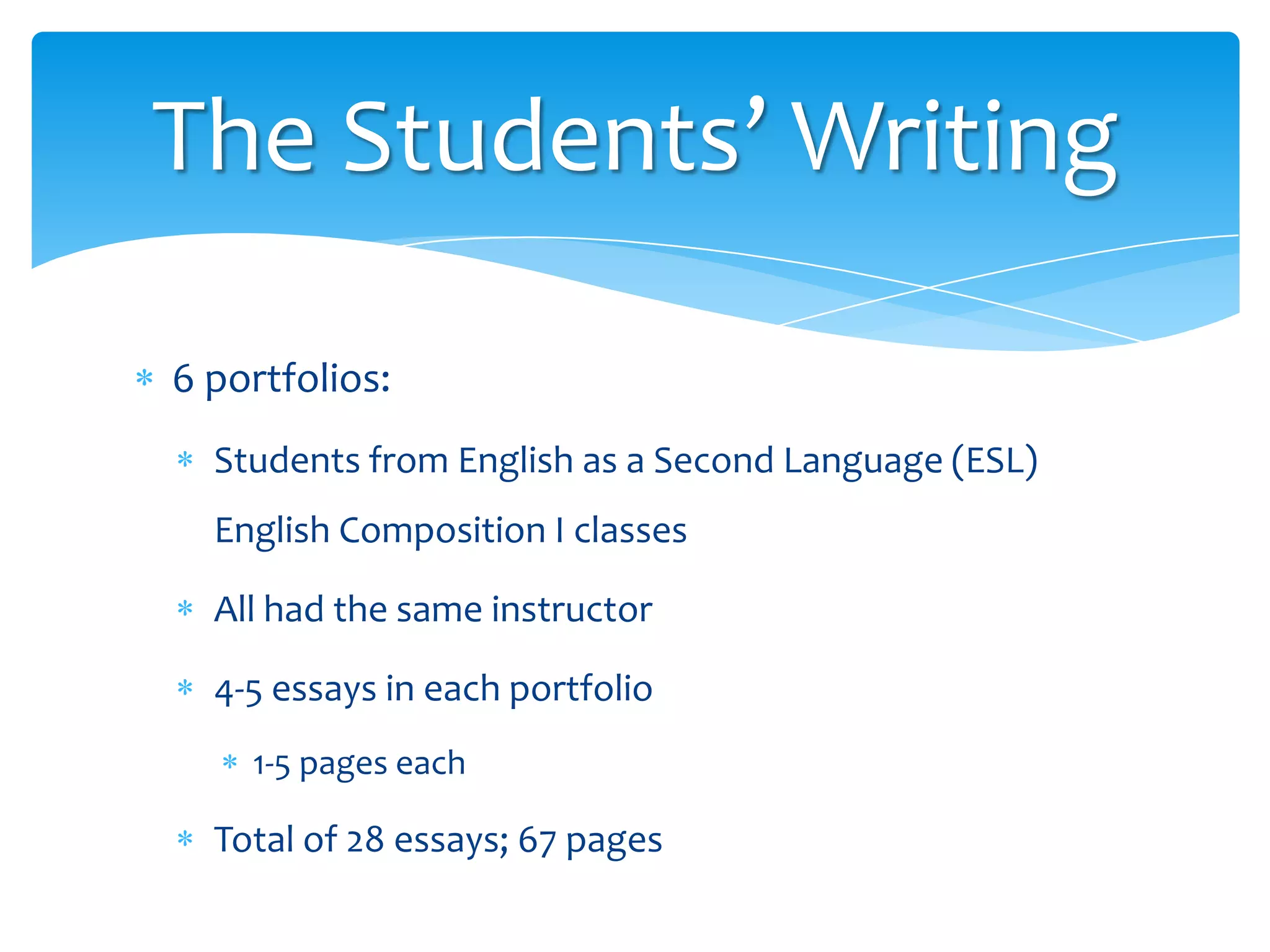
The Students’ Writing
6 portfolios:
Students from English as a Second Language (ESL)
English Composition I classes
All had the same instructor
4-5 essays in each portfolio
1-5 pages each

Total of 28 essays; 67 pages
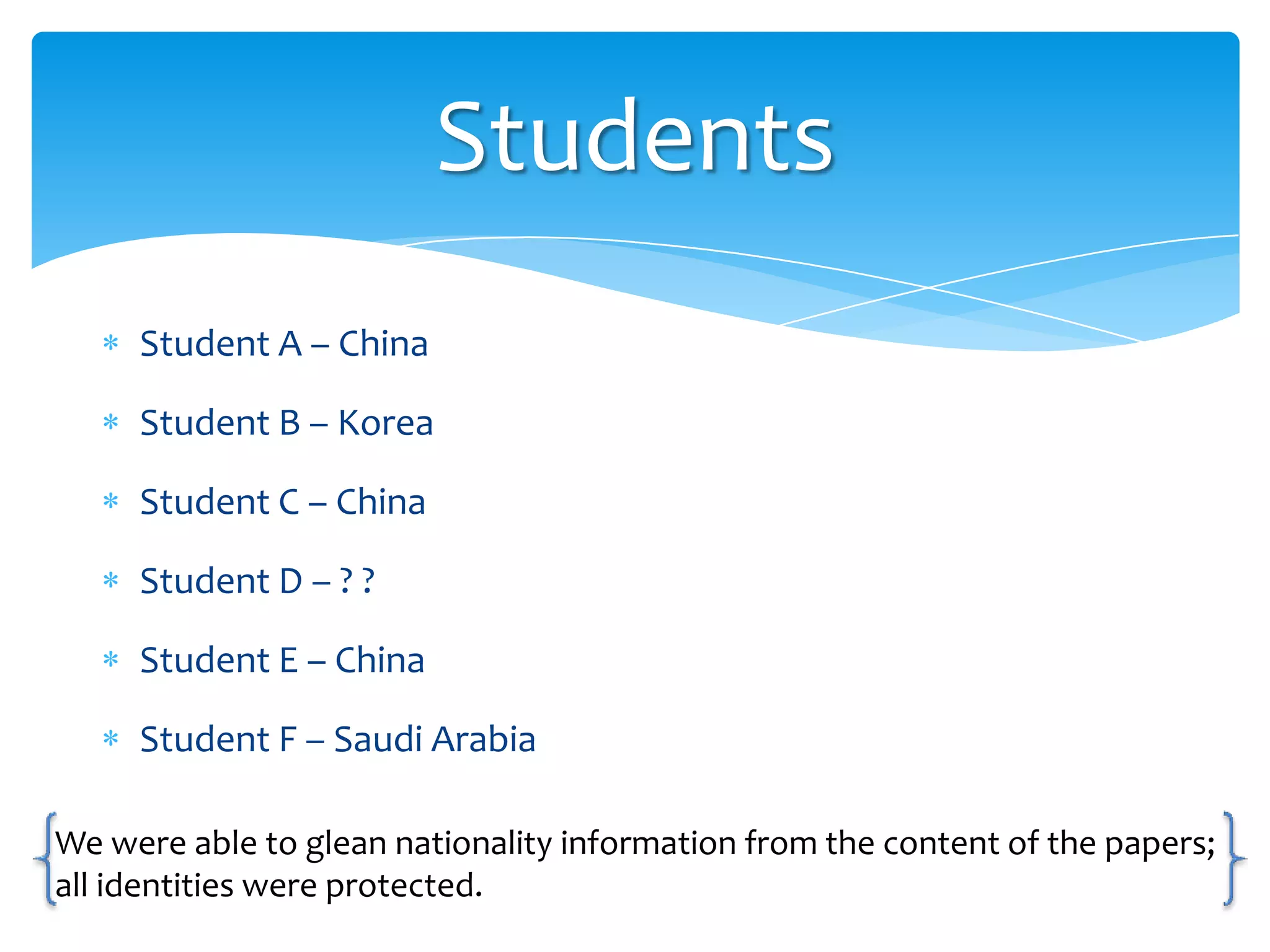
Students
Student A – China
Student B – Korea
Student C – China
Student D – ? ?

Student E – China
Student F – Saudi Arabia
We were able to glean nationality information from the content of the papers;
all identities were protected.
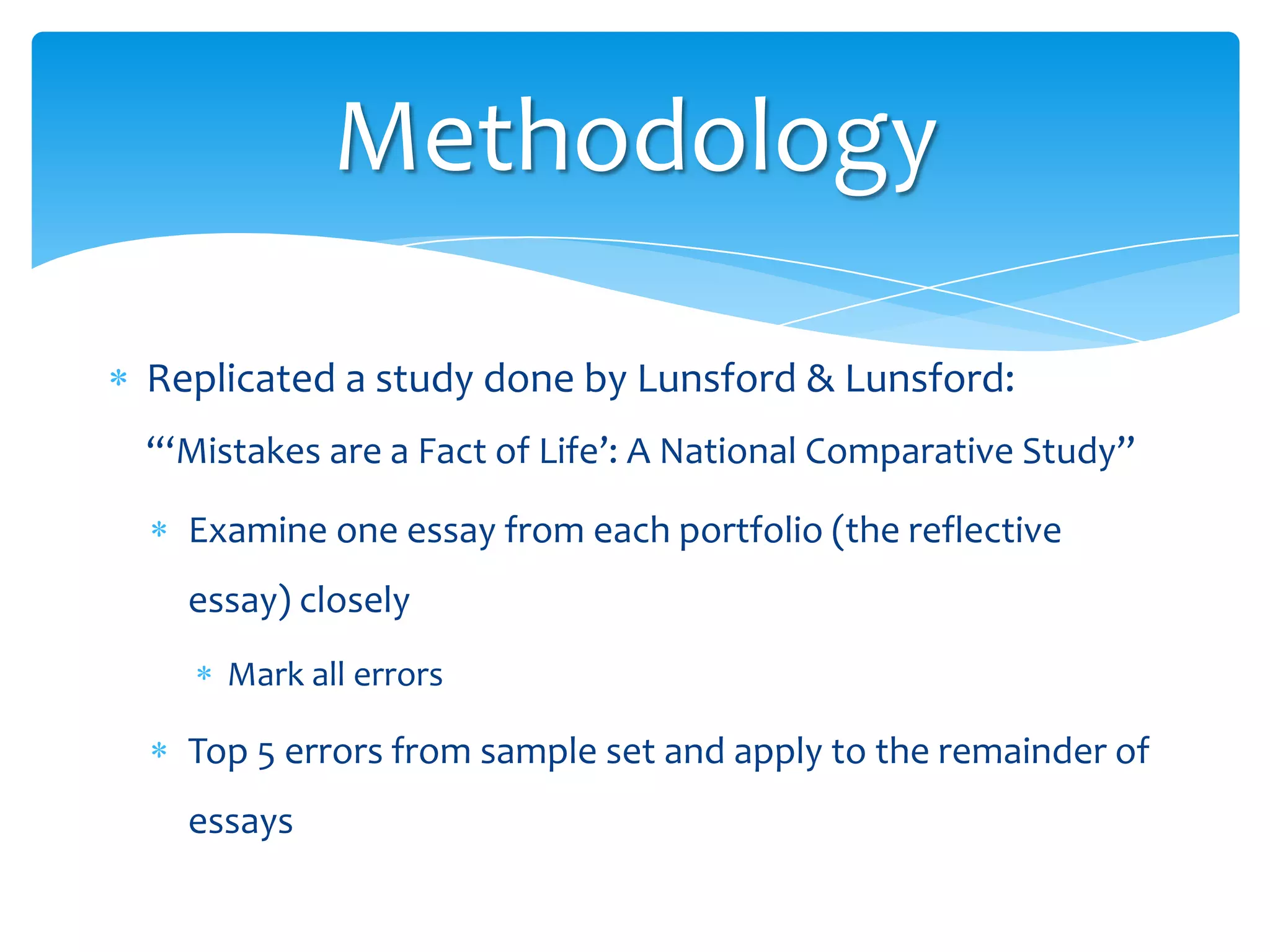
Methodology
Replicated a study done by Lunsford & Lunsford:
“‘Mistakes are a Fact of Life’: A National Comparative Study”
Examine one essay from each portfolio (the reflective
essay) closely
Mark all errors

Top 5 errors from sample set and apply to the remainder of
essays
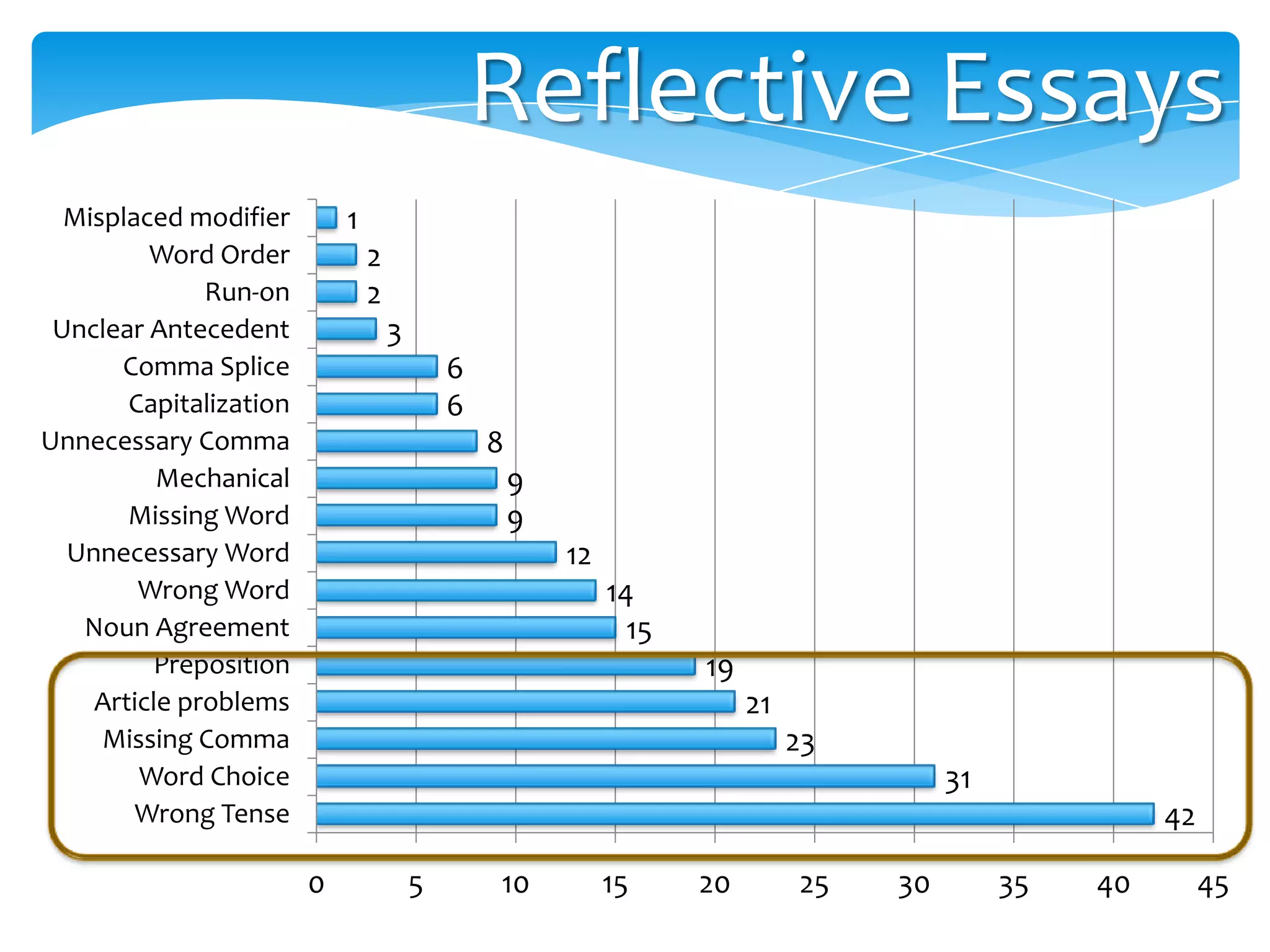
Reflective Essays
Misplaced modifier
Word Order
Run-on
Unclear Antecedent
Comma Splice
Capitalization
Unnecessary Comma
Mechanical
Missing Word
Unnecessary Word
Wrong Word
Noun Agreement
Preposition
Article problems
Missing Comma
Word Choice
Wrong Tense

1
2
2

3
6
6
8
9
9
12
14
15
19
21
23
31
42
0

5

10

15

20

25

30

35

40

45
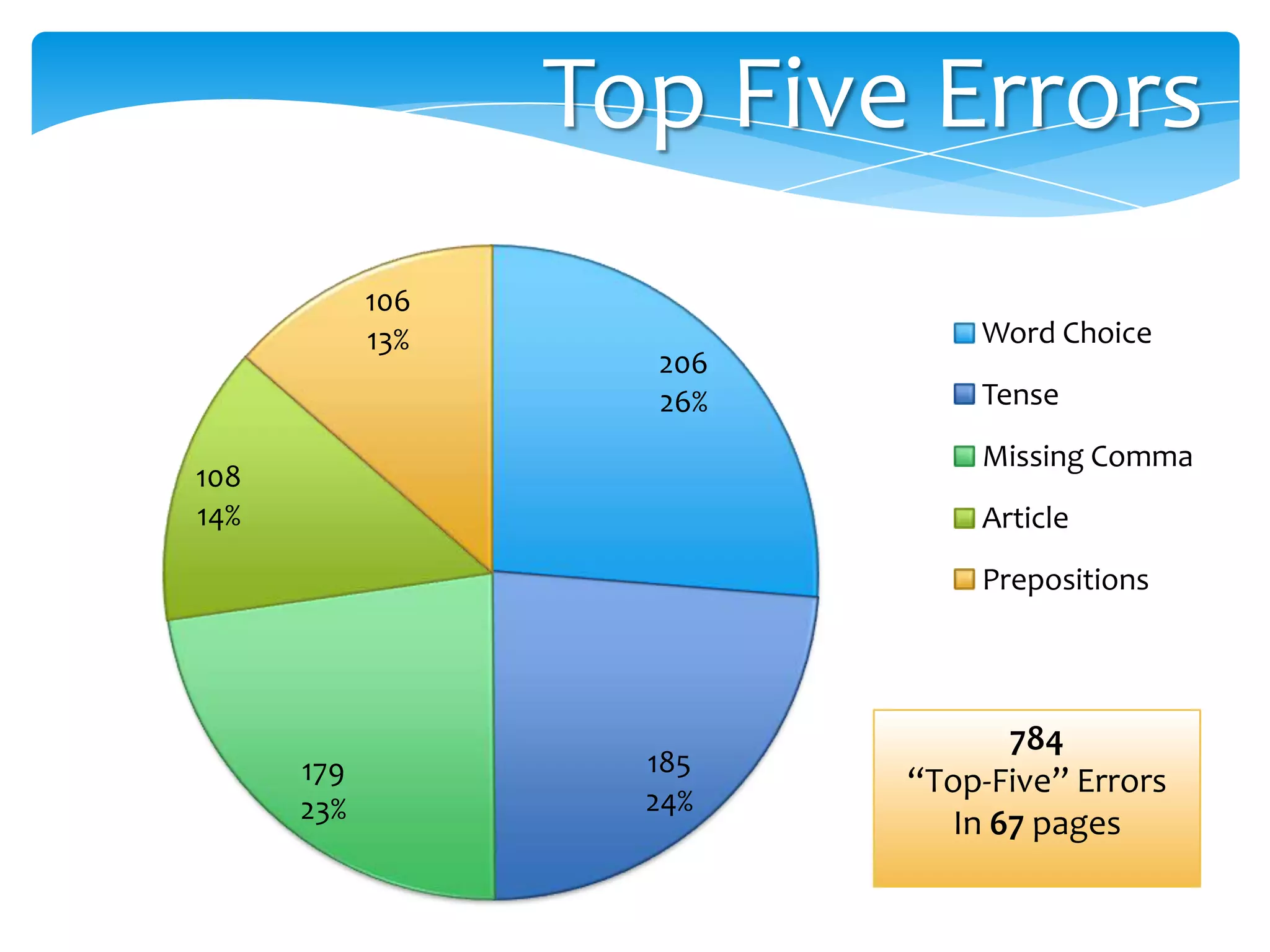
Top Five Errors
106
13%

206
26%

Word Choice

Tense
Missing Comma

108
14%

Article
Prepositions

179
23%

185
24%

784
“Top-Five” Errors
In 67 pages
Verb Tenses
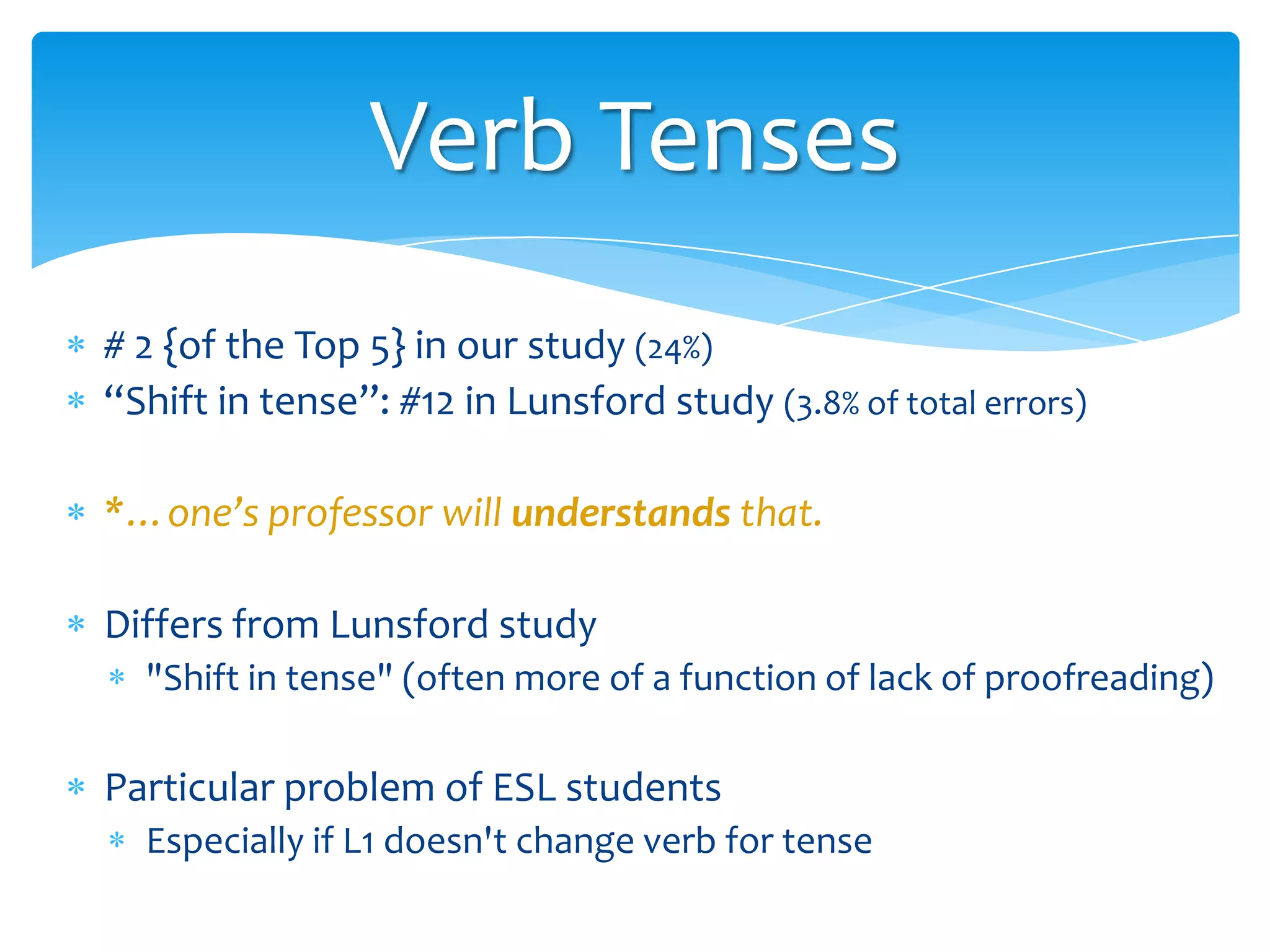
# 2 {of the Top 5} in our study (24%)
“Shift in tense”: #12 in Lunsford study (3.8% of total errors)
*…one’s professor will understands that.
Differs from Lunsford study
"Shift in tense" (often more of a function of lack of proofreading)

Particular problem of ESL students
Especially if L1 doesn't change verb for tense
Missing Commas
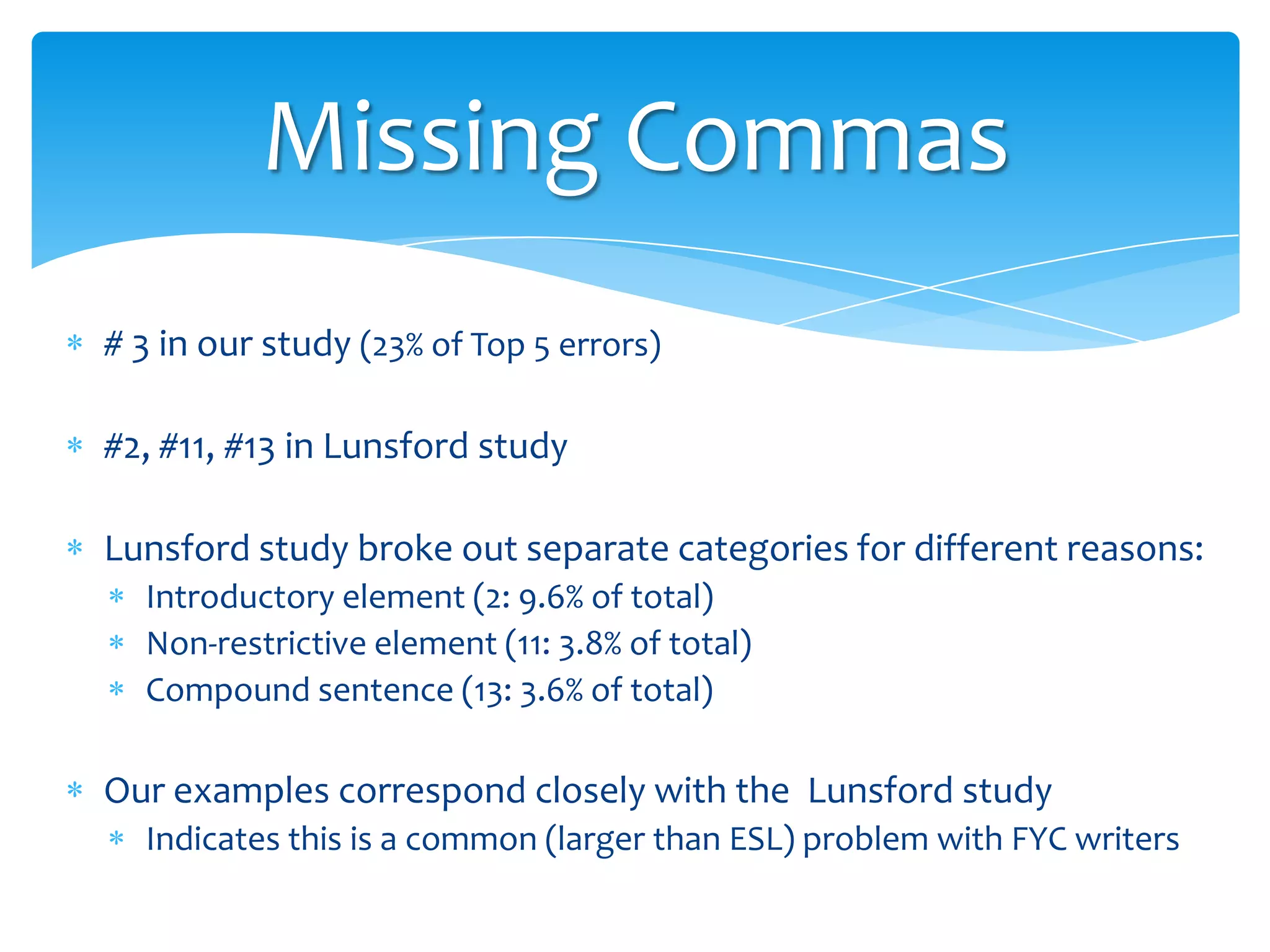
# 3 in our study (23% of Top 5 errors)
#2, #11, #13 in Lunsford study

Lunsford study broke out separate categories for different reasons:
Introductory element (2: 9.6% of total)
Non-restrictive element (11: 3.8% of total)
Compound sentence (13: 3.6% of total)

Our examples correspond closely with the Lunsford study
Indicates this is a common (larger than ESL) problem with FYC writers
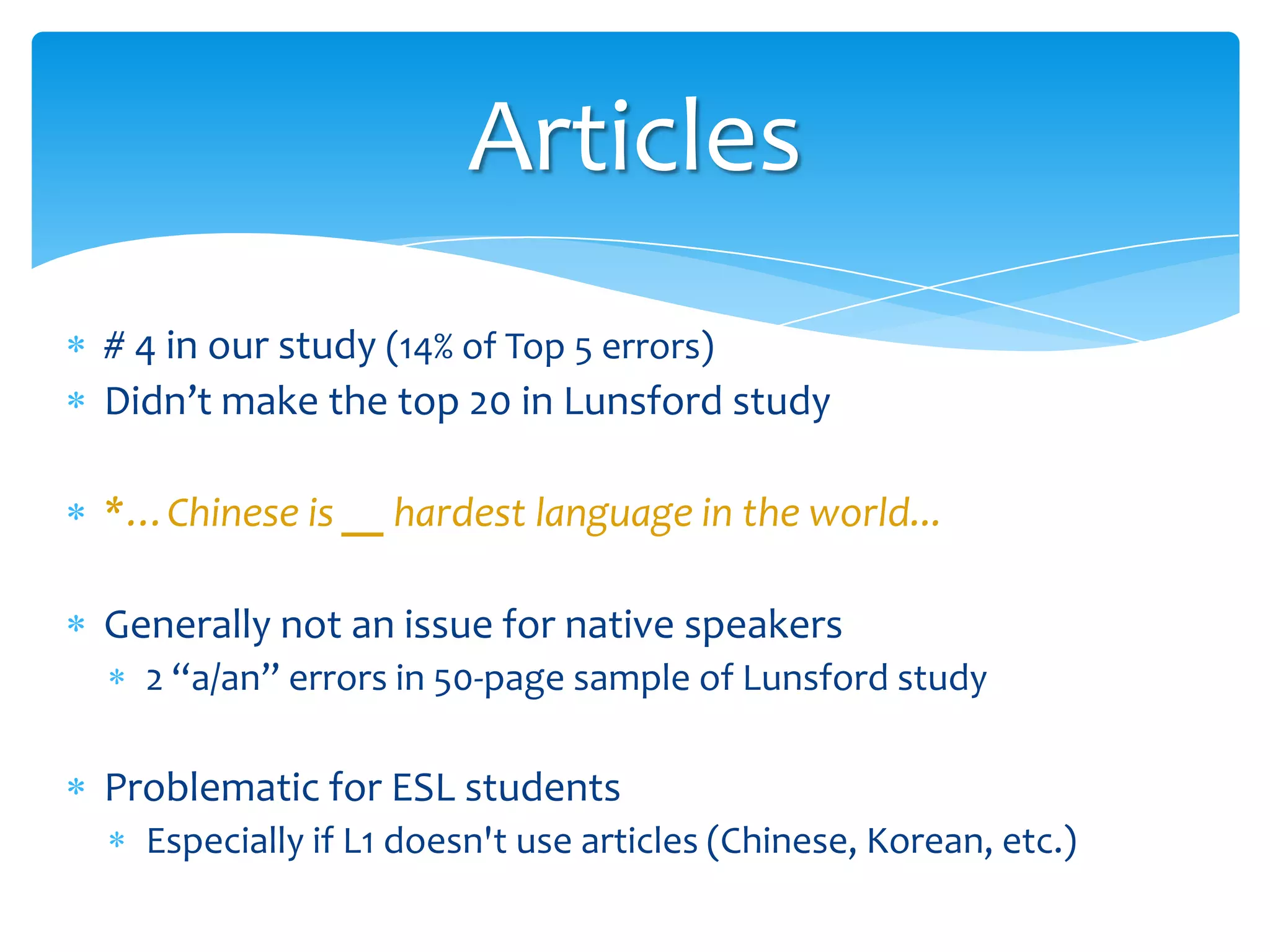
Articles
# 4 in our study (14% of Top 5 errors)
Didn’t make the top 20 in Lunsford study
*…Chinese is __ hardest language in the world...
Generally not an issue for native speakers
2 “a/an” errors in 50-page sample of Lunsford study

Problematic for ESL students
Especially if L1 doesn't use articles (Chinese, Korean, etc.)
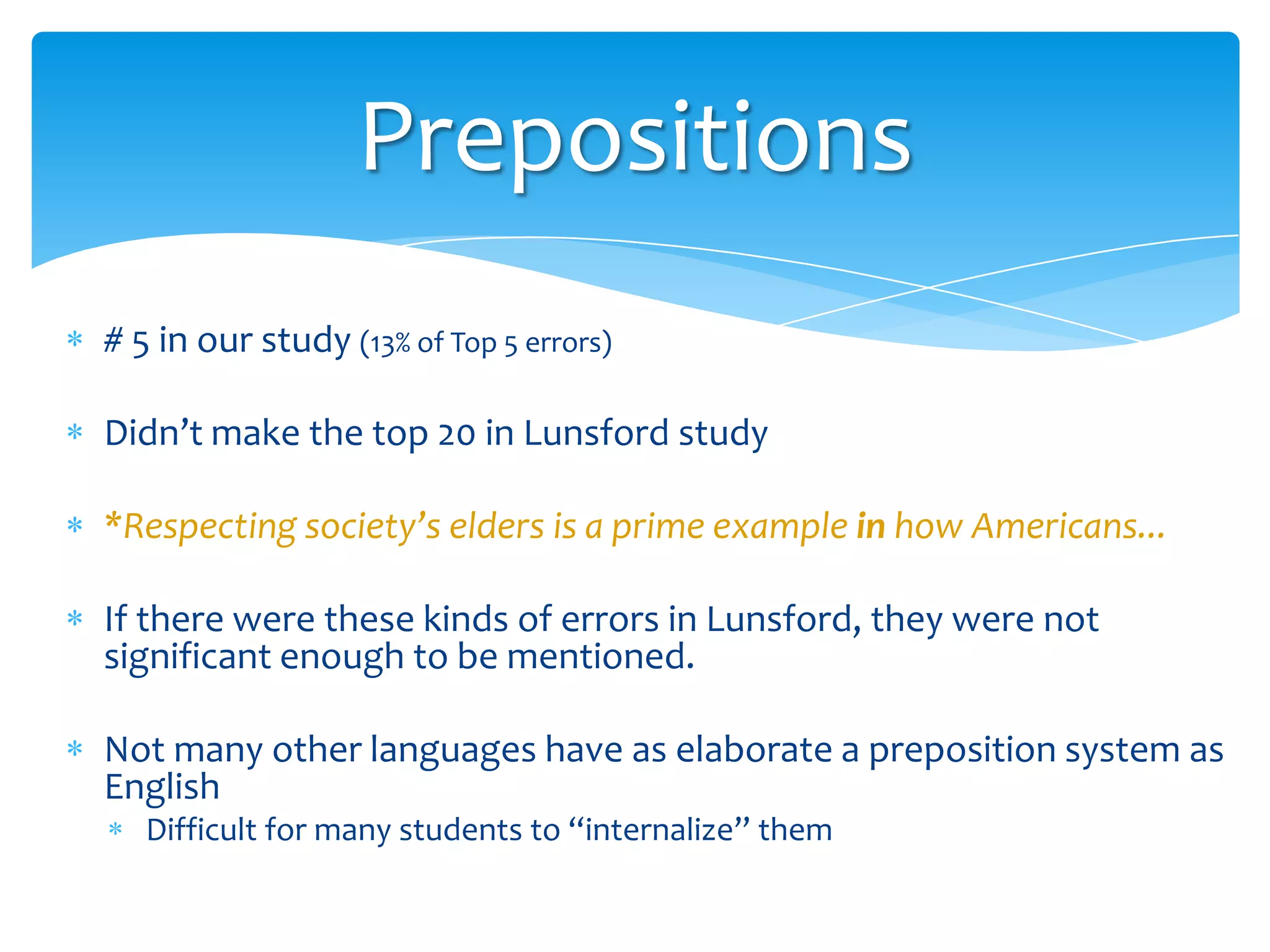
Prepositions
# 5 in our study (13% of Top 5 errors)
Didn’t make the top 20 in Lunsford study
*Respecting society’s elders is a prime example in how Americans...
If there were these kinds of errors in Lunsford, they were not
significant enough to be mentioned.

Not many other languages have as elaborate a preposition system as
English
Difficult for many students to “internalize” them
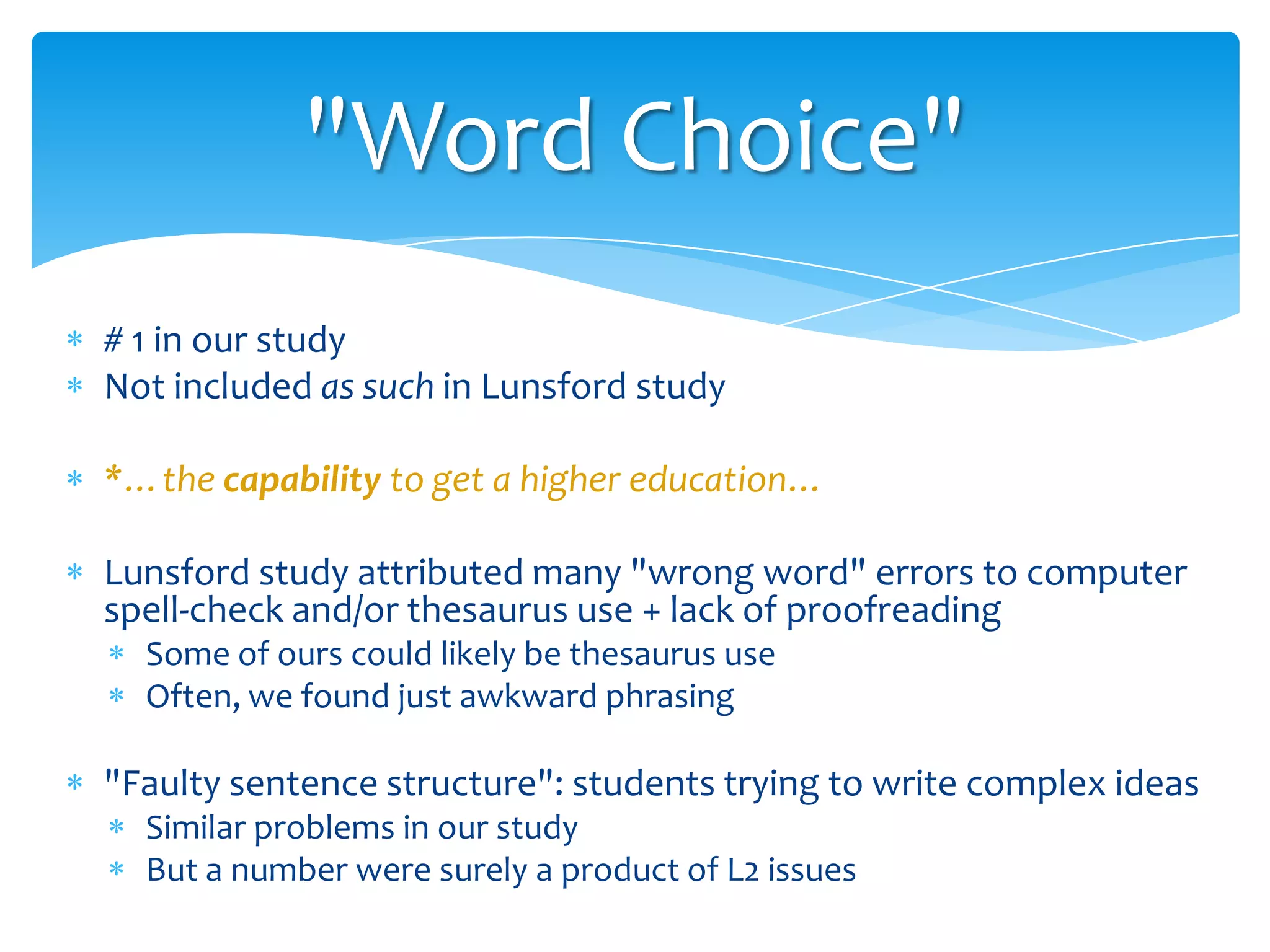
"Word Choice"
# 1 in our study
Not included as such in Lunsford study
*…the capability to get a higher education…
Lunsford study attributed many "wrong word" errors to computer
spell-check and/or thesaurus use + lack of proofreading
Some of ours could likely be thesaurus use
Often, we found just awkward phrasing

"Faulty sentence structure": students trying to write complex ideas
Similar problems in our study
But a number were surely a product of L2 issues
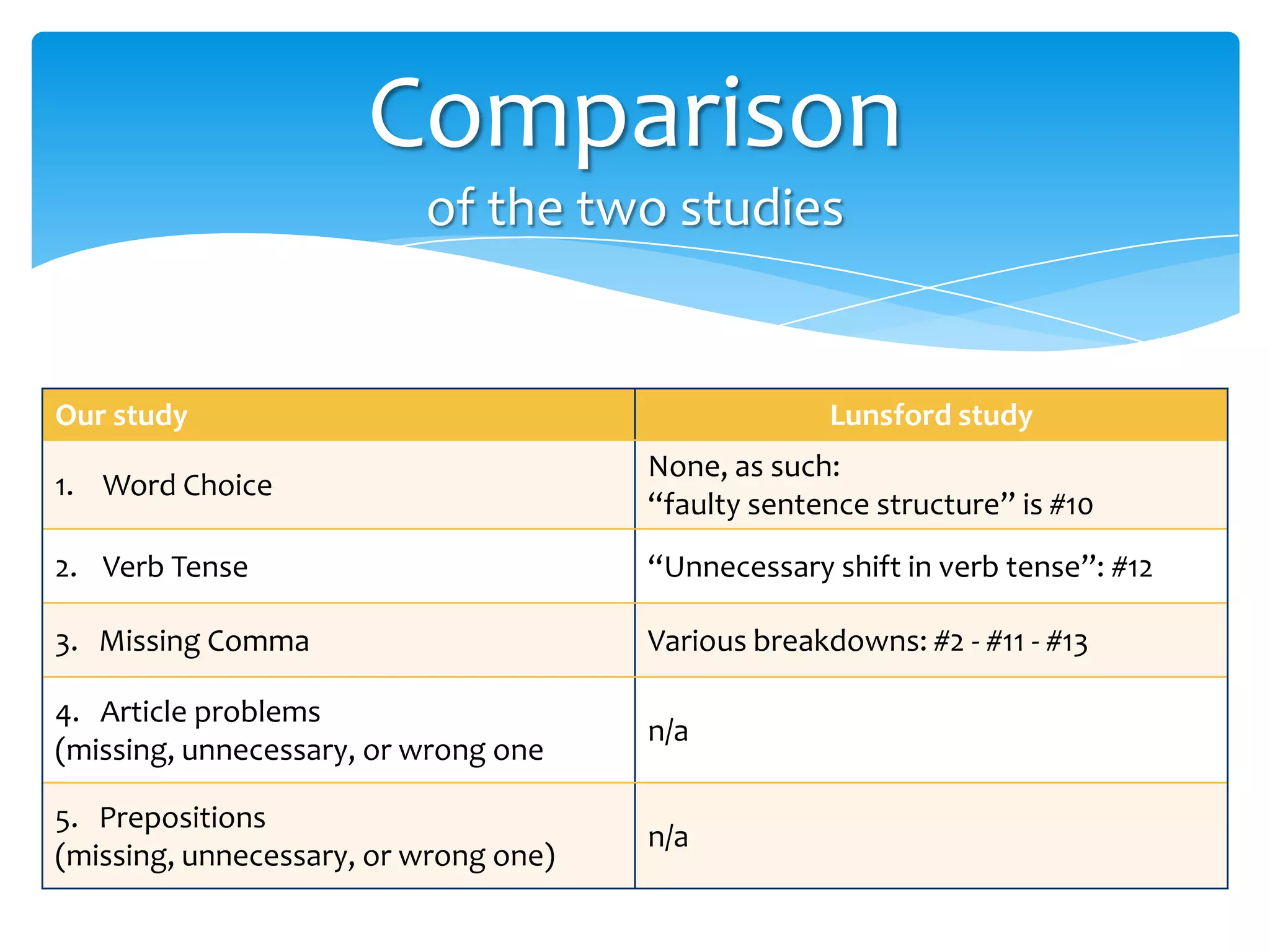
Comparison
of the two studies

Our study

Lunsford study

1. Word Choice

None, as such:
“faulty sentence structure” is #10

2. Verb Tense

“Unnecessary shift in verb tense”: #12

3. Missing Comma

Various breakdowns: #2 - #11 - #13

4. Article problems
(missing, unnecessary, or wrong one

n/a

5. Prepositions
(missing, unnecessary, or wrong one)

n/a
Implications for Composition
The number of non-native English speakers is increasing in
American colleges/universities
Many students are strong enough in English to be
"mainstreamed“

It can be useful for comp instructors to know what kinds of
errors tend to be L2-based
Versus what errors students across the board make
Revision Correlation?
We are exploring a possible correlation between frequency of
mistakes and probable revision attempts
This would support the idea that multiple drafts give students
the chance to overcome/identify usage errors
Time to focus on idea construction, before language editing
Important for all students, not just ESL
Thank you
Questions?

Lost in Translation: Grammatical Errors of Non-Native English Writers in First-Year Composition

  • 1.
    Lost in Translation: GrammaticalErrors of Non-Native English Writers in First-Year Composition Kristina Floyd Dawn Lombardi Tabitha Martin University of Akron Student Innovation Symposium April 11, 2013
  • 2.
    The Students’ Writing 6portfolios: Students from English as a Second Language (ESL) English Composition I classes All had the same instructor 4-5 essays in each portfolio 1-5 pages each Total of 28 essays; 67 pages
  • 3.
    Students Student A –China Student B – Korea Student C – China Student D – ? ? Student E – China Student F – Saudi Arabia We were able to glean nationality information from the content of the papers; all identities were protected.
  • 4.
    Methodology Replicated a studydone by Lunsford & Lunsford: “‘Mistakes are a Fact of Life’: A National Comparative Study” Examine one essay from each portfolio (the reflective essay) closely Mark all errors Top 5 errors from sample set and apply to the remainder of essays
  • 5.
    Reflective Essays Misplaced modifier WordOrder Run-on Unclear Antecedent Comma Splice Capitalization Unnecessary Comma Mechanical Missing Word Unnecessary Word Wrong Word Noun Agreement Preposition Article problems Missing Comma Word Choice Wrong Tense 1 2 2 3 6 6 8 9 9 12 14 15 19 21 23 31 42 0 5 10 15 20 25 30 35 40 45
  • 6.
    Top Five Errors 106 13% 206 26% WordChoice Tense Missing Comma 108 14% Article Prepositions 179 23% 185 24% 784 “Top-Five” Errors In 67 pages
  • 7.
    Verb Tenses # 2{of the Top 5} in our study (24%) “Shift in tense”: #12 in Lunsford study (3.8% of total errors) *…one’s professor will understands that. Differs from Lunsford study "Shift in tense" (often more of a function of lack of proofreading) Particular problem of ESL students Especially if L1 doesn't change verb for tense
  • 8.
    Missing Commas # 3in our study (23% of Top 5 errors) #2, #11, #13 in Lunsford study Lunsford study broke out separate categories for different reasons: Introductory element (2: 9.6% of total) Non-restrictive element (11: 3.8% of total) Compound sentence (13: 3.6% of total) Our examples correspond closely with the Lunsford study Indicates this is a common (larger than ESL) problem with FYC writers
  • 9.
    Articles # 4 inour study (14% of Top 5 errors) Didn’t make the top 20 in Lunsford study *…Chinese is __ hardest language in the world... Generally not an issue for native speakers 2 “a/an” errors in 50-page sample of Lunsford study Problematic for ESL students Especially if L1 doesn't use articles (Chinese, Korean, etc.)
  • 10.
    Prepositions # 5 inour study (13% of Top 5 errors) Didn’t make the top 20 in Lunsford study *Respecting society’s elders is a prime example in how Americans... If there were these kinds of errors in Lunsford, they were not significant enough to be mentioned. Not many other languages have as elaborate a preposition system as English Difficult for many students to “internalize” them
  • 11.
    "Word Choice" # 1in our study Not included as such in Lunsford study *…the capability to get a higher education… Lunsford study attributed many "wrong word" errors to computer spell-check and/or thesaurus use + lack of proofreading Some of ours could likely be thesaurus use Often, we found just awkward phrasing "Faulty sentence structure": students trying to write complex ideas Similar problems in our study But a number were surely a product of L2 issues
  • 12.
    Comparison of the twostudies Our study Lunsford study 1. Word Choice None, as such: “faulty sentence structure” is #10 2. Verb Tense “Unnecessary shift in verb tense”: #12 3. Missing Comma Various breakdowns: #2 - #11 - #13 4. Article problems (missing, unnecessary, or wrong one n/a 5. Prepositions (missing, unnecessary, or wrong one) n/a
  • 13.
    Implications for Composition Thenumber of non-native English speakers is increasing in American colleges/universities Many students are strong enough in English to be "mainstreamed“ It can be useful for comp instructors to know what kinds of errors tend to be L2-based Versus what errors students across the board make
  • 14.
    Revision Correlation? We areexploring a possible correlation between frequency of mistakes and probable revision attempts This would support the idea that multiple drafts give students the chance to overcome/identify usage errors Time to focus on idea construction, before language editing Important for all students, not just ESL
  • 15.

Editor's Notes