Genre

Presented by Beth Weiss and Verity Askew
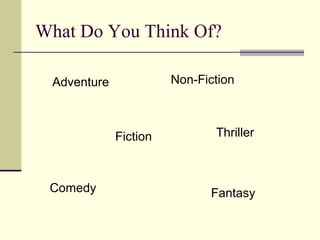
What Do You Think Of?

 Adventure             Non-Fiction


             Fiction          Thriller


 Comedy                      Fantasy
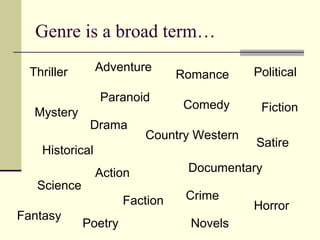
Genre is a broad term…

 Thriller       Adventure                  Political
                                Romance
                Paranoid
                                Comedy      Fiction
  Mystery
              Drama
                         Country Western
                                           Satire
   Historical
                Action           Documentary
   Science
                      Faction    Crime
                                           Horror
Fantasy
             Poetry              Novels
From the Syllabus…
 Genre:

 Derived from the French word meaning 'type'.
 Genres can be broad categories such as
 novels, drama or poetry, or they can be quite
 specific types such a 'the detective novel'.
 The categories of genres are fluid and
 change depending on who is using them and
 the context in which they are being used.
Genre and Audience

 Establishes the target audience
 Genre leads to target audience which leads
  purpose which leads to your own personal
  response
 It all starts with the genre!
Genre and Personal Response

 Helps formulate your own opinion of a text
 Genre creates expectations of the text
 Can help position us to respond in a certain
  way
The Turning – Tim Winton

 Fiction anthology of short stories
 Entertaining and Engaging
 Characters not people
 Not a true story- however based on Winton’s
  childhood.
Pans Labyrinth (2006) – Directed by
 Guillermo Del Toro

 Complex genre- combination
 War = realistic/historical elements
 Ending = fairytale
 Violent scenes; Bashing and Amputation =
  horror
 Quest narrative = fantasy
True Grit (2010) – Directed by
Joel and Ethan Coen

 Country/Western/Adventure film
 Music, costume and setting all reinforce our
  expectation for this genre.
 Female protagonist is unusual for the genre,
  able to discuss gender roles
Cinderella Ate My Daughter (2011) –
Peggy Orenstein

 Non Fiction/Expository
 Purpose is to inform
 Use of facts, information, expert opinion,
  statistics etc to back up ideas.
 We are positioned to agree because it is
  understood that the information is accurate
  and often clinically presented.
No Sugar (1988) – Playwright:
Jack Davis

 Stage Drama, based on historical events
 Faction (uses real life events for the bases of
  a fictional dramatisation)
 Greater degree of realism and emotional
  connection with audiences because of the
  reference to real life events (Billy’s emotive
  account of the massacre)
Bran Nue Dae (2009) – Directed
by Rachel Perkins
 Genre: Musical/comedy
 Elements of Western Australian historical
  context- references the dislocation and
  oppression of Aboriginal people as a result of
  European colonialism in the night time dream
  sequence. (Could be seen as similar to the
  historical elements in No Sugar)
 Adapted from a stage musical
Food Inc – Robert Kenner

 Informative documentary
 Provides information whilst still being
  entertaining
 Constructed to evoke certain emotions from
  audiences- eg lingering shots on
  uncomfortable animals show the negative
  and cruel consequences of heavily doctored
  mechanicalized farming processes and invite
  an emotive response.
In The Exam…


Sample Question: Reading Section
 “How has text 2 used genre to position you to
  respond to it’s ideas about _______”
How To Answer:

 Read the question and read text 2
 Identify the genre and the conventions that
  support it
 Identify the big ideas
 Explore your personal response and how the
  genre positioned you to feel that way about
  it’s ideas
In Conclusion
 Genre is derived from the French word meaning
    ‘type’
   There are many many different genres, some are
    broad (novel) some are specific (mystery)
   Genres have certain expectations which can provide
    an assumed audience
   Understanding genres can shape your own personal
    response as to whether or not you like a text
   Show and understanding of genre in the exam to
    show your depth of understanding of the texts
Thank You!


Are There Any
 Questions?

genre

  • 1.
    Genre Presented by BethWeiss and Verity Askew
  • 2.
    What Do YouThink Of? Adventure Non-Fiction Fiction Thriller Comedy Fantasy
  • 3.
    Genre is abroad term… Thriller Adventure Political Romance Paranoid Comedy Fiction Mystery Drama Country Western Satire Historical Action Documentary Science Faction Crime Horror Fantasy Poetry Novels
  • 4.
    From the Syllabus… Genre: Derived from the French word meaning 'type'. Genres can be broad categories such as novels, drama or poetry, or they can be quite specific types such a 'the detective novel'. The categories of genres are fluid and change depending on who is using them and the context in which they are being used.
  • 5.
    Genre and Audience Establishes the target audience  Genre leads to target audience which leads purpose which leads to your own personal response  It all starts with the genre!
  • 6.
    Genre and PersonalResponse  Helps formulate your own opinion of a text  Genre creates expectations of the text  Can help position us to respond in a certain way
  • 7.
    The Turning –Tim Winton  Fiction anthology of short stories  Entertaining and Engaging  Characters not people  Not a true story- however based on Winton’s childhood.
  • 8.
    Pans Labyrinth (2006)– Directed by Guillermo Del Toro  Complex genre- combination  War = realistic/historical elements  Ending = fairytale  Violent scenes; Bashing and Amputation = horror  Quest narrative = fantasy
  • 9.
    True Grit (2010)– Directed by Joel and Ethan Coen  Country/Western/Adventure film  Music, costume and setting all reinforce our expectation for this genre.  Female protagonist is unusual for the genre, able to discuss gender roles
  • 10.
    Cinderella Ate MyDaughter (2011) – Peggy Orenstein  Non Fiction/Expository  Purpose is to inform  Use of facts, information, expert opinion, statistics etc to back up ideas.  We are positioned to agree because it is understood that the information is accurate and often clinically presented.
  • 11.
    No Sugar (1988)– Playwright: Jack Davis  Stage Drama, based on historical events  Faction (uses real life events for the bases of a fictional dramatisation)  Greater degree of realism and emotional connection with audiences because of the reference to real life events (Billy’s emotive account of the massacre)
  • 12.
    Bran Nue Dae(2009) – Directed by Rachel Perkins  Genre: Musical/comedy  Elements of Western Australian historical context- references the dislocation and oppression of Aboriginal people as a result of European colonialism in the night time dream sequence. (Could be seen as similar to the historical elements in No Sugar)  Adapted from a stage musical
  • 13.
    Food Inc –Robert Kenner  Informative documentary  Provides information whilst still being entertaining  Constructed to evoke certain emotions from audiences- eg lingering shots on uncomfortable animals show the negative and cruel consequences of heavily doctored mechanicalized farming processes and invite an emotive response.
  • 14.
    In The Exam… SampleQuestion: Reading Section  “How has text 2 used genre to position you to respond to it’s ideas about _______”
  • 15.
    How To Answer: Read the question and read text 2  Identify the genre and the conventions that support it  Identify the big ideas  Explore your personal response and how the genre positioned you to feel that way about it’s ideas
  • 16.
    In Conclusion  Genreis derived from the French word meaning ‘type’  There are many many different genres, some are broad (novel) some are specific (mystery)  Genres have certain expectations which can provide an assumed audience  Understanding genres can shape your own personal response as to whether or not you like a text  Show and understanding of genre in the exam to show your depth of understanding of the texts
  • 17.
    Thank You! Are ThereAny Questions?