Contents
1. What is nanotechnology and its origin
2. Nanomaterials
3. Applications of nanotechnology
4. Future of nanotechnology
5. Risks and Ethics
Nanotechnology
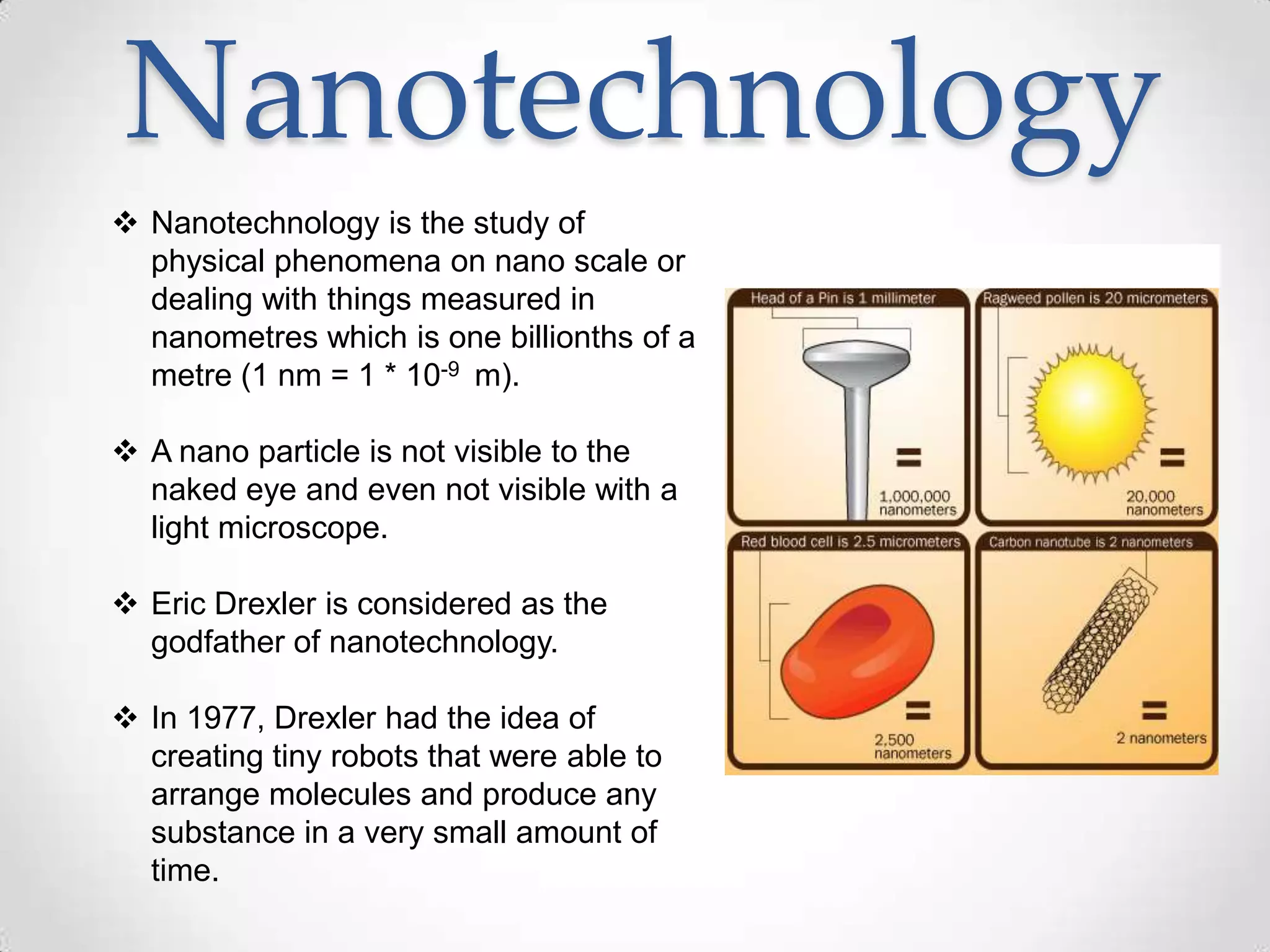
 Nanotechnology is the study of
physical phenomena on nano scale or
dealing with things measured in
nanometres which is one billionths of a
metre (1 nm = 1 * 10-9 m).
 A nano particle is not visible to the
naked eye and even not visible with a
light microscope.
 Eric Drexler is considered as the
godfather of nanotechnology.
 In 1977, Drexler had the idea of
creating tiny robots that were able to
arrange molecules and produce any
substance in a very small amount of
time.
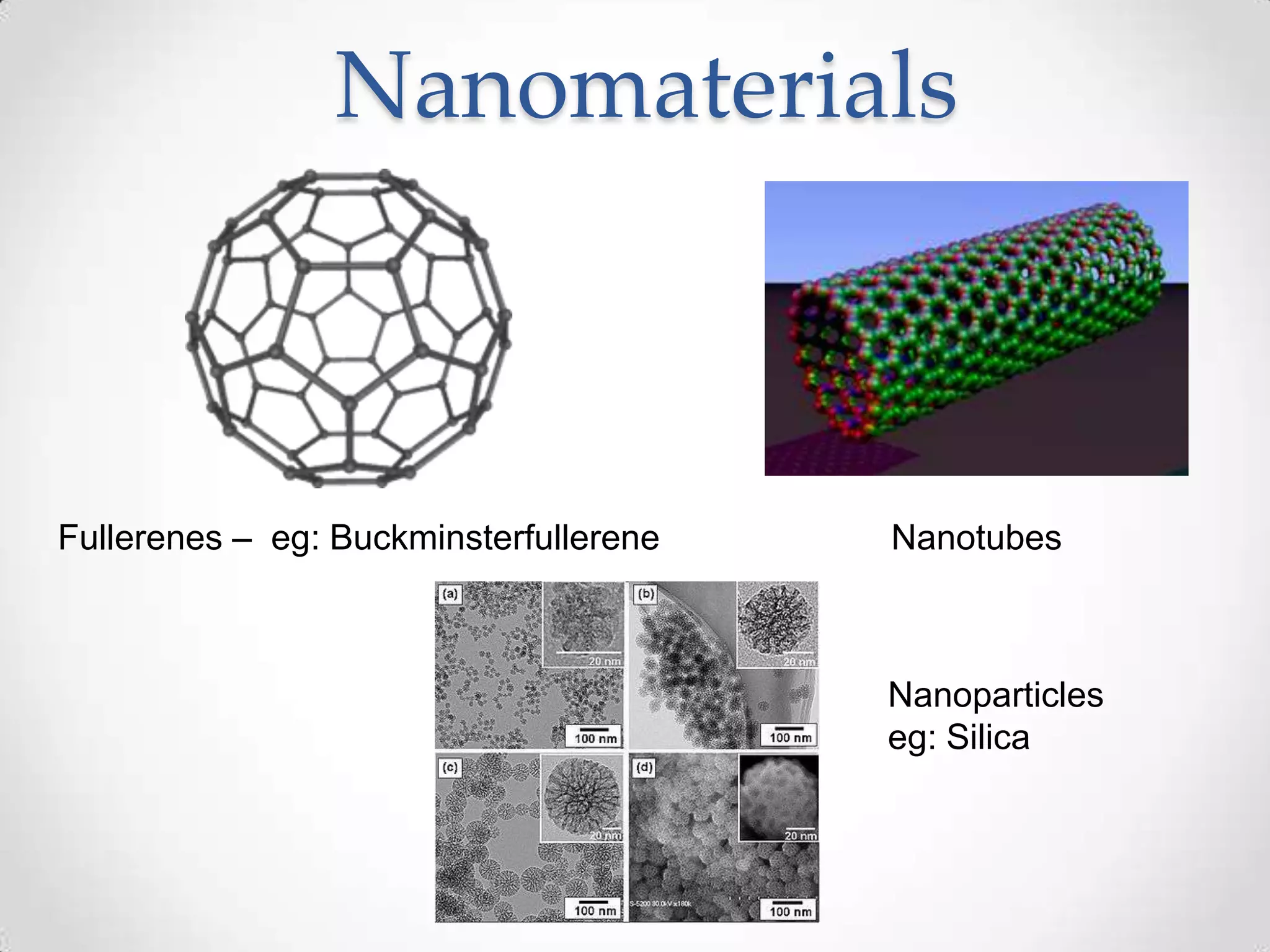
Nanomaterials
Fullerenes – eg: Buckminsterfullerene Nanotubes
Nanoparticles
eg: Silica
Applications of
nanotechnology
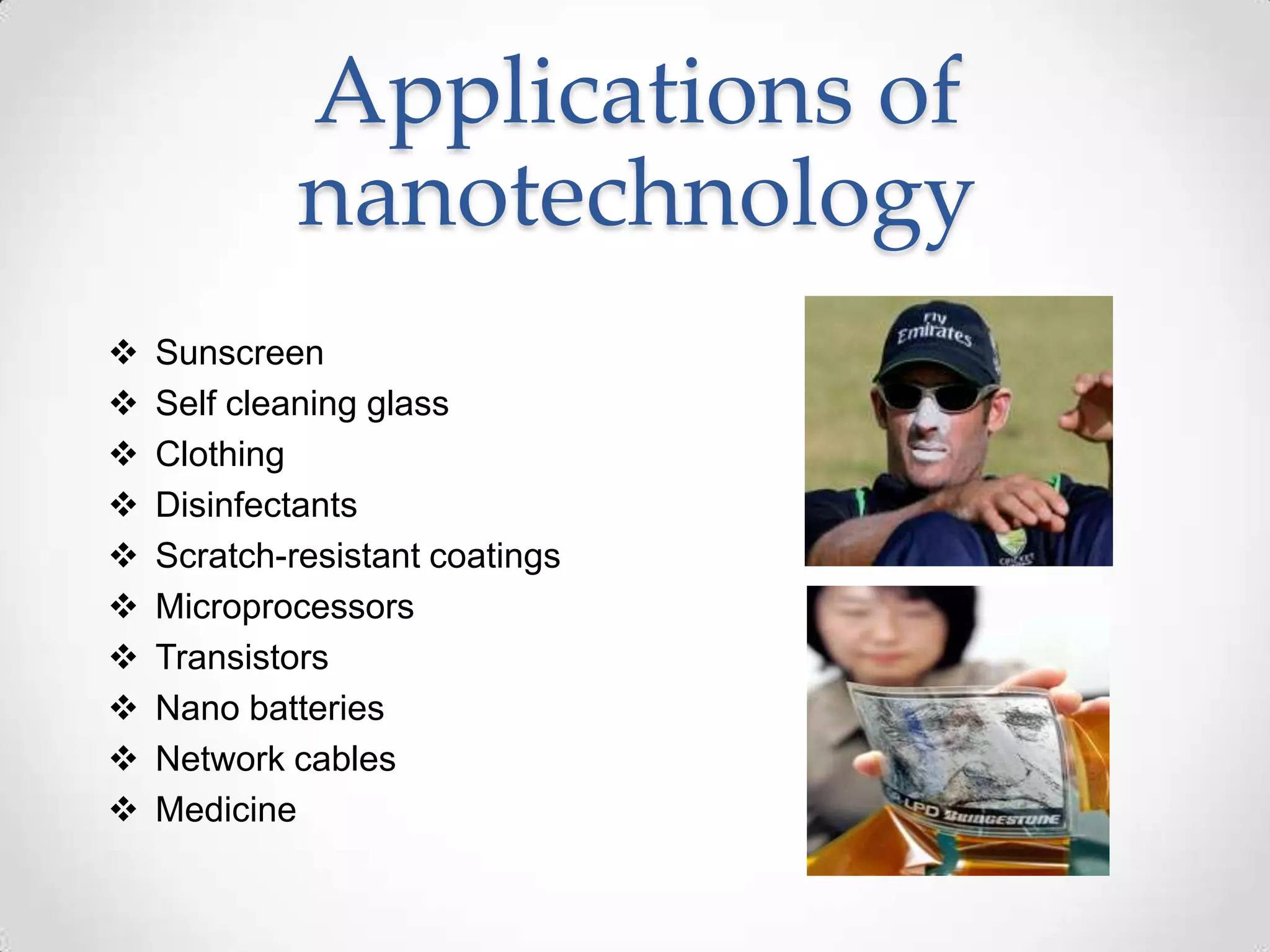
 Sunscreen
 Self cleaning glass
 Clothing
 Disinfectants
 Scratch-resistant coatings
 Microprocessors
 Transistors
 Nano batteries
 Network cables
 Medicine
Future of nanotechnology
 Replicators / Nano machines
- replicate almost anything
 Grey goo scenario
- self replicating nano robots
 Medicine
- nano robots designed to attack
cancer cells
 Environment
- airborne nano robots to rebuild
the thinning ozone layer
Risks and Ethics
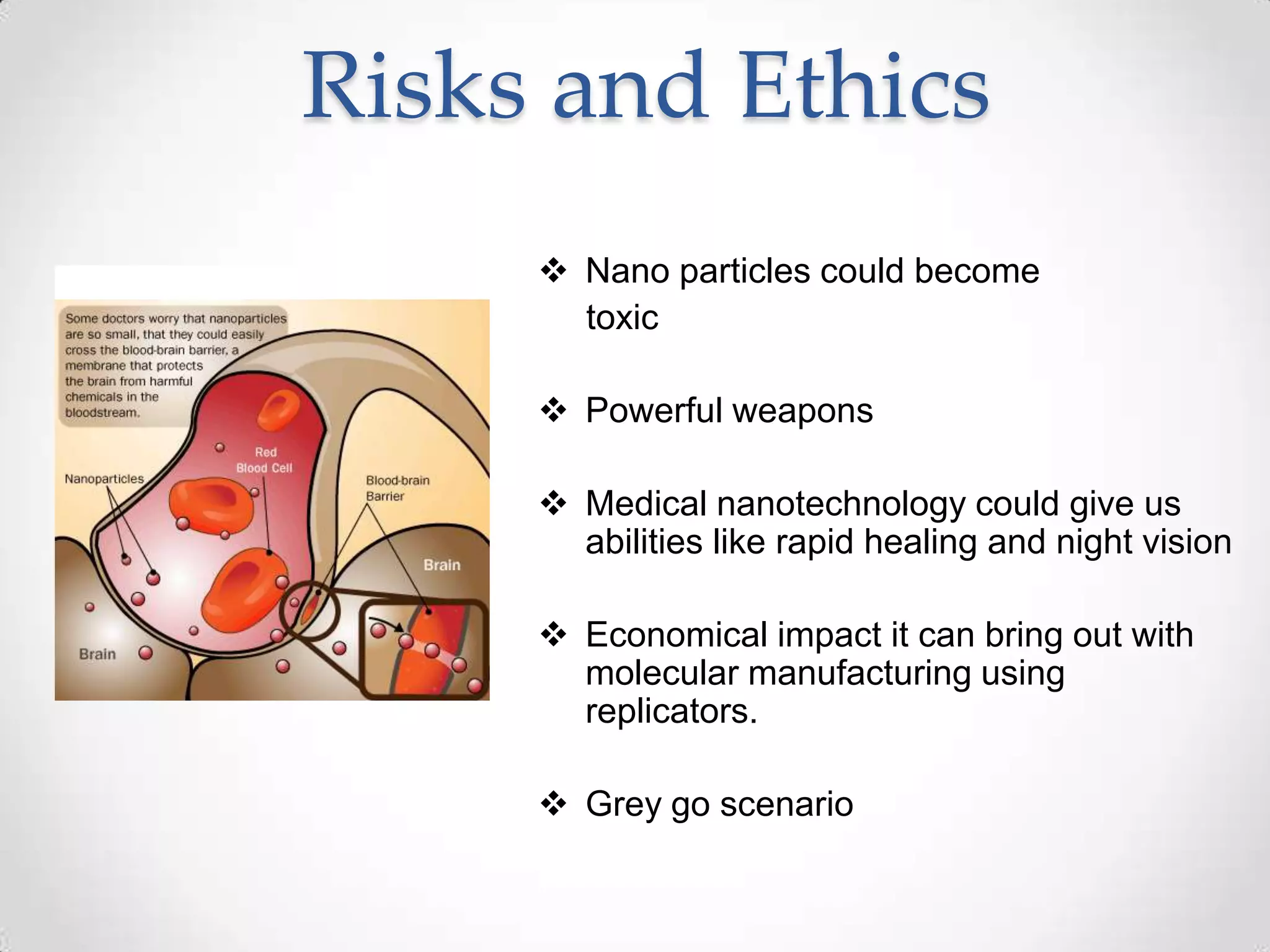
 Nano particles could become
toxic
 Powerful weapons
 Medical nanotechnology could give us
abilities like rapid healing and night vision
 Economical impact it can bring out with
molecular manufacturing using
replicators.
 Grey go scenario
Conclusion
 Nanotechnology can create a world with unimaginable possibilities.
Nanotechnology is predicted to be a main driver of technology and
business in this century and holds the promise of higher
performance materials, intelligent systems and new production
methods with significant impact for all aspects of society.
Topics covered
1. What is nanotechnology and its origin
2. Nanomaterials
3. Applications of nanotechnology
4. Future of nanotechnology
5. Risks and Ethics
Nanotechnology

Nanotechnology

  • 2.
    Contents 1. What isnanotechnology and its origin 2. Nanomaterials 3. Applications of nanotechnology 4. Future of nanotechnology 5. Risks and Ethics
  • 3.
    Nanotechnology  Nanotechnology isthe study of physical phenomena on nano scale or dealing with things measured in nanometres which is one billionths of a metre (1 nm = 1 * 10-9 m).  A nano particle is not visible to the naked eye and even not visible with a light microscope.  Eric Drexler is considered as the godfather of nanotechnology.  In 1977, Drexler had the idea of creating tiny robots that were able to arrange molecules and produce any substance in a very small amount of time.
  • 4.
    Nanomaterials Fullerenes – eg:Buckminsterfullerene Nanotubes Nanoparticles eg: Silica
  • 5.
    Applications of nanotechnology  Sunscreen Self cleaning glass  Clothing  Disinfectants  Scratch-resistant coatings  Microprocessors  Transistors  Nano batteries  Network cables  Medicine
  • 6.
    Future of nanotechnology Replicators / Nano machines - replicate almost anything  Grey goo scenario - self replicating nano robots  Medicine - nano robots designed to attack cancer cells  Environment - airborne nano robots to rebuild the thinning ozone layer
  • 7.
    Risks and Ethics Nano particles could become toxic  Powerful weapons  Medical nanotechnology could give us abilities like rapid healing and night vision  Economical impact it can bring out with molecular manufacturing using replicators.  Grey go scenario
  • 8.
    Conclusion  Nanotechnology cancreate a world with unimaginable possibilities. Nanotechnology is predicted to be a main driver of technology and business in this century and holds the promise of higher performance materials, intelligent systems and new production methods with significant impact for all aspects of society. Topics covered 1. What is nanotechnology and its origin 2. Nanomaterials 3. Applications of nanotechnology 4. Future of nanotechnology 5. Risks and Ethics