
INTRODUCTION
TO
NANOTECHNOLOG
Y
Prashant Sharma
MCA 3rd
Semester
Definition
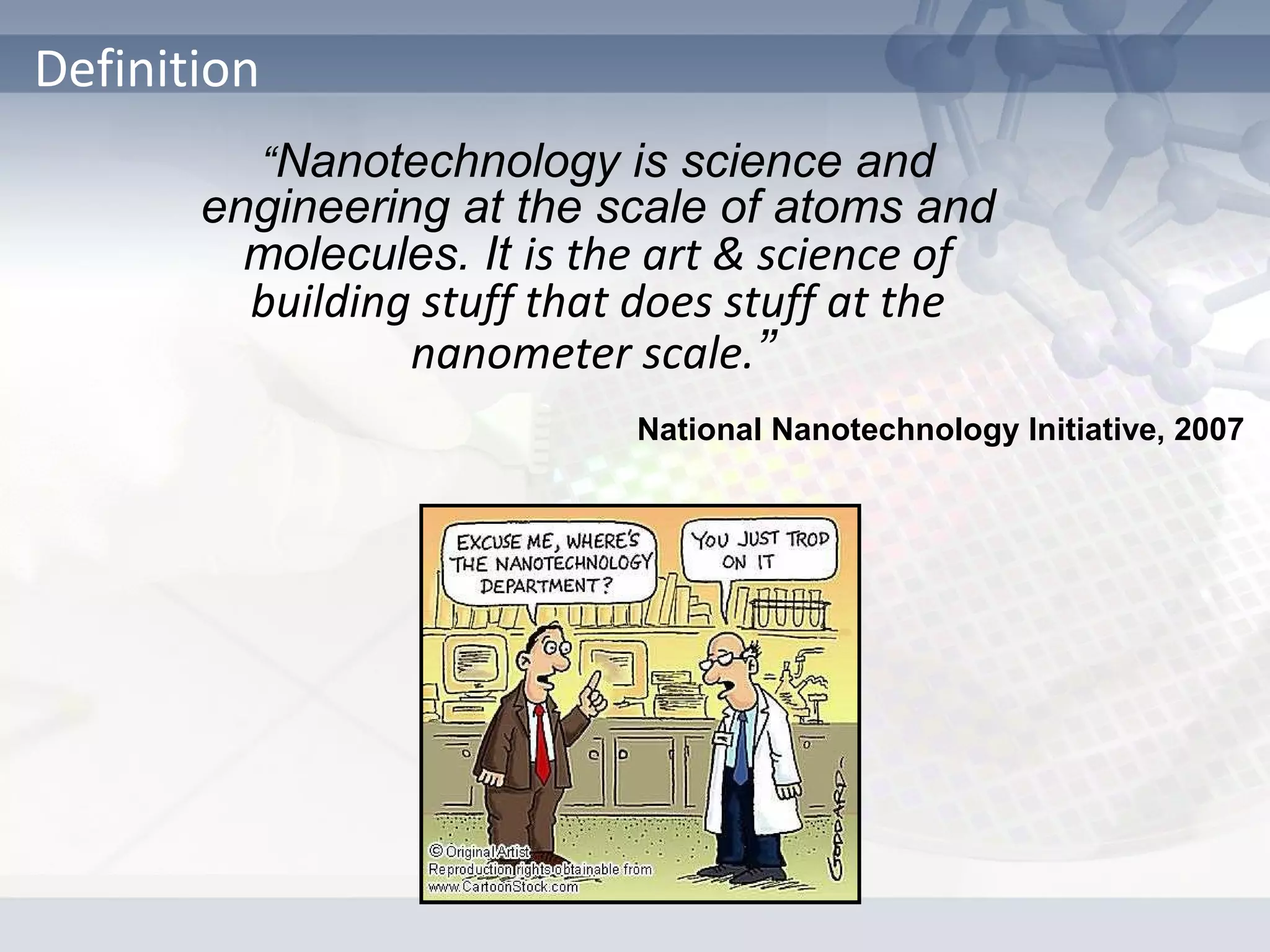
“Nanotechnology is science and
engineering at the scale of atoms and
molecules. It is the art & science of
building stuff that does stuff at the
nanometer scale.”
National Nanotechnology Initiative, 2007
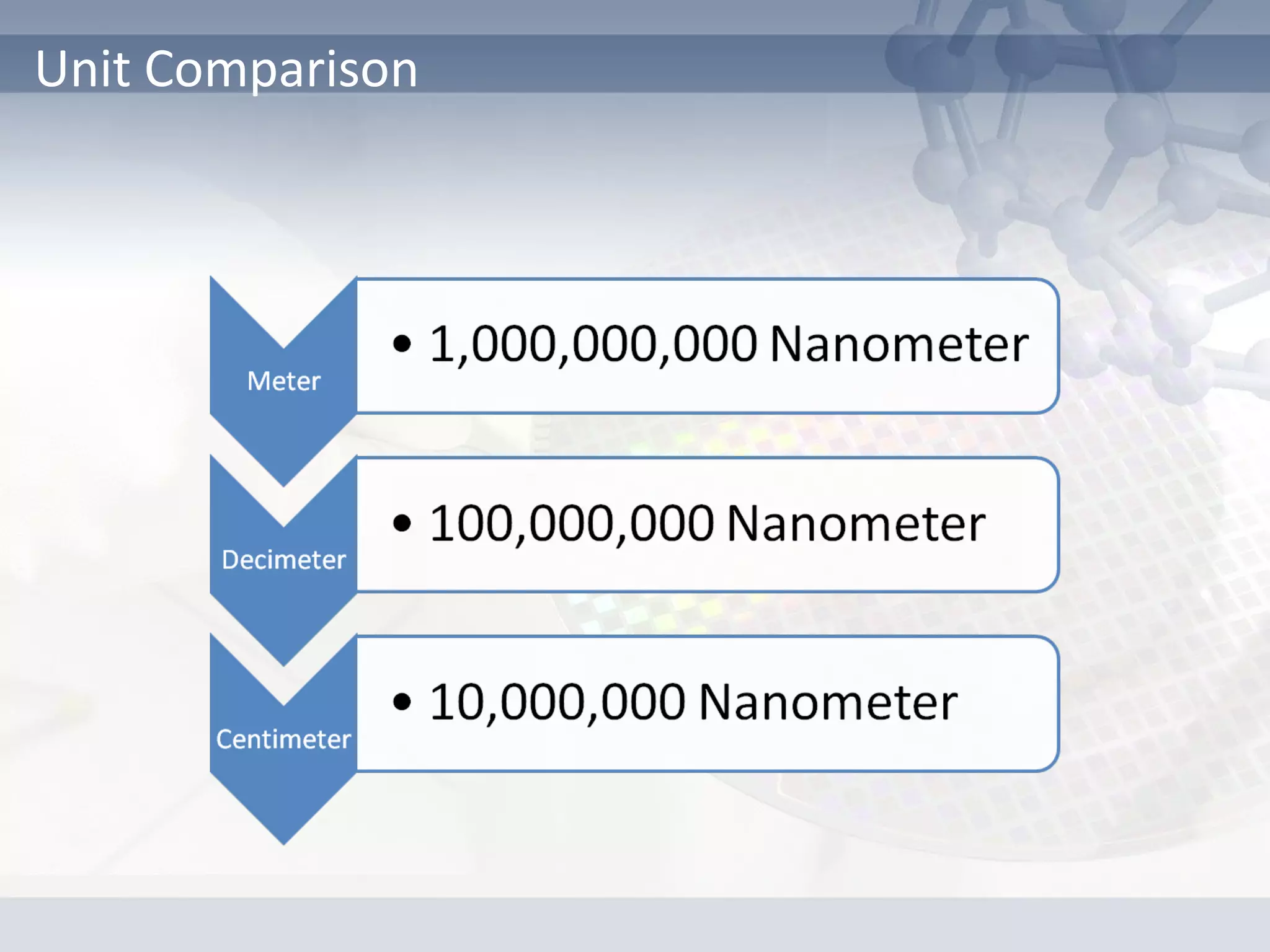
Unit Comparison
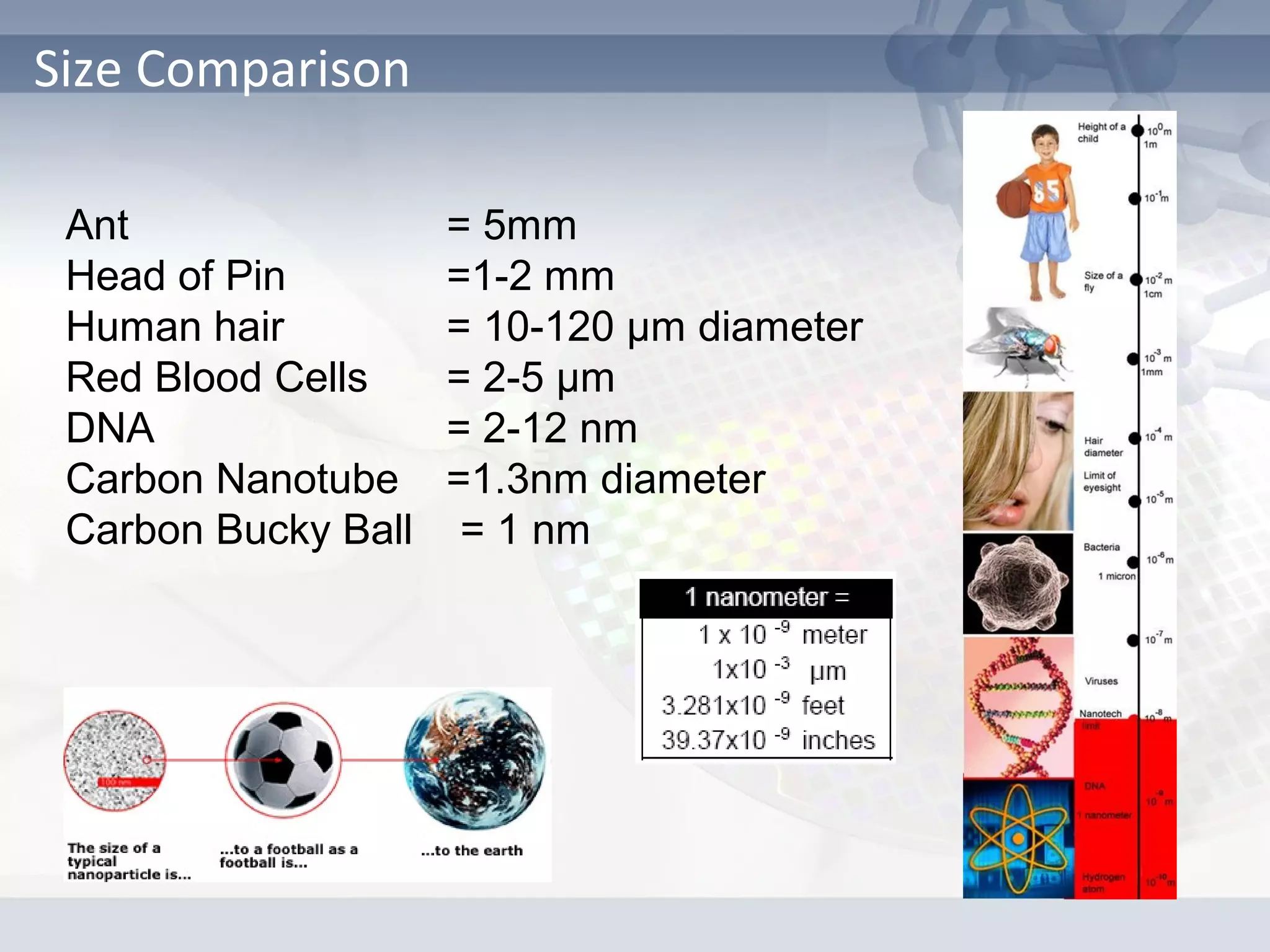
Size Comparison
Ant = 5mm
Head of Pin =1-2 mm
Human hair = 10-120 µm diameter
Red Blood Cells = 2-5 µm
DNA = 2-12 nm
Carbon Nanotube =1.3nm diameter
Carbon Bucky Ball = 1 nm
History
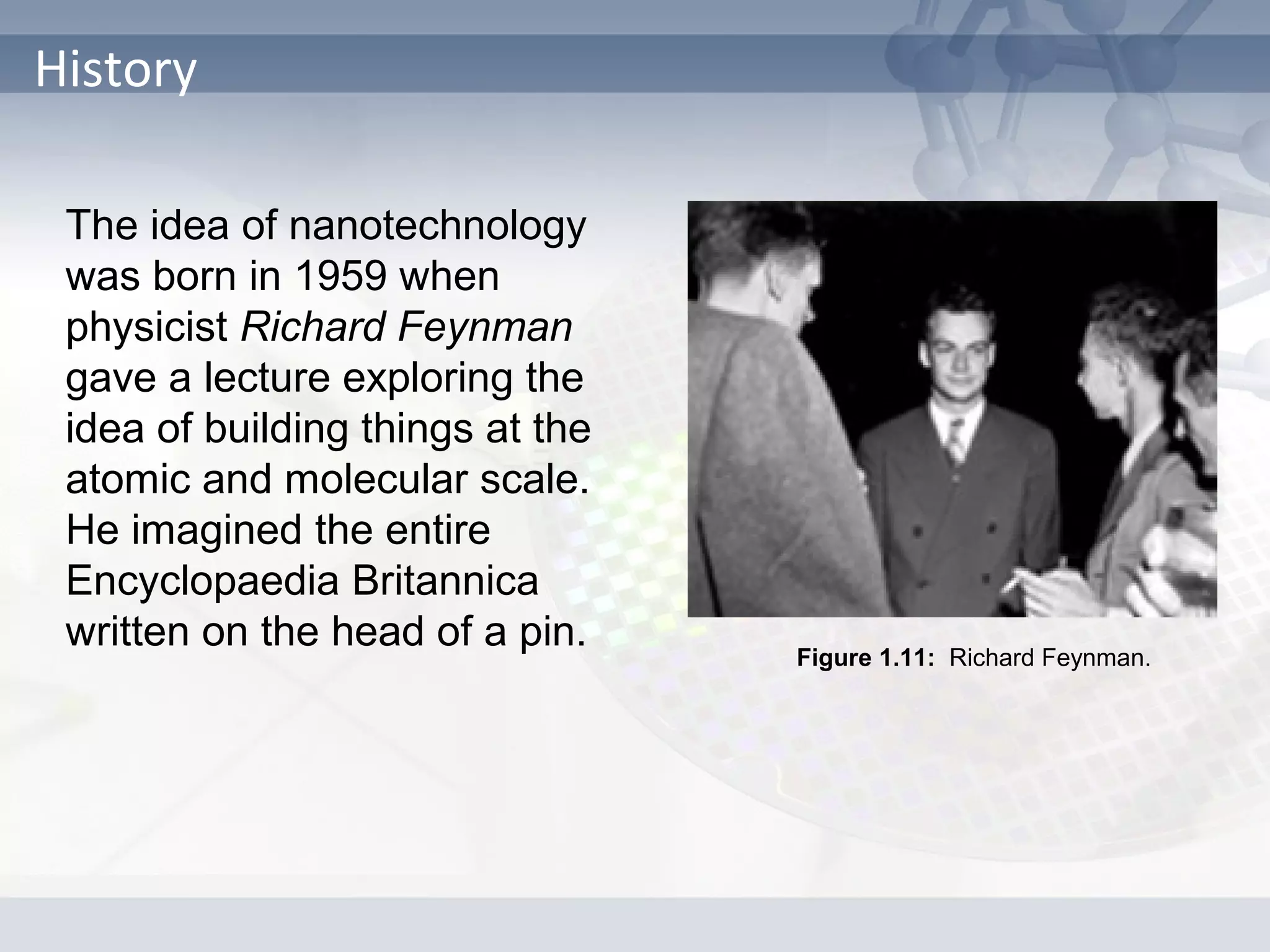
The idea of nanotechnology
was born in 1959 when
physicist Richard Feynman
gave a lecture exploring the
idea of building things at the
atomic and molecular scale.
He imagined the entire
Encyclopaedia Britannica
written on the head of a pin. Figure 1.11: Richard Feynman.
History (cont..)
• Experimental nanotechnology did not come into its own
until 1981, when IBM scientists in Zurich, Switzerland, built
the first scanning tunnelling microscope (STM)
• This allows us to see single atoms by scanning a tiny probe
over the surface of a silicon crystal
• In 1990, IBM scientists discovered how to use an STM to
move single xenon atoms around on a nickel surface - in an
iconic experiment, with an inspired eye for marketing, they
moved 35 atoms to spell out "IBM".
History (cont..)
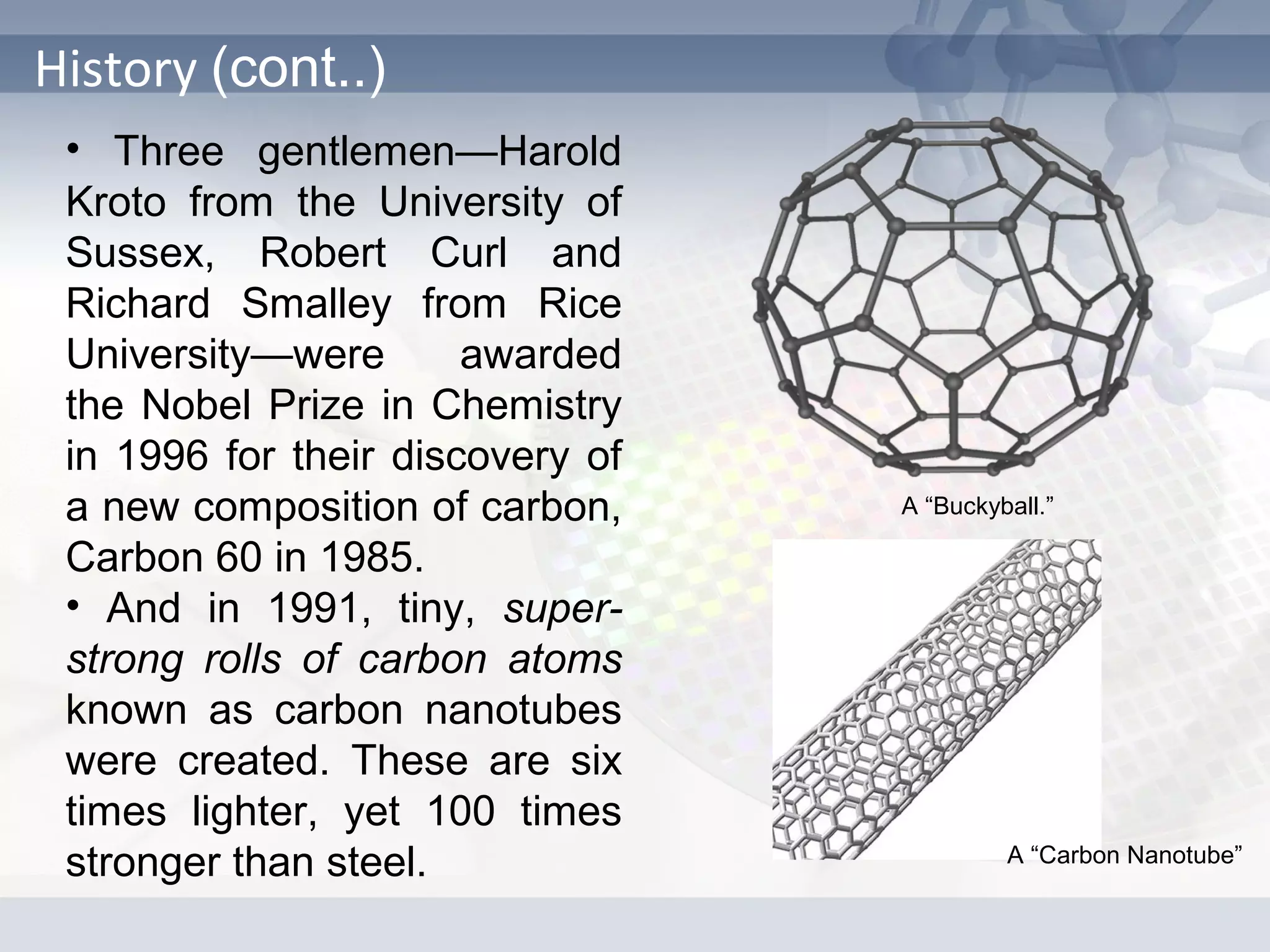
• Three gentlemen—Harold
Kroto from the University of
Sussex, Robert Curl and
Richard Smalley from Rice
University—were awarded
the Nobel Prize in Chemistry
in 1996 for their discovery of
a new composition of carbon,
Carbon 60 in 1985.
• And in 1991, tiny, super-
strong rolls of carbon atoms
known as carbon nanotubes
were created. These are six
times lighter, yet 100 times
stronger than steel.
A “Buckyball.”
A “Carbon Nanotube”
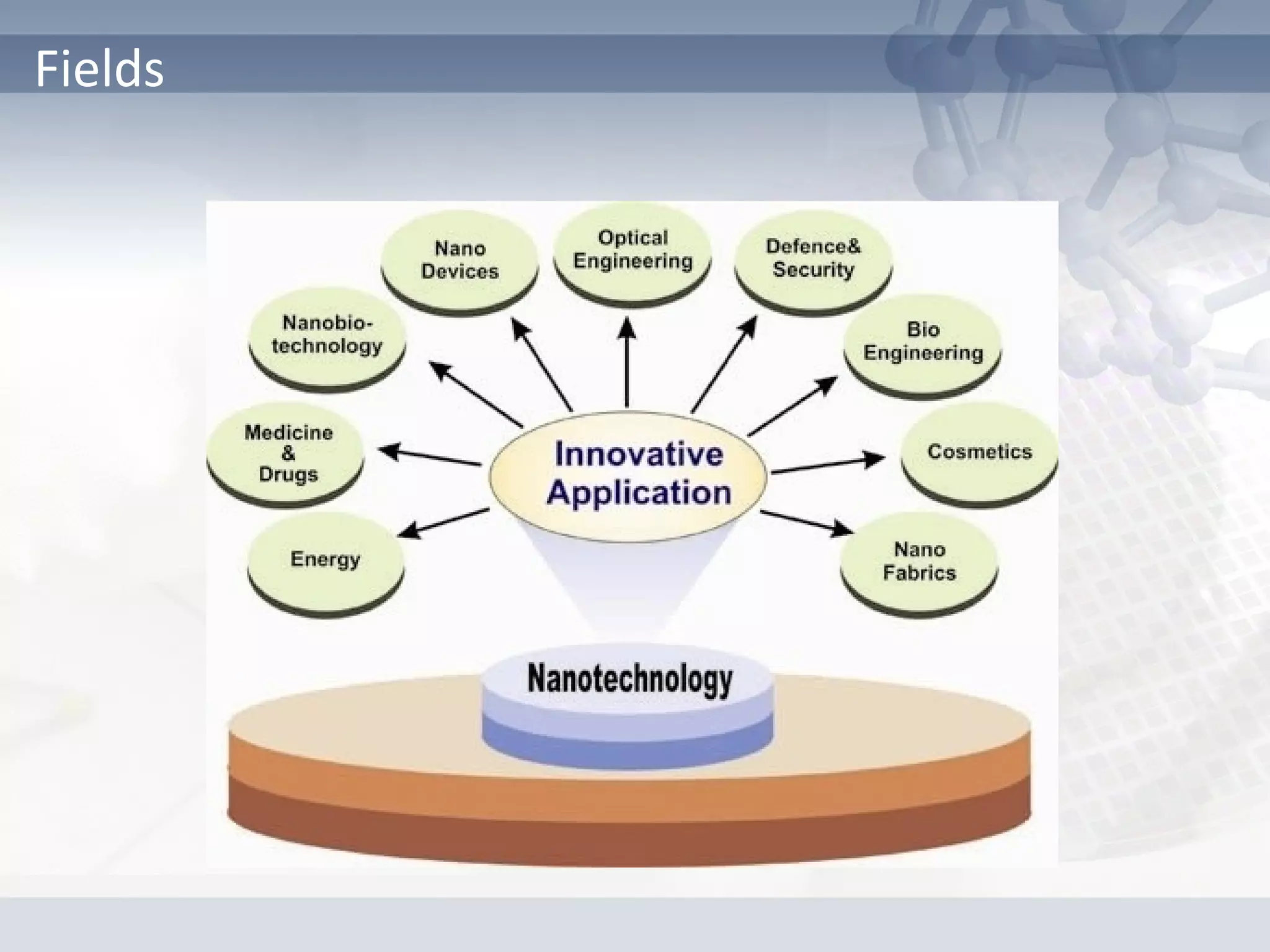
Fields
Applications
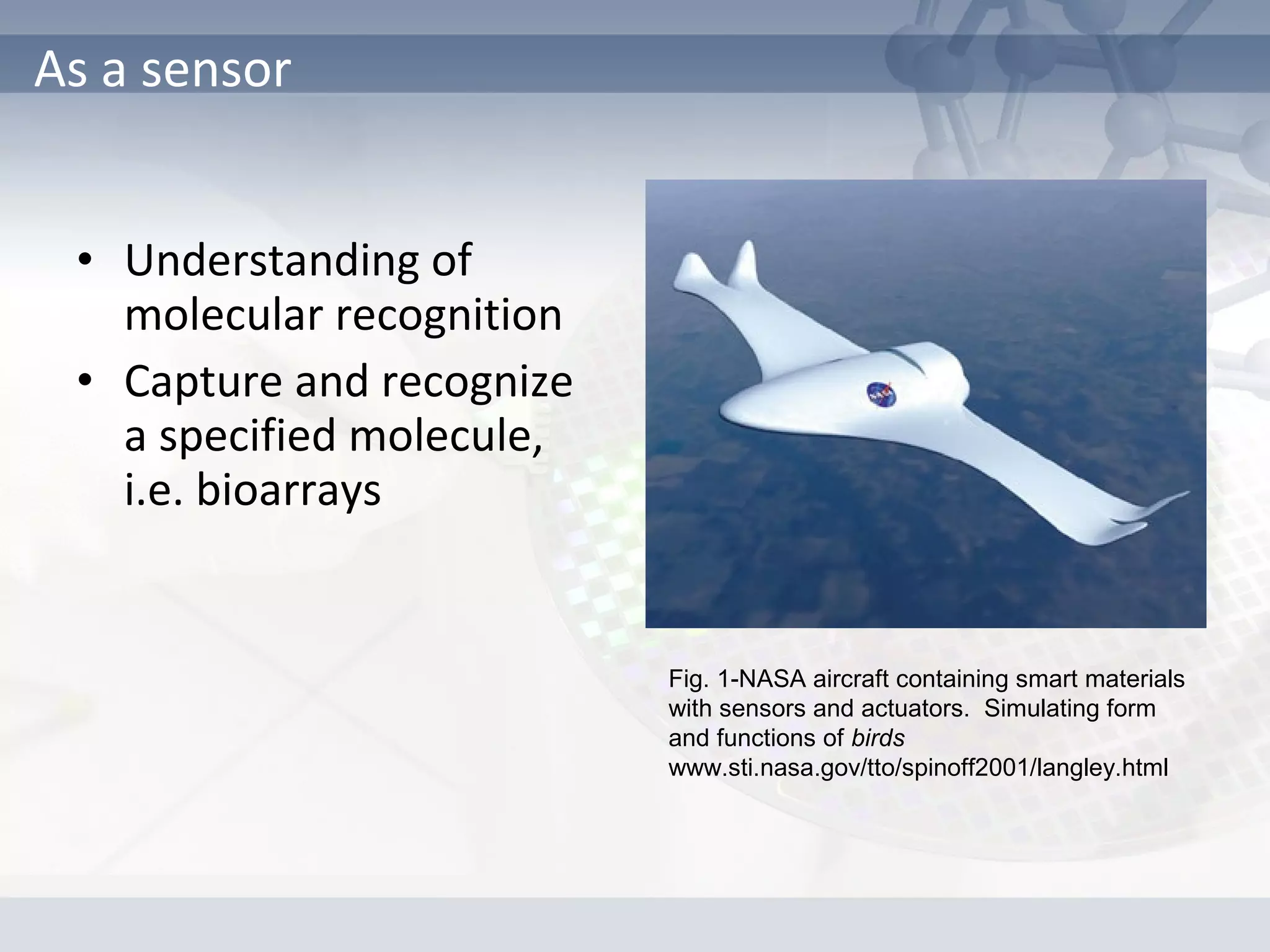
• Understanding of
molecular recognition
• Capture and recognize
a specified molecule,
i.e. bioarrays
As a sensor
Fig. 1-NASA aircraft containing smart materials
with sensors and actuators. Simulating form
and functions of birds
www.sti.nasa.gov/tto/spinoff2001/langley.html
As a Space Elevator
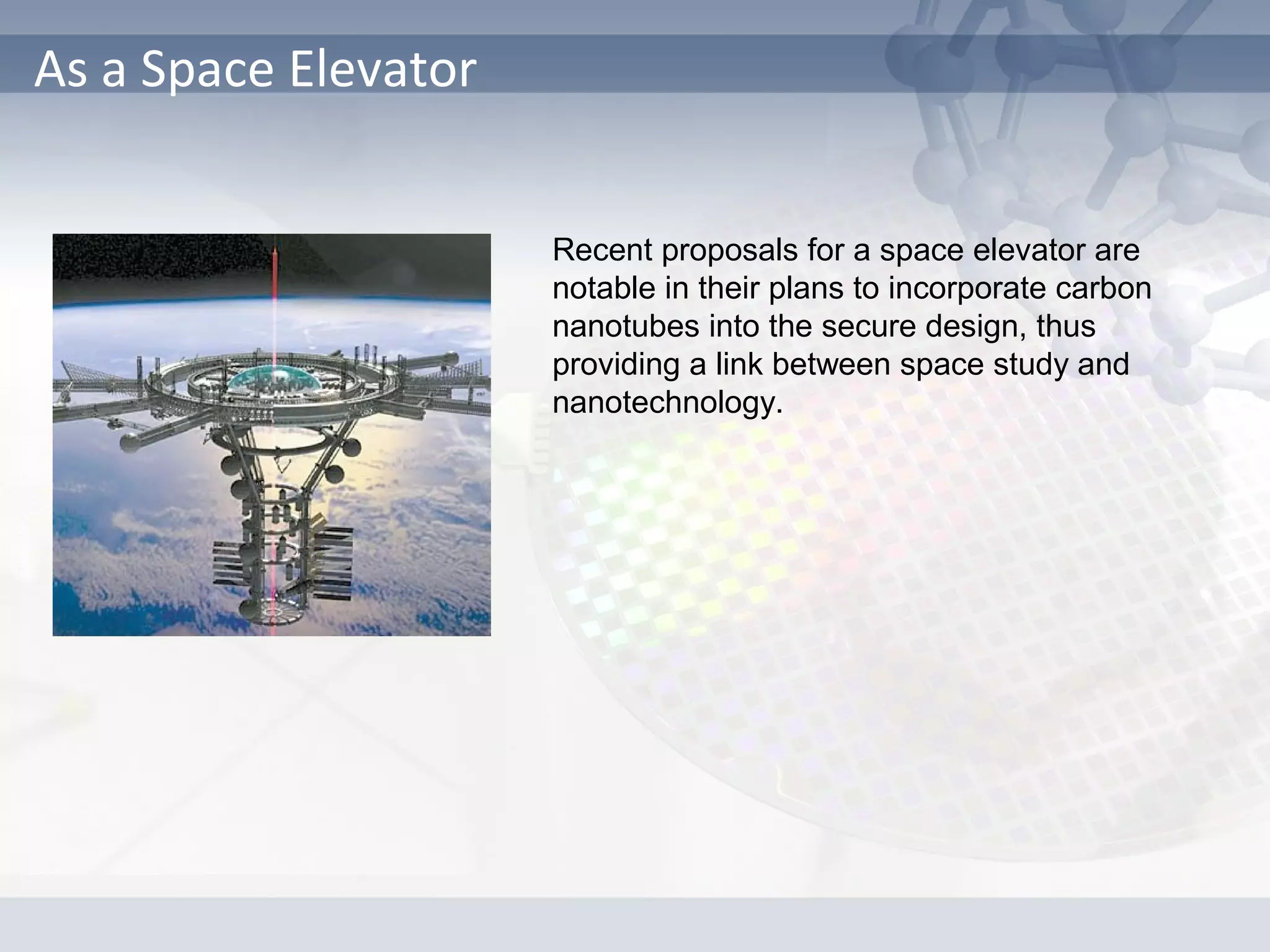
Recent proposals for a space elevator are
notable in their plans to incorporate carbon
nanotubes into the secure design, thus
providing a link between space study and
nanotechnology.
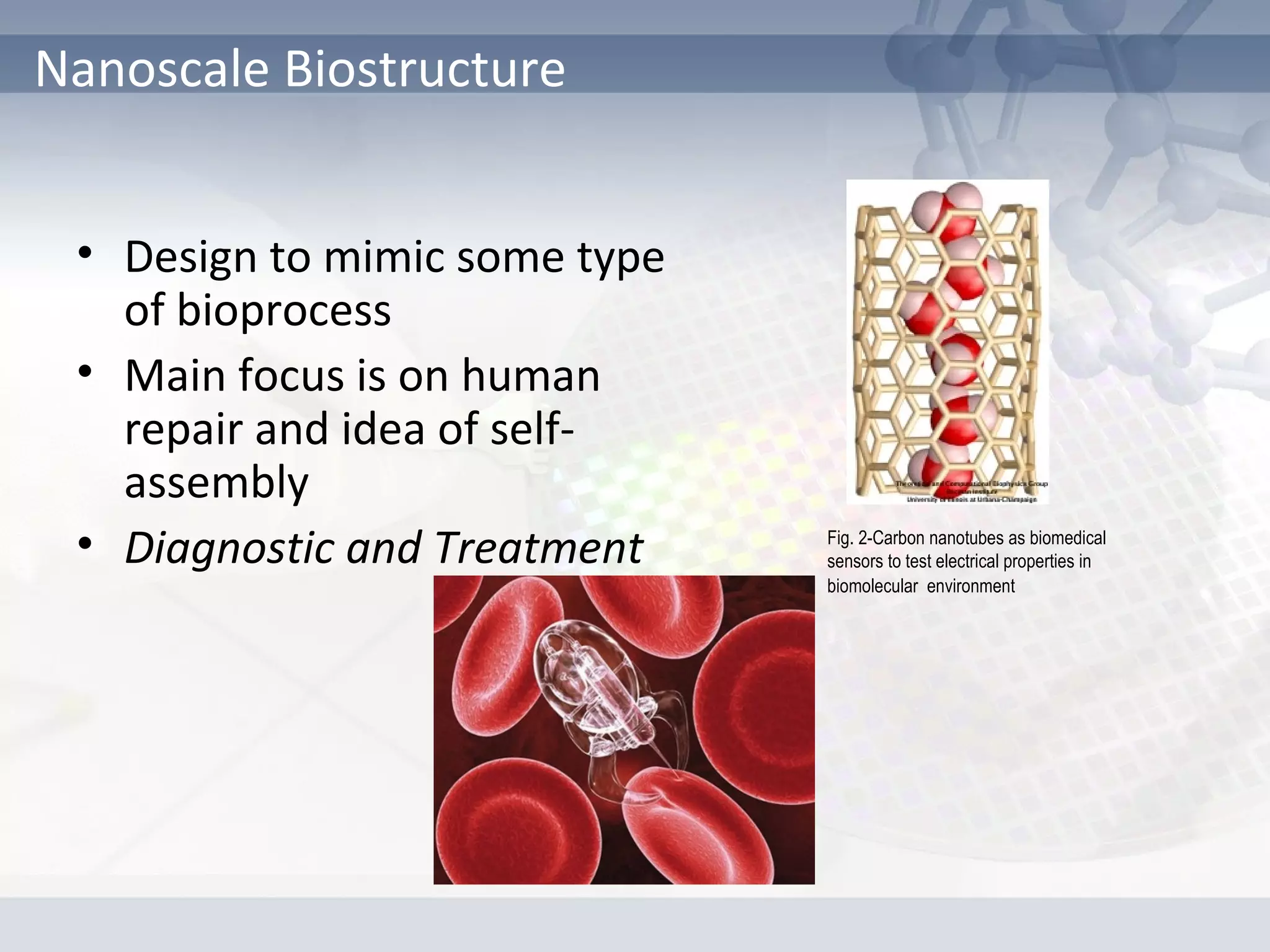
• Design to mimic some type
of bioprocess
• Main focus is on human
repair and idea of self-
assembly
• Diagnostic and Treatment
Nanoscale Biostructure
Fig. 2-Carbon nanotubes as biomedical
sensors to test electrical properties in
biomolecular environment
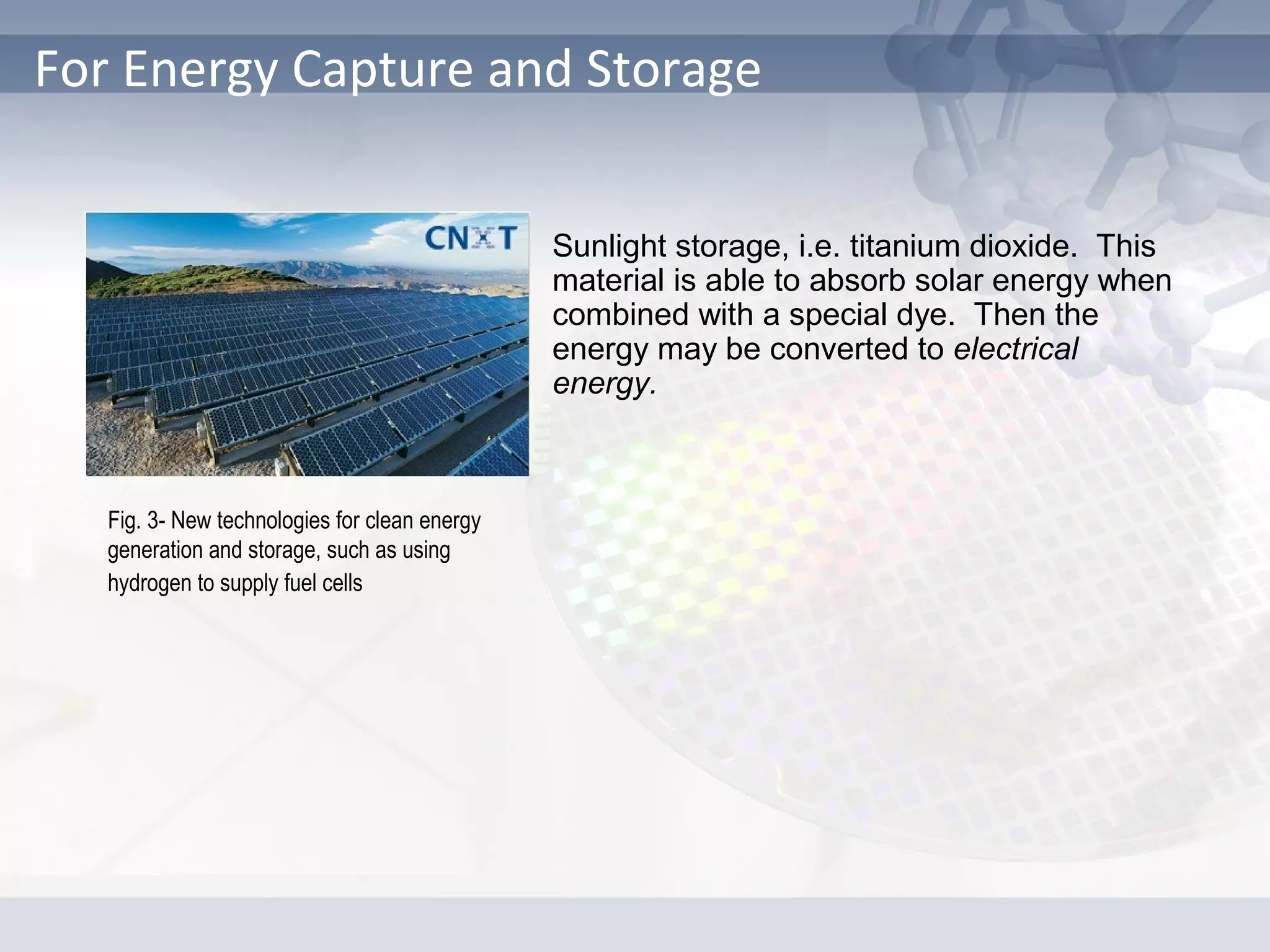
For Energy Capture and Storage
Sunlight storage, i.e. titanium dioxide. This
material is able to absorb solar energy when
combined with a special dye. Then the
energy may be converted to electrical
energy.
Fig. 3- New technologies for clean energy
generation and storage, such as using
hydrogen to supply fuel cells
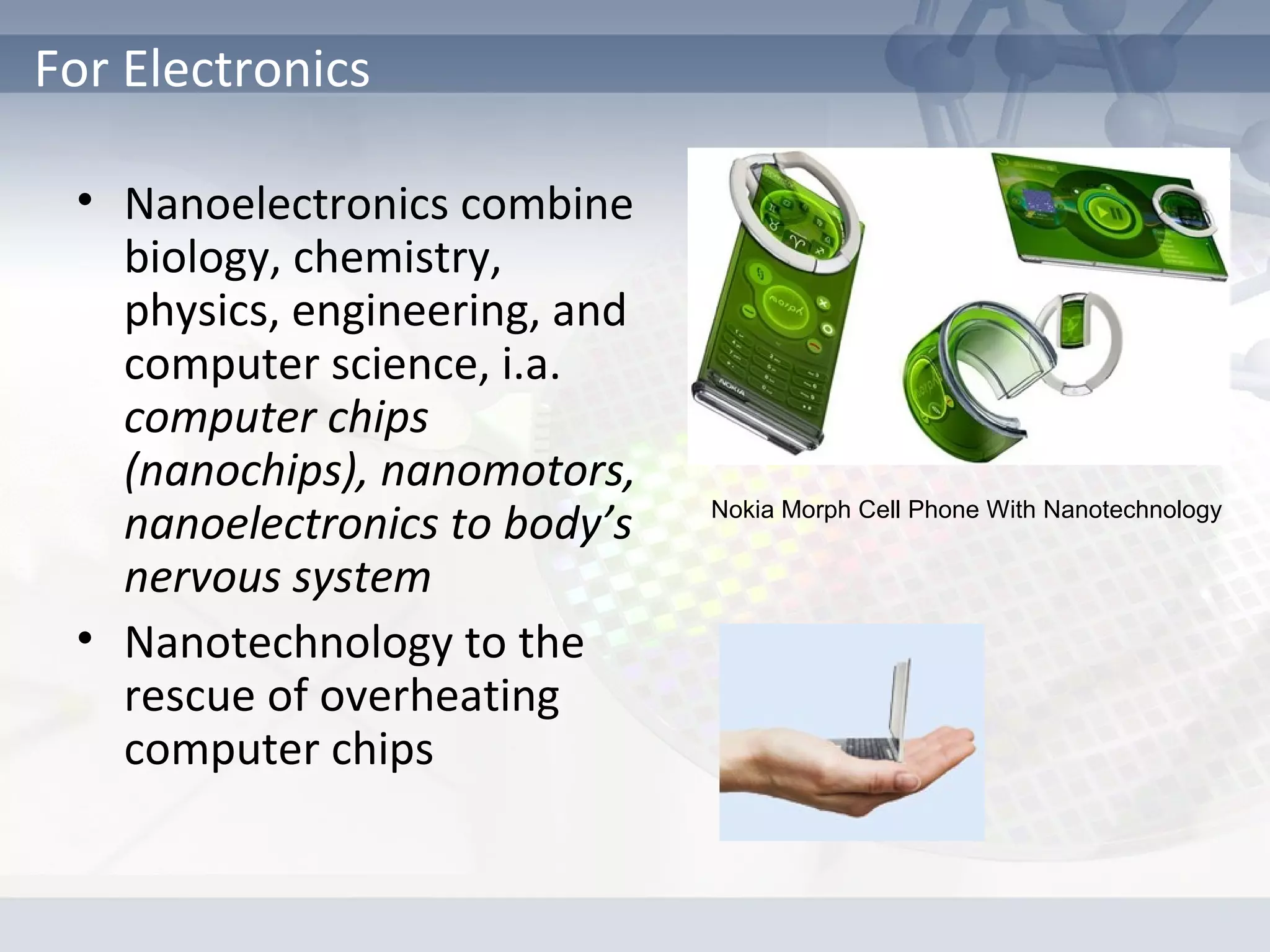
• Nanoelectronics combine
biology, chemistry,
physics, engineering, and
computer science, i.a.
computer chips
(nanochips), nanomotors,
nanoelectronics to body’s
nervous system
• Nanotechnology to the
rescue of overheating
computer chips
For Electronics
Nokia Morph Cell Phone With Nanotechnology
• Miniature Weapons and Explosives
• Disassembles for Military Use
• Uncontrolled Nanomachines
• Self Replicating Nanomachines
• Monitoring
• Tracking
Potential Danger
• However, if the researchers in this field put
together an ethical set of guidelines (e.g.,
Molecular Nanotechnology Guidelines) and
follow them, then we should be able to
develop nanotechnology safely while still
reaping its promised benefits.
• Nanotechnology is predicted to be developed
by 2020 but much depends on our
commitment to its research.
Conclusion
• http://en.wikipedia.org/wiki/Nanotechnology
• http://www.newscientist.com
• http://wanderlustmind.com/2009/01/18/interactive-nanotech-food
• http://scienceblogs.com/framing-
science/2008/05/at_the_new_york_times_and_glob.php
• http://1nanotechnology.blogspot.com/2007/08/conclusion.html
• Alberto Quiñonez, Ph.D.(Slides)
• Karen Wosczyna-Birch (Slides)
Bibliography
Questionnaire
?
Thank You

Introduction to Nanotechnology

  • 1.
  • 2.
    Definition “Nanotechnology is scienceand engineering at the scale of atoms and molecules. It is the art & science of building stuff that does stuff at the nanometer scale.” National Nanotechnology Initiative, 2007
  • 3.
  • 4.
    Size Comparison Ant =5mm Head of Pin =1-2 mm Human hair = 10-120 µm diameter Red Blood Cells = 2-5 µm DNA = 2-12 nm Carbon Nanotube =1.3nm diameter Carbon Bucky Ball = 1 nm
  • 5.
    History The idea ofnanotechnology was born in 1959 when physicist Richard Feynman gave a lecture exploring the idea of building things at the atomic and molecular scale. He imagined the entire Encyclopaedia Britannica written on the head of a pin. Figure 1.11: Richard Feynman.
  • 6.
    History (cont..) • Experimentalnanotechnology did not come into its own until 1981, when IBM scientists in Zurich, Switzerland, built the first scanning tunnelling microscope (STM) • This allows us to see single atoms by scanning a tiny probe over the surface of a silicon crystal • In 1990, IBM scientists discovered how to use an STM to move single xenon atoms around on a nickel surface - in an iconic experiment, with an inspired eye for marketing, they moved 35 atoms to spell out "IBM".
  • 7.
    History (cont..) • Threegentlemen—Harold Kroto from the University of Sussex, Robert Curl and Richard Smalley from Rice University—were awarded the Nobel Prize in Chemistry in 1996 for their discovery of a new composition of carbon, Carbon 60 in 1985. • And in 1991, tiny, super- strong rolls of carbon atoms known as carbon nanotubes were created. These are six times lighter, yet 100 times stronger than steel. A “Buckyball.” A “Carbon Nanotube”
  • 8.
  • 9.
  • 10.
    • Understanding of molecularrecognition • Capture and recognize a specified molecule, i.e. bioarrays As a sensor Fig. 1-NASA aircraft containing smart materials with sensors and actuators. Simulating form and functions of birds www.sti.nasa.gov/tto/spinoff2001/langley.html
  • 11.
    As a SpaceElevator Recent proposals for a space elevator are notable in their plans to incorporate carbon nanotubes into the secure design, thus providing a link between space study and nanotechnology.
  • 12.
    • Design tomimic some type of bioprocess • Main focus is on human repair and idea of self- assembly • Diagnostic and Treatment Nanoscale Biostructure Fig. 2-Carbon nanotubes as biomedical sensors to test electrical properties in biomolecular environment
  • 13.
    For Energy Captureand Storage Sunlight storage, i.e. titanium dioxide. This material is able to absorb solar energy when combined with a special dye. Then the energy may be converted to electrical energy. Fig. 3- New technologies for clean energy generation and storage, such as using hydrogen to supply fuel cells
  • 14.
    • Nanoelectronics combine biology,chemistry, physics, engineering, and computer science, i.a. computer chips (nanochips), nanomotors, nanoelectronics to body’s nervous system • Nanotechnology to the rescue of overheating computer chips For Electronics Nokia Morph Cell Phone With Nanotechnology
  • 15.
    • Miniature Weaponsand Explosives • Disassembles for Military Use • Uncontrolled Nanomachines • Self Replicating Nanomachines • Monitoring • Tracking Potential Danger
  • 16.
    • However, ifthe researchers in this field put together an ethical set of guidelines (e.g., Molecular Nanotechnology Guidelines) and follow them, then we should be able to develop nanotechnology safely while still reaping its promised benefits. • Nanotechnology is predicted to be developed by 2020 but much depends on our commitment to its research. Conclusion
  • 17.
    • http://en.wikipedia.org/wiki/Nanotechnology • http://www.newscientist.com •http://wanderlustmind.com/2009/01/18/interactive-nanotech-food • http://scienceblogs.com/framing- science/2008/05/at_the_new_york_times_and_glob.php • http://1nanotechnology.blogspot.com/2007/08/conclusion.html • Alberto Quiñonez, Ph.D.(Slides) • Karen Wosczyna-Birch (Slides) Bibliography
  • 18.
  • 19.