Downloaded 33 times
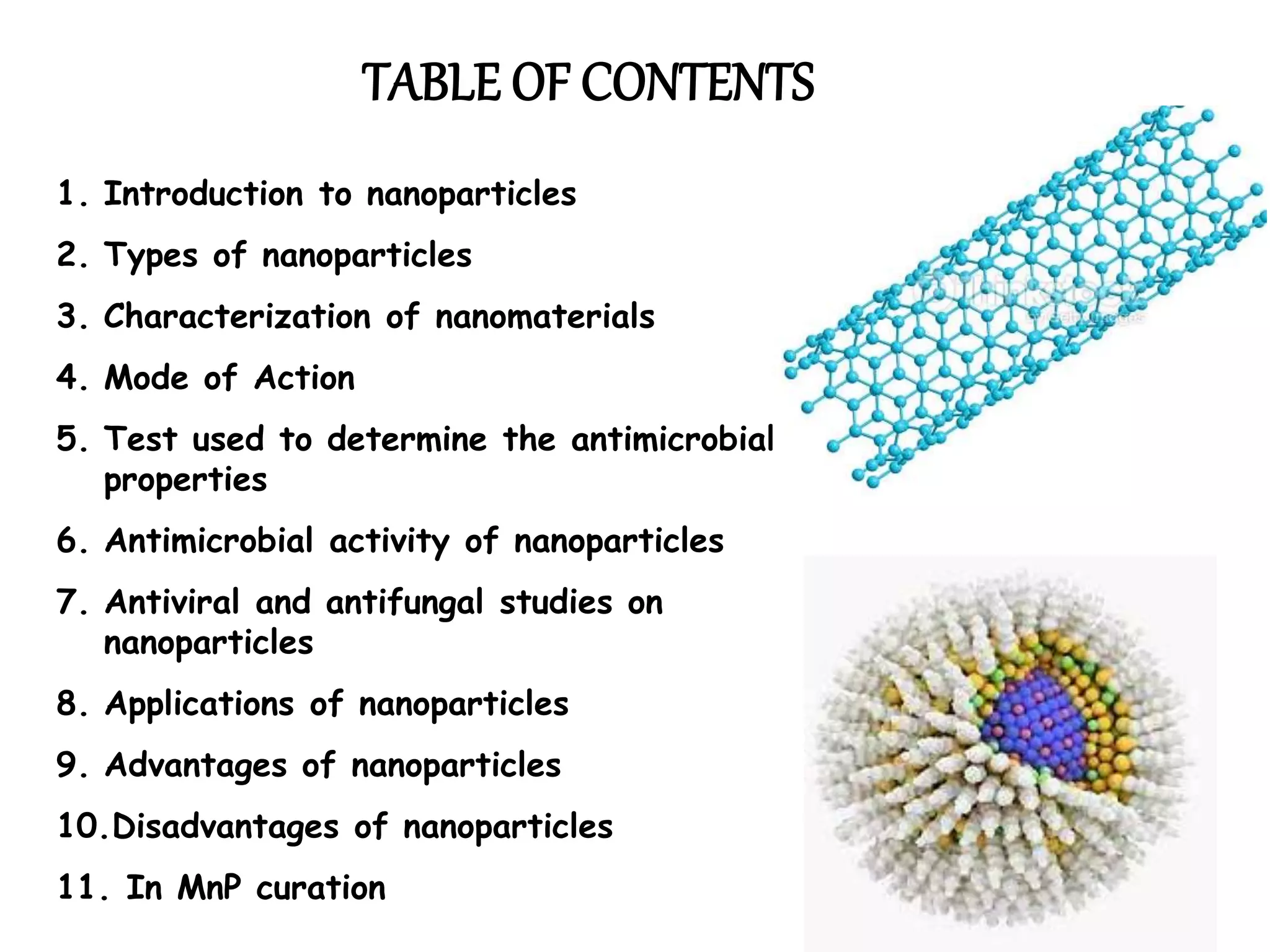


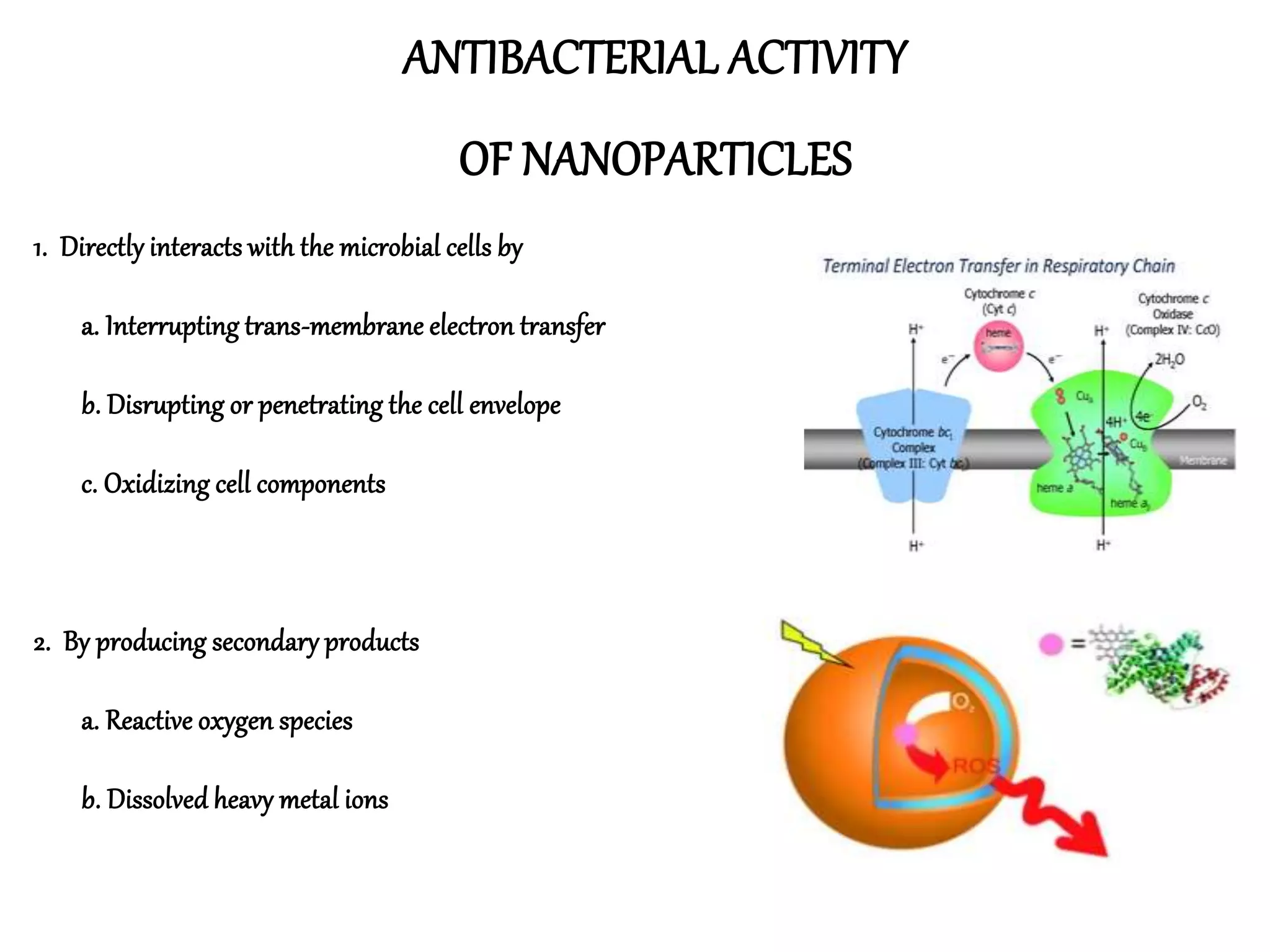
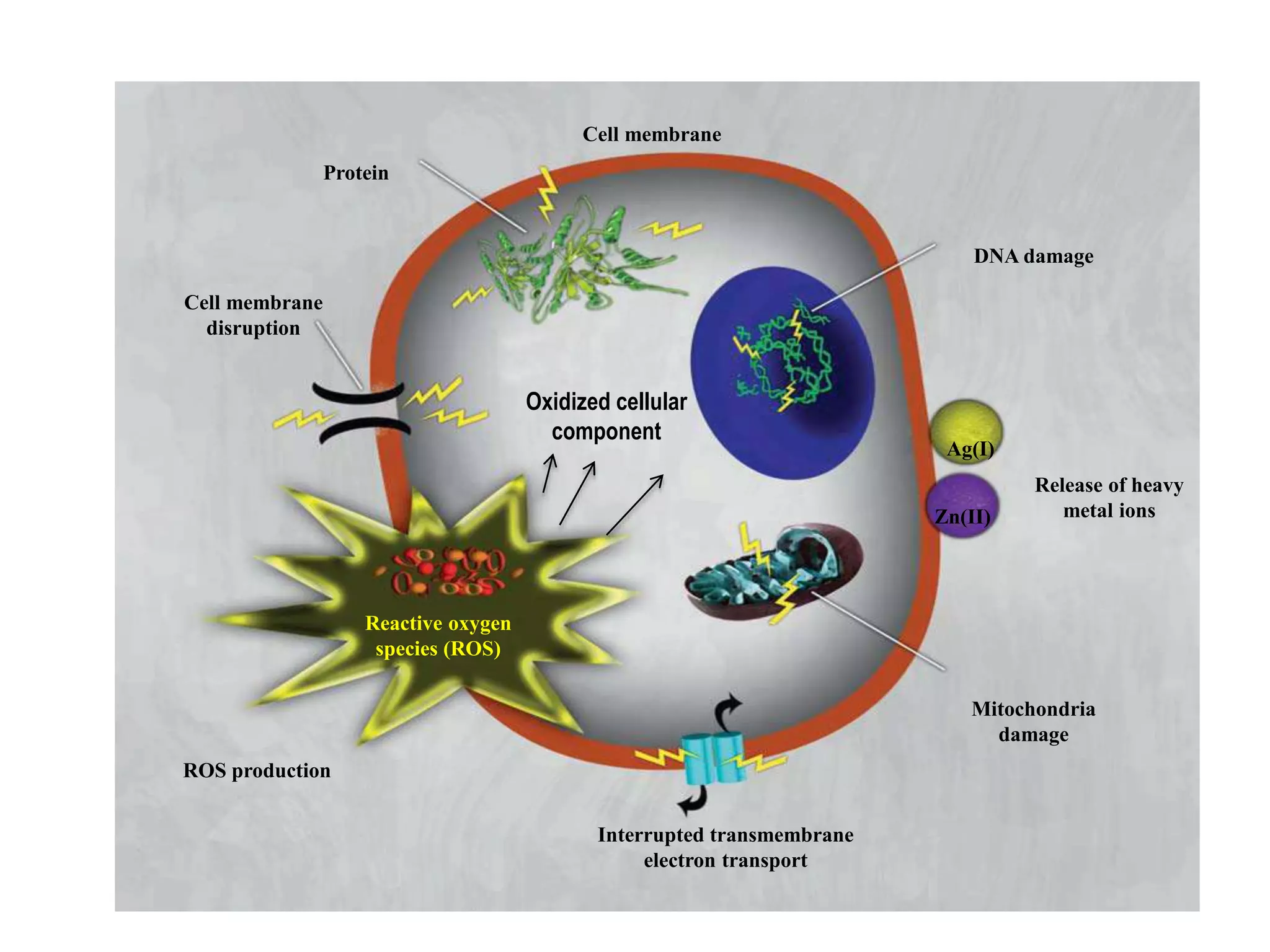








This document discusses nanoparticles, including their types, characterization, modes of action, and applications. Some key points include: Nanoparticles range from 1-1000nm in size and have high surface area to volume ratios. Common types include nanotubes and quantum dots. Characterization techniques include spectroscopy, XRD, SEM, and TEM. Nanoparticles have antimicrobial effects through reactive oxygen species production and cell membrane disruption. Applications include use in wound dressings, household products, and food/water purification to provide broad-spectrum antimicrobial properties. Advantages are specific targeting and biodegradability while disadvantages include potential toxicity risks.


