Naming of
Hydrocarbons
Nomenclature
Alkanes – General Rules (IUPAC)
• Step 1: Determine the longest chain ( Use your visualization :) )
• Step 2: Determine which end is nearest to the branch
• Step 3: Number the carbon atoms from the chosen end
• Step 4: Name the branch (-CH3 (methyl), -C2H5 (ethyl) ) showing its
location (number of Carbon atom with which it is connected)
• Step 5: Add root (depends on the amount of "C" in the longest chain)
• Step 6: Add "-ane" to the root
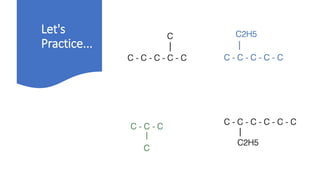
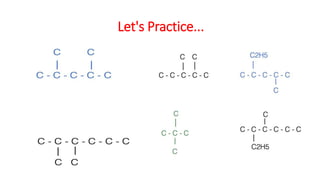
Let's
Practice...
Special Cases with the Branches...
• If you have more than one branch on the same "C" atom, the number
of "C" is indicated for each branch
• When two or more identical branches occur on different carbon
atoms, the prefixes –di (2); -tri (3); -tetra (4) are used
• If you have different branches e.g. ethyl and methyl: 1) you indicate
the "location" 2) name first ethyl, later methyl – because of
alphabetical order
Let's Practice...
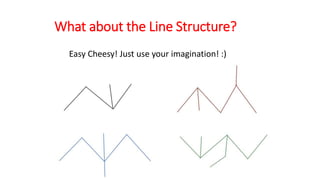
What about the Line Structure?
Easy Cheesy! Just use your imagination! :)
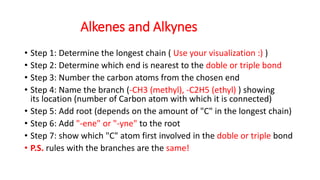
Alkenes and Alkynes
• Step 1: Determine the longest chain ( Use your visualization :) )
• Step 2: Determine which end is nearest to the doble or triple bond
• Step 3: Number the carbon atoms from the chosen end
• Step 4: Name the branch (-CH3 (methyl), -C2H5 (ethyl) ) showing
its location (number of Carbon atom with which it is connected)
• Step 5: Add root (depends on the amount of "C" in the longest chain)
• Step 6: Add "-ene" or "-yne" to the root
• Step 7: show which "C" atom first involved in the doble or triple bond
• P.S. rules with the branches are the same!
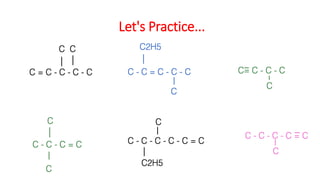
Let's Practice...
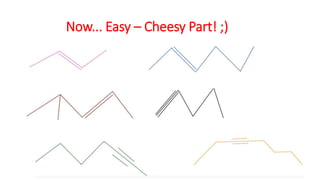
Now... Easy – Cheesy Part! ;)
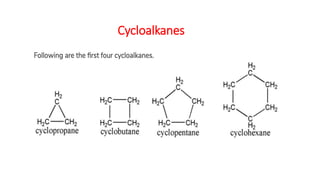
Cycloalkanes
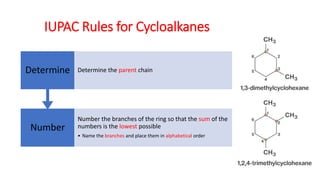
IUPAC Rules for Cycloalkanes
Number
Number the branches of the ring so that the sum of the
numbers is the lowest possible
• Name the branches and place them in alphabetical order
Determine Determine the parent chain
Thanks for the Attention!

Naming hydrocarbons

  • 1.
  • 2.
    Alkanes – GeneralRules (IUPAC) • Step 1: Determine the longest chain ( Use your visualization :) ) • Step 2: Determine which end is nearest to the branch • Step 3: Number the carbon atoms from the chosen end • Step 4: Name the branch (-CH3 (methyl), -C2H5 (ethyl) ) showing its location (number of Carbon atom with which it is connected) • Step 5: Add root (depends on the amount of "C" in the longest chain) • Step 6: Add "-ane" to the root
  • 3.
  • 4.
    Special Cases withthe Branches... • If you have more than one branch on the same "C" atom, the number of "C" is indicated for each branch • When two or more identical branches occur on different carbon atoms, the prefixes –di (2); -tri (3); -tetra (4) are used • If you have different branches e.g. ethyl and methyl: 1) you indicate the "location" 2) name first ethyl, later methyl – because of alphabetical order
  • 5.
  • 6.
    What about theLine Structure? Easy Cheesy! Just use your imagination! :)
  • 7.
    Alkenes and Alkynes •Step 1: Determine the longest chain ( Use your visualization :) ) • Step 2: Determine which end is nearest to the doble or triple bond • Step 3: Number the carbon atoms from the chosen end • Step 4: Name the branch (-CH3 (methyl), -C2H5 (ethyl) ) showing its location (number of Carbon atom with which it is connected) • Step 5: Add root (depends on the amount of "C" in the longest chain) • Step 6: Add "-ene" or "-yne" to the root • Step 7: show which "C" atom first involved in the doble or triple bond • P.S. rules with the branches are the same!
  • 8.
  • 9.
    Now... Easy –Cheesy Part! ;)
  • 10.
  • 11.
    IUPAC Rules forCycloalkanes Number Number the branches of the ring so that the sum of the numbers is the lowest possible • Name the branches and place them in alphabetical order Determine Determine the parent chain
  • 13.
    Thanks for theAttention!