











Tools and Strategies for Promoting Literacy and New Literacies for Young Gifted StudentsSponsored by the Computers and Technology and Early Childhood NetworksNAGC 56th Annual ConventionSt. Louis, MissouriNovember 4, 2009
Our Road Ahead8:45    Traditional vs. New Literacies9:45 	  Break10:00  Weslandia from Traditional to New11:30  Creating a Digital Story12:00  Lunch1:00	  Project Production2:00	  Non-Fiction Never Smile at a Monkey2:30    Break4:15 	  Closure
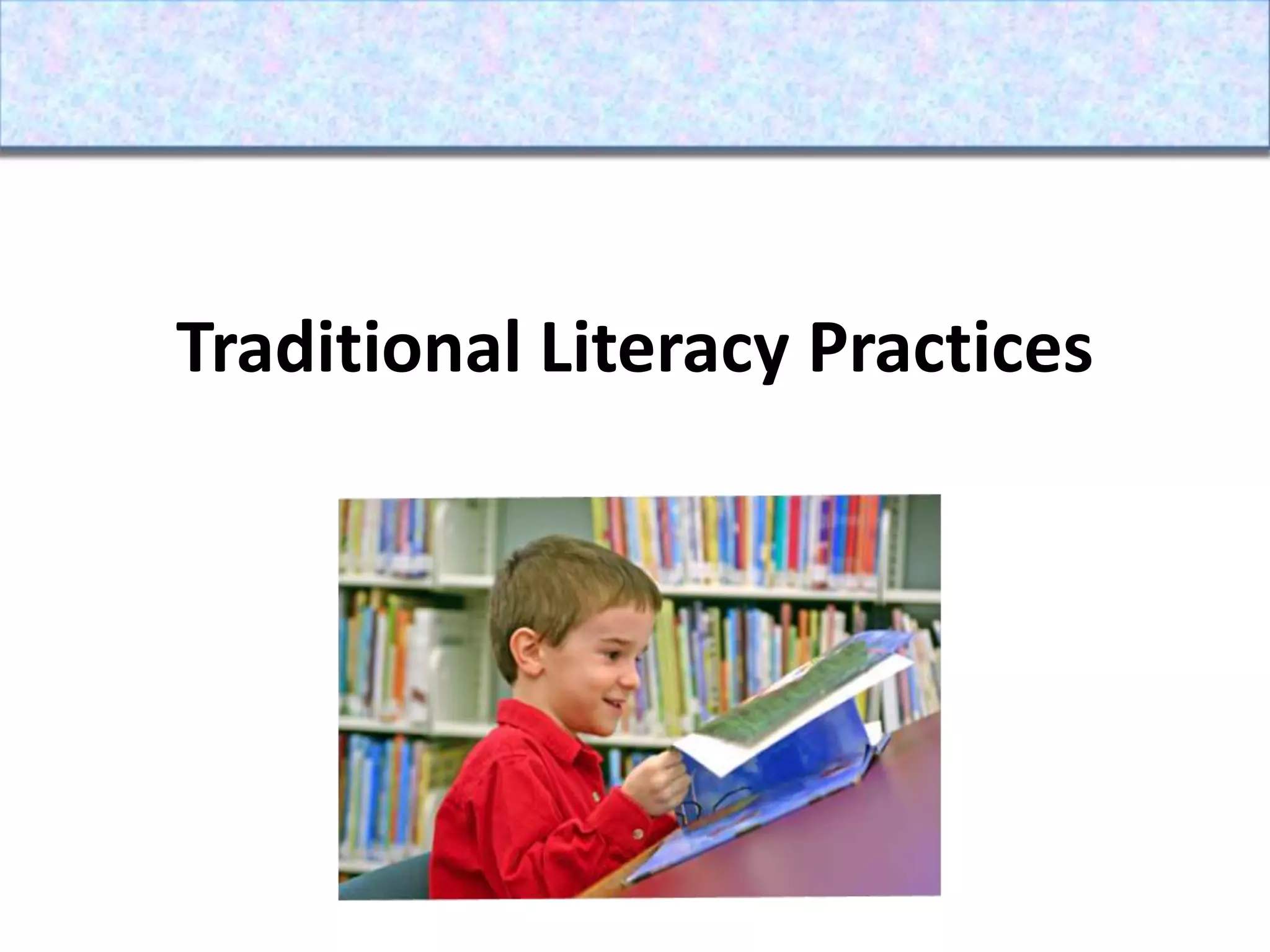
Traditional Literacy Practices
Literacy LearningThere are important and powerful relationships between reading and writing.When students read and think about text, they are also noticing and using the craft of writing.When students learn how to compose their writing, they develop key understandings about text that will help them be more insightful readers.Source:  Fountas & Pinnell, 2001.
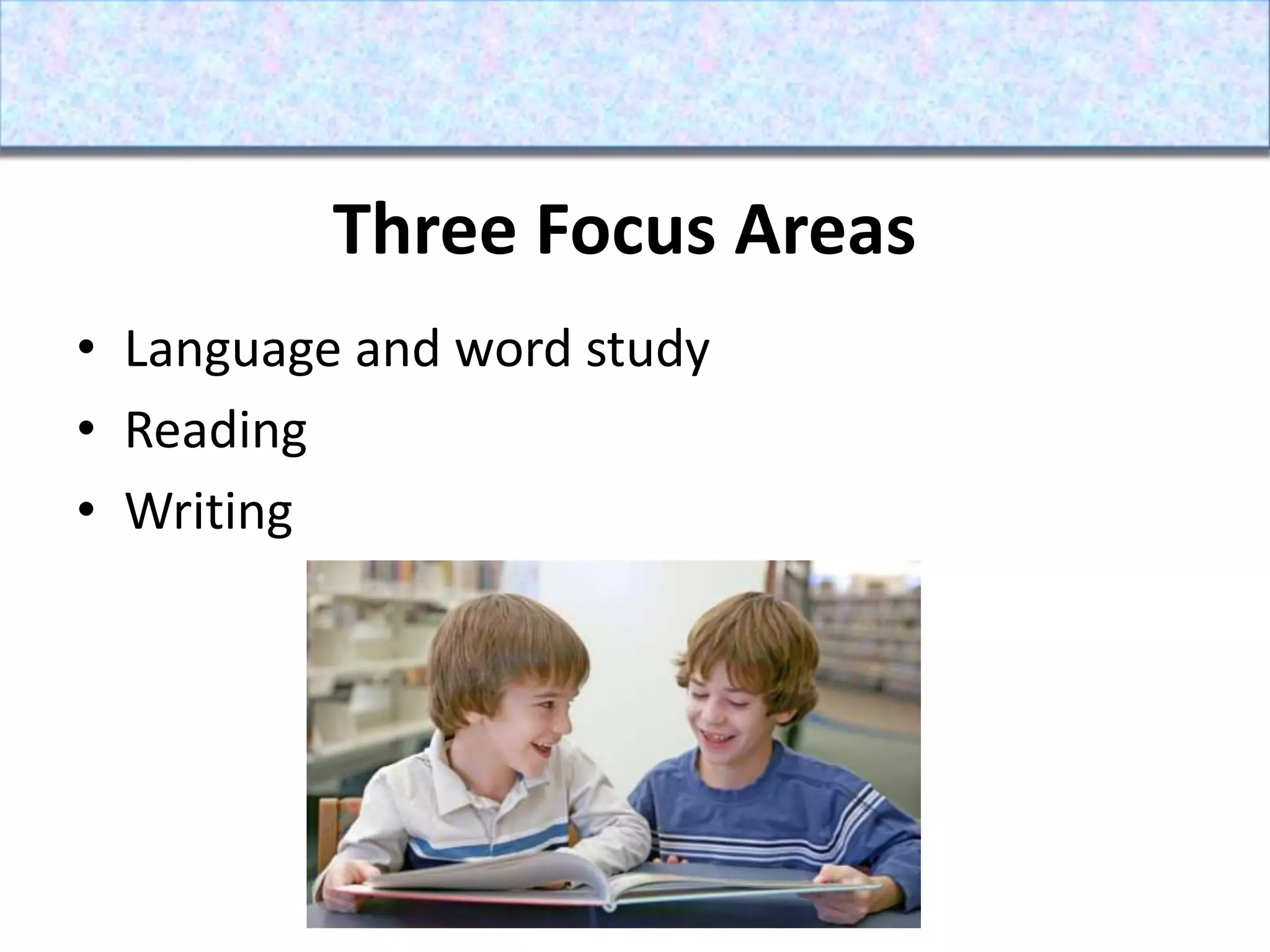
Three Focus AreasLanguage and word studyReading Writing
Getting to Know You	Introduce yourself to others at your table and discuss the following:What characteristics do advanced readers in your classroom exhibit?Which reading strategies have you found to be effective in your classroom?How do you know?
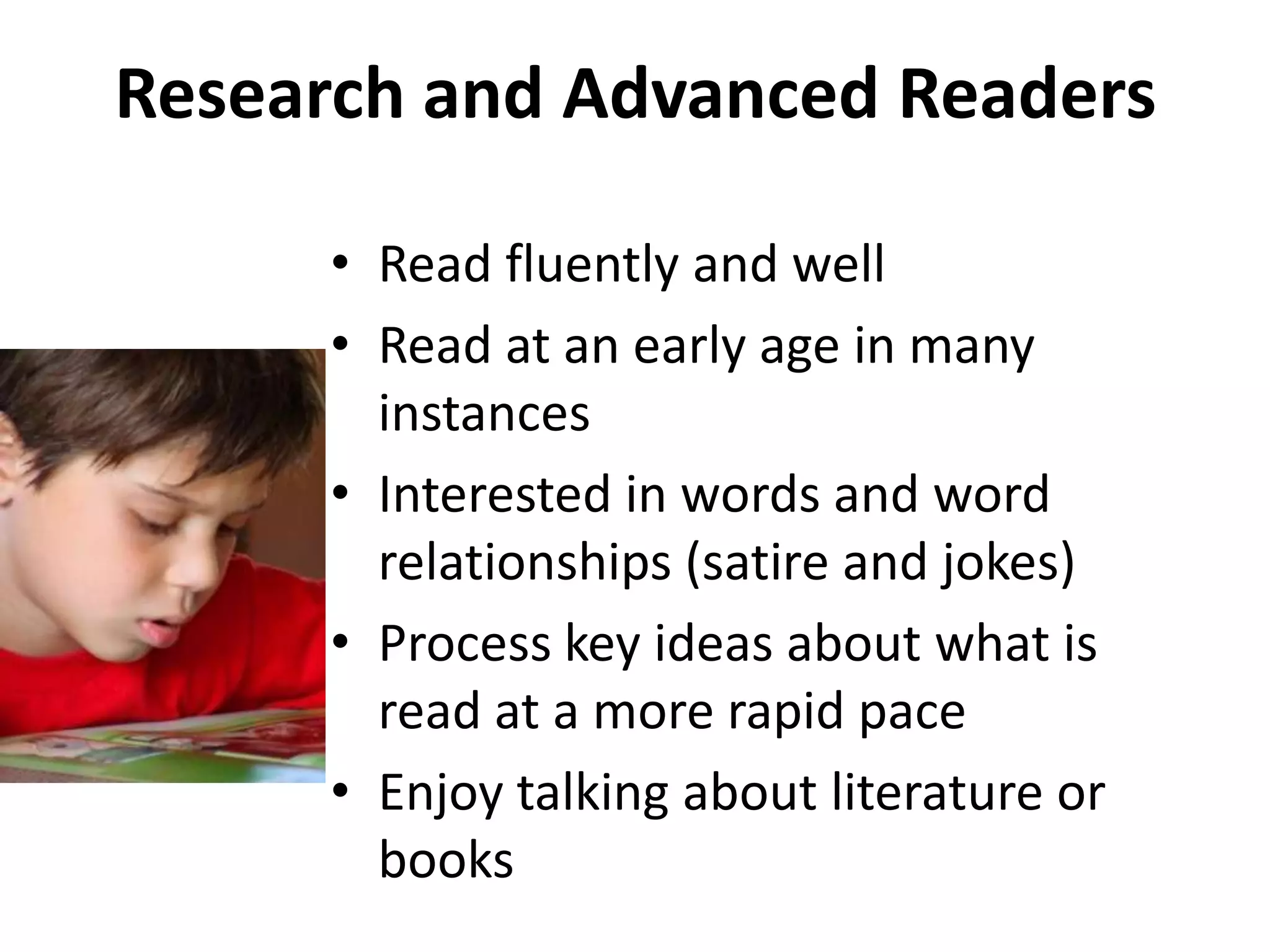
Research and Advanced ReadersRead fluently and wellRead at an early age in many instancesInterested in words and word relationships (satire and jokes)Process key ideas about what is read at a more rapid paceEnjoy talking about literature or books
Research and Advanced ReadersWrite descriptively to communicate storiesRead often – inside and outside of classEnjoy verbal puzzles and gamesAdvanced vocabulary for age or cultural populationPlay with language
A New Literacies Perspective
http://brianhousand.com
http://giftedtech.ning.com
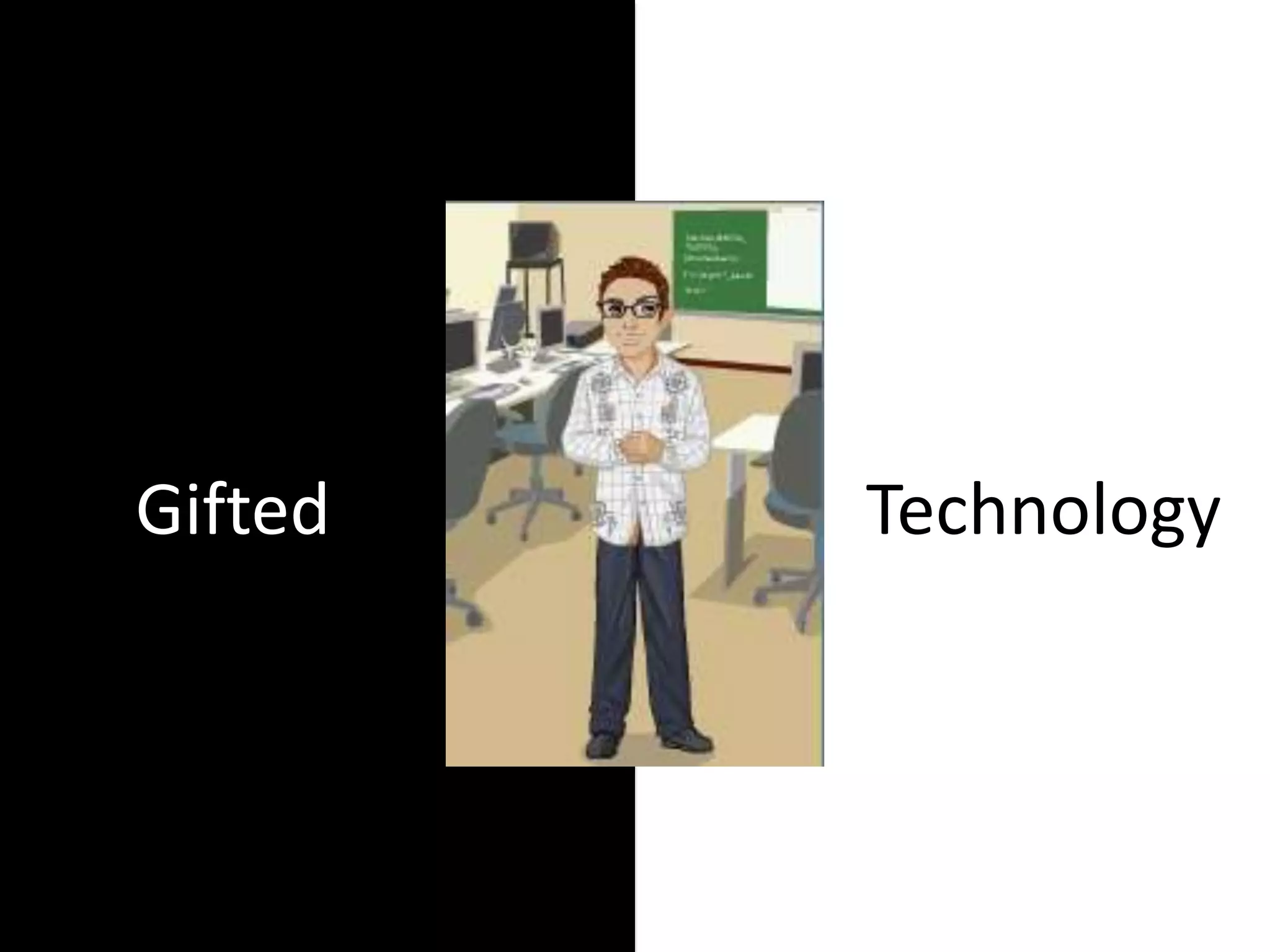
TechnologyGifted
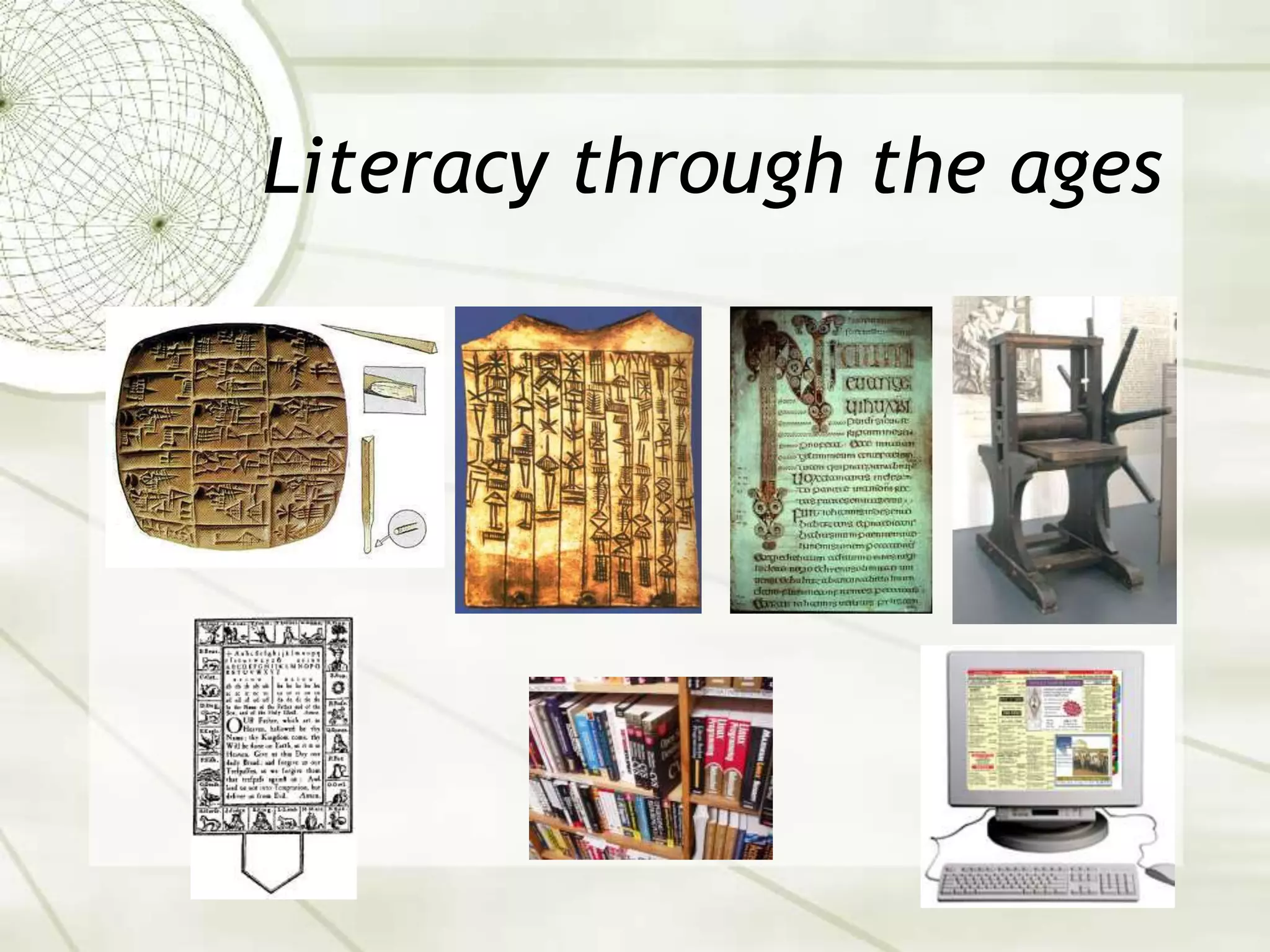
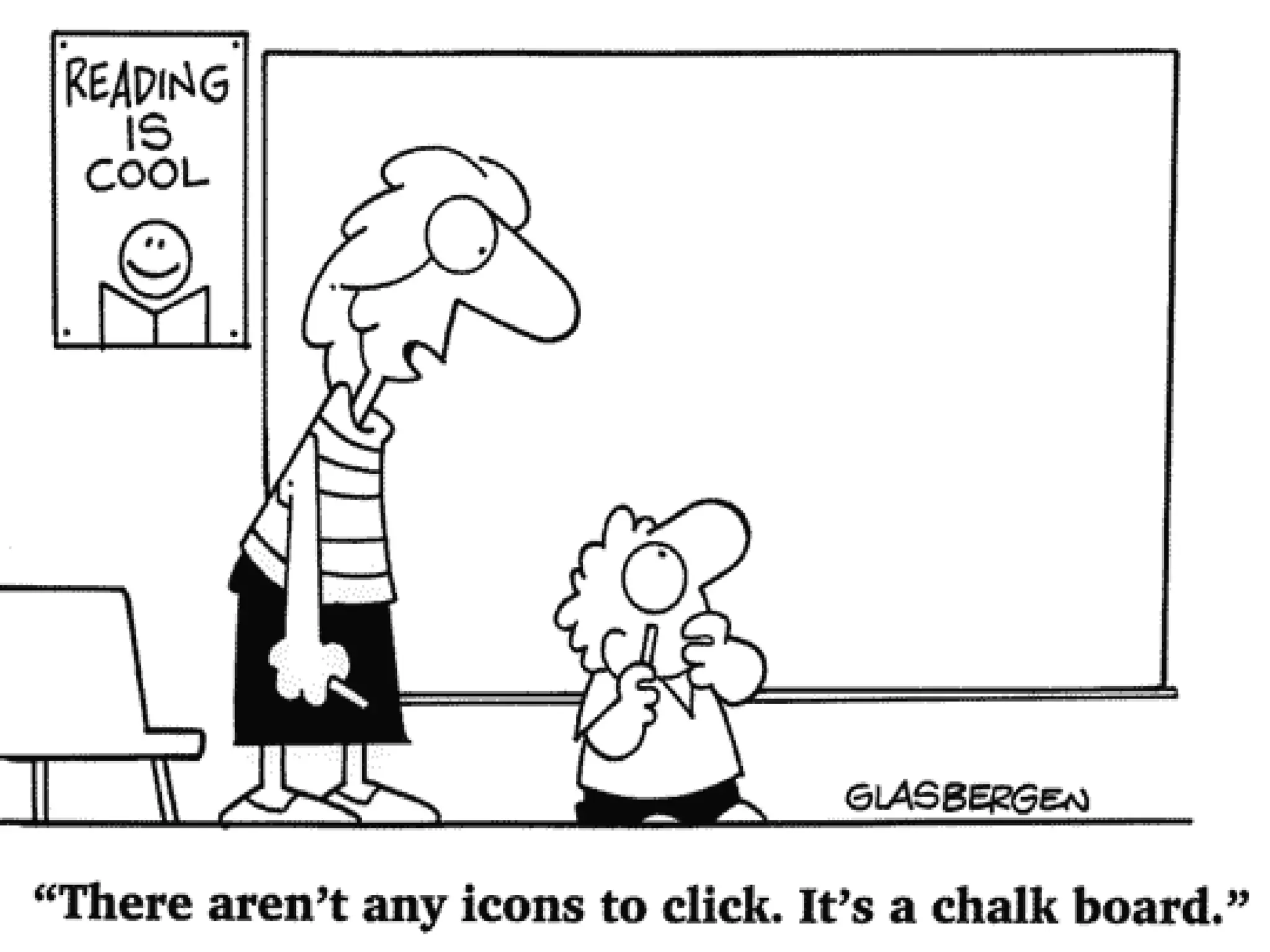
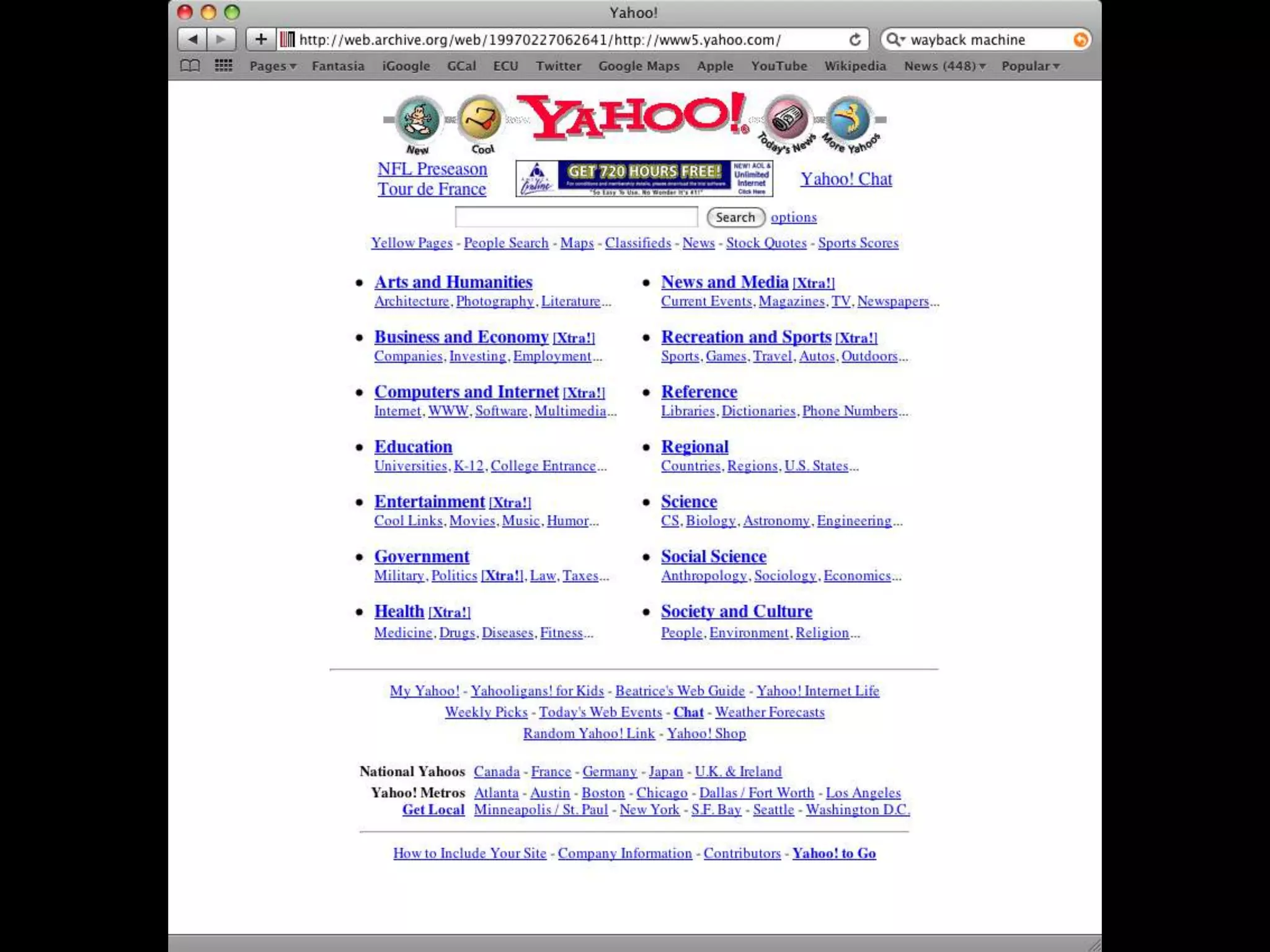
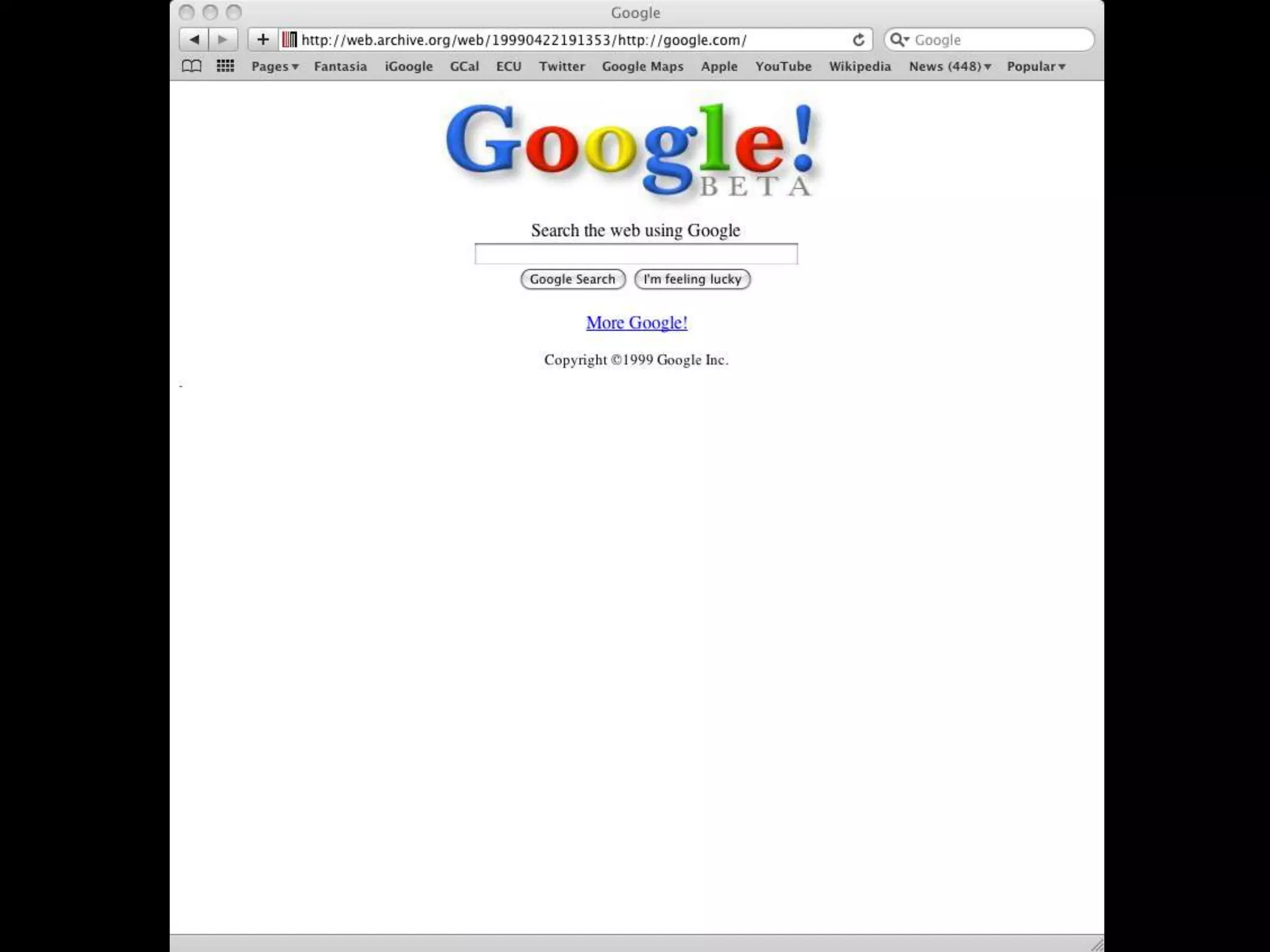
Literacy through the ages
DIGITAL DIVIDEIMMIGRANTSNATIVES
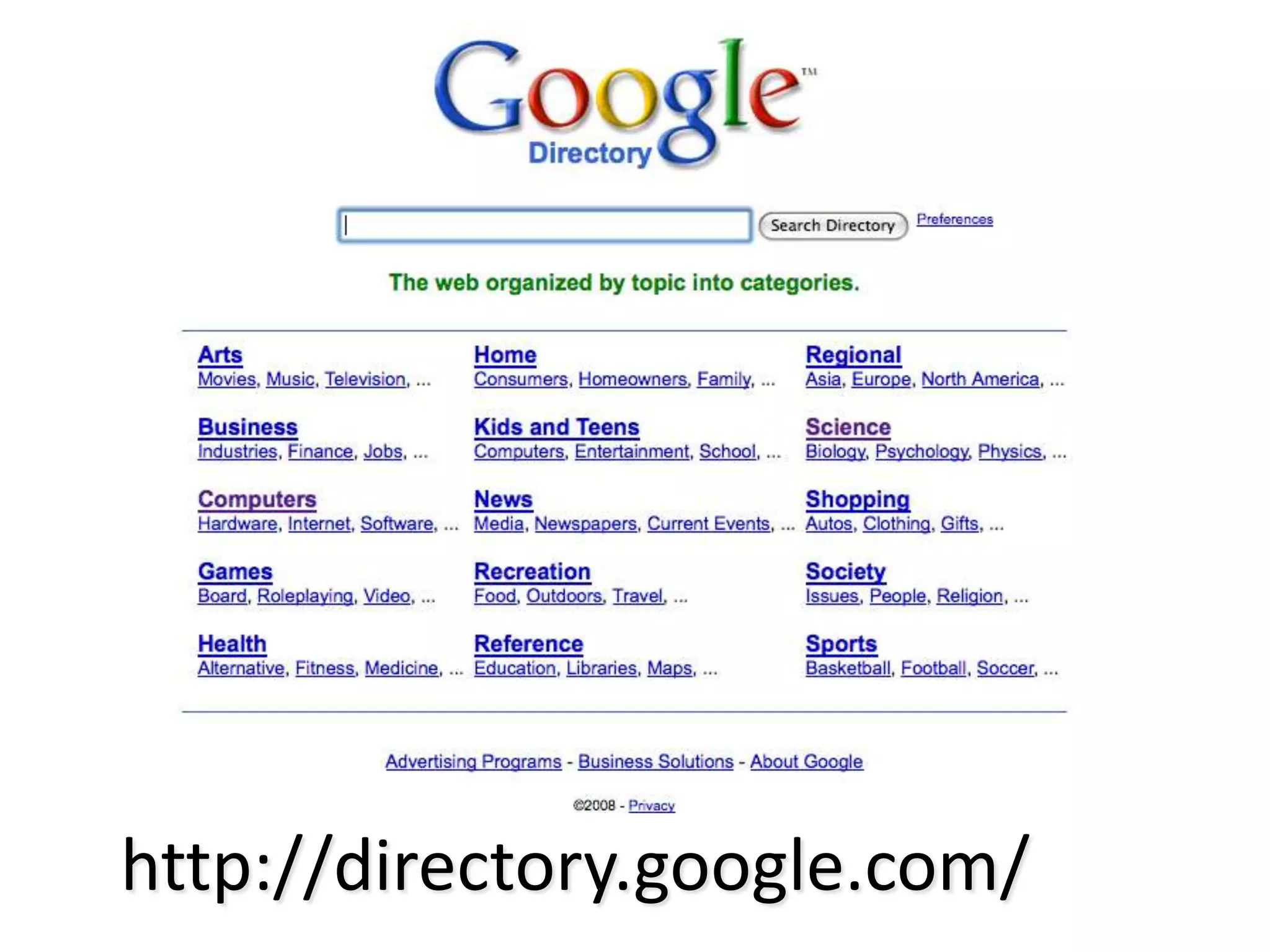
http://directory.google.com/
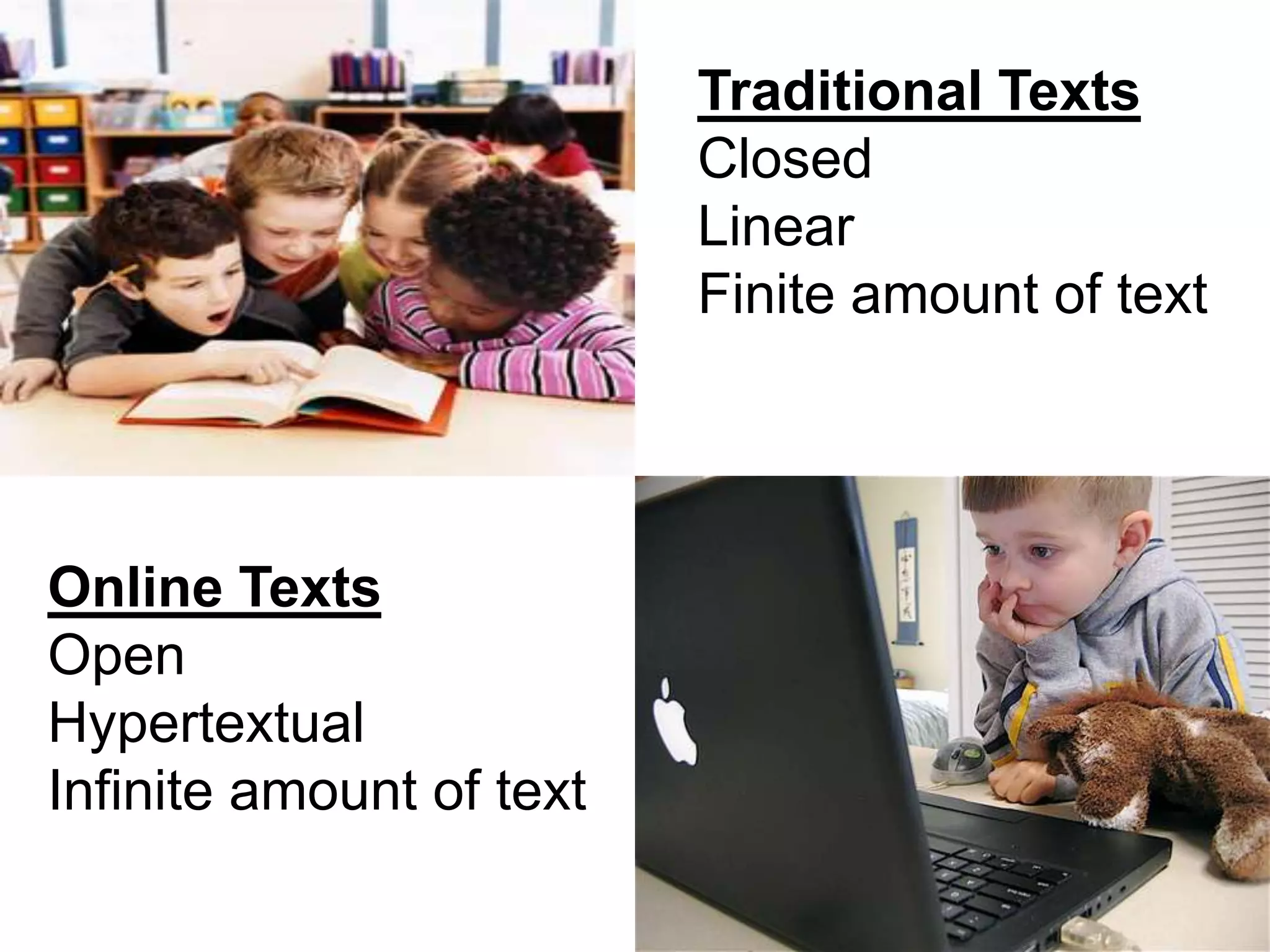
Traditional TextsClosedLinearFinite amount of textOnline TextsOpenHypertextualInfinite amount of text
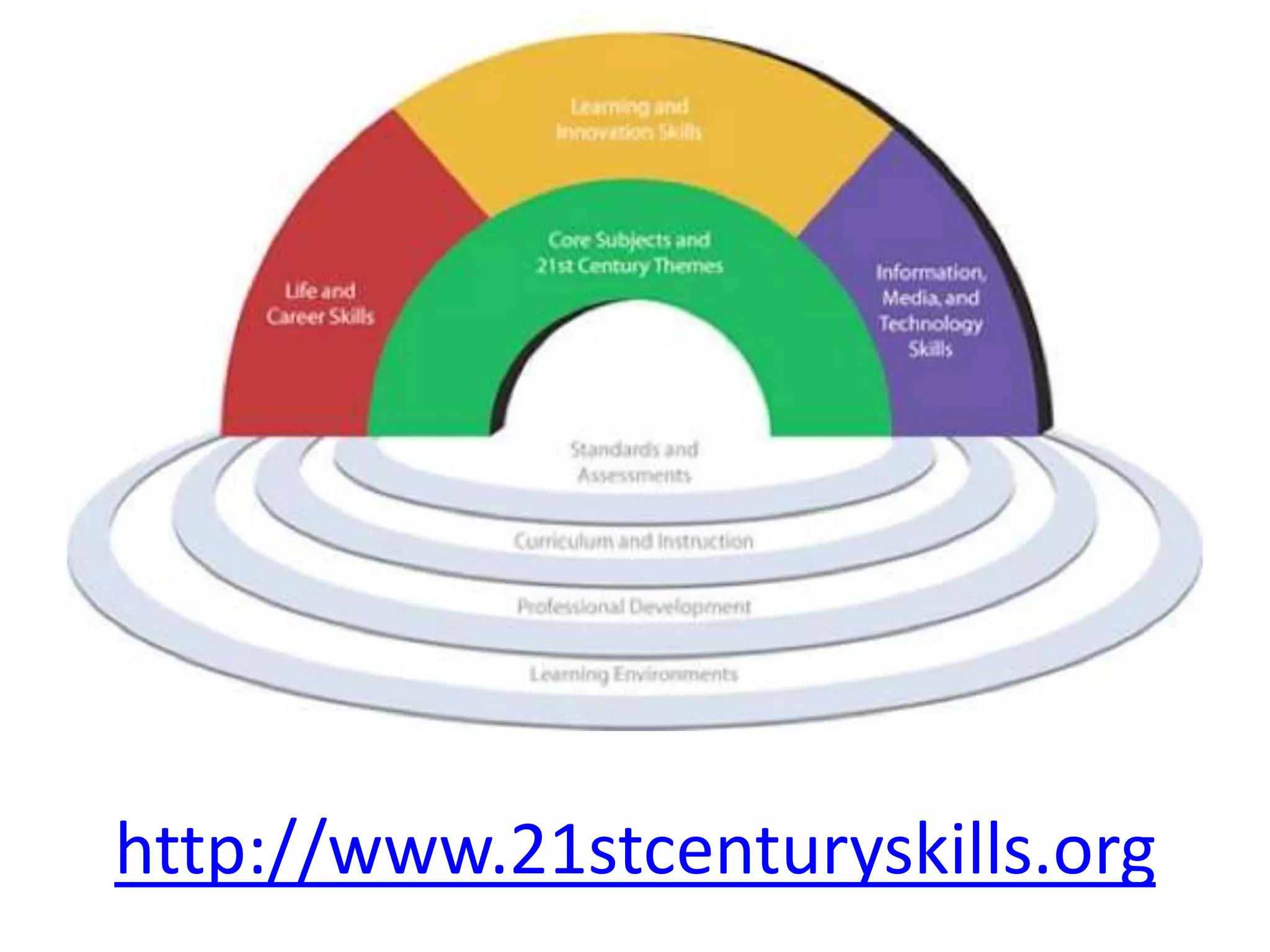
http://www.21stcenturyskills.org
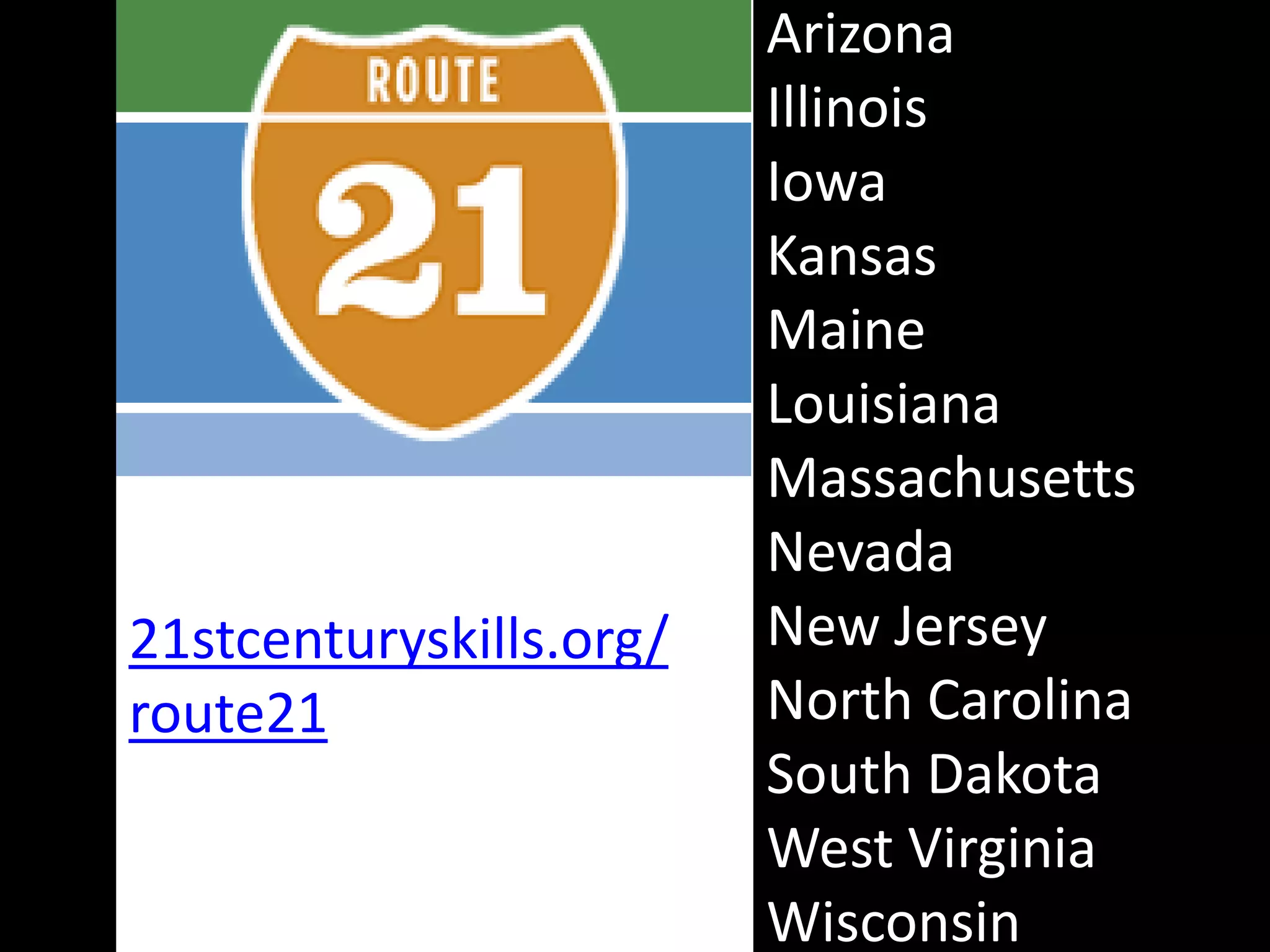
ArizonaIllinoisIowaKansasMaineLouisianaMassachusettsNevadaNew JerseyNorth CarolinaSouth DakotaWest VirginiaWisconsin21stcenturyskills.org/route21
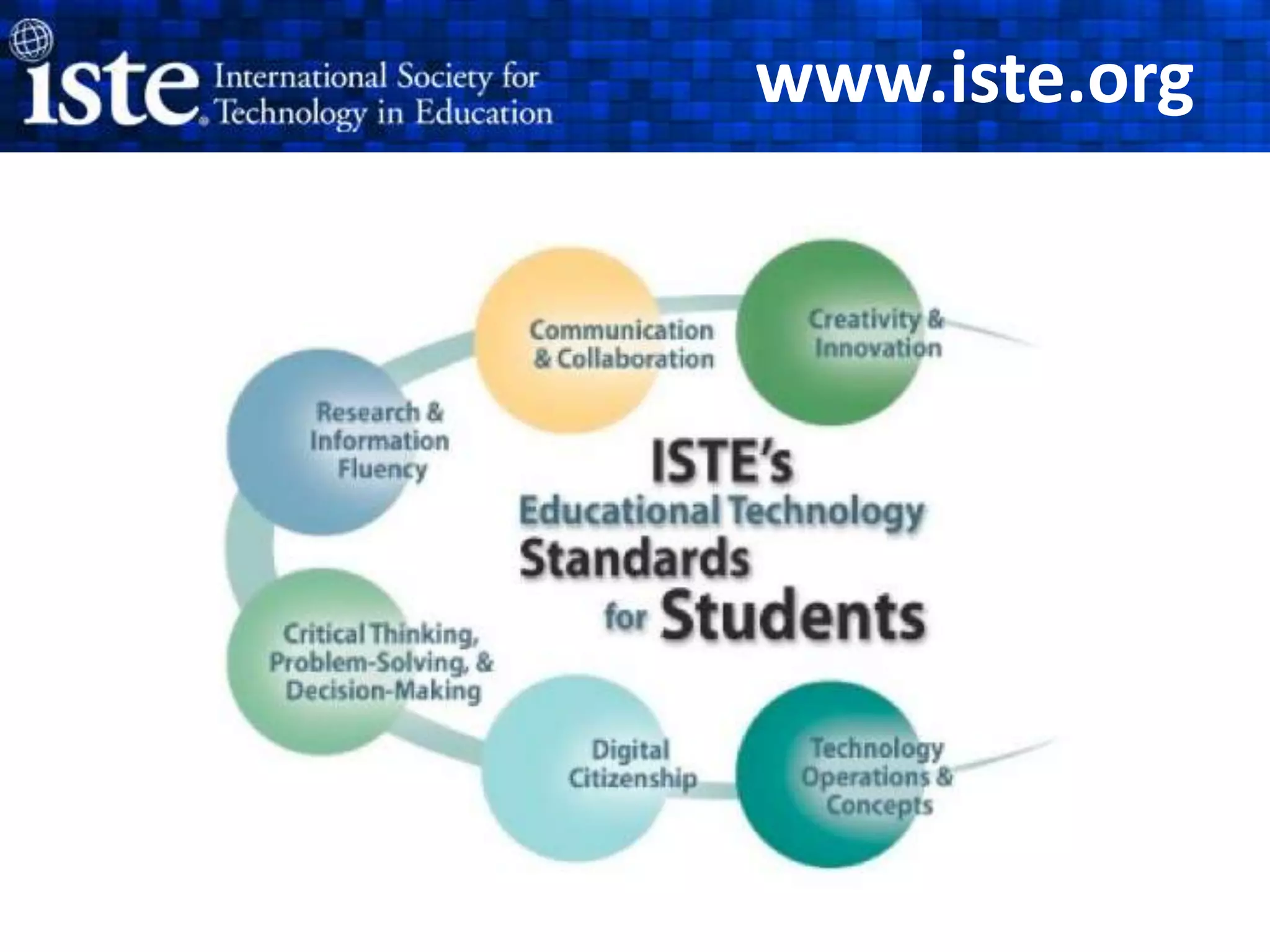
www.iste.org
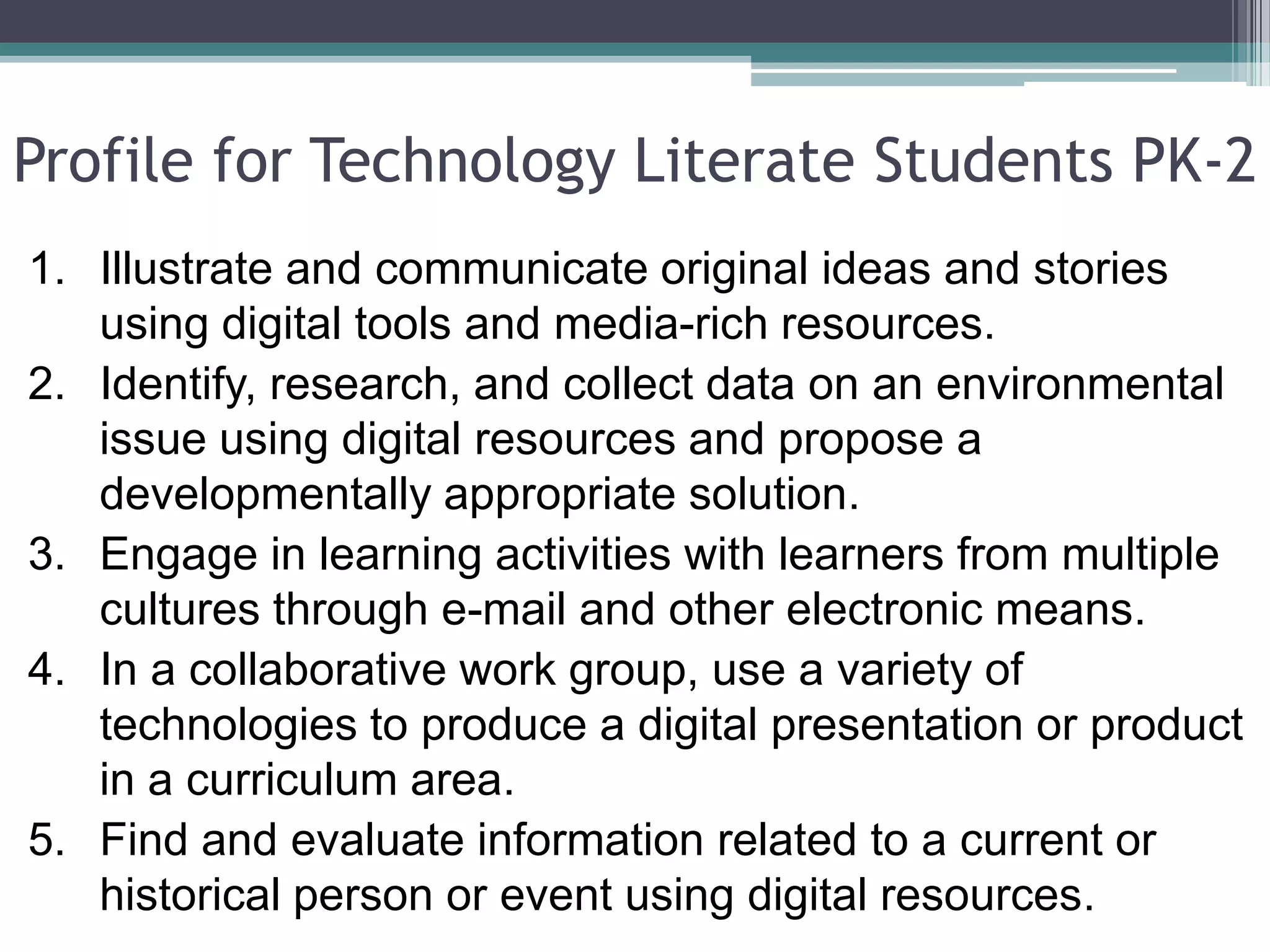
Profile for Technology Literate Students PK-2Illustrate and communicate original ideas and stories using digital tools and media-rich resources.Identify, research, and collect data on an environmental issue using digital resources and propose a developmentally appropriate solution.Engage in learning activities with learners from multiple cultures through e-mail and other electronic means.In a collaborative work group, use a variety of technologies to produce a digital presentation or product in a curriculum area.Find and evaluate information related to a current or historical person or event using digital resources.
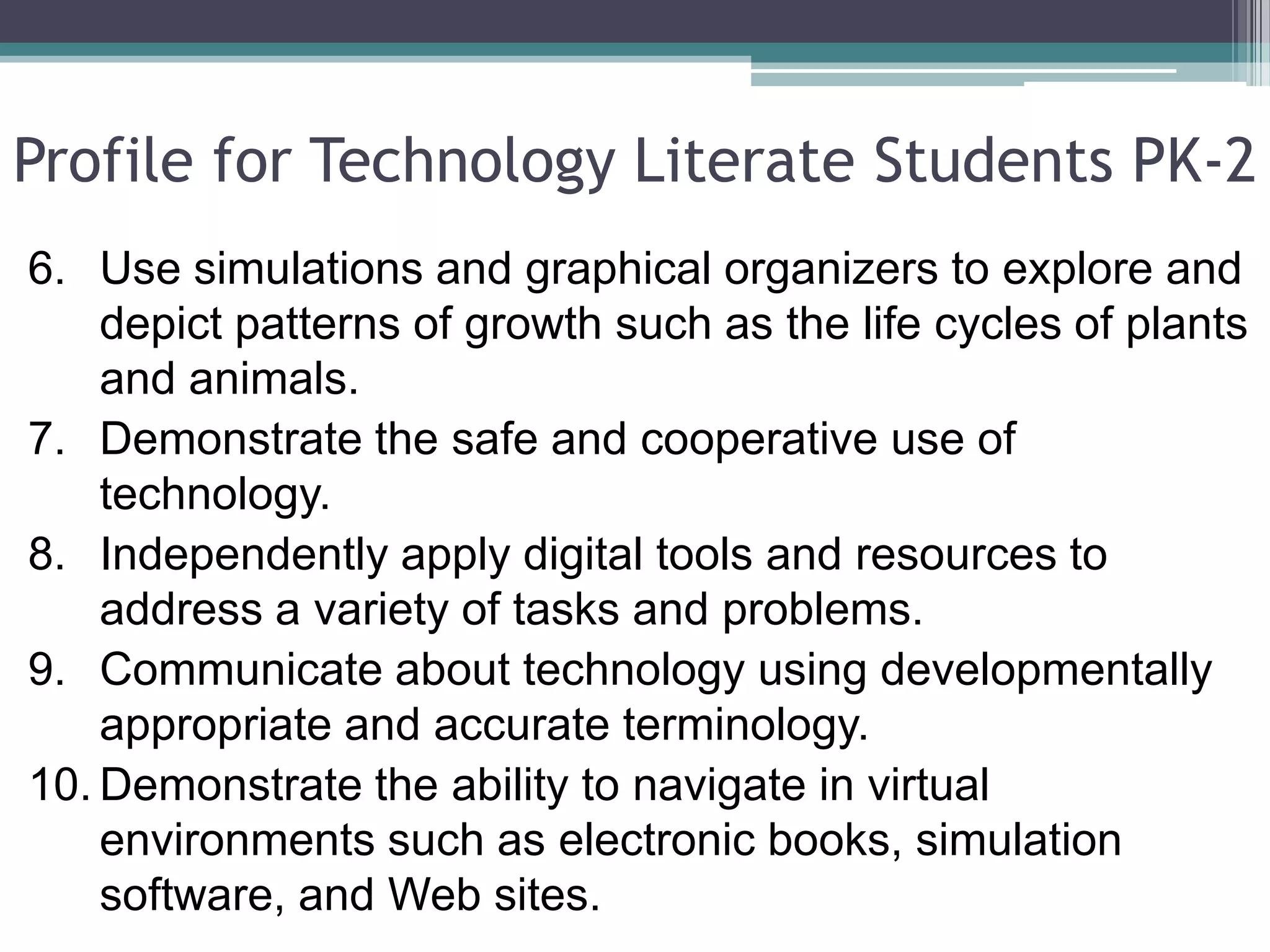
Profile for Technology Literate Students PK-2Use simulations and graphical organizers to explore and depict patterns of growth such as the life cycles of plants and animals. Demonstrate the safe and cooperative use of technology. Independently apply digital tools and resources to address a variety of tasks and problems. Communicate about technology using developmentally appropriate and accurate terminology. Demonstrate the ability to navigate in virtual environments such as electronic books, simulation software, and Web sites.
What areNewLiteracies?(Leu, Kinzer, Coiro, and Cammack, 2004)
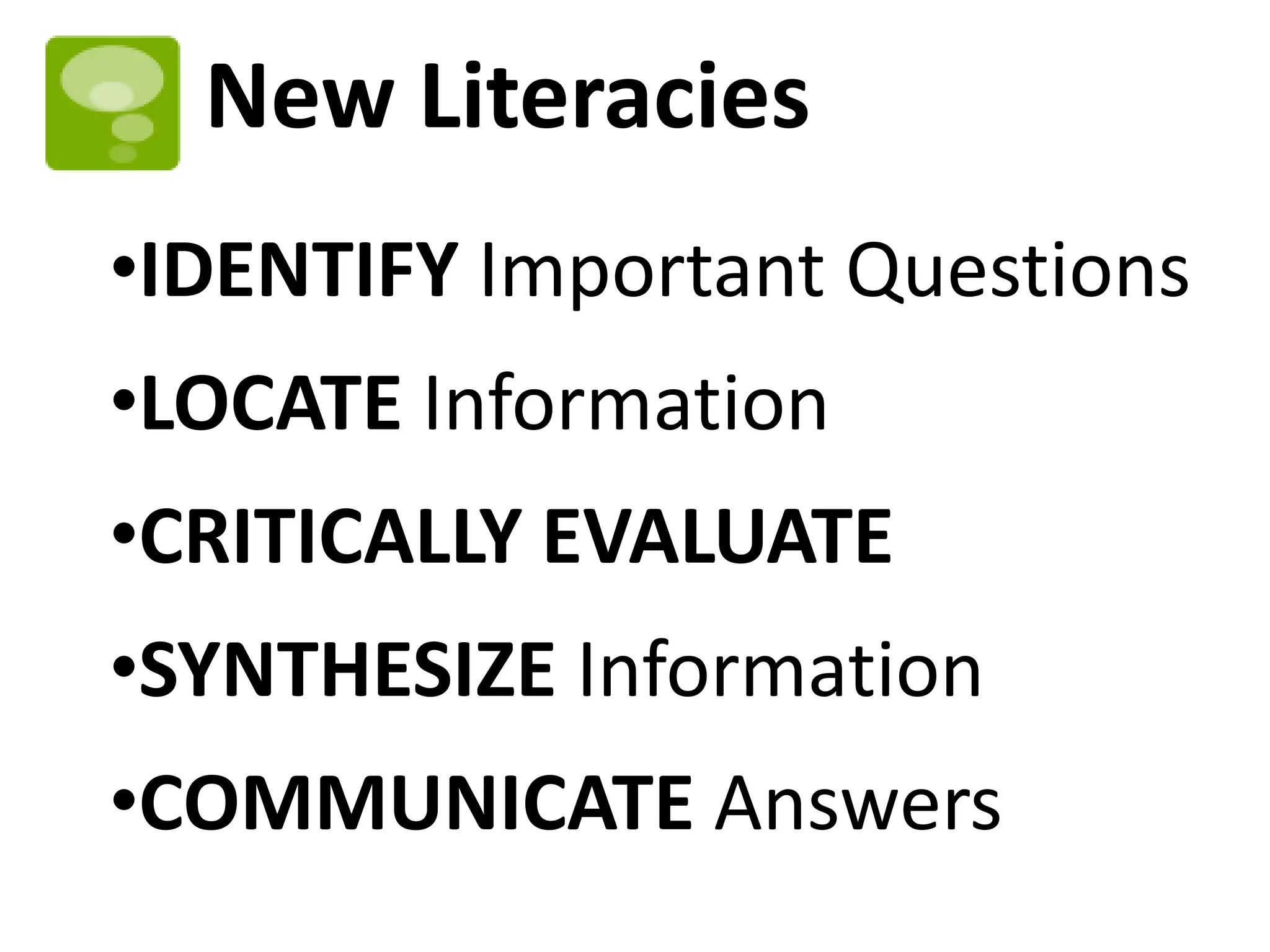
New LiteraciesIDENTIFY Important Questions
LOCATE Information
CRITICALLY EVALUATE
SYNTHESIZE Information
COMMUNICATE Answers
5 Types of Evaluation Understanding Relevancy Accuracy ReliabilityBias(Coiro, 2006)
Rather than running the risk of having our students become "walking encyclopedias," we need to teach them how to think creatively. (Sternberg, 2006)
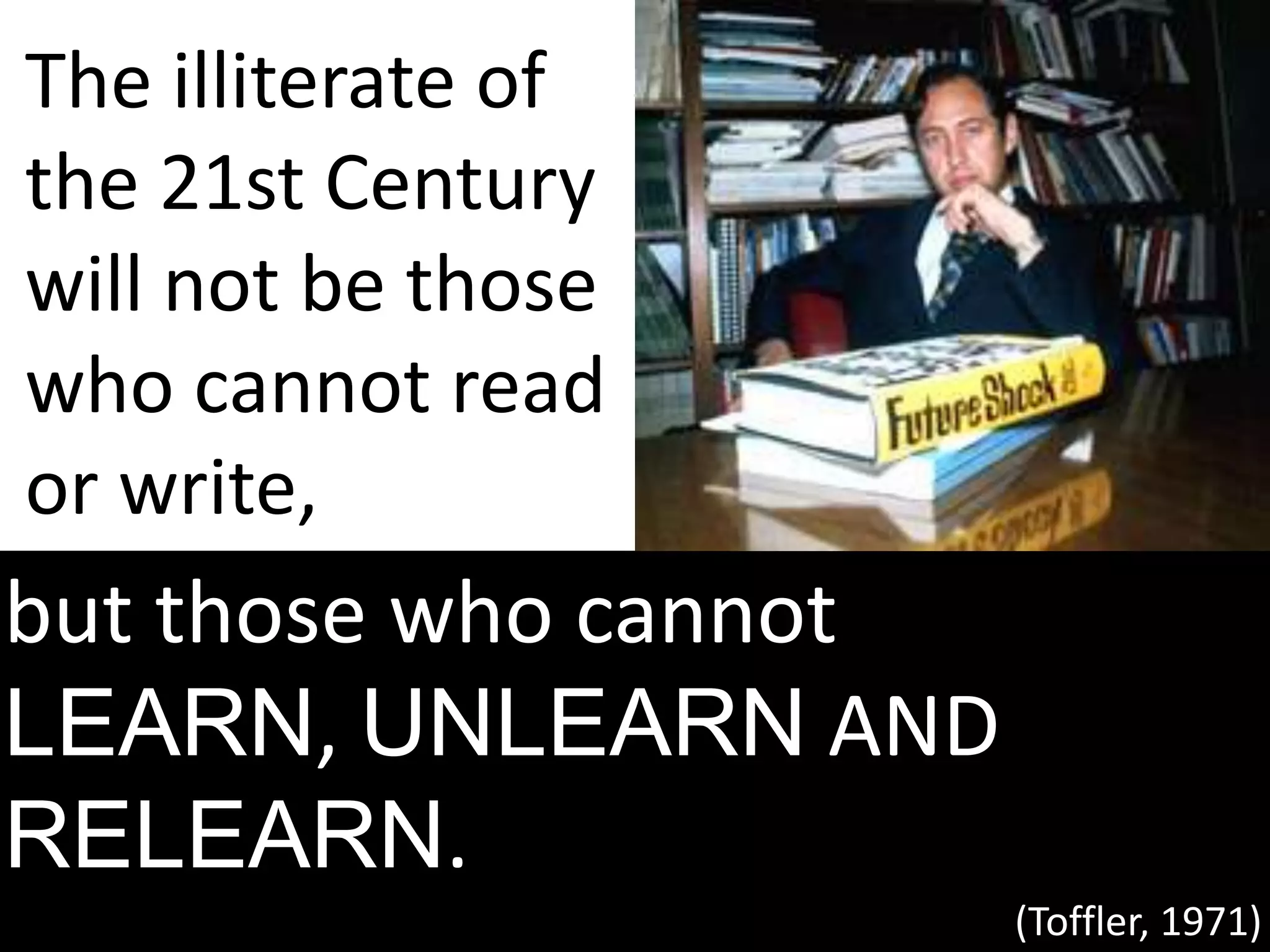
The illiterate of the 21st Century will not be those who cannot read or write, but those who cannot LEARN, UNLEARN AND RELEARN.(Toffler, 1971)
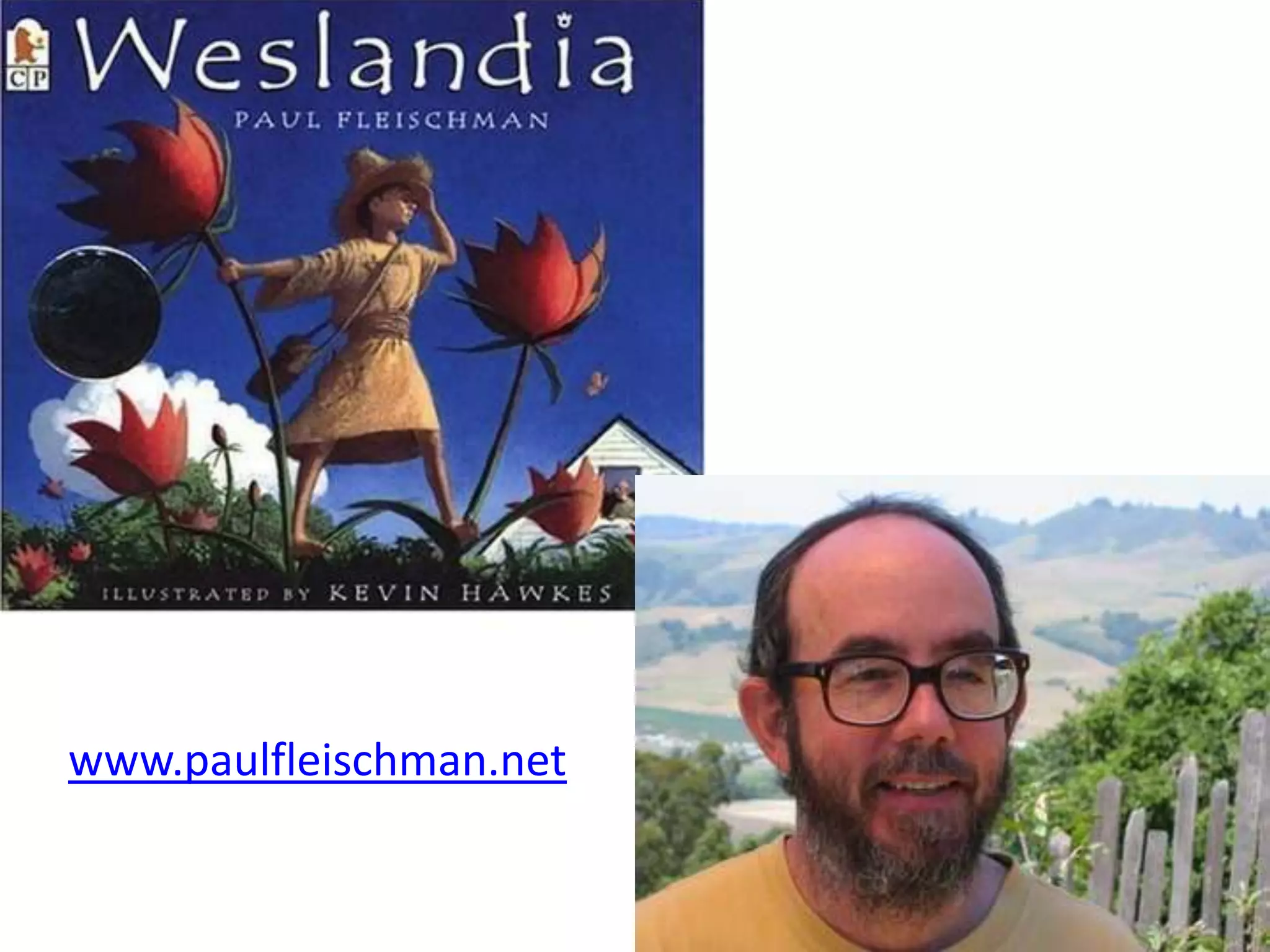
www.paulfleischman.net
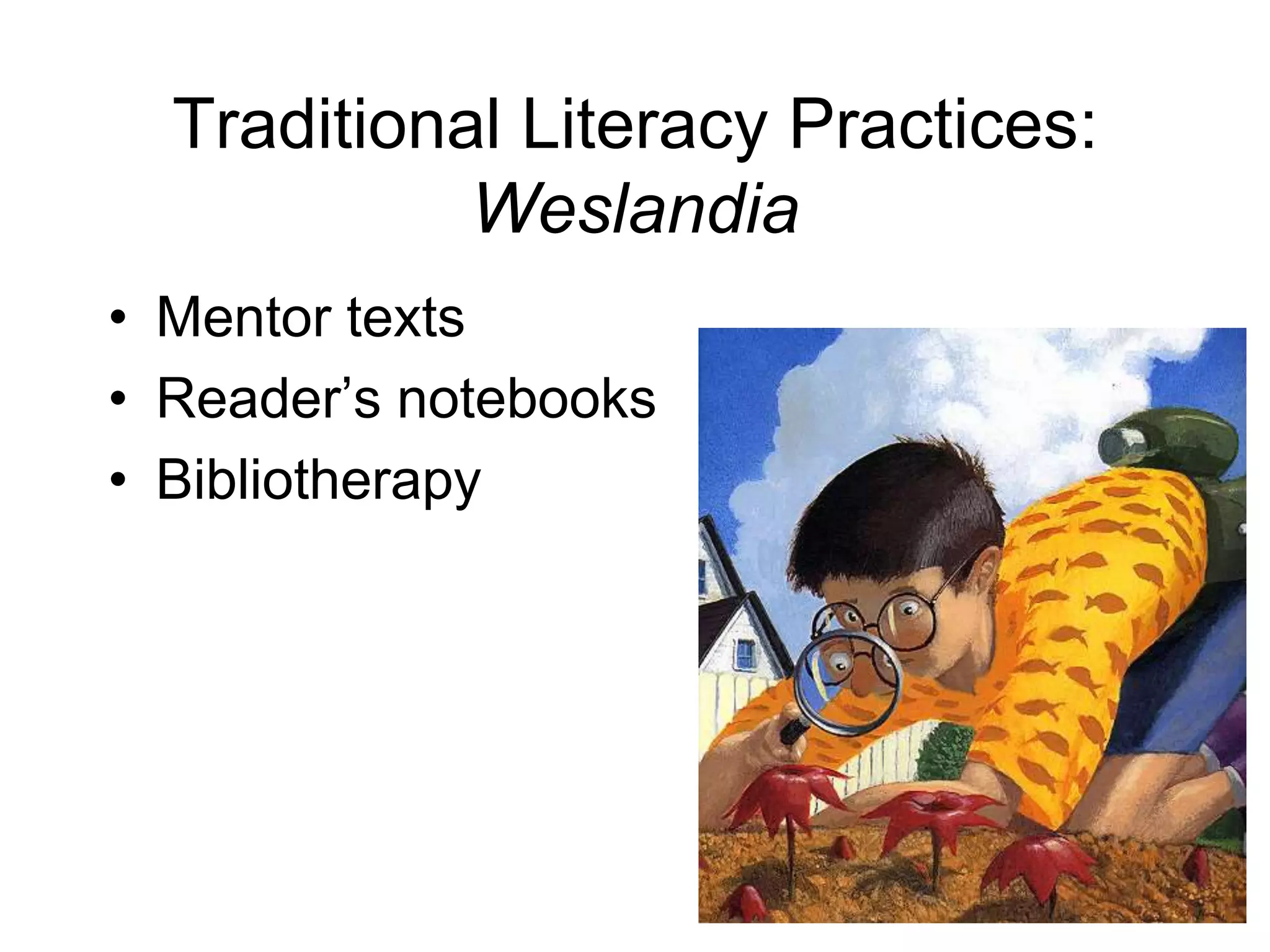
Traditional Literacy Practices:  WeslandiaMentor textsReader’s notebooksBibliotherapy
Mentor Texts
What are Mentor Texts?Pieces of literature that you can return to and read for many different purposesAre to be studied and then imitatedHelp students to make powerful connections to their own livesHelp students to take risks and try out new strategiesShould be books that students can relate to and can read independently or with some support
Importance of Text Selection“A mentor is one who models, coaches, and lifts another to higher levels.”Therefore, a mentor text must be chosen carefully to ensure that it can establish a model of quality writing that appropriate for guiding our students. With the help of a beautifully crafted mentor text, students and teachers can consider the imagery, the possible themes, and the elements that have come together to create the wonderful stories.Source:  http://www.interactivereadalouds.com/overview.aspx
Characteristics of Good Mentor TextsMentor texts:boost language development ,promote active listening, encourage deeper thinking,provide outstanding models of fluency, feature beautiful art, support learning more about the world around us,serve as models of great writing, and are time tested and easily available "classics." Source:  http://www.interactivereadalouds.com/overview.aspx
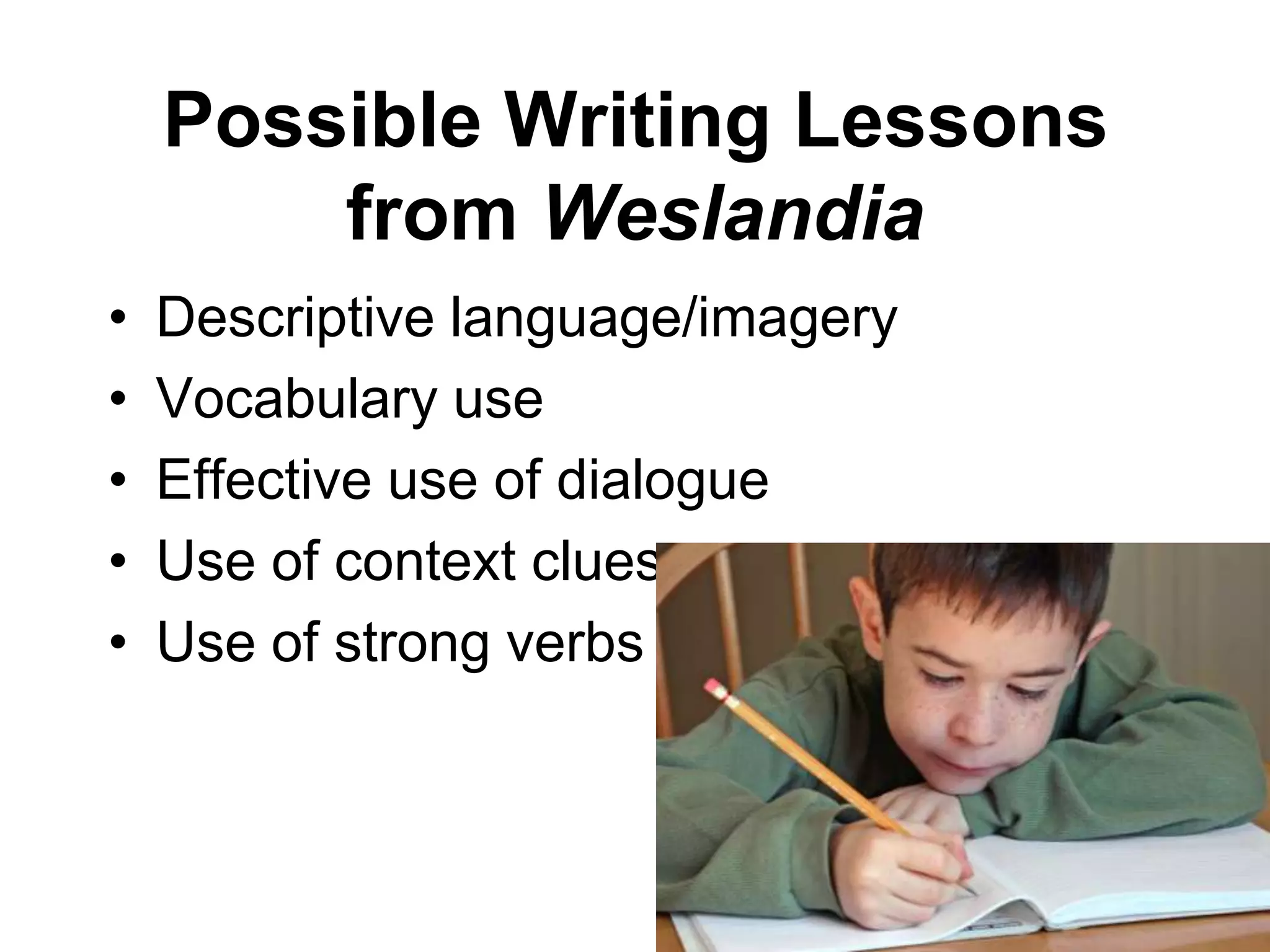
Possible Writing Lessons from WeslandiaDescriptive language/imageryVocabulary useEffective use of dialogueUse of context cluesUse of strong verbs
Sample from WeslandiaFrom Weslandia:  Unlike jeans, which he found scratchy and heavy, the robe was comfortable, reflected the sun, and offered myriad opportunities for pockets.Example:  Unlike a tie, which he thought was binding and hot, the scarf was loose around his neck, kept him shielded from the cold, and gave him more options for wearing bright colors.
Your TurnDetermine the type of writing lesson you would like to develop from using Weslandia.Select a passage that illustrates the aspect you want students to learn.Create a sample passage based on the mentor text passage.
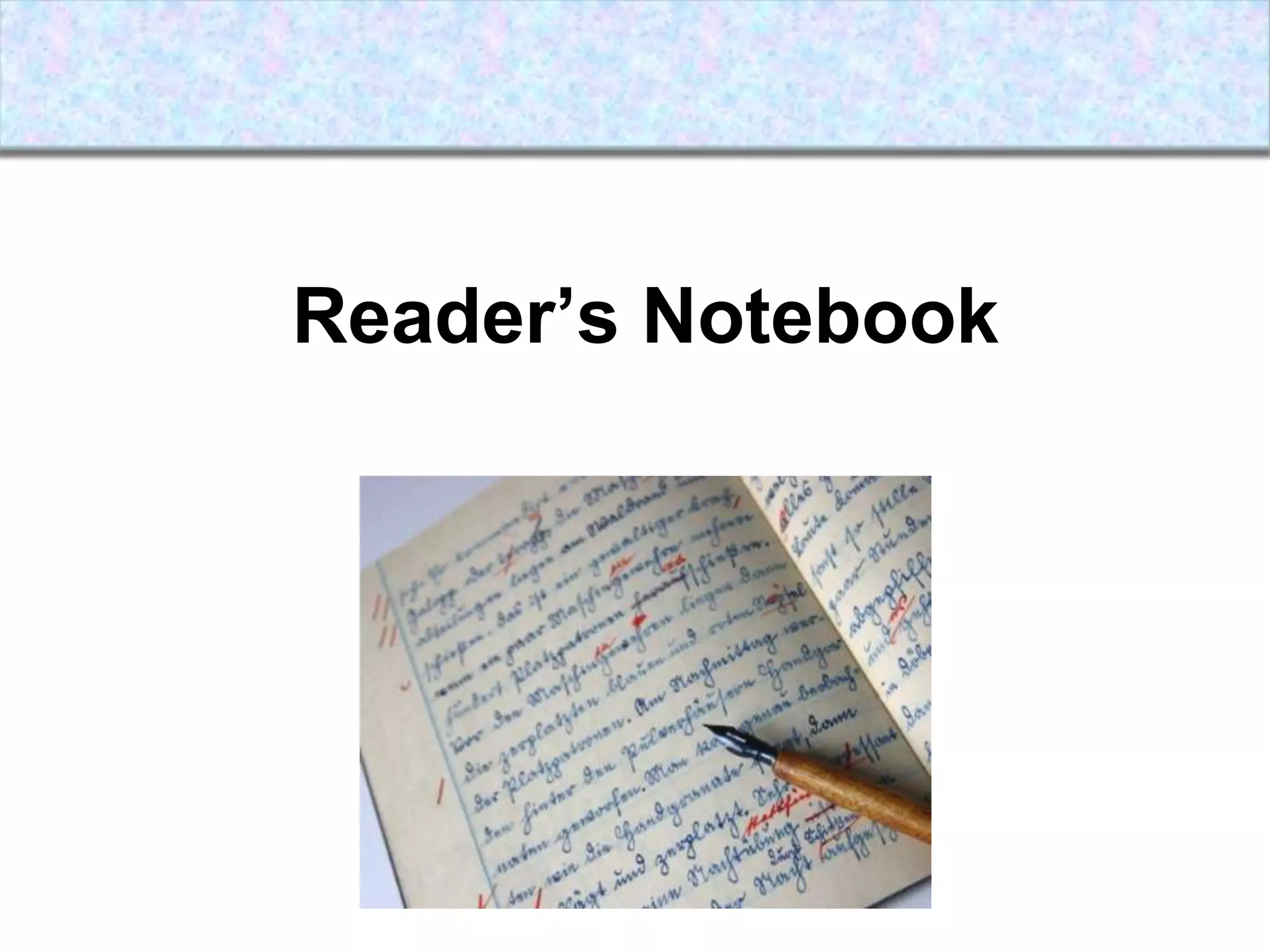
Reader’s Notebook
What is a Reader’s Notebook?It is a notebook of pages in which students write about their reading.  The idea is based upon Rosenblatt’s (1938, 1978, 1983) theory of reading response: a transaction between the reader and the text.It is used throughout the academic year.  All assignments are completed in school.The emphasis is on the intersection of thinking, talking, and writing throughout the reading of a text.  The writing is conversational in tone.
Parts of the Reader’s NotebookThe reading list:  documents amount and kind of reading being doneThe reading interests list:  list of what the student wants to readBooks to read list:  suggestions from teacher, based on analysis of student’s listsThe letters:  responses from student to teacher and vice versa about the textGuided reading/Book club (writing about reading):  responses shared in book club setting
Bibliotherapy
What is Bibliotherapy?Guided reading which helps individuals understand themselves and their environments, helps them learn from others, and helps them find solutions to problems (Byrne, 2005).An interactive process in which the reader becomes part of the unfolding intellectual and emotional process of the story.  The reader responds by modifying his/her own behavior or attitude (Abdullah, 2002).
Benefits of BibliotherapyProvides opportunity for participants to recognize and understand themselves, their characteristics, and the complexity of human thought and behavior.Promotes social development as well as the love of literature in general, and reading in particular.Reduces feelings of isolation that may be felt by people with problems.						--Abdullah, 2002
Goals of Bibliotherapyto provide information about problemsto provide insight into problemsto stimulate discussion about problemsto communicate new values and attitudesto create an awareness that others have dealt with similar problemsto provide solutions to problems                                            -Pardeck, 1994
Importance of Using Literature to Help Children Cope with ProblemsThrough literature children can understand that they are not alone in encountering problems.Teachers can guide children in discussing their problems more freely.Teacher and children can share their feelings, which will help teachers and children relate better to one another.Teachers and children, through literature, work together to find different solutions for problems.
Choosing Books for BibliotherapyMore frequently fiction than nonfiction because of emotional appealBe wary of books written for therapeutic purposes.Maintain high level literature to ensure it will touch and challenge gifted students.Look for situations that evoke emotions.Look for situations that offer alternatives.Look for characters with whom the reader can identify.
Selecting Books for Emotional AppealCharacters coping with similar issuesEmphasis on learning to accept differencesProductive, supportive adult charactersGiftedness present as a characteristic with related behaviorsStruggles with moral and ethical choicesHumor-- Halsted, 1994
Criteria for Selecting Books for Gifted Learners (Emotional Development)Some characters should be gifted adults.Some of the child characters should clearly be gifted themselves.Giftedness need not necessarily be labeled.Characters should be open-minded, questioning, with a passion for learning everything or devoted to one subject of intense interest.Characters should be struggling with issues of personal or moral courage, personal values, and moral and ethical choices.Some books should have humor of a high level.
Cautions with BibliotherapyMaintain awareness of the possibility of deeper problems.Identify children who seem unable to relate meaningfully to the book or to the group.Control the depth of the discussion -- not everything needs to be explicitly said.Emphasize confidentiality.
Areas for UsingBibliotherapyAcademic achievementAssertivenessAttitude changeBehavioral changeFear reductionSelf-conceptSelf-development
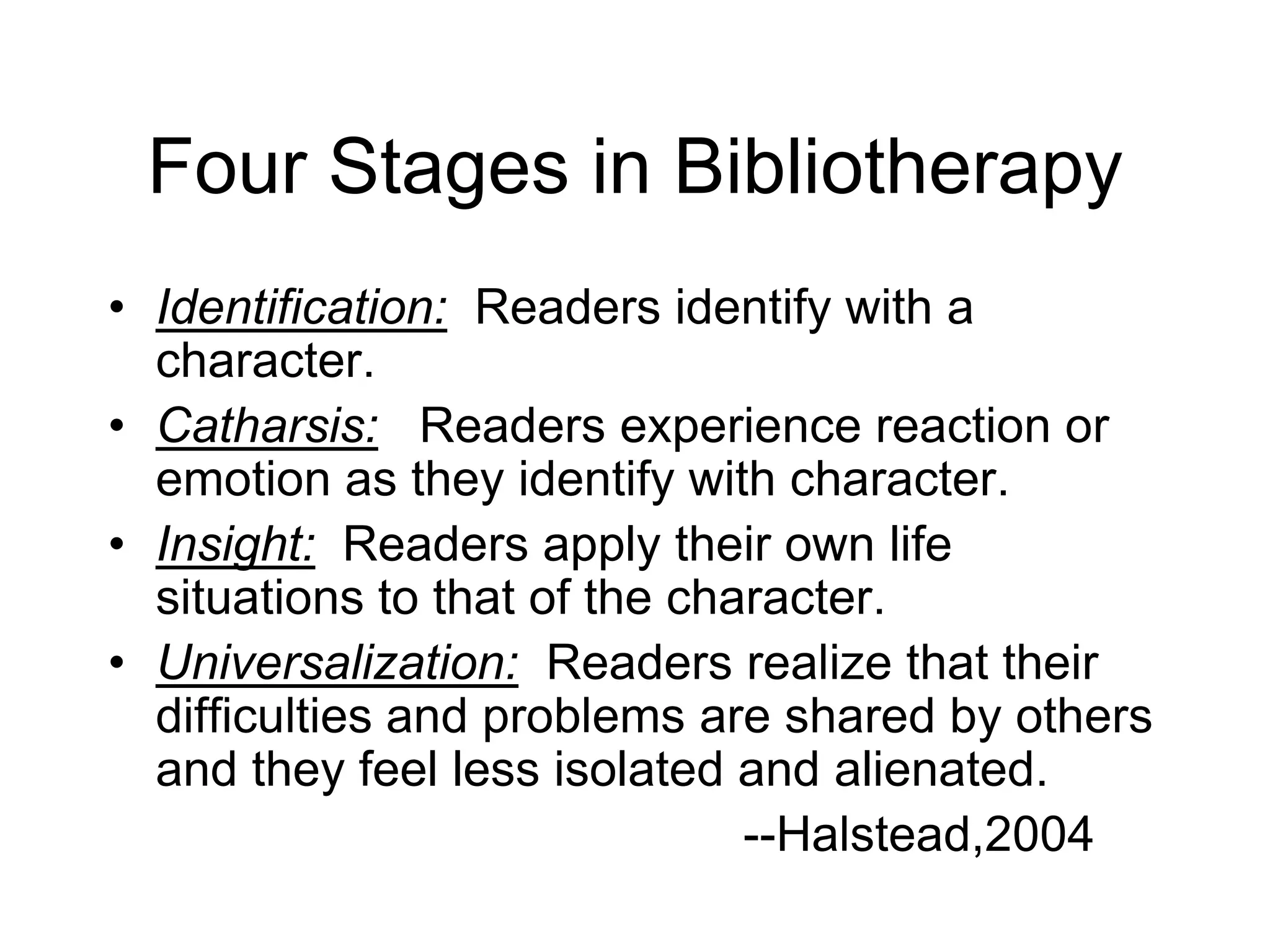
Four Stages in BibliotherapyIdentification:  Readers identify with a character.Catharsis:   Readers experience reaction or emotion as they identify with character.Insight:  Readers apply their own life situations to that of the character.Universalization:  Readers realize that their difficulties and problems are shared by others and they feel less isolated and alienated.						--Halstead,2004
Preparing the QuestionsUse fact questions to set the stage and ascertain general level of understanding and response.Use interpretive questions to move into the stages of bibliotherapy.
Identification QuestionsDescribe Wesley.How are you like Wesley? Why?Do you think that Wesley is gifted? Why or why not?Do you think that Wesley feels different from others? Why or why not?
CatharsisHow do you know that Wesley was not like other children his age?Why do you think Wesley felt that he was an outcast?What happens in the book to help Wesley become more accepted by his peers?How did Wesley exhibit resourcefulness?
Insight (Self-awareness)Do you feel different from others?  Why or why not?How do your relationships with others affect how you feel about yourself?How do you deal with feeling different from others?How resourceful could you be if you were left alone on a deserted island?
UniversalizationHave you ever known/heard of someone that people thought was bad because he or she was different? Have people ever thought you were bad because you were different?  Describe how you dealt with the situation.
Your TurnReview the sample questions for each portion of a bibliotherapy lesson using Weslandia.Develop one additional question for each portion.Be prepared to share your ideas.
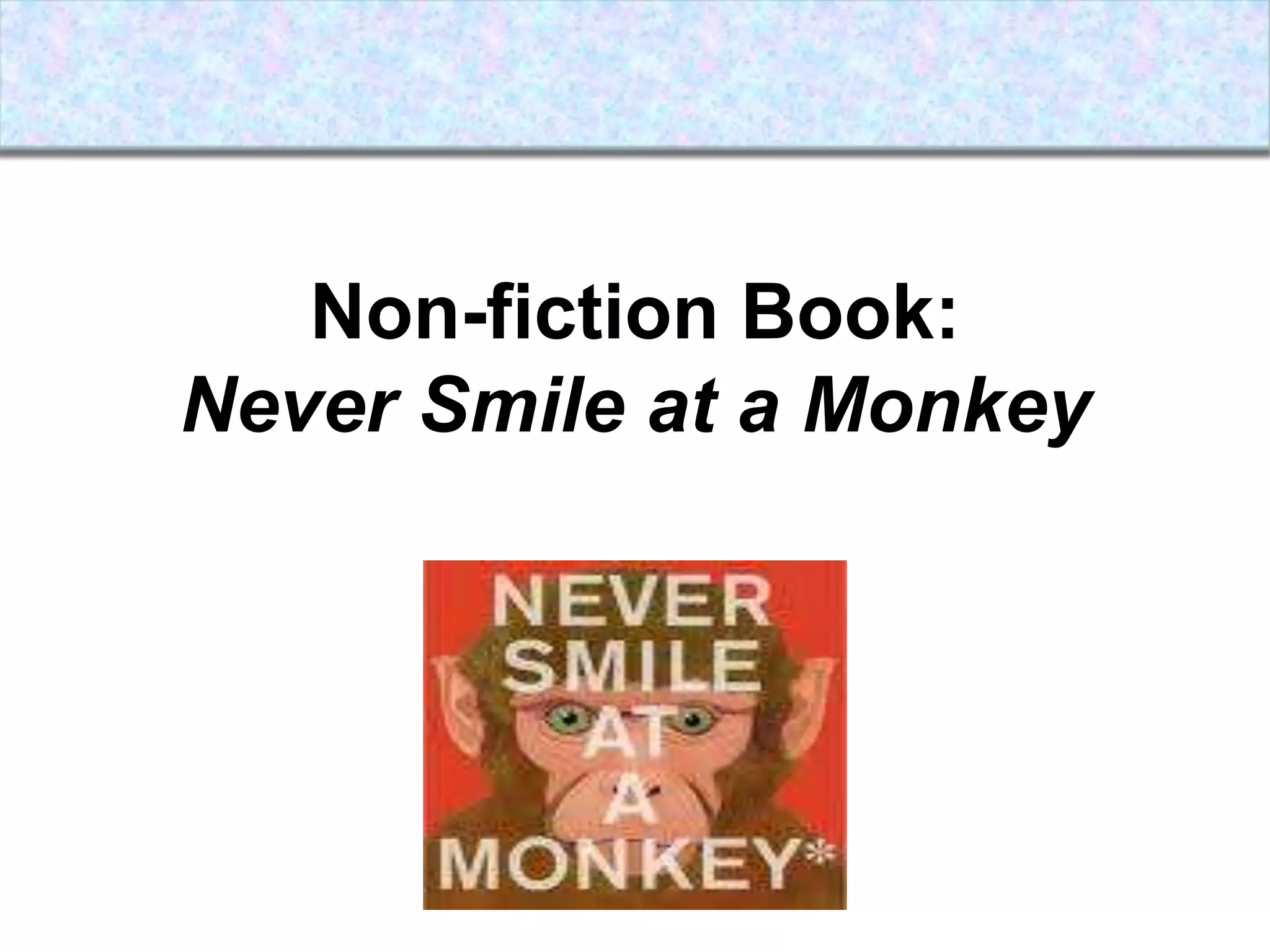
Non-fiction Book:Never Smile at a Monkey
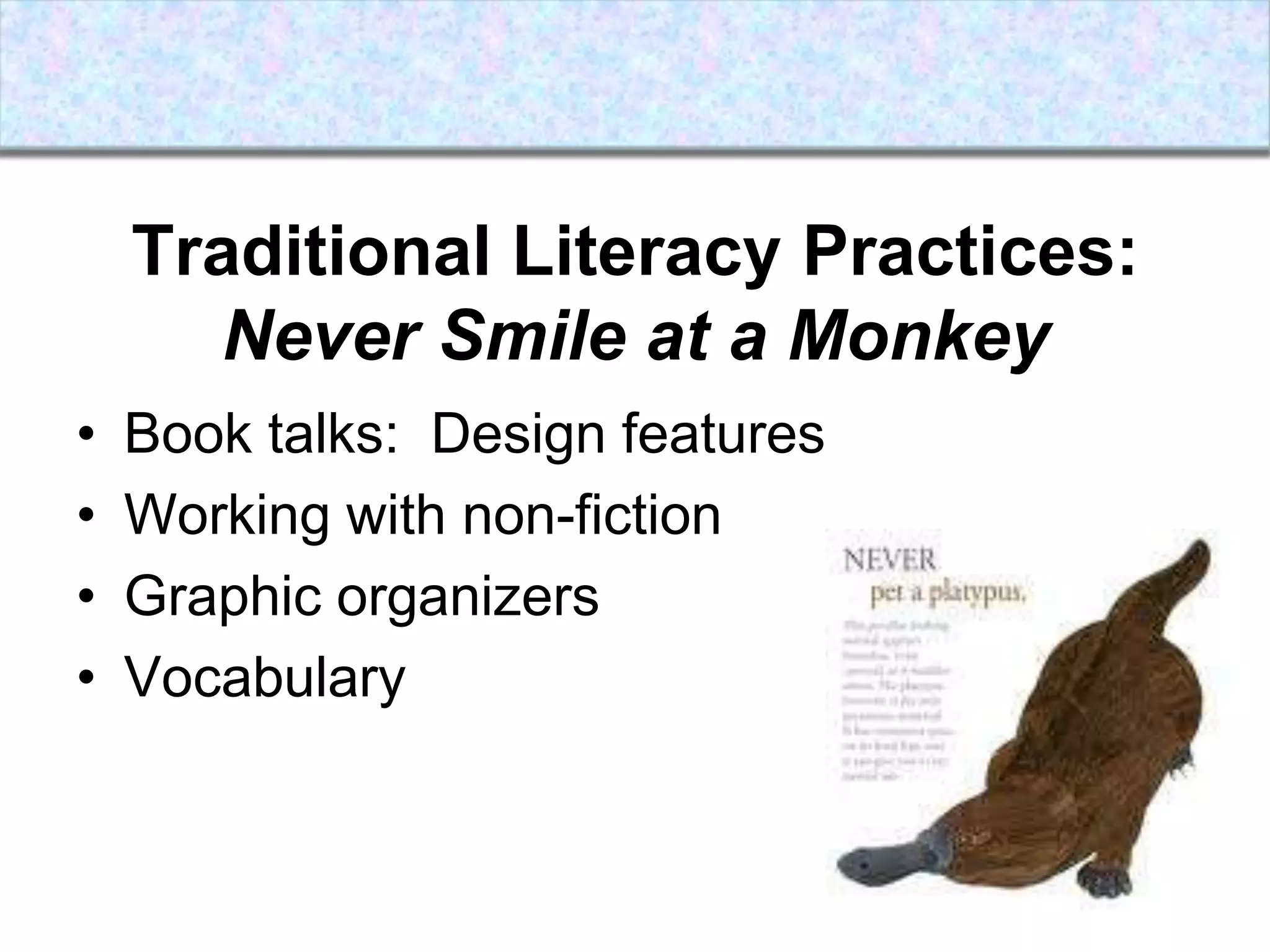
Traditional Literacy Practices:  Never Smile at a MonkeyBook talks:  Design featuresWorking with non-fictionGraphic organizersVocabulary 
Book Talks:  Design FeaturesInformational books have 10 key design features.In planning a book talk, should analyze the text in terms of the ten key design features.  Determine what is most important for emphasis with your students.
Informational Text Design FeaturesGenre:  writing styleText structure:  organization of text (categories; chronological sequence;  cause and effect)Content:  subject matter.  What challenges are presented by the text?Themes and ideas:  What are the big ideas in the book?  Is there a main theme with supporting themes? Language and literary features:  figurative language, dialogue, description, technical language, etc.
Informational Text Design Features (cont.)Sentence complexity:  long sentences vs. short ones; simple vs. compound sentences; use of independent and dependent clauses, etc. Vocabulary:  word meaningsWords:  issues in decoding wordsIllustrations:  drawings, paintings, photographs, etc. How do the illustrations contribute to the meaning of the text?Book and print features:  physical attributes of the text (length; words and sentences per page; layout; print size; punctuation; way sections are indicated, etc.)When introducing this text, keep in mind……
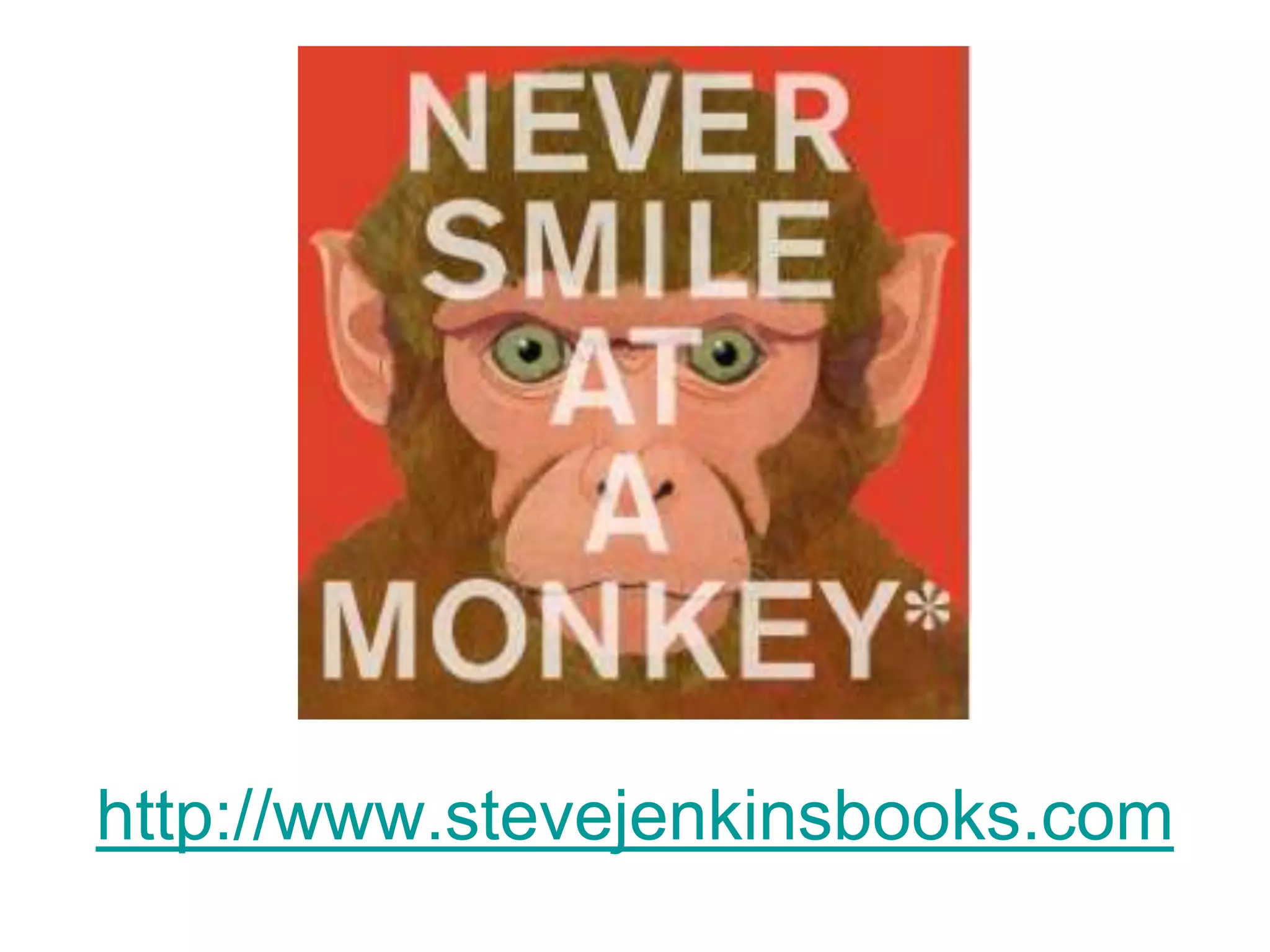
Your Turn: Informational Text Design Features Read Never Smile at a Monkey.Review the design feature(s) assigned to your group.Be prepared to share your information and how you would use it in a book talk.
http://www.stevejenkinsbooks.com
Working with Non-fiction
Working with Non-fictionUsing text structuresAnticipating and predictingAppreciating different opinionsRecognizing biasSynthesizing information
Exploring Nonfiction:  Questions and Organizers to Guide Reading and Understanding of Nonfiction Texts	- Teacher Guide	- Student Guide
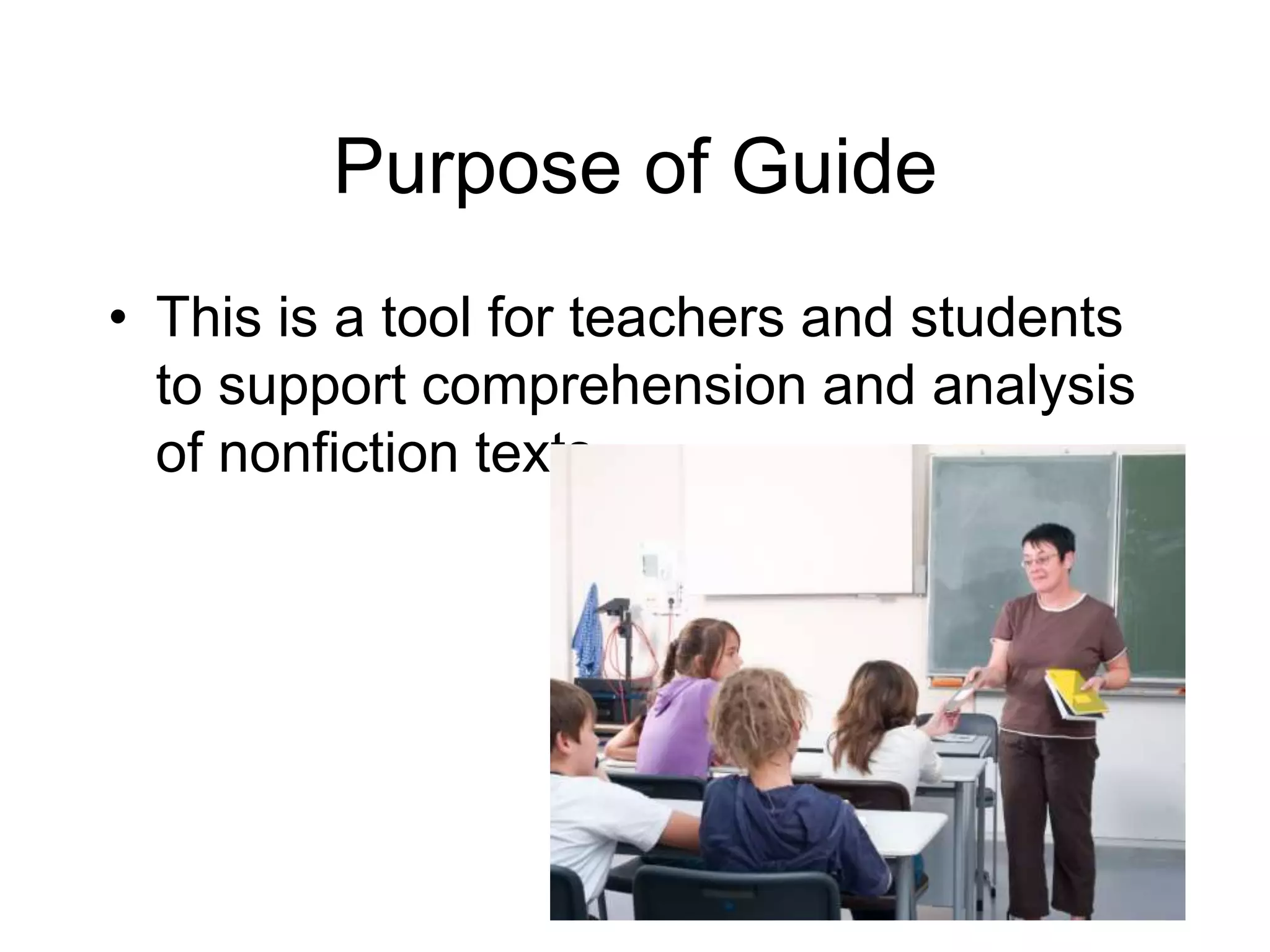
Purpose of GuideThis is a tool for teachers and students to support comprehension and analysis of nonfiction texts.
GoalsTo develop student skills in reading and comprehending nonfiction textsTo develop student skills in planning, monitoring, and evaluating the reading processTo develop students’ higher level thinking and reasoning skills in language arts and the other content areasTo develop students’ understanding of the link between the practices and content of a discipline and the presentation of informationTo develop students’ skills in identifying and analyzing concepts within and across disciplines
ImplementationThe guide is not linked to a particular text or reading selection.  It is applicable to multiple texts in multiple formats.The student guide may be given to students to use independently.  The teacher may copy selected pages from the student guide for students to use with the texts they read.
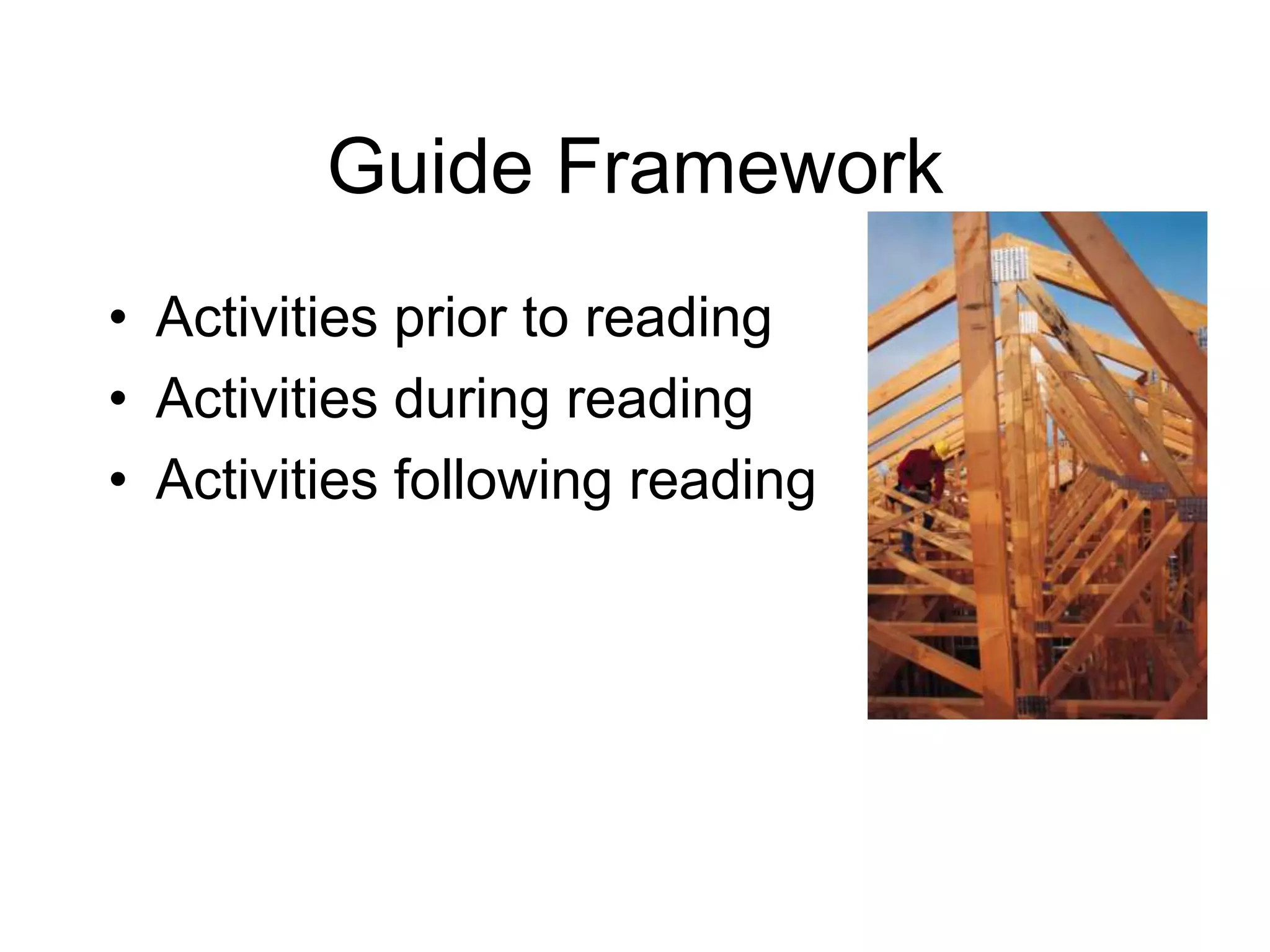
Guide FrameworkActivities prior to readingActivities during readingActivities following reading
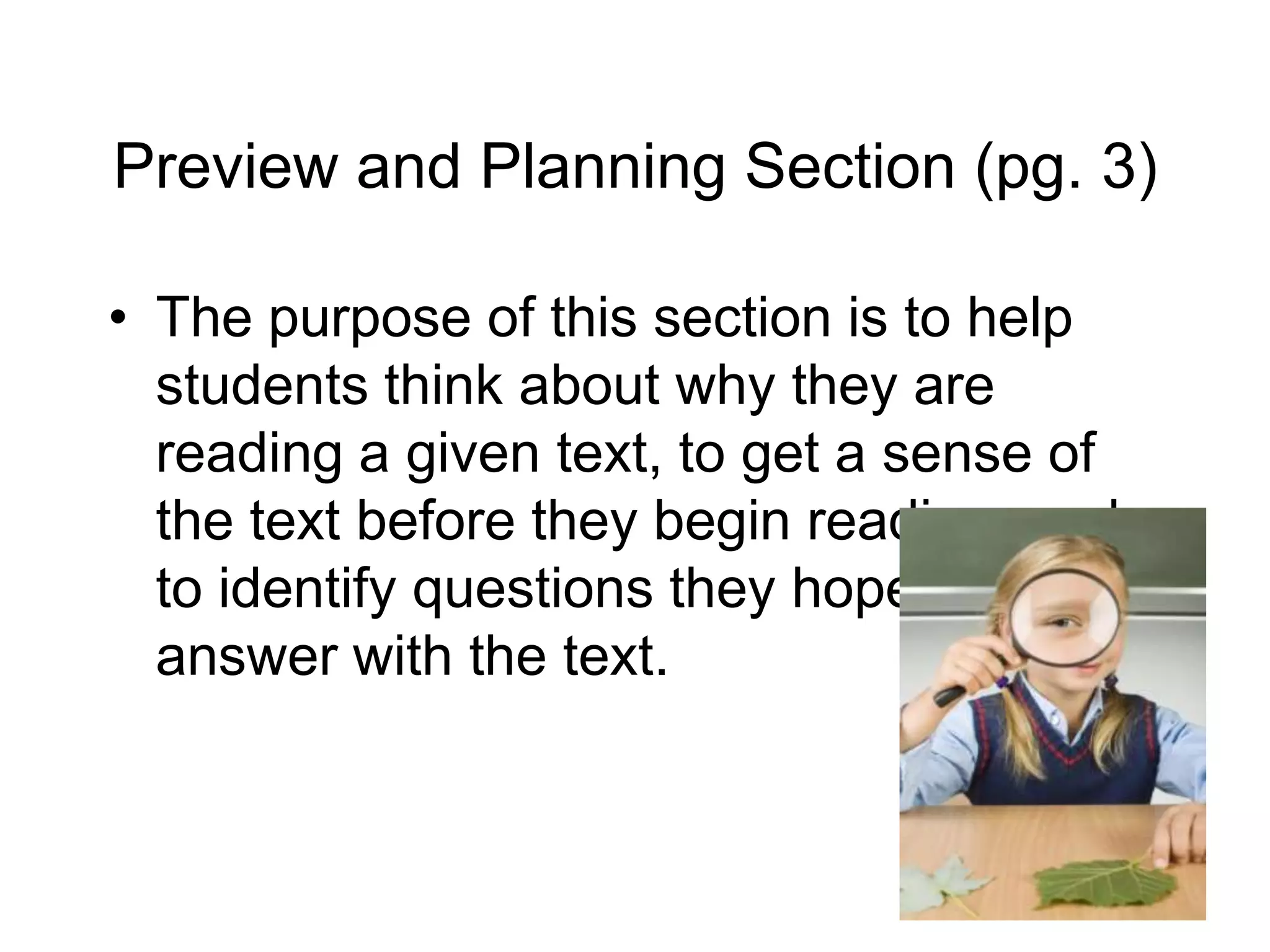
Preview and Planning Section (pg. 3)The purpose of this section is to help students think about why they are reading a given text, to get a sense of the text before they begin reading, and to identify questions they hope to answer with the text.
Preview Chart (pg. 5)The purpose of this chart is to encourage students to look for the special features of a text that will help guide them through their reading.
Planning Chart (pg. 6)The purpose of this chart is to encourage students to think about their purpose in reading and their current understanding of the topic under study.
Read and Discover Section (pg. 7)The purpose of this section is to provide students with some tools they can use during reading to monitor and summarize what they are reading.
Reading Log (pg. 8)The purpose of the reading log is for the students to keep notes as they read.
Question Chart (pg. 9)The purpose of this chart is to connect what students discover as they read with the questions they identified in the planning stage.
Connecting Prior Knowledge (pg.10)The purpose of this activity is to encourage students to identify what aspects of prior knowledge they activated in trying to understand new information.
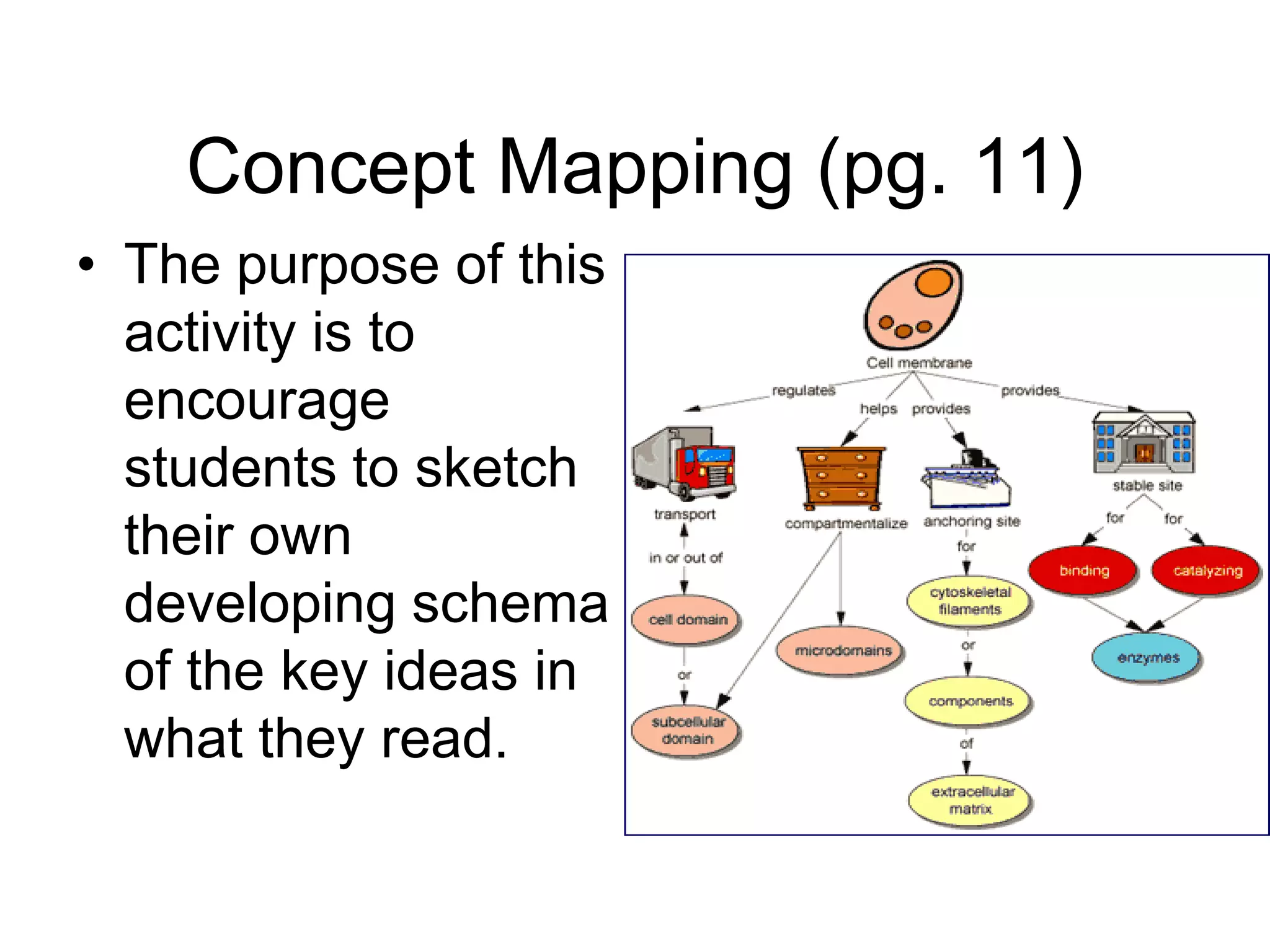
Concept Mapping (pg. 11)The purpose of this activity is to encourage students to sketch their own developing schema of the key ideas in what they read.
Review and Go Beyond Section (pg. 12)The purpose of this section is to encourage students to return to their original plans for reading and use that as a basis for reviewing what they have learned and thinking of new questions.
Summary Chart (pg. 13)The purpose of this chart is to connect what students have read directly with what they have planned.
Reasoning Questions (pg. 14)The purpose of these questions is to tie students’ thinking about what they read to a specific critical thinking model (Richard Paul:  www.criticalthinking.org).
Building Blocks (pg. 15)The purpose of this activity is to encourage students to think about the work of experts in the disciplines the students are studying.
Beyond the Book (pg. 17)The purpose of these activities is to encourage further reading with the specific text, and to encourage further investigation of the topic through other resources.
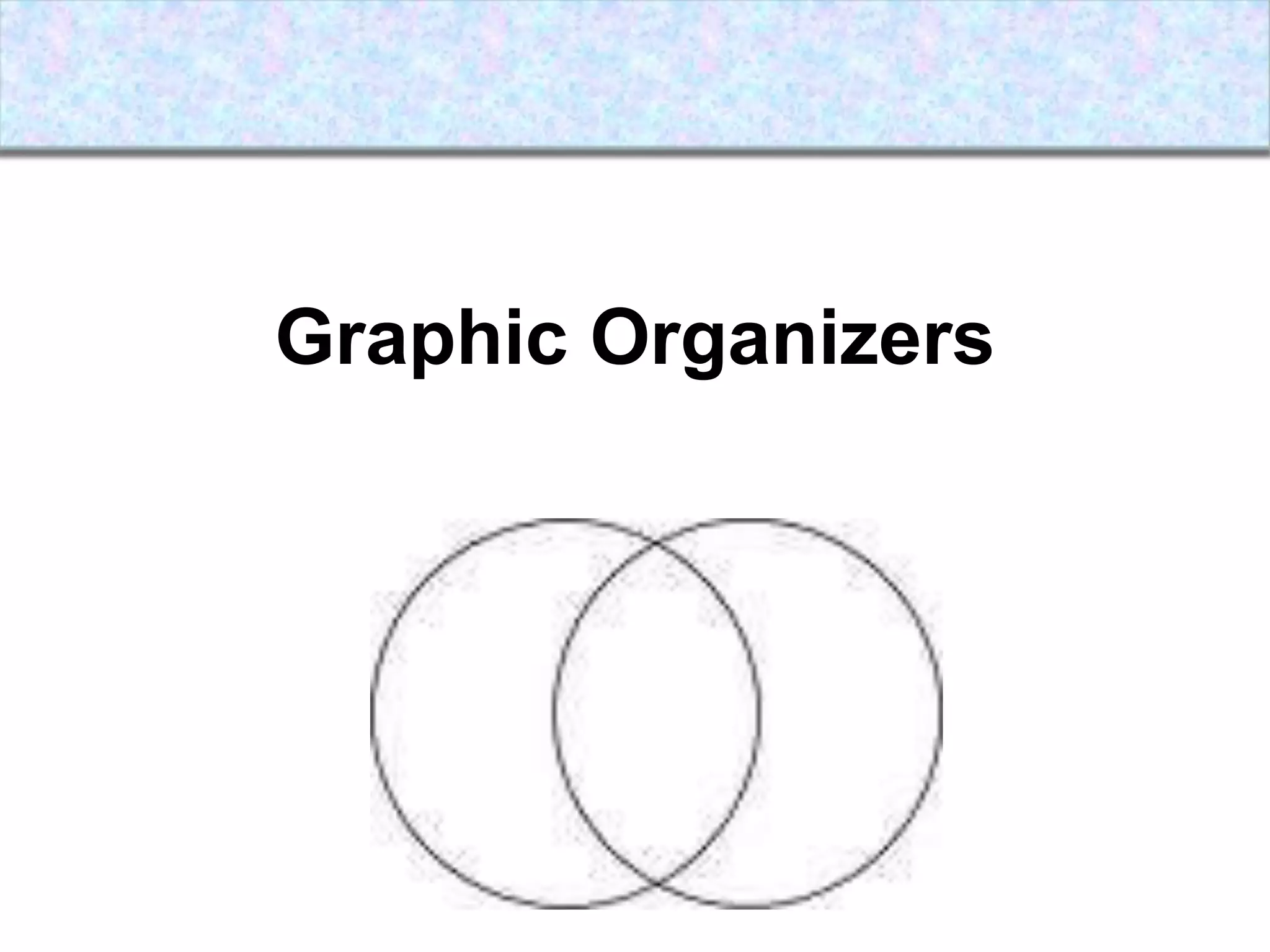
Graphic Organizers
What is a graphic organizer?“A graphic organizer is a visual diagram that shows the relationships among a number of ideas.  Use graphic organizers to help students see the important interrelationships in the information they are reading or to become aware of the way authors have structured a text.  These insights help students with their own writing as well as reading.”Source:  Fountas & Pinnell, 2001, pg. 441.
Tips for Using Graphic OrganizersSelect the graphic organizer relative to your goals for comprehension.Use the organizer with the whole group first, modeling its use multiple times.Have students work in dyads using the organizer before having them work independently with it.Make sure that you are explicit in discussing how the graphic organizer will help to support the students’ thinking.Source:  Fountas & Pinnell, 2006.
How Graphic Organizers Can Support Student ThinkingThey can help readers make connections across texts.They can help readers to analyze texts to notice structure.They can help readers think analytically about literary elements in fiction.They can help readers learn to analyze texts to notice the author’s craft.They can help readers notice and learn new vocabulary.
Vocabulary Instruction
The Role of Vocabulary in ComprehensionA child’s vocabulary level is highly predictive of his/her level of reading comprehension.Words allow us to label our concepts and ideas about the world.Meaning is communicated by the way words are presented according to grammatical rules.Vocabulary limitations are a major factor in the achievement gap between higher income and disadvantaged students.Source: Fountas & Pinnell, 2006.
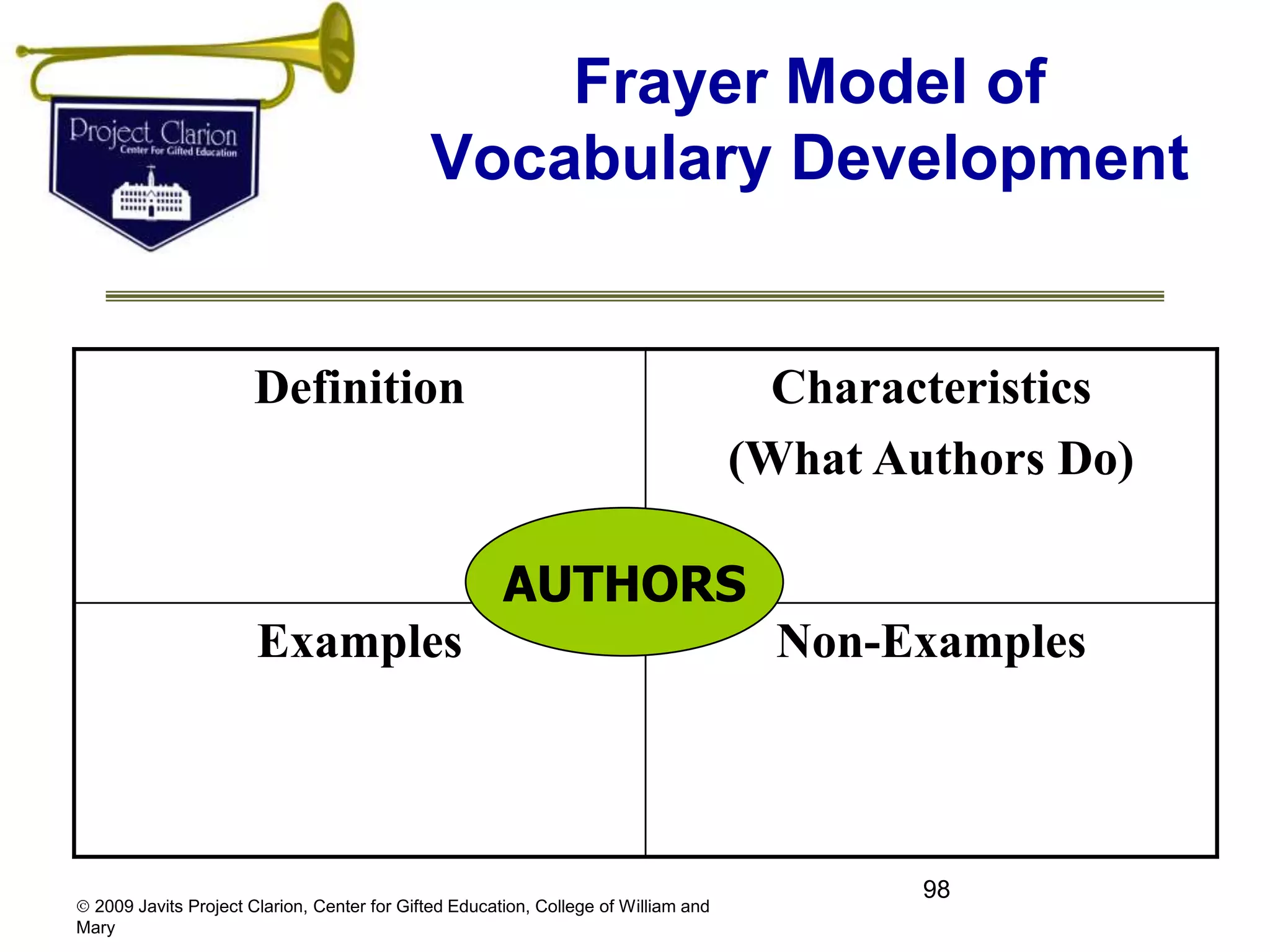
Frayer Model of Vocabulary Development98AUTHORS 2009 Javits Project Clarion, Center for Gifted Education, College of William and Mary
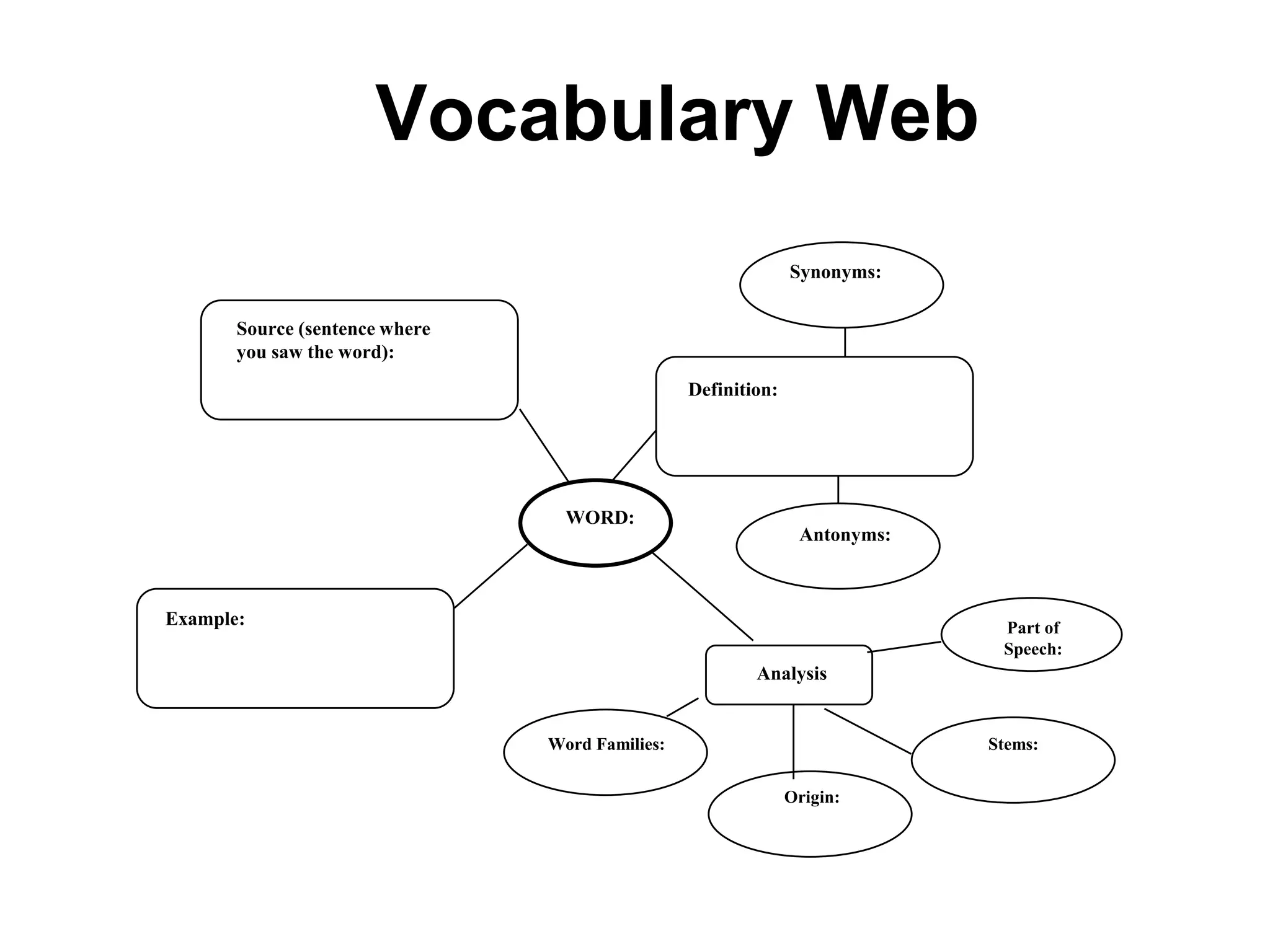
Vocabulary WebSynonyms:Source (sentence where you saw the word):Definition: WORD:Antonyms:Example:Part of Speech:AnalysisWord Families:Stems:Origin:
Vocabulary WebStems:The smaller words and pieces of words from which the larger word is made.  These include prefixes, suffixes, and roots.  Check the dictionary for possible stems. Word Families:Think of other words in the same family as the word or other words which use one or more of the same stems. Example:Develop your own sentence, analogy, picture, or other types of examples that demonstrate understanding of the word.
Recommended DictionariesAmerican Heritage Dictionary of the English Language (4th ed.)Merriam-Webster Collegiate Dictionary (11th ed.)
Other Vocabulary Activities“Quick Writes”:  Give students a new vocabulary word prior to reading a text.  Students write the definition, synonyms and antonyms, or a response to a question about the word.  Students share their Quick Write responses.  After the text is read and students see the word in context, they revisit their responses and make adjustments.“Speaking Out”:  Students select a word from the text that they will use throughout the week.  They maintain a log indicating how they used the word in context.
Online ResourcesWord of the day from Dictionary.com:http://dictionary.reference.com/wordoftheday/Merriam Webster online dictionary: www.m-w.comWord a Day Mailing List:  http://wordsmith.org/awad/
Additional Vocabulary Study MaterialsWord Within the Word by Michael Clay Thompson (Royal Fireworks Press)The Caesar’s English by Michael Clay Thompson (Royal Fireworks Press)
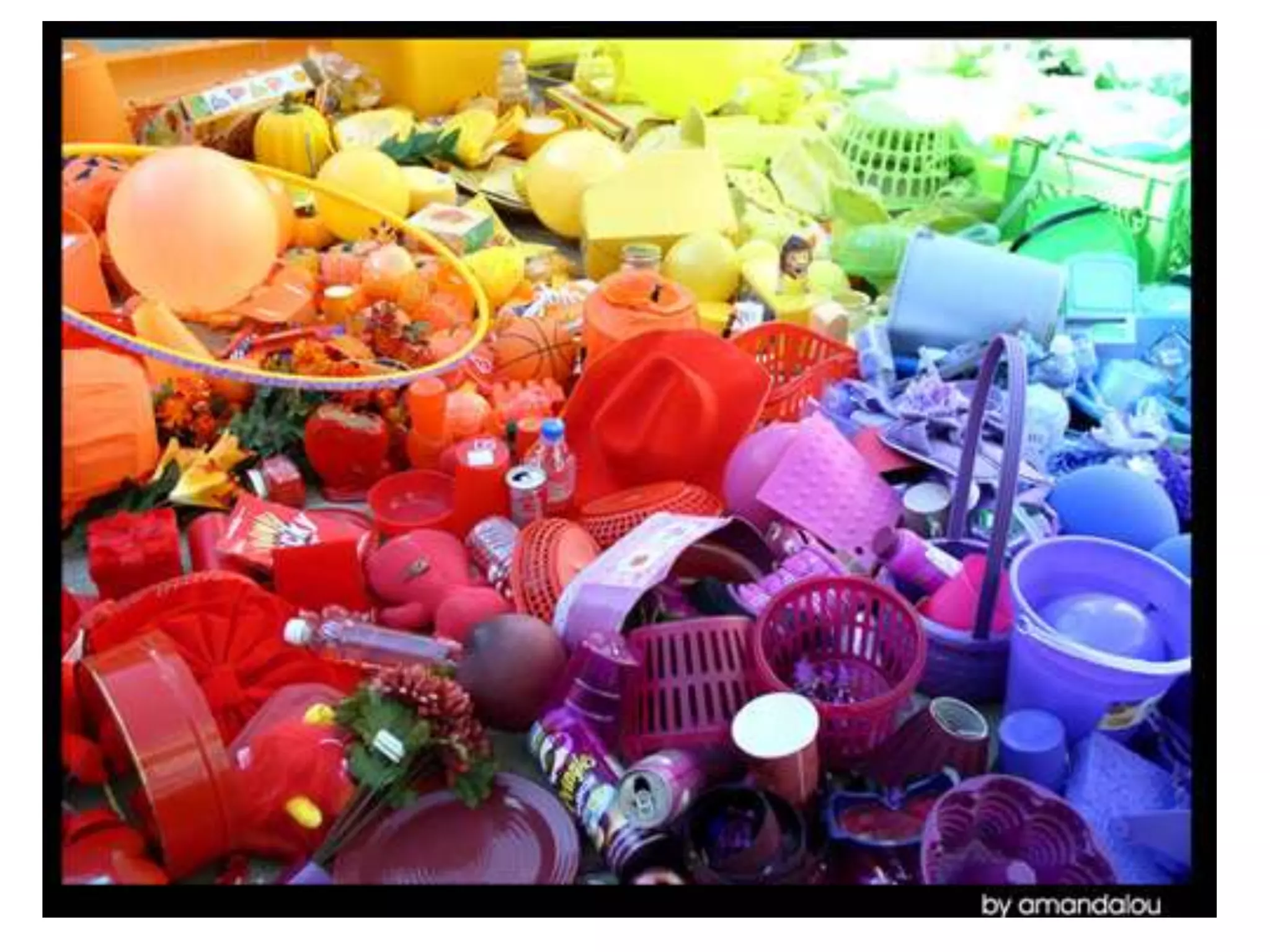
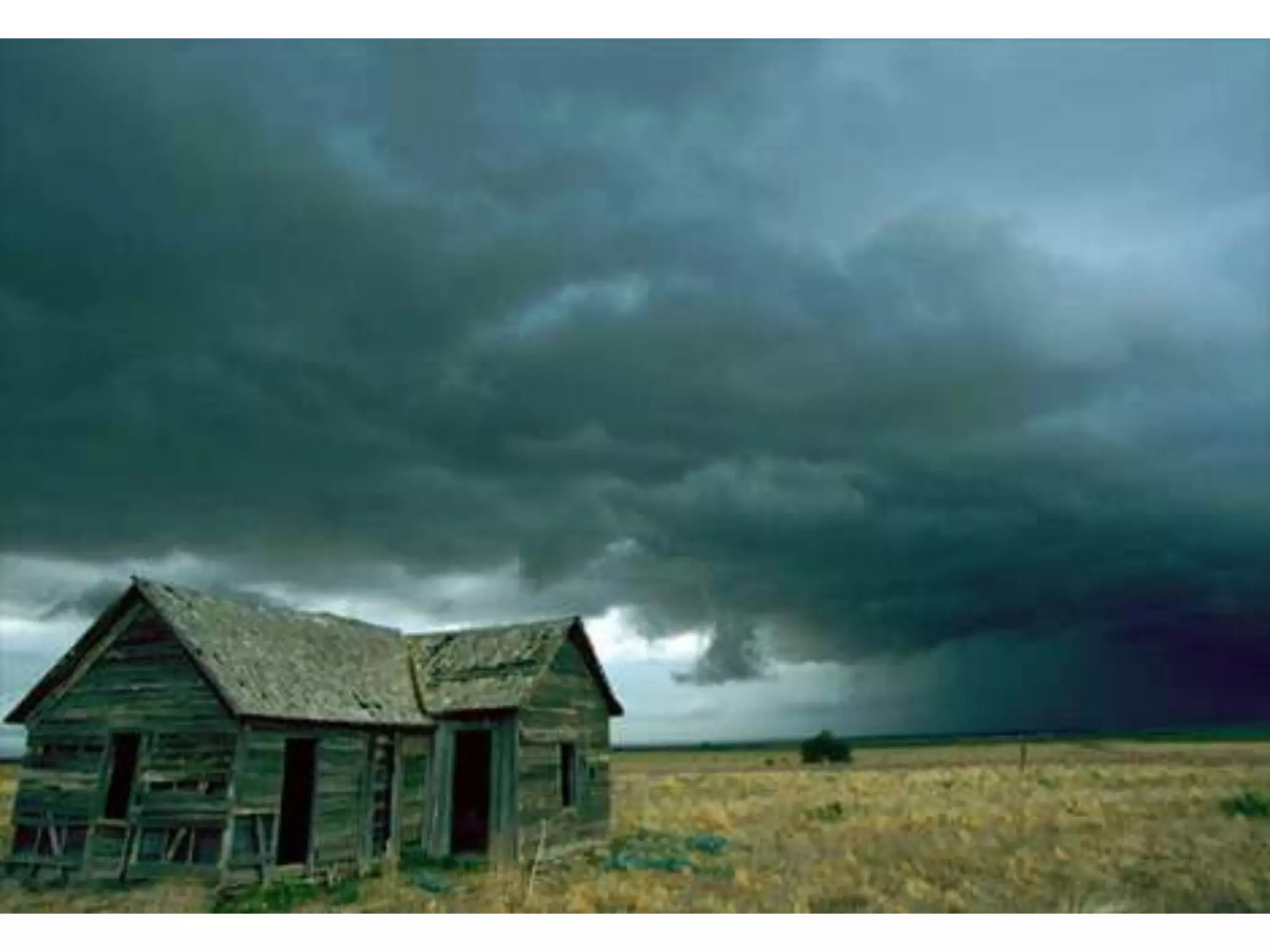
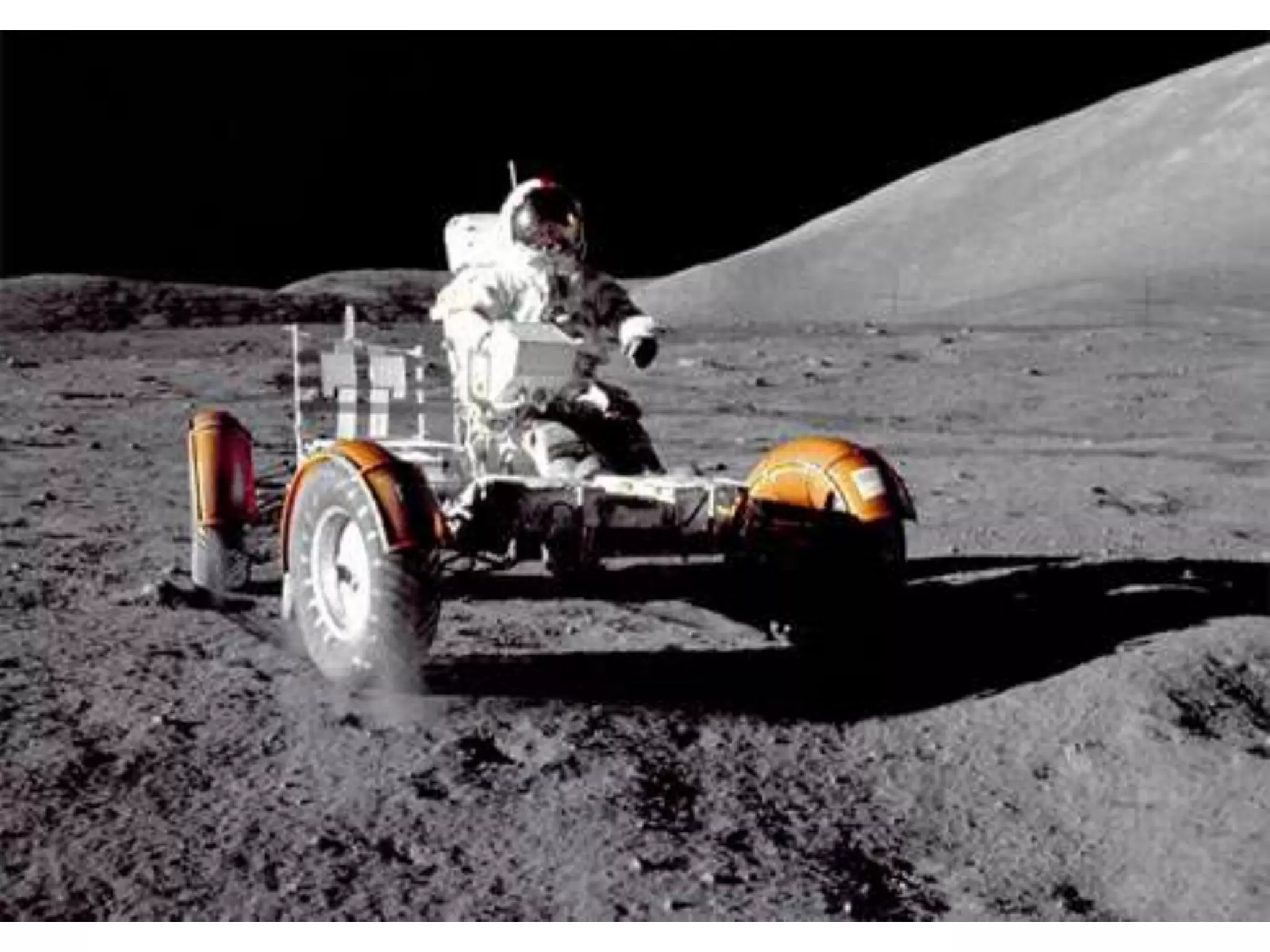
Flickr Writing Promptshttp://www.flickr.com
NAGC Wednesday Academy 2009

NAGC Wednesday Academy 2009

  • 1.
    Tools and Strategiesfor Promoting Literacy and New Literacies for Young Gifted StudentsSponsored by the Computers and Technology and Early Childhood NetworksNAGC 56th Annual ConventionSt. Louis, MissouriNovember 4, 2009
  • 2.
    Our Road Ahead8:45 Traditional vs. New Literacies9:45 Break10:00 Weslandia from Traditional to New11:30 Creating a Digital Story12:00 Lunch1:00 Project Production2:00 Non-Fiction Never Smile at a Monkey2:30 Break4:15 Closure
  • 3.
  • 4.
    Literacy LearningThere areimportant and powerful relationships between reading and writing.When students read and think about text, they are also noticing and using the craft of writing.When students learn how to compose their writing, they develop key understandings about text that will help them be more insightful readers.Source: Fountas & Pinnell, 2001.
  • 5.
    Three Focus AreasLanguageand word studyReading Writing
  • 6.
    Getting to KnowYou Introduce yourself to others at your table and discuss the following:What characteristics do advanced readers in your classroom exhibit?Which reading strategies have you found to be effective in your classroom?How do you know?
  • 7.
    Research and AdvancedReadersRead fluently and wellRead at an early age in many instancesInterested in words and word relationships (satire and jokes)Process key ideas about what is read at a more rapid paceEnjoy talking about literature or books
  • 8.
    Research and AdvancedReadersWrite descriptively to communicate storiesRead often – inside and outside of classEnjoy verbal puzzles and gamesAdvanced vocabulary for age or cultural populationPlay with language
  • 9.
    A New LiteraciesPerspective
  • 10.
  • 11.
  • 12.
  • 13.
  • 16.
  • 20.
  • 21.
    Traditional TextsClosedLinearFinite amountof textOnline TextsOpenHypertextualInfinite amount of text
  • 22.
  • 23.
  • 24.
  • 25.
    Profile for TechnologyLiterate Students PK-2Illustrate and communicate original ideas and stories using digital tools and media-rich resources.Identify, research, and collect data on an environmental issue using digital resources and propose a developmentally appropriate solution.Engage in learning activities with learners from multiple cultures through e-mail and other electronic means.In a collaborative work group, use a variety of technologies to produce a digital presentation or product in a curriculum area.Find and evaluate information related to a current or historical person or event using digital resources.
  • 26.
    Profile for TechnologyLiterate Students PK-2Use simulations and graphical organizers to explore and depict patterns of growth such as the life cycles of plants and animals. Demonstrate the safe and cooperative use of technology. Independently apply digital tools and resources to address a variety of tasks and problems. Communicate about technology using developmentally appropriate and accurate terminology. Demonstrate the ability to navigate in virtual environments such as electronic books, simulation software, and Web sites.
  • 27.
    What areNewLiteracies?(Leu, Kinzer,Coiro, and Cammack, 2004)
  • 28.
  • 29.
  • 30.
  • 31.
  • 32.
  • 33.
    5 Types ofEvaluation Understanding Relevancy Accuracy ReliabilityBias(Coiro, 2006)
  • 34.
    Rather than runningthe risk of having our students become "walking encyclopedias," we need to teach them how to think creatively. (Sternberg, 2006)
  • 35.
    The illiterate ofthe 21st Century will not be those who cannot read or write, but those who cannot LEARN, UNLEARN AND RELEARN.(Toffler, 1971)
  • 38.
  • 40.
    Traditional Literacy Practices: WeslandiaMentor textsReader’s notebooksBibliotherapy
  • 41.
  • 42.
    What are MentorTexts?Pieces of literature that you can return to and read for many different purposesAre to be studied and then imitatedHelp students to make powerful connections to their own livesHelp students to take risks and try out new strategiesShould be books that students can relate to and can read independently or with some support
  • 43.
    Importance of TextSelection“A mentor is one who models, coaches, and lifts another to higher levels.”Therefore, a mentor text must be chosen carefully to ensure that it can establish a model of quality writing that appropriate for guiding our students. With the help of a beautifully crafted mentor text, students and teachers can consider the imagery, the possible themes, and the elements that have come together to create the wonderful stories.Source: http://www.interactivereadalouds.com/overview.aspx
  • 44.
    Characteristics of GoodMentor TextsMentor texts:boost language development ,promote active listening, encourage deeper thinking,provide outstanding models of fluency, feature beautiful art, support learning more about the world around us,serve as models of great writing, and are time tested and easily available "classics." Source: http://www.interactivereadalouds.com/overview.aspx
  • 45.
    Possible Writing Lessonsfrom WeslandiaDescriptive language/imageryVocabulary useEffective use of dialogueUse of context cluesUse of strong verbs
  • 46.
    Sample from WeslandiaFromWeslandia: Unlike jeans, which he found scratchy and heavy, the robe was comfortable, reflected the sun, and offered myriad opportunities for pockets.Example: Unlike a tie, which he thought was binding and hot, the scarf was loose around his neck, kept him shielded from the cold, and gave him more options for wearing bright colors.
  • 47.
    Your TurnDetermine thetype of writing lesson you would like to develop from using Weslandia.Select a passage that illustrates the aspect you want students to learn.Create a sample passage based on the mentor text passage.
  • 48.
  • 49.
    What is aReader’s Notebook?It is a notebook of pages in which students write about their reading. The idea is based upon Rosenblatt’s (1938, 1978, 1983) theory of reading response: a transaction between the reader and the text.It is used throughout the academic year. All assignments are completed in school.The emphasis is on the intersection of thinking, talking, and writing throughout the reading of a text. The writing is conversational in tone.
  • 50.
    Parts of theReader’s NotebookThe reading list: documents amount and kind of reading being doneThe reading interests list: list of what the student wants to readBooks to read list: suggestions from teacher, based on analysis of student’s listsThe letters: responses from student to teacher and vice versa about the textGuided reading/Book club (writing about reading): responses shared in book club setting
  • 51.
  • 52.
    What is Bibliotherapy?Guidedreading which helps individuals understand themselves and their environments, helps them learn from others, and helps them find solutions to problems (Byrne, 2005).An interactive process in which the reader becomes part of the unfolding intellectual and emotional process of the story. The reader responds by modifying his/her own behavior or attitude (Abdullah, 2002).
  • 53.
    Benefits of BibliotherapyProvidesopportunity for participants to recognize and understand themselves, their characteristics, and the complexity of human thought and behavior.Promotes social development as well as the love of literature in general, and reading in particular.Reduces feelings of isolation that may be felt by people with problems. --Abdullah, 2002
  • 54.
    Goals of Bibliotherapytoprovide information about problemsto provide insight into problemsto stimulate discussion about problemsto communicate new values and attitudesto create an awareness that others have dealt with similar problemsto provide solutions to problems -Pardeck, 1994
  • 55.
    Importance of UsingLiterature to Help Children Cope with ProblemsThrough literature children can understand that they are not alone in encountering problems.Teachers can guide children in discussing their problems more freely.Teacher and children can share their feelings, which will help teachers and children relate better to one another.Teachers and children, through literature, work together to find different solutions for problems.
  • 56.
    Choosing Books forBibliotherapyMore frequently fiction than nonfiction because of emotional appealBe wary of books written for therapeutic purposes.Maintain high level literature to ensure it will touch and challenge gifted students.Look for situations that evoke emotions.Look for situations that offer alternatives.Look for characters with whom the reader can identify.
  • 57.
    Selecting Books forEmotional AppealCharacters coping with similar issuesEmphasis on learning to accept differencesProductive, supportive adult charactersGiftedness present as a characteristic with related behaviorsStruggles with moral and ethical choicesHumor-- Halsted, 1994
  • 58.
    Criteria for SelectingBooks for Gifted Learners (Emotional Development)Some characters should be gifted adults.Some of the child characters should clearly be gifted themselves.Giftedness need not necessarily be labeled.Characters should be open-minded, questioning, with a passion for learning everything or devoted to one subject of intense interest.Characters should be struggling with issues of personal or moral courage, personal values, and moral and ethical choices.Some books should have humor of a high level.
  • 59.
    Cautions with BibliotherapyMaintainawareness of the possibility of deeper problems.Identify children who seem unable to relate meaningfully to the book or to the group.Control the depth of the discussion -- not everything needs to be explicitly said.Emphasize confidentiality.
  • 60.
    Areas for UsingBibliotherapyAcademicachievementAssertivenessAttitude changeBehavioral changeFear reductionSelf-conceptSelf-development
  • 61.
    Four Stages inBibliotherapyIdentification: Readers identify with a character.Catharsis: Readers experience reaction or emotion as they identify with character.Insight: Readers apply their own life situations to that of the character.Universalization: Readers realize that their difficulties and problems are shared by others and they feel less isolated and alienated. --Halstead,2004
  • 62.
    Preparing the QuestionsUsefact questions to set the stage and ascertain general level of understanding and response.Use interpretive questions to move into the stages of bibliotherapy.
  • 63.
    Identification QuestionsDescribe Wesley.Howare you like Wesley? Why?Do you think that Wesley is gifted? Why or why not?Do you think that Wesley feels different from others? Why or why not?
  • 64.
    CatharsisHow do youknow that Wesley was not like other children his age?Why do you think Wesley felt that he was an outcast?What happens in the book to help Wesley become more accepted by his peers?How did Wesley exhibit resourcefulness?
  • 65.
    Insight (Self-awareness)Do youfeel different from others? Why or why not?How do your relationships with others affect how you feel about yourself?How do you deal with feeling different from others?How resourceful could you be if you were left alone on a deserted island?
  • 66.
    UniversalizationHave you everknown/heard of someone that people thought was bad because he or she was different? Have people ever thought you were bad because you were different? Describe how you dealt with the situation.
  • 67.
    Your TurnReview thesample questions for each portion of a bibliotherapy lesson using Weslandia.Develop one additional question for each portion.Be prepared to share your ideas.
  • 68.
  • 69.
    Traditional Literacy Practices: Never Smile at a MonkeyBook talks: Design featuresWorking with non-fictionGraphic organizersVocabulary 
  • 70.
    Book Talks: Design FeaturesInformational books have 10 key design features.In planning a book talk, should analyze the text in terms of the ten key design features. Determine what is most important for emphasis with your students.
  • 71.
    Informational Text DesignFeaturesGenre: writing styleText structure: organization of text (categories; chronological sequence; cause and effect)Content: subject matter. What challenges are presented by the text?Themes and ideas: What are the big ideas in the book? Is there a main theme with supporting themes? Language and literary features: figurative language, dialogue, description, technical language, etc.
  • 72.
    Informational Text DesignFeatures (cont.)Sentence complexity: long sentences vs. short ones; simple vs. compound sentences; use of independent and dependent clauses, etc. Vocabulary: word meaningsWords: issues in decoding wordsIllustrations: drawings, paintings, photographs, etc. How do the illustrations contribute to the meaning of the text?Book and print features: physical attributes of the text (length; words and sentences per page; layout; print size; punctuation; way sections are indicated, etc.)When introducing this text, keep in mind……
  • 73.
    Your Turn: InformationalText Design Features Read Never Smile at a Monkey.Review the design feature(s) assigned to your group.Be prepared to share your information and how you would use it in a book talk.
  • 74.
  • 75.
  • 76.
    Working with Non-fictionUsingtext structuresAnticipating and predictingAppreciating different opinionsRecognizing biasSynthesizing information
  • 77.
    Exploring Nonfiction: Questions and Organizers to Guide Reading and Understanding of Nonfiction Texts - Teacher Guide - Student Guide
  • 78.
    Purpose of GuideThisis a tool for teachers and students to support comprehension and analysis of nonfiction texts.
  • 79.
    GoalsTo develop studentskills in reading and comprehending nonfiction textsTo develop student skills in planning, monitoring, and evaluating the reading processTo develop students’ higher level thinking and reasoning skills in language arts and the other content areasTo develop students’ understanding of the link between the practices and content of a discipline and the presentation of informationTo develop students’ skills in identifying and analyzing concepts within and across disciplines
  • 80.
    ImplementationThe guide isnot linked to a particular text or reading selection. It is applicable to multiple texts in multiple formats.The student guide may be given to students to use independently. The teacher may copy selected pages from the student guide for students to use with the texts they read.
  • 81.
    Guide FrameworkActivities priorto readingActivities during readingActivities following reading
  • 82.
    Preview and PlanningSection (pg. 3)The purpose of this section is to help students think about why they are reading a given text, to get a sense of the text before they begin reading, and to identify questions they hope to answer with the text.
  • 83.
    Preview Chart (pg.5)The purpose of this chart is to encourage students to look for the special features of a text that will help guide them through their reading.
  • 84.
    Planning Chart (pg.6)The purpose of this chart is to encourage students to think about their purpose in reading and their current understanding of the topic under study.
  • 85.
    Read and DiscoverSection (pg. 7)The purpose of this section is to provide students with some tools they can use during reading to monitor and summarize what they are reading.
  • 86.
    Reading Log (pg.8)The purpose of the reading log is for the students to keep notes as they read.
  • 87.
    Question Chart (pg.9)The purpose of this chart is to connect what students discover as they read with the questions they identified in the planning stage.
  • 88.
    Connecting Prior Knowledge(pg.10)The purpose of this activity is to encourage students to identify what aspects of prior knowledge they activated in trying to understand new information.
  • 89.
    Concept Mapping (pg.11)The purpose of this activity is to encourage students to sketch their own developing schema of the key ideas in what they read.
  • 90.
    Review and GoBeyond Section (pg. 12)The purpose of this section is to encourage students to return to their original plans for reading and use that as a basis for reviewing what they have learned and thinking of new questions.
  • 91.
    Summary Chart (pg.13)The purpose of this chart is to connect what students have read directly with what they have planned.
  • 92.
    Reasoning Questions (pg.14)The purpose of these questions is to tie students’ thinking about what they read to a specific critical thinking model (Richard Paul: www.criticalthinking.org).
  • 93.
    Building Blocks (pg.15)The purpose of this activity is to encourage students to think about the work of experts in the disciplines the students are studying.
  • 94.
    Beyond the Book(pg. 17)The purpose of these activities is to encourage further reading with the specific text, and to encourage further investigation of the topic through other resources.
  • 95.
  • 96.
    What is agraphic organizer?“A graphic organizer is a visual diagram that shows the relationships among a number of ideas. Use graphic organizers to help students see the important interrelationships in the information they are reading or to become aware of the way authors have structured a text. These insights help students with their own writing as well as reading.”Source: Fountas & Pinnell, 2001, pg. 441.
  • 97.
    Tips for UsingGraphic OrganizersSelect the graphic organizer relative to your goals for comprehension.Use the organizer with the whole group first, modeling its use multiple times.Have students work in dyads using the organizer before having them work independently with it.Make sure that you are explicit in discussing how the graphic organizer will help to support the students’ thinking.Source: Fountas & Pinnell, 2006.
  • 98.
    How Graphic OrganizersCan Support Student ThinkingThey can help readers make connections across texts.They can help readers to analyze texts to notice structure.They can help readers think analytically about literary elements in fiction.They can help readers learn to analyze texts to notice the author’s craft.They can help readers notice and learn new vocabulary.
  • 99.
  • 100.
    The Role ofVocabulary in ComprehensionA child’s vocabulary level is highly predictive of his/her level of reading comprehension.Words allow us to label our concepts and ideas about the world.Meaning is communicated by the way words are presented according to grammatical rules.Vocabulary limitations are a major factor in the achievement gap between higher income and disadvantaged students.Source: Fountas & Pinnell, 2006.
  • 101.
    Frayer Model ofVocabulary Development98AUTHORS 2009 Javits Project Clarion, Center for Gifted Education, College of William and Mary
  • 102.
    Vocabulary WebSynonyms:Source (sentencewhere you saw the word):Definition: WORD:Antonyms:Example:Part of Speech:AnalysisWord Families:Stems:Origin:
  • 103.
    Vocabulary WebStems:The smallerwords and pieces of words from which the larger word is made. These include prefixes, suffixes, and roots. Check the dictionary for possible stems. Word Families:Think of other words in the same family as the word or other words which use one or more of the same stems. Example:Develop your own sentence, analogy, picture, or other types of examples that demonstrate understanding of the word.
  • 104.
    Recommended DictionariesAmerican HeritageDictionary of the English Language (4th ed.)Merriam-Webster Collegiate Dictionary (11th ed.)
  • 105.
    Other Vocabulary Activities“QuickWrites”: Give students a new vocabulary word prior to reading a text. Students write the definition, synonyms and antonyms, or a response to a question about the word. Students share their Quick Write responses. After the text is read and students see the word in context, they revisit their responses and make adjustments.“Speaking Out”: Students select a word from the text that they will use throughout the week. They maintain a log indicating how they used the word in context.
  • 106.
    Online ResourcesWord ofthe day from Dictionary.com:http://dictionary.reference.com/wordoftheday/Merriam Webster online dictionary: www.m-w.comWord a Day Mailing List: http://wordsmith.org/awad/
  • 107.
    Additional Vocabulary StudyMaterialsWord Within the Word by Michael Clay Thompson (Royal Fireworks Press)The Caesar’s English by Michael Clay Thompson (Royal Fireworks Press)
  • 109.