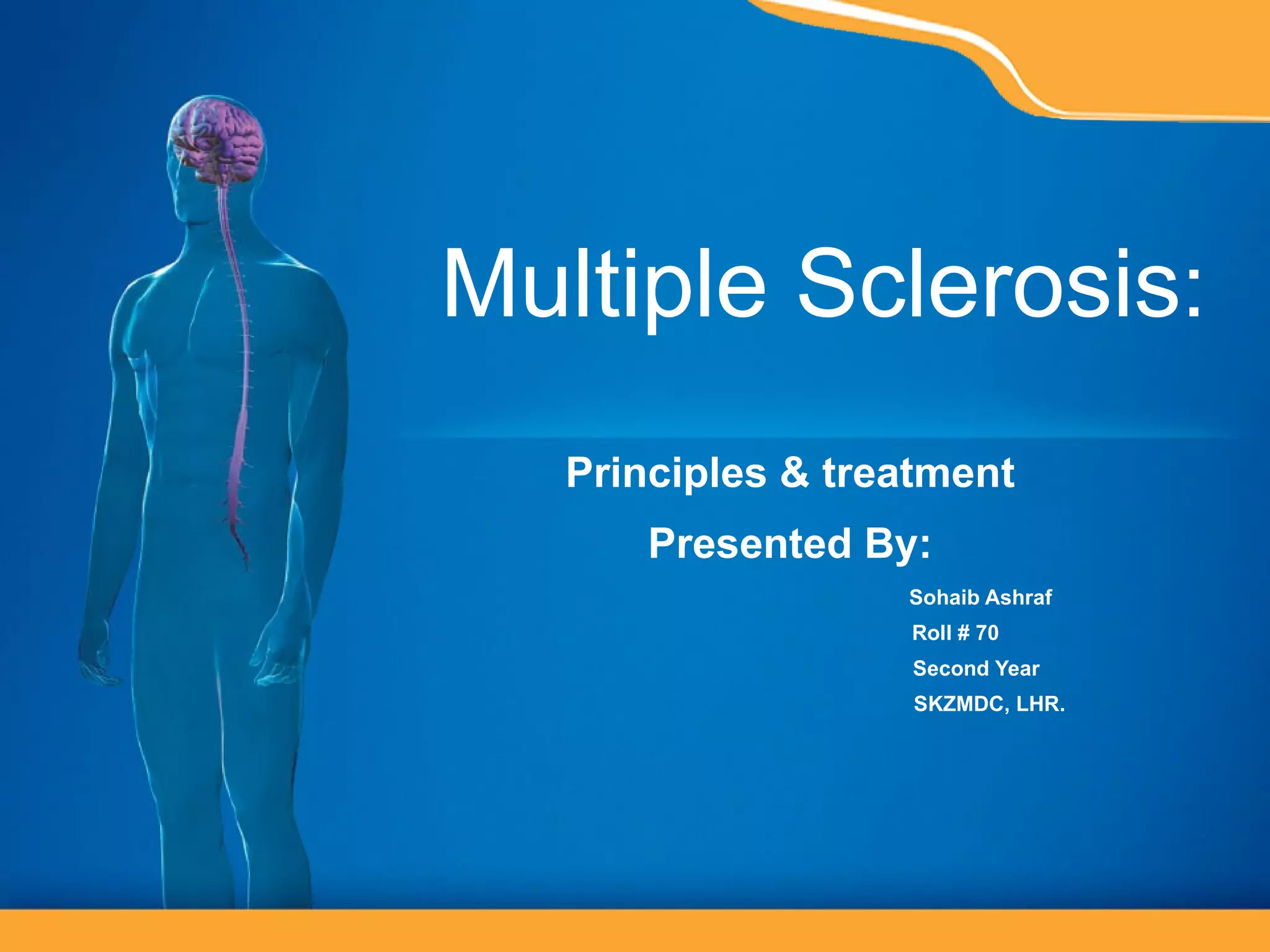





Multiple Sclerosis : Principles & treatment Presented By: Sohaib Ashraf   Roll # 70   Second Year   SKZMDC, LHR.
1-Overview
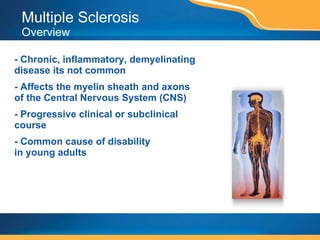
Multiple Sclerosis  Overview - Chronic, inflammatory, demyelinating disease its not common - Affects the myelin sheath and axons of the Central Nervous System (CNS) - Progressive clinical or subclinical course - Common cause of disability  in young adults
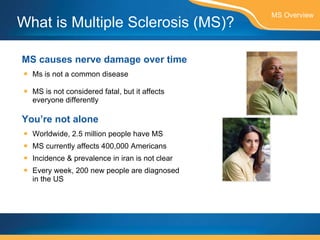
What is Multiple Sclerosis (MS)? MS causes nerve damage over time Ms is not a common disease MS is not considered fatal, but it affects everyone differently You’re not alone Worldwide, 2.5 million people have MS MS currently affects 400,000 Americans Incidence & prevalence in iran is not clear Every week, 200 new people are diagnosed in the US MS Overview
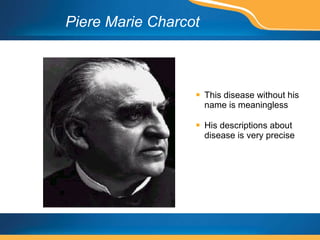
Piere Marie Charcot This disease without his name is meaningless His descriptions about disease is very precise
 
2-Ethiology
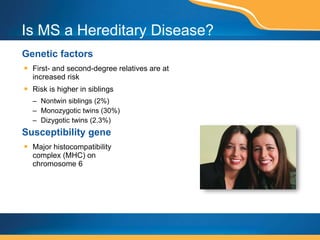
Is MS a Hereditary Disease? Genetic factors First- and second-degree relatives are at  increased risk Risk is higher in siblings Nontwin siblings (2%) Monozygotic twins (30%) Dizygotic twins (2.3%) Susceptibility gene Major histocompatibility  complex (MHC) on  chromosome 6 Source: http://www.msfacts.org/info/info_faq.html, http://www.ninds.nih.gov/disorders/multiple_sclerosis/detail_multiple_sclerosis.htm#54263215 and http://www.nationalmssociety.org/Sourcebook-Epidemiology.asp. Accessed May 17, 2006
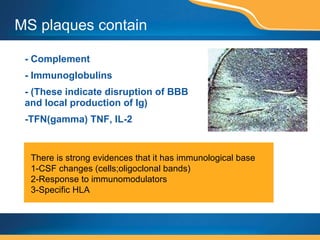
MS plaques contain  - Complement - Immunoglobulins - (These indicate disruption of BBB and local production of Ig) -TFN(gamma) TNF, IL-2 There is strong evidences that it has immunological base 1-CSF changes (cells;oligoclonal bands)  2-Response to immunomodulators 3-Specific HLA
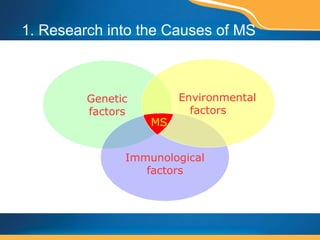
1. Research into the Causes of MS Genetic factors Immunological factors Environmental factors MS
3-The Biology of MS
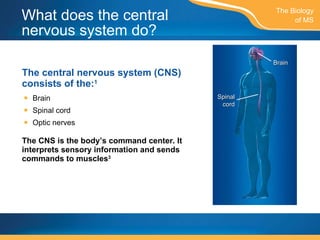
What does the central nervous system do? The central nervous system (CNS) consists of the: 1 Brain Spinal cord Optic nerves The CNS is the body’s command center. It interprets sensory information and sends commands to muscles 3 The Biology of MS Spinal cord Brain
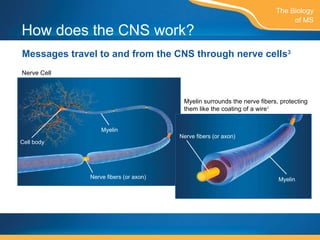
How does the CNS work? Messages travel to and from the CNS through nerve cells 3 The Biology of MS Myelin surrounds the nerve fibers, protecting them like the coating of a wire 1 Nerve Cell  Nerve fibers (or axon) Myelin Nerve fibers (or axon) Cell body Myelin
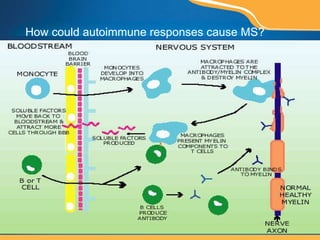
How could autoimmune responses cause MS?
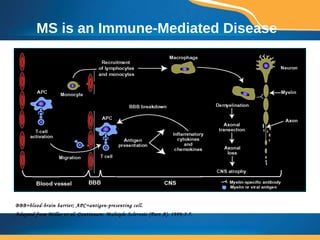
MS is an Immune-Mediated Disease BBB=blood-brain barrier; APC=antigen-presenting cell. Adapted from Miller et al.  Continuum: Multiple Sclerosis (Part A).  1999;5:7.
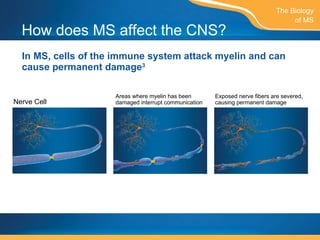
How does MS affect the CNS? In MS, cells of the immune system attack myelin and can cause permanent damage 3 The Biology of MS Areas where myelin has been damaged interrupt communication  Exposed nerve fibers are severed, causing permanent damage Nerve Cell
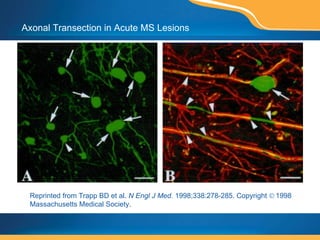
Axonal Transection in Acute MS Lesions Reprinted from Trapp BD et al.  N Engl J Med.  1998;338:278-285. Copyright     1998 Massachusetts Medical Society.  .
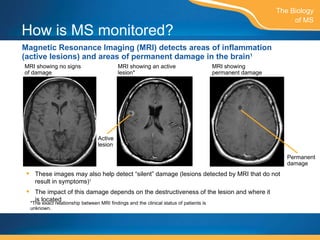
How is MS monitored? Magnetic Resonance Imaging (MRI) detects areas of inflammation (active lesions) and areas of permanent damage in the brain 1 The Biology of MS MRI showing no signs  of damage MRI showing an active lesion* MRI showing  permanent damage Active lesion Permanent damage These images may also help detect “silent” damage (lesions detected by MRI that do not result in symptoms) 1 The impact of this damage depends on the destructiveness of the lesion and where it is located *The exact relationship between MRI findings and the clinical status of patients is unknown.
4-Pathophysiology
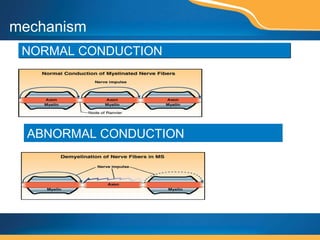
NORMAL CONDUCTION ABNORMAL CONDUCTION mechanism
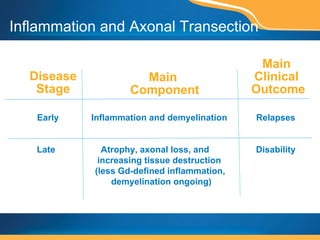
Inflammation and Axonal Transection Disease Stage Main  Component Main  Clinical  Outcome Early Inflammation and demyelination   Relapses Late   Atrophy, axonal loss, and   Disability increasing tissue destruction (less Gd-defined inflammation,  demyelination ongoing)
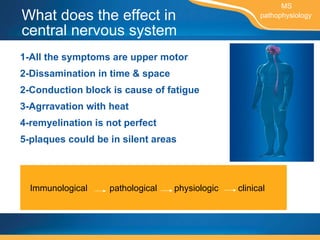
What does the effect in central nervous system  1-All the symptoms are upper motor 2-Dissamination in time & space  2-Conduction block is cause of fatigue 3-Agrravation with heat 4-remyelination is not perfect 5-plaques could be in silent areas MS pathophysiology  Immunological  pathological  physiologic  clinical
Treatment Goals Reduce (control) relapses Delay disease progression Delay disability  Alleviate symptoms
Early Treatment The National MS Society recommends: “ Initiation of therapy with an immunomodulator is advised as soon as possible following a definite diagnosis of MS with a relapsing course, and may be considered for selected patients with a first attack who are at high risk for MS.” Source: Recommendation of the Executive Committee of the Medical Advisory Board of the Nat’l MS Society www.nationalmssociety.org/Sourcebook-Early.asp. Accessed May 17, 2006.
Current Therapies:  Immunosuppressants and Immunomodulators Corticosteroids Interferons   : Betaseron   (interferon   -1b) Avonex   (interferon   -1a) Rebif   (interferon   -1a) Immunosuppressants and immunomodulators:  Copaxone   (glatiramer acetate) Novantrone   (mitoxantrone) Symptomatic management
Corticosteroids Symptomatic management Used in moderate-to-severe exacerbations  IV methylprednisolone 500 mg/day for five days followed by oral prednisone (optional) Hasten clinical recovery Delay recurrence of neurologic events Does not alter the course of MS
Interferon Beta Mechanism of Action Reduce the production of the TNFa , known to induce damage to myelin Reduce inflammation by: Switching cytokine production from type 1 (pro-inflammatory) to type 2 (anti-inflammatory) cells  Decrease antigen presentation, to reduce the attack on myelin Reduce the ability of immune cells to cross the blood-brain barrier,
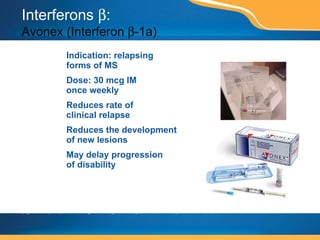
Interferons   :  Avonex (Interferon   -1a) Indication: relapsing  forms of MS Dose: 30 mcg IM  once weekly Reduces rate of  clinical relapse Reduces the development of new lesions May delay progression  of disability  Avonex-lyo-vial This page contains prescription brand drugs that are registered or registered trademarks of pharmaceutical manufacturers that are not affiliated with Caremark.
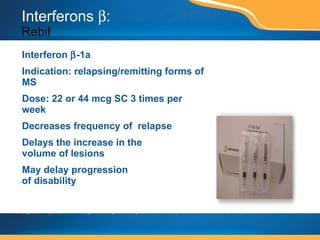
Interferons   :  Rebif Interferon   -1a Indication: relapsing/remitting forms of MS Dose: 22 or 44 mcg SC 3 times per week Decreases frequency of  relapse Delays the increase in the  volume of lesions May delay progression  of disability  This page contains prescription brand drugs that are registered or registered trademarks of pharmaceutical manufacturers that are not affiliated with Caremark.
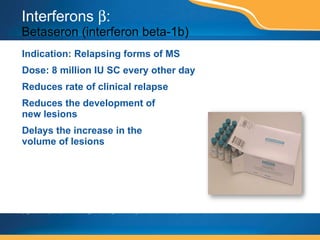
Interferons   :  Betaseron (interferon beta-1b) Indication: Relapsing forms of MS Dose: 8 million IU SC every other day Reduces rate of clinical relapse Reduces the development of  new lesions Delays the increase in the  volume of lesions This page contains prescription brand drugs that are registered or registered trademarks of pharmaceutical manufacturers that are not affiliated with Caremark.
Side Effects of Interferons Common: Flu-like symptoms Chills Fever Muscle aches Asthenia (weakness) Betaseron and Rebif have injection site reactions  Uncommon: Severe depression Suicide Seizures Cardiac effects Anemia Elevated liver enzymes Severe hepatic injury, including cases of hepatic failure, has been reported in patients taking Avonex This page contains prescription brand drugs that are registered or registered trademarks of pharmaceutical manufacturers that are not affiliated with Caremark.
Copaxone Mechanism of Action Synthetic chain of four amino acids Structurally resembles the myelin basic protein molecule Believed to block the immune system from attacking myelin This page contains prescription brand drugs that are registered or registered trademarks of pharmaceutical manufacturers that are not affiliated with Caremark.
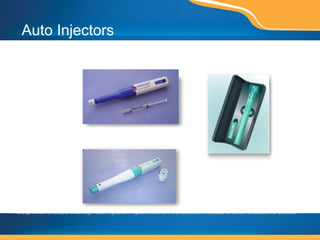
Auto Injectors auto ject ®  2  for glass syringe Dispenses Copaxone Rebiject ® Dispenses Rebif auto ject ®  2.25 Dispenses Betaseron All provided free from manufacturer.  Rebiject and Copaxone need a prescription. This page contains prescription brand drugs that are registered or registered trademarks of pharmaceutical manufacturers that are not affiliated with Caremark.
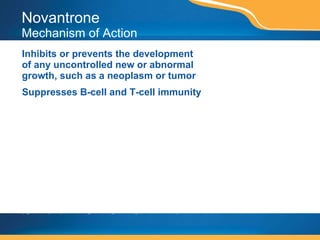
Novantrone Mechanism of Action Inhibits or prevents the development of any uncontrolled new or abnormal growth, such as a neoplasm or tumor Suppresses B-cell and T-cell immunity This page contains prescription brand drugs that are registered or registered trademarks of pharmaceutical manufacturers that are not affiliated with Caremark.
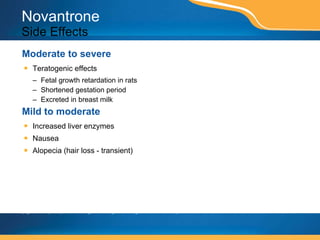
Novantrone Side Effects Moderate to severe Teratogenic effects Fetal growth retardation in rats Shortened gestation period Excreted in breast milk Mild to moderate Increased liver enzymes Nausea Alopecia (hair loss - transient) This page contains prescription brand drugs that are registered or registered trademarks of pharmaceutical manufacturers that are not affiliated with Caremark.
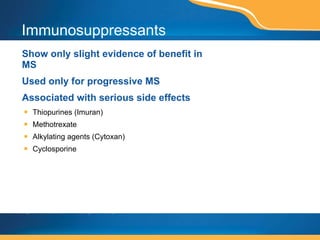
Immunosuppressants Show only slight evidence of benefit in MS Used only for progressive MS Associated with serious side effects Thiopurines (Imuran) Methotrexate Alkylating agents (Cytoxan) Cyclosporine This page contains prescription brand drugs that are registered or trademarks of pharmaceutical manufacturers that are not affiliated with Caremark.
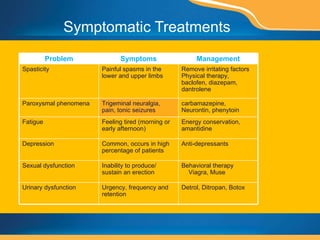
Symptomatic Treatments Problem Symptoms Management Spasticity Painful spasms in the lower and upper limbs Remove irritating factors Physical therapy,  baclofen, diazepam, dantrolene Paroxysmal phenomena Trigeminal neuralgia, pain, tonic seizures carbamazepine, Neurontin, phenytoin Fatigue Feeling tired (morning or early afternoon) Energy conservation, amantidine  Depression Common, occurs in high percentage of patients Anti-depressants Sexual dysfunction Inability to produce/ sustain an erection Behavioral therapy  Viagra, Muse Urinary dysfunction Urgency, frequency and retention Detrol, Ditropan, Botox
Conclusion Early treatment may delay disability and enhance recovery from relapses Treatment must be a cooperative effort between multidisciplinary team of healthcare providers Medications are not a cure for MS
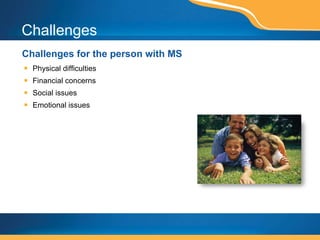
Challenges Challenges for the person with MS Physical difficulties Financial concerns Social issues Emotional issues
Resources and Links Support/Information National MS Society (NMSS) 1-800-FIGHT-MS Consortium of MS Centers 1-201-837-0727 MS Foundation 1-800-441-7055 MS Association of America 1-800-833-4MSA
5-Summary
Conclusion 1-Multiple sclerosis is not a common Disease 2-It’s the result of Different mechanisms 3-the most probable mechanism is immunological Conclusion Its clear that effective treatments depends on better undrestanding of mechanisms
THANKYOU


Multiple Sclerosis

  • 1.
    Multiple Sclerosis :Principles & treatment Presented By: Sohaib Ashraf Roll # 70 Second Year SKZMDC, LHR.
  • 2.
  • 3.
    Multiple Sclerosis Overview - Chronic, inflammatory, demyelinating disease its not common - Affects the myelin sheath and axons of the Central Nervous System (CNS) - Progressive clinical or subclinical course - Common cause of disability in young adults
  • 4.
    What is MultipleSclerosis (MS)? MS causes nerve damage over time Ms is not a common disease MS is not considered fatal, but it affects everyone differently You’re not alone Worldwide, 2.5 million people have MS MS currently affects 400,000 Americans Incidence & prevalence in iran is not clear Every week, 200 new people are diagnosed in the US MS Overview
  • 5.
    Piere Marie CharcotThis disease without his name is meaningless His descriptions about disease is very precise
  • 6.
  • 7.
  • 8.
    Is MS aHereditary Disease? Genetic factors First- and second-degree relatives are at increased risk Risk is higher in siblings Nontwin siblings (2%) Monozygotic twins (30%) Dizygotic twins (2.3%) Susceptibility gene Major histocompatibility complex (MHC) on chromosome 6 Source: http://www.msfacts.org/info/info_faq.html, http://www.ninds.nih.gov/disorders/multiple_sclerosis/detail_multiple_sclerosis.htm#54263215 and http://www.nationalmssociety.org/Sourcebook-Epidemiology.asp. Accessed May 17, 2006
  • 9.
    MS plaques contain - Complement - Immunoglobulins - (These indicate disruption of BBB and local production of Ig) -TFN(gamma) TNF, IL-2 There is strong evidences that it has immunological base 1-CSF changes (cells;oligoclonal bands) 2-Response to immunomodulators 3-Specific HLA
  • 10.
    1. Research intothe Causes of MS Genetic factors Immunological factors Environmental factors MS
  • 11.
  • 12.
    What does thecentral nervous system do? The central nervous system (CNS) consists of the: 1 Brain Spinal cord Optic nerves The CNS is the body’s command center. It interprets sensory information and sends commands to muscles 3 The Biology of MS Spinal cord Brain
  • 13.
    How does theCNS work? Messages travel to and from the CNS through nerve cells 3 The Biology of MS Myelin surrounds the nerve fibers, protecting them like the coating of a wire 1 Nerve Cell Nerve fibers (or axon) Myelin Nerve fibers (or axon) Cell body Myelin
  • 14.
    How could autoimmuneresponses cause MS?
  • 15.
    MS is anImmune-Mediated Disease BBB=blood-brain barrier; APC=antigen-presenting cell. Adapted from Miller et al. Continuum: Multiple Sclerosis (Part A). 1999;5:7.
  • 16.
    How does MSaffect the CNS? In MS, cells of the immune system attack myelin and can cause permanent damage 3 The Biology of MS Areas where myelin has been damaged interrupt communication Exposed nerve fibers are severed, causing permanent damage Nerve Cell
  • 17.
    Axonal Transection inAcute MS Lesions Reprinted from Trapp BD et al. N Engl J Med. 1998;338:278-285. Copyright  1998 Massachusetts Medical Society. .
  • 18.
    How is MSmonitored? Magnetic Resonance Imaging (MRI) detects areas of inflammation (active lesions) and areas of permanent damage in the brain 1 The Biology of MS MRI showing no signs of damage MRI showing an active lesion* MRI showing permanent damage Active lesion Permanent damage These images may also help detect “silent” damage (lesions detected by MRI that do not result in symptoms) 1 The impact of this damage depends on the destructiveness of the lesion and where it is located *The exact relationship between MRI findings and the clinical status of patients is unknown.
  • 19.
  • 20.
    NORMAL CONDUCTION ABNORMALCONDUCTION mechanism
  • 21.
    Inflammation and AxonalTransection Disease Stage Main Component Main Clinical Outcome Early Inflammation and demyelination Relapses Late Atrophy, axonal loss, and Disability increasing tissue destruction (less Gd-defined inflammation, demyelination ongoing)
  • 22.
    What does theeffect in central nervous system 1-All the symptoms are upper motor 2-Dissamination in time & space 2-Conduction block is cause of fatigue 3-Agrravation with heat 4-remyelination is not perfect 5-plaques could be in silent areas MS pathophysiology Immunological pathological physiologic clinical
  • 23.
    Treatment Goals Reduce(control) relapses Delay disease progression Delay disability Alleviate symptoms
  • 24.
    Early Treatment TheNational MS Society recommends: “ Initiation of therapy with an immunomodulator is advised as soon as possible following a definite diagnosis of MS with a relapsing course, and may be considered for selected patients with a first attack who are at high risk for MS.” Source: Recommendation of the Executive Committee of the Medical Advisory Board of the Nat’l MS Society www.nationalmssociety.org/Sourcebook-Early.asp. Accessed May 17, 2006.
  • 25.
    Current Therapies: Immunosuppressants and Immunomodulators Corticosteroids Interferons  : Betaseron  (interferon  -1b) Avonex  (interferon  -1a) Rebif  (interferon  -1a) Immunosuppressants and immunomodulators: Copaxone  (glatiramer acetate) Novantrone  (mitoxantrone) Symptomatic management
  • 26.
    Corticosteroids Symptomatic managementUsed in moderate-to-severe exacerbations IV methylprednisolone 500 mg/day for five days followed by oral prednisone (optional) Hasten clinical recovery Delay recurrence of neurologic events Does not alter the course of MS
  • 27.
    Interferon Beta Mechanismof Action Reduce the production of the TNFa , known to induce damage to myelin Reduce inflammation by: Switching cytokine production from type 1 (pro-inflammatory) to type 2 (anti-inflammatory) cells Decrease antigen presentation, to reduce the attack on myelin Reduce the ability of immune cells to cross the blood-brain barrier,
  • 28.
    Interferons : Avonex (Interferon  -1a) Indication: relapsing forms of MS Dose: 30 mcg IM once weekly Reduces rate of clinical relapse Reduces the development of new lesions May delay progression of disability Avonex-lyo-vial This page contains prescription brand drugs that are registered or registered trademarks of pharmaceutical manufacturers that are not affiliated with Caremark.
  • 29.
    Interferons : Rebif Interferon  -1a Indication: relapsing/remitting forms of MS Dose: 22 or 44 mcg SC 3 times per week Decreases frequency of relapse Delays the increase in the volume of lesions May delay progression of disability This page contains prescription brand drugs that are registered or registered trademarks of pharmaceutical manufacturers that are not affiliated with Caremark.
  • 30.
    Interferons : Betaseron (interferon beta-1b) Indication: Relapsing forms of MS Dose: 8 million IU SC every other day Reduces rate of clinical relapse Reduces the development of new lesions Delays the increase in the volume of lesions This page contains prescription brand drugs that are registered or registered trademarks of pharmaceutical manufacturers that are not affiliated with Caremark.
  • 31.
    Side Effects ofInterferons Common: Flu-like symptoms Chills Fever Muscle aches Asthenia (weakness) Betaseron and Rebif have injection site reactions Uncommon: Severe depression Suicide Seizures Cardiac effects Anemia Elevated liver enzymes Severe hepatic injury, including cases of hepatic failure, has been reported in patients taking Avonex This page contains prescription brand drugs that are registered or registered trademarks of pharmaceutical manufacturers that are not affiliated with Caremark.
  • 32.
    Copaxone Mechanism ofAction Synthetic chain of four amino acids Structurally resembles the myelin basic protein molecule Believed to block the immune system from attacking myelin This page contains prescription brand drugs that are registered or registered trademarks of pharmaceutical manufacturers that are not affiliated with Caremark.
  • 33.
    Auto Injectors autoject ® 2 for glass syringe Dispenses Copaxone Rebiject ® Dispenses Rebif auto ject ® 2.25 Dispenses Betaseron All provided free from manufacturer. Rebiject and Copaxone need a prescription. This page contains prescription brand drugs that are registered or registered trademarks of pharmaceutical manufacturers that are not affiliated with Caremark.
  • 34.
    Novantrone Mechanism ofAction Inhibits or prevents the development of any uncontrolled new or abnormal growth, such as a neoplasm or tumor Suppresses B-cell and T-cell immunity This page contains prescription brand drugs that are registered or registered trademarks of pharmaceutical manufacturers that are not affiliated with Caremark.
  • 35.
    Novantrone Side EffectsModerate to severe Teratogenic effects Fetal growth retardation in rats Shortened gestation period Excreted in breast milk Mild to moderate Increased liver enzymes Nausea Alopecia (hair loss - transient) This page contains prescription brand drugs that are registered or registered trademarks of pharmaceutical manufacturers that are not affiliated with Caremark.
  • 36.
    Immunosuppressants Show onlyslight evidence of benefit in MS Used only for progressive MS Associated with serious side effects Thiopurines (Imuran) Methotrexate Alkylating agents (Cytoxan) Cyclosporine This page contains prescription brand drugs that are registered or trademarks of pharmaceutical manufacturers that are not affiliated with Caremark.
  • 37.
    Symptomatic Treatments ProblemSymptoms Management Spasticity Painful spasms in the lower and upper limbs Remove irritating factors Physical therapy, baclofen, diazepam, dantrolene Paroxysmal phenomena Trigeminal neuralgia, pain, tonic seizures carbamazepine, Neurontin, phenytoin Fatigue Feeling tired (morning or early afternoon) Energy conservation, amantidine Depression Common, occurs in high percentage of patients Anti-depressants Sexual dysfunction Inability to produce/ sustain an erection Behavioral therapy Viagra, Muse Urinary dysfunction Urgency, frequency and retention Detrol, Ditropan, Botox
  • 38.
    Conclusion Early treatmentmay delay disability and enhance recovery from relapses Treatment must be a cooperative effort between multidisciplinary team of healthcare providers Medications are not a cure for MS
  • 39.
    Challenges Challenges forthe person with MS Physical difficulties Financial concerns Social issues Emotional issues
  • 40.
    Resources and LinksSupport/Information National MS Society (NMSS) 1-800-FIGHT-MS Consortium of MS Centers 1-201-837-0727 MS Foundation 1-800-441-7055 MS Association of America 1-800-833-4MSA
  • 41.
  • 42.
    Conclusion 1-Multiple sclerosisis not a common Disease 2-It’s the result of Different mechanisms 3-the most probable mechanism is immunological Conclusion Its clear that effective treatments depends on better undrestanding of mechanisms
  • 43.
  • 44.
  • 45.
  • 46.