Case presentation
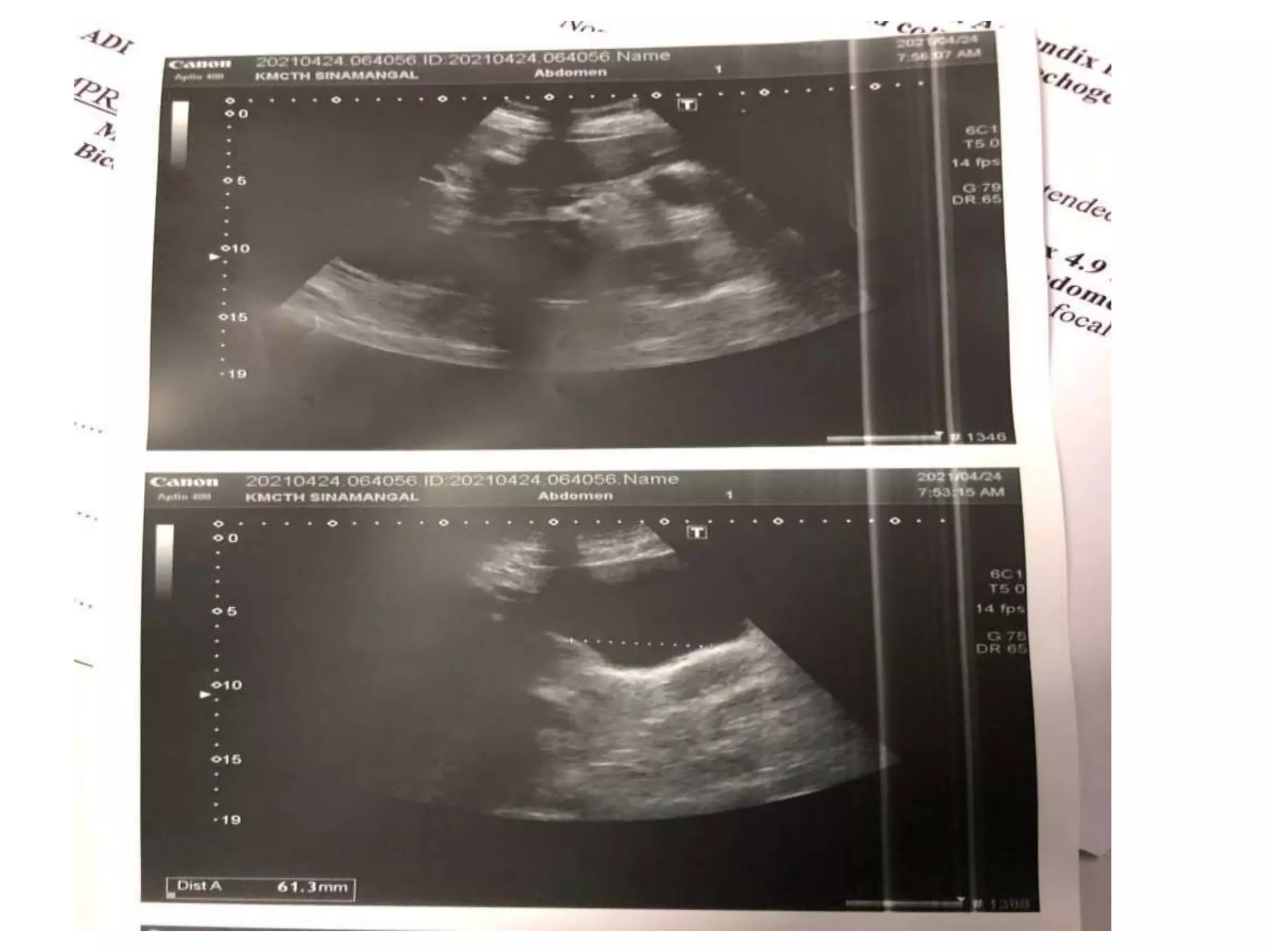
A 35 years lady with h/o:
 Severe lower abdominal pain
 Difficulty in passing urine
Provisional diagnosis
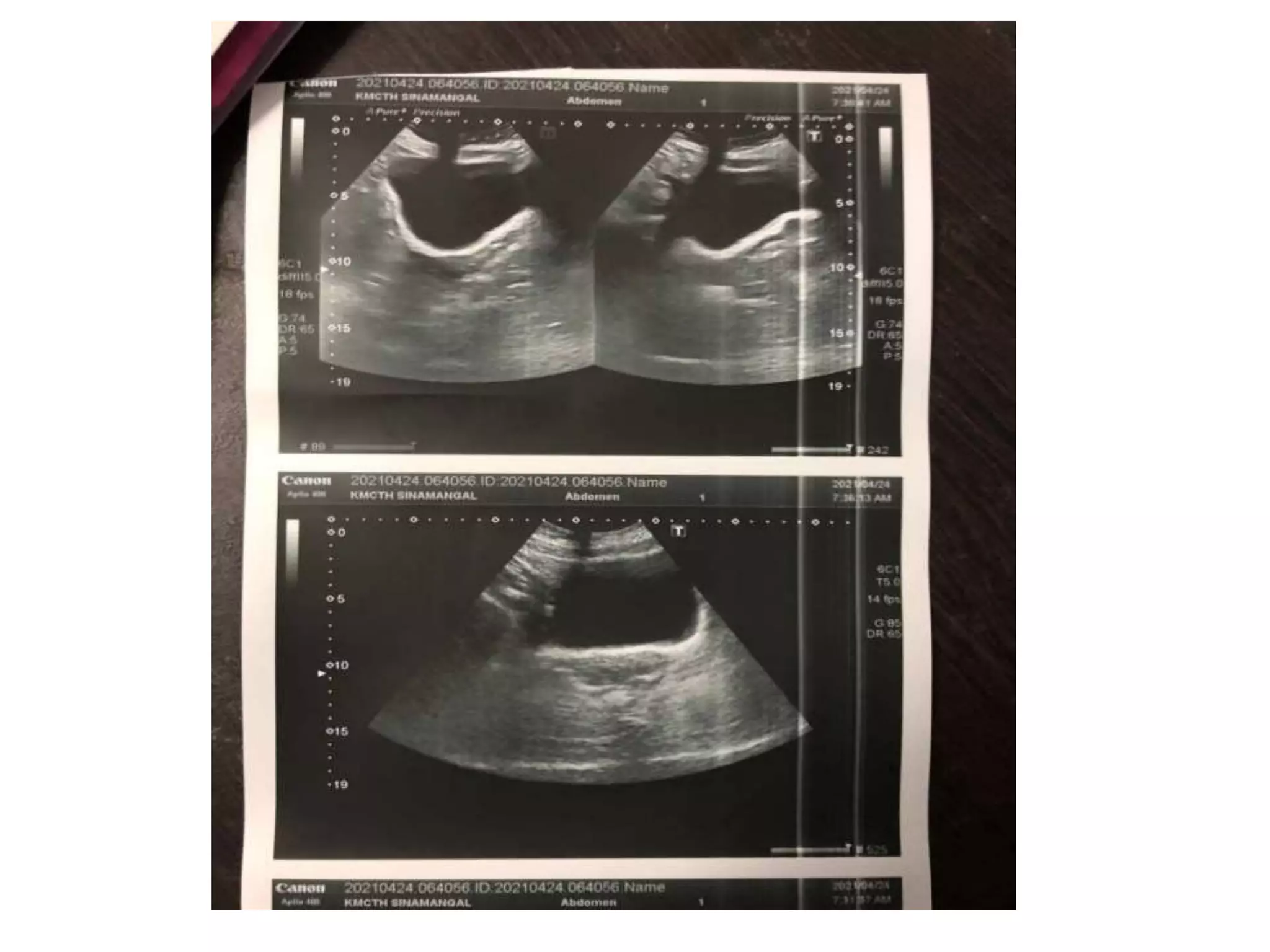
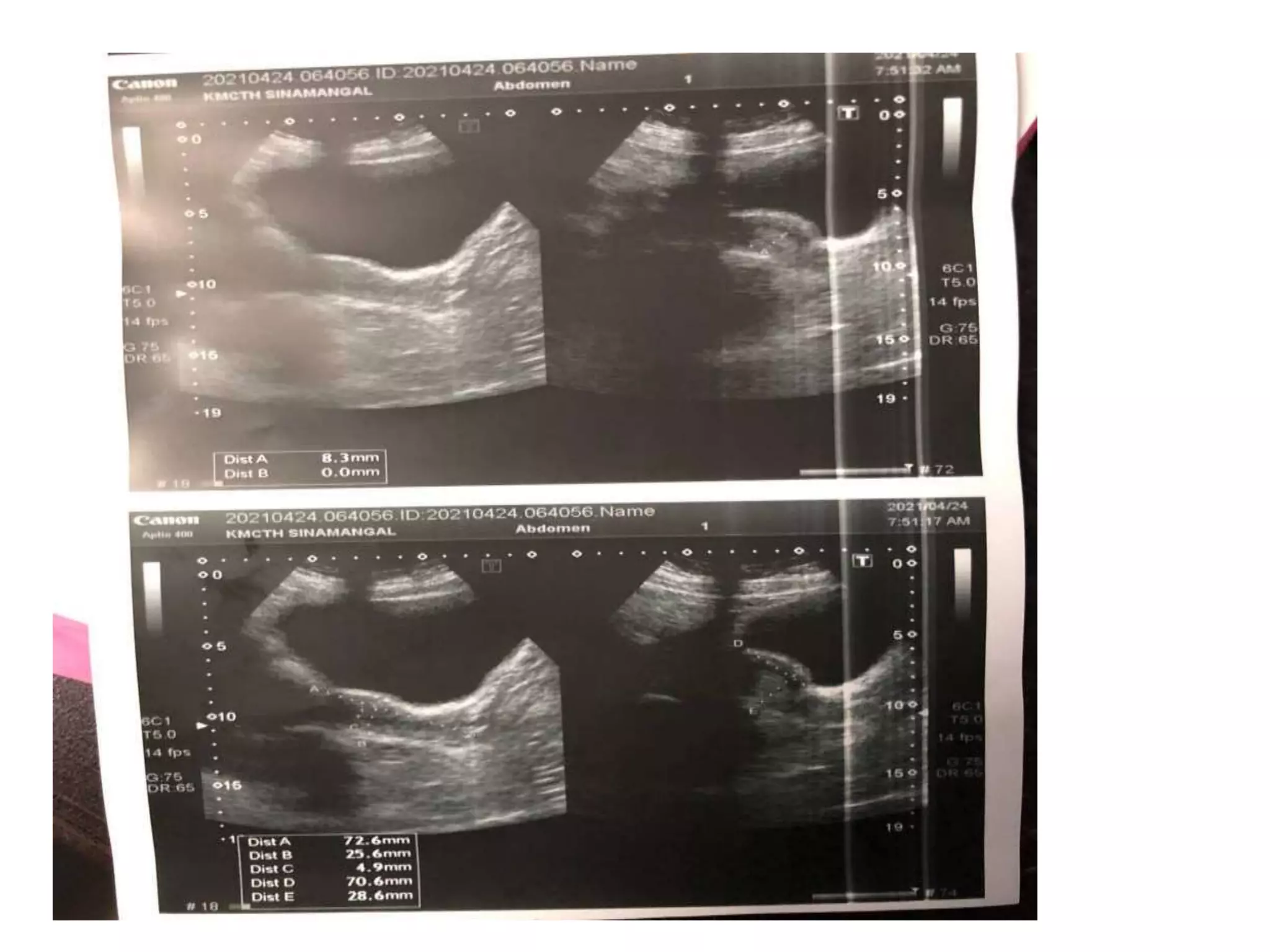
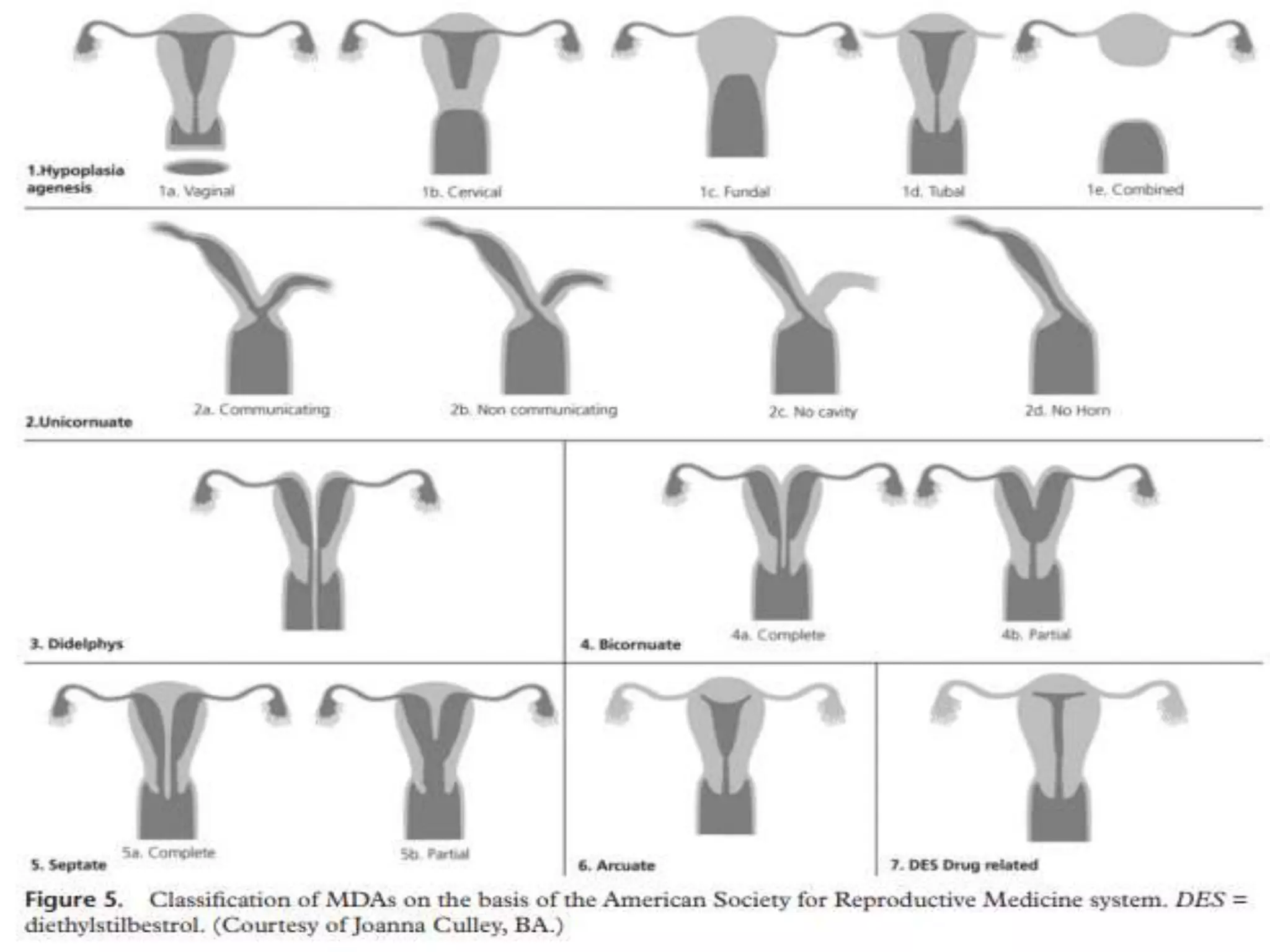
• Two separate uterus with separate cervical
canal with normal vaginal canal
Bicornate bicollis uterus
D/D
• Bicornuate unicollis uterus
• Septate uterus
• Uterus didelphys
• Arcuate uterus
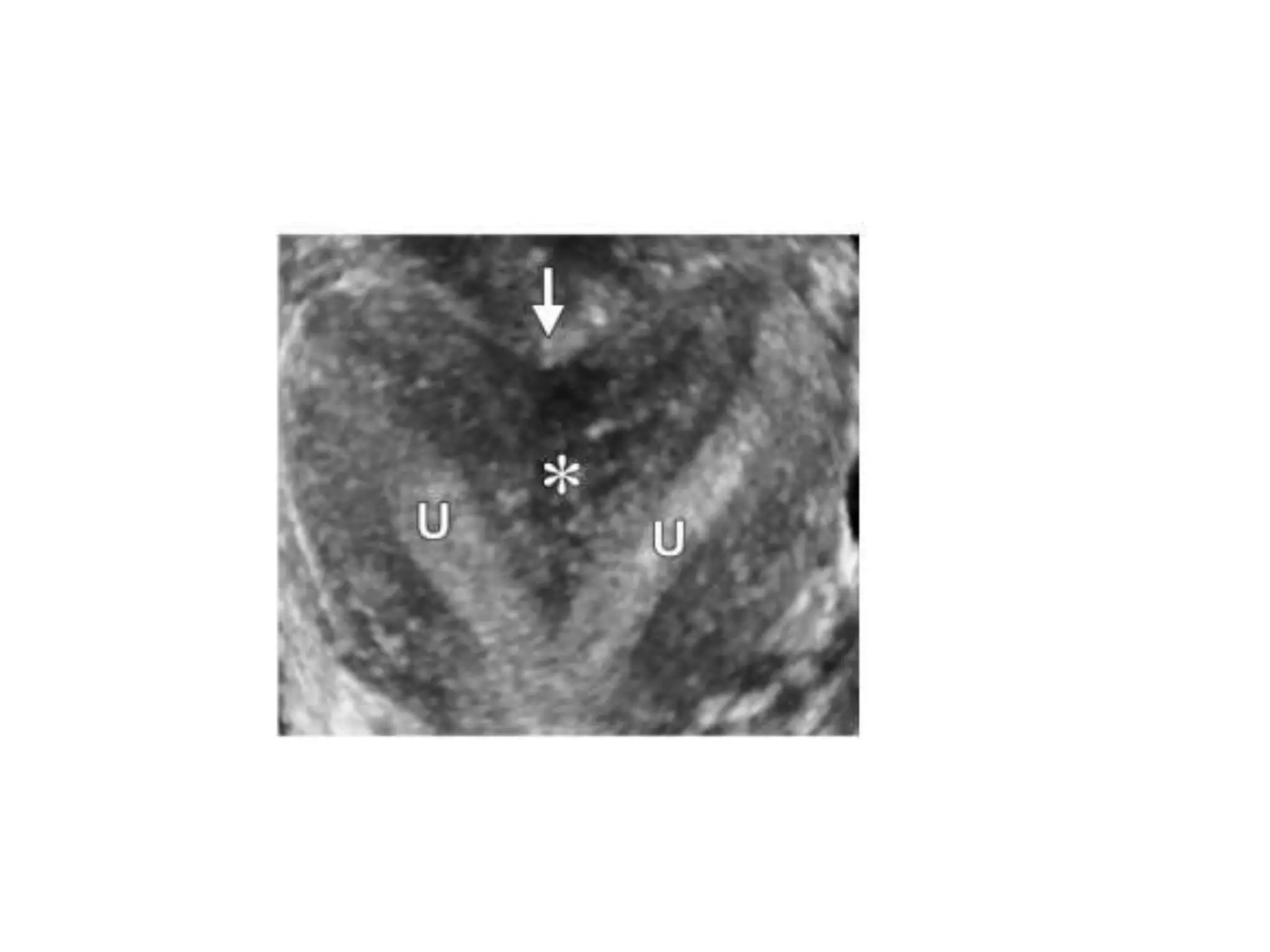
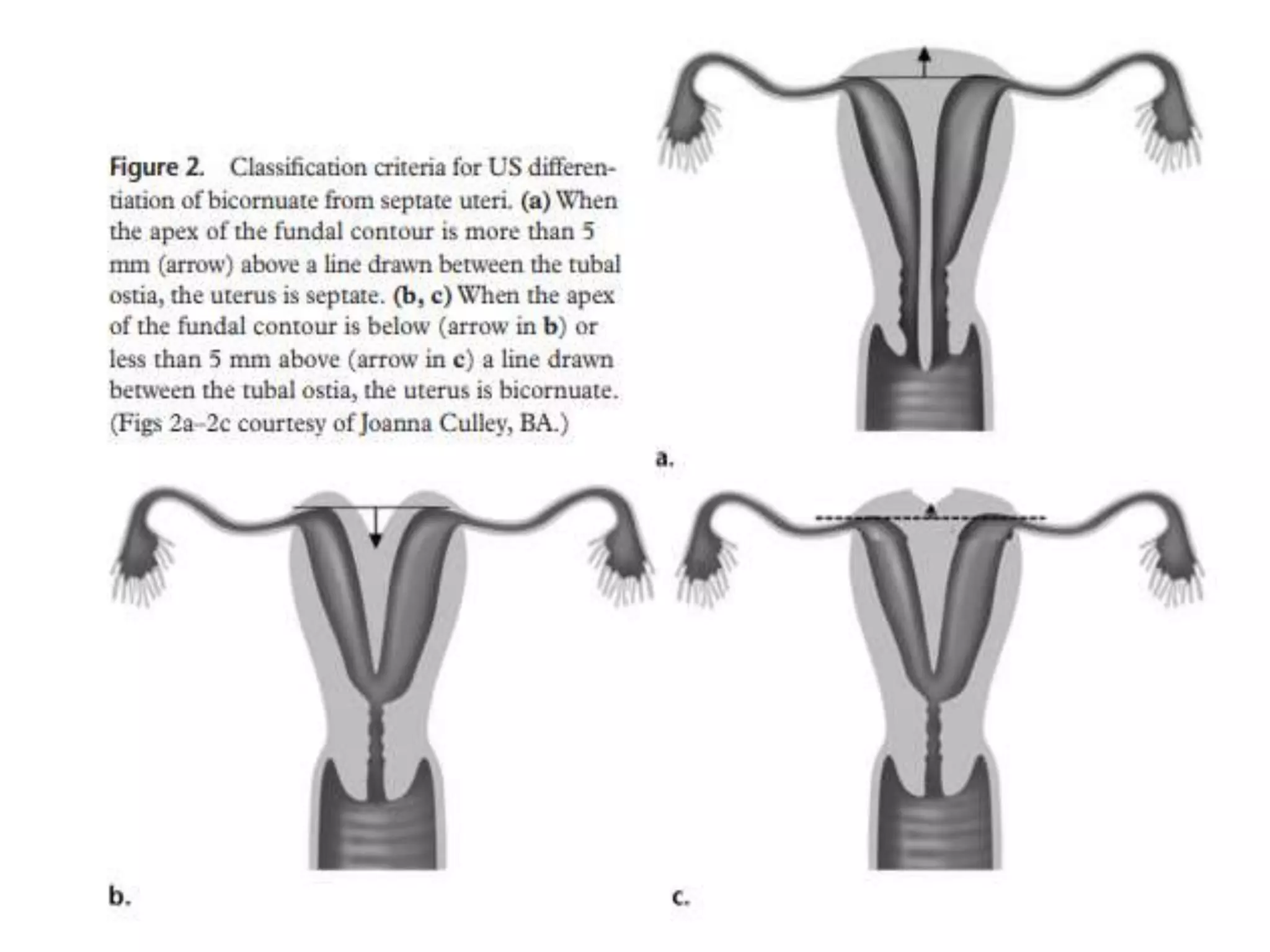
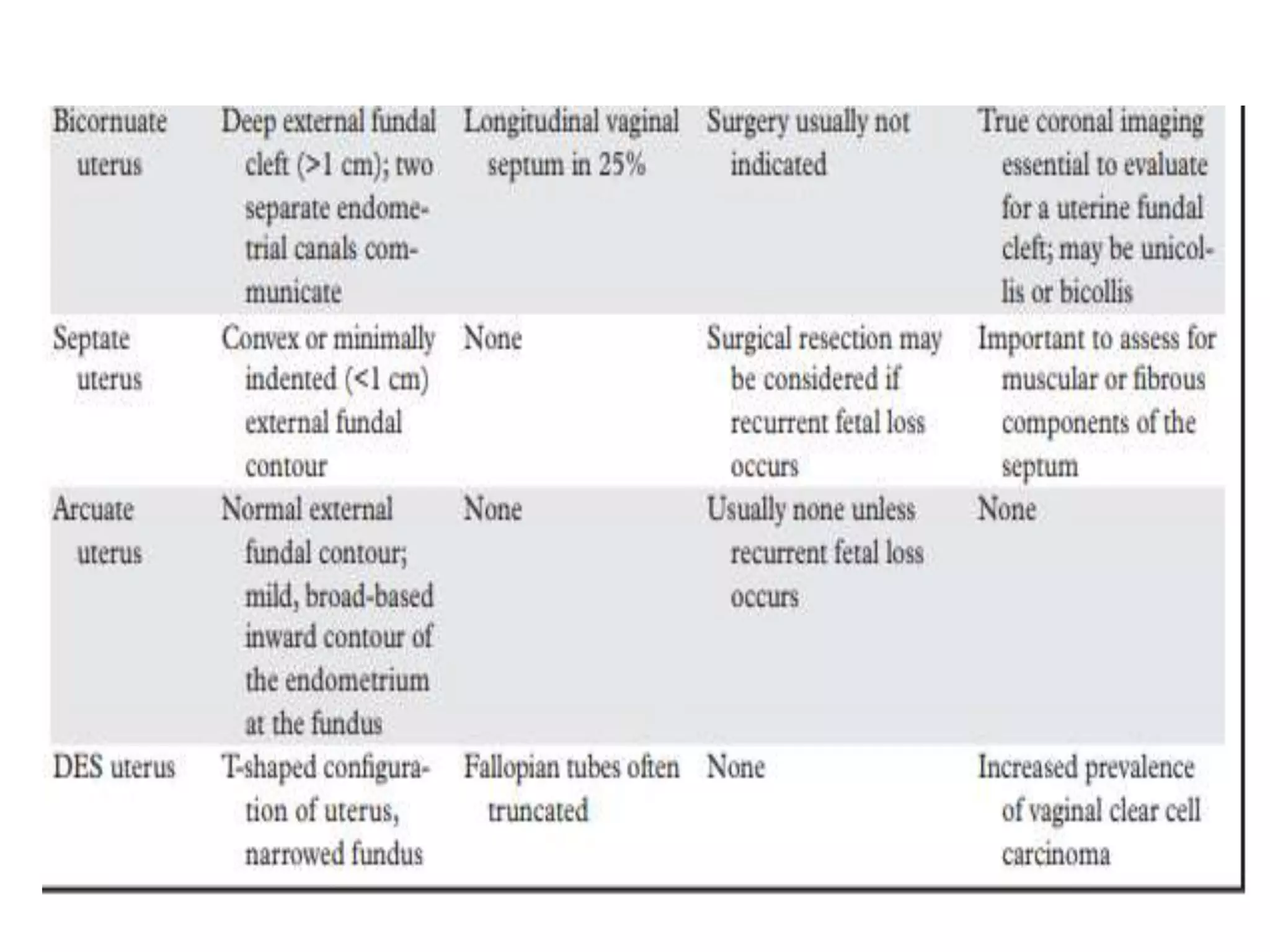
• Absence of a cleft in the external
uterine fundal contour with a
duplicated endometrial cavity is the
key feature used to diagnose a septate
uterus rather than a bicornuate uterus.
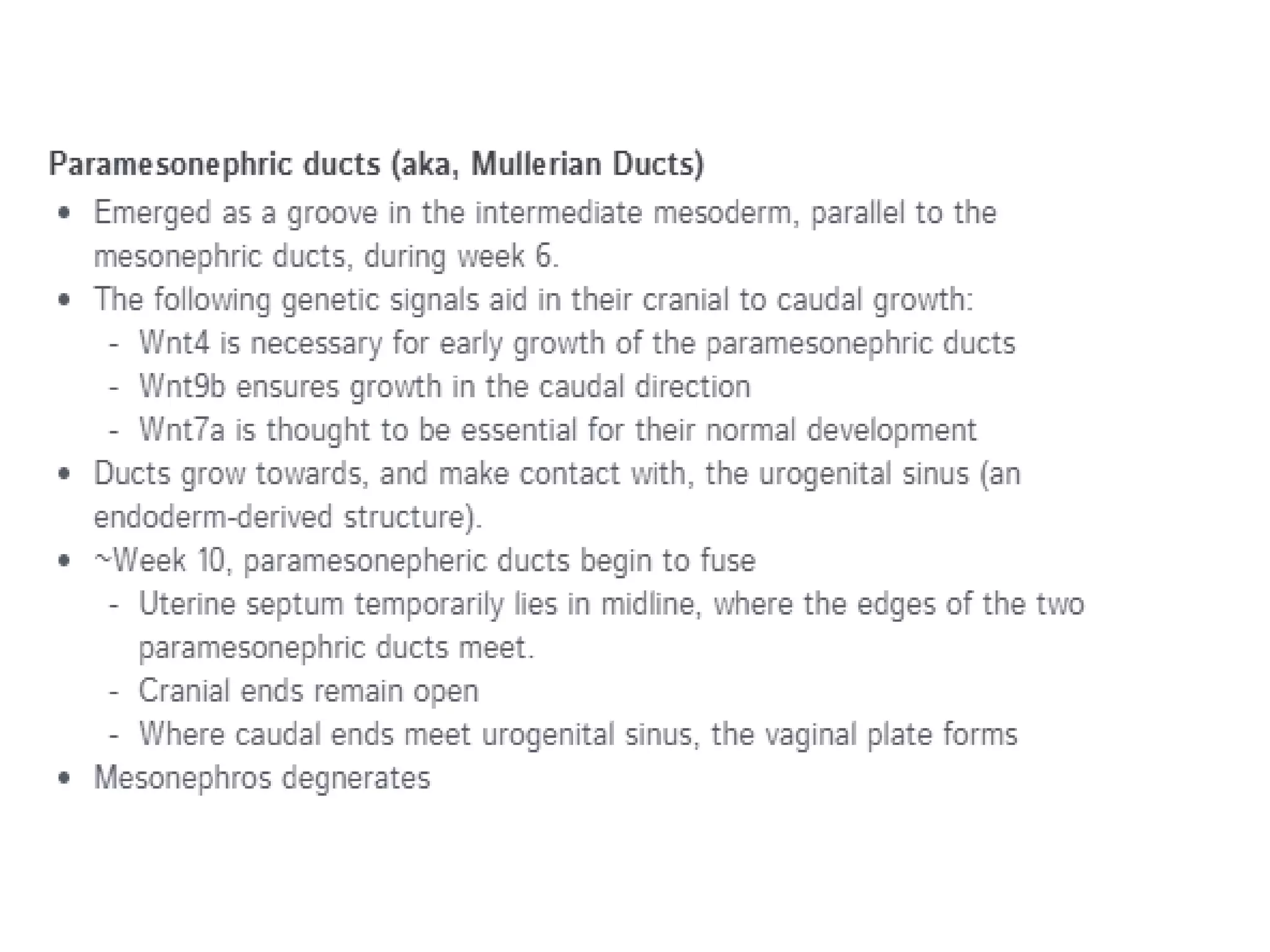
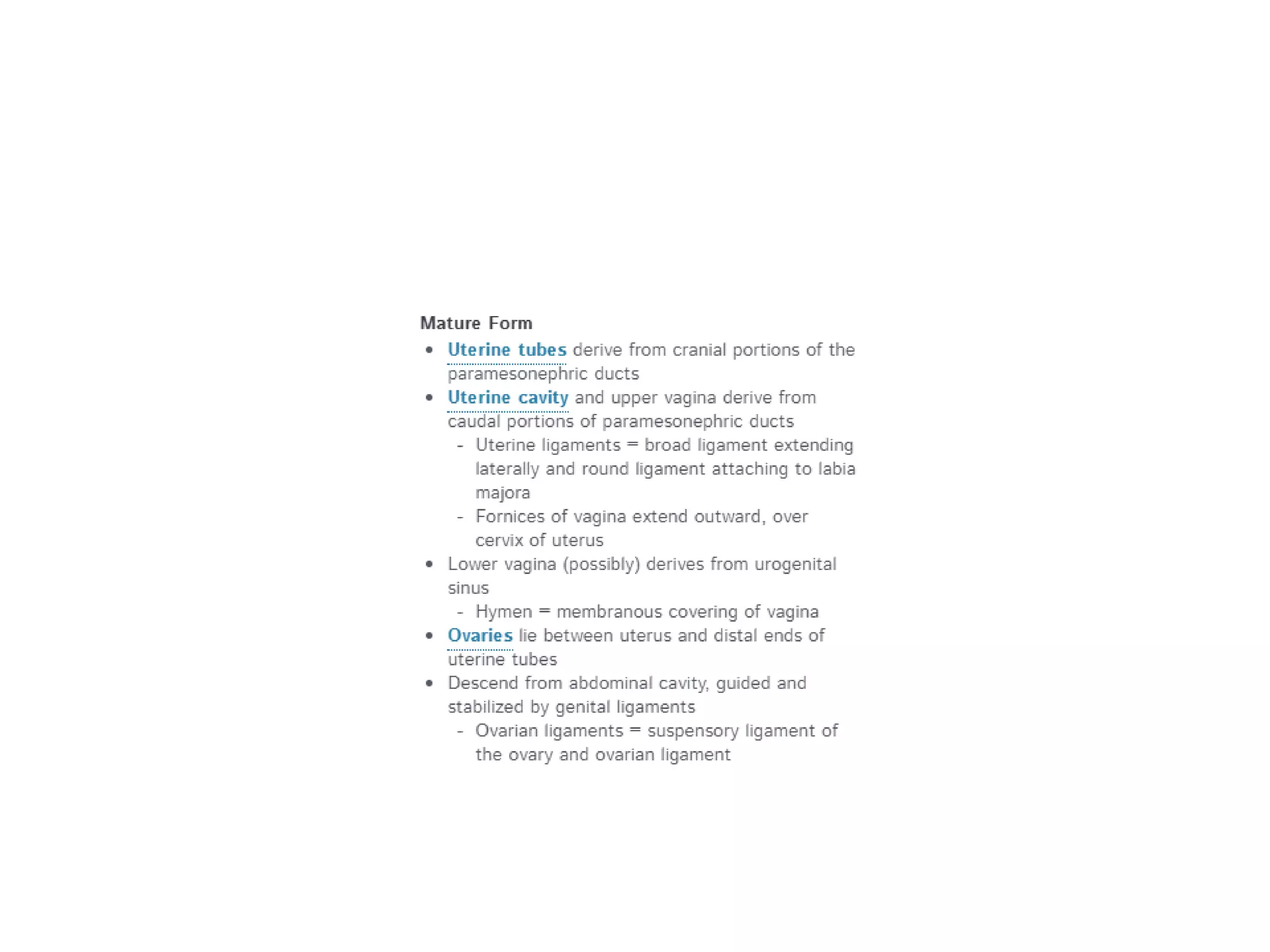
• The müllerian ducts are paired embryologic
structures that undergo fusion and resorption
in utero to give rise to the uterus, fallopian
tubes, cervix, and upper two-thirds of the v
vagina. Interruption of
• normal development of the müllerian ducts
can result in formation
• of müllerian duct anomalies (MDAs).
Associations
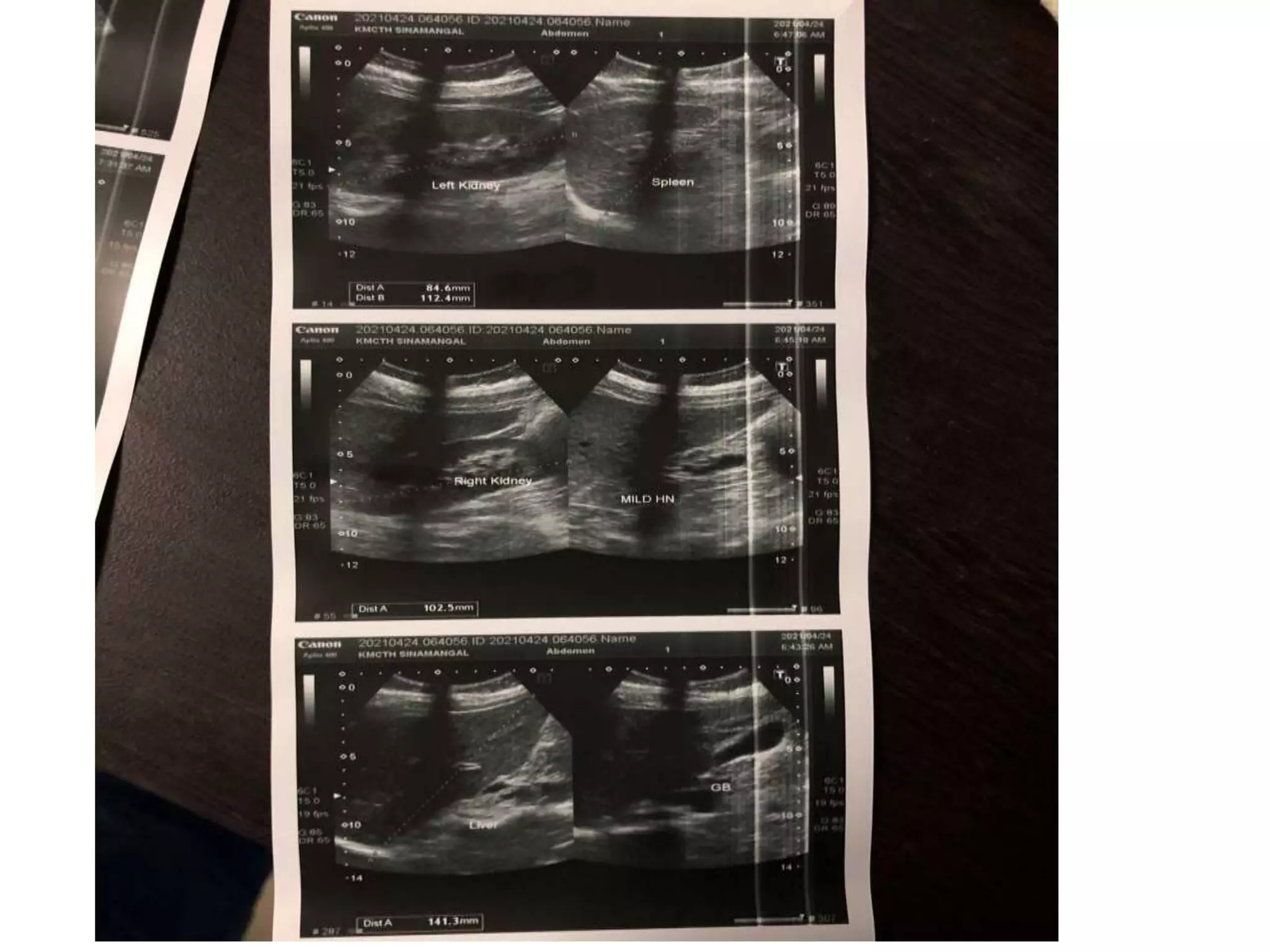
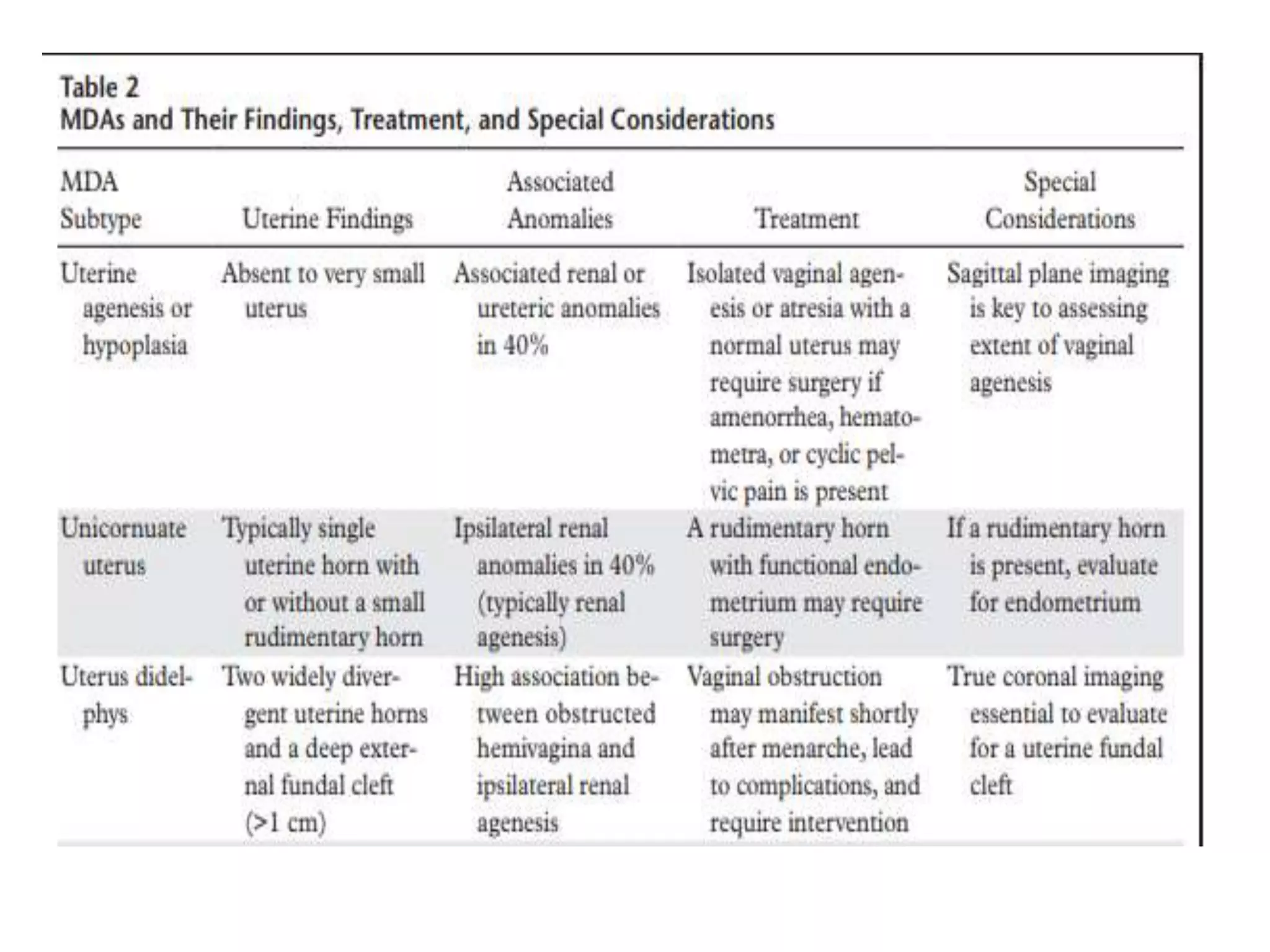
• renal anomalies, with a reported prevalence of
• 30%–50%, including renal agenesis (most
commonly unilateral agenesis), ectopia,
hypoplasia,
• fusion, malrotation, and duplication
• vertebral bodies
• (29%), such as wedged or fused vertebral bodies
• and spina bifida (22%–23%), cardiac anomalies
• (14.5%), and syndromes such as Klippel-Feil
• syndrome (7%)
Complications
• Menstrual distrubances
• Infertility
• Sexual distrubance
Reference

Mullerian Duct Anomalies

  • 1.
  • 2.
    A 35 yearslady with h/o:  Severe lower abdominal pain  Difficulty in passing urine
  • 7.
    Provisional diagnosis • Twoseparate uterus with separate cervical canal with normal vaginal canal Bicornate bicollis uterus
  • 8.
    D/D • Bicornuate unicollisuterus • Septate uterus • Uterus didelphys • Arcuate uterus
  • 12.
    • Absence ofa cleft in the external uterine fundal contour with a duplicated endometrial cavity is the key feature used to diagnose a septate uterus rather than a bicornuate uterus.
  • 16.
    • The müllerianducts are paired embryologic structures that undergo fusion and resorption in utero to give rise to the uterus, fallopian tubes, cervix, and upper two-thirds of the v vagina. Interruption of • normal development of the müllerian ducts can result in formation • of müllerian duct anomalies (MDAs).
  • 20.
    Associations • renal anomalies,with a reported prevalence of • 30%–50%, including renal agenesis (most commonly unilateral agenesis), ectopia, hypoplasia, • fusion, malrotation, and duplication • vertebral bodies • (29%), such as wedged or fused vertebral bodies • and spina bifida (22%–23%), cardiac anomalies • (14.5%), and syndromes such as Klippel-Feil • syndrome (7%)
  • 21.
    Complications • Menstrual distrubances •Infertility • Sexual distrubance
  • 22.