Moving Images
Shot Distance 
This is the most simple variable. Normal shots include 
long shot, medium shots and close-ups. Extreme close 
ups and extreme long shots are less frequently used. 
When a long shot becomes a medium shot and vice versa 
is debateable.
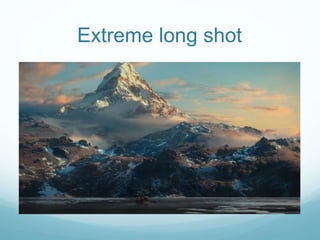
Extreme long shot
Extreme long shot 
 This shot helps to show the layout and 
size of the world. This is done by showing 
the foreground, middle ground and 
background together. 
 Here the mountain in the background if massive in comparison to 
the characters in the foreground. This gives perspective on not 
only the physical size of the mountain but the size of journey that 
the characters will have to travel. The middle-ground helps to link 
the two together by adding depth to the shot. 
 The sun setting in the east helps to add the aspect of time running 
out and combined with the sizing and the journey the sense that 
the adventure feels impossible.
Shot Distance 
This is used to influence the viewer’s sympathies. The 
normal distance is medium shot to close up; which gives 
a comfortable relationship with the person on the screen 
for the audience. Extreme close ups are used to make 
the viewer feel uncomfortable, with an evil character for 
instance, or to emphasise the tension felt by the person 
being interviewed.
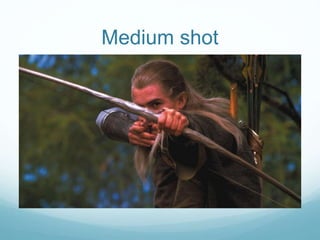
Medium shot
Medium shot 
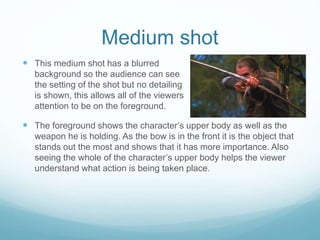
 This medium shot has a blurred 
background so the audience can see 
the setting of the shot but no detailing 
is shown, this allows all of the viewers 
attention to be on the foreground. 
 The foreground shows the character’s upper body as well as the 
weapon he is holding. As the bow is in the front it is the object that 
stands out the most and shows that it has more importance. Also 
seeing the whole of the character’s upper body helps the viewer 
understand what action is being taken place.
Close up
Close up 
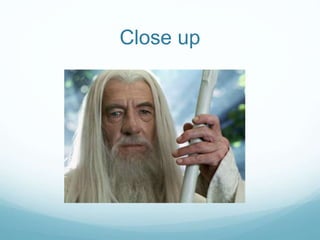
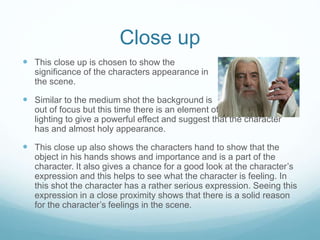
 This close up is chosen to show the 
significance of the characters appearance in 
the scene. 
 Similar to the medium shot the background is 
out of focus but this time there is an element of 
lighting to give a powerful effect and suggest that the character 
has and almost holy appearance. 
 This close up also shows the characters hand to show that the 
object in his hands shows and importance and is a part of the 
character. It also gives a chance for a good look at the character’s 
expression and this helps to see what the character is feeling. In 
this shot the character has a rather serious expression. Seeing this 
expression in a close proximity shows that there is a solid reason 
for the character’s feelings in the scene.
Moving Images 
There is some implication that seeing closely is seeing 
better. Sometimes a camera person will zoom in on a 
face if there is some suggestion in an interview of lying or 
guilt. 
If an interviewee is placed in partial shade this can 
increase the drama because it gives the impression the 
viewer is privileged to hear some significant, secret 
information.
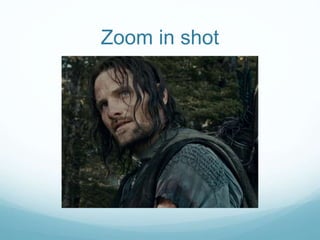
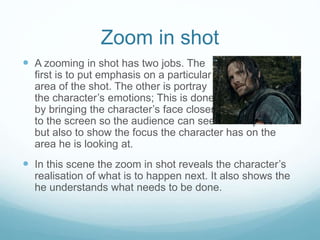
Zoom in shot
Zoom in shot 
 A zooming in shot has two jobs. The 
first is to put emphasis on a particular 
area of the shot. The other is portray 
the character’s emotions; This is done 
by bringing the character’s face closer 
to the screen so the audience can see their expression 
but also to show the focus the character has on the 
area he is looking at. 
 In this scene the zoom in shot reveals the character’s 
realisation of what is to happen next. It also shows the 
he understands what needs to be done.
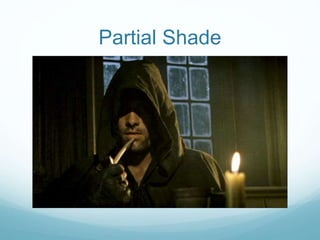
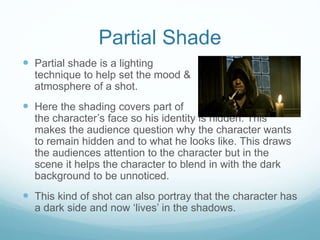
Partial Shade
Partial Shade 
 Partial shade is a lighting 
technique to help set the mood & 
atmosphere of a shot. 
 Here the shading covers part of 
the character’s face so his identity is hidden. This 
makes the audience question why the character wants 
to remain hidden and to what he looks like. This draws 
the audiences attention to the character but in the 
scene it helps the character to blend in with the dark 
background to be unnoticed. 
 This kind of shot can also portray that the character has 
a dark side and now ‘lives’ in the shadows.
Proximity or Nearness 
Subjects closer to the camera have greater importance. 
Move the subjects in the picture around and you change 
their importance.
Proximity
Proximity 
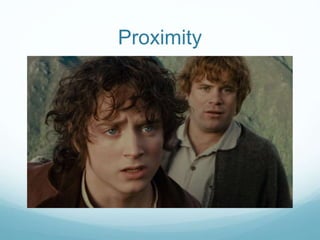
 Proximity is used in a shot to 
show the importance of a 
character when compared to 
another. In this scene the 
character in the foreground is 
closer to the screen showing that 
he has more importance. This 
also uses being closer to the screen to help give emphasis 
on the character’s expression as well as directing the 
audiences attention to him. 
 The character in the background is given less importance as 
there is less of him revealed in the shot and he is in the 
middle ground to further from the screen. This suggest what 
the character in the foreground is saying holds more 
importance and is what the audience needs to listen to and 
remember.
Soft Focus 
Fuzzy frames are usually associated with romantic 
moods. Shallow focus, which either the foreground, 
middleground or background of the image is given focus 
allows the film maker to direct the audiences’ attention. 
Deep focus, which keeps everything in the image in 
focus allows the viewer to choose what to focus on and is 
often used to show realism (as seen in TV drama).
Fuzzy Frames
Fuzzy Frames 
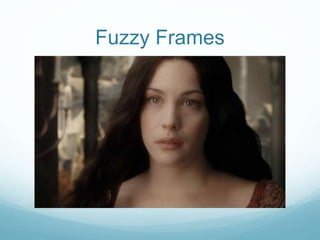
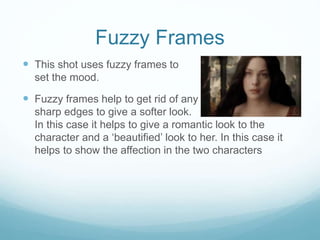
 This shot uses fuzzy frames to 
set the mood. 
 Fuzzy frames help to get rid of any 
sharp edges to give a softer look. 
In this case it helps to give a romantic look to the 
character and a ‘beautified’ look to her. In this case it 
helps to show the affection in the two characters
Deep focus
Deep focus 
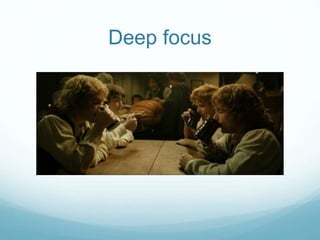
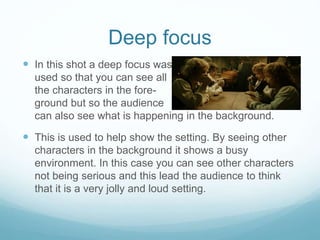
 In this shot a deep focus was 
used so that you can see all 
the characters in the fore-ground 
but so the audience 
can also see what is happening in the background. 
 This is used to help show the setting. By seeing other 
characters in the background it shows a busy 
environment. In this case you can see other characters 
not being serious and this lead the audience to think 
that it is a very jolly and loud setting.
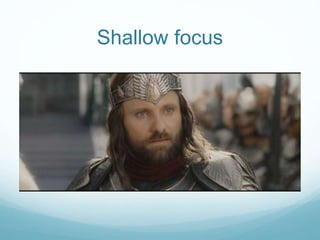
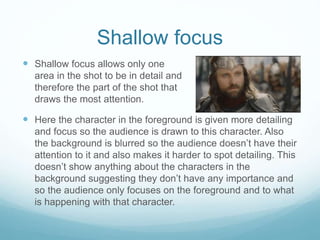
Shallow focus
Shallow focus 
 Shallow focus allows only one 
area in the shot to be in detail and 
therefore the part of the shot that 
draws the most attention. 
 Here the character in the foreground is given more detailing 
and focus so the audience is drawn to this character. Also 
the background is blurred so the audience doesn’t have their 
attention to it and also makes it harder to spot detailing. This 
doesn’t show anything about the characters in the 
background suggesting they don’t have any importance and 
so the audience only focuses on the foreground and to what 
is happening with that character.

Moving images add picture ppt

  • 1.
  • 2.
    Shot Distance Thisis the most simple variable. Normal shots include long shot, medium shots and close-ups. Extreme close ups and extreme long shots are less frequently used. When a long shot becomes a medium shot and vice versa is debateable.
  • 3.
  • 4.
    Extreme long shot  This shot helps to show the layout and size of the world. This is done by showing the foreground, middle ground and background together.  Here the mountain in the background if massive in comparison to the characters in the foreground. This gives perspective on not only the physical size of the mountain but the size of journey that the characters will have to travel. The middle-ground helps to link the two together by adding depth to the shot.  The sun setting in the east helps to add the aspect of time running out and combined with the sizing and the journey the sense that the adventure feels impossible.
  • 5.
    Shot Distance Thisis used to influence the viewer’s sympathies. The normal distance is medium shot to close up; which gives a comfortable relationship with the person on the screen for the audience. Extreme close ups are used to make the viewer feel uncomfortable, with an evil character for instance, or to emphasise the tension felt by the person being interviewed.
  • 6.
  • 7.
    Medium shot This medium shot has a blurred background so the audience can see the setting of the shot but no detailing is shown, this allows all of the viewers attention to be on the foreground.  The foreground shows the character’s upper body as well as the weapon he is holding. As the bow is in the front it is the object that stands out the most and shows that it has more importance. Also seeing the whole of the character’s upper body helps the viewer understand what action is being taken place.
  • 8.
  • 9.
    Close up This close up is chosen to show the significance of the characters appearance in the scene.  Similar to the medium shot the background is out of focus but this time there is an element of lighting to give a powerful effect and suggest that the character has and almost holy appearance.  This close up also shows the characters hand to show that the object in his hands shows and importance and is a part of the character. It also gives a chance for a good look at the character’s expression and this helps to see what the character is feeling. In this shot the character has a rather serious expression. Seeing this expression in a close proximity shows that there is a solid reason for the character’s feelings in the scene.
  • 10.
    Moving Images Thereis some implication that seeing closely is seeing better. Sometimes a camera person will zoom in on a face if there is some suggestion in an interview of lying or guilt. If an interviewee is placed in partial shade this can increase the drama because it gives the impression the viewer is privileged to hear some significant, secret information.
  • 11.
  • 12.
    Zoom in shot  A zooming in shot has two jobs. The first is to put emphasis on a particular area of the shot. The other is portray the character’s emotions; This is done by bringing the character’s face closer to the screen so the audience can see their expression but also to show the focus the character has on the area he is looking at.  In this scene the zoom in shot reveals the character’s realisation of what is to happen next. It also shows the he understands what needs to be done.
  • 13.
  • 14.
    Partial Shade Partial shade is a lighting technique to help set the mood & atmosphere of a shot.  Here the shading covers part of the character’s face so his identity is hidden. This makes the audience question why the character wants to remain hidden and to what he looks like. This draws the audiences attention to the character but in the scene it helps the character to blend in with the dark background to be unnoticed.  This kind of shot can also portray that the character has a dark side and now ‘lives’ in the shadows.
  • 15.
    Proximity or Nearness Subjects closer to the camera have greater importance. Move the subjects in the picture around and you change their importance.
  • 16.
  • 17.
    Proximity  Proximityis used in a shot to show the importance of a character when compared to another. In this scene the character in the foreground is closer to the screen showing that he has more importance. This also uses being closer to the screen to help give emphasis on the character’s expression as well as directing the audiences attention to him.  The character in the background is given less importance as there is less of him revealed in the shot and he is in the middle ground to further from the screen. This suggest what the character in the foreground is saying holds more importance and is what the audience needs to listen to and remember.
  • 18.
    Soft Focus Fuzzyframes are usually associated with romantic moods. Shallow focus, which either the foreground, middleground or background of the image is given focus allows the film maker to direct the audiences’ attention. Deep focus, which keeps everything in the image in focus allows the viewer to choose what to focus on and is often used to show realism (as seen in TV drama).
  • 19.
  • 20.
    Fuzzy Frames This shot uses fuzzy frames to set the mood.  Fuzzy frames help to get rid of any sharp edges to give a softer look. In this case it helps to give a romantic look to the character and a ‘beautified’ look to her. In this case it helps to show the affection in the two characters
  • 21.
  • 22.
    Deep focus In this shot a deep focus was used so that you can see all the characters in the fore-ground but so the audience can also see what is happening in the background.  This is used to help show the setting. By seeing other characters in the background it shows a busy environment. In this case you can see other characters not being serious and this lead the audience to think that it is a very jolly and loud setting.
  • 23.
  • 24.
    Shallow focus Shallow focus allows only one area in the shot to be in detail and therefore the part of the shot that draws the most attention.  Here the character in the foreground is given more detailing and focus so the audience is drawn to this character. Also the background is blurred so the audience doesn’t have their attention to it and also makes it harder to spot detailing. This doesn’t show anything about the characters in the background suggesting they don’t have any importance and so the audience only focuses on the foreground and to what is happening with that character.