Understanding the changing
consumer behavior
Dr. Md. Iftekharul Amin
Professor
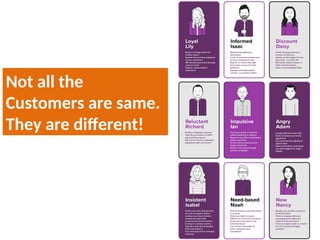
Not all the
Customers are same.
They are different!
To be successful in the market
Marketers need to know how their customers
BEHAVE!
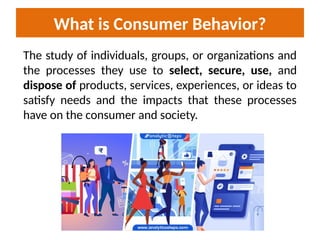
What is Consumer Behavior?
The study of individuals, groups, or organizations and
the processes they use to select, secure, use, and
dispose of products, services, experiences, or ideas to
satisfy needs and the impacts that these processes
have on the consumer and society.
Why is a Consumer Important?
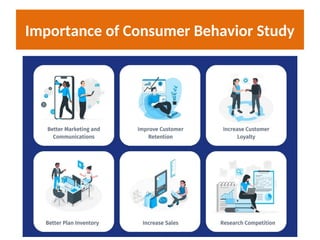
Importance of Consumer Behavior Study
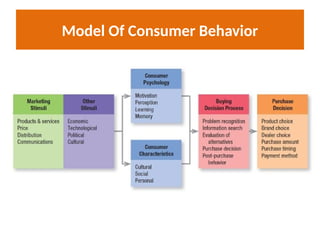
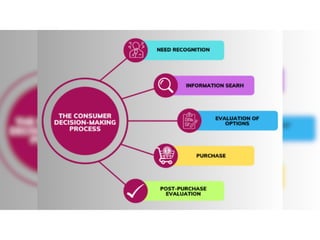
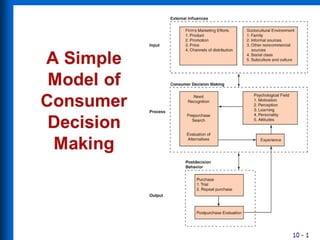
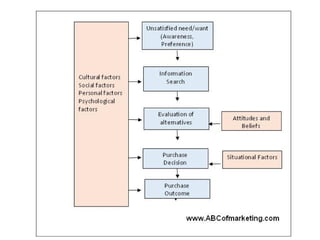
Model Of Consumer Behavior
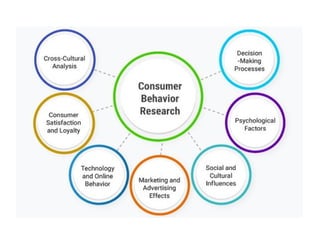
What influences consumer behavior?
• Consumer characteristics
– Cultural factors
– Social factors
– Personal factors
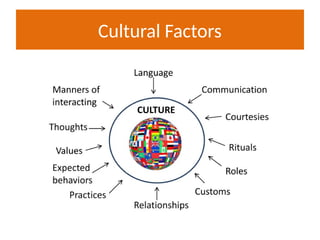
Cultural Factors
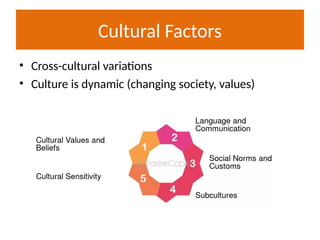
Cultural Factors
• Cross-cultural variations
• Culture is dynamic (changing society, values)
Cultural values of relevance to consumer
behavior
• Other-oriented values
• Environment-oriented values
• Self-oriented values
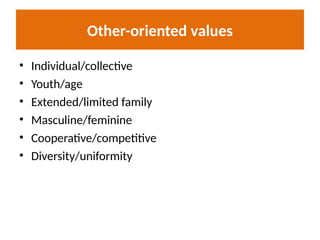
Other-oriented values
• Individual/collective
• Youth/age
• Extended/limited family
• Masculine/feminine
• Cooperative/competitive
• Diversity/uniformity
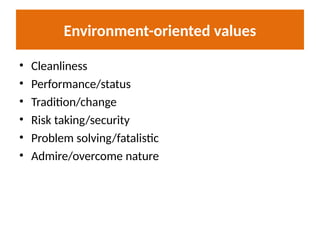
Environment-oriented values
• Cleanliness
• Performance/status
• Tradition/change
• Risk taking/security
• Problem solving/fatalistic
• Admire/overcome nature
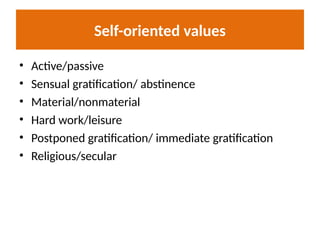
Self-oriented values
• Active/passive
• Sensual gratification/ abstinence
• Material/nonmaterial
• Hard work/leisure
• Postponed gratification/ immediate gratification
• Religious/secular
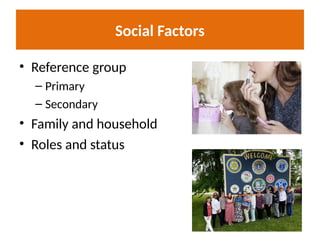
Social Factors
• Reference group
– Primary
– Secondary
• Family and household
• Roles and status
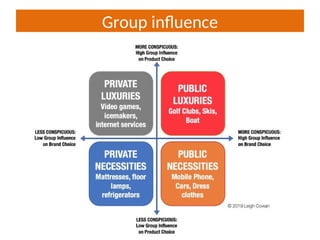
Group influence
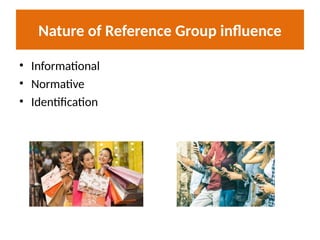
Nature of Reference Group influence
• Informational
• Normative
• Identification
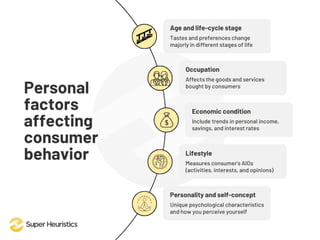
Personal Factors
Consumer psychology
• Perception
• Learning
• Motivation
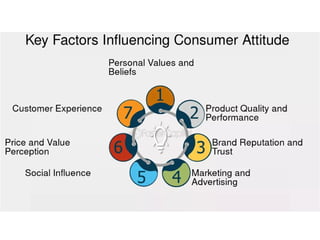
• Attitudes
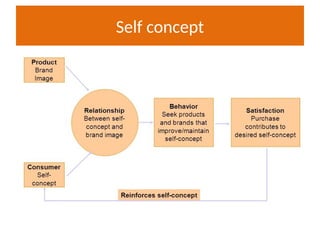
• Self-concept and lifestyle
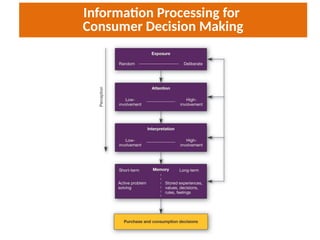
Information Processing for
Consumer Decision Making
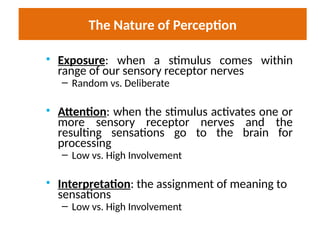
The Nature of Perception
• Exposure: when a stimulus comes within
range of our sensory receptor nerves
– Random vs. Deliberate
• Attention: when the stimulus activates one or
more sensory receptor nerves and the
resulting sensations go to the brain for
processing
– Low vs. High Involvement
• Interpretation: the assignment of meaning to
sensations
– Low vs. High Involvement
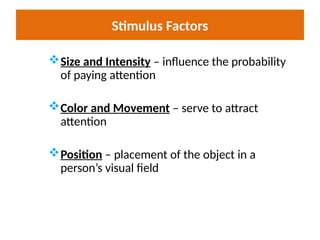
Stimulus Factors
Size and Intensity – influence the probability
of paying attention
Color and Movement – serve to attract
attention
Position – placement of the object in a
person’s visual field
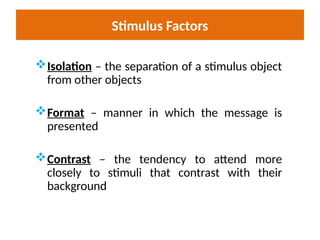
Stimulus Factors
Isolation – the separation of a stimulus object
from other objects
Format – manner in which the message is
presented
Contrast – the tendency to attend more
closely to stimuli that contrast with their
background
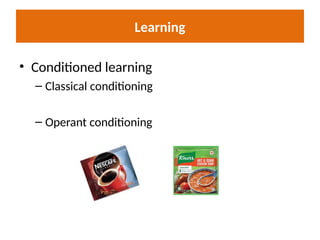
Learning
• Conditioned learning
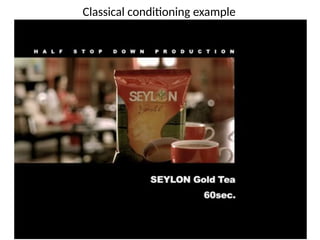
– Classical conditioning
– Operant conditioning
Classical conditioning example
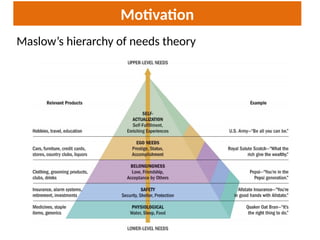
Motivation
Maslow’s hierarchy of needs theory
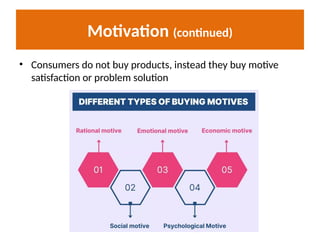
Motivation (continued)
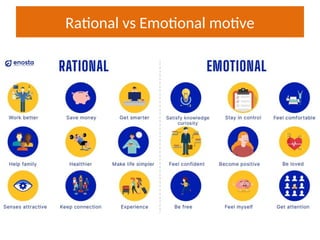
• Consumers do not buy products, instead they buy motive
satisfaction or problem solution
Rational vs Emotional motive
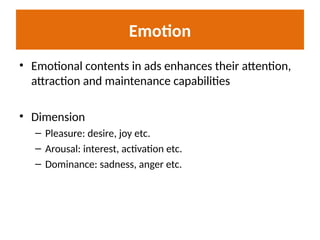
Emotion
• Emotional contents in ads enhances their attention,
attraction and maintenance capabilities
• Dimension
– Pleasure: desire, joy etc.
– Arousal: interest, activation etc.
– Dominance: sadness, anger etc.
Use of Emotion in ad
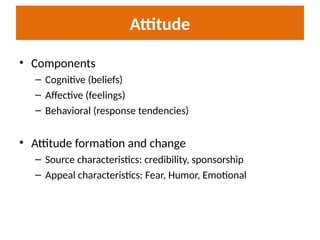
Attitude
• Components
– Cognitive (beliefs)
– Affective (feelings)
– Behavioral (response tendencies)
• Attitude formation and change
– Source characteristics: credibility, sponsorship
– Appeal characteristics: Fear, Humor, Emotional
Self concept
Life Style
MKT 2 - Understanding the changing consumer behavior.ppt

MKT 2 - Understanding the changing consumer behavior.ppt