Chapter 5: Consumer Motivation
What is Motivation? An activated state within a person that leads to goal-directed behavior. Needs  Feelings Desires
Motivation begins with the recognition of a need. Need recognition: a perceived discrepancy exists between an actual and a desired state of being Needs can be either innate or learned. Needs are never fully satisfied.
Two Types of Needs: Utilitarian needs  Expressive needs
Some General Theories of Motivation  Broad theories of motivation  Maslow’s hierarchy of needs
Maslow’s Hierarchy of Needs
McClelland’s Theory of Learned Needs Achievement  Affiliation  Power Uniqueness
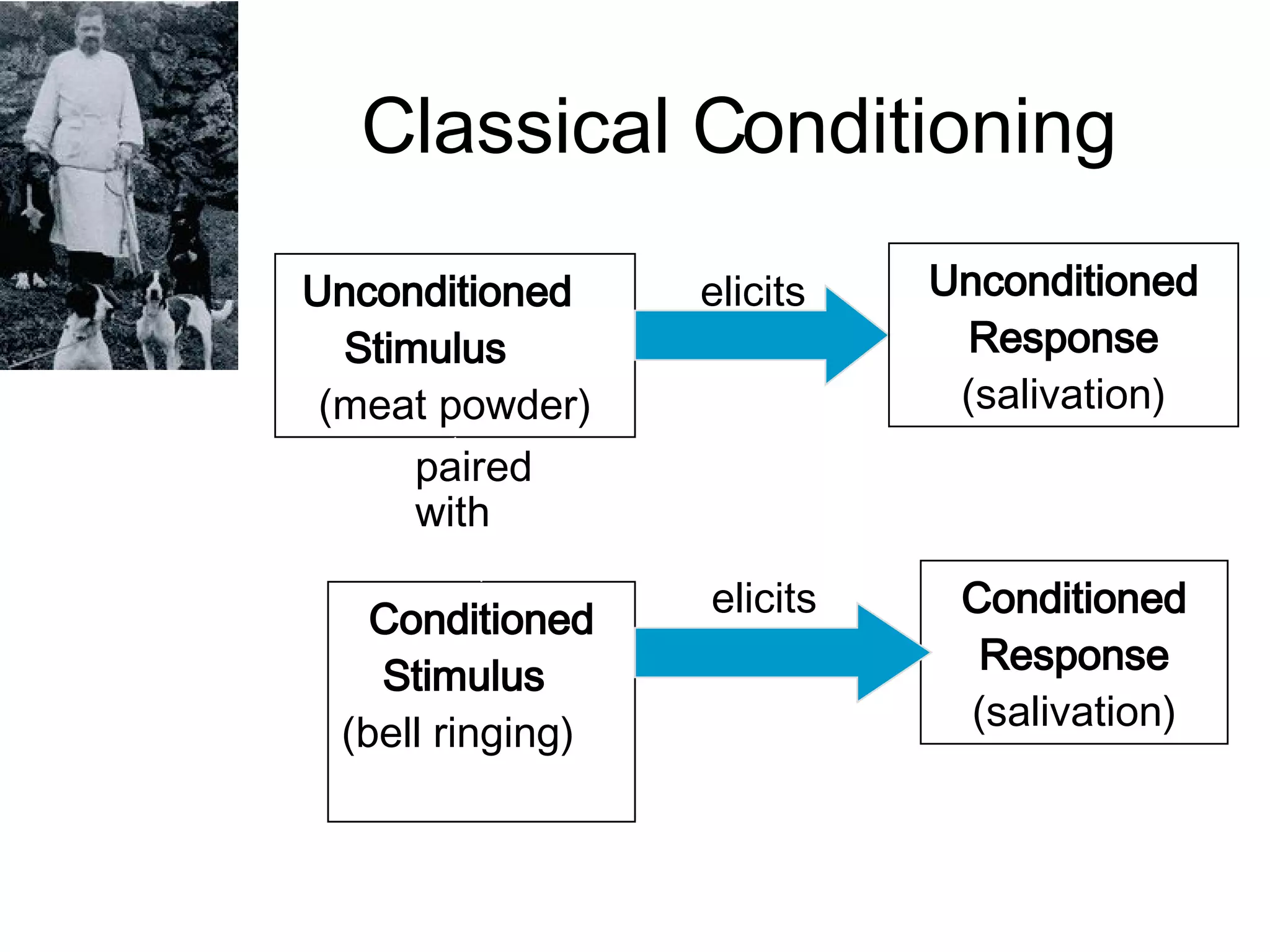
Classical Conditioning Unconditioned  Stimulus   (meat powder) elicits Conditioned Stimulus   (bell ringing)  Conditioned Response  (salivation) Unconditioned Response  (salivation) paired with elicits
Classical Conditioning US Michael Jordan elicits CS   Nike CR Admiration UR   Admiration paired with elicits
Operant Conditioning The process in which the frequency of occurrence of a bit of behavior is modified by the consequences of the behavior. Reinforcers Positive reinforcers Negative reinforcers Secondary reinforcers Punishers Analysis of contingencies of reinforcement
Operant Conditioning (continued) Schedules of reinforcement Extinction Discriminative stimuli Shaping consumer responses
Vicarious Learning People foresee the probable consequences of their behavior. People learn by watching the actions of others and the consequences of these actions (i.e. vicarious learning). People have the ability to regulate their own behavior.
Factors Increasing a Model’s Effectiveness The model is physically attractive. The model is credible. The model is successful. The model is similar to the observer. The model is shown overcoming difficulties and then succeeding.
Midrange Theories of Motivation Opponent-Process Theory Optimum Stimulation Levels  The Desire to Maintain Behavioral Freedom  The Motivation to Avoid Risk The Motivation to Attribute Causality
I. Opponent-Process Theory The immediate positive or negative emotional reaction is felt. A second emotional reaction occurs that has a feeling opposite to that initially experienced. The combination of the two emotional reactions results in the overall feeling experienced by the consumer. Priming
II. Optimum Stimulation Level  A person’s preferred amount of  physiological activation or arousal. Activation may vary from very low levels (e.g. sleep) to very high levels (e.g. severe panic). Individuals are motivated to maintain an optimum level of stimulation and will take action to correct the level when it becomes to high or too low. Variety seeking Motivation for hedonic experiences
III. The Desire to Maintain Behavioral Freedom  Psychological reactance  Two types of threats can lead to reactance: Social threats  Impersonal threats Three conditions lead to reactance: Consumers believe they have a choice The choice is threatened The choice is important
IV. The Motivation to  Avoid Risk Perceived risk  Negative outcomes of a decision  Probability these outcomes will occur
7 Types of Consumer Risks. Financial Performance Physical Psychological Social Time Opportunity Loss
Factors Influencing  Perception of Risk Individual characteristics Situation/nature of task Characteristics of product or service How consumers process information
Six risk-reduction strategies are: Be brand loyal  Buy through brand image  Buy through store image Seek out information  Buy the most expensive brand Buy the least expensive brand
V. The Motivation to Attribute Causality Internal attribution External attribution Fundamental attribution error
Augmentation-Discounting Model Discounting  Augmenting
Managerial Implications of Motivation Positioning and Differentiation Environmental Analysis Research Marketing Mix Segmentation

Consumer Motivation

  • 1.
  • 2.
    What is Motivation?An activated state within a person that leads to goal-directed behavior. Needs Feelings Desires
  • 3.
    Motivation begins withthe recognition of a need. Need recognition: a perceived discrepancy exists between an actual and a desired state of being Needs can be either innate or learned. Needs are never fully satisfied.
  • 4.
    Two Types ofNeeds: Utilitarian needs Expressive needs
  • 5.
    Some General Theoriesof Motivation Broad theories of motivation Maslow’s hierarchy of needs
  • 6.
  • 7.
    McClelland’s Theory ofLearned Needs Achievement Affiliation Power Uniqueness
  • 8.
    Classical Conditioning Unconditioned Stimulus (meat powder) elicits Conditioned Stimulus (bell ringing) Conditioned Response (salivation) Unconditioned Response (salivation) paired with elicits
  • 9.
    Classical Conditioning USMichael Jordan elicits CS Nike CR Admiration UR Admiration paired with elicits
  • 10.
    Operant Conditioning Theprocess in which the frequency of occurrence of a bit of behavior is modified by the consequences of the behavior. Reinforcers Positive reinforcers Negative reinforcers Secondary reinforcers Punishers Analysis of contingencies of reinforcement
  • 11.
    Operant Conditioning (continued)Schedules of reinforcement Extinction Discriminative stimuli Shaping consumer responses
  • 12.
    Vicarious Learning Peopleforesee the probable consequences of their behavior. People learn by watching the actions of others and the consequences of these actions (i.e. vicarious learning). People have the ability to regulate their own behavior.
  • 13.
    Factors Increasing aModel’s Effectiveness The model is physically attractive. The model is credible. The model is successful. The model is similar to the observer. The model is shown overcoming difficulties and then succeeding.
  • 14.
    Midrange Theories ofMotivation Opponent-Process Theory Optimum Stimulation Levels The Desire to Maintain Behavioral Freedom The Motivation to Avoid Risk The Motivation to Attribute Causality
  • 15.
    I. Opponent-Process TheoryThe immediate positive or negative emotional reaction is felt. A second emotional reaction occurs that has a feeling opposite to that initially experienced. The combination of the two emotional reactions results in the overall feeling experienced by the consumer. Priming
  • 16.
    II. Optimum StimulationLevel A person’s preferred amount of physiological activation or arousal. Activation may vary from very low levels (e.g. sleep) to very high levels (e.g. severe panic). Individuals are motivated to maintain an optimum level of stimulation and will take action to correct the level when it becomes to high or too low. Variety seeking Motivation for hedonic experiences
  • 17.
    III. The Desireto Maintain Behavioral Freedom Psychological reactance Two types of threats can lead to reactance: Social threats Impersonal threats Three conditions lead to reactance: Consumers believe they have a choice The choice is threatened The choice is important
  • 18.
    IV. The Motivationto Avoid Risk Perceived risk Negative outcomes of a decision Probability these outcomes will occur
  • 19.
    7 Types ofConsumer Risks. Financial Performance Physical Psychological Social Time Opportunity Loss
  • 20.
    Factors Influencing Perception of Risk Individual characteristics Situation/nature of task Characteristics of product or service How consumers process information
  • 21.
    Six risk-reduction strategiesare: Be brand loyal Buy through brand image Buy through store image Seek out information Buy the most expensive brand Buy the least expensive brand
  • 22.
    V. The Motivationto Attribute Causality Internal attribution External attribution Fundamental attribution error
  • 23.
  • 24.
    Managerial Implications ofMotivation Positioning and Differentiation Environmental Analysis Research Marketing Mix Segmentation