GETTING AND STAYING
       MOTIVATED
             LUNCH AND LEARN
             STUDENT SUCCESS


Even if you’re on the right track, you’ll get run
over if you just sit there.

                                   - Arthur Godfrey
Motivation is the academic glue that holds
                 everything together

   It’s tempting to blame a lack of motivation on others – a
    boring professor or an annoying roommate – but YOU
    are responsible for your own motivation!

   No one else can motivate you if you don’t have your own
    internal motivation.

   But motivation can be fleeting, and you need strategies
    to tap into your motivation…..

   So let’s get motivated!
Setting Goals
   Students who set goals – long and short term – are more
    motivated to complete those goals.

   Chances are you already set goals for personal things like
    losing weight and exercising, but you can and should set
    academic goals as well.

   Having defined goals can also help you become motivated in
    classes you don’t particularly like!

   So before each semester begins, jot down 3 goals you’d like
    to reach within that semester.
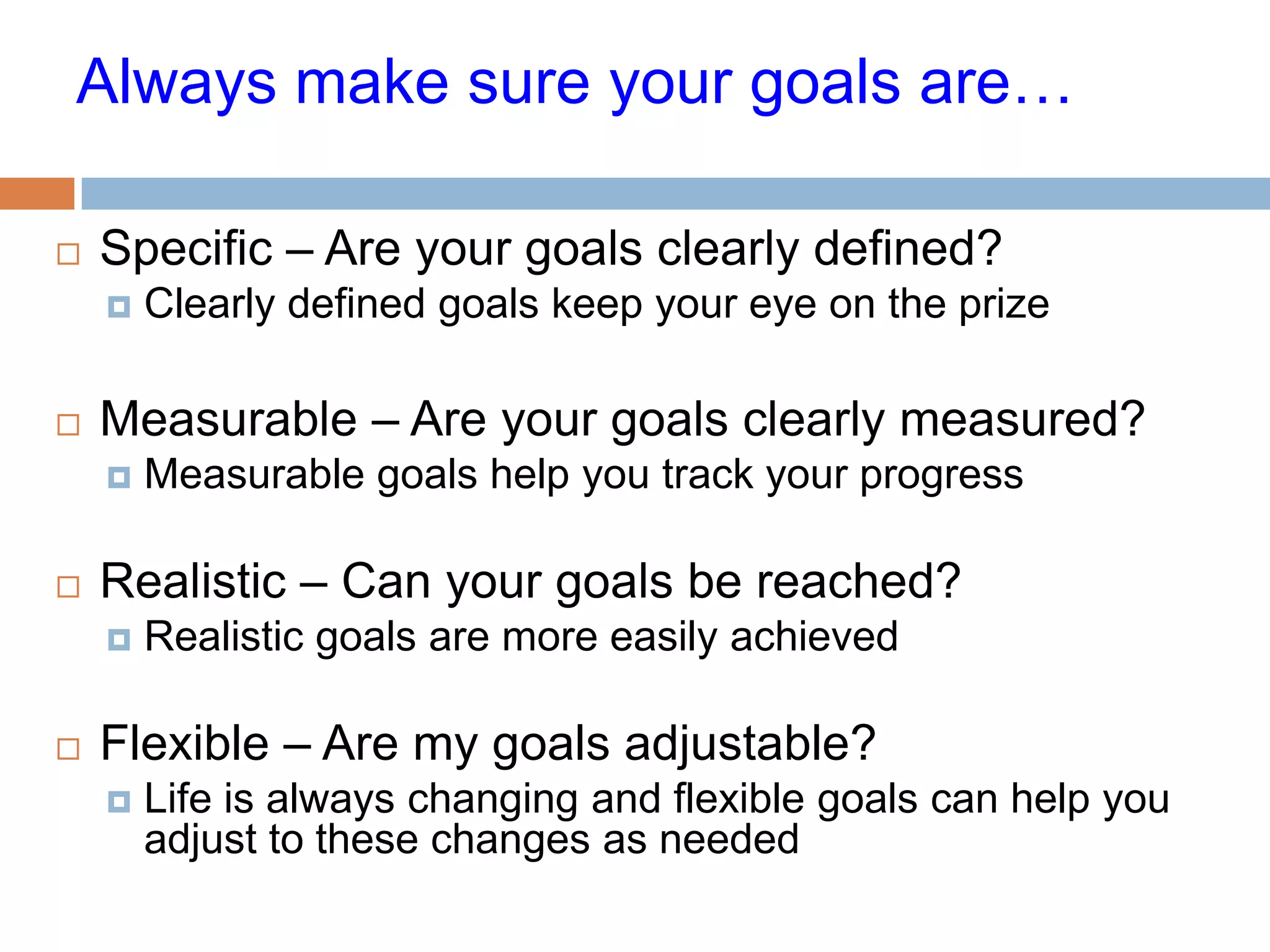
Always make sure your goals are…

   Specific – Are your goals clearly defined?
       Clearly defined goals keep your eye on the prize

   Measurable – Are your goals clearly measured?
       Measurable goals help you track your progress

   Realistic – Can your goals be reached?
       Realistic goals are more easily achieved

   Flexible – Are my goals adjustable?
       Life is always changing and flexible goals can help you
        adjust to these changes as needed
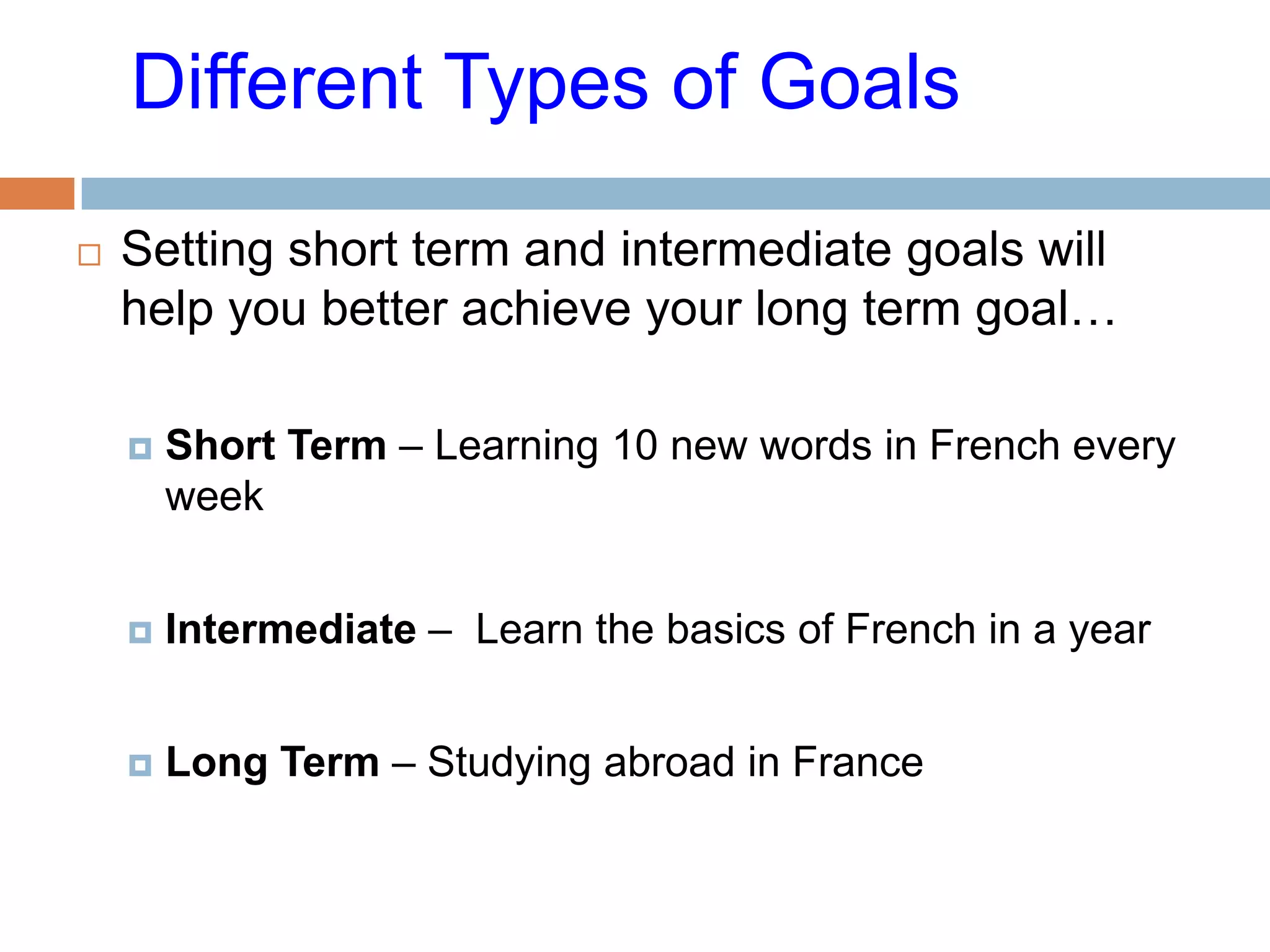
Different Types of Goals

   Setting short term and intermediate goals will
    help you better achieve your long term goal…

       Short Term – Learning 10 new words in French every
        week


       Intermediate – Learn the basics of French in a year


       Long Term – Studying abroad in France
Process Goals

   Process Goals are goals that describe what we will
    do to reach our desired outcome

   These goals help us reach the short term and
    intermediate goals on the way to our long term goals

   A process goal for learning French vocabulary would
    be to make vocabulary cards – without these cards,
    your short term goal may never be met
Goals need to be set at different levels

   Set goals so they are a tiny bit beyond your grasp, but
    not so far that they are completely out of reach

   Reaching slightly challenging goals can do wonders for
    your motivation!

   Remember to consider factors around you when setting
    your goals: tiredness, family/social commitments, and
    other outside influences

   The better you set your goals, the more motivated you’ll
    be!
Suggestions for Getting Motivated
   Break up big assignments into smaller chunks

   Use the five minute rule
       Work on something for 5 minutes, once you get started you
        will find that you won’t stop after the set time

   Set goals for each study session

   Reward yourself

   Seek help if you need it
Suggestions for Staying Motivated

   Use intrinsic and extrinsic motivation

   Add variety

   Organize a study group

   Keep a schedule

   Use positive self-talk

   Take breaks
Suggestions for Reviving Your
Motivation
   Reevaluate your goals

   Add more choices to your life

   Relate schoolwork to your life

   Seek professional help if needed

   Don’t hibernate

   Prioritize
Keep tabs on your motivation
   Try to recognize when your motivation breaks
    down and what things led you to become
    unmotivated

   Once you are able to see what affects your
    motivation, you will be better able to make
    adjustments to keep your motivation soaring!

Motivation

  • 1.
    GETTING AND STAYING MOTIVATED LUNCH AND LEARN STUDENT SUCCESS Even if you’re on the right track, you’ll get run over if you just sit there. - Arthur Godfrey
  • 2.
    Motivation is theacademic glue that holds everything together  It’s tempting to blame a lack of motivation on others – a boring professor or an annoying roommate – but YOU are responsible for your own motivation!  No one else can motivate you if you don’t have your own internal motivation.  But motivation can be fleeting, and you need strategies to tap into your motivation…..  So let’s get motivated!
  • 3.
    Setting Goals  Students who set goals – long and short term – are more motivated to complete those goals.  Chances are you already set goals for personal things like losing weight and exercising, but you can and should set academic goals as well.  Having defined goals can also help you become motivated in classes you don’t particularly like!  So before each semester begins, jot down 3 goals you’d like to reach within that semester.
  • 4.
    Always make sureyour goals are…  Specific – Are your goals clearly defined?  Clearly defined goals keep your eye on the prize  Measurable – Are your goals clearly measured?  Measurable goals help you track your progress  Realistic – Can your goals be reached?  Realistic goals are more easily achieved  Flexible – Are my goals adjustable?  Life is always changing and flexible goals can help you adjust to these changes as needed
  • 5.
    Different Types ofGoals  Setting short term and intermediate goals will help you better achieve your long term goal…  Short Term – Learning 10 new words in French every week  Intermediate – Learn the basics of French in a year  Long Term – Studying abroad in France
  • 6.
    Process Goals  Process Goals are goals that describe what we will do to reach our desired outcome  These goals help us reach the short term and intermediate goals on the way to our long term goals  A process goal for learning French vocabulary would be to make vocabulary cards – without these cards, your short term goal may never be met
  • 7.
    Goals need tobe set at different levels  Set goals so they are a tiny bit beyond your grasp, but not so far that they are completely out of reach  Reaching slightly challenging goals can do wonders for your motivation!  Remember to consider factors around you when setting your goals: tiredness, family/social commitments, and other outside influences  The better you set your goals, the more motivated you’ll be!
  • 8.
    Suggestions for GettingMotivated  Break up big assignments into smaller chunks  Use the five minute rule  Work on something for 5 minutes, once you get started you will find that you won’t stop after the set time  Set goals for each study session  Reward yourself  Seek help if you need it
  • 9.
    Suggestions for StayingMotivated  Use intrinsic and extrinsic motivation  Add variety  Organize a study group  Keep a schedule  Use positive self-talk  Take breaks
  • 10.
    Suggestions for RevivingYour Motivation  Reevaluate your goals  Add more choices to your life  Relate schoolwork to your life  Seek professional help if needed  Don’t hibernate  Prioritize
  • 11.
    Keep tabs onyour motivation  Try to recognize when your motivation breaks down and what things led you to become unmotivated  Once you are able to see what affects your motivation, you will be better able to make adjustments to keep your motivation soaring!