ACTIVE READING


Learning to Read and Remember
             Lunch and Learn
       Sponsored by Student Success
READING FOR LEARNING

Reading for learning from your texts is a three-step process:
1. Ask questions about the headings and                  figures.


2. Read actively by staying engaged in what                 you
   are reading, answering the questions              you posed, and
   taking notes as you read.


3. Review and rehearse the information so you’ll remember it.
STRATEGIES FOR ACTIVE READING
The best strategy to help you set and keep your reading purpose is
annotating, that is, taking notes in your text.

Annotating is the process of writing the key information (such as
major points, definitions, and examples) in the margins of your text.

You are looking for and marking all of the information you will need
to remember from your chapters.

Because it gives you a purpose, you’ll find that annotation helps you
concentrate while reading and actually helps you learn from the text.
STRATEGIES FOR ACTIVE READING

Text Annotation works because it:

 Gives you a purpose for reading
 Improves your comprehension
 Provides an immediate test of your understanding
 Increases your concentration
 Keeps you from having to reread the chapters over
  again
 Creates a study tool that will help you prepare for
  exams
THE NUTS AND BOLTS OF ANNOTATION
 READ BEFORE YOU WRITE
            Before you annotate, you need to get a sense of what the chapter or           section is
 about. Read at least one paragraph before you write anything       down in order to figure out what
 might be important and get a sense of the big picture.

 THINK ABOUT THE IDEAS YOU’VE READ
            If you were going to talk to someone else about the information, what           would be
 important to tell them? This is the material you will annotate.

 WRITE KEY IDEAS IN THE MARGINS
            Definitions                      Examples of the main idea
            Lists                            Details or characteristics of the main ideas
            Names, Dates, Events Cause / Effect or Compare / Contrast
            Possible test questions          Confusing Information

 REVIEW YOUR WORK
             Check your annotations to be sure they make sense. If you only had your       annotations
 to study from, would you have enough information? If not, go       back and fill in any gaps.
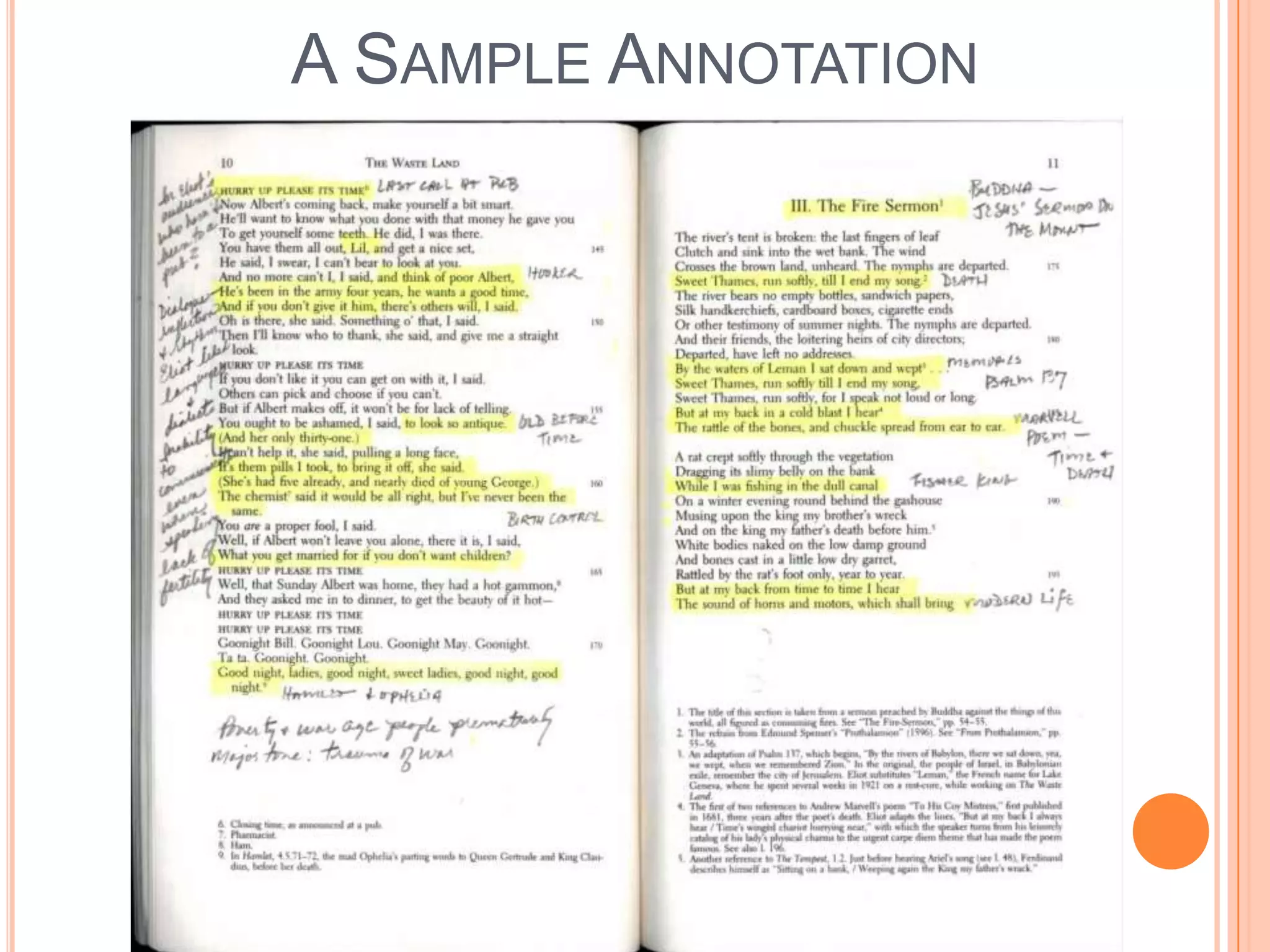
A SAMPLE ANNOTATION
STUDYING YOUR ANNOTATIONS
1. Cover up the text. You don’t want to reread entire pages, just your annotations.
2. Read your annotations and rehearse the material. Ask yourself questions. Do you
   understand all the key ideas? Do you understand how all the concepts relate to each other
   and how they relate to the larger concepts?
3. Reread selectively. If you find a section that is not entirely clear to you, uncover the text
   and reread that section only.
4. Test yourself. Once you are comfortable with the material in the text, try to self-test.
   Look at chapter headings and subheadings. Cover up the text and the annotations then try
   to say the information to yourself.


 Once you have tested yourself several times on the information, you may want to compare
                 what you’ve read with the information in your lecture notes.


                       This will help you start to pull the ideas together.
If nothing else, remember these tips:


        Good readers are active. Active reading means                that you
are focused on the text and learning as you go.      Highlighting your books
does not usually lead to reading     actively.


        Annotation encourages active reading. Gone are the days of reading and
not learning. To annotate, you     summarize the key ideas of the text in the
margins using     your own words (a good test of your understanding).


        Use your annotations to study. Annotations provide a way to test
yourself on the information you’ll need to remember for the exam.

Active Reading

  • 1.
    ACTIVE READING Learning toRead and Remember Lunch and Learn Sponsored by Student Success
  • 2.
    READING FOR LEARNING Readingfor learning from your texts is a three-step process: 1. Ask questions about the headings and figures. 2. Read actively by staying engaged in what you are reading, answering the questions you posed, and taking notes as you read. 3. Review and rehearse the information so you’ll remember it.
  • 3.
    STRATEGIES FOR ACTIVEREADING The best strategy to help you set and keep your reading purpose is annotating, that is, taking notes in your text. Annotating is the process of writing the key information (such as major points, definitions, and examples) in the margins of your text. You are looking for and marking all of the information you will need to remember from your chapters. Because it gives you a purpose, you’ll find that annotation helps you concentrate while reading and actually helps you learn from the text.
  • 4.
    STRATEGIES FOR ACTIVEREADING Text Annotation works because it:  Gives you a purpose for reading  Improves your comprehension  Provides an immediate test of your understanding  Increases your concentration  Keeps you from having to reread the chapters over again  Creates a study tool that will help you prepare for exams
  • 5.
    THE NUTS ANDBOLTS OF ANNOTATION READ BEFORE YOU WRITE Before you annotate, you need to get a sense of what the chapter or section is about. Read at least one paragraph before you write anything down in order to figure out what might be important and get a sense of the big picture. THINK ABOUT THE IDEAS YOU’VE READ If you were going to talk to someone else about the information, what would be important to tell them? This is the material you will annotate. WRITE KEY IDEAS IN THE MARGINS Definitions Examples of the main idea Lists Details or characteristics of the main ideas Names, Dates, Events Cause / Effect or Compare / Contrast Possible test questions Confusing Information REVIEW YOUR WORK Check your annotations to be sure they make sense. If you only had your annotations to study from, would you have enough information? If not, go back and fill in any gaps.
  • 6.
  • 7.
    STUDYING YOUR ANNOTATIONS 1.Cover up the text. You don’t want to reread entire pages, just your annotations. 2. Read your annotations and rehearse the material. Ask yourself questions. Do you understand all the key ideas? Do you understand how all the concepts relate to each other and how they relate to the larger concepts? 3. Reread selectively. If you find a section that is not entirely clear to you, uncover the text and reread that section only. 4. Test yourself. Once you are comfortable with the material in the text, try to self-test. Look at chapter headings and subheadings. Cover up the text and the annotations then try to say the information to yourself. Once you have tested yourself several times on the information, you may want to compare what you’ve read with the information in your lecture notes. This will help you start to pull the ideas together.
  • 8.
    If nothing else,remember these tips:  Good readers are active. Active reading means that you are focused on the text and learning as you go. Highlighting your books does not usually lead to reading actively.  Annotation encourages active reading. Gone are the days of reading and not learning. To annotate, you summarize the key ideas of the text in the margins using your own words (a good test of your understanding).  Use your annotations to study. Annotations provide a way to test yourself on the information you’ll need to remember for the exam.