CONCENTRATION
TIPS
1Ritika Dhameja
What is concentration?
Ritika Dhameja
2
 To concentrate is to direct your mental powers
or your efforts towards a particular activity,
subject or problem.
What is Memory?
Ritika Dhameja
3
 Memory is the ability to remember information,
experiences and people.
Relation between
Concentration & Memory
Ritika Dhameja
4
 Concentration and memory work hand-in-hand
 We generally practice only skills that improve
our memory but never look at factors that
enhance concentration
 Good concentration will enhance memory
Introduction
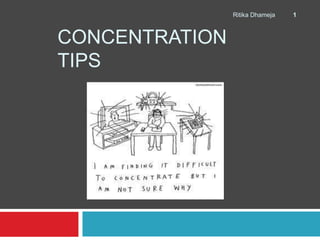
 The art or practice of concentration is to
eliminate distraction and focus on the task at
hand.
 Do you find that you read through material and
suddenly discover that you have no idea about
what you've just read?
 Or if you attend lectures and have difficulty
paying attention to what is being said?
5
Ritika Dhameja
Ritika Dhameja
6
 Does your mind flit from one thing to another?
 Do you have trouble focusing on something for
more than a few minutes?
Ritika Dhameja
7
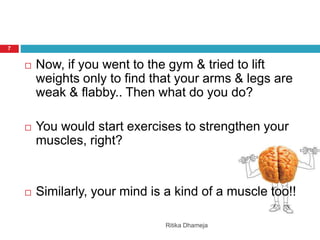
 Now, if you went to the gym & tried to lift
weights only to find that your arms & legs are
weak & flabby.. Then what do you do?
 You would start exercises to strengthen your
muscles, right?
 Similarly, your mind is a kind of a muscle too!!
Ritika Dhameja
8
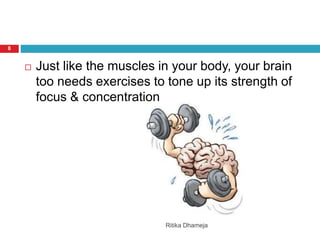
 Just like the muscles in your body, your brain
too needs exercises to tone up its strength of
focus & concentration
Determining your concentration
span
Ritika Dhameja
9
 Go to your study area and get settled
 Read a large section of the text book
belonging to your least favourite subject
 Note the time you start
 Make an effort to LEARN & RECALL the
information you read
 Note the time at which you find your mind
beginning to wander, no matter how little
 This will be your maximum CONCENTRATION
SPAN
Ritika Dhameja
10
 You will obeserve that your concentration span
varies depending on the subject, how you feel,
your mood, the amount of rest that you have
taken as well as your eating habits
 The study beyond your concentration span is
ineffective
 You may be still reading but your brain will be
losing most of the information it takes in
Ways to increase concentration
Ritika Dhameja
11
 Stick to a routine & study schedule
 Study in a quiet environment
 For a study break, do something different from
what you've been doing (e.g., walk around if
you've been sitting) and in a different area
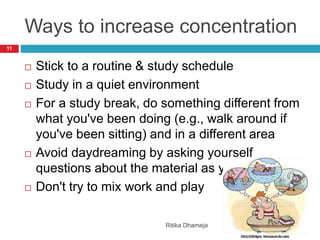
 Avoid daydreaming by asking yourself
questions about the material as you study it
 Don't try to mix work and play
Ritika Dhameja
12
 Before lectures, look over the notes of the
previous lecture and read the course material
pertaining to the lecture so that you can anticipate
the main ideas that the teacher will cover
 Show outward interest during lectures (attentive
expression and posture) to self-motivate internal
interest
 Resist distractions by sitting in front of the room
away from disruptive classmates and by focusing
on the teacher by listening intently and note taking
Ways to increase concentration
Conclusion
Ritika Dhameja
13
 These are very simple and easy methods &
should be practiced very religiously
 It will become a habit in the course of time
 This will definitely help you concentrate better
Ritika Dhameja14
Thank You15
Ritika Dhameja

Concentration tips

  • 1.
  • 2.
    What is concentration? RitikaDhameja 2  To concentrate is to direct your mental powers or your efforts towards a particular activity, subject or problem.
  • 3.
    What is Memory? RitikaDhameja 3  Memory is the ability to remember information, experiences and people.
  • 4.
    Relation between Concentration &Memory Ritika Dhameja 4  Concentration and memory work hand-in-hand  We generally practice only skills that improve our memory but never look at factors that enhance concentration  Good concentration will enhance memory
  • 5.
    Introduction  The artor practice of concentration is to eliminate distraction and focus on the task at hand.  Do you find that you read through material and suddenly discover that you have no idea about what you've just read?  Or if you attend lectures and have difficulty paying attention to what is being said? 5 Ritika Dhameja
  • 6.
    Ritika Dhameja 6  Doesyour mind flit from one thing to another?  Do you have trouble focusing on something for more than a few minutes?
  • 7.
    Ritika Dhameja 7  Now,if you went to the gym & tried to lift weights only to find that your arms & legs are weak & flabby.. Then what do you do?  You would start exercises to strengthen your muscles, right?  Similarly, your mind is a kind of a muscle too!!
  • 8.
    Ritika Dhameja 8  Justlike the muscles in your body, your brain too needs exercises to tone up its strength of focus & concentration
  • 9.
    Determining your concentration span RitikaDhameja 9  Go to your study area and get settled  Read a large section of the text book belonging to your least favourite subject  Note the time you start  Make an effort to LEARN & RECALL the information you read  Note the time at which you find your mind beginning to wander, no matter how little  This will be your maximum CONCENTRATION SPAN
  • 10.
    Ritika Dhameja 10  Youwill obeserve that your concentration span varies depending on the subject, how you feel, your mood, the amount of rest that you have taken as well as your eating habits  The study beyond your concentration span is ineffective  You may be still reading but your brain will be losing most of the information it takes in
  • 11.
    Ways to increaseconcentration Ritika Dhameja 11  Stick to a routine & study schedule  Study in a quiet environment  For a study break, do something different from what you've been doing (e.g., walk around if you've been sitting) and in a different area  Avoid daydreaming by asking yourself questions about the material as you study it  Don't try to mix work and play
  • 12.
    Ritika Dhameja 12  Beforelectures, look over the notes of the previous lecture and read the course material pertaining to the lecture so that you can anticipate the main ideas that the teacher will cover  Show outward interest during lectures (attentive expression and posture) to self-motivate internal interest  Resist distractions by sitting in front of the room away from disruptive classmates and by focusing on the teacher by listening intently and note taking Ways to increase concentration
  • 13.
    Conclusion Ritika Dhameja 13  Theseare very simple and easy methods & should be practiced very religiously  It will become a habit in the course of time  This will definitely help you concentrate better
  • 14.
  • 15.