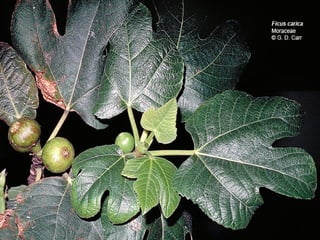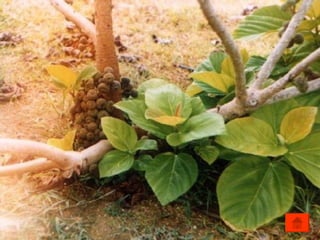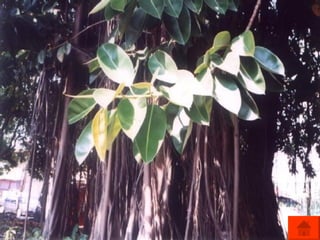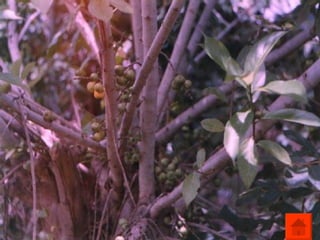







moraceae (mulberry family)
group member NABILAH BINTI YUSOF D20091034854 NORIZA BINTI ISHAK D20091034845 NUR ILIYANA BINTI SHAFEAI D20091034868 NURUL AIN BINTI ABDUL HAMID D20091034867 MUNIRAH BINTI SAFIEE D20091034844
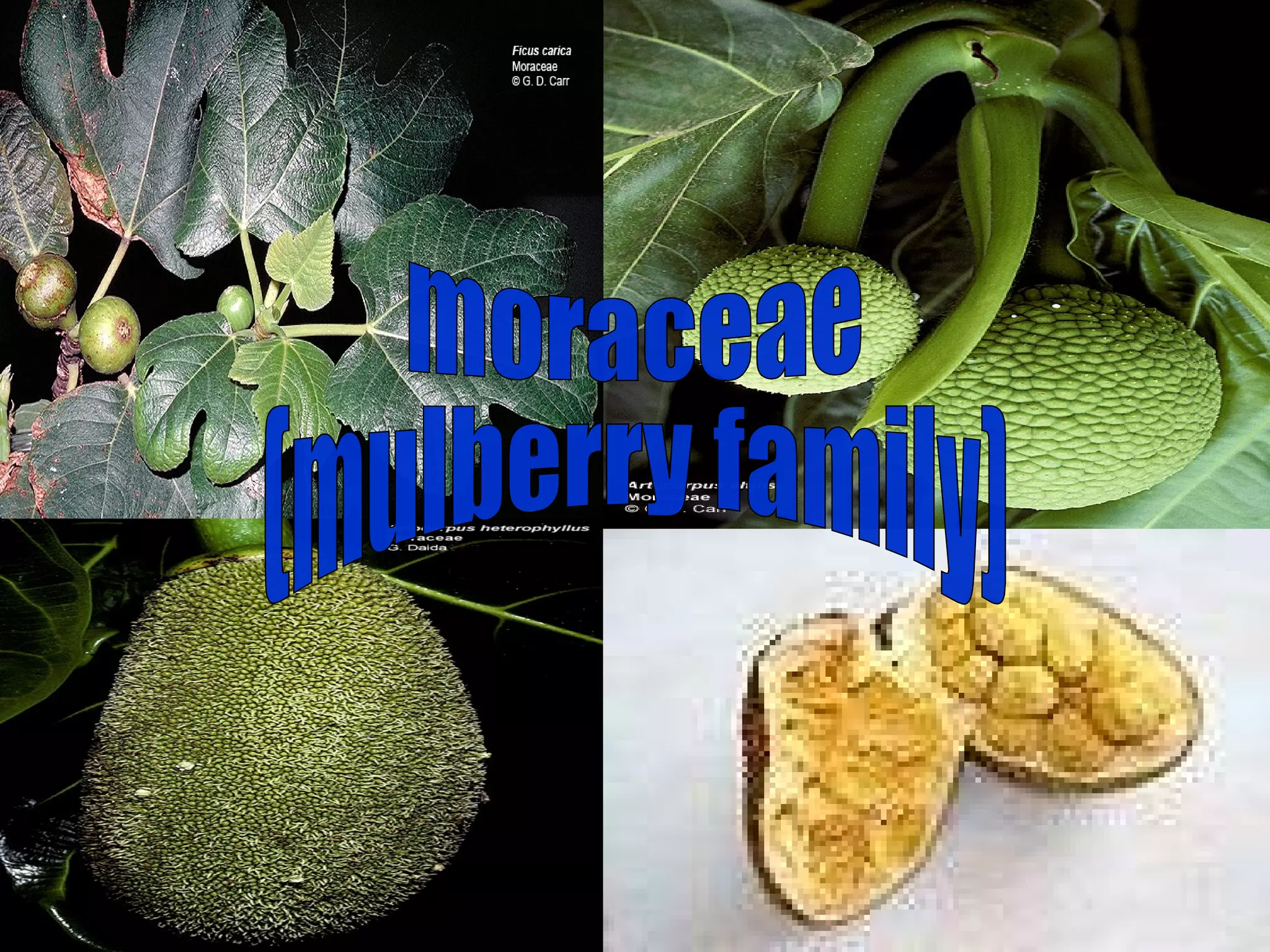
Number of genera and species Comprise : 37 genera and 1050 species Intropical America : 19 genera, 270 species The largest  genera :  Ficus  759 species in the worldwide and  Dorstenia  150 species in the worldwide Another large genus  Artocarpus  more than 50 species in Asean- Australian region
Features of the family Habit : trees, shrubs, subshrubs, less often herbs, the trees and shrub terrestrial, brunch sometimes abscising, sometime are armed with thorns or prickle Latex : milky, sometimes watery, often turning to brownish when exposed to air Stipules : often conspicuous ( to 10 cm long in some  Ficus  ), the bases often encircling stems,leaving circular scars, caducous, persistents Leaves : alternate,rarely opposite, blade margin usually entire, venation usually pinnate Inflorescences : usually axillary, often in pairs, unisexual and bisexual, spikes, cup-shaped
Features of the family Flowers : actinomorphic, unisexual Fruits  :  achenes, drupes, enclosed in enlarged, fleshy receptacle, often many – seeded fleshy structure Seed  :  large or small, endosperm absent in large seed or present when seed small
NATURAL HISTORY
 
Species in Malaysia Jackfruit Breadfruit Cempedak Mas cotek Ara  Ara beringin Ara lempung Ara nasi
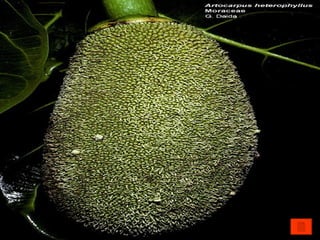
Jack fruit ( Artocarpus heterophyllus  ) Kingdom : plantae Division  : magnoliophyta Class  : mangnoliopsida Order  : rosales Family  : moraceae Tribe  : artocarpeae Genus  : artocarpus Species  : A. heterophyllus Origin : rainforest of Western Ghats Cultivated : India,Burma,Ceylon,Southern China,Malaysia, East india  Height : 30 to 70 feet (9 to 21m) Evergreen All part are sticky, white latex Monoecious: male flowers borne in oblong cluster 5- 10 cm. female cluster are elliptic or rounded Fruit weight : up to 76 pounds
Fruits Thick and quite prickly Borne on short lateral branches along a main trunk  Oval to oblong shape  The green rind is made up of hexagonal fleshy spines The flesh are starchy and fibrous Source of dietary fibre
Resin  When the jackfruit is opened, one finds the round fruits contained in ‘pockets’ in a fibrous interior The main difficulty in extracting the individual fruit is sticky white latex produced by the fruit This latex is identical to the white wood glue one find in hardware store
Cempedak (  Artocarpus champeden ) Kingdom : plantae Division  : magnoliophyta Class  : mangnoliopsida Order  : rosales Family  : moraceae Tribe  : artocarpeae Genus  : artocarpus Species  : A. champeden Origin  : South East Asia, occuring  from West Malaysia to west irian on the island of New Guinea  Evergreen Bear fruit once or twice a year
fruits Sausage shape  length : 20 -50 cm The flesh surrounding the large seeds are yellow, orange or green in color the sweet, juicy pulp surround the seed in a thick layer between the husk and an inedible core Skin : thin and leathery, pattern with hexagon that either flat or raised protuberances
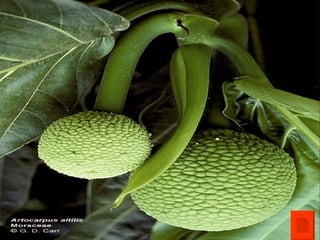
BREADFRUIT    ( Artocarpus   altilis  ) Kingdom : plantae  Plants Subkingdom : Tracheobionta – Vascular plants Superdivision : Spermatophyta – Seed plants Division  Magnoliophyta  – Flowering plants Class : Magnoliopsida– Dicotyledons Subclass : Hamamelididae Order : Urticales  Family : Moraceae – Mulberry family Genus :  Artocarpus  J.R. Forst. & G. Forst. – breadfruit Species :  Artocarpus   altilis  (Parkinson) Fosberg – breadfruit
Breadfruit  ( Artocarpus   altilis  ) fast growing reaching 85 ft (26 m) in height often buttressed at the base The leaves, evergreen or deciduous depending on climatic conditions, on    thick, yellow petioles to 1 1/2 in (3.8 cm) long, are ovate, 9 to 36 in (22.8-90 cm) long, 8 to 20 in (20-50 cm) wide, entire at the base, then more or less deeply cut into 5 to 11 pointed lobes Some fruits may have a harsh, sandpaper-like rind. Generally the rind is green at  first, turning yellowish-green, yellow or yellow-brown when ripe, though one variety is lavender In the green stage, the fruit is hard and the interior is white, starchy and somewhat   fibrous
Breadfruit  ( Artocarpus   altilis  ) When fully ripe, the fruit is somewhat soft, the interior is cream colored or yellow and   pasty, also sweetly fragrant The seeds are irregularly oval, rounded at one end, pointed at the other, about 3/4 in (2 cm) long, dull-brown with darker stripes In the center of seedless fruits there is a cylindrical or oblong core, in some types covered with hairs bearing flat, brown, abortive seeds about 1/8 in (3 mm) long The fruit stalk (pedicel) varies from 1 to 5 in (2.5-12.5 cm) long Climate  : The breadfruit is ultra-tropical it requires a temperature range of 60° to 100°F (15.56°-37.78°C)
Breadfruit  ( Artocarpus   altilis  ) Origin : The breadfruit is believed to be native to a vast area extending from New Guinea   through the Indo-Malayan Archipelago to Western Micronesia It is said to have been widely spread in the Pacific area by migrating Polynesians, and Hawaiians believed that it was brought from the Samoan island of Upalu to Oahu in the 12th Century A.D It is said to have been first seen by Europeans in the Marquesas in 1595, then in Tahiti in 1606 At the beginning of the 18th Century, the early English explorers were loud in its praises, and its fame, together with several periods of famine in Jamaica between 1780 and 1786, inspired plantation owners in the British West Indies to petition King George III to import seedless breadfruit trees to provide food for their slaves
Breadfruit  ( Artocarpus   altilis  ) Soil : breadfruit tree must have deep, fertile, well-drained soil But some of the best authorities on South Pacific plants point out that the seedless breadfruit does well on sandy coral soils Toxicity Most varieties of breadfruit are purgative if eaten raw Some varieties are boiled twice and the water thrown away, to avoid unpleasant effects, while there are a few named cultivars that can be safely eaten without cooking
Mas Cotek (Ficus Deltoidea  ) Kingdom  :  Plantae Order  :  Rosales Family : Moraceae Tribe :  Ficeae  Gaudich. Genus :  Ficus Common Name :  Mistletoe  fig
Mas cotek   (Ficus Deltoidea  ) Evergreen shrub or small tree 5-7 m tall 1-3 m wide It grows only about 20 feet more often found as a shrub than a tree aerial roots usually seen as a large cascading epiphytic shrub on large trees on large trees Leaves Leaves broadly spoon-shaped 4-8 cm long bright green color from above rust-red to olive brown color from beneath
Mas cotek   (Ficus Deltoidea  ) Pollination Each species of  Ficus  has an associated species of agaonid wasp Ficus  species can only be pollinated by their associated agaonid wasps the wasps can only lay eggs within their associated  Ficus  fruit Propagation May propagate from seed May propagate from cutting Trees can begin life as epiphytes on other trees.
Mas cotek   (Ficus Deltoidea  ) Dispersal Pollinator wasps Fruit eating birds Distribution  native to S.E. Asia to Borneo, and the Philippines tropical rainforest Average temperature ranges from over 20C to 30 C
ECONOMIC USES Brosimum guianense  and  B.rubescens  - provide timber for building furniture and making tools. Two species of  Castilla  - yield a rubber  Latex of the same species of  Naucleopsis  is used to prepare and arrow poison that affects the cardiac system and not the nervous system. Latex of some species of  Ficus  is used to treat intestinal worm infections. Latex of  Maclura tinctoria  is used to treat toothaches Species of  Dorstenia , in particular  D.cayapia  and  D.contrajreva  have broad application.
ECONOMIC USES A protolytics enzyme called ficin is derived from the latex of  Ficus carica  and  F.glabrata  are used in the food industry as food ingredients in tenderizers and to produce protein hydrosylates. Bark fiber of  Poulsenia  are used to prepare bark cloth and some species of  Ficus  are used to make amate paper in Mexico. The seed of  Brosimum alicastrum  are eaten, boiled, roasted and ground into flour to make bread or tortillas. Species of  Ficus  are grown widely as ornamentals and houseplants.
Journal
Title:  Antibacterial and antifungal activities of the crude extract and compounds from Dorstenia turbinata (Moraceae).   Authors:  Ngameni, B. 1 Kuete, V. 2 kuetevictor@yahoo.fr Simo, I.K. 3 Mbaveng, A.T. 4 Awoussong, P.K. 5 Patnam, R. 6 Roy, R. 6 Ngadjui, B.T. 1,5  Source:  South African Journal of Botany ; Apr2009, Vol. 75 Issue 2, p256-261, 6p
Abstract: The aim of this study was to evaluate the antimicrobial activity of the crude extract of the twigs of Dorstenia turbinata (DTT) as well as that of five of the nine compounds isolated from this extract, namely 5-methoxy-3-[3-(ß-glucopyranosyloxy)-2-hydroxy-3-methylbutyl]psoralen (1), 5-methoxy-3-(3-methyl-2,3-dihydroxybutyl)psoralen (2), (2′S, 3′R)-3′-hydroxymarmesin (3), 4-hydroxy-3-methoxybenzaldehyde (4) and 4-methoxyphenol (5). Gram-positive, Gram-negative bacterial species as well as fungi were used. The agar disc diffusion test was used to determine the sensitivity of the tested samples while the well micro-dilution was used to determine the minimal inhibition concentrations (MIC) and the minimal microbicidal concentration (MMC) of the active samples. The results of the disc diffusion assay showed that the crude extract (DTT), compounds 1 to 3 were able to prevent the growth of all the tested pathogens at the tested concentrations. Compounds 4 and 5 showed moderate and selective activities. The results of MIC determinations indicated values ranging from 19.53 to 78.12 µg/ml for the DTT and from 9.76 to 78.12 µg/ml for compound 2. The MIC values recorded on 91% of the tested organisms for compounds 1 and 3. The lowest MIC value for the crude extract of D. turbinata (19.53 µg/ml) was noted on Trichophyton rubrum and Escherichia coli. The corresponding value for the tested compounds (9.76 µg/ml) was obtained with 2 and 3 on T. rubrum. The antimicrobial activity of this plant as well as that of compounds 1-2 is being reported for the first time. The overall results provide promising baseline information for the potential use of the crude extracts from DTT as well as some of the isolated compounds in the treatment of bacterial and fungal infections. [Copyright 2009 Elsevier]
Anticonvulsant effect of Ficus religiosa: Role of serotonergic pathways.   Authors: 1. Singh, Damanpreet 1   2.  Goel, Rajesh Kumar 2 goekrkpup@gmail.com  Source:  Journal of Ethnopharmacology ; Jun2009, Vol. 123 Issue 2, p330-334,  5p  \
Abstract: Ethnopharmacological relevance: Ficus religiosa ( Moraceae ) is reported to have numerous therapeutic utility in folk medicine. Among different biological activities on central nervous system, it has been reported to be used in ethnomedical treatment of epilepsy, which led us to further explore its anticonvulsant activity in various animal models of epilepsy. Aim of the study: To investigate anticonvulsant activity of methanolic extract of figs of Ficus religiosa in animal models and to determine its possible anticonvulsant mechanism. Materials and methods: Anticonvulsant activity of figs extract (25, 50 and 100mg/kg, i.p.) was studied in seizures induced by maximum electroshock (MES), picrotoxin and pentylenetetrazol (PTZ). Cyproheptadine, a nonselective (5HT<sub>1/2</sub>) serotonin antagonist (4mg/kg, i.p.) was used to study the reversal of protective effect of extract in the above mentioned models. Acute toxicity, neurotoxicity and potentiation of pentobarbitone induced sleep by extract was also studied. Results: Extract showed no toxicity, potentiated pentobarbitone induced sleep and inhibited seizures induced by MES and picrotoxin in a dose dependent manner. Anticonvulsant effect of extract was comparable to clinically used antiepileptic drugs (phenytoin and diazepam). However, PTZ induced seizures were not inhibited. Animals pretreated with cyproheptadine showed inhibition of the anticonvulsant effect of extract. Conclusions: These findings suggested that the methanolic extract of figs of Ficus religiosa had anticonvulsant activity against MES and picrotoxin induced convulsions, with no neurotoxic effect, in a dose dependent manner. Inhibition of the anticonvulsant effect of extract by cyproheptadine substantiates the involvement of serotonergic pathways for the anticonvulsant activity of extract. [Copyright 2009 Elsevier]
Title:  Antimicrobial activity of the crude extract, fractions and compounds from stem bark of Ficus ovata (Moraceae).   Authors:  Kuete, Victor 1 kuetevictor@yahoo.fr Nana, Frédéric 2 Ngameni, Bathélémy 3 bath_ngameni@yahoo.fr Mbaveng, Armelle Tsafack 4 Keumedjio, Félix 2 Ngadjui, Bonaventure Tchaleu 2,3  Source:  Journal of Ethnopharmacology ; Jul2009, Vol. 124 Issue 3, p556-561, 6p
Abstract: Aim of the study: This study was designed to investigate the antimicrobial activities of the methanol extracts from the stem bark of Ficus ovata (FOB), fractions (FOB1–6) and compounds isolated following bio-guided fractionation [3-friedelanone (1), taraxeryl acetate (2), betulinic acid (3), oleanoïc acid (4), 2-hydroxyisoprunetin (5), 6,7-(2-isopropenyl furo)-5,2,4-trihydroxyisoflavone (6), Cajanin (7) and protocatechuic acid (8)]. Materials and Methods: The micro-dilution method was used for the determination of the minimal inhibition concentration (MIC) and the minimal microbicidal concentration (MMC) against fungi (two species), Gram-positive (three species) and Gram-negative bacteria (five species). Results: The results of the MIC determinations indicated that the crude extract (FOB), fractions FOB2 and FOB4 as well as compound 5 were active on the entire studied organisms. Other samples showed selective activity, fractions FOB1, FOB3 and FOB5 being active against 50% of the tested microbial species while FOB6 was active on 40%. Compounds 8, 6, 2 and 7 prevented the growth of 80%, 70%, 50% and 20% of the organisms respectively. The lowest MIC value (156g/ml) observed with the crude extract was recorded on Streptococcus faecalis, Candida albicans and Microsporum audouinii. The corresponding value for fractions (39μg/ml) was noted with FOB4 against Staphylococcus aureus, while that of the tested compounds (10μg/ml) was observed with compound 8 on Microsporum audouinii. The results of the MMC determination suggested that the cidal effect of most of the tested samples on the studied microorganisms could be expected. Conclusions: The overall results provided evidence that the studied plant extract, as well as some of the isolated compounds might be potential sources of new antimicrobial drug. [Copyright 2009 Elsevier]
Title:  Growth promoting potential of Ficus bengalensis root extracts in immature female rats.   Authors:  Nidhiya, I. S. R. 1 Pai, K. S. R. 1 ksr.pai@manipal.edu Rao, C. Mallikarjuna 1  Source:  Pharmaceutical Biology ; Apr2009, Vol. 47 Issue 4, p268-273, 6p
The growth promoting potential of alcohol and aqueous extracts of young prop roots of Ficus bengalensis Linn. ( Moraceae ), a medicinal plant widely used among the tribes of the western zone of Maharashtra state, India to increase height, was studied. Its growth promoting effect was evaluated in one-month-old immature female rats. Extracts were administered to young rats for 30 days. Significant ( p < 0.05) increase in body weight was observed in alcohol and aqueous extract treated immature female rats. Animals treated with alcohol extract showed statistically significant difference ( p < 0.05) in parameters such as mean food consumption, total body length and increase in alkaline phosphatase levels, a biochemical marker for bone formation. Significant results were not observed in other parameters such as feed efficiency, tail length, relative organ weight, bone density, tibial epiphyseal cartilage width and bone hydroxy proline levels. The results obtained establish the efficacy of the plant material as well as importance of chronic studies to justify the use of this plant in growth promotion. [ABSTRACT FROM AUTHOR]
Title:  Optimization of a multitarget preservation technique for jackfruit (Artocarpus heterophyllus L.) bulbs.   Authors:  Saxena, Alok  aloksaxena156@gmail.com Bawa, A.S. 1 Raju, P.S. 1  Source:  Journal of Food Engineering ; Mar2009, Vol. 91 Issue 1, p18-28, 11p
Abstract: Jackfruit (Artocarpus heterophyllus L.) bulbs in pitted and pre-cut form were subjected to a multitarget preservation technique involving water activity (a <sub>w</sub>) regulation, acidification, and in-pack pasteurization as the hurdles. The osmotic dewatering process was optimized using response surface methodology with osmotic concentration, temperature, and duration of immersion as the process variables. Optimized conditions were found to be 65.9°Brix, 68.5°C temperature, and 180.6 minutes of immersion respectively for maximizing water loss, and overall acceptability while minimizing solid gain. Microstructural observations highlighted the maintenance of tissue integrity under the optimized process conditions. Total carotenoids retention in the product was found to be 64.2%, 46.2% and 35.7% under 6°C, ambient (22–32°C) and 37°C temperature conditions respectively during storage. The overall shelf-life of multitarget preserved high moisture jackfruit bulbs was found to be 8, 6 and 4 months under the respective storage temperatures of 6°C, ambient, and 37°C. [Copyright 2009 Elsevier]
conclusion
plant usually woody, less often herbaceous Milky latex present Stipules present, often conspicuous and / or fully encircling the twig Leaves alternate, rarely opposite, simple Flowers unisexual, perianth uniseriate or absent, stamen one to four, gynoecium with one locule, placentation apical, the ovule one Fruits often enclosed by accrescent fleshy perianth or receptacle


Moraceae power point

  • 1.
  • 2.
    group member NABILAHBINTI YUSOF D20091034854 NORIZA BINTI ISHAK D20091034845 NUR ILIYANA BINTI SHAFEAI D20091034868 NURUL AIN BINTI ABDUL HAMID D20091034867 MUNIRAH BINTI SAFIEE D20091034844
  • 3.
    Number of generaand species Comprise : 37 genera and 1050 species Intropical America : 19 genera, 270 species The largest genera : Ficus 759 species in the worldwide and Dorstenia 150 species in the worldwide Another large genus Artocarpus more than 50 species in Asean- Australian region
  • 4.
    Features of thefamily Habit : trees, shrubs, subshrubs, less often herbs, the trees and shrub terrestrial, brunch sometimes abscising, sometime are armed with thorns or prickle Latex : milky, sometimes watery, often turning to brownish when exposed to air Stipules : often conspicuous ( to 10 cm long in some Ficus ), the bases often encircling stems,leaving circular scars, caducous, persistents Leaves : alternate,rarely opposite, blade margin usually entire, venation usually pinnate Inflorescences : usually axillary, often in pairs, unisexual and bisexual, spikes, cup-shaped
  • 5.
    Features of thefamily Flowers : actinomorphic, unisexual Fruits : achenes, drupes, enclosed in enlarged, fleshy receptacle, often many – seeded fleshy structure Seed : large or small, endosperm absent in large seed or present when seed small
  • 6.
  • 7.
  • 8.
    Species in MalaysiaJackfruit Breadfruit Cempedak Mas cotek Ara Ara beringin Ara lempung Ara nasi
  • 9.
    Jack fruit (Artocarpus heterophyllus ) Kingdom : plantae Division : magnoliophyta Class : mangnoliopsida Order : rosales Family : moraceae Tribe : artocarpeae Genus : artocarpus Species : A. heterophyllus Origin : rainforest of Western Ghats Cultivated : India,Burma,Ceylon,Southern China,Malaysia, East india Height : 30 to 70 feet (9 to 21m) Evergreen All part are sticky, white latex Monoecious: male flowers borne in oblong cluster 5- 10 cm. female cluster are elliptic or rounded Fruit weight : up to 76 pounds
  • 10.
    Fruits Thick andquite prickly Borne on short lateral branches along a main trunk Oval to oblong shape The green rind is made up of hexagonal fleshy spines The flesh are starchy and fibrous Source of dietary fibre
  • 11.
    Resin Whenthe jackfruit is opened, one finds the round fruits contained in ‘pockets’ in a fibrous interior The main difficulty in extracting the individual fruit is sticky white latex produced by the fruit This latex is identical to the white wood glue one find in hardware store
  • 12.
    Cempedak ( Artocarpus champeden ) Kingdom : plantae Division : magnoliophyta Class : mangnoliopsida Order : rosales Family : moraceae Tribe : artocarpeae Genus : artocarpus Species : A. champeden Origin : South East Asia, occuring from West Malaysia to west irian on the island of New Guinea Evergreen Bear fruit once or twice a year
  • 13.
    fruits Sausage shape length : 20 -50 cm The flesh surrounding the large seeds are yellow, orange or green in color the sweet, juicy pulp surround the seed in a thick layer between the husk and an inedible core Skin : thin and leathery, pattern with hexagon that either flat or raised protuberances
  • 14.
    BREADFRUIT ( Artocarpus altilis ) Kingdom : plantae Plants Subkingdom : Tracheobionta – Vascular plants Superdivision : Spermatophyta – Seed plants Division Magnoliophyta – Flowering plants Class : Magnoliopsida– Dicotyledons Subclass : Hamamelididae Order : Urticales Family : Moraceae – Mulberry family Genus : Artocarpus J.R. Forst. & G. Forst. – breadfruit Species : Artocarpus altilis (Parkinson) Fosberg – breadfruit
  • 15.
    Breadfruit (Artocarpus altilis ) fast growing reaching 85 ft (26 m) in height often buttressed at the base The leaves, evergreen or deciduous depending on climatic conditions, on thick, yellow petioles to 1 1/2 in (3.8 cm) long, are ovate, 9 to 36 in (22.8-90 cm) long, 8 to 20 in (20-50 cm) wide, entire at the base, then more or less deeply cut into 5 to 11 pointed lobes Some fruits may have a harsh, sandpaper-like rind. Generally the rind is green at first, turning yellowish-green, yellow or yellow-brown when ripe, though one variety is lavender In the green stage, the fruit is hard and the interior is white, starchy and somewhat fibrous
  • 16.
    Breadfruit (Artocarpus altilis ) When fully ripe, the fruit is somewhat soft, the interior is cream colored or yellow and pasty, also sweetly fragrant The seeds are irregularly oval, rounded at one end, pointed at the other, about 3/4 in (2 cm) long, dull-brown with darker stripes In the center of seedless fruits there is a cylindrical or oblong core, in some types covered with hairs bearing flat, brown, abortive seeds about 1/8 in (3 mm) long The fruit stalk (pedicel) varies from 1 to 5 in (2.5-12.5 cm) long Climate : The breadfruit is ultra-tropical it requires a temperature range of 60° to 100°F (15.56°-37.78°C)
  • 17.
    Breadfruit (Artocarpus altilis ) Origin : The breadfruit is believed to be native to a vast area extending from New Guinea through the Indo-Malayan Archipelago to Western Micronesia It is said to have been widely spread in the Pacific area by migrating Polynesians, and Hawaiians believed that it was brought from the Samoan island of Upalu to Oahu in the 12th Century A.D It is said to have been first seen by Europeans in the Marquesas in 1595, then in Tahiti in 1606 At the beginning of the 18th Century, the early English explorers were loud in its praises, and its fame, together with several periods of famine in Jamaica between 1780 and 1786, inspired plantation owners in the British West Indies to petition King George III to import seedless breadfruit trees to provide food for their slaves
  • 18.
    Breadfruit (Artocarpus altilis ) Soil : breadfruit tree must have deep, fertile, well-drained soil But some of the best authorities on South Pacific plants point out that the seedless breadfruit does well on sandy coral soils Toxicity Most varieties of breadfruit are purgative if eaten raw Some varieties are boiled twice and the water thrown away, to avoid unpleasant effects, while there are a few named cultivars that can be safely eaten without cooking
  • 19.
    Mas Cotek (FicusDeltoidea ) Kingdom : Plantae Order : Rosales Family : Moraceae Tribe : Ficeae Gaudich. Genus : Ficus Common Name : Mistletoe fig
  • 20.
    Mas cotek (Ficus Deltoidea ) Evergreen shrub or small tree 5-7 m tall 1-3 m wide It grows only about 20 feet more often found as a shrub than a tree aerial roots usually seen as a large cascading epiphytic shrub on large trees on large trees Leaves Leaves broadly spoon-shaped 4-8 cm long bright green color from above rust-red to olive brown color from beneath
  • 21.
    Mas cotek (Ficus Deltoidea ) Pollination Each species of Ficus has an associated species of agaonid wasp Ficus species can only be pollinated by their associated agaonid wasps the wasps can only lay eggs within their associated Ficus fruit Propagation May propagate from seed May propagate from cutting Trees can begin life as epiphytes on other trees.
  • 22.
    Mas cotek (Ficus Deltoidea ) Dispersal Pollinator wasps Fruit eating birds Distribution native to S.E. Asia to Borneo, and the Philippines tropical rainforest Average temperature ranges from over 20C to 30 C
  • 23.
    ECONOMIC USES Brosimumguianense and B.rubescens - provide timber for building furniture and making tools. Two species of Castilla - yield a rubber Latex of the same species of Naucleopsis is used to prepare and arrow poison that affects the cardiac system and not the nervous system. Latex of some species of Ficus is used to treat intestinal worm infections. Latex of Maclura tinctoria is used to treat toothaches Species of Dorstenia , in particular D.cayapia and D.contrajreva have broad application.
  • 24.
    ECONOMIC USES Aprotolytics enzyme called ficin is derived from the latex of Ficus carica and F.glabrata are used in the food industry as food ingredients in tenderizers and to produce protein hydrosylates. Bark fiber of Poulsenia are used to prepare bark cloth and some species of Ficus are used to make amate paper in Mexico. The seed of Brosimum alicastrum are eaten, boiled, roasted and ground into flour to make bread or tortillas. Species of Ficus are grown widely as ornamentals and houseplants.
  • 25.
  • 26.
    Title: Antibacterialand antifungal activities of the crude extract and compounds from Dorstenia turbinata (Moraceae). Authors: Ngameni, B. 1 Kuete, V. 2 kuetevictor@yahoo.fr Simo, I.K. 3 Mbaveng, A.T. 4 Awoussong, P.K. 5 Patnam, R. 6 Roy, R. 6 Ngadjui, B.T. 1,5 Source: South African Journal of Botany ; Apr2009, Vol. 75 Issue 2, p256-261, 6p
  • 27.
    Abstract: The aimof this study was to evaluate the antimicrobial activity of the crude extract of the twigs of Dorstenia turbinata (DTT) as well as that of five of the nine compounds isolated from this extract, namely 5-methoxy-3-[3-(ß-glucopyranosyloxy)-2-hydroxy-3-methylbutyl]psoralen (1), 5-methoxy-3-(3-methyl-2,3-dihydroxybutyl)psoralen (2), (2′S, 3′R)-3′-hydroxymarmesin (3), 4-hydroxy-3-methoxybenzaldehyde (4) and 4-methoxyphenol (5). Gram-positive, Gram-negative bacterial species as well as fungi were used. The agar disc diffusion test was used to determine the sensitivity of the tested samples while the well micro-dilution was used to determine the minimal inhibition concentrations (MIC) and the minimal microbicidal concentration (MMC) of the active samples. The results of the disc diffusion assay showed that the crude extract (DTT), compounds 1 to 3 were able to prevent the growth of all the tested pathogens at the tested concentrations. Compounds 4 and 5 showed moderate and selective activities. The results of MIC determinations indicated values ranging from 19.53 to 78.12 µg/ml for the DTT and from 9.76 to 78.12 µg/ml for compound 2. The MIC values recorded on 91% of the tested organisms for compounds 1 and 3. The lowest MIC value for the crude extract of D. turbinata (19.53 µg/ml) was noted on Trichophyton rubrum and Escherichia coli. The corresponding value for the tested compounds (9.76 µg/ml) was obtained with 2 and 3 on T. rubrum. The antimicrobial activity of this plant as well as that of compounds 1-2 is being reported for the first time. The overall results provide promising baseline information for the potential use of the crude extracts from DTT as well as some of the isolated compounds in the treatment of bacterial and fungal infections. [Copyright 2009 Elsevier]
  • 28.
    Anticonvulsant effect ofFicus religiosa: Role of serotonergic pathways. Authors: 1. Singh, Damanpreet 1 2. Goel, Rajesh Kumar 2 goekrkpup@gmail.com Source: Journal of Ethnopharmacology ; Jun2009, Vol. 123 Issue 2, p330-334, 5p \
  • 29.
    Abstract: Ethnopharmacological relevance:Ficus religiosa ( Moraceae ) is reported to have numerous therapeutic utility in folk medicine. Among different biological activities on central nervous system, it has been reported to be used in ethnomedical treatment of epilepsy, which led us to further explore its anticonvulsant activity in various animal models of epilepsy. Aim of the study: To investigate anticonvulsant activity of methanolic extract of figs of Ficus religiosa in animal models and to determine its possible anticonvulsant mechanism. Materials and methods: Anticonvulsant activity of figs extract (25, 50 and 100mg/kg, i.p.) was studied in seizures induced by maximum electroshock (MES), picrotoxin and pentylenetetrazol (PTZ). Cyproheptadine, a nonselective (5HT<sub>1/2</sub>) serotonin antagonist (4mg/kg, i.p.) was used to study the reversal of protective effect of extract in the above mentioned models. Acute toxicity, neurotoxicity and potentiation of pentobarbitone induced sleep by extract was also studied. Results: Extract showed no toxicity, potentiated pentobarbitone induced sleep and inhibited seizures induced by MES and picrotoxin in a dose dependent manner. Anticonvulsant effect of extract was comparable to clinically used antiepileptic drugs (phenytoin and diazepam). However, PTZ induced seizures were not inhibited. Animals pretreated with cyproheptadine showed inhibition of the anticonvulsant effect of extract. Conclusions: These findings suggested that the methanolic extract of figs of Ficus religiosa had anticonvulsant activity against MES and picrotoxin induced convulsions, with no neurotoxic effect, in a dose dependent manner. Inhibition of the anticonvulsant effect of extract by cyproheptadine substantiates the involvement of serotonergic pathways for the anticonvulsant activity of extract. [Copyright 2009 Elsevier]
  • 30.
    Title: Antimicrobialactivity of the crude extract, fractions and compounds from stem bark of Ficus ovata (Moraceae). Authors: Kuete, Victor 1 kuetevictor@yahoo.fr Nana, Frédéric 2 Ngameni, Bathélémy 3 bath_ngameni@yahoo.fr Mbaveng, Armelle Tsafack 4 Keumedjio, Félix 2 Ngadjui, Bonaventure Tchaleu 2,3 Source: Journal of Ethnopharmacology ; Jul2009, Vol. 124 Issue 3, p556-561, 6p
  • 31.
    Abstract: Aim ofthe study: This study was designed to investigate the antimicrobial activities of the methanol extracts from the stem bark of Ficus ovata (FOB), fractions (FOB1–6) and compounds isolated following bio-guided fractionation [3-friedelanone (1), taraxeryl acetate (2), betulinic acid (3), oleanoïc acid (4), 2-hydroxyisoprunetin (5), 6,7-(2-isopropenyl furo)-5,2,4-trihydroxyisoflavone (6), Cajanin (7) and protocatechuic acid (8)]. Materials and Methods: The micro-dilution method was used for the determination of the minimal inhibition concentration (MIC) and the minimal microbicidal concentration (MMC) against fungi (two species), Gram-positive (three species) and Gram-negative bacteria (five species). Results: The results of the MIC determinations indicated that the crude extract (FOB), fractions FOB2 and FOB4 as well as compound 5 were active on the entire studied organisms. Other samples showed selective activity, fractions FOB1, FOB3 and FOB5 being active against 50% of the tested microbial species while FOB6 was active on 40%. Compounds 8, 6, 2 and 7 prevented the growth of 80%, 70%, 50% and 20% of the organisms respectively. The lowest MIC value (156g/ml) observed with the crude extract was recorded on Streptococcus faecalis, Candida albicans and Microsporum audouinii. The corresponding value for fractions (39μg/ml) was noted with FOB4 against Staphylococcus aureus, while that of the tested compounds (10μg/ml) was observed with compound 8 on Microsporum audouinii. The results of the MMC determination suggested that the cidal effect of most of the tested samples on the studied microorganisms could be expected. Conclusions: The overall results provided evidence that the studied plant extract, as well as some of the isolated compounds might be potential sources of new antimicrobial drug. [Copyright 2009 Elsevier]
  • 32.
    Title: Growthpromoting potential of Ficus bengalensis root extracts in immature female rats. Authors: Nidhiya, I. S. R. 1 Pai, K. S. R. 1 ksr.pai@manipal.edu Rao, C. Mallikarjuna 1 Source: Pharmaceutical Biology ; Apr2009, Vol. 47 Issue 4, p268-273, 6p
  • 33.
    The growth promotingpotential of alcohol and aqueous extracts of young prop roots of Ficus bengalensis Linn. ( Moraceae ), a medicinal plant widely used among the tribes of the western zone of Maharashtra state, India to increase height, was studied. Its growth promoting effect was evaluated in one-month-old immature female rats. Extracts were administered to young rats for 30 days. Significant ( p < 0.05) increase in body weight was observed in alcohol and aqueous extract treated immature female rats. Animals treated with alcohol extract showed statistically significant difference ( p < 0.05) in parameters such as mean food consumption, total body length and increase in alkaline phosphatase levels, a biochemical marker for bone formation. Significant results were not observed in other parameters such as feed efficiency, tail length, relative organ weight, bone density, tibial epiphyseal cartilage width and bone hydroxy proline levels. The results obtained establish the efficacy of the plant material as well as importance of chronic studies to justify the use of this plant in growth promotion. [ABSTRACT FROM AUTHOR]
  • 34.
    Title: Optimizationof a multitarget preservation technique for jackfruit (Artocarpus heterophyllus L.) bulbs. Authors: Saxena, Alok aloksaxena156@gmail.com Bawa, A.S. 1 Raju, P.S. 1 Source: Journal of Food Engineering ; Mar2009, Vol. 91 Issue 1, p18-28, 11p
  • 35.
    Abstract: Jackfruit (Artocarpusheterophyllus L.) bulbs in pitted and pre-cut form were subjected to a multitarget preservation technique involving water activity (a <sub>w</sub>) regulation, acidification, and in-pack pasteurization as the hurdles. The osmotic dewatering process was optimized using response surface methodology with osmotic concentration, temperature, and duration of immersion as the process variables. Optimized conditions were found to be 65.9°Brix, 68.5°C temperature, and 180.6 minutes of immersion respectively for maximizing water loss, and overall acceptability while minimizing solid gain. Microstructural observations highlighted the maintenance of tissue integrity under the optimized process conditions. Total carotenoids retention in the product was found to be 64.2%, 46.2% and 35.7% under 6°C, ambient (22–32°C) and 37°C temperature conditions respectively during storage. The overall shelf-life of multitarget preserved high moisture jackfruit bulbs was found to be 8, 6 and 4 months under the respective storage temperatures of 6°C, ambient, and 37°C. [Copyright 2009 Elsevier]
  • 36.
  • 37.
    plant usually woody,less often herbaceous Milky latex present Stipules present, often conspicuous and / or fully encircling the twig Leaves alternate, rarely opposite, simple Flowers unisexual, perianth uniseriate or absent, stamen one to four, gynoecium with one locule, placentation apical, the ovule one Fruits often enclosed by accrescent fleshy perianth or receptacle
  • 38.
  • 39.
  • 40.
  • 41.
  • 42.
  • 43.
  • 44.
  • 45.
  • 46.