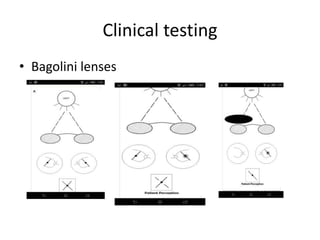
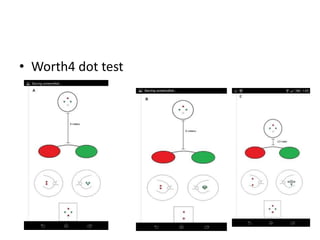
Monofixation syndrome is characterized by central foveal suppression in one eye despite maintained peripheral fusion. It is caused by mild retinal image blur or misalignment between the eyes. The macula has high spatial resolution making the brain sensitive to small interocular differences, leading to central suppression in one eye, while the lower resolution periphery allows fusion. The size of the central scotoma corresponds to the degree of interocular image disparity. Clinical features include a small-angle strabismus, anisometropic amblyopia, and a unilateral central scotoma only present binocularly.



![APPROACH TO FEVER IN PEDIATRICS[1].pptTT](https://cdn.slidesharecdn.com/ss_thumbnails/approachtofeverinpediatrics1-260125081456-d559e079-thumbnail.jpg?width=640&height=640&fit=bounds)


![Hypothalamus short notes on location, function and disorders by Dr. Neha [PT]...](https://cdn.slidesharecdn.com/ss_thumbnails/hypothalamusbydr-260124142231-2b48143d-thumbnail.jpg?width=640&height=640&fit=bounds)


![Cells and Organs of immune system [Autosaved].pptx](https://cdn.slidesharecdn.com/ss_thumbnails/cellsandorgansofimmunesystemautosaved-260123152717-ea0cb261-thumbnail.jpg?width=640&height=640&fit=bounds)