CONTACT LENS
DEPOSITS
Group D PRESENTATION
Group D members
◦ Mohamed Saed Ali
◦ Mubarak Mawlid Yousuf
◦ Aidarous Ahmed Hersi
◦ Ridwan Awil Jama
◦ Maimoun Abib Hassan
◦ Naseem Hussein Hassan
◦ Najma Ibrahim Osman
topics
◦ What is contact lens deposition
◦ Types of contact lens deposition according to:
◦ position
◦ nature
◦ Effects of contact lens deposition
◦ Removers of contact lens deposition
◦ Procedure of removing contact lens deposition
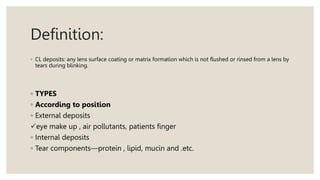
Definition:
◦ CL deposits: any lens surface coating or matrix formation which is not flushed or rinsed from a lens by
tears during blinking.
◦ TYPES
◦ According to position
◦ External deposits
eye make up , air pollutants, patients finger
◦ Internal deposits
◦ Tear components—protein , lipid, mucin and .etc.
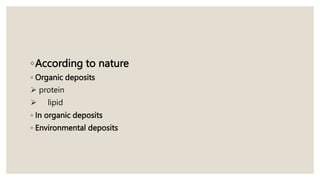
◦According to nature
◦ Organic deposits
 protein
 lipid
◦ In organic deposits
◦ Environmental deposits
◦ How do deposits form on contact lens surface?
 interaction between lens and content of tears
Evaporation of tears leaves residue on lens.
Deposits originate from tear film immediately start to form on the lens and these
increase and vary over time.
Deposits also originate from external sources such as patients finger.
Organic deposits
◦ The organic deposits are the proteins ,lipids ,carbohydrates, pigments of organic origin, and
deposits composed of micro-organisms with other substances.
◦
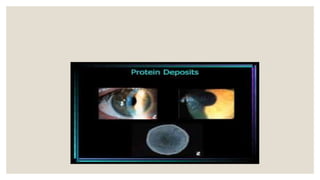
◦ protein deposits
◦ Protein deposits on contact lens make them un-comfortable, irritating and itchy.
◦ They can make your vision blurry and may lead to conjunctivitis .
◦ There are two types of protein deposits on your tears.
◦ Native proteins are not visible and are easily removed when cleaning your lenses.
◦ Denatured proteins that make the lenses hazy.
◦ If you are experiencing difficulties with your contact lenses, or you believe you may have any
infection, discontinue wearing your lenses and contact your eye doctor.
◦ removing the protein
◦ Enzymatic cleaners can remove the protein from your lenses.
◦ After removing and cleaning your lenses, place them in the enzyme cleaner to soak for two
hours.
◦ After two hours, clean and rinse them again.
◦ Then place in disinfecting solution overnight.
◦ Its recommended that protein be removed once a week.
◦ You should use the lens products recommended by your eye doctor
◦ Enzymes can also remove other types of deposits if they are incorporated in the
protein deposits.
How protein deposits get denatured.
◦ Environmental factors
◦ Heat
◦ Drying
◦ Oxidation
◦ UV-light
Procedure of removing…
◦ Enzymatic protein removers contain one of the following.
 papain.
 pancreatin
 subtilisin A&B
Papain
• Protease I,e enzyme that act as protein specifically.
• Derived from papaya plant.
◦ Usually have slightly unpleasant odour due to the inclusion of cysteine.
◦ binds to contact lens material and can cause sensitivity reaction .
◦ Short 15 min soaking time possible.
◦ subtilisin A&B
◦ Proteases
◦ Subtilisin A formulated specifically for use in hydrogen peroxide lens care systems.
◦ Subtilisin B is formulated for use in conventional chemical and thermal systems.
Lipid deposits…
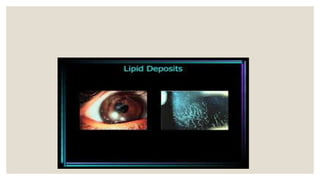
◦ symptoms
Non-to mild discomfort, reduced vision.
◦ Signs
◦ Shimmering, oily film on the lens surface
◦ Etiology
◦ accumulation of lipid on soft lens surface.
◦ May be from poor tear film quality exacerbated by lid margin disease.
◦ Skin care products may deposit on lens during handling.
◦ Prevalence
◦ Common
◦ DDX
◦ Separate from protein film by texture, uniformity and colour.
Lipid removing…
◦ Consider switching to DD lenses. DOLCE AND GABBANA
◦ Change lens material.
◦ Review rub and rinse routine.
◦ Switch to solution with surfactants.
In organic deposits..
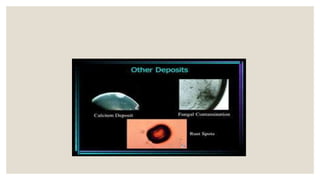
◦ The in organic deposits are calcium salts, phosphates and carbonates of calcium,
ferrous oxide, salts and pigments derived from in organic chemicals.
◦ The most common types of in-organic deposits are “jelly bumps” which occurs most
frequently on extended wear contact lenses.

◦ The jelly bumps are round, nodular deposits composed primarily of calcium, lipids and
cholesterol .
◦ These deposits are difficult to remove from the contact lens.
Environmental deposits
◦ The most common environmental deposits are rust spots and particles from cosmetics.
◦ Rust spots are caused generally by the use of tap water or by foreign matter in the environment
.
◦ They are generally orange and circular .
◦ Deposits from cosmetics have an iridescent.
◦ Greasy appearance and may be caused by
◦ mascara
◦ hair spray
◦ creams
Effects of deposits
◦ Deposits can cause dis-comfort and visual disturbances.
◦ They may also produce mechanical abrasions
◦ Also can cause immuno-allergic reactions and facilitate adherence of micro-organisms
◦ And subsequently cause infection
◦ The upper eye lid may be irritated by the deposit or grab onto it, causing the lens to decenter.
◦ Can cause corneal diseases if the patient is non-educated.
Deposit complication
◦ Reduced visual acuity
◦ Lens dryness proteins repel water and the lens may dry up more easily.
◦ Irritation and reduced comfort can cause shortened wear time .
◦ Causes allergic response.
◦ Micro-organisms attachment to deposits may cause eye infection.
CL-deposits.pptx

CL-deposits.pptx

  • 1.
  • 2.
    Group D members ◦Mohamed Saed Ali ◦ Mubarak Mawlid Yousuf ◦ Aidarous Ahmed Hersi ◦ Ridwan Awil Jama ◦ Maimoun Abib Hassan ◦ Naseem Hussein Hassan ◦ Najma Ibrahim Osman
  • 3.
    topics ◦ What iscontact lens deposition ◦ Types of contact lens deposition according to: ◦ position ◦ nature ◦ Effects of contact lens deposition ◦ Removers of contact lens deposition ◦ Procedure of removing contact lens deposition
  • 4.
    Definition: ◦ CL deposits:any lens surface coating or matrix formation which is not flushed or rinsed from a lens by tears during blinking. ◦ TYPES ◦ According to position ◦ External deposits eye make up , air pollutants, patients finger ◦ Internal deposits ◦ Tear components—protein , lipid, mucin and .etc.
  • 5.
    ◦According to nature ◦Organic deposits  protein  lipid ◦ In organic deposits ◦ Environmental deposits
  • 6.
    ◦ How dodeposits form on contact lens surface?  interaction between lens and content of tears Evaporation of tears leaves residue on lens. Deposits originate from tear film immediately start to form on the lens and these increase and vary over time. Deposits also originate from external sources such as patients finger.
  • 7.
    Organic deposits ◦ Theorganic deposits are the proteins ,lipids ,carbohydrates, pigments of organic origin, and deposits composed of micro-organisms with other substances. ◦ ◦ protein deposits ◦ Protein deposits on contact lens make them un-comfortable, irritating and itchy. ◦ They can make your vision blurry and may lead to conjunctivitis . ◦ There are two types of protein deposits on your tears. ◦ Native proteins are not visible and are easily removed when cleaning your lenses.
  • 9.
    ◦ Denatured proteinsthat make the lenses hazy. ◦ If you are experiencing difficulties with your contact lenses, or you believe you may have any infection, discontinue wearing your lenses and contact your eye doctor. ◦ removing the protein ◦ Enzymatic cleaners can remove the protein from your lenses. ◦ After removing and cleaning your lenses, place them in the enzyme cleaner to soak for two hours. ◦ After two hours, clean and rinse them again.
  • 10.
    ◦ Then placein disinfecting solution overnight. ◦ Its recommended that protein be removed once a week. ◦ You should use the lens products recommended by your eye doctor ◦ Enzymes can also remove other types of deposits if they are incorporated in the protein deposits.
  • 11.
    How protein depositsget denatured. ◦ Environmental factors ◦ Heat ◦ Drying ◦ Oxidation ◦ UV-light
  • 12.
    Procedure of removing… ◦Enzymatic protein removers contain one of the following.  papain.  pancreatin  subtilisin A&B Papain • Protease I,e enzyme that act as protein specifically. • Derived from papaya plant.
  • 13.
    ◦ Usually haveslightly unpleasant odour due to the inclusion of cysteine. ◦ binds to contact lens material and can cause sensitivity reaction . ◦ Short 15 min soaking time possible. ◦ subtilisin A&B ◦ Proteases ◦ Subtilisin A formulated specifically for use in hydrogen peroxide lens care systems. ◦ Subtilisin B is formulated for use in conventional chemical and thermal systems.
  • 14.
    Lipid deposits… ◦ symptoms Non-tomild discomfort, reduced vision. ◦ Signs ◦ Shimmering, oily film on the lens surface ◦ Etiology ◦ accumulation of lipid on soft lens surface. ◦ May be from poor tear film quality exacerbated by lid margin disease. ◦ Skin care products may deposit on lens during handling.
  • 16.
    ◦ Prevalence ◦ Common ◦DDX ◦ Separate from protein film by texture, uniformity and colour.
  • 17.
    Lipid removing… ◦ Considerswitching to DD lenses. DOLCE AND GABBANA ◦ Change lens material. ◦ Review rub and rinse routine. ◦ Switch to solution with surfactants.
  • 18.
    In organic deposits.. ◦The in organic deposits are calcium salts, phosphates and carbonates of calcium, ferrous oxide, salts and pigments derived from in organic chemicals. ◦ The most common types of in-organic deposits are “jelly bumps” which occurs most frequently on extended wear contact lenses. ◦ The jelly bumps are round, nodular deposits composed primarily of calcium, lipids and cholesterol . ◦ These deposits are difficult to remove from the contact lens.
  • 19.
    Environmental deposits ◦ Themost common environmental deposits are rust spots and particles from cosmetics. ◦ Rust spots are caused generally by the use of tap water or by foreign matter in the environment . ◦ They are generally orange and circular . ◦ Deposits from cosmetics have an iridescent. ◦ Greasy appearance and may be caused by ◦ mascara ◦ hair spray ◦ creams
  • 21.
    Effects of deposits ◦Deposits can cause dis-comfort and visual disturbances. ◦ They may also produce mechanical abrasions ◦ Also can cause immuno-allergic reactions and facilitate adherence of micro-organisms ◦ And subsequently cause infection ◦ The upper eye lid may be irritated by the deposit or grab onto it, causing the lens to decenter. ◦ Can cause corneal diseases if the patient is non-educated.
  • 22.
    Deposit complication ◦ Reducedvisual acuity ◦ Lens dryness proteins repel water and the lens may dry up more easily. ◦ Irritation and reduced comfort can cause shortened wear time . ◦ Causes allergic response. ◦ Micro-organisms attachment to deposits may cause eye infection.