Molecular Structures
Learning Objectives
At the end of the discussion, you should be able to:
1. State and explain VSEPR Theory;
2. Predict the structures of small molecules using valence shell
electron pair repulsion (VSEPR) theory;
3. Relate molecular geometry and physical/chemical properties;
and,
4. Determine the polarity of molecules
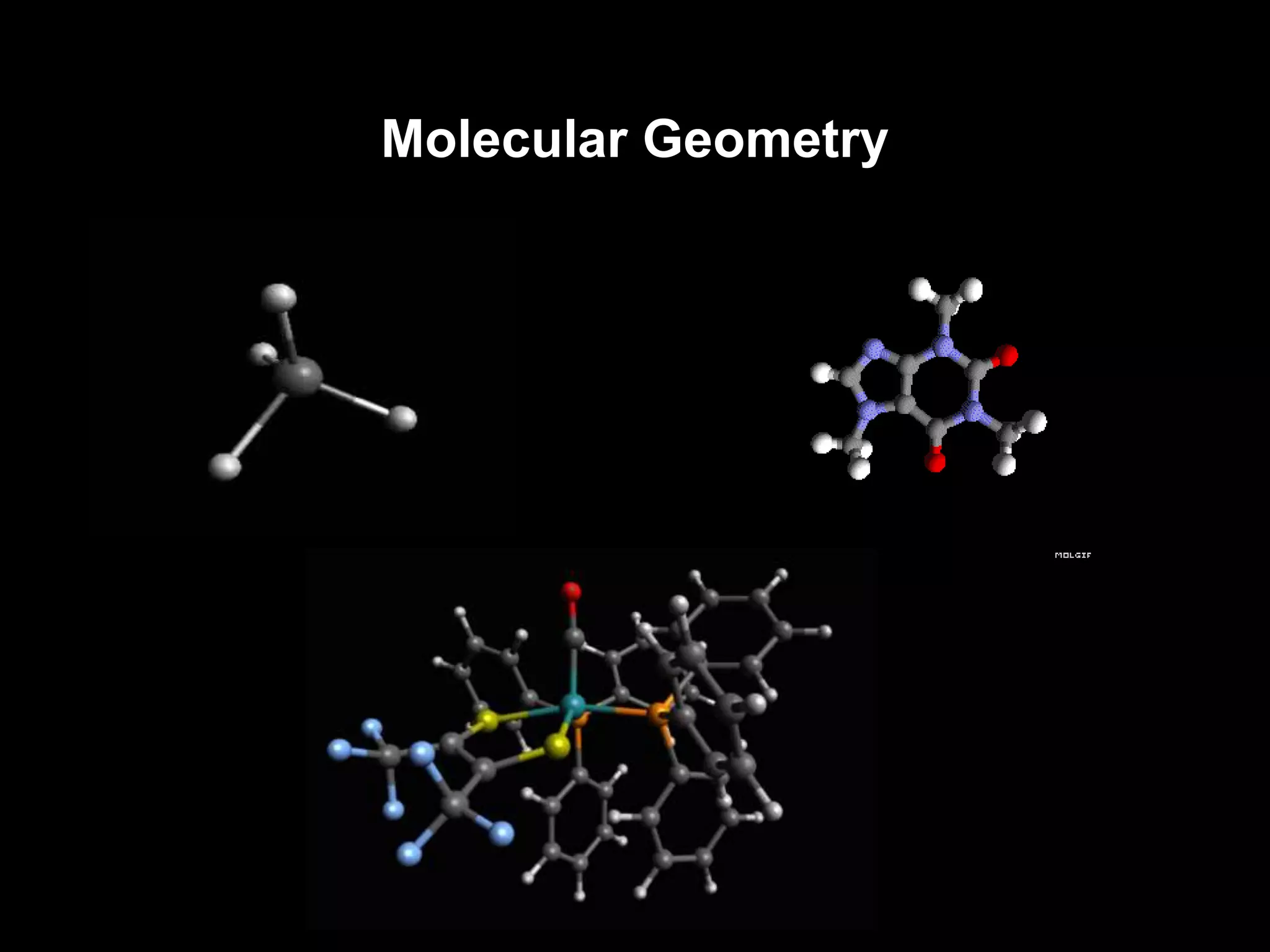
Molecular Geometry
Valence Shell Electron Pair Repulsion
Theory (VSEPR Theory)
Valence shell electrons of the central atom tend to take up
positions that maximize their separation to attain stability.
The valence shell electrons can either be a bonding pair or
a lone pair.
When these groups of electrons are situated close to each
other, they tend to repel each other until repulsion is
weakened with distance and the molecule becomes stable.
The geometric structure acquired by any given molecule is
actually a consequence of the electron repulsions of the
different electron pairs that fill the valence shell of the central
atom.
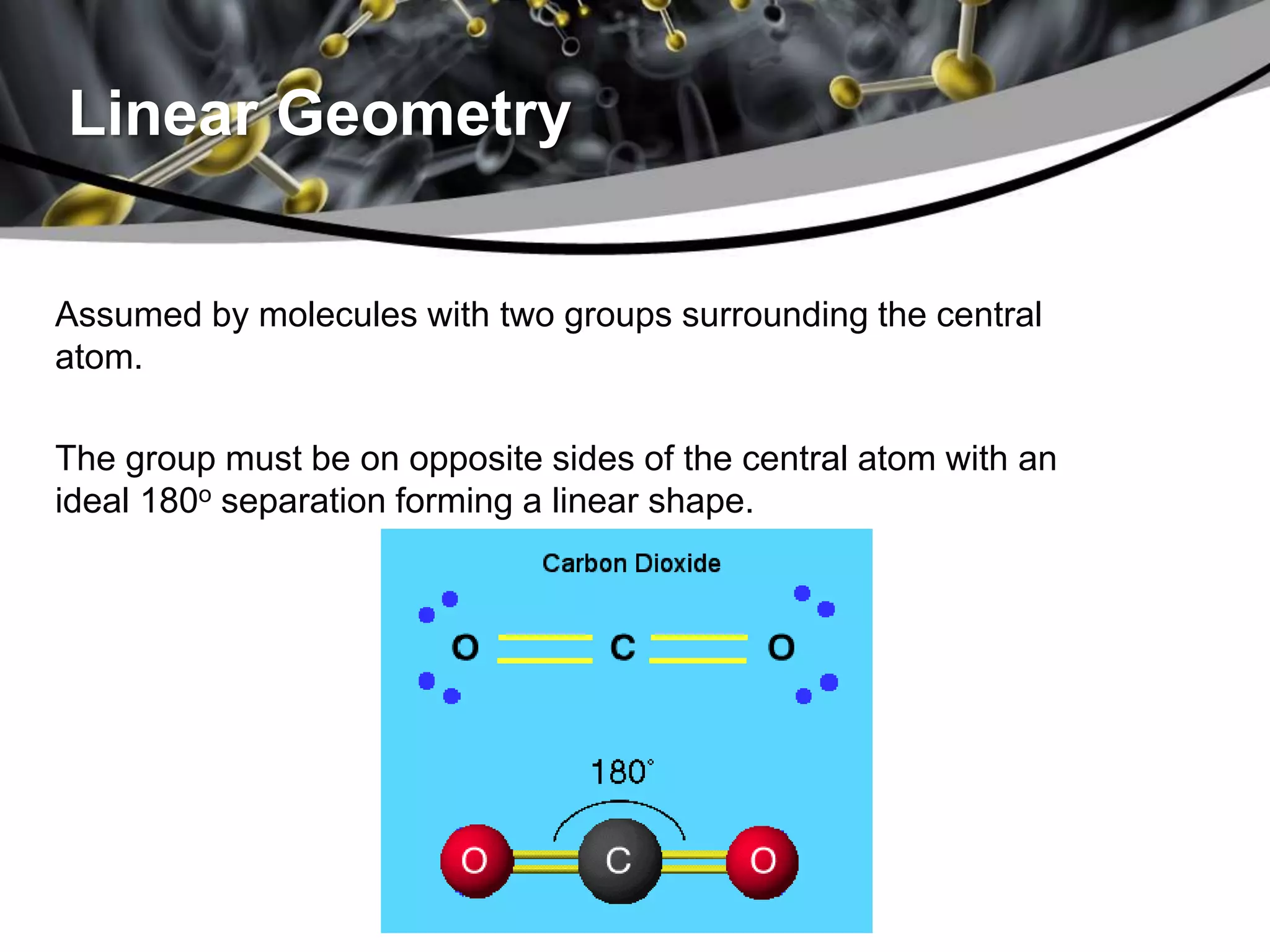
Linear Geometry
Assumed by molecules with two groups surrounding the central
atom.
The group must be on opposite sides of the central atom with an
ideal 180o separation forming a linear shape.
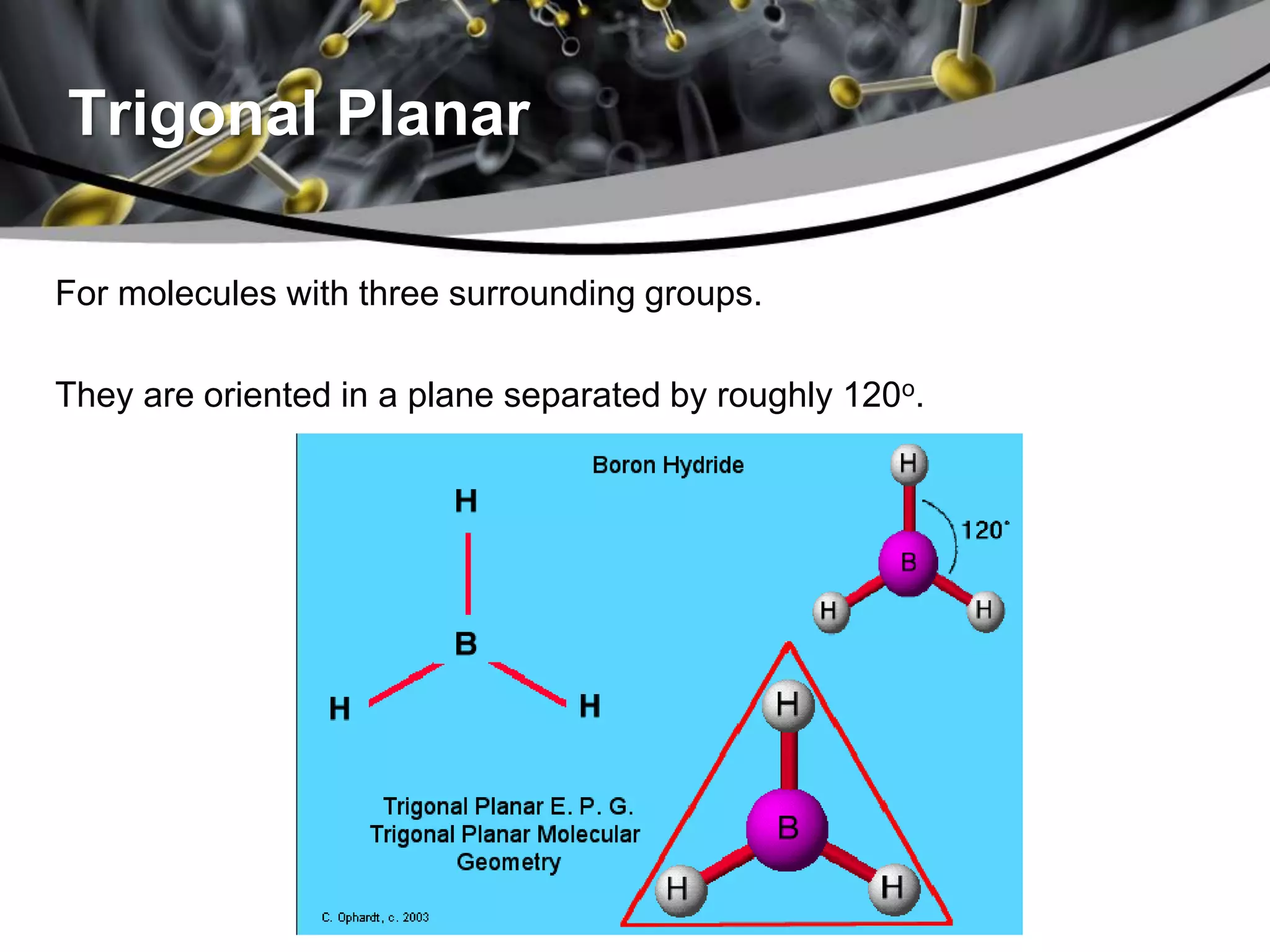
Trigonal Planar
For molecules with three surrounding groups.
They are oriented in a plane separated by roughly 120o.
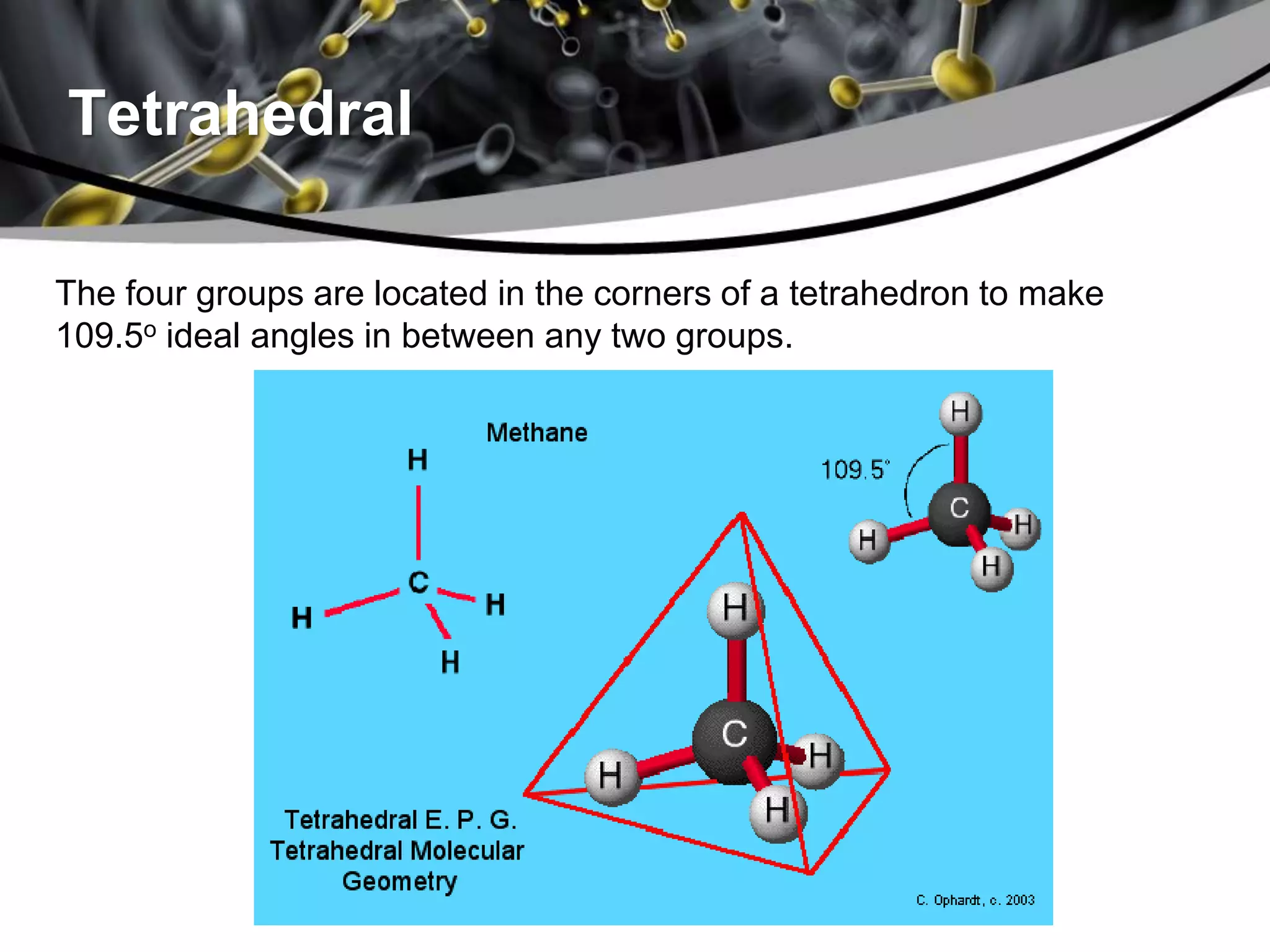
Tetrahedral
The four groups are located in the corners of a tetrahedron to make
109.5o ideal angles in between any two groups.
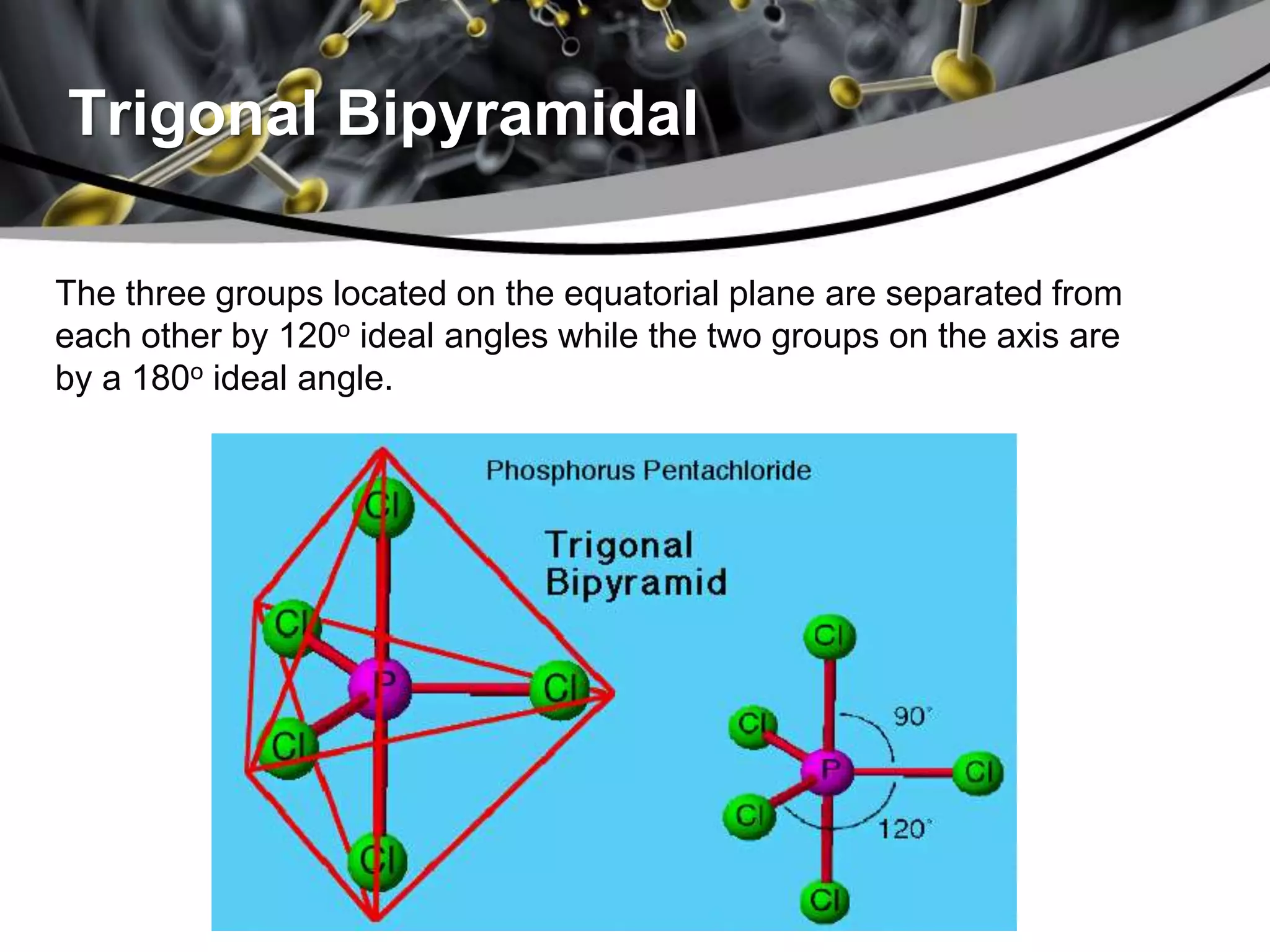
Trigonal Bipyramidal
The three groups located on the equatorial plane are separated from
each other by 120o ideal angles while the two groups on the axis are
by a 180o ideal angle.
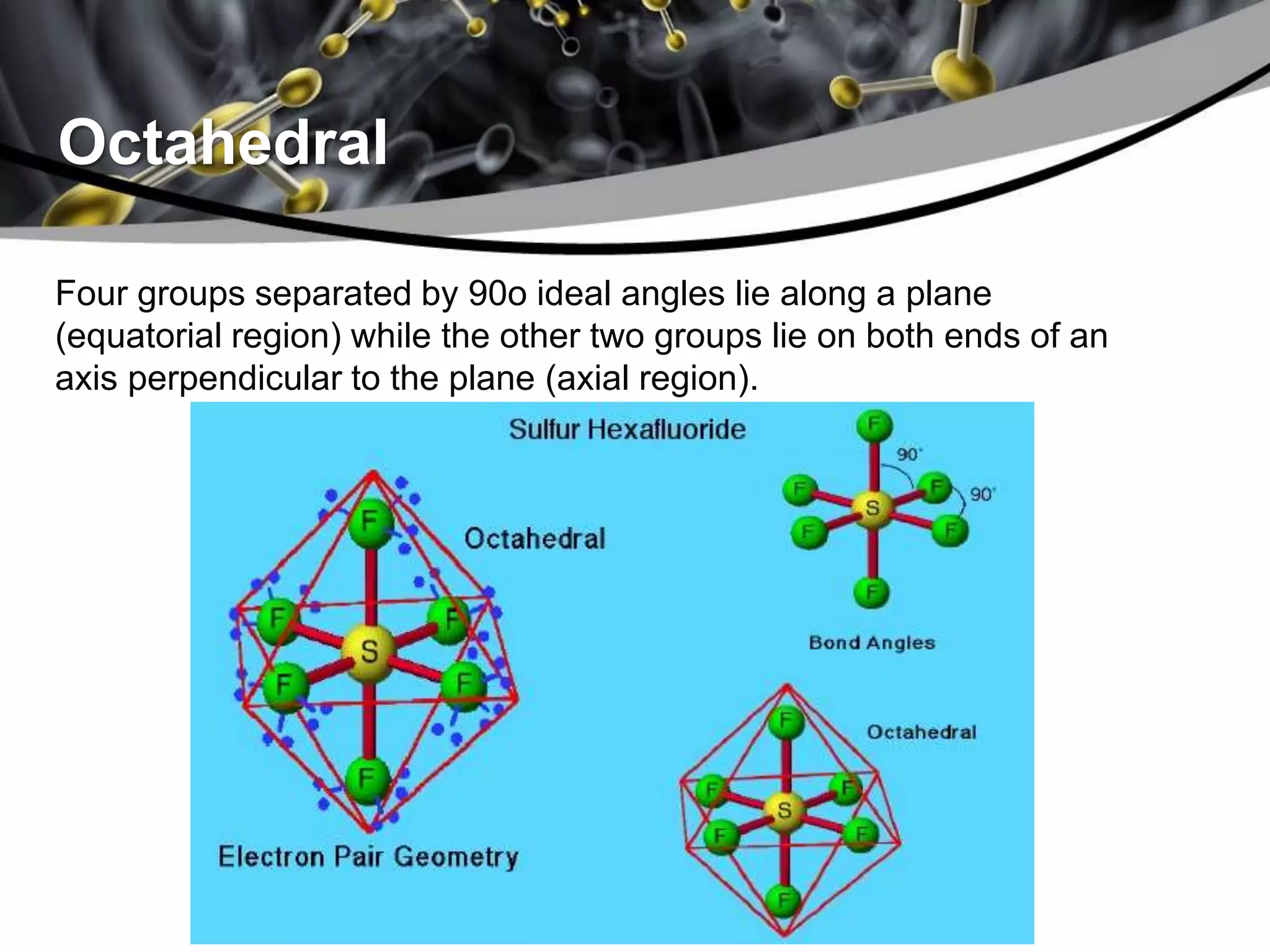
Octahedral
Four groups separated by 90o ideal angles lie along a plane
(equatorial region) while the other two groups lie on both ends of an
axis perpendicular to the plane (axial region).
Molecular Shapes
Whereas molecular geometry is defined by total number of
surrounding groups, the molecular shape is described in terms of
surrounding atoms and not the surrounding lone pairs.
It is possible for some molecules to have the same
molecular geometries but have different shapes.
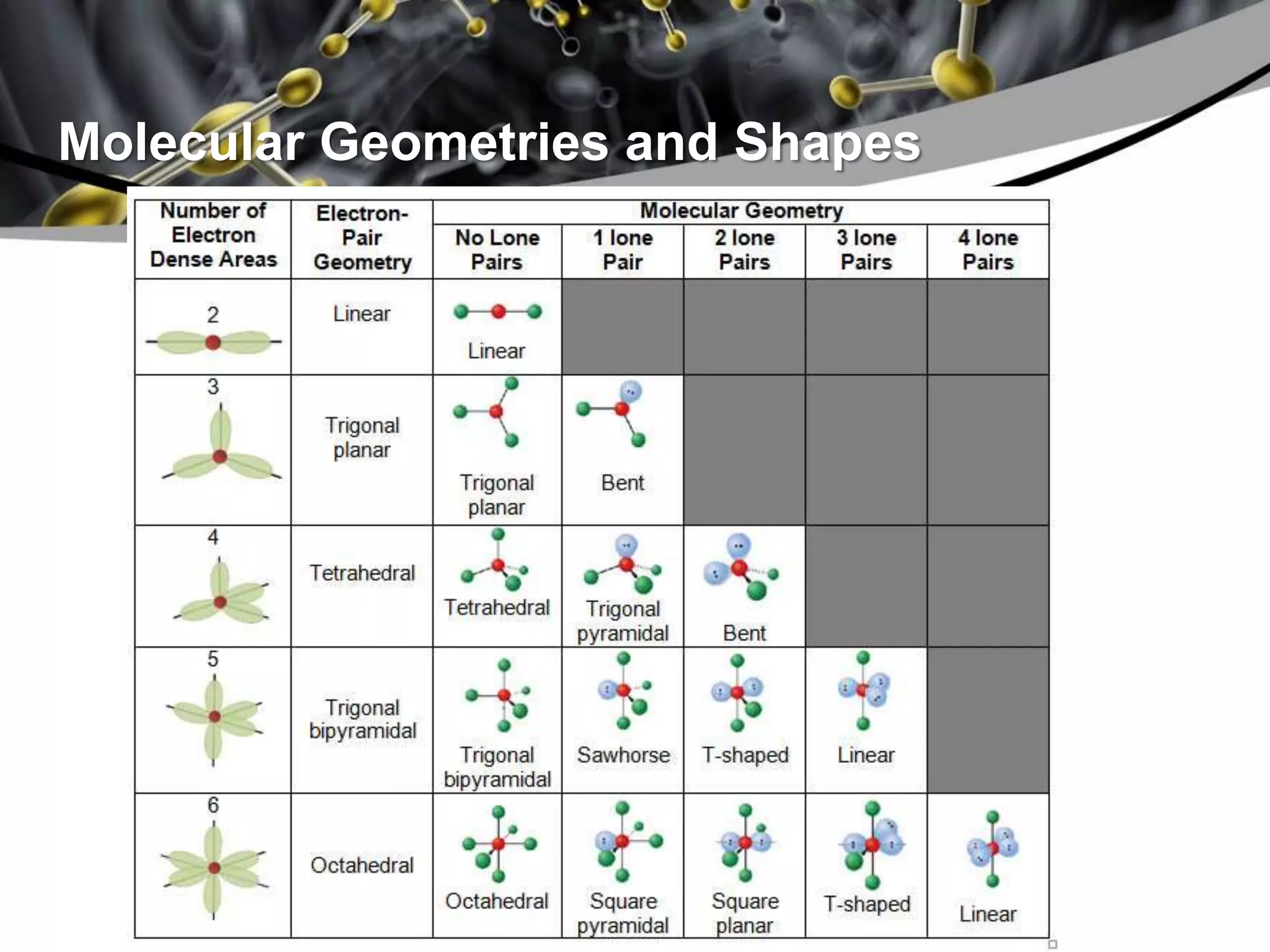
Molecular Geometries and Shapes
Sample Problem
STEP
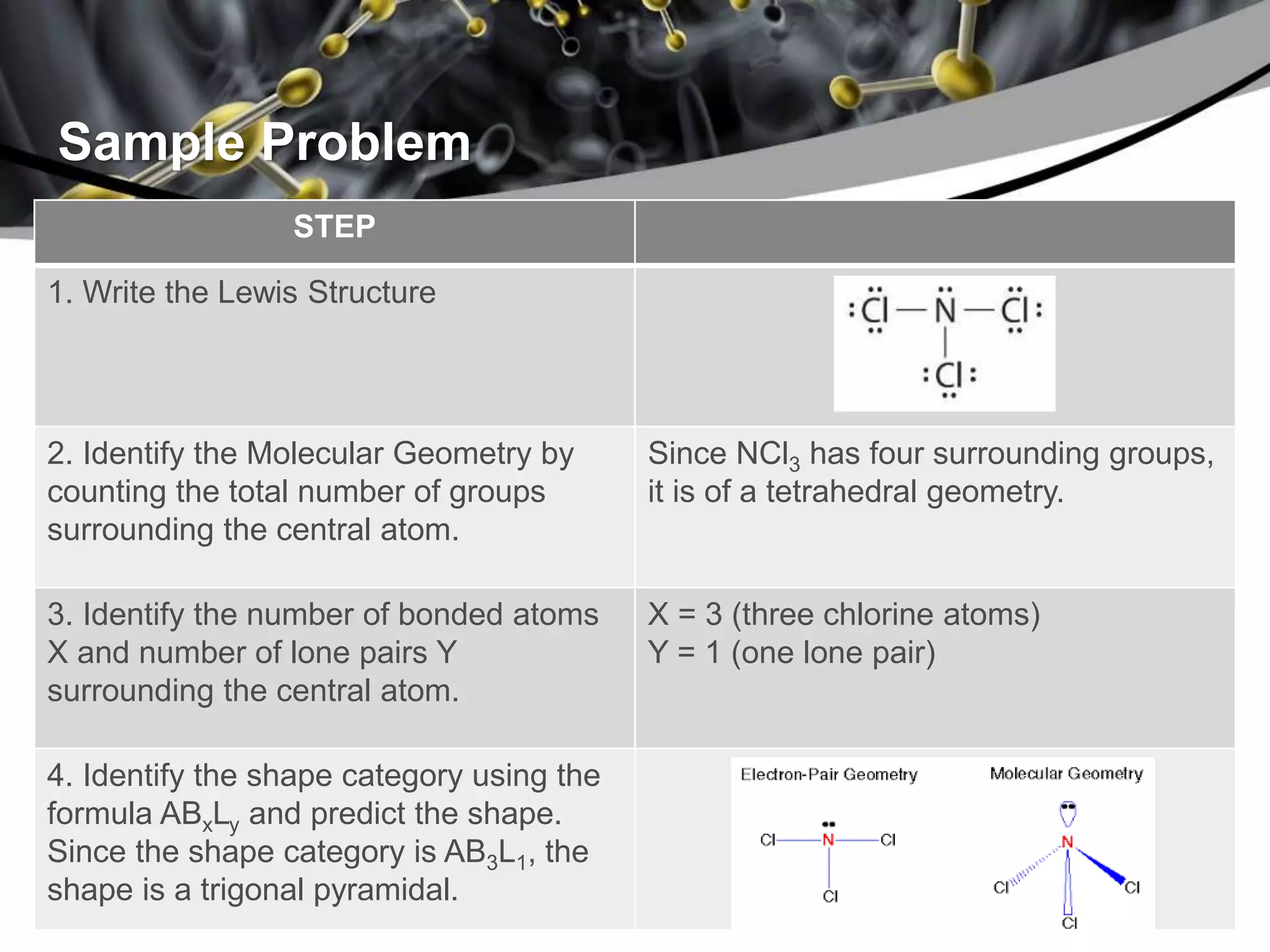
1. Write the Lewis Structure
2. Identify the Molecular Geometry by
counting the total number of groups
surrounding the central atom.
Since NCl3 has four surrounding groups,
it is of a tetrahedral geometry.
3. Identify the number of bonded atoms
X and number of lone pairs Y
surrounding the central atom.
X = 3 (three chlorine atoms)
Y = 1 (one lone pair)
4. Identify the shape category using the
formula ABxLy and predict the shape.
Since the shape category is AB3L1, the
shape is a trigonal pyramidal.
Seatwork:
Draw the Lewis structure with indicating appropriate geometry for the
following compounds:
A. AsCl3 B. SiF5

Molecular Structures

  • 3.
  • 4.
    Learning Objectives At theend of the discussion, you should be able to: 1. State and explain VSEPR Theory; 2. Predict the structures of small molecules using valence shell electron pair repulsion (VSEPR) theory; 3. Relate molecular geometry and physical/chemical properties; and, 4. Determine the polarity of molecules
  • 5.
  • 6.
    Valence Shell ElectronPair Repulsion Theory (VSEPR Theory) Valence shell electrons of the central atom tend to take up positions that maximize their separation to attain stability. The valence shell electrons can either be a bonding pair or a lone pair. When these groups of electrons are situated close to each other, they tend to repel each other until repulsion is weakened with distance and the molecule becomes stable. The geometric structure acquired by any given molecule is actually a consequence of the electron repulsions of the different electron pairs that fill the valence shell of the central atom.
  • 7.
    Linear Geometry Assumed bymolecules with two groups surrounding the central atom. The group must be on opposite sides of the central atom with an ideal 180o separation forming a linear shape.
  • 8.
    Trigonal Planar For moleculeswith three surrounding groups. They are oriented in a plane separated by roughly 120o.
  • 9.
    Tetrahedral The four groupsare located in the corners of a tetrahedron to make 109.5o ideal angles in between any two groups.
  • 10.
    Trigonal Bipyramidal The threegroups located on the equatorial plane are separated from each other by 120o ideal angles while the two groups on the axis are by a 180o ideal angle.
  • 11.
    Octahedral Four groups separatedby 90o ideal angles lie along a plane (equatorial region) while the other two groups lie on both ends of an axis perpendicular to the plane (axial region).
  • 12.
    Molecular Shapes Whereas moleculargeometry is defined by total number of surrounding groups, the molecular shape is described in terms of surrounding atoms and not the surrounding lone pairs. It is possible for some molecules to have the same molecular geometries but have different shapes.
  • 13.
  • 14.
    Sample Problem STEP 1. Writethe Lewis Structure 2. Identify the Molecular Geometry by counting the total number of groups surrounding the central atom. Since NCl3 has four surrounding groups, it is of a tetrahedral geometry. 3. Identify the number of bonded atoms X and number of lone pairs Y surrounding the central atom. X = 3 (three chlorine atoms) Y = 1 (one lone pair) 4. Identify the shape category using the formula ABxLy and predict the shape. Since the shape category is AB3L1, the shape is a trigonal pyramidal.
  • 15.
    Seatwork: Draw the Lewisstructure with indicating appropriate geometry for the following compounds: A. AsCl3 B. SiF5