Submitted to:- 
 Mr. M. Alam 
 HOD (Chemical Department) 
Submitted by:- 
 Kuldeep Patidar 
 B.tech 3rd year 5th sem. 
 12MUBCHE003 
 Chemical Engineering
Molecular Distillation 
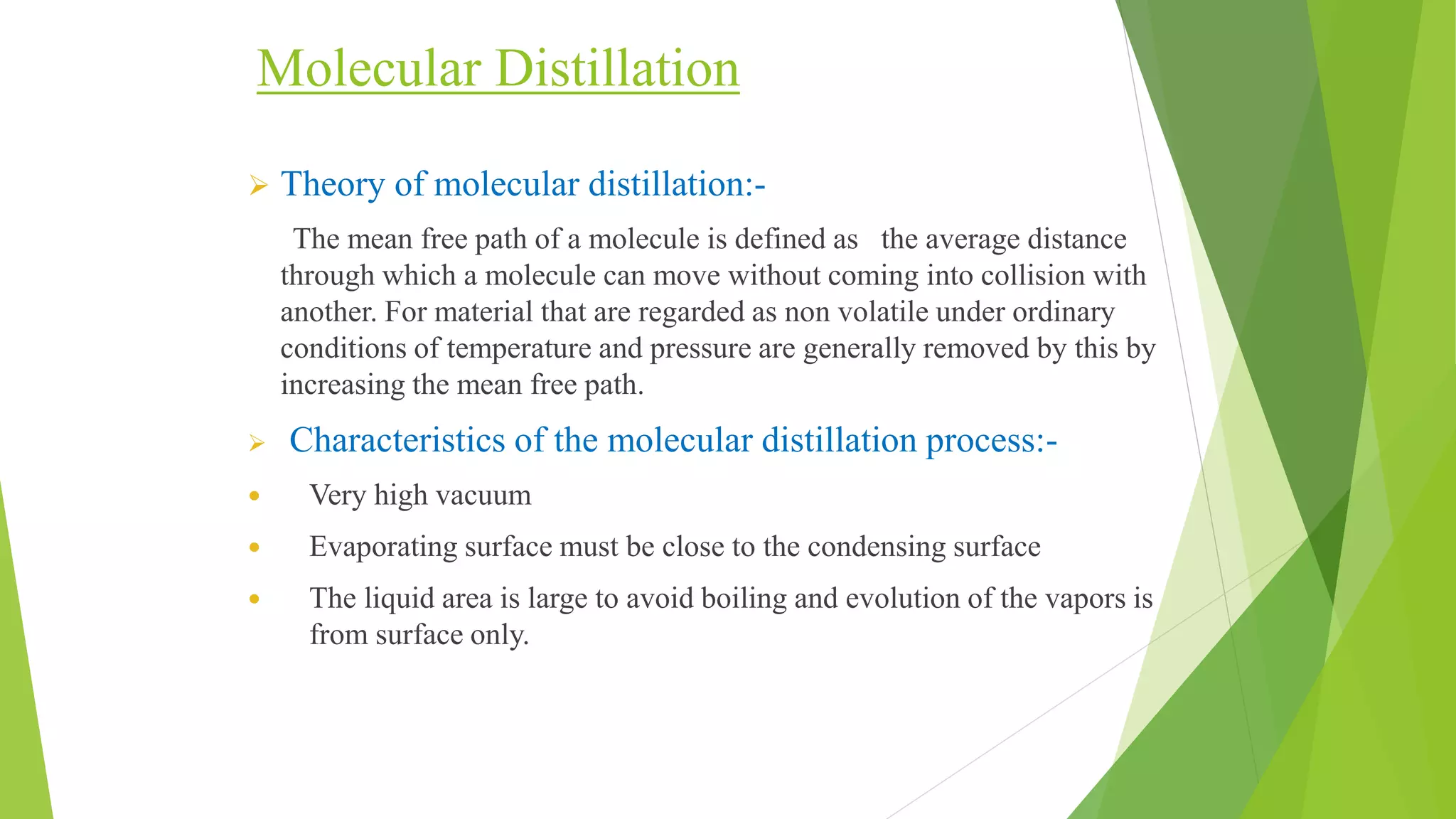
 Theory of molecular distillation:- 
The mean free path of a molecule is defined as the average distance 
through which a molecule can move without coming into collision with 
another. For material that are regarded as non volatile under ordinary 
conditions of temperature and pressure are generally removed by this by 
increasing the mean free path. 
 Characteristics of the molecular distillation process:- 
 Very high vacuum 
 Evaporating surface must be close to the condensing surface 
 The liquid area is large to avoid boiling and evolution of the vapors is 
from surface only.
Molecular Distillation (cont.) 
• Application of molecular distillation:- 
 Purification of oils 
 Separating of vitamins
Packed distillation columns 
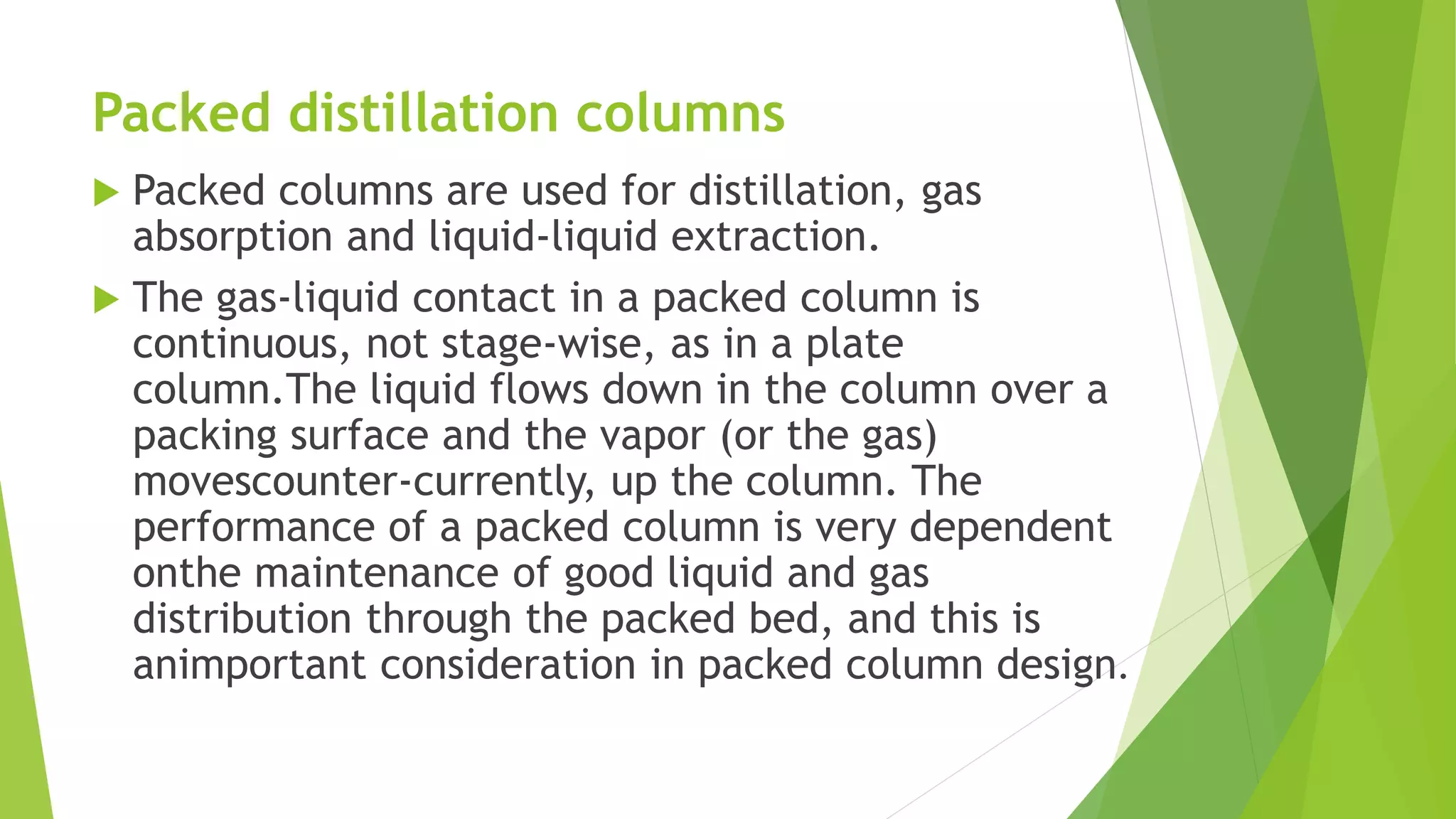
 Packed columns are used for distillation, gas 
absorption and liquid-liquid extraction. 
 The gas-liquid contact in a packed column is 
continuous, not stage-wise, as in a plate 
column.The liquid flows down in the column over a 
packing surface and the vapor (or the gas) 
movescounter-currently, up the column. The 
performance of a packed column is very dependent 
onthe maintenance of good liquid and gas 
distribution through the packed bed, and this is 
animportant consideration in packed column design.
Advantages and disadvantages for the plate 
and the packed columns 
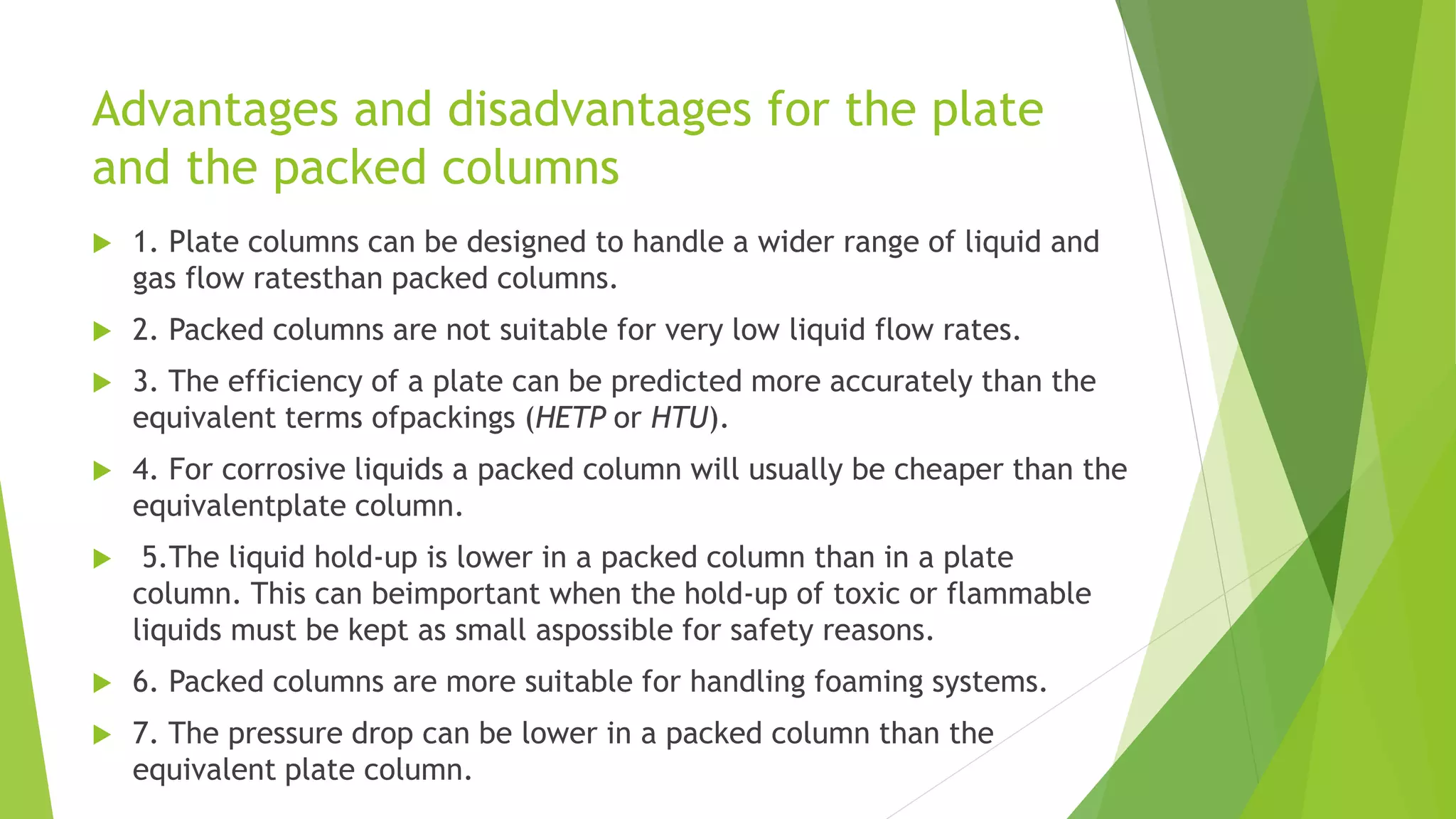
 1. Plate columns can be designed to handle a wider range of liquid and 
gas flow ratesthan packed columns. 
 2. Packed columns are not suitable for very low liquid flow rates. 
 3. The efficiency of a plate can be predicted more accurately than the 
equivalent terms ofpackings (HETP or HTU). 
 4. For corrosive liquids a packed column will usually be cheaper than the 
equivalentplate column. 
 5.The liquid hold-up is lower in a packed column than in a plate 
column. This can beimportant when the hold-up of toxic or flammable 
liquids must be kept as small aspossible for safety reasons. 
 6. Packed columns are more suitable for handling foaming systems. 
 7. The pressure drop can be lower in a packed column than the 
equivalent plate column.
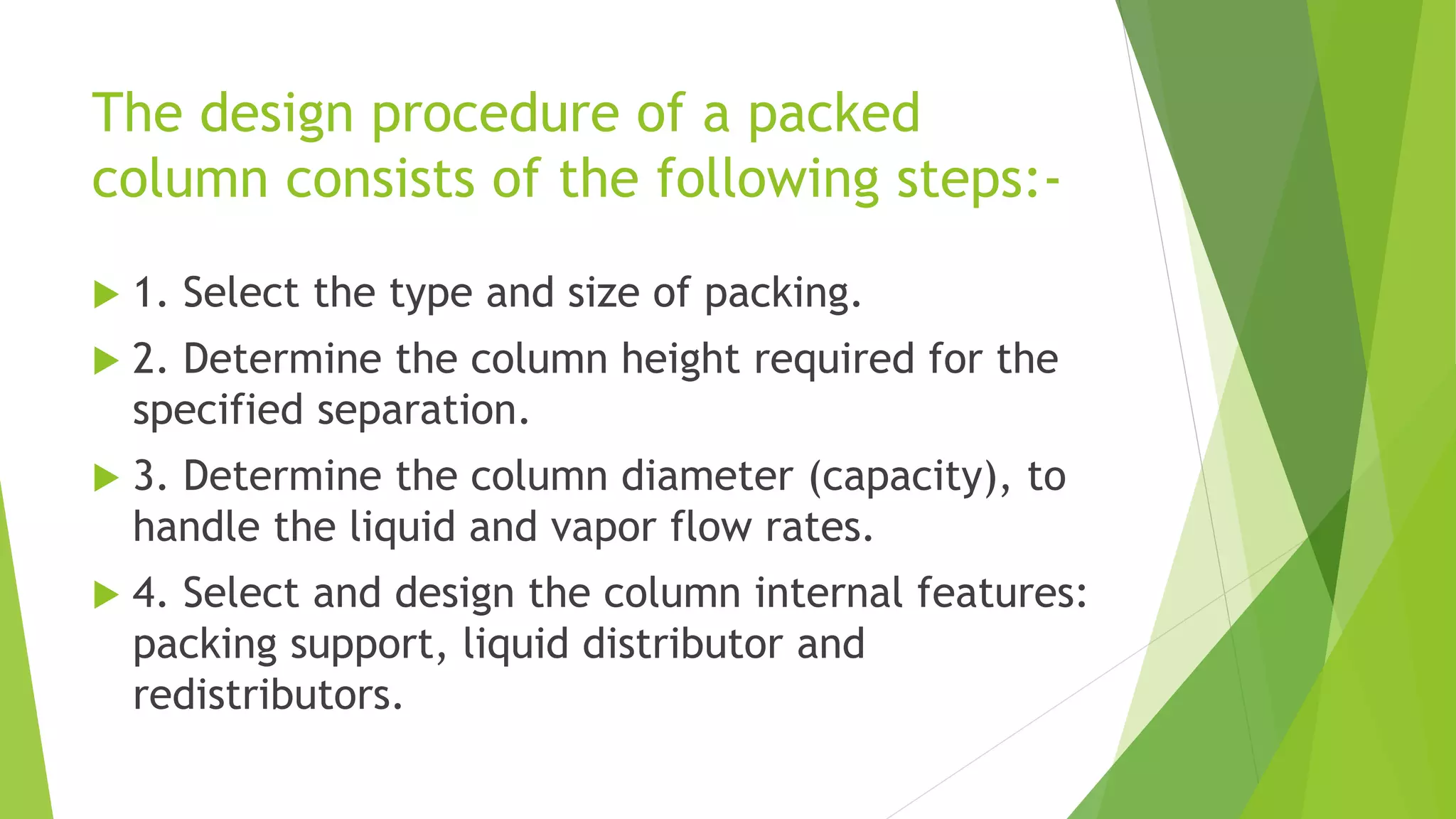
The design procedure of a packed 
column consists of the following steps:- 
 1. Select the type and size of packing. 
 2. Determine the column height required for the 
specified separation. 
 3. Determine the column diameter (capacity), to 
handle the liquid and vapor flow rates. 
 4. Select and design the column internal features: 
packing support, liquid distributor and 
redistributors.
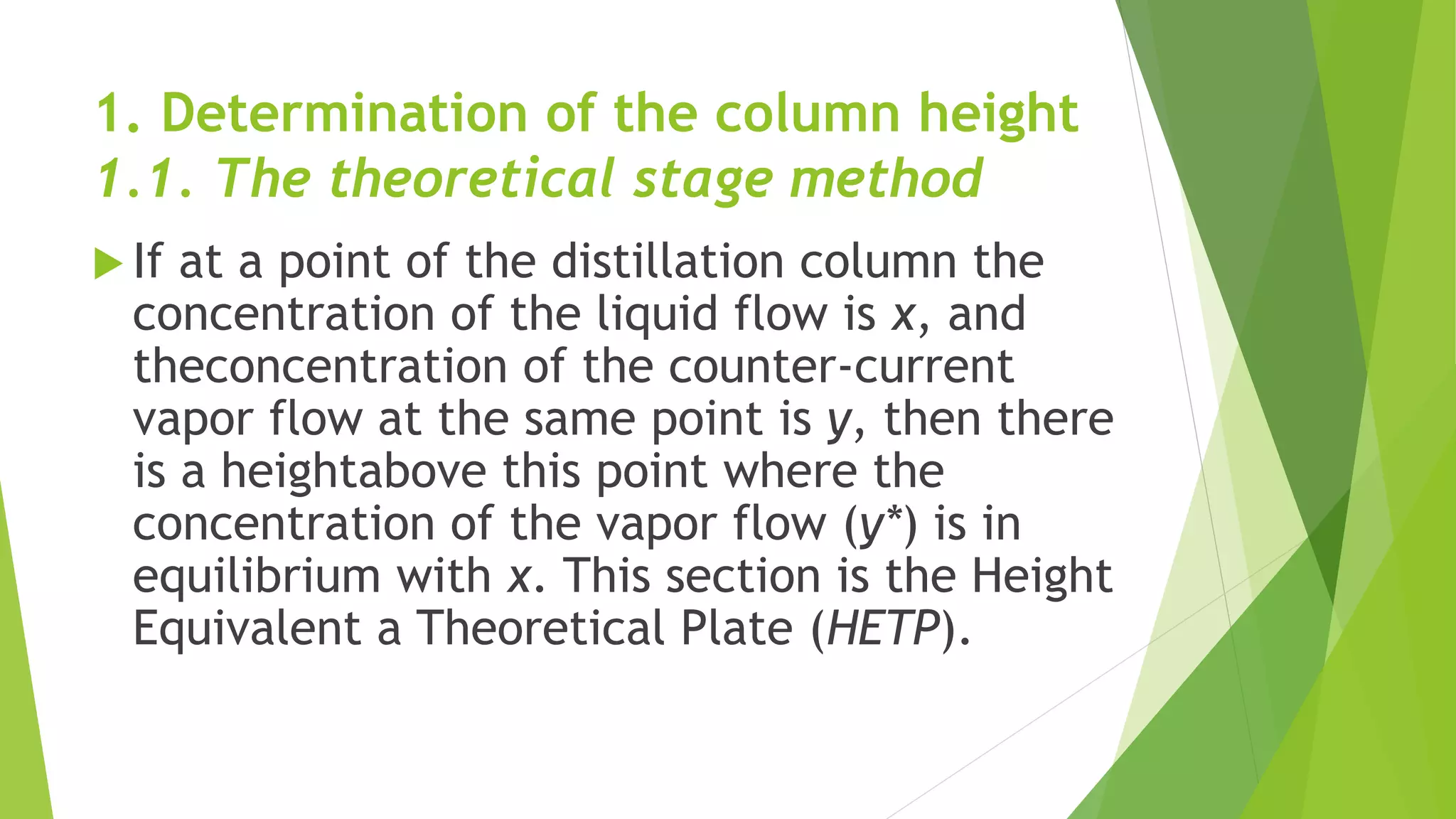
1. Determination of the column height 
1.1. The theoretical stage method 
 If at a point of the distillation column the 
concentration of the liquid flow is x, and 
theconcentration of the counter-current 
vapor flow at the same point is y, then there 
is a heightabove this point where the 
concentration of the vapor flow (y*) is in 
equilibrium with x. This section is the Height 
Equivalent a Theoretical Plate (HETP).
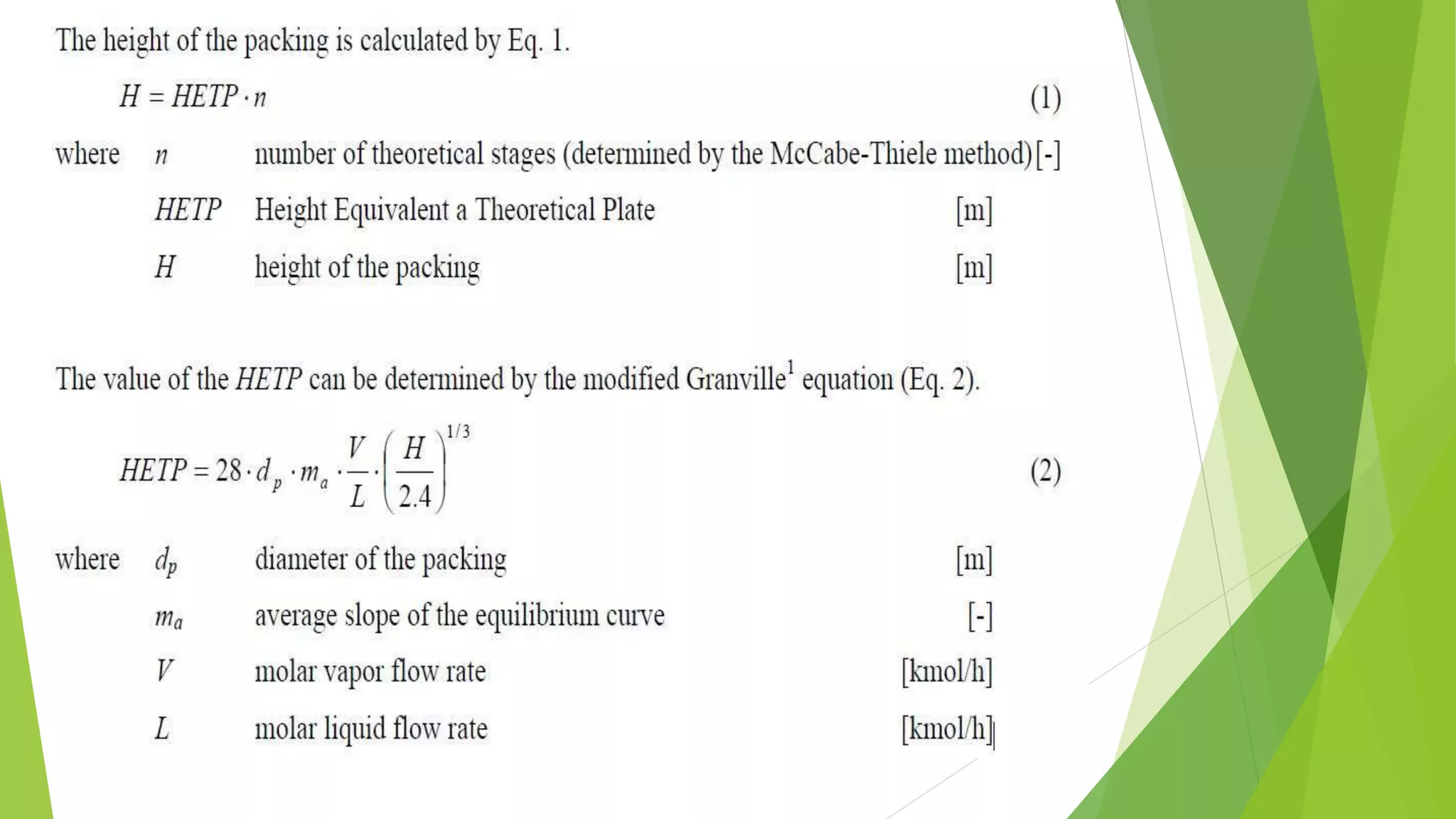
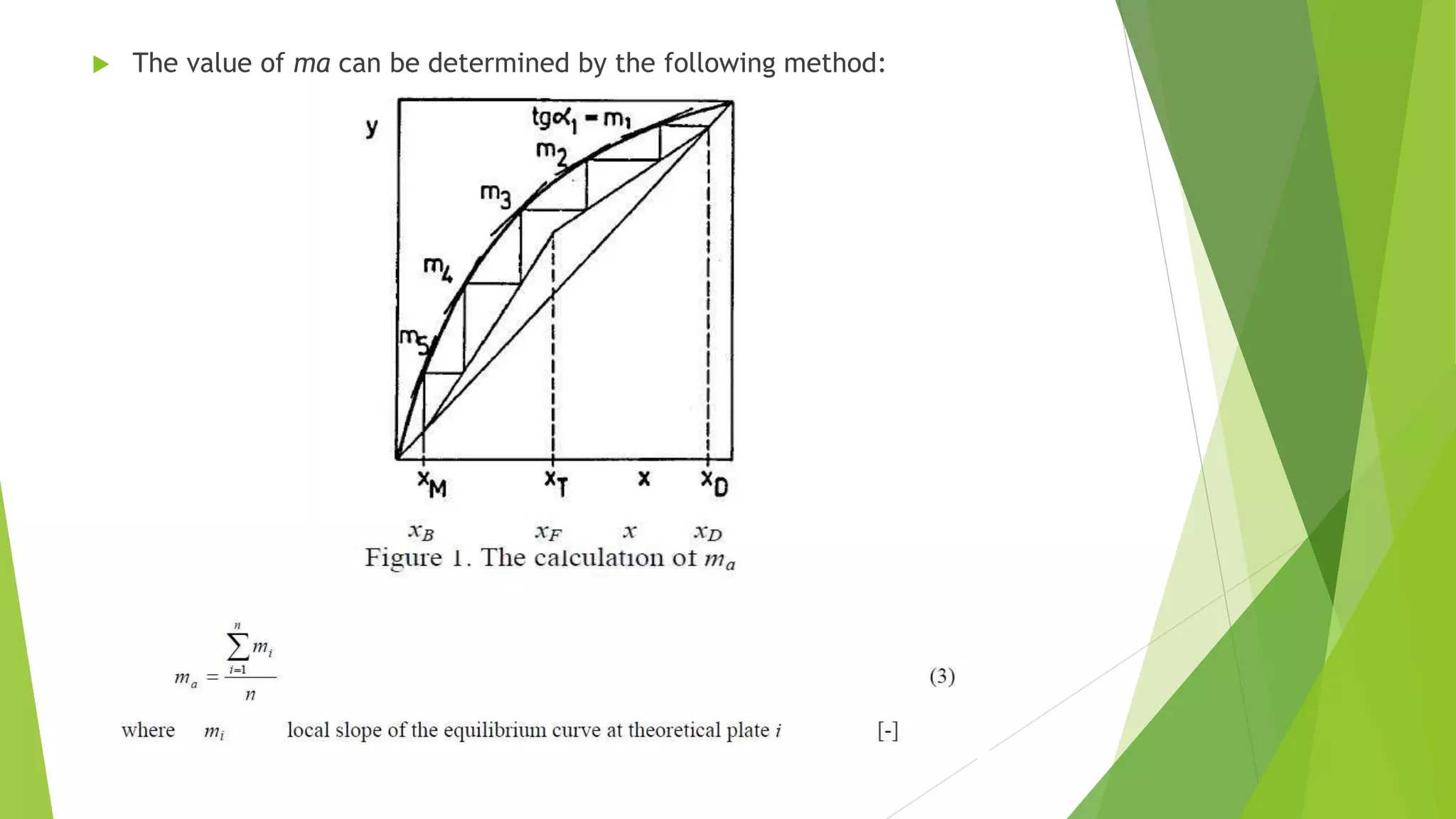
 The value of ma can be determined by the following method:
1.2. The transfer unit method 
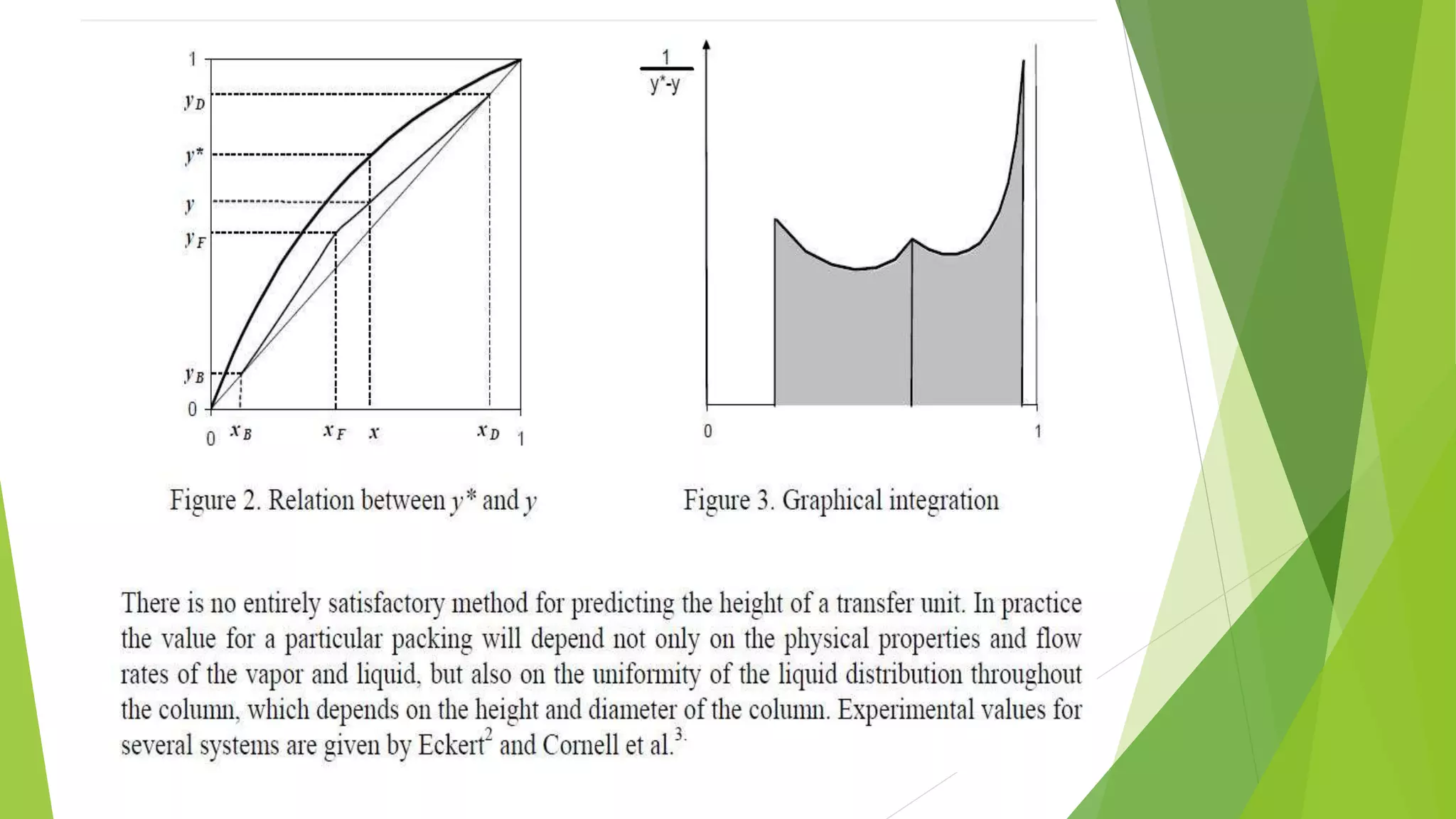
 The transfer unit is a part of column height 
where the change in vapor concentration 
equals tothe average driving force. The driving 
force is the difference between the 
equilibrium (y*) andthe actual (y) vapor 
concentration. 
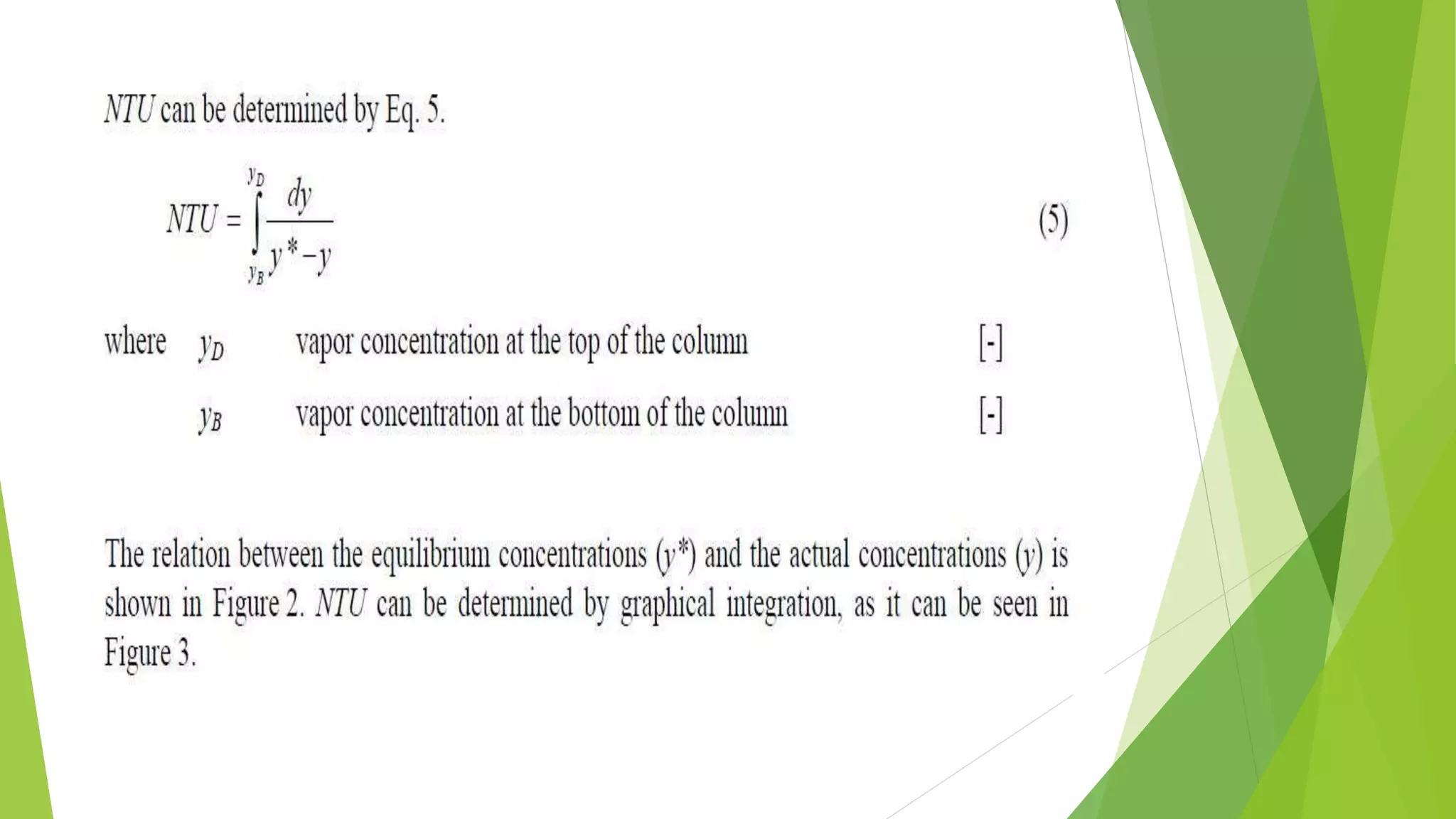
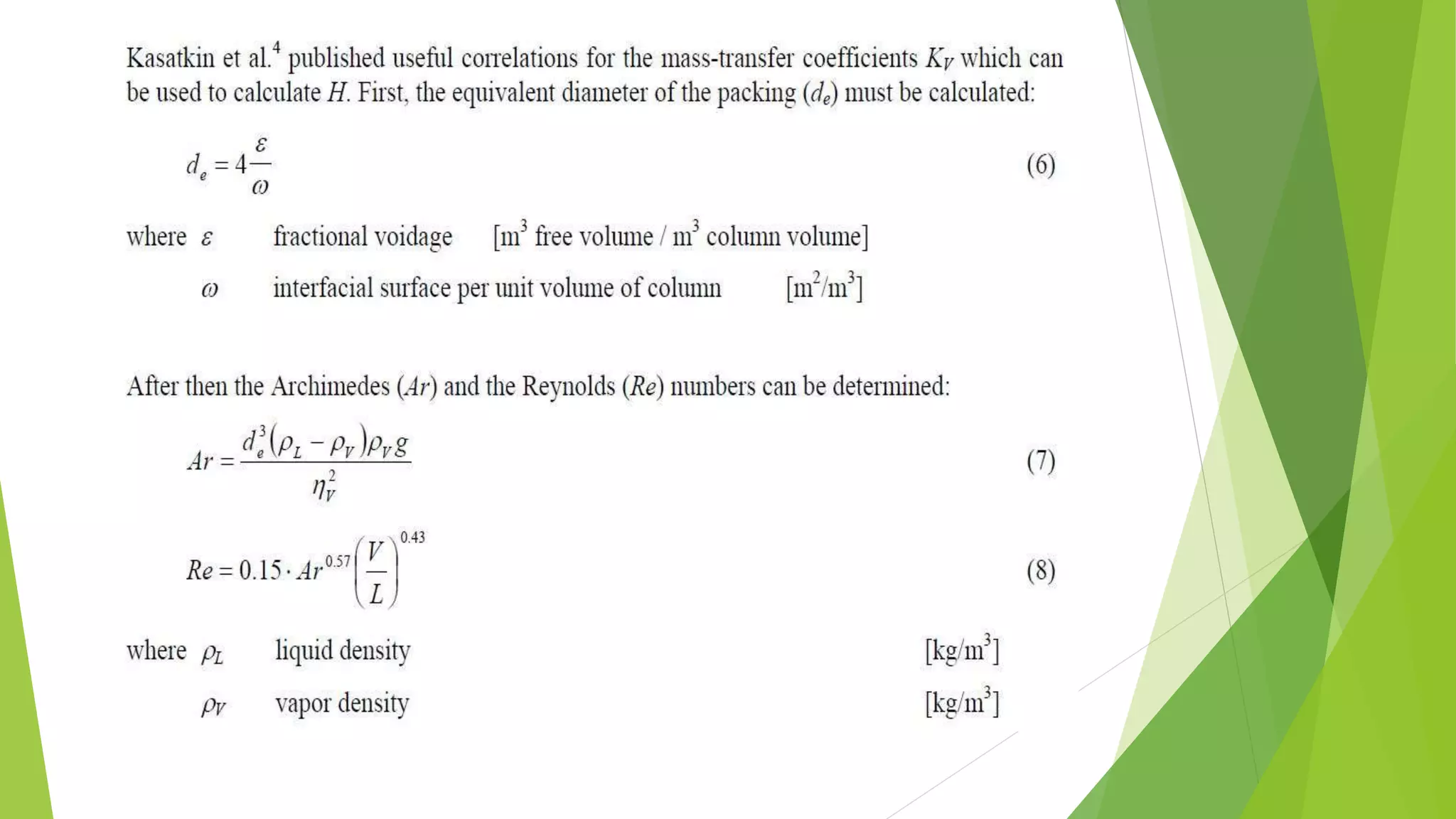
 The column height can be computed by Eq. 4. 
H = HTU ⋅ NTU 
_________________________(4) 
 where HTU Height of a Transfer Unit [m] 
 NTU Number of Transfer Units [-]
molecular distillation and packed columm distillation

molecular distillation and packed columm distillation

  • 1.
    Submitted to:- Mr. M. Alam  HOD (Chemical Department) Submitted by:-  Kuldeep Patidar  B.tech 3rd year 5th sem.  12MUBCHE003  Chemical Engineering
  • 2.
    Molecular Distillation Theory of molecular distillation:- The mean free path of a molecule is defined as the average distance through which a molecule can move without coming into collision with another. For material that are regarded as non volatile under ordinary conditions of temperature and pressure are generally removed by this by increasing the mean free path.  Characteristics of the molecular distillation process:-  Very high vacuum  Evaporating surface must be close to the condensing surface  The liquid area is large to avoid boiling and evolution of the vapors is from surface only.
  • 3.
    Molecular Distillation (cont.) • Application of molecular distillation:-  Purification of oils  Separating of vitamins
  • 4.
    Packed distillation columns  Packed columns are used for distillation, gas absorption and liquid-liquid extraction.  The gas-liquid contact in a packed column is continuous, not stage-wise, as in a plate column.The liquid flows down in the column over a packing surface and the vapor (or the gas) movescounter-currently, up the column. The performance of a packed column is very dependent onthe maintenance of good liquid and gas distribution through the packed bed, and this is animportant consideration in packed column design.
  • 5.
    Advantages and disadvantagesfor the plate and the packed columns  1. Plate columns can be designed to handle a wider range of liquid and gas flow ratesthan packed columns.  2. Packed columns are not suitable for very low liquid flow rates.  3. The efficiency of a plate can be predicted more accurately than the equivalent terms ofpackings (HETP or HTU).  4. For corrosive liquids a packed column will usually be cheaper than the equivalentplate column.  5.The liquid hold-up is lower in a packed column than in a plate column. This can beimportant when the hold-up of toxic or flammable liquids must be kept as small aspossible for safety reasons.  6. Packed columns are more suitable for handling foaming systems.  7. The pressure drop can be lower in a packed column than the equivalent plate column.
  • 6.
    The design procedureof a packed column consists of the following steps:-  1. Select the type and size of packing.  2. Determine the column height required for the specified separation.  3. Determine the column diameter (capacity), to handle the liquid and vapor flow rates.  4. Select and design the column internal features: packing support, liquid distributor and redistributors.
  • 7.
    1. Determination ofthe column height 1.1. The theoretical stage method  If at a point of the distillation column the concentration of the liquid flow is x, and theconcentration of the counter-current vapor flow at the same point is y, then there is a heightabove this point where the concentration of the vapor flow (y*) is in equilibrium with x. This section is the Height Equivalent a Theoretical Plate (HETP).
  • 9.
     The valueof ma can be determined by the following method:
  • 10.
    1.2. The transferunit method  The transfer unit is a part of column height where the change in vapor concentration equals tothe average driving force. The driving force is the difference between the equilibrium (y*) andthe actual (y) vapor concentration.  The column height can be computed by Eq. 4. H = HTU ⋅ NTU _________________________(4)  where HTU Height of a Transfer Unit [m]  NTU Number of Transfer Units [-]