 Lead Chamber Process
 Produces relatively dilute acid (62%–78% H2SO4)
 Contact Process
 Iron pyrite (FeS2)
(Silicon free FeS2 contain about 53.4% S)
 Elemental sulfur
 Air
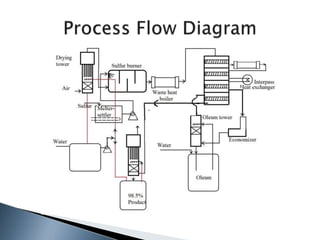
 Melting and burning of sulfur
 Drying off air
 Recovery of heat form SO2
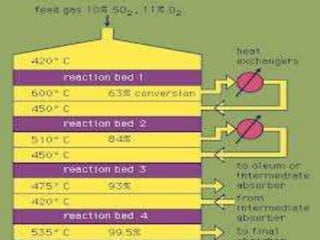
 Conversion of SO2 to SO3 a convertor
 Absorption of SO3 in sulfuric acid
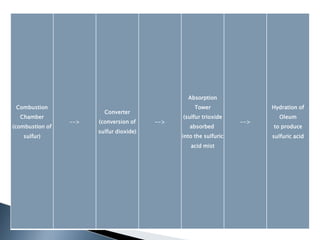
Combustion
Chamber
(combustion of
sulfur)
-->
Converter
(conversion of
sulfur dioxide)
-->
Absorption
Tower
(sulfur trioxide
absorbed
into the sulfuric
acid mist
-->
Hydration of
Oleum
to produce
sulfuric acid
S(s) + O2(g) → SO2(g)
2SO2(g) + O2(g) → 2SO3(g)
SO3(g) + H2SO4 → H2S2O7
H2S2O7(l) + H2O(l) → 2H2SO4(l)
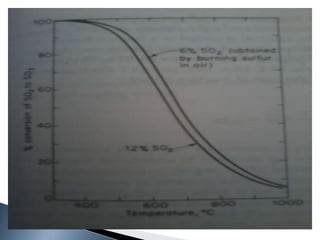
1. Equilibrium is an inverse function of
temp. and direct function of oxygen
to sulfur dioxide ration
2. Rate of reaction is direct function of
temp.
3. Removal of sulfur trioxide formed
allow more sulfur dioxide to be
converted
Prepare a flow chart to show the sequence of
processes used to convert sulfur into
concentrated sulfuric acid. Write equations
for significant chemical reactions beside the
appropriate section of the flow chart.
◦ Construct a table that lists the main by-products
of sulfuric acid production from sulfur dioxide
and describes how these problems are treated or
reduced.
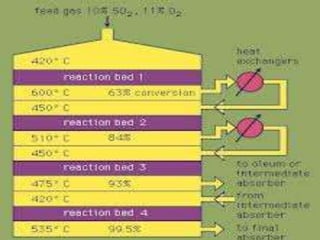
 During the contact process, the temperature
of the gas increases as it passes through each
catalyst bed in the converter. The gas must
be diverted for cooling before returning for
another pass.
 a Why does the temperature of the gas rise?
 b Why is it necessary to cool the gas?
 c What side-benefit is obtained from the need
to cool the gas?
 Although water reacts directly with sulfur
trioxide to form sulfuric acid, this reaction is
not employed when sulfuric acid is made.
 A Explain why not.
 B Describe the process that is used.
 c Write equations for the reactions that
occur in the process described in part b
above.
 Air is thoroughly purified before it is used in
the contact process. Explain the reason for
this
Sulfur dioxide is present in emissions from
sulfuric acid plants.
 a Why is the release of large amounts of
sulfur dioxide in the atmosphere
 undesirable?
b What is done to limit the extent of these
emissions in sulfuric acid plants?
 Under the title ‘Sulfuric acid: the world’s most
wanted chemical’, write a paragraph that uses
the words: fertilizers, contact process,
smelting, converter, absorption tower,
equilibrium, reaction rate and catalytic
oxidation.
Describe two ways that expenses are
minimized in the contact process.
Construct a concept map that includes the
following terms: sulfuric acid, fertilizers,
oxidation, contact process, converter,
absorption tower, oxidation, reaction rate,
equilibrium yield and catalyst
In the commercial production of sulfuric acid,
sulfur dioxide is oxidized to sulfur trioxide by
oxygen gas.
a) Write a balanced chemical equation for the
reaction.
b) Write an expression for the equilibrium
constant for the reaction.
c) Predict the reaction conditions that would favor
maximum equilibrium yield of sulfur trioxide.
Explain your reasoning.
d) How would these conditions affect the rate of
reaction?
e) Discuss the conflict that arises in the choice of
reaction conditions for the contact process and
the strategies used to deal with this conflict.
 Your firm has asked you to design a new sulfuric
acid plant, briefly list important factors that you
would consider when deciding:
a) whether to use powdered sulfur from a local
supplier or molten sulfur transported a greater
distance
b) if sulfur were to be burnt in air or oxygen
c) whether to obtain sulfur dioxide by burning
sulfur or from the waste gases of a copper
smelter
d) whether to use air or oxygen for the reaction in
the converter.
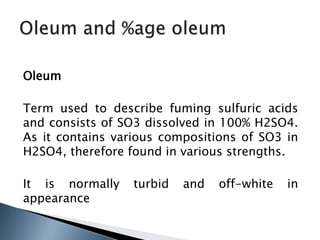
Oleum
Term used to describe fuming sulfuric acids
and consists of SO3 dissolved in 100% H2SO4.
As it contains various compositions of SO3 in
H2SO4, therefore found in various strengths.
It is normally turbid and off-white in
appearance
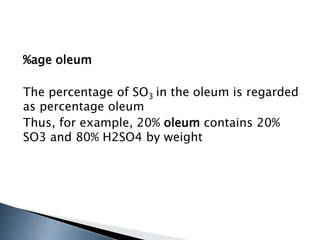
%age oleum
The percentage of SO3 in the oleum is regarded
as percentage oleum
Thus, for example, 20% oleum contains 20%
SO3 and 80% H2SO4 by weight

Sulfuric acid manufacturing and process flow diagram

  • 1.
     Lead ChamberProcess  Produces relatively dilute acid (62%–78% H2SO4)  Contact Process
  • 2.
     Iron pyrite(FeS2) (Silicon free FeS2 contain about 53.4% S)  Elemental sulfur  Air
  • 3.
     Melting andburning of sulfur  Drying off air  Recovery of heat form SO2  Conversion of SO2 to SO3 a convertor  Absorption of SO3 in sulfuric acid
  • 4.
    Combustion Chamber (combustion of sulfur) --> Converter (conversion of sulfurdioxide) --> Absorption Tower (sulfur trioxide absorbed into the sulfuric acid mist --> Hydration of Oleum to produce sulfuric acid
  • 8.
    S(s) + O2(g)→ SO2(g) 2SO2(g) + O2(g) → 2SO3(g) SO3(g) + H2SO4 → H2S2O7 H2S2O7(l) + H2O(l) → 2H2SO4(l)
  • 9.
    1. Equilibrium isan inverse function of temp. and direct function of oxygen to sulfur dioxide ration 2. Rate of reaction is direct function of temp. 3. Removal of sulfur trioxide formed allow more sulfur dioxide to be converted
  • 11.
    Prepare a flowchart to show the sequence of processes used to convert sulfur into concentrated sulfuric acid. Write equations for significant chemical reactions beside the appropriate section of the flow chart.
  • 12.
    ◦ Construct atable that lists the main by-products of sulfuric acid production from sulfur dioxide and describes how these problems are treated or reduced.
  • 13.
     During thecontact process, the temperature of the gas increases as it passes through each catalyst bed in the converter. The gas must be diverted for cooling before returning for another pass.  a Why does the temperature of the gas rise?  b Why is it necessary to cool the gas?  c What side-benefit is obtained from the need to cool the gas?
  • 14.
     Although waterreacts directly with sulfur trioxide to form sulfuric acid, this reaction is not employed when sulfuric acid is made.  A Explain why not.  B Describe the process that is used.  c Write equations for the reactions that occur in the process described in part b above.
  • 15.
     Air isthoroughly purified before it is used in the contact process. Explain the reason for this
  • 16.
    Sulfur dioxide ispresent in emissions from sulfuric acid plants.  a Why is the release of large amounts of sulfur dioxide in the atmosphere  undesirable? b What is done to limit the extent of these emissions in sulfuric acid plants?
  • 17.
     Under thetitle ‘Sulfuric acid: the world’s most wanted chemical’, write a paragraph that uses the words: fertilizers, contact process, smelting, converter, absorption tower, equilibrium, reaction rate and catalytic oxidation.
  • 18.
    Describe two waysthat expenses are minimized in the contact process.
  • 19.
    Construct a conceptmap that includes the following terms: sulfuric acid, fertilizers, oxidation, contact process, converter, absorption tower, oxidation, reaction rate, equilibrium yield and catalyst
  • 20.
    In the commercialproduction of sulfuric acid, sulfur dioxide is oxidized to sulfur trioxide by oxygen gas. a) Write a balanced chemical equation for the reaction. b) Write an expression for the equilibrium constant for the reaction. c) Predict the reaction conditions that would favor maximum equilibrium yield of sulfur trioxide. Explain your reasoning. d) How would these conditions affect the rate of reaction? e) Discuss the conflict that arises in the choice of reaction conditions for the contact process and the strategies used to deal with this conflict.
  • 21.
     Your firmhas asked you to design a new sulfuric acid plant, briefly list important factors that you would consider when deciding: a) whether to use powdered sulfur from a local supplier or molten sulfur transported a greater distance b) if sulfur were to be burnt in air or oxygen c) whether to obtain sulfur dioxide by burning sulfur or from the waste gases of a copper smelter d) whether to use air or oxygen for the reaction in the converter.
  • 22.
    Oleum Term used todescribe fuming sulfuric acids and consists of SO3 dissolved in 100% H2SO4. As it contains various compositions of SO3 in H2SO4, therefore found in various strengths. It is normally turbid and off-white in appearance
  • 23.
    %age oleum The percentageof SO3 in the oleum is regarded as percentage oleum Thus, for example, 20% oleum contains 20% SO3 and 80% H2SO4 by weight