Molecular Beam Epitaxy
Enrique Flores Fontau
IEE3030-Microelectronics
Tallinn University of Technology
 Introduction
 What is Epitaxy?
 Epitaxy types
 Growth modes
 Molecular Beam Epitaxy
 Working principle
 MBE Growth process
 MBE features
 In situ monitoring
 Materials
 SS-MBE
 Benefits and Problems
 Applications
 Conclusions
Contents
Introduction
What is Epitaxy?
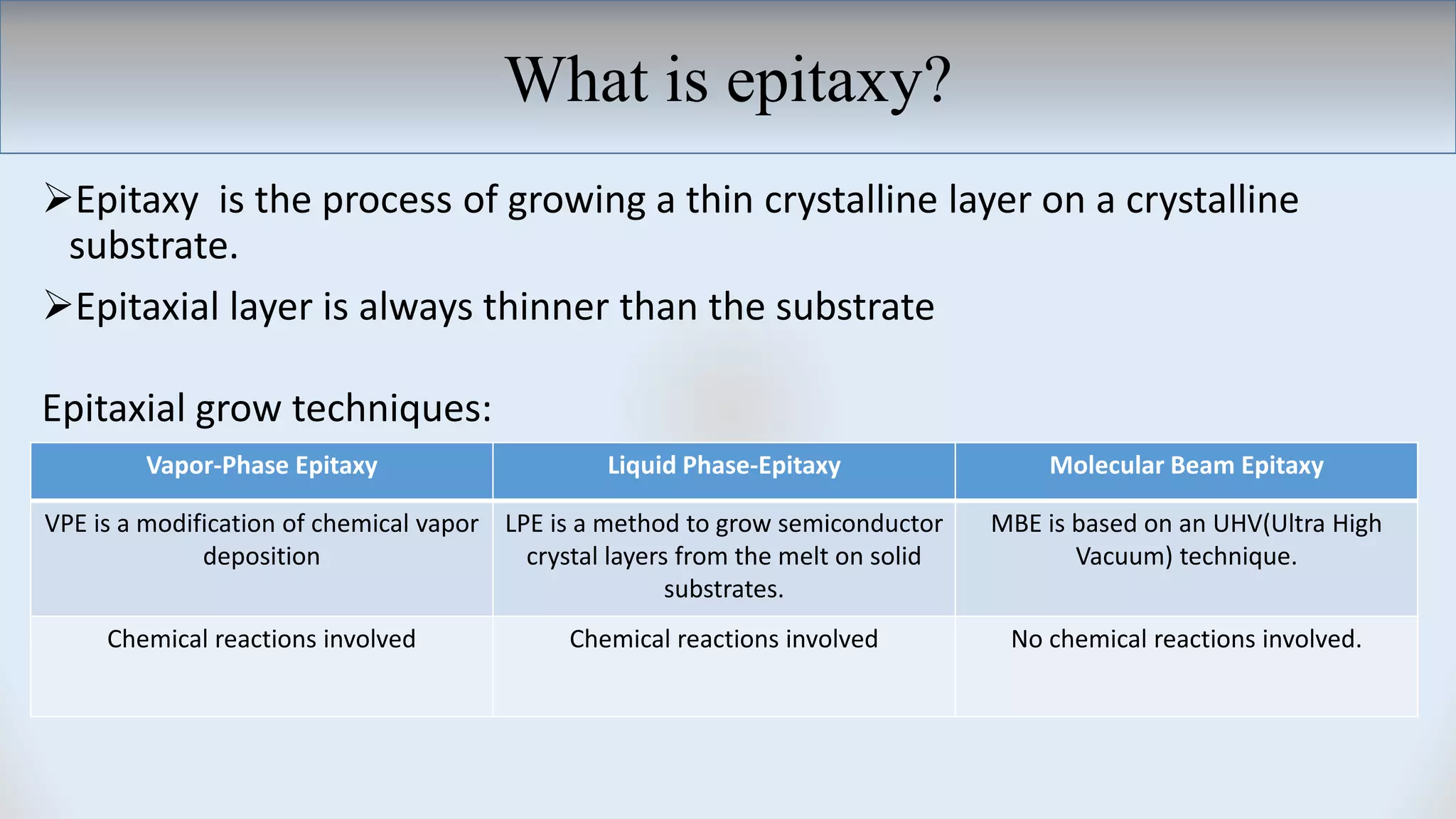
Epitaxy is the process of growing a thin crystalline layer on a crystalline
substrate.
Epitaxial layer is always thinner than the substrate
Epitaxial grow techniques:
What is epitaxy?
Vapor-Phase Epitaxy Liquid Phase-Epitaxy Molecular Beam Epitaxy
VPE is a modification of chemical vapor
deposition
LPE is a method to grow semiconductor
crystal layers from the melt on solid
substrates.
MBE is based on an UHV(Ultra High
Vacuum) technique.
Chemical reactions involved Chemical reactions involved No chemical reactions involved.
Homoepitaxy
The deposition substrate is the same material as we are depositing from the beam.
(e.g Si on Si)
Heteroepitaxy
Substrate and material are of different composition in order to fabricate integrated
crystalline layers of different materials. (e.g GaAs on Si)
Epitaxy types
 There are three main growth modes that can occur depending upon the
substrate temperature, the deposition rate and available surface energy
Growth modes
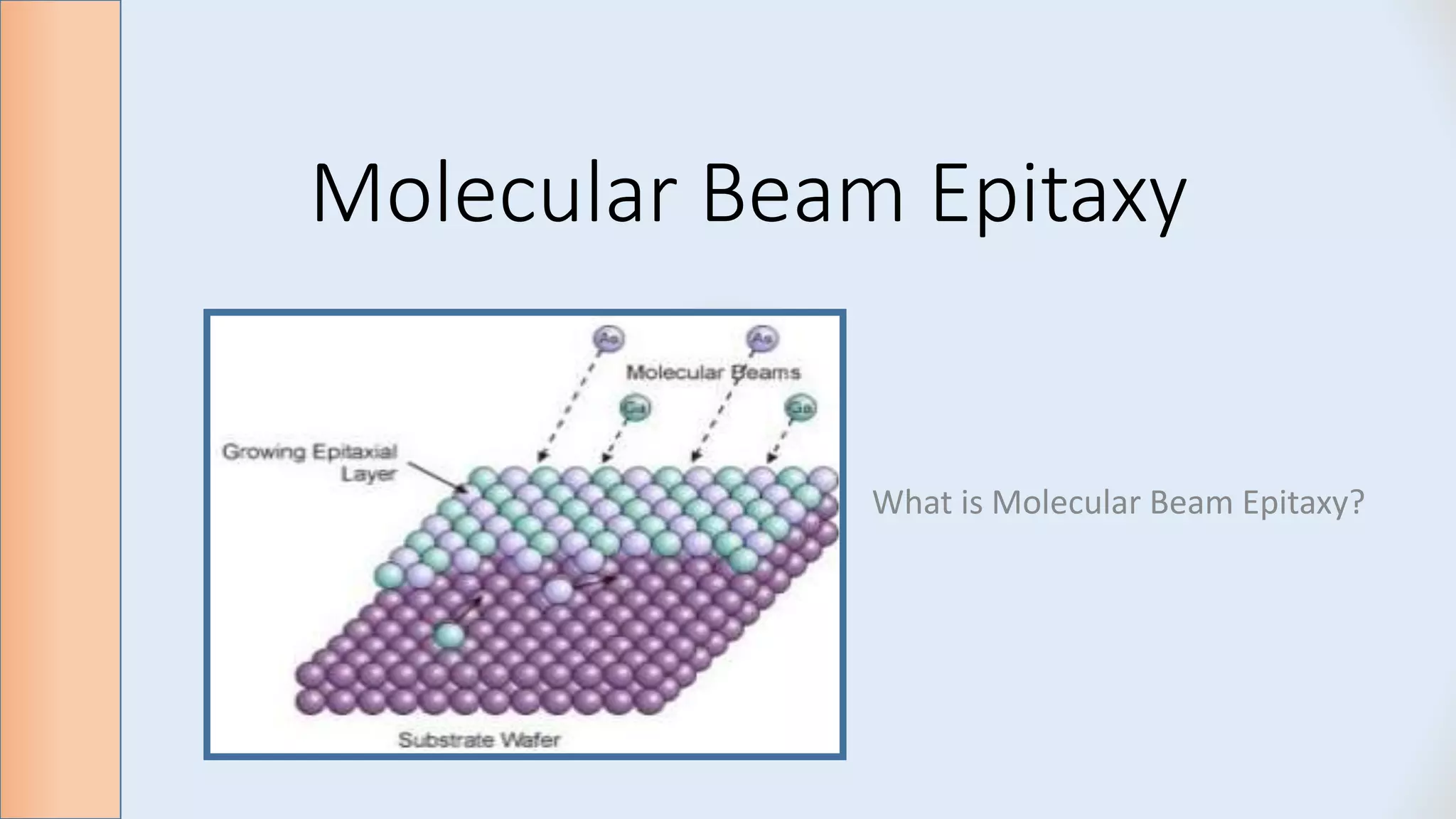
Molecular Beam Epitaxy
What is Molecular Beam Epitaxy?
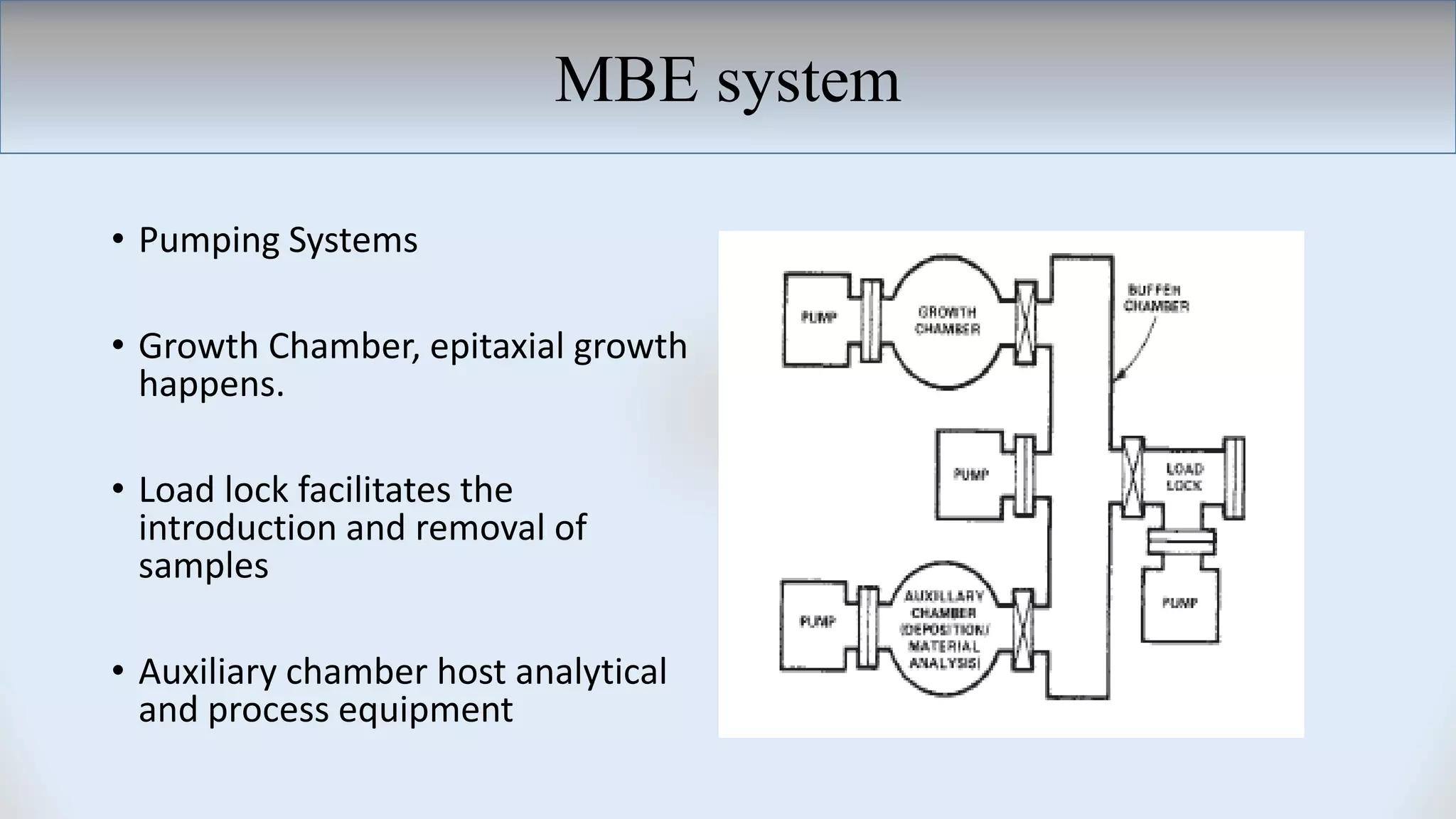
• Pumping Systems
• Growth Chamber, epitaxial growth
happens.
• Load lock facilitates the
introduction and removal of
samples
• Auxiliary chamber host analytical
and process equipment
MBE system
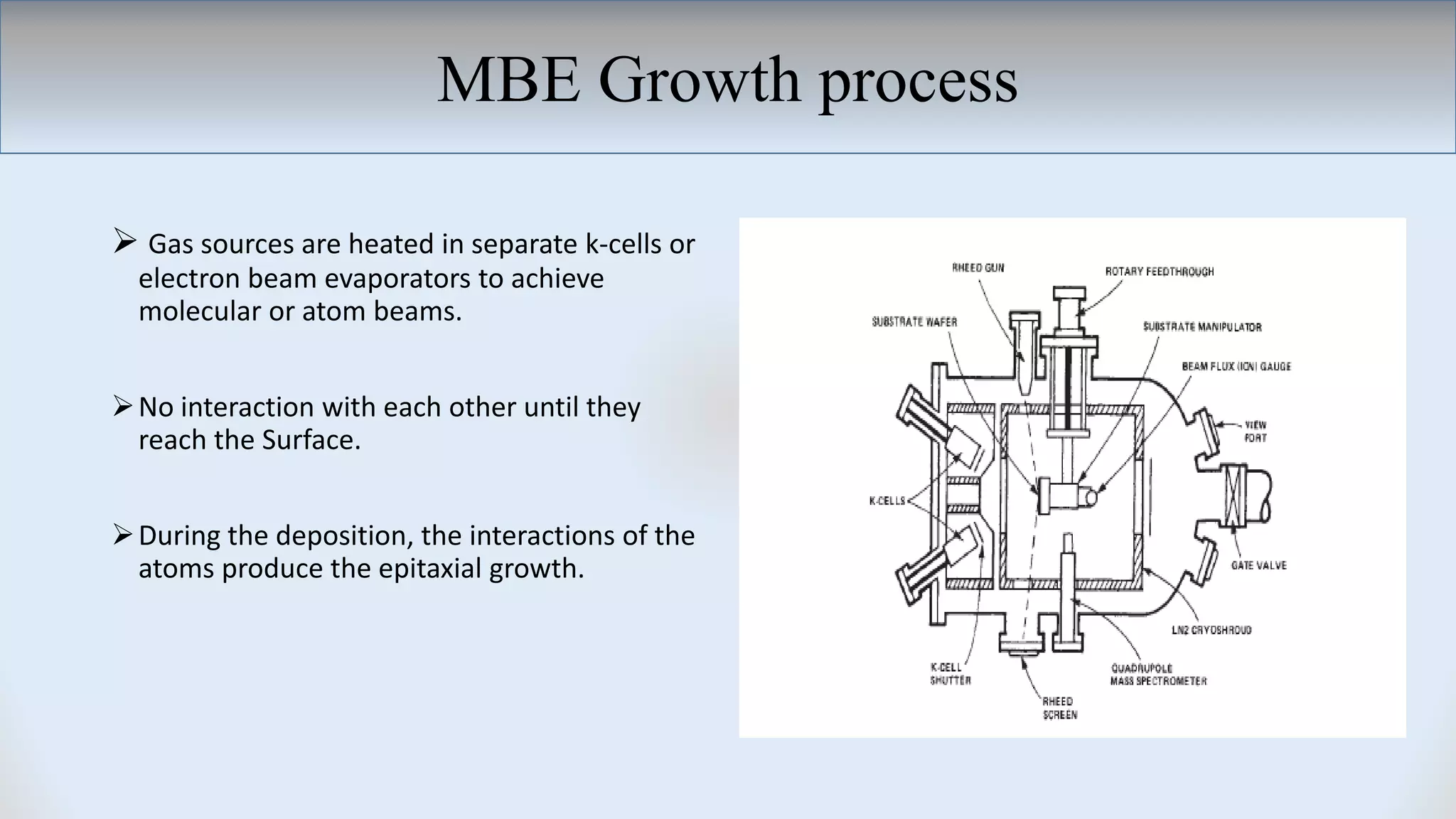
 Gas sources are heated in separate k-cells or
electron beam evaporators to achieve
molecular or atom beams.
No interaction with each other until they
reach the Surface.
During the deposition, the interactions of the
atoms produce the epitaxial growth.
MBE Growth process
Controlling , via shutters and the
temperature of the source, will
control the rate of impinging
materials.
The temperature of the substrate will
control the rate of diffusion and
desorption.
Background gases help to avoid
monolayr contamination.
MBE Growth process
Deposition rate (𝜇𝑚/ℎ𝑟): 1-5 s
Growth temperature (℃): 550
Thickness control (Å): 5
Interface width (Å): 5
Shuttering control: 0.1 s
MBE features
Reflection High Energy Electron Diffraction (RHEED)
 Observe removal of contaminants from the substrate surface
Calibrate growth rates
Estimate the substrate temperature
Determine the stoichiometry
Analyze surface morphology – RHEED pattern
Study growth kinetics – RHEED intensity oscillations
In Situ Monitoring
Materials
What kind of materials are used?
Materials used on MBE
Different materials are used depending the type of MBE, but we will focus on
Solid Source MBE type.
Molecular Beams Substrate target
Group III – V molecular beams III-V Semiconductors
SS- MBE
Group II – VI molecular beams II-VI Semiconductors
Others IV-VI Semiconductors, Heusler alloys,
silicides, metals ...
 Typically, the substrate target is a semiconductor material with useful electronic properties.
 The molecular beam quite often is composed of evaporated elemental substances such as
gallium and arsenic
Materials used on MBE
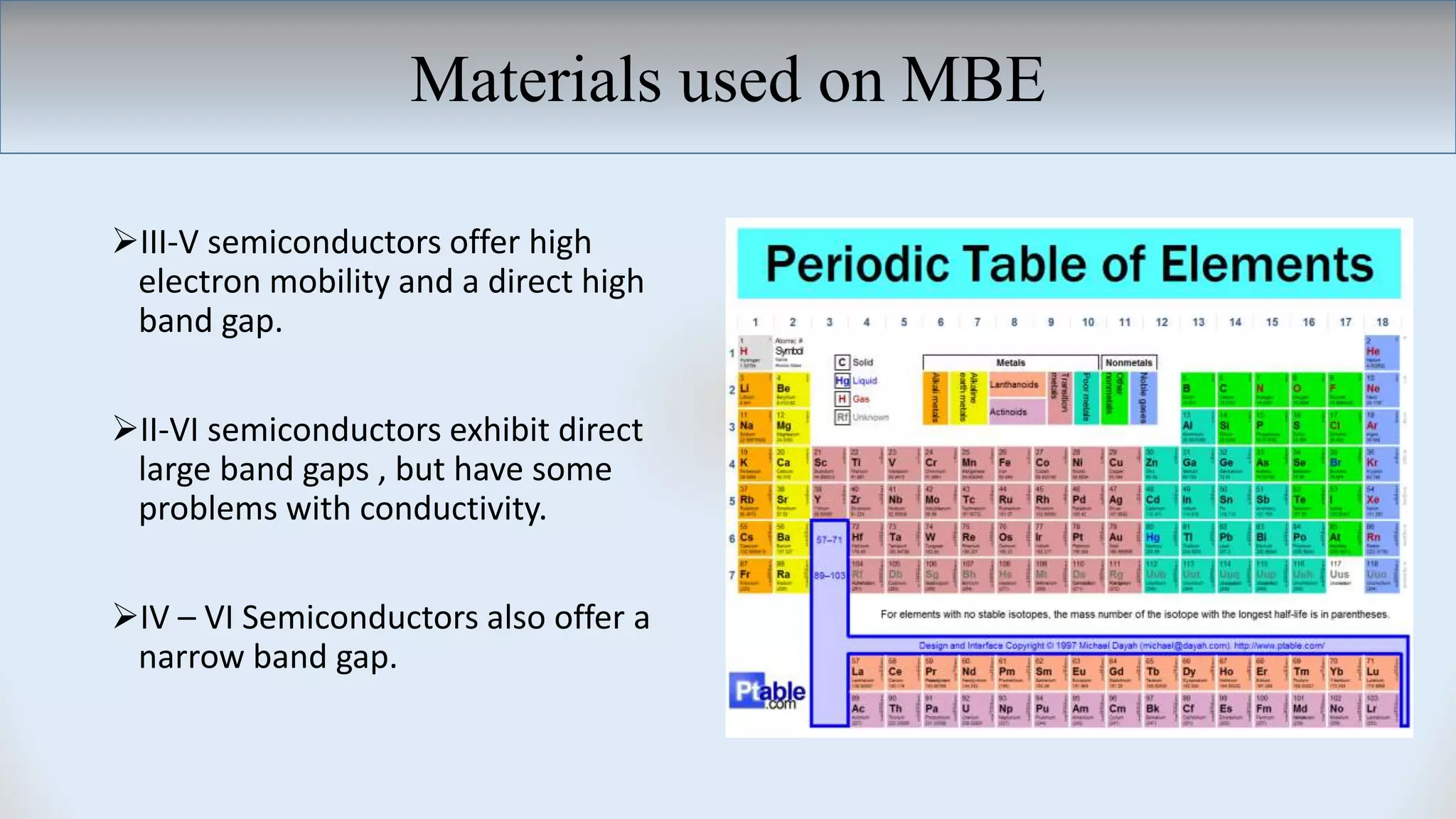
III-V semiconductors offer high
electron mobility and a direct high
band gap.
II-VI semiconductors exhibit direct
large band gaps , but have some
problems with conductivity.
IV – VI Semiconductors also offer a
narrow band gap.
Benefits and Problems
Is it worth to use ?
 Clean surfaces.
 Monitoring in situ.
 Independent vaporization of each
material.
 Multiple sources are used to grow
alloy films and heterostructures.
Deposition is controlled at
submonolayer level.
Extremely flexible technique since
growth parameters are varied
independently.
Benefits/Problems of MBE
Very low deposition rates: 1um –
100nm per hour are used.
 High equipment cost and long set
up time.
Extreme Flexibility (uncontrolled
flexibility = chaos!).
Many Boring Evenings!
Mostly Broken Equipment!
Mega-Buck Evaporation!
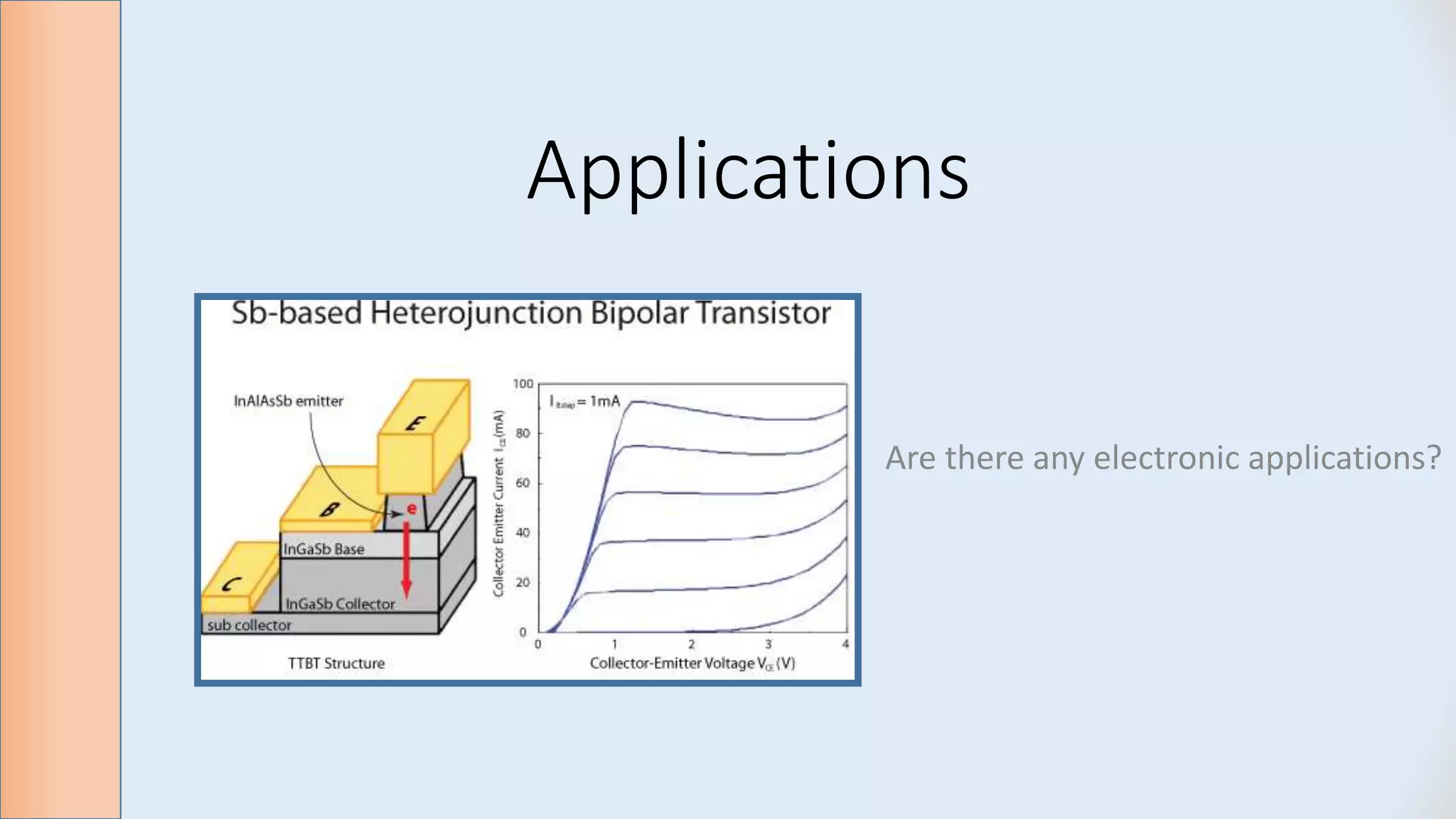
Applications
Are there any electronic applications?
Applications
The driving force today is the fabrication of advanced electronic and
optoelectronic devices.
Transistors (HEMT,HBT):
Microwave devices (IMPATT)
Optoelectronic devices (MQW) laser
Conclusions
Key points of the topic
Very well controlled and clean result.
High equipment cost and long setup time
 In situ monitoring
 High Speed electronic and optoelectronic applications
III-V semiconductors as GaAs are the most common used in Electronic
and OptoElectronics devices.
Conclusions
Any Questions?
Ah, I get it now!

Molecular beam epitaxy

  • 1.
    Molecular Beam Epitaxy EnriqueFlores Fontau IEE3030-Microelectronics Tallinn University of Technology
  • 2.
     Introduction  Whatis Epitaxy?  Epitaxy types  Growth modes  Molecular Beam Epitaxy  Working principle  MBE Growth process  MBE features  In situ monitoring  Materials  SS-MBE  Benefits and Problems  Applications  Conclusions Contents
  • 3.
  • 4.
    Epitaxy is theprocess of growing a thin crystalline layer on a crystalline substrate. Epitaxial layer is always thinner than the substrate Epitaxial grow techniques: What is epitaxy? Vapor-Phase Epitaxy Liquid Phase-Epitaxy Molecular Beam Epitaxy VPE is a modification of chemical vapor deposition LPE is a method to grow semiconductor crystal layers from the melt on solid substrates. MBE is based on an UHV(Ultra High Vacuum) technique. Chemical reactions involved Chemical reactions involved No chemical reactions involved.
  • 5.
    Homoepitaxy The deposition substrateis the same material as we are depositing from the beam. (e.g Si on Si) Heteroepitaxy Substrate and material are of different composition in order to fabricate integrated crystalline layers of different materials. (e.g GaAs on Si) Epitaxy types
  • 6.
     There arethree main growth modes that can occur depending upon the substrate temperature, the deposition rate and available surface energy Growth modes
  • 7.
    Molecular Beam Epitaxy Whatis Molecular Beam Epitaxy?
  • 8.
    • Pumping Systems •Growth Chamber, epitaxial growth happens. • Load lock facilitates the introduction and removal of samples • Auxiliary chamber host analytical and process equipment MBE system
  • 9.
     Gas sourcesare heated in separate k-cells or electron beam evaporators to achieve molecular or atom beams. No interaction with each other until they reach the Surface. During the deposition, the interactions of the atoms produce the epitaxial growth. MBE Growth process
  • 10.
    Controlling , viashutters and the temperature of the source, will control the rate of impinging materials. The temperature of the substrate will control the rate of diffusion and desorption. Background gases help to avoid monolayr contamination. MBE Growth process
  • 11.
    Deposition rate (𝜇𝑚/ℎ𝑟):1-5 s Growth temperature (℃): 550 Thickness control (Å): 5 Interface width (Å): 5 Shuttering control: 0.1 s MBE features
  • 12.
    Reflection High EnergyElectron Diffraction (RHEED)  Observe removal of contaminants from the substrate surface Calibrate growth rates Estimate the substrate temperature Determine the stoichiometry Analyze surface morphology – RHEED pattern Study growth kinetics – RHEED intensity oscillations In Situ Monitoring
  • 13.
    Materials What kind ofmaterials are used?
  • 14.
    Materials used onMBE Different materials are used depending the type of MBE, but we will focus on Solid Source MBE type. Molecular Beams Substrate target Group III – V molecular beams III-V Semiconductors SS- MBE Group II – VI molecular beams II-VI Semiconductors Others IV-VI Semiconductors, Heusler alloys, silicides, metals ...  Typically, the substrate target is a semiconductor material with useful electronic properties.  The molecular beam quite often is composed of evaporated elemental substances such as gallium and arsenic
  • 15.
    Materials used onMBE III-V semiconductors offer high electron mobility and a direct high band gap. II-VI semiconductors exhibit direct large band gaps , but have some problems with conductivity. IV – VI Semiconductors also offer a narrow band gap.
  • 16.
    Benefits and Problems Isit worth to use ?
  • 17.
     Clean surfaces. Monitoring in situ.  Independent vaporization of each material.  Multiple sources are used to grow alloy films and heterostructures. Deposition is controlled at submonolayer level. Extremely flexible technique since growth parameters are varied independently. Benefits/Problems of MBE Very low deposition rates: 1um – 100nm per hour are used.  High equipment cost and long set up time. Extreme Flexibility (uncontrolled flexibility = chaos!). Many Boring Evenings! Mostly Broken Equipment! Mega-Buck Evaporation!
  • 18.
    Applications Are there anyelectronic applications?
  • 19.
    Applications The driving forcetoday is the fabrication of advanced electronic and optoelectronic devices. Transistors (HEMT,HBT): Microwave devices (IMPATT) Optoelectronic devices (MQW) laser
  • 20.
  • 21.
    Very well controlledand clean result. High equipment cost and long setup time  In situ monitoring  High Speed electronic and optoelectronic applications III-V semiconductors as GaAs are the most common used in Electronic and OptoElectronics devices. Conclusions
  • 22.