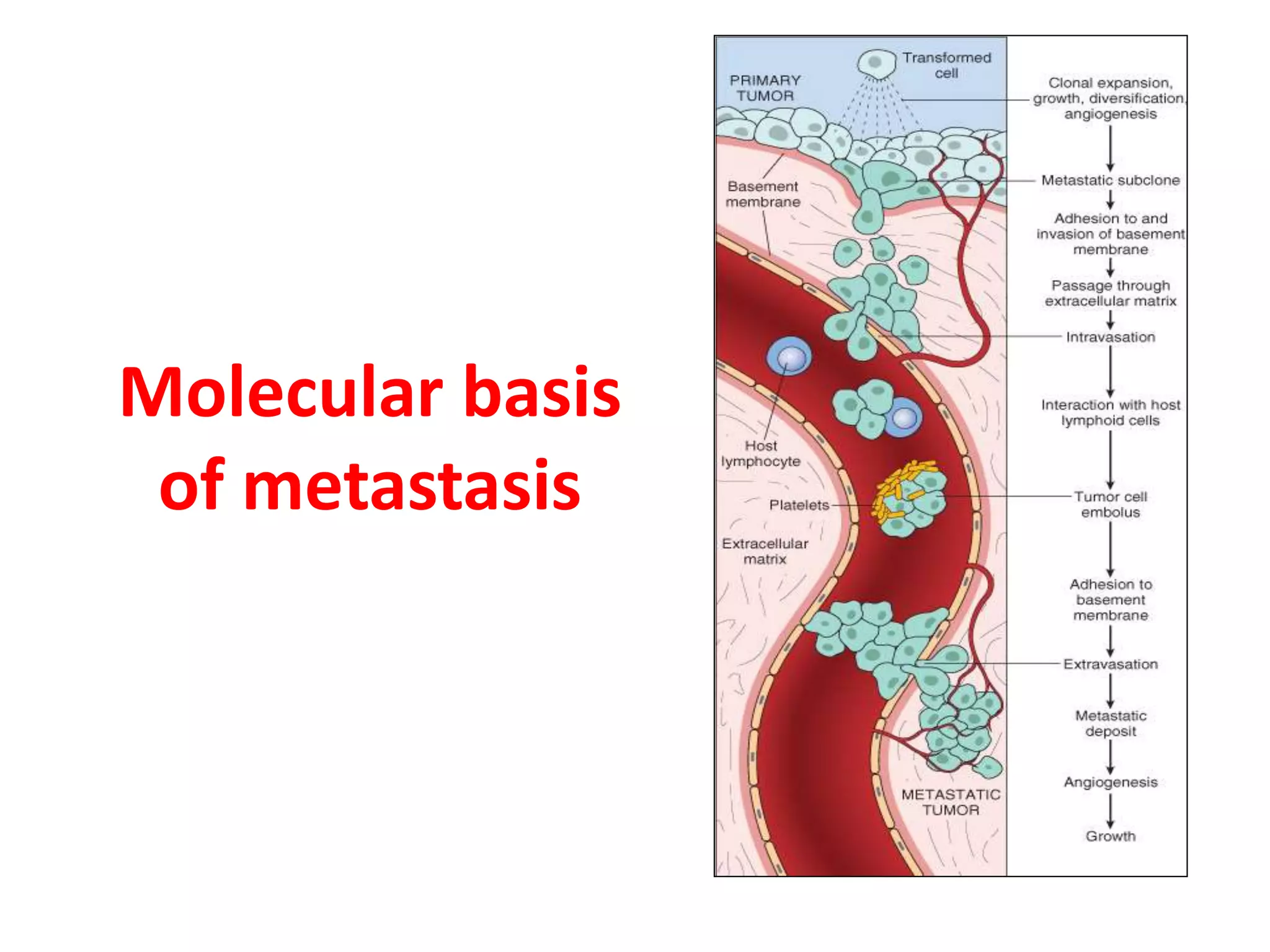
Molecular basis
of metastasis
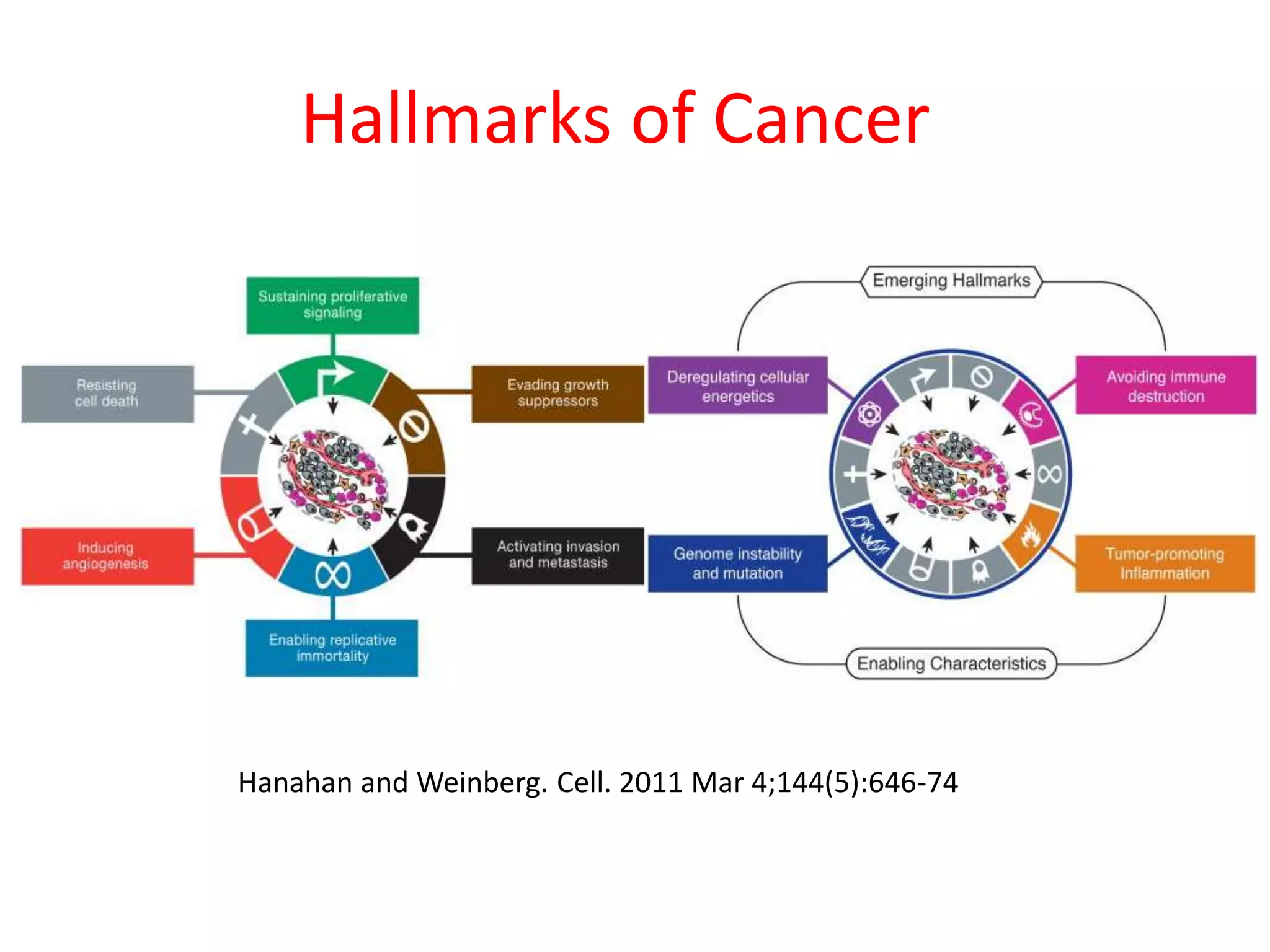
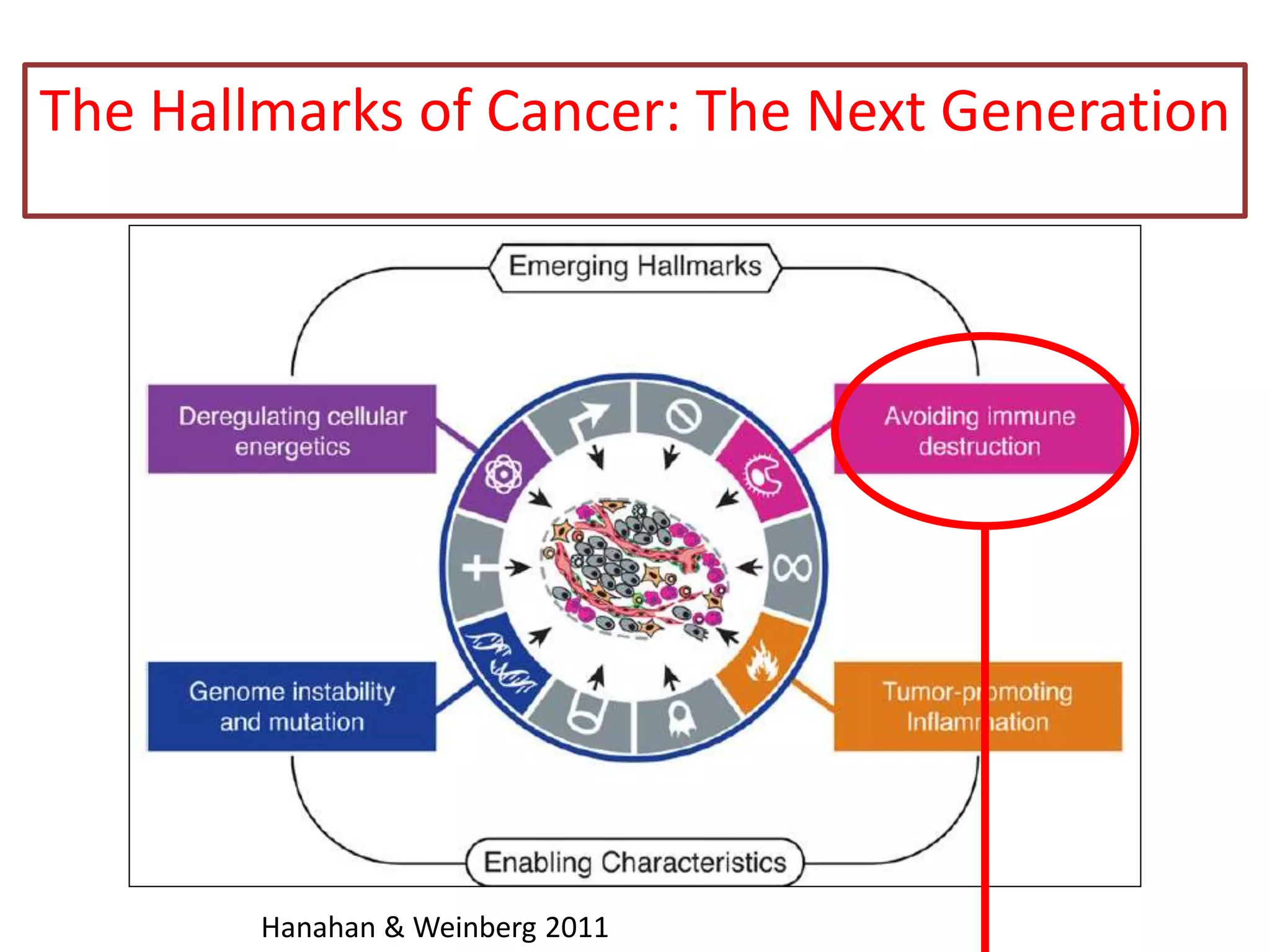
Hallmarks of Cancer
Hanahan and Weinberg. Cell. 2011 Mar 4;144(5):646-74
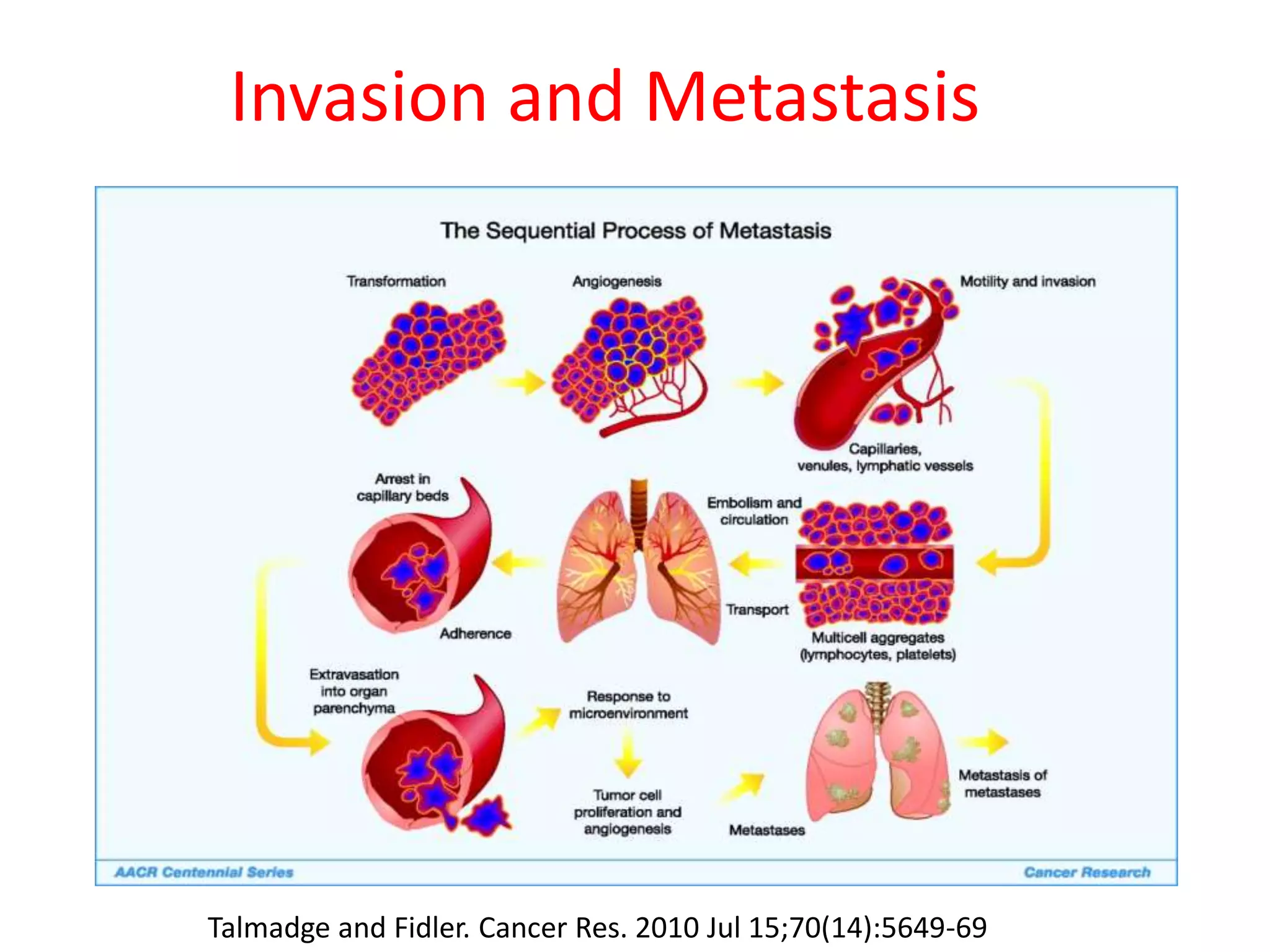
Invasion and Metastasis
Talmadge and Fidler. Cancer Res. 2010 Jul 15;70(14):5649-69
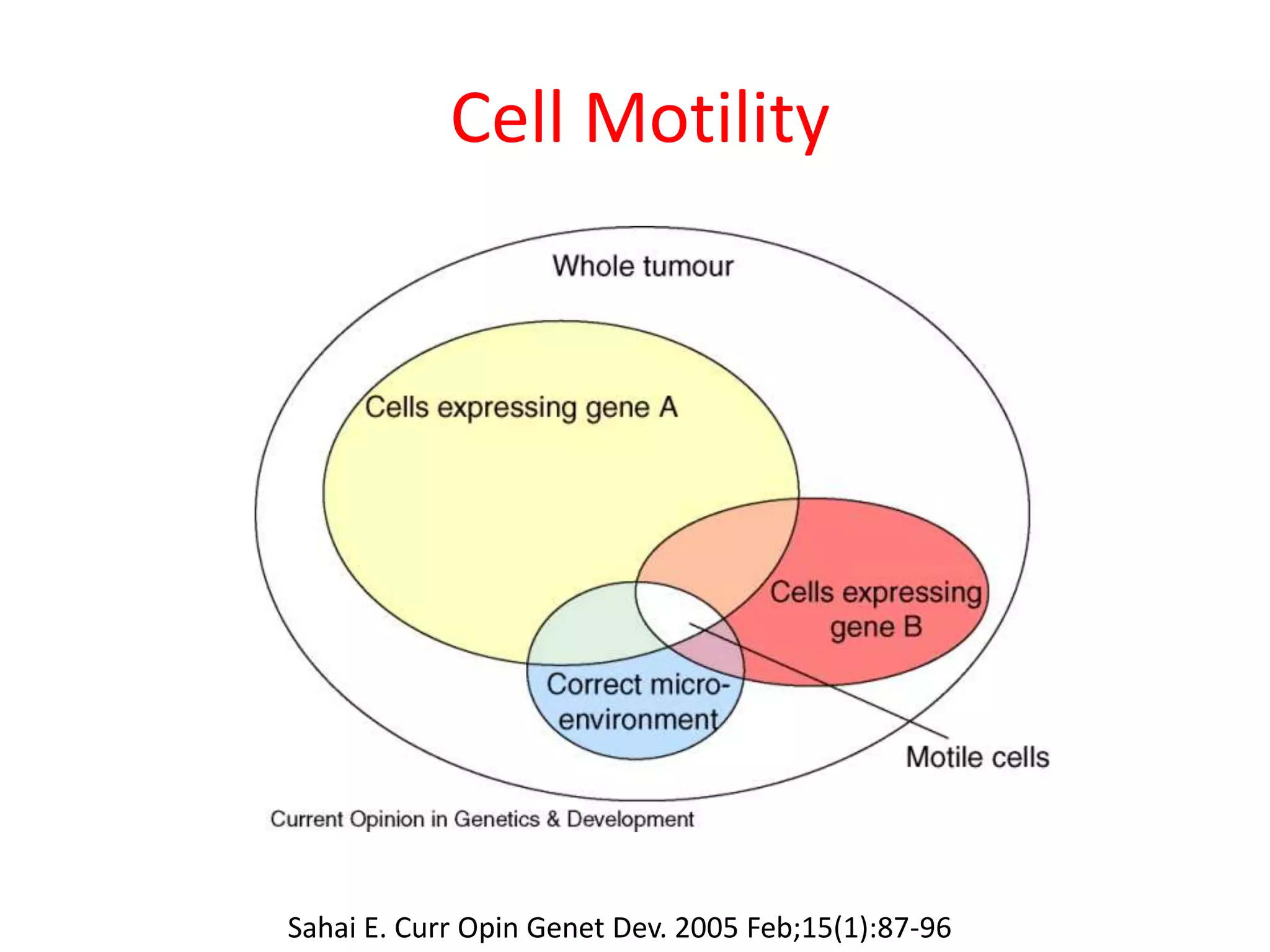
Cell Motility
Sahai E. Curr Opin Genet Dev. 2005 Feb;15(1):87-96
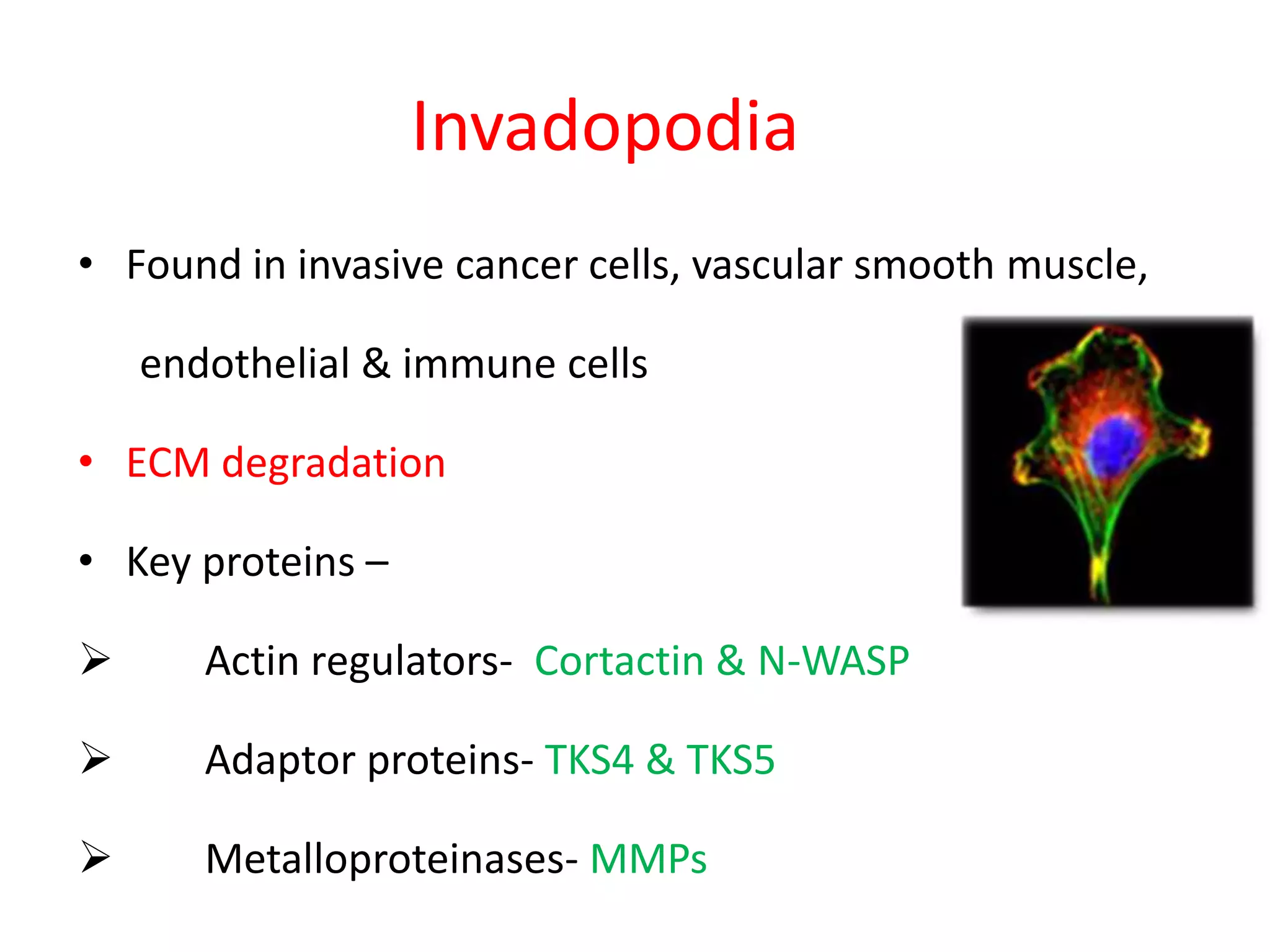
Invadopodia
• Found in invasive cancer cells, vascular smooth muscle,
endothelial & immune cells
• ECM degradation
• Key proteins –
 Actin regulators- Cortactin & N-WASP
 Adaptor proteins- TKS4 & TKS5
 Metalloproteinases- MMPs
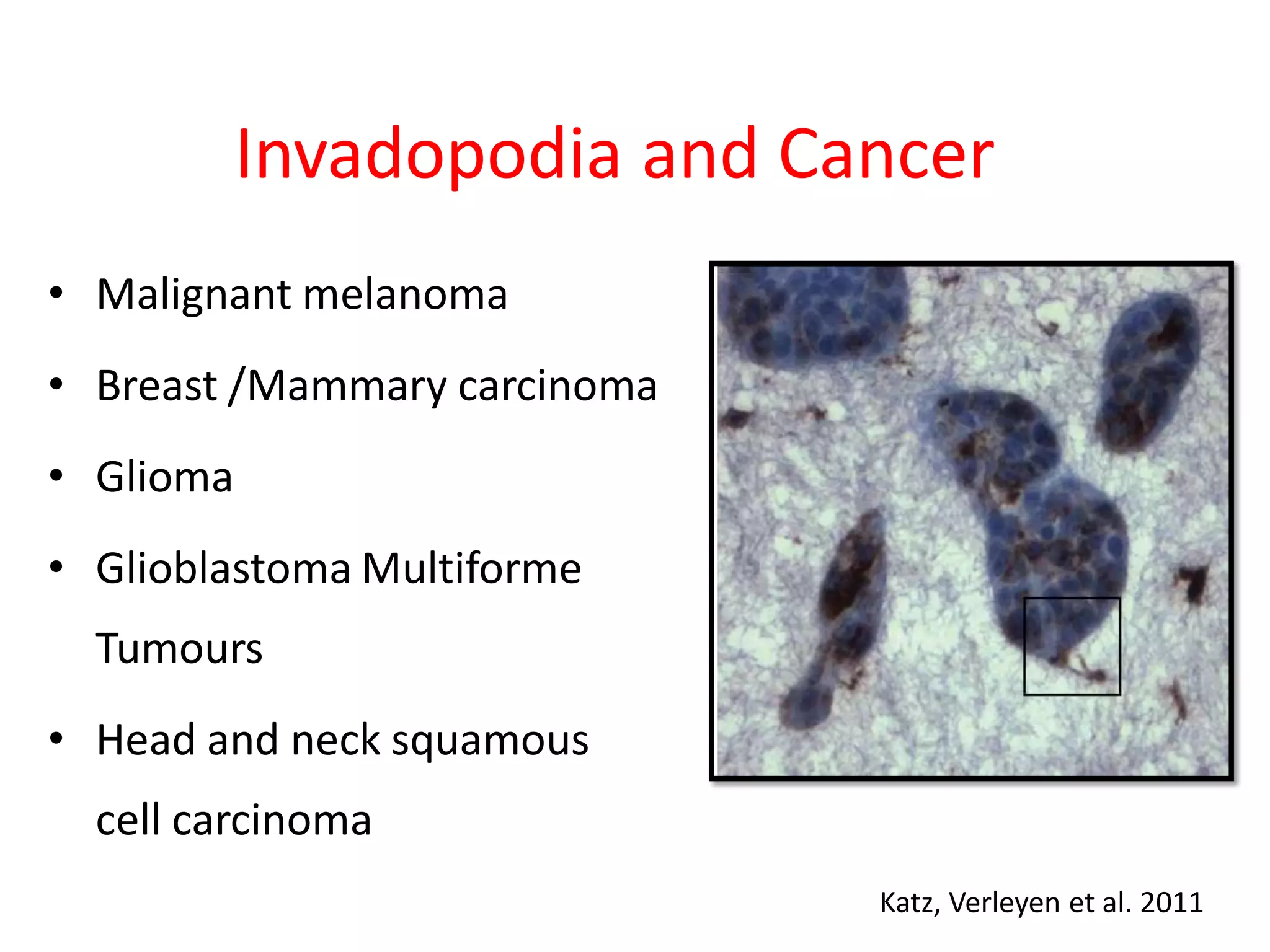
Invadopodia and Cancer
• Malignant melanoma
• Breast /Mammary carcinoma
• Glioma
• Glioblastoma Multiforme
Tumours
• Head and neck squamous
cell carcinoma
Katz, Verleyen et al. 2011
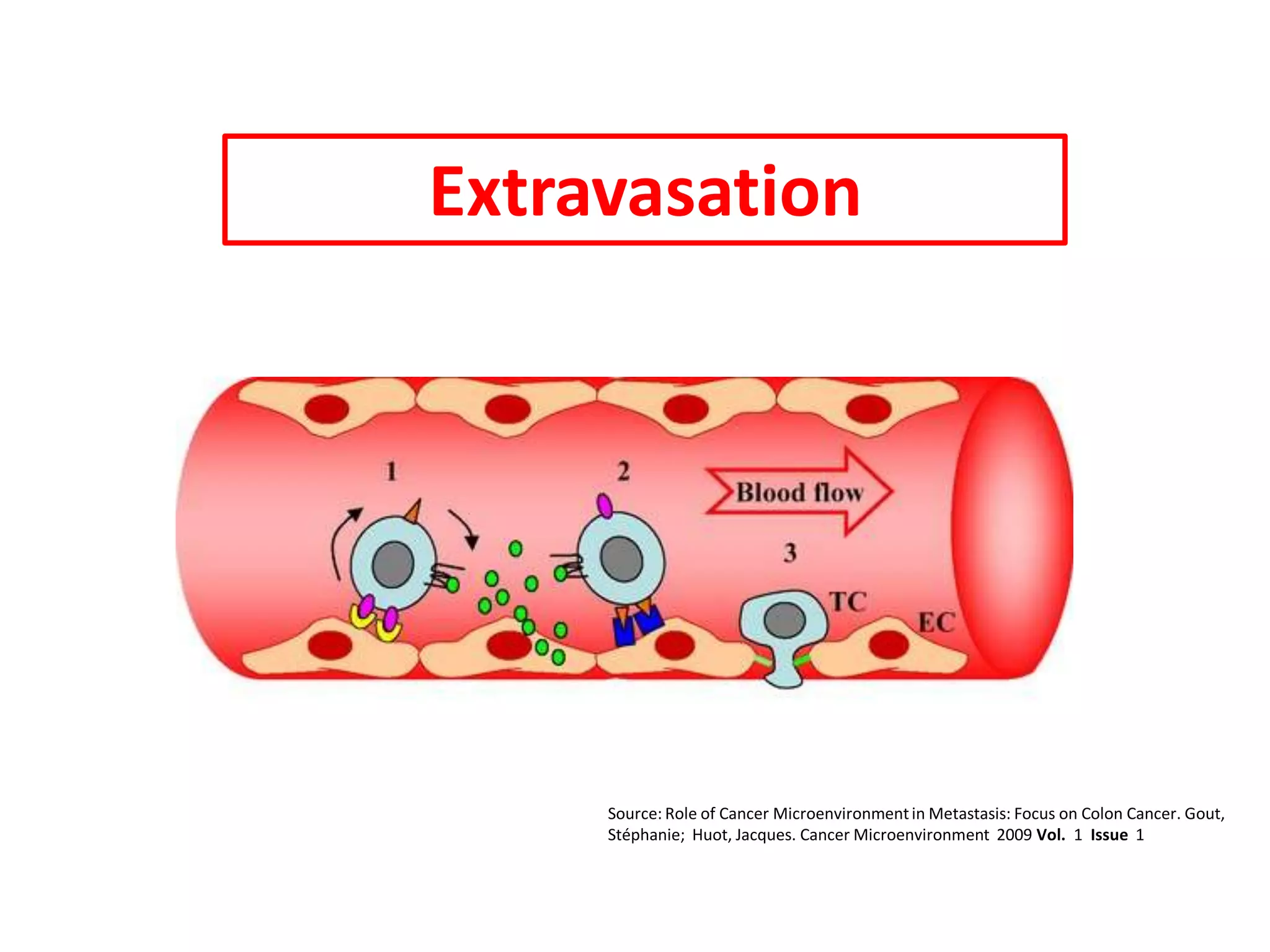
Extravasation
Source: Role of Cancer Microenvironmentin Metastasis: Focus on Colon Cancer. Gout,
Stéphanie; Huot, Jacques. Cancer Microenvironment 2009 Vol. 1 Issue 1
“Escape of Cancer Cells from
Circulation”
Q. What is extravasation of
cancer cells?
Koop et al 1996
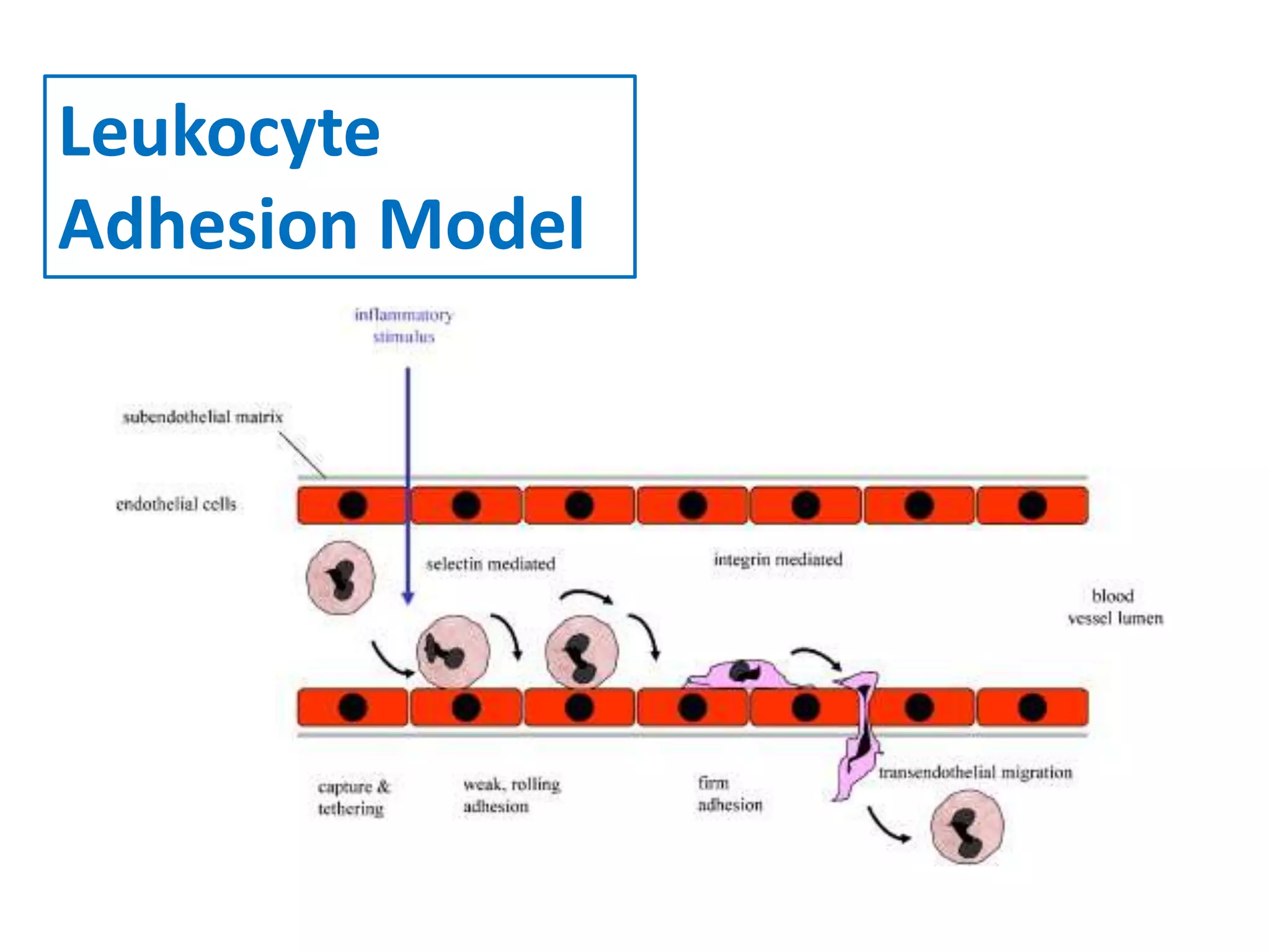
Leukocyte
Adhesion Model
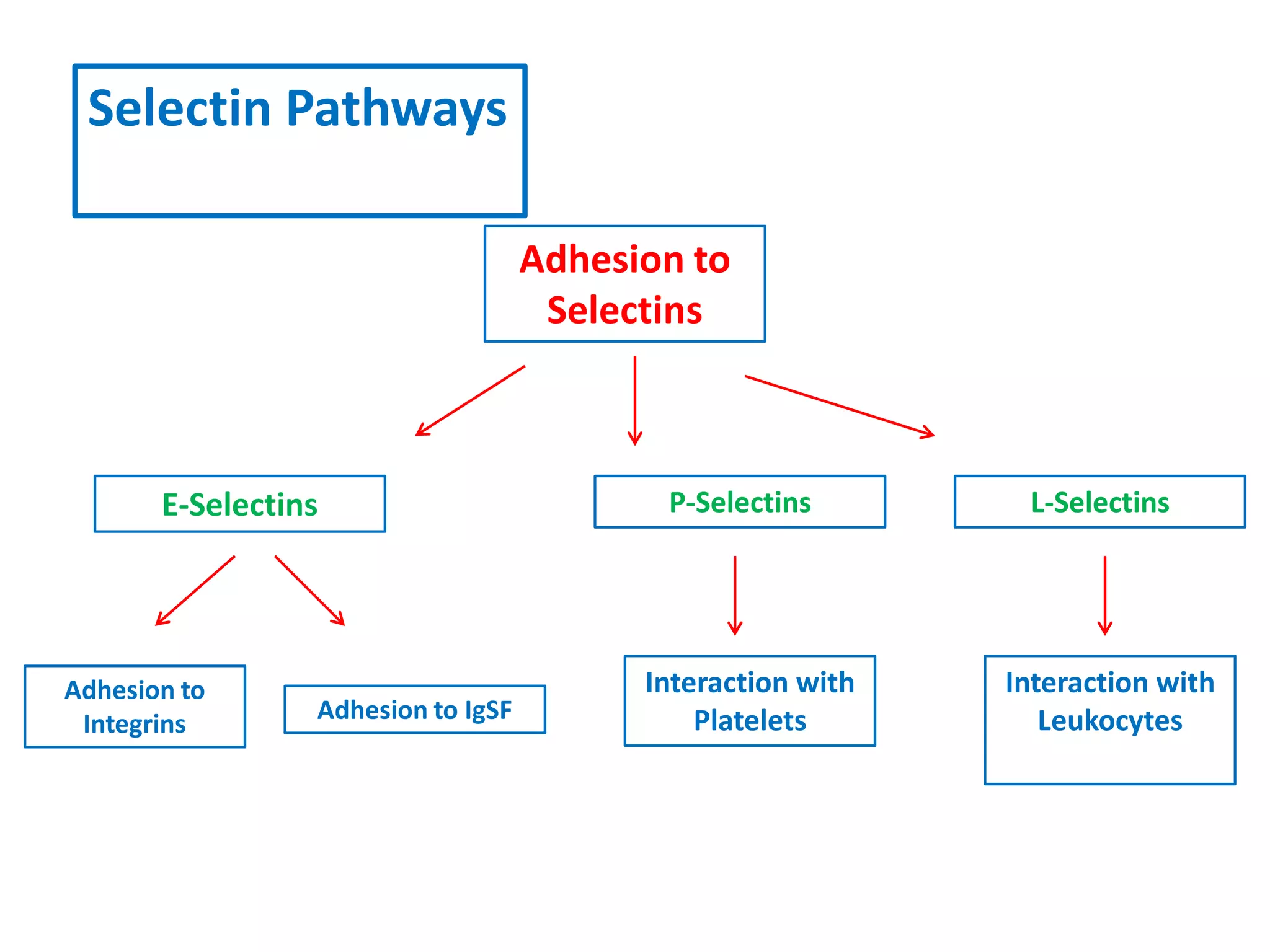
Adhesion to
Integrins
Adhesion to
Selectins
E-Selectins P-Selectins L-Selectins
Adhesion to IgSF
Interaction with
Platelets
Interaction with
Leukocytes
Selectin Pathways
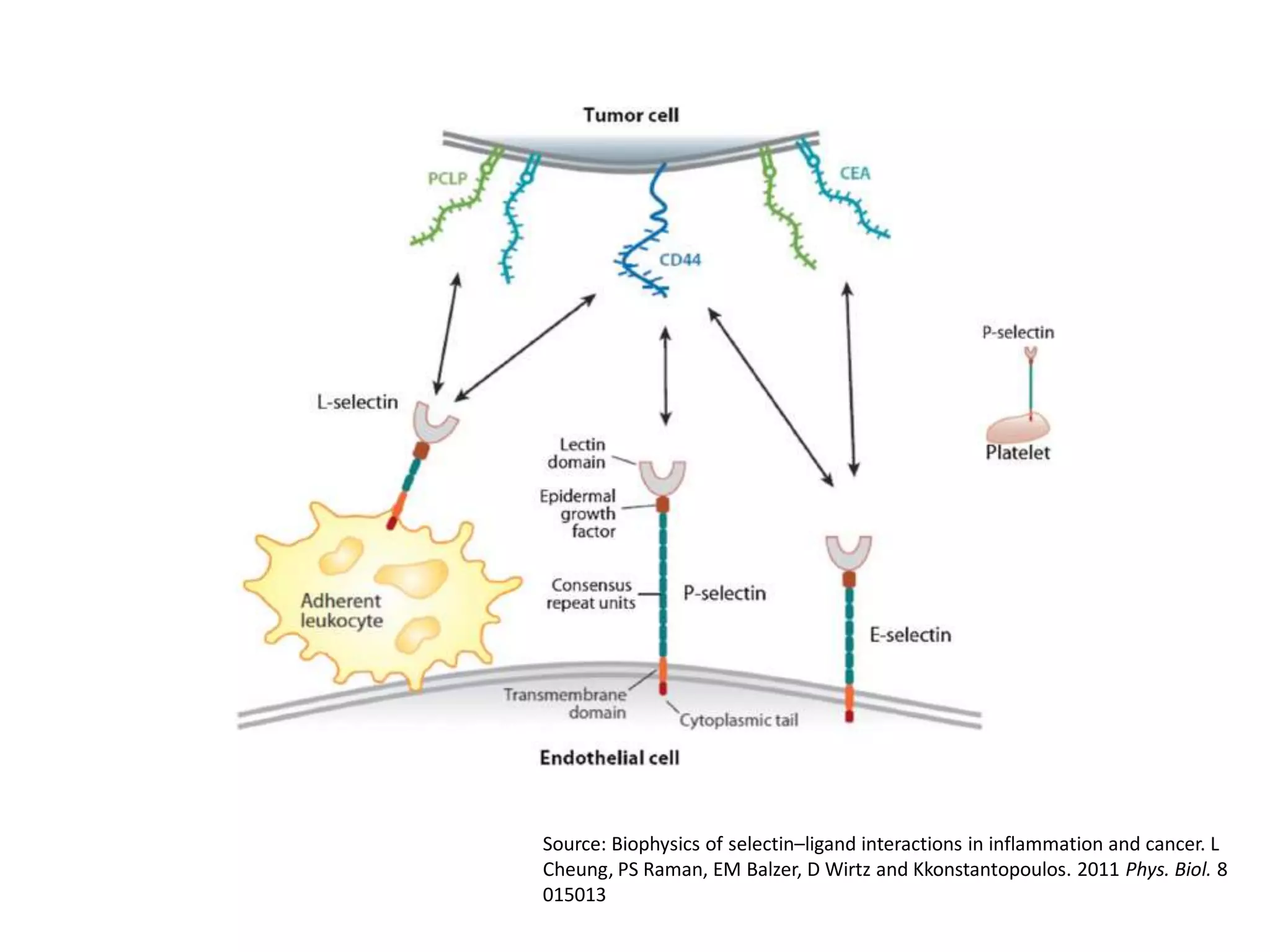
Source: Biophysics of selectin–ligand interactions in inflammation and cancer. L
Cheung, PS Raman, EM Balzer, D Wirtz and Kkonstantopoulos. 2011 Phys. Biol. 8
015013
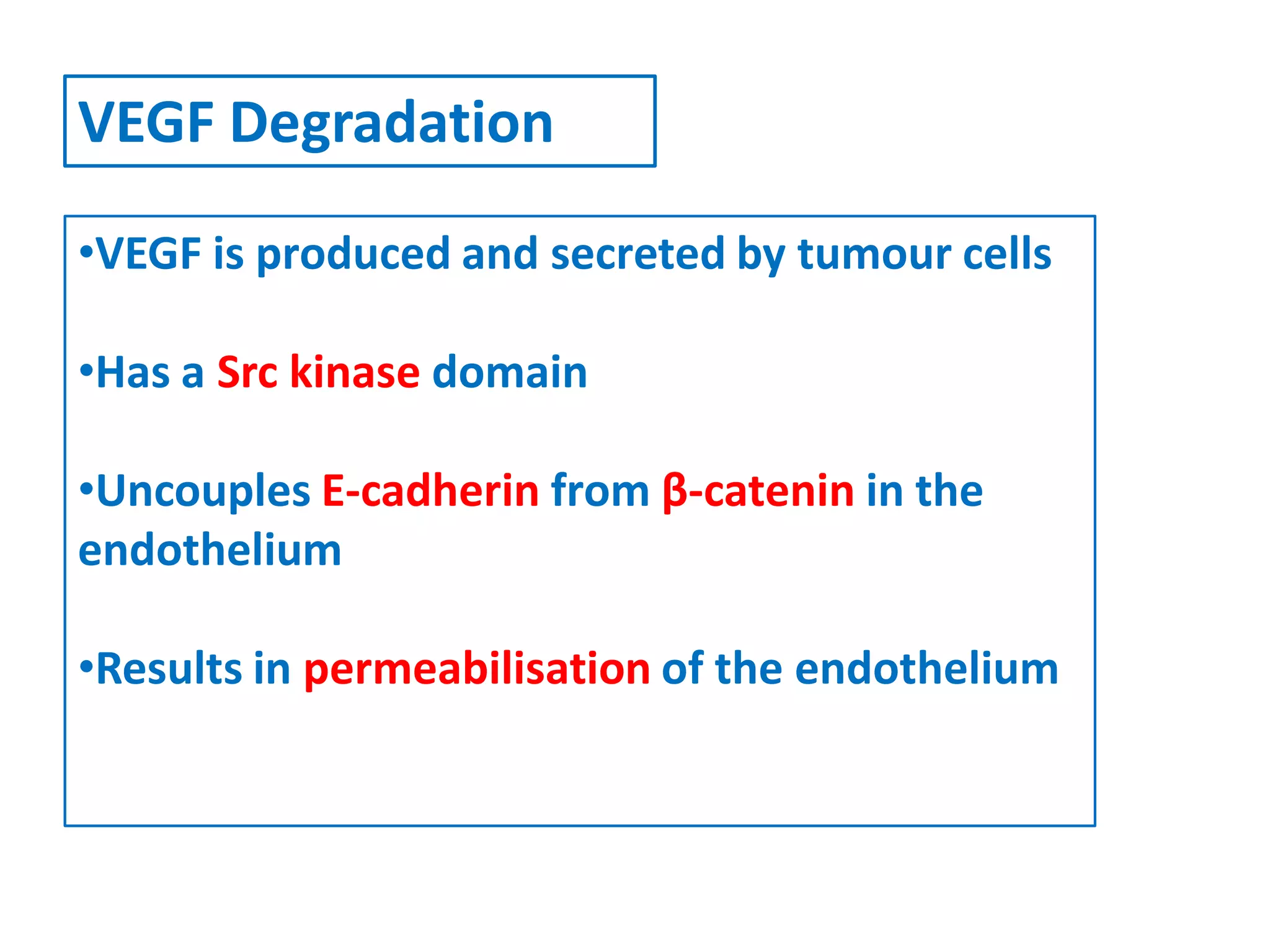
VEGF Degradation
•VEGF is produced and secreted by tumour cells
•Has a Src kinase domain
•Uncouples E-cadherin from β-catenin in the
endothelium
•Results in permeabilisation of the endothelium
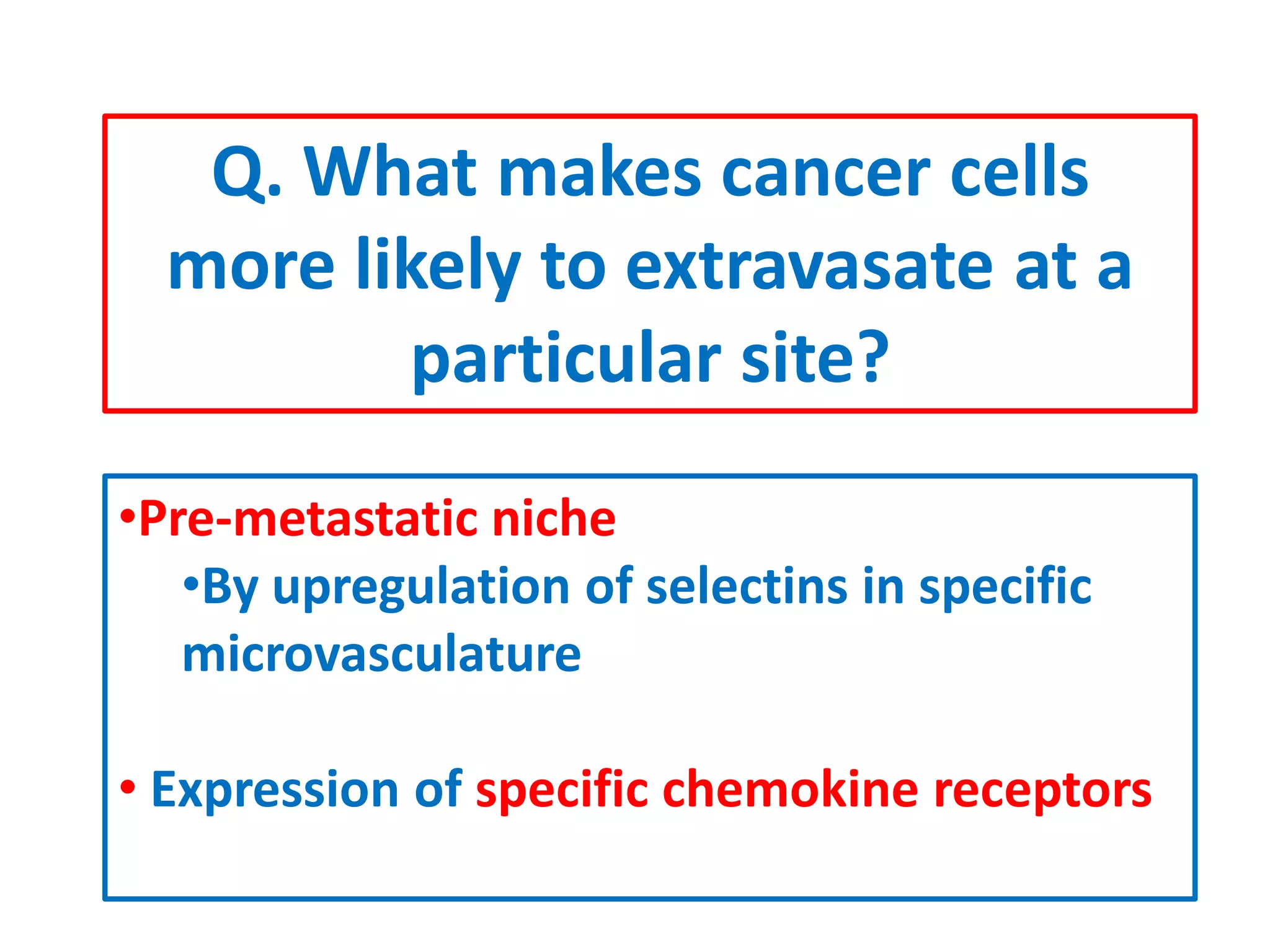
Q. What makes cancer cells
more likely to extravasate at a
particular site?
•Pre-metastatic niche
•By upregulation of selectins in specific
microvasculature
• Expression of specific chemokine receptors
Cancer Cell Survival
Evasion of the host defence
The Hallmarks of Cancer: The Next Generation
Hanahan & Weinberg 2011
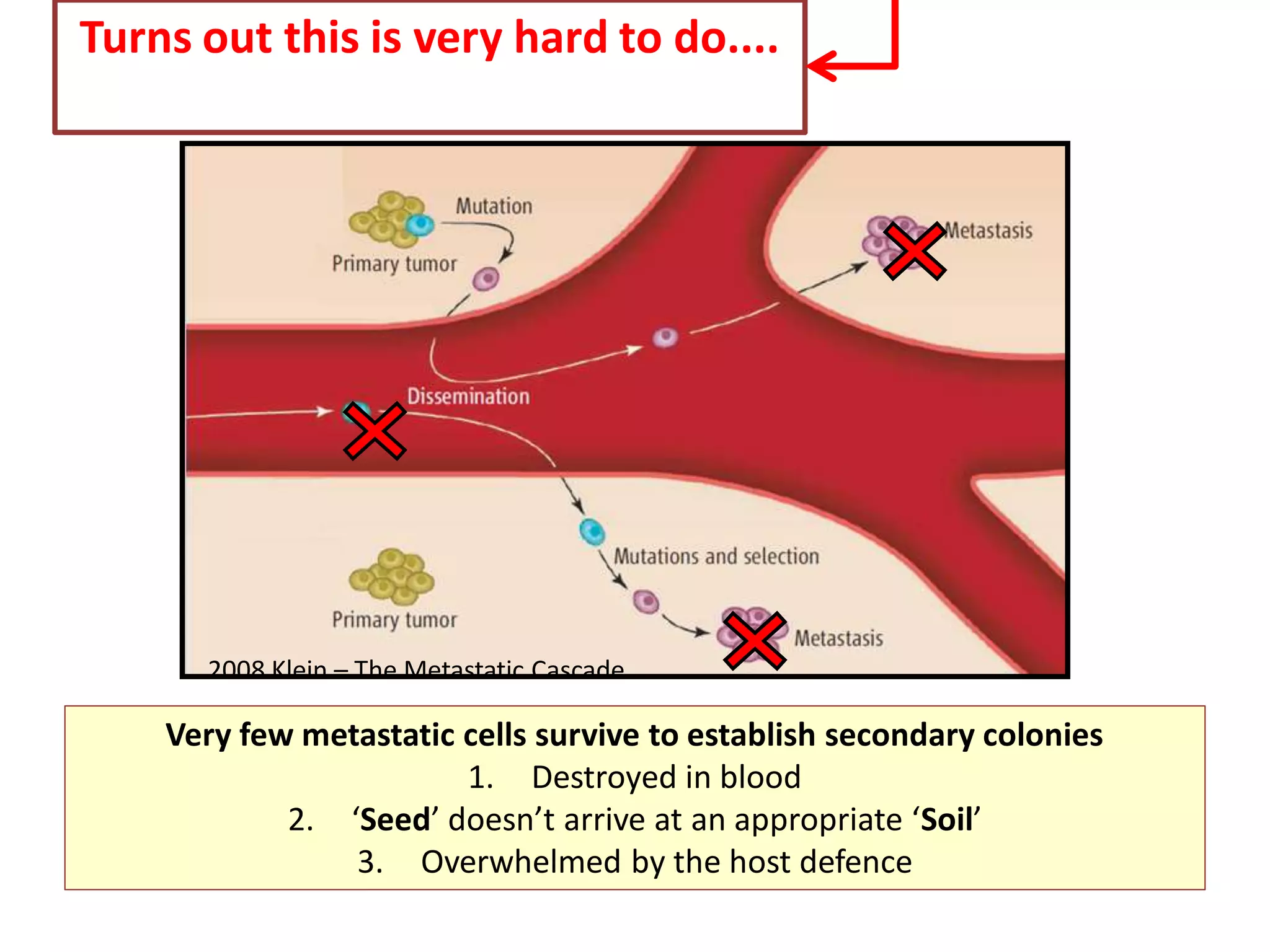
Turns out this is very hard to do....
Very few metastatic cells survive to establish secondary colonies
1. Destroyed in blood
2. ‘Seed’ doesn’t arrive at an appropriate ‘Soil’
3. Overwhelmed by the host defence
2008 Klein – The Metastatic Cascade
Question:
What methods do cancer cells
employ to evade the host defence?
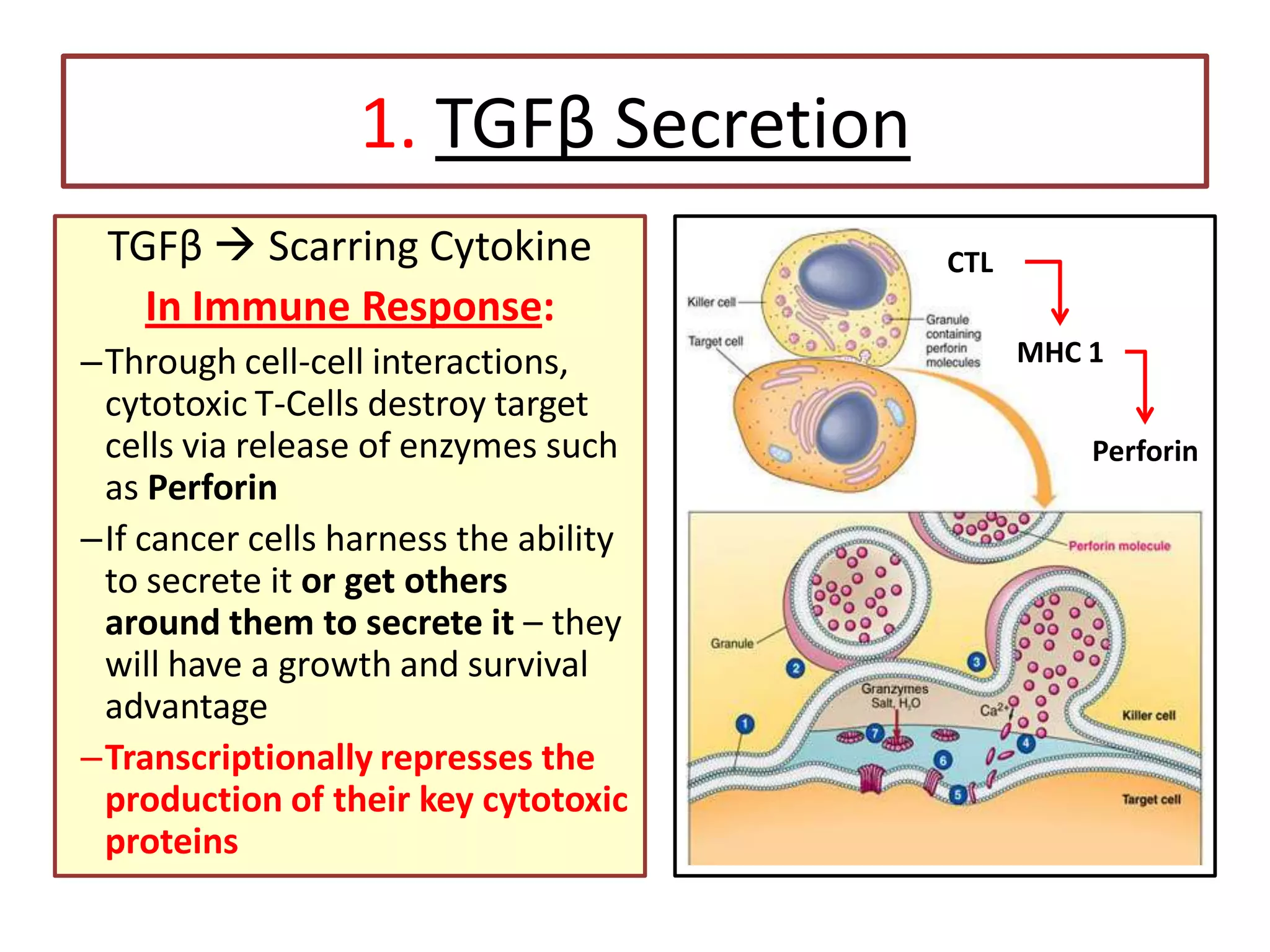
1. TGFβ Secretion
TGFβ  Scarring Cytokine
In Immune Response:
–Through cell-cell interactions,
cytotoxic T-Cells destroy target
cells via release of enzymes such
as Perforin
–If cancer cells harness the ability
to secrete it or get others
around them to secrete it – they
will have a growth and survival
advantage
–Transcriptionally represses the
production of their key cytotoxic
proteins
CTL
MHC 1
Perforin
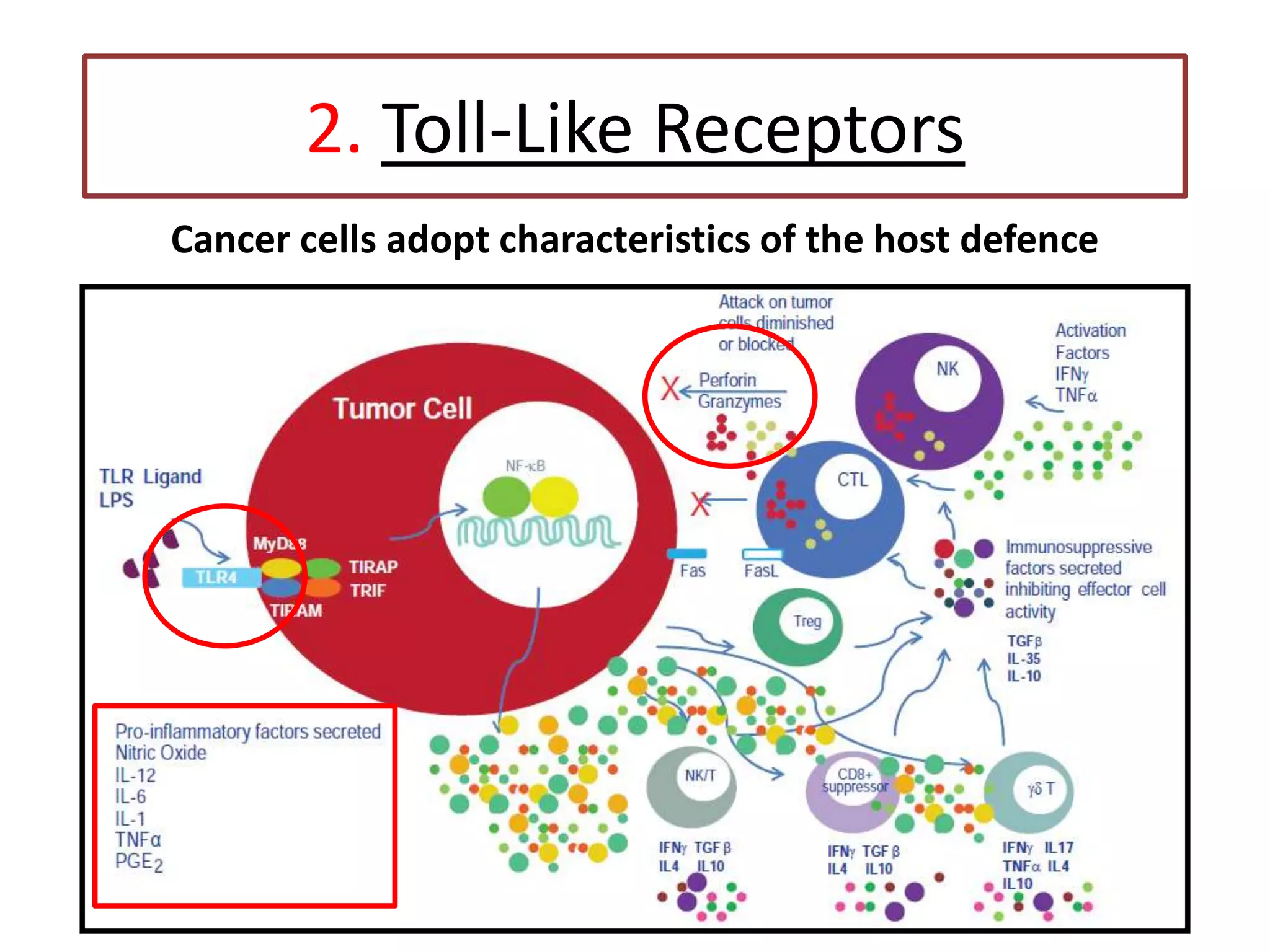
2. Toll-Like Receptors
Cancer cells adopt characteristics of the host defence
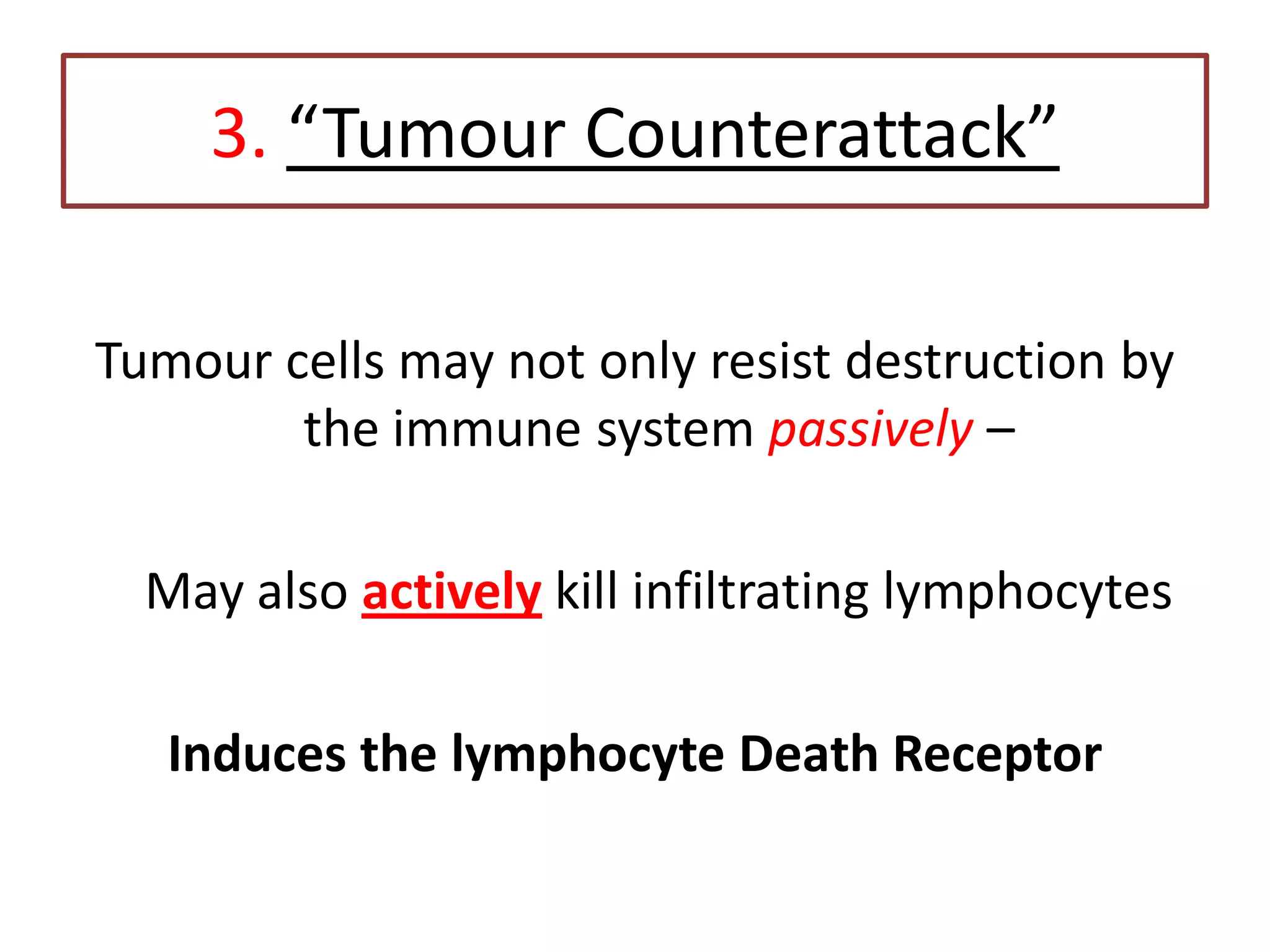
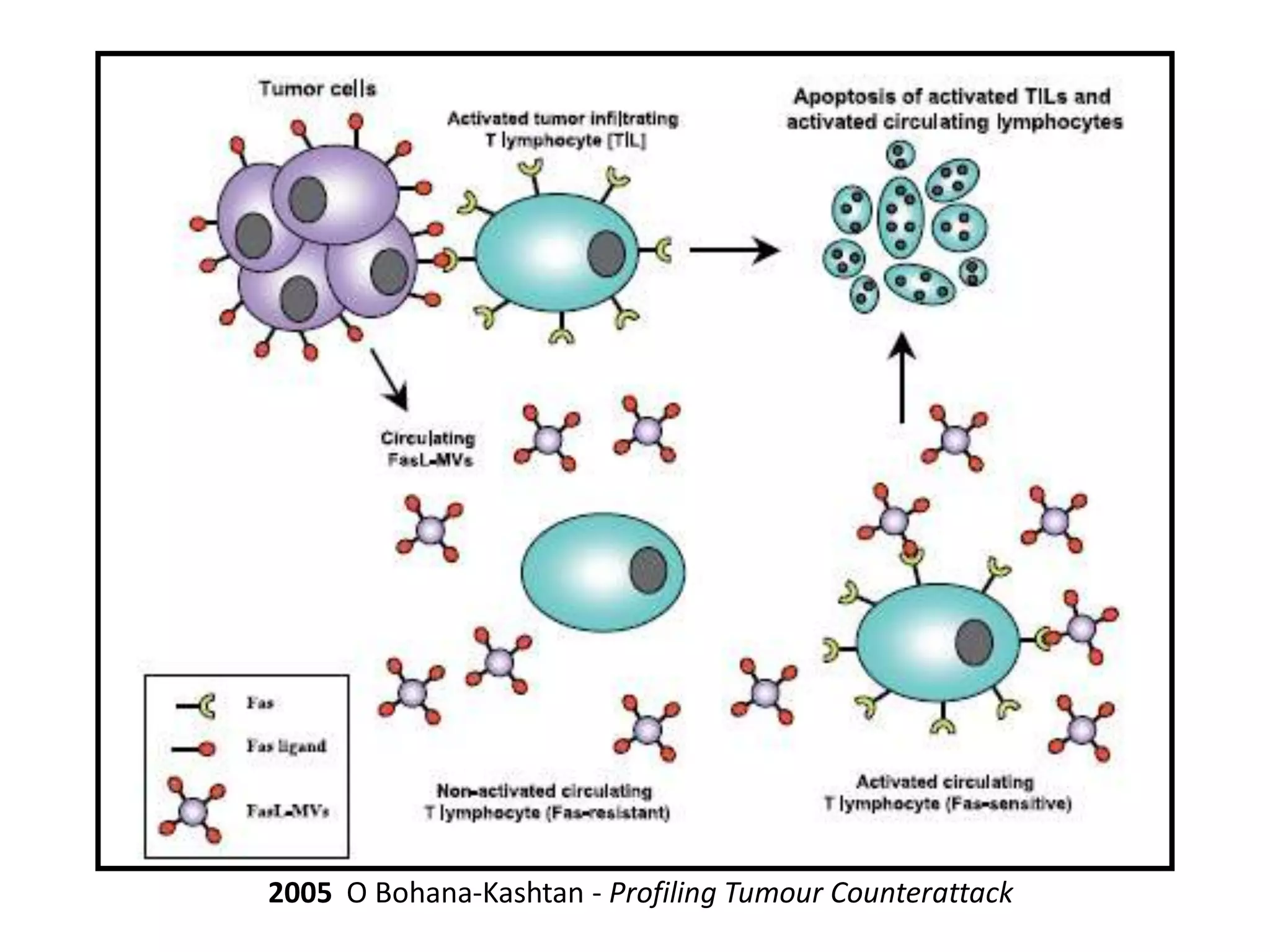
3. “Tumour Counterattack”
Tumour cells may not only resist destruction by
the immune system passively –
May also actively kill infiltrating lymphocytes
Induces the lymphocyte Death Receptor
2005 O Bohana-Kashtan - Profiling Tumour Counterattack
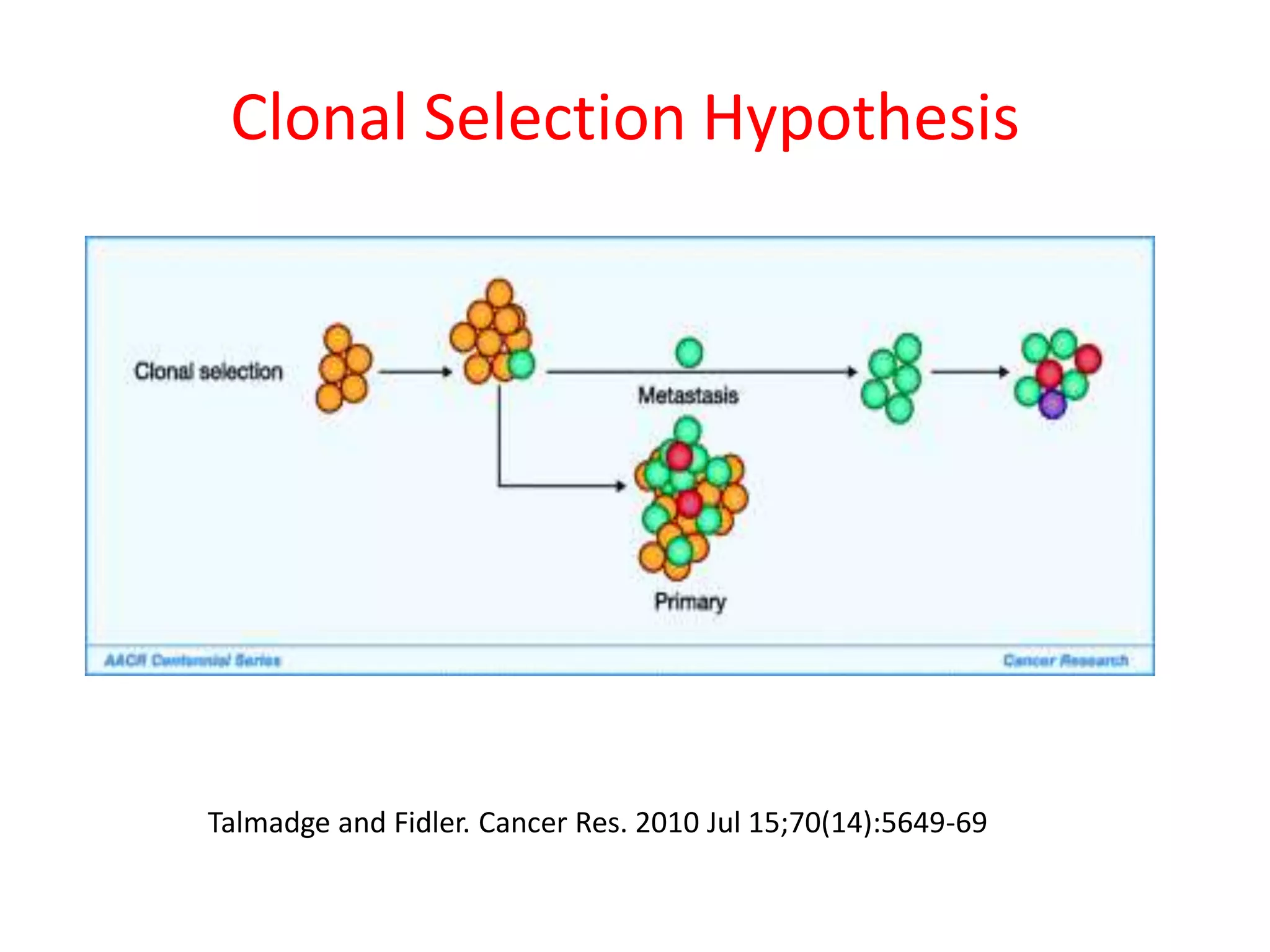
Clonal Selection Hypothesis
Talmadge and Fidler. Cancer Res. 2010 Jul 15;70(14):5649-69
Conclusion
• Ability to invade and metastasise defining
feature of malignancy
• Cells must acquire motility and the ability to
traverse basement membrane
• Cells must be able to survive in new tissue
• Involvement of multiple gene programs

Molecular basis of metastasis

  • 1.
  • 2.
    Hallmarks of Cancer Hanahanand Weinberg. Cell. 2011 Mar 4;144(5):646-74
  • 3.
    Invasion and Metastasis Talmadgeand Fidler. Cancer Res. 2010 Jul 15;70(14):5649-69
  • 4.
    Cell Motility Sahai E.Curr Opin Genet Dev. 2005 Feb;15(1):87-96
  • 5.
    Invadopodia • Found ininvasive cancer cells, vascular smooth muscle, endothelial & immune cells • ECM degradation • Key proteins –  Actin regulators- Cortactin & N-WASP  Adaptor proteins- TKS4 & TKS5  Metalloproteinases- MMPs
  • 6.
    Invadopodia and Cancer •Malignant melanoma • Breast /Mammary carcinoma • Glioma • Glioblastoma Multiforme Tumours • Head and neck squamous cell carcinoma Katz, Verleyen et al. 2011
  • 7.
    Extravasation Source: Role ofCancer Microenvironmentin Metastasis: Focus on Colon Cancer. Gout, Stéphanie; Huot, Jacques. Cancer Microenvironment 2009 Vol. 1 Issue 1
  • 8.
    “Escape of CancerCells from Circulation” Q. What is extravasation of cancer cells? Koop et al 1996
  • 9.
  • 10.
    Adhesion to Integrins Adhesion to Selectins E-SelectinsP-Selectins L-Selectins Adhesion to IgSF Interaction with Platelets Interaction with Leukocytes Selectin Pathways
  • 11.
    Source: Biophysics ofselectin–ligand interactions in inflammation and cancer. L Cheung, PS Raman, EM Balzer, D Wirtz and Kkonstantopoulos. 2011 Phys. Biol. 8 015013
  • 12.
    VEGF Degradation •VEGF isproduced and secreted by tumour cells •Has a Src kinase domain •Uncouples E-cadherin from β-catenin in the endothelium •Results in permeabilisation of the endothelium
  • 13.
    Q. What makescancer cells more likely to extravasate at a particular site? •Pre-metastatic niche •By upregulation of selectins in specific microvasculature • Expression of specific chemokine receptors
  • 14.
    Cancer Cell Survival Evasionof the host defence
  • 15.
    The Hallmarks ofCancer: The Next Generation Hanahan & Weinberg 2011
  • 16.
    Turns out thisis very hard to do.... Very few metastatic cells survive to establish secondary colonies 1. Destroyed in blood 2. ‘Seed’ doesn’t arrive at an appropriate ‘Soil’ 3. Overwhelmed by the host defence 2008 Klein – The Metastatic Cascade
  • 17.
    Question: What methods docancer cells employ to evade the host defence?
  • 18.
    1. TGFβ Secretion TGFβ Scarring Cytokine In Immune Response: –Through cell-cell interactions, cytotoxic T-Cells destroy target cells via release of enzymes such as Perforin –If cancer cells harness the ability to secrete it or get others around them to secrete it – they will have a growth and survival advantage –Transcriptionally represses the production of their key cytotoxic proteins CTL MHC 1 Perforin
  • 19.
    2. Toll-Like Receptors Cancercells adopt characteristics of the host defence
  • 20.
    3. “Tumour Counterattack” Tumourcells may not only resist destruction by the immune system passively – May also actively kill infiltrating lymphocytes Induces the lymphocyte Death Receptor
  • 21.
    2005 O Bohana-Kashtan- Profiling Tumour Counterattack
  • 22.
    Clonal Selection Hypothesis Talmadgeand Fidler. Cancer Res. 2010 Jul 15;70(14):5649-69
  • 23.
    Conclusion • Ability toinvade and metastasise defining feature of malignancy • Cells must acquire motility and the ability to traverse basement membrane • Cells must be able to survive in new tissue • Involvement of multiple gene programs