MODULE 1
 HISTORICAL LINGUISTICS
 Part One


History of the English Language
2nd Semester 1432-1433 AH
Dr. Abdel-Fattah Adel
HISTORICAL LINGUISTICS
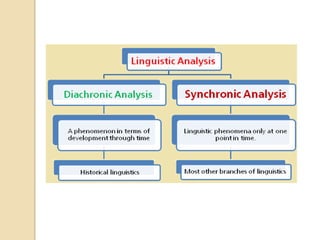
   The two types of linguistic studies:
    Synchronic and Diachronic
    Linguistics
   The Definition of Historical
    linguistics
   The main Concerns of Historical
    linguistics
   Studying language change
   Two axes of the historical study of
    language
   Four Myths of Language.
The Definition of Historical
linguistics
   Historical linguistics (also
    called diachronic linguistics) is the
    study of language change.
The main Concerns of
Historical linguistics
Historical linguistics has five main concerns:
 to describe and account for observed changes in
  particular languages
 to reconstruct the pre-history of languages and
  determine their relatedness, grouping them
  into language families (comparative linguistics)
 to develop general theories about how and why
  language changes
 to describe the history of speech communities: a
  group of people who share a set of norms and
  expectations regarding the use of language
 to study the history of words, i.e. etymology: their
  origins, and how their form and meaning have
  changed over time.
Three tools for the study of
language
 1. Articulatory phonetics:
 2. Sociolinguistics:
 3. Comparative philology:
Four specific areas of
language change
 1. pronunciation
 2. grammar and morphology
 3. meaning (semantic change)
 4. attitudes toward language change
The evidence for language
change
 A. Surviving written evidence
 B. Knowledge of speech sounds
 C. writing about language
Language is a form of social
and human behavior
 No language is inherently better or
  more grammatical than any other
 Languages have rules and
  conventions of successful
  communication; and yet, throughout
  history, people have judged language,
  language performance, and individual
  linguistic competence.
Two axes of the historical
study of language
 Prescriptive
 Descriptive
Four Myths of Language.

 A. The myth of universality:
 B. The myth of simplicity
 C. The myth of teleology:
 D. The myth of gradualism

Module1 historical linguistics-part1

  • 1.
    MODULE 1 HISTORICALLINGUISTICS Part One History of the English Language 2nd Semester 1432-1433 AH Dr. Abdel-Fattah Adel
  • 2.
    HISTORICAL LINGUISTICS  The two types of linguistic studies: Synchronic and Diachronic Linguistics  The Definition of Historical linguistics  The main Concerns of Historical linguistics  Studying language change  Two axes of the historical study of language  Four Myths of Language.
  • 4.
    The Definition ofHistorical linguistics  Historical linguistics (also called diachronic linguistics) is the study of language change.
  • 5.
    The main Concernsof Historical linguistics Historical linguistics has five main concerns:  to describe and account for observed changes in particular languages  to reconstruct the pre-history of languages and determine their relatedness, grouping them into language families (comparative linguistics)  to develop general theories about how and why language changes  to describe the history of speech communities: a group of people who share a set of norms and expectations regarding the use of language  to study the history of words, i.e. etymology: their origins, and how their form and meaning have changed over time.
  • 6.
    Three tools forthe study of language  1. Articulatory phonetics:  2. Sociolinguistics:  3. Comparative philology:
  • 7.
    Four specific areasof language change  1. pronunciation  2. grammar and morphology  3. meaning (semantic change)  4. attitudes toward language change
  • 8.
    The evidence forlanguage change  A. Surviving written evidence  B. Knowledge of speech sounds  C. writing about language
  • 9.
    Language is aform of social and human behavior  No language is inherently better or more grammatical than any other  Languages have rules and conventions of successful communication; and yet, throughout history, people have judged language, language performance, and individual linguistic competence.
  • 10.
    Two axes ofthe historical study of language  Prescriptive  Descriptive
  • 11.
    Four Myths ofLanguage.  A. The myth of universality:  B. The myth of simplicity  C. The myth of teleology:  D. The myth of gradualism