Physical Science
Module 5


    The Hydrosphere
Hydrosphere
 What is the Hydrosphere?
 The sum of all the water on the
  planet
 Life cannot exist on any other planet but can
  on earth because of what?
 Water
Water
 Water is only liquid in what range?
 Above 32 degrees Fahrenheit and below 212
  Fahrenheit
 What two factors control the temperature of
  our planet?
 The sun and the atmosphere
Facts to Memorize
 The vast majority of the earth’s water supply
  is contained in the oceans as saltwater
 The vast majority of earth’s freshwater supply
  is stored in icebergs and glaciers
 The largest source of liquid freshwater is
  groundwater
The Hydrologic Cycle
 What is the Hydrologic Cycle?
 The process by which water is continuously
  exchanged between earth’s various water
  sources
Hydrologic Cycle
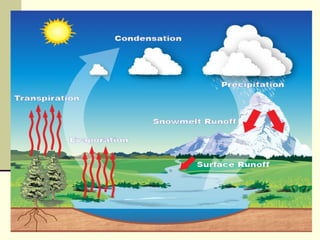
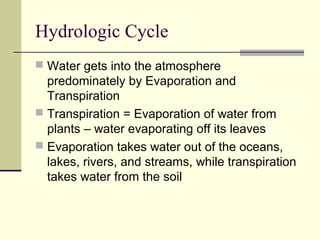
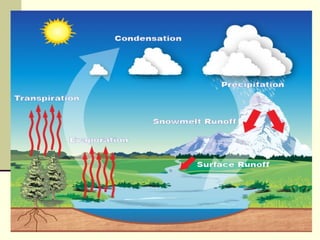
 Water gets into the atmosphere
  predominately by Evaporation and
  Transpiration
 Transpiration = Evaporation of water from
  plants – water evaporating off its leaves
 Evaporation takes water out of the oceans,
  lakes, rivers, and streams, while transpiration
  takes water from the soil
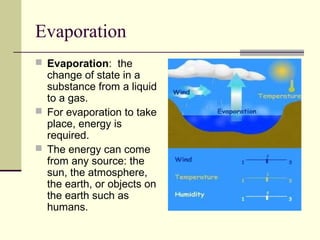
Evaporation
 Evaporation: the
  change of state in a
  substance from a liquid
  to a gas.
 For evaporation to take
  place, energy is
  required.
 The energy can come
  from any source: the
  sun, the atmosphere,
  the earth, or objects on
  the earth such as
  humans.
Transpiration
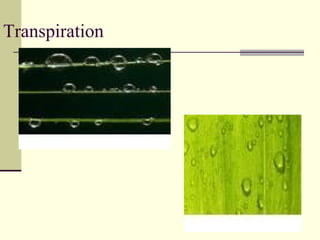
 Transpiration is the evaporation of water from
  plants through stomata.
 Stomata are small openings found on the
  underside of leaves that are connected to
  vascular plant tissues.
 In most plants, transpiration is a passive
  process largely controlled by the humidity of
  the atmosphere and the moisture content of
  the soil.
 Transpiration depletes soil moisture
Transpiration
Soil Moisture
 Soil moisture can also be depleted when it
  soaks down into the groundwater sources
  and feeds into lakes, rivers, and streams by
  the process known as what?
 Groundwater Flow
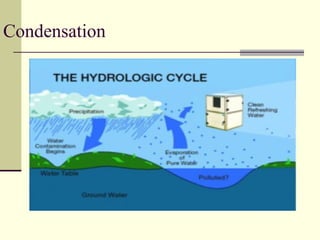
 Clouds form by what process?
 Condensation
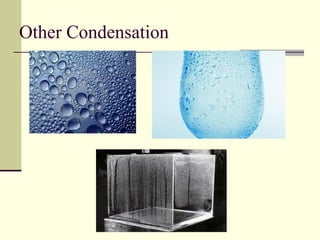
 The process by which a gas turns into a liquid
Condensation
Other Condensation
Precipitation
 What is precipitation?
 Water falling from the atmosphere as rain,
  snow, sleet, or hail
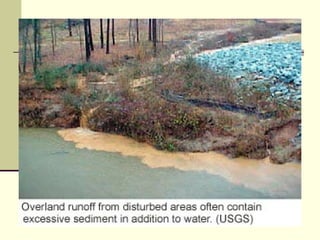
 What is surface runoff?
 When precipitation falls on land and
  replenishes soil moisture OR it can run along
  the surface of the land into an ocean, lake,
  river, or stream
Let’s Review
 Precipitation can happen in what ways?
 What are the two ways water can return to
  the sky?
 How are clouds formed?
 What is soil moisture?
 What is surface runoff?
Experiment 5.1
 Get out your Lab Report and a pencil
 Need two volunteers

Module 5 - Physical Science

  • 1.
  • 2.
    Hydrosphere  What isthe Hydrosphere?  The sum of all the water on the planet  Life cannot exist on any other planet but can on earth because of what?  Water
  • 3.
    Water  Water isonly liquid in what range?  Above 32 degrees Fahrenheit and below 212 Fahrenheit  What two factors control the temperature of our planet?  The sun and the atmosphere
  • 4.
    Facts to Memorize The vast majority of the earth’s water supply is contained in the oceans as saltwater  The vast majority of earth’s freshwater supply is stored in icebergs and glaciers  The largest source of liquid freshwater is groundwater
  • 5.
    The Hydrologic Cycle What is the Hydrologic Cycle?  The process by which water is continuously exchanged between earth’s various water sources
  • 7.
    Hydrologic Cycle  Watergets into the atmosphere predominately by Evaporation and Transpiration  Transpiration = Evaporation of water from plants – water evaporating off its leaves  Evaporation takes water out of the oceans, lakes, rivers, and streams, while transpiration takes water from the soil
  • 8.
    Evaporation  Evaporation: the change of state in a substance from a liquid to a gas.  For evaporation to take place, energy is required.  The energy can come from any source: the sun, the atmosphere, the earth, or objects on the earth such as humans.
  • 9.
    Transpiration  Transpiration isthe evaporation of water from plants through stomata.  Stomata are small openings found on the underside of leaves that are connected to vascular plant tissues.  In most plants, transpiration is a passive process largely controlled by the humidity of the atmosphere and the moisture content of the soil.  Transpiration depletes soil moisture
  • 10.
  • 11.
    Soil Moisture  Soilmoisture can also be depleted when it soaks down into the groundwater sources and feeds into lakes, rivers, and streams by the process known as what?  Groundwater Flow
  • 12.
     Clouds formby what process?  Condensation  The process by which a gas turns into a liquid
  • 13.
  • 14.
  • 15.
    Precipitation  What isprecipitation?  Water falling from the atmosphere as rain, snow, sleet, or hail  What is surface runoff?  When precipitation falls on land and replenishes soil moisture OR it can run along the surface of the land into an ocean, lake, river, or stream
  • 17.
    Let’s Review  Precipitationcan happen in what ways?  What are the two ways water can return to the sky?  How are clouds formed?  What is soil moisture?  What is surface runoff?
  • 19.
    Experiment 5.1  Getout your Lab Report and a pencil  Need two volunteers