Modes of
Charging Security
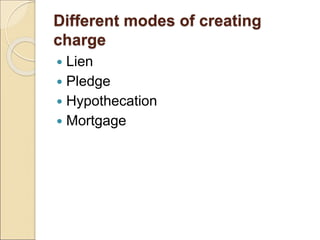
Different modes of creating
charge
 Lien
 Pledge
 Hypothecation
 Mortgage
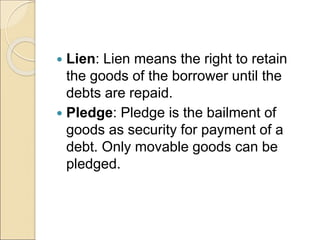
 Lien: Lien means the right to retain
the goods of the borrower until the
debts are repaid.
 Pledge: Pledge is the bailment of
goods as security for payment of a
debt. Only movable goods can be
pledged.
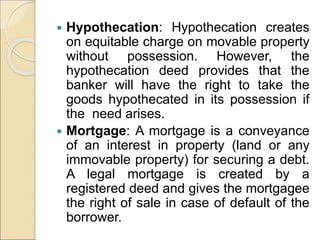
 Hypothecation: Hypothecation creates
on equitable charge on movable property
without possession. However, the
hypothecation deed provides that the
banker will have the right to take the
goods hypothecated in its possession if
the need arises.
 Mortgage: A mortgage is a conveyance
of an interest in property (land or any
immovable property) for securing a debt.
A legal mortgage is created by a
registered deed and gives the mortgagee
the right of sale in case of default of the
borrower.
Kinds of Lien:
 A particular lien applies to one transaction
or certain transactions only.
 General lien gives a right to a person to
retain the goods not only in respect of a
particular debt but also in respect of the
general balance due form the owner of the
goods to the person exercising the right of
lien. It extends to all transactions
 Essentials of pledge
1. Delivery of goods:
Delivery of goods is essential to complete a
pledge. The delivery may be physical or
symbolic. Physical delivery refers to
physical transfer of goods from a pledger to
the pledgee. Symbolic delivery requires no
actual delivery of goods. But the possession
of goods must be transferred to a pledgee.
2. Transfer of ownership:
The ownership of goods remains with the
pledger. The possession of the goods vests
with pledgee till the loan is repaid.
Documents required for Pledge:
 Demand promissory note.
 Agreement for pledge.
 Letter of continuity.
 Letter of arrangement
 Insurance policy covering all risks.
 Invoice of goods pledged (for imported
goods).
 Latest stock report.
 Letter of disclaimer
 Other documents as per sanction letter.
Liquid Asset:
The term liquid assets refers to the assets
which can be readily converted into cash
without any loss. Liquidity describes the
degree to which an asset or security can be
quickly bought or sold in the market without
affecting the asset's price
Different forms of liquid
assets;
 Cash in Hand
 Statutory balance with central bank
 Balance with other bank
 Money at call & short notice
 Investment
Supplies of Liquid Assets
 Incoming Customer Deposits
 Revenues from the Sale of Non-
deposit Services
 Customer Loan Repayments
 Sales of Bank Assets
 Borrowings from the Money Market
Demand of Assets
 Customer Deposit Withdrawals
 Credit Requests from Quality Loan
Customers
 Repayment of Non-deposit
Borrowings
 Operating Expenses and Taxes
 Payment of Stockholder Dividends

Modes of Charging Security

  • 1.
  • 2.
    Different modes ofcreating charge  Lien  Pledge  Hypothecation  Mortgage
  • 3.
     Lien: Lienmeans the right to retain the goods of the borrower until the debts are repaid.  Pledge: Pledge is the bailment of goods as security for payment of a debt. Only movable goods can be pledged.
  • 4.
     Hypothecation: Hypothecationcreates on equitable charge on movable property without possession. However, the hypothecation deed provides that the banker will have the right to take the goods hypothecated in its possession if the need arises.  Mortgage: A mortgage is a conveyance of an interest in property (land or any immovable property) for securing a debt. A legal mortgage is created by a registered deed and gives the mortgagee the right of sale in case of default of the borrower.
  • 5.
    Kinds of Lien: A particular lien applies to one transaction or certain transactions only.  General lien gives a right to a person to retain the goods not only in respect of a particular debt but also in respect of the general balance due form the owner of the goods to the person exercising the right of lien. It extends to all transactions
  • 6.
     Essentials ofpledge 1. Delivery of goods: Delivery of goods is essential to complete a pledge. The delivery may be physical or symbolic. Physical delivery refers to physical transfer of goods from a pledger to the pledgee. Symbolic delivery requires no actual delivery of goods. But the possession of goods must be transferred to a pledgee. 2. Transfer of ownership: The ownership of goods remains with the pledger. The possession of the goods vests with pledgee till the loan is repaid.
  • 7.
    Documents required forPledge:  Demand promissory note.  Agreement for pledge.  Letter of continuity.  Letter of arrangement  Insurance policy covering all risks.  Invoice of goods pledged (for imported goods).  Latest stock report.  Letter of disclaimer  Other documents as per sanction letter.
  • 8.
    Liquid Asset: The termliquid assets refers to the assets which can be readily converted into cash without any loss. Liquidity describes the degree to which an asset or security can be quickly bought or sold in the market without affecting the asset's price
  • 9.
    Different forms ofliquid assets;  Cash in Hand  Statutory balance with central bank  Balance with other bank  Money at call & short notice  Investment
  • 10.
    Supplies of LiquidAssets  Incoming Customer Deposits  Revenues from the Sale of Non- deposit Services  Customer Loan Repayments  Sales of Bank Assets  Borrowings from the Money Market
  • 11.
    Demand of Assets Customer Deposit Withdrawals  Credit Requests from Quality Loan Customers  Repayment of Non-deposit Borrowings  Operating Expenses and Taxes  Payment of Stockholder Dividends