Loan and
Advances
Introduction:-
• In finance, a loan is the lending of money by one or
more individuals, organizations, or other entities to
other individuals, organizations etc.
• Money provided by the bank to entities for fulfilling
their short term requirements is known as Advances.
Loan is a kind of debt while Advances are credit facility
granted to customers by banks. Loans can be secured
or unsecured whereas Advances are generally secured
by asset or by guarantee from a surety.
Loan are classified into
Secured loan Unsecured
loan
Secured loan:-
• Section 5(a) of banking regulations act 1949 define as
secured loan and advance means a loan and advance
made on security of asset, the market value of which is
not at any time less than the amount of such loan and
advance.
• The loan is made on the security of tangible asset like:
1. Goods
2. Government security
3. Land and building
4. Gold and silver
Bank borrower
loan
securities
Unsecured loan is a loan that is issued and
supported only by the borrower’s credit
worthiness, rather than by any type of collateral.
Unsecured loans—sometimes referred to as
signature loans or personal loans—are approved
without the use of property or other assets as
collateral.
Unsecured Loan:-
Modes of creating on the
securities:-
Lien
Pledge
Hypothecation
Mortgage
Lien: Lien means the right to retain
the goods of the borrower until the
demand of the person holding the
lien are satisfied as per the
contract.
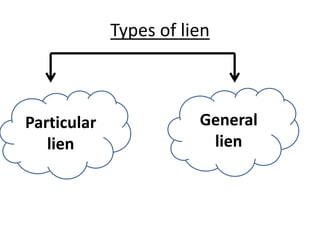
Types of lien
Particular
lien
General
lien
Pledge:-
Pledge is the bailment of goods as security for
payment of a debt. Only movable goods can be
pledged. bailment is delivery of goods by one
person to another for some purpose under a
contract that the goods shall when returned or
otherwise disposed off according to the direction
of pledge or pawnor.
Parties:-
• Person who deliver the goods as security -
pledge or pawnor.
• Person to whom the goods are delivered -
pledge or Pawnee.
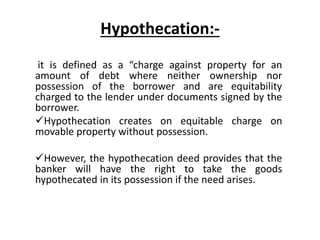
Hypothecation:-
it is defined as a “charge against property for an
amount of debt where neither ownership nor
possession of the borrower and are equitability
charged to the lender under documents signed by the
borrower.
Hypothecation creates on equitable charge on
movable property without possession.
However, the hypothecation deed provides that the
banker will have the right to take the goods
hypothecated in its possession if the need arises.
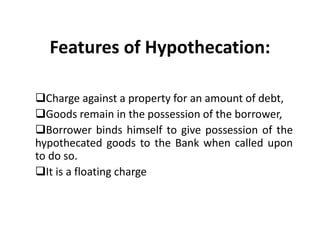
Features of Hypothecation:
Charge against a property for an amount of debt,
Goods remain in the possession of the borrower,
Borrower binds himself to give possession of the
hypothecated goods to the Bank when called upon
to do so.
It is a floating charge
Mortgage
• A mortgage is a loan from a bank or a financial institution
that help the borrower purchase a house.
• A mortgage is a conveyance of an interest in property (land
or any immovable property) for securing a debt.
•
• A mortgage is a loan in which property or real estate is used
as collateral.
•
• A legal mortgage is created by a registered deed and gives
the mortgagee the right of sale in case of default of the
borrower
Assignment:-
• It mean transfer of an existing or future right
over property or money by one person to
another . transfer of right or interest to recover
the debt. An assignment is a legal term used in
the context of the law of contract and
of property. In both instances, assignment is the
process whereby a person, the assignor, transfers
rights or benefits to another, the assignee. An
assignment may not transfer a duty, burden or
detriment without the express agreement of the
assign
Parties
Assignor Assignee
The person
transferring the right.
The person to
whom the right is
assigned.
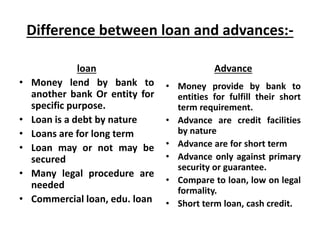
Difference between loan and advances:-
loan
• Money lend by bank to
another bank Or entity for
specific purpose.
• Loan is a debt by nature
• Loans are for long term
• Loan may or not may be
secured
• Many legal procedure are
needed
• Commercial loan, edu. loan
Advance
• Money provide by bank to
entities for fulfill their short
term requirement.
• Advance are credit facilities
by nature
• Advance are for short term
• Advance only against primary
security or guarantee.
• Compare to loan, low on legal
formality.
• Short term loan, cash credit.
Loan and advances

Loan and advances

  • 1.
  • 2.
    Introduction:- • In finance,a loan is the lending of money by one or more individuals, organizations, or other entities to other individuals, organizations etc. • Money provided by the bank to entities for fulfilling their short term requirements is known as Advances. Loan is a kind of debt while Advances are credit facility granted to customers by banks. Loans can be secured or unsecured whereas Advances are generally secured by asset or by guarantee from a surety.
  • 3.
    Loan are classifiedinto Secured loan Unsecured loan
  • 4.
    Secured loan:- • Section5(a) of banking regulations act 1949 define as secured loan and advance means a loan and advance made on security of asset, the market value of which is not at any time less than the amount of such loan and advance. • The loan is made on the security of tangible asset like: 1. Goods 2. Government security 3. Land and building 4. Gold and silver
  • 5.
  • 6.
    Unsecured loan isa loan that is issued and supported only by the borrower’s credit worthiness, rather than by any type of collateral. Unsecured loans—sometimes referred to as signature loans or personal loans—are approved without the use of property or other assets as collateral. Unsecured Loan:-
  • 7.
    Modes of creatingon the securities:- Lien Pledge Hypothecation Mortgage
  • 8.
    Lien: Lien meansthe right to retain the goods of the borrower until the demand of the person holding the lien are satisfied as per the contract.
  • 9.
  • 10.
    Pledge:- Pledge is thebailment of goods as security for payment of a debt. Only movable goods can be pledged. bailment is delivery of goods by one person to another for some purpose under a contract that the goods shall when returned or otherwise disposed off according to the direction of pledge or pawnor.
  • 11.
    Parties:- • Person whodeliver the goods as security - pledge or pawnor. • Person to whom the goods are delivered - pledge or Pawnee.
  • 12.
    Hypothecation:- it is definedas a “charge against property for an amount of debt where neither ownership nor possession of the borrower and are equitability charged to the lender under documents signed by the borrower. Hypothecation creates on equitable charge on movable property without possession. However, the hypothecation deed provides that the banker will have the right to take the goods hypothecated in its possession if the need arises.
  • 13.
    Features of Hypothecation: Chargeagainst a property for an amount of debt, Goods remain in the possession of the borrower, Borrower binds himself to give possession of the hypothecated goods to the Bank when called upon to do so. It is a floating charge
  • 14.
    Mortgage • A mortgageis a loan from a bank or a financial institution that help the borrower purchase a house. • A mortgage is a conveyance of an interest in property (land or any immovable property) for securing a debt. • • A mortgage is a loan in which property or real estate is used as collateral. • • A legal mortgage is created by a registered deed and gives the mortgagee the right of sale in case of default of the borrower
  • 15.
    Assignment:- • It meantransfer of an existing or future right over property or money by one person to another . transfer of right or interest to recover the debt. An assignment is a legal term used in the context of the law of contract and of property. In both instances, assignment is the process whereby a person, the assignor, transfers rights or benefits to another, the assignee. An assignment may not transfer a duty, burden or detriment without the express agreement of the assign
  • 16.
    Parties Assignor Assignee The person transferringthe right. The person to whom the right is assigned.
  • 17.
    Difference between loanand advances:- loan • Money lend by bank to another bank Or entity for specific purpose. • Loan is a debt by nature • Loans are for long term • Loan may or not may be secured • Many legal procedure are needed • Commercial loan, edu. loan Advance • Money provide by bank to entities for fulfill their short term requirement. • Advance are credit facilities by nature • Advance are for short term • Advance only against primary security or guarantee. • Compare to loan, low on legal formality. • Short term loan, cash credit.