Modeling PhysicsKarynLorangWilkes University
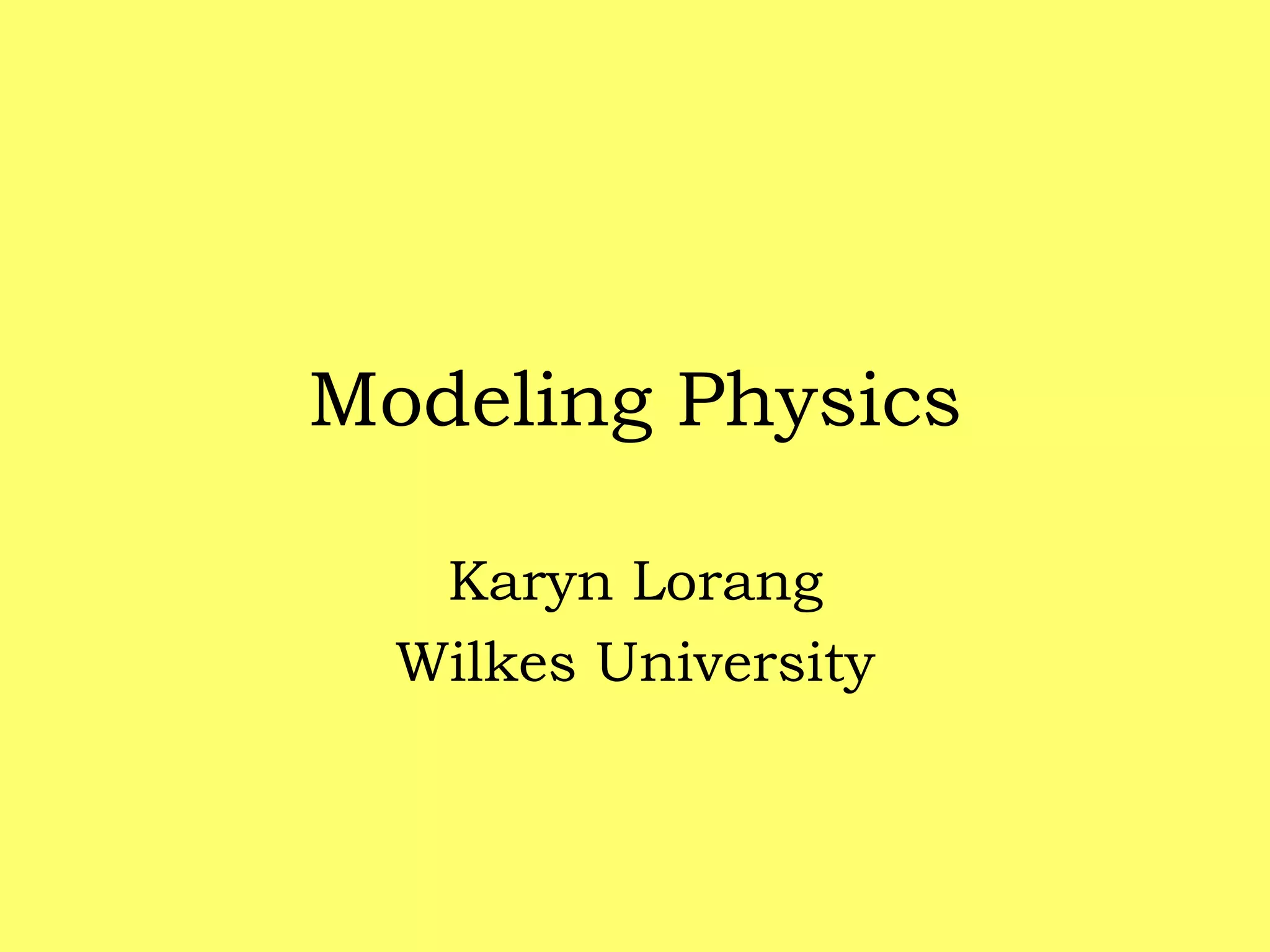
What Is Modeling Physics?An inquiry based teaching methodInstruction is organized around a storylineStorylines are further developed into modelsA variety of representations are used for each conceptConnections between the conceptual representations and the physical model are developedhttp://www.flickr.com/photos/rungta/63640541/
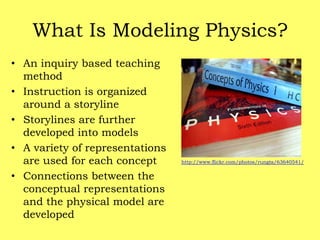
How Does Modeling Physics Affect the Classroom?Students are responsible for their learningTeacher becomes a facilitatorStudent discourse is a key factor to successStudents are interactive with the learning of physics conceptshttp://www.flickr.com/photos/usnationalarchives/4727537268/
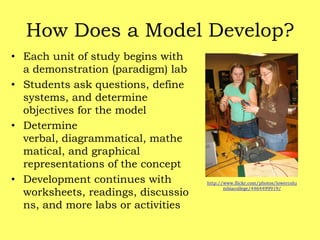
How Does a Model Develop?Each unit of study begins with a demonstration (paradigm) labStudents ask questions, define systems, and determine objectives for the modelDetermine verbal, diagrammatical, mathematical, and graphical representations of the conceptDevelopment continues with worksheets, readings, discussions, and more labs or activitieshttp://www.flickr.com/photos/lowercolumbiacollege/4464499919/
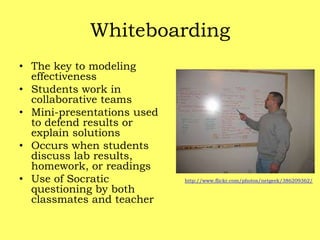
WhiteboardingThe key to modeling effectivenessStudents work in collaborative teamsMini-presentations used to defend results or explain solutionsOccurs when students discuss lab results, homework, or readingsUse of Socratic questioning by both classmates and teacherhttp://www.flickr.com/photos/netgeek/386209362/
What is Socratic Questioning?Questions used to encourage further thinkingUsed to analyze topics or uncover misconceptions without giving answersUsed to reason through complex topicshttp://www.flickr.com/photos/ian-w-scott/4869953457/
Advantages to the Modeling Approach to Teaching and LearningStudents develop a better grasp of the conceptsStudents become self-directed learners through the use of Socratic questioningIncreases student interaction within the classroomIncreases presentation skills and confidence for students

Modeling Physics presentation

  • 1.
  • 2.
    What Is ModelingPhysics?An inquiry based teaching methodInstruction is organized around a storylineStorylines are further developed into modelsA variety of representations are used for each conceptConnections between the conceptual representations and the physical model are developedhttp://www.flickr.com/photos/rungta/63640541/
  • 3.
    How Does ModelingPhysics Affect the Classroom?Students are responsible for their learningTeacher becomes a facilitatorStudent discourse is a key factor to successStudents are interactive with the learning of physics conceptshttp://www.flickr.com/photos/usnationalarchives/4727537268/
  • 4.
    How Does aModel Develop?Each unit of study begins with a demonstration (paradigm) labStudents ask questions, define systems, and determine objectives for the modelDetermine verbal, diagrammatical, mathematical, and graphical representations of the conceptDevelopment continues with worksheets, readings, discussions, and more labs or activitieshttp://www.flickr.com/photos/lowercolumbiacollege/4464499919/
  • 5.
    WhiteboardingThe key tomodeling effectivenessStudents work in collaborative teamsMini-presentations used to defend results or explain solutionsOccurs when students discuss lab results, homework, or readingsUse of Socratic questioning by both classmates and teacherhttp://www.flickr.com/photos/netgeek/386209362/
  • 6.
    What is SocraticQuestioning?Questions used to encourage further thinkingUsed to analyze topics or uncover misconceptions without giving answersUsed to reason through complex topicshttp://www.flickr.com/photos/ian-w-scott/4869953457/
  • 7.
    Advantages to theModeling Approach to Teaching and LearningStudents develop a better grasp of the conceptsStudents become self-directed learners through the use of Socratic questioningIncreases student interaction within the classroomIncreases presentation skills and confidence for students