Curriculum (re)development in electrical
 and computer engineering programs
    B. Pejcinovic, L. Zurk, M. Siderius, M.
   Holtzman, D. Duncan, R. Bass, R. Kravitz,
                   J. Morris
    Electrical and Computer Engineering
So, you want to (radically) change your
             curriculum?

•   WHAT
•   WHY
•   HOW
•   Why should you care and join us?
WHAT
 Identify and transform at least one
ECE course on each level of study for
         a total of 4-5 courses
Use tested and practical techniques,
    suitable to our environment
Use this experience to transform the
        rest of the curriculum
WHY
• Plenty of research  we can radically improve
  our students’ learning
• Many effective pedagogical approaches have
  been proposed and tested, but adoption of
  these methods in engineering is sporadic
• Engineering is very well suited for many
  techniques involving problem-solving and
  project-based learning
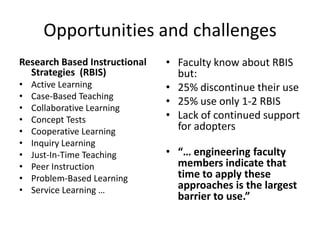
Opportunities and challenges
Research Based Instructional   • Faculty know about RBIS
  Strategies (RBIS)              but:
•   Active Learning            • 25% discontinue their use
•   Case-Based Teaching
                               • 25% use only 1-2 RBIS
•   Collaborative Learning
•   Concept Tests              • Lack of continued support
•   Cooperative Learning         for adopters
•   Inquiry Learning
•   Just-In-Time Teaching      • “… engineering faculty
•   Peer Instruction             members indicate that
•   Problem-Based Learning       time to apply these
•   Service Learning …           approaches is the largest
                                 barrier to use.”
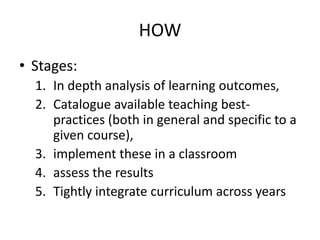
HOW
• Stages:
  1. In depth analysis of learning outcomes,
  2. Catalogue available teaching best-
     practices (both in general and specific to a
     given course),
  3. implement these in a classroom
  4. assess the results
  5. Tightly integrate curriculum across years
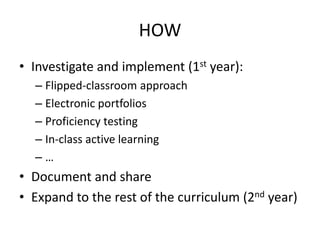
HOW
• Investigate and implement (1st year):
  – Flipped-classroom approach
  – Electronic portfolios
  – Proficiency testing
  – In-class active learning
  –…
• Document and share
• Expand to the rest of the curriculum (2nd year)
Join us if
• You are facing similar challenges and want to
  implement similar curriculum-level changes
• You want to find out how well these
  techniques work in practice and learn from
  our mistakes
• You can provide feedback from your
  experience

Curriculum (re)development in electrical and computer engineering v2

  • 1.
    Curriculum (re)development inelectrical and computer engineering programs B. Pejcinovic, L. Zurk, M. Siderius, M. Holtzman, D. Duncan, R. Bass, R. Kravitz, J. Morris Electrical and Computer Engineering
  • 2.
    So, you wantto (radically) change your curriculum? • WHAT • WHY • HOW • Why should you care and join us?
  • 3.
    WHAT Identify andtransform at least one ECE course on each level of study for a total of 4-5 courses Use tested and practical techniques, suitable to our environment Use this experience to transform the rest of the curriculum
  • 4.
    WHY • Plenty ofresearch  we can radically improve our students’ learning • Many effective pedagogical approaches have been proposed and tested, but adoption of these methods in engineering is sporadic • Engineering is very well suited for many techniques involving problem-solving and project-based learning
  • 5.
    Opportunities and challenges ResearchBased Instructional • Faculty know about RBIS Strategies (RBIS) but: • Active Learning • 25% discontinue their use • Case-Based Teaching • 25% use only 1-2 RBIS • Collaborative Learning • Concept Tests • Lack of continued support • Cooperative Learning for adopters • Inquiry Learning • Just-In-Time Teaching • “… engineering faculty • Peer Instruction members indicate that • Problem-Based Learning time to apply these • Service Learning … approaches is the largest barrier to use.”
  • 6.
    HOW • Stages: 1. In depth analysis of learning outcomes, 2. Catalogue available teaching best- practices (both in general and specific to a given course), 3. implement these in a classroom 4. assess the results 5. Tightly integrate curriculum across years
  • 7.
    HOW • Investigate andimplement (1st year): – Flipped-classroom approach – Electronic portfolios – Proficiency testing – In-class active learning –… • Document and share • Expand to the rest of the curriculum (2nd year)
  • 8.
    Join us if •You are facing similar challenges and want to implement similar curriculum-level changes • You want to find out how well these techniques work in practice and learn from our mistakes • You can provide feedback from your experience