Clicker Technology for CES Ed Tech CommitteeJason CrandallDoctoral StudentEducational PsychologyThe University of Texas at Austin
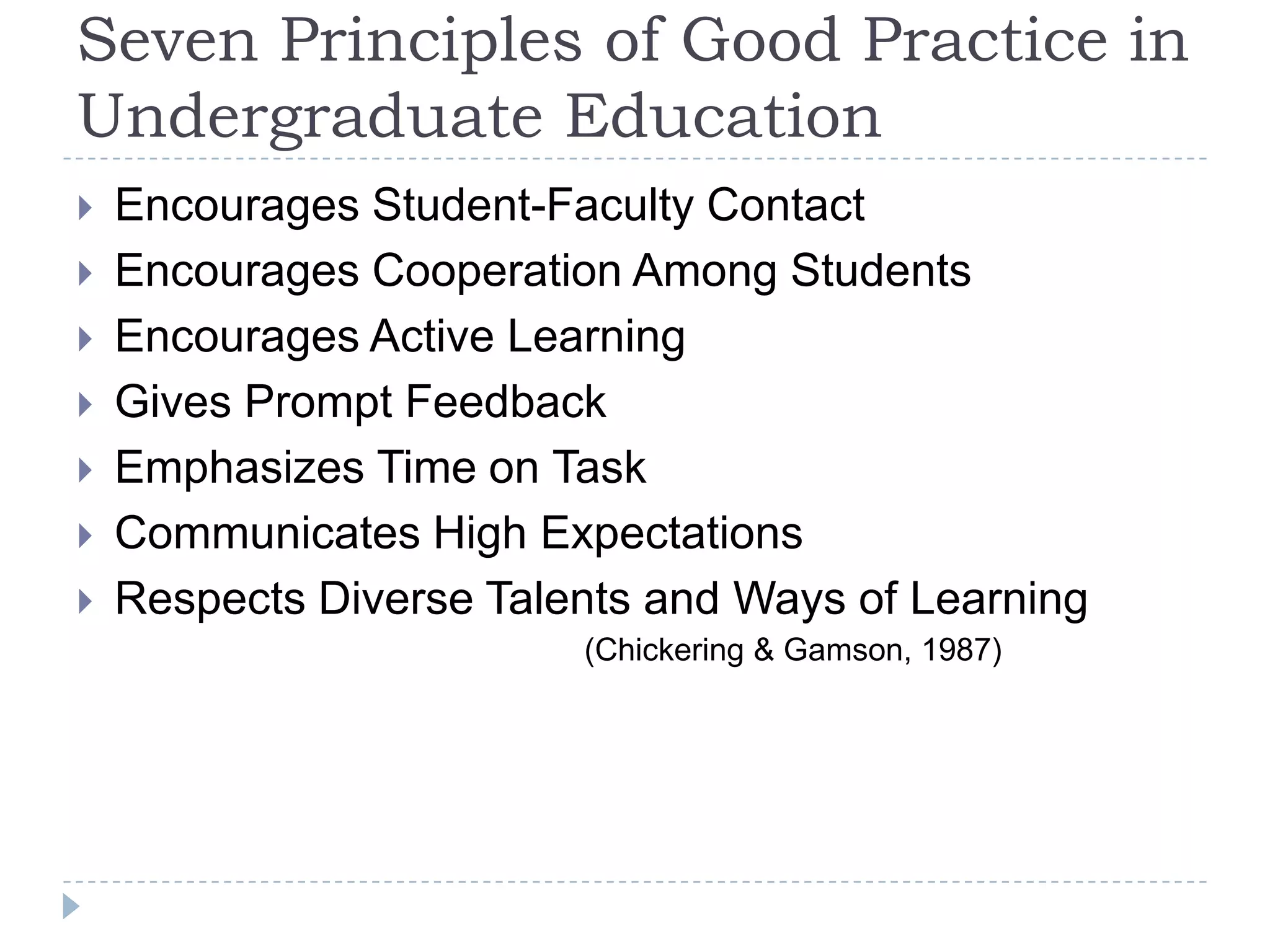
Seven Principles of Good Practice in Undergraduate EducationEncourages Student-Faculty ContactEncourages Cooperation Among StudentsEncourages Active LearningGives Prompt FeedbackEmphasizes Time on TaskCommunicates High ExpectationsRespects Diverse Talents and Ways of Learning				(Chickering & Gamson, 1987)
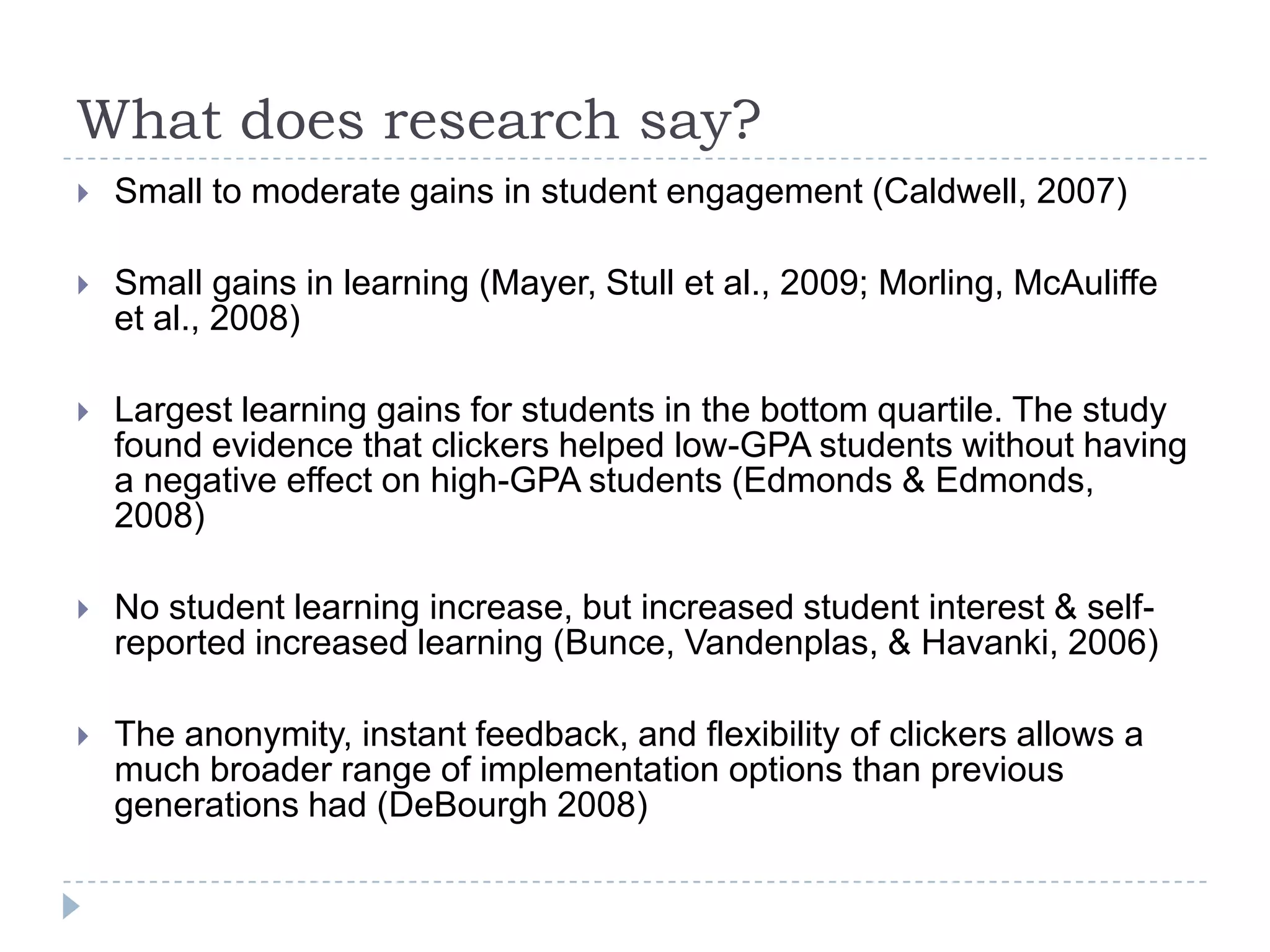
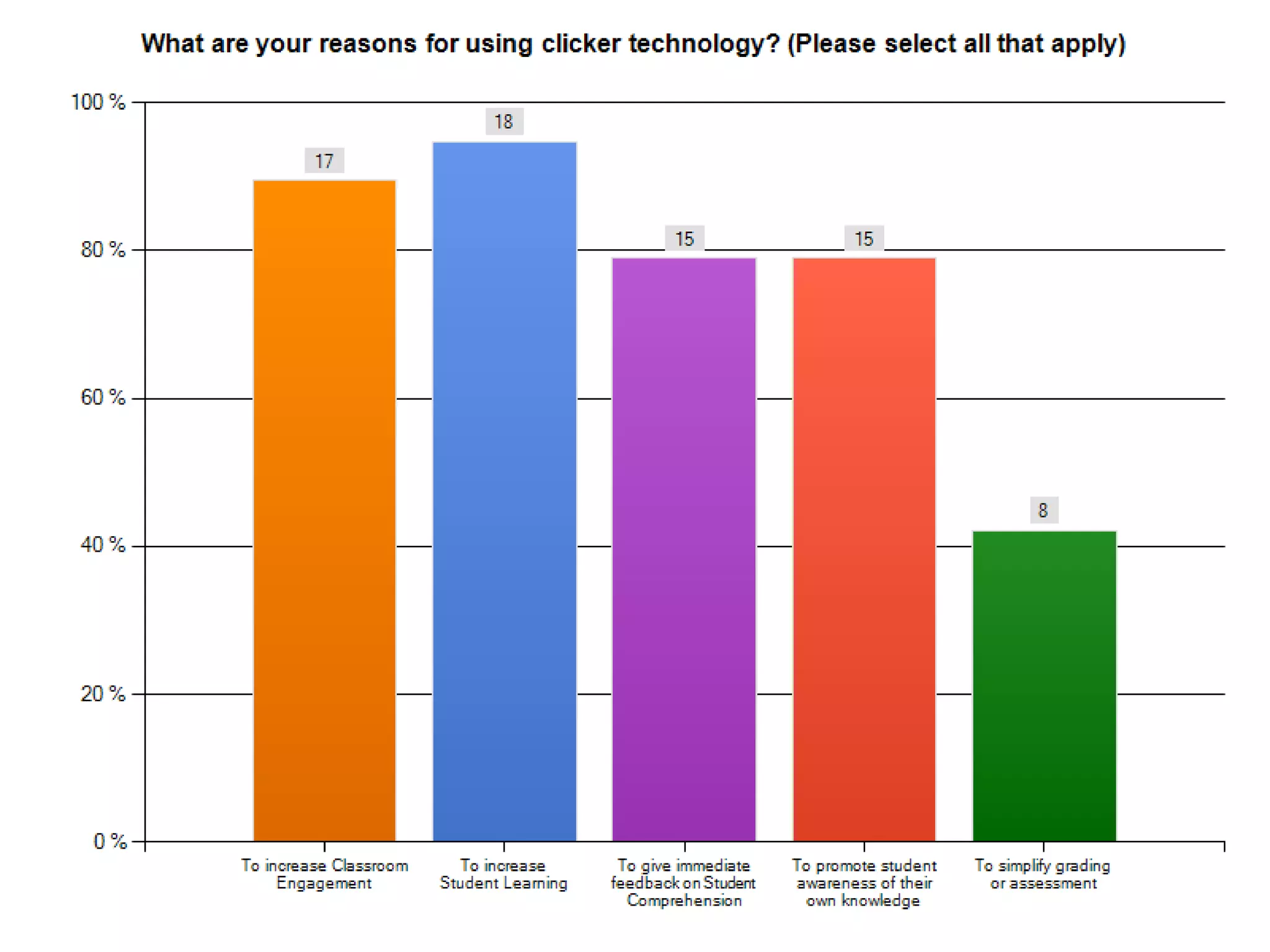
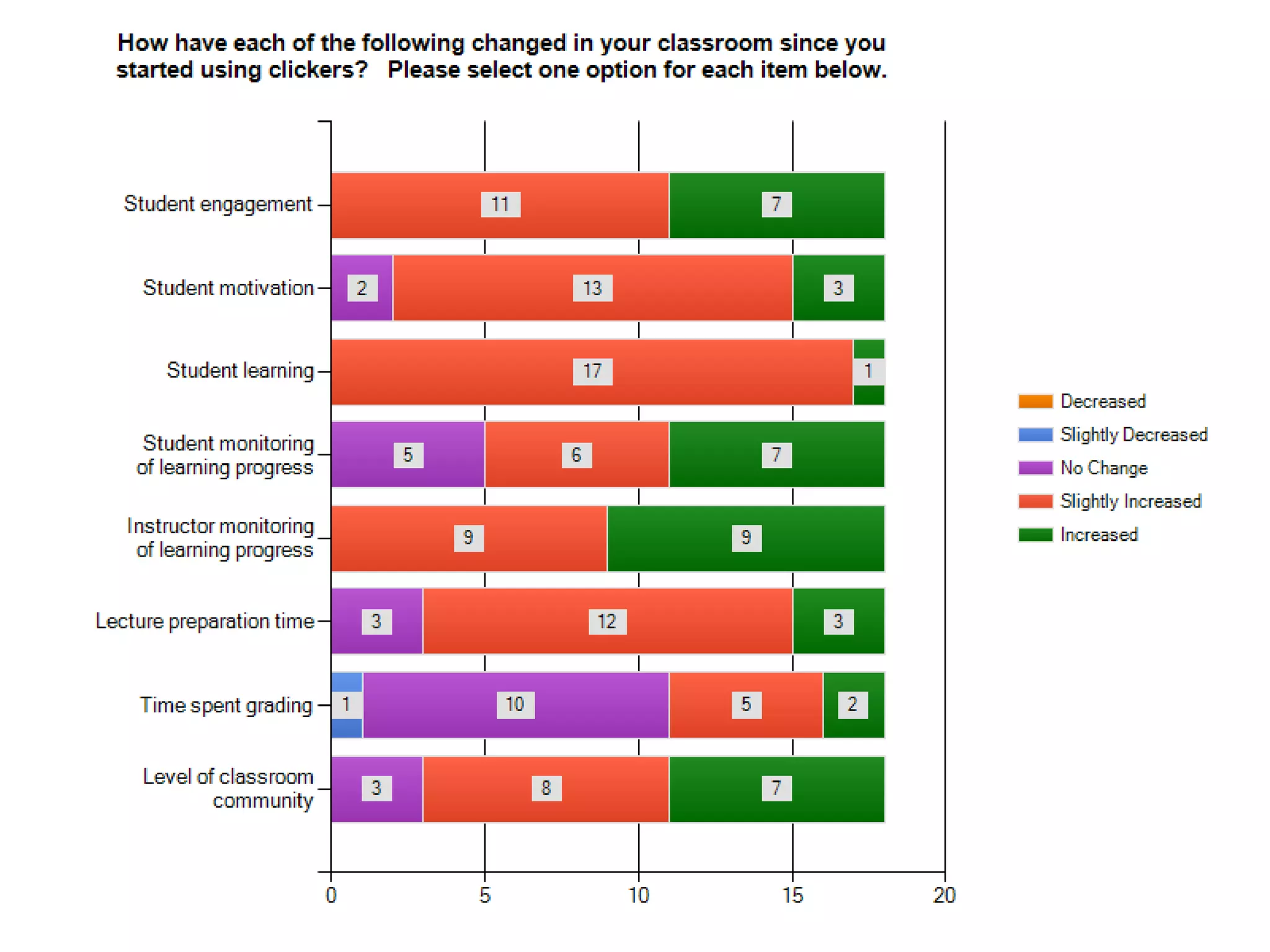
What does research say?Small to moderate gains in student engagement (Caldwell, 2007)Small gains in learning (Mayer, Stull et al., 2009; Morling, McAuliffe et al., 2008)Largest learning gains for students in the bottom quartile. The study found evidence that clickers helped low-GPA students without having a negative effect on high-GPA students (Edmonds & Edmonds, 2008)No student learning increase, but increased student interest & self-reported increased learning (Bunce, Vandenplas, & Havanki, 2006)The anonymity, instant feedback, and flexibility of clickers allows a much broader range of implementation options than previous generations had (DeBourgh 2008)
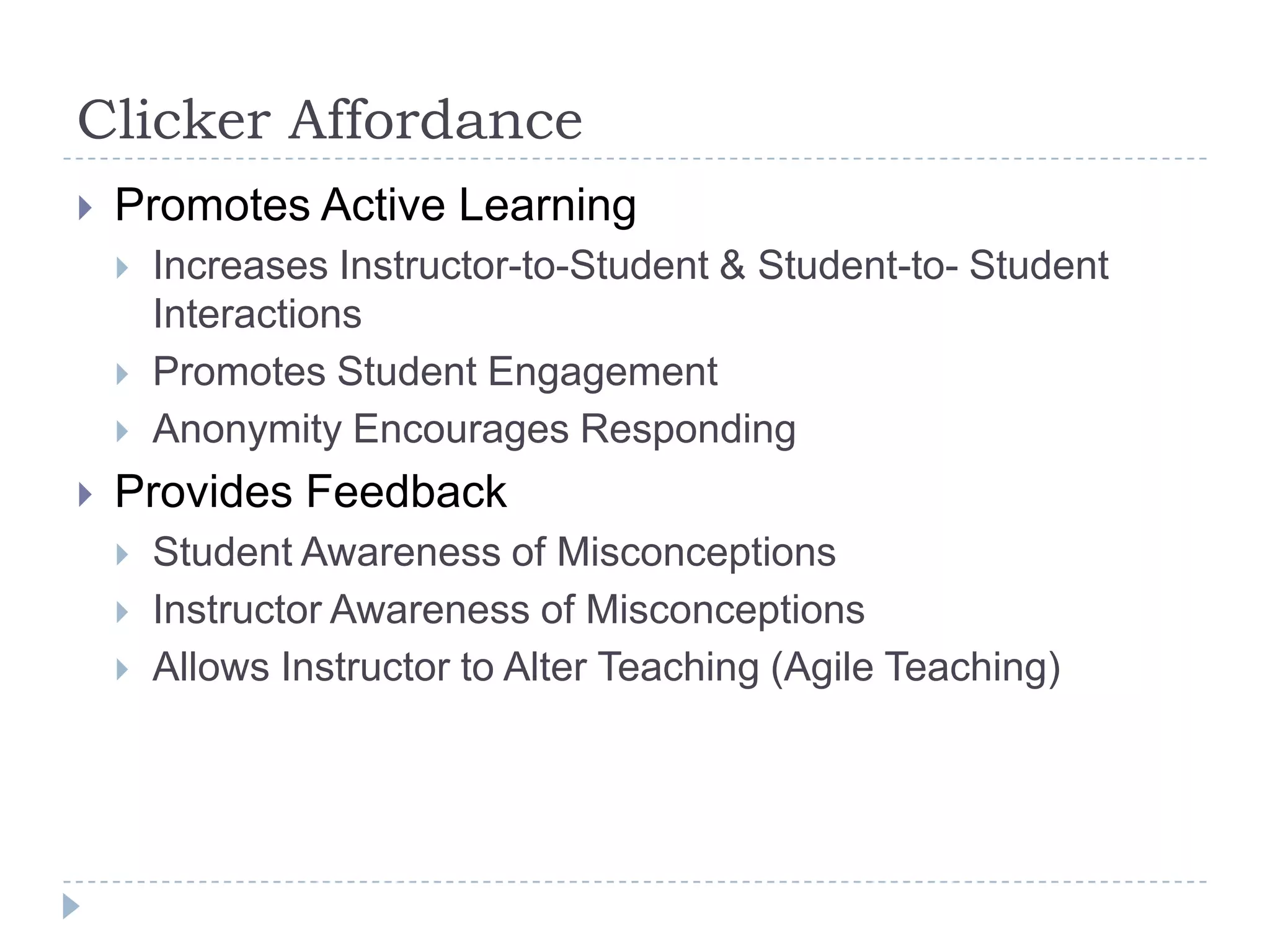
Clicker AffordancePromotes Active LearningIncreases Instructor-to-Student & Student-to- Student InteractionsPromotes Student EngagementAnonymity Encourages RespondingProvides FeedbackStudent Awareness of MisconceptionsInstructor Awareness of MisconceptionsAllows Instructor to Alter Teaching (Agile Teaching)
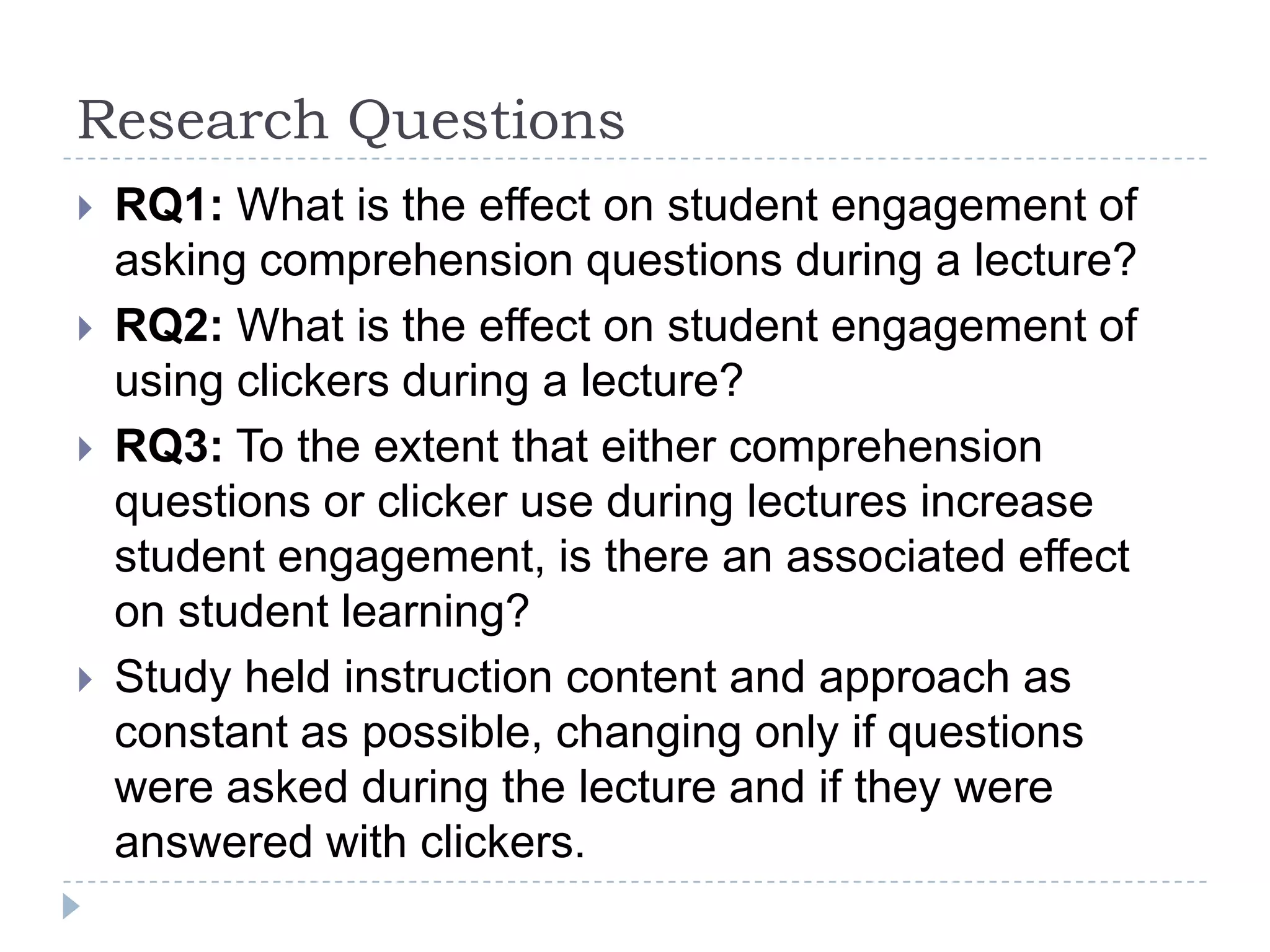
Research QuestionsRQ1: What is the effect on student engagement of asking comprehension questions during a lecture?RQ2: What is the effect on student engagement of using clickers during a lecture?RQ3: To the extent that either comprehension questions or clicker use during lectures increase student engagement, is there an associated effect on student learning?Study held instruction content and approach as constant as possible, changing only if questions were asked during the lecture and if they were answered with clickers.
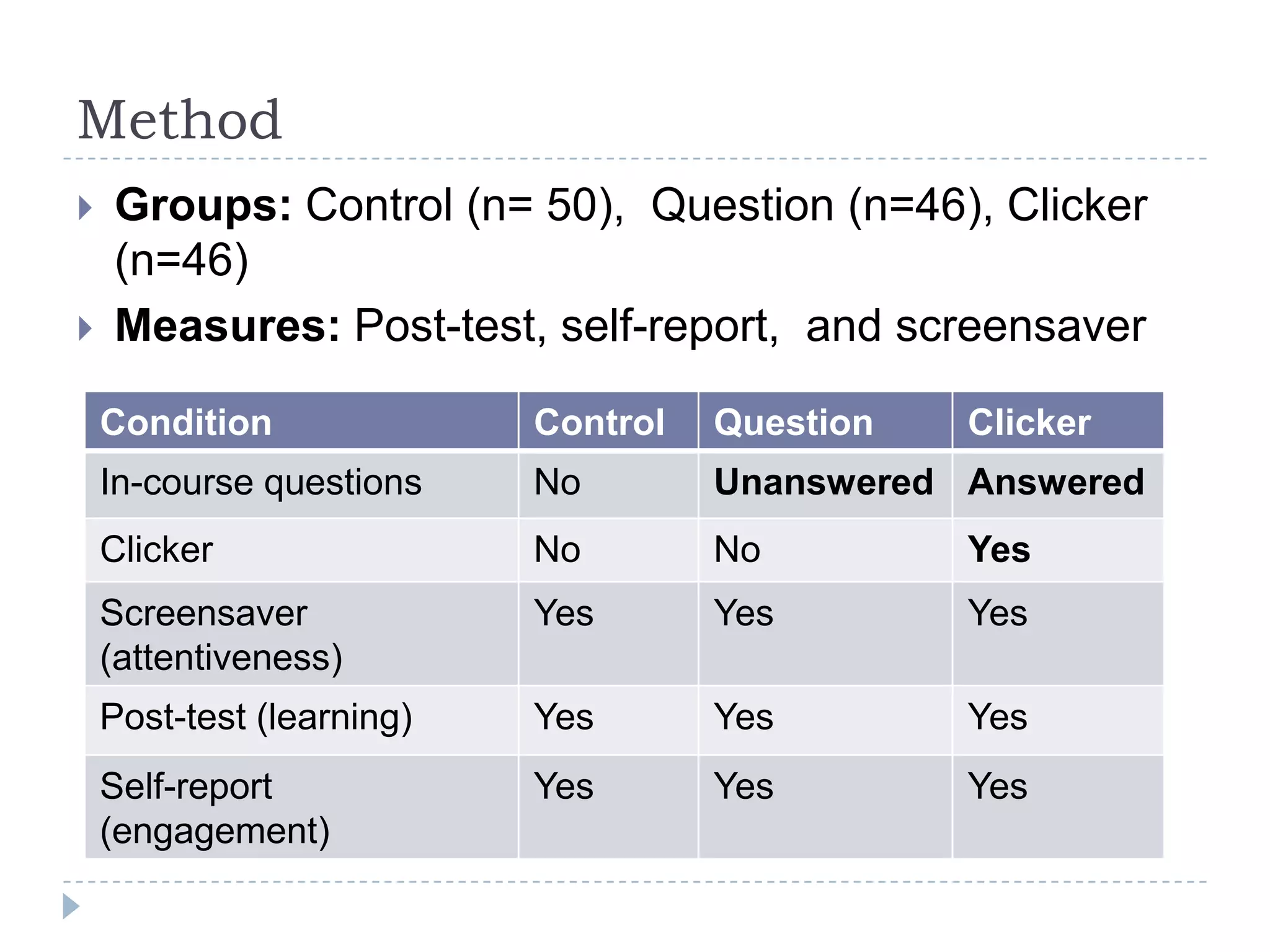
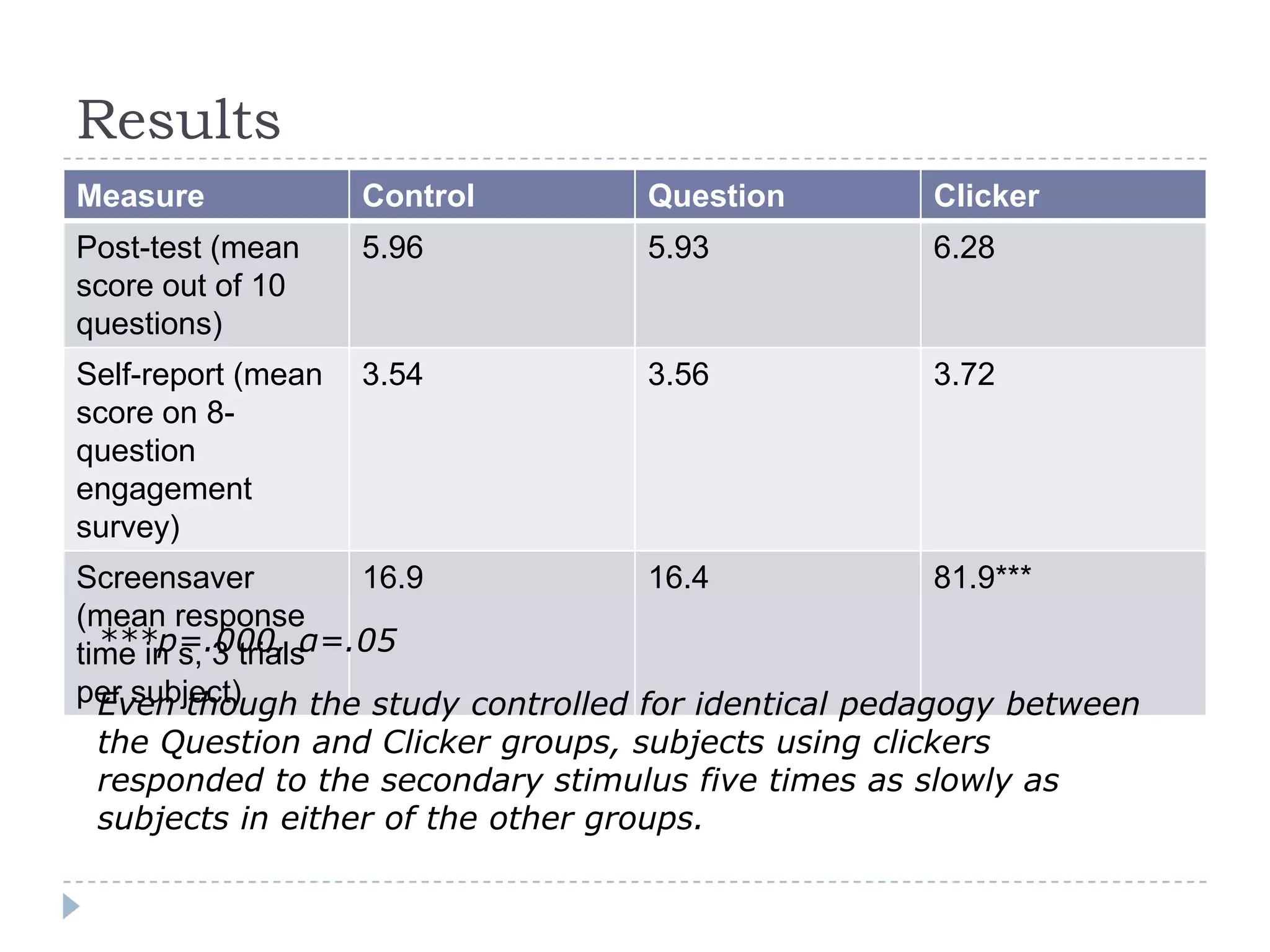
MethodGroups: Control (n= 50),  Question (n=46), Clicker (n=46)Measures: Post-test, self-report,  and screensaver
Results***p=.000, α=.05Even though the study controlled for identical pedagogy between the Question and Clicker groups, subjects using clickers responded to the secondary stimulus five times as slowly as subjects in either of the other groups.
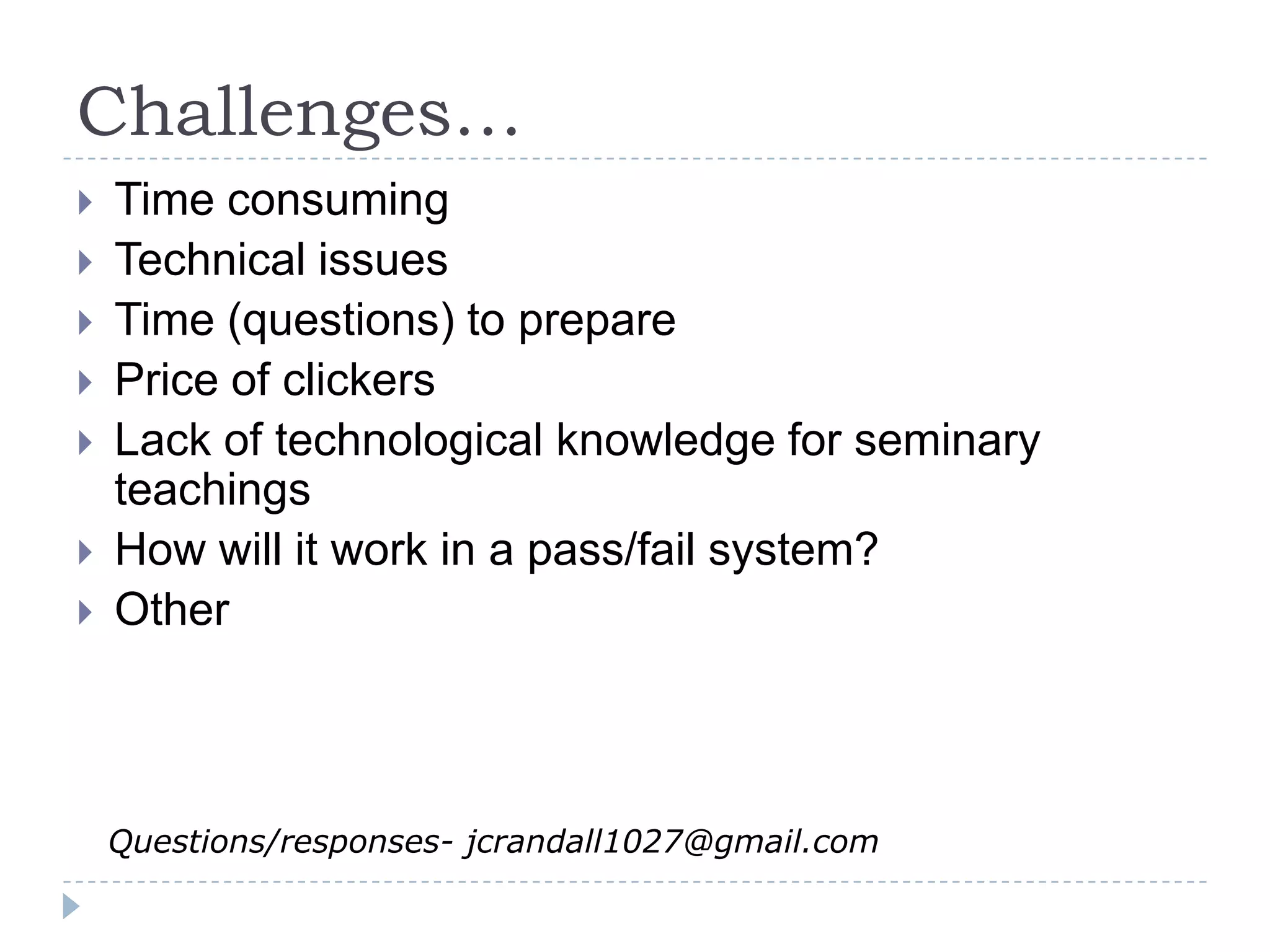
Challenges…Time consumingTechnical issuesTime (questions) to preparePrice of clickersLack of technological knowledge for seminary teachingsHow will it work in a pass/fail system?OtherQuestions/responses- jcrandall1027@gmail.com

Ces Ed Tech Presentation 5 26

  • 1.
    Clicker Technology forCES Ed Tech CommitteeJason CrandallDoctoral StudentEducational PsychologyThe University of Texas at Austin
  • 2.
    Seven Principles ofGood Practice in Undergraduate EducationEncourages Student-Faculty ContactEncourages Cooperation Among StudentsEncourages Active LearningGives Prompt FeedbackEmphasizes Time on TaskCommunicates High ExpectationsRespects Diverse Talents and Ways of Learning (Chickering & Gamson, 1987)
  • 3.
    What does researchsay?Small to moderate gains in student engagement (Caldwell, 2007)Small gains in learning (Mayer, Stull et al., 2009; Morling, McAuliffe et al., 2008)Largest learning gains for students in the bottom quartile. The study found evidence that clickers helped low-GPA students without having a negative effect on high-GPA students (Edmonds & Edmonds, 2008)No student learning increase, but increased student interest & self-reported increased learning (Bunce, Vandenplas, & Havanki, 2006)The anonymity, instant feedback, and flexibility of clickers allows a much broader range of implementation options than previous generations had (DeBourgh 2008)
  • 4.
    Clicker AffordancePromotes ActiveLearningIncreases Instructor-to-Student & Student-to- Student InteractionsPromotes Student EngagementAnonymity Encourages RespondingProvides FeedbackStudent Awareness of MisconceptionsInstructor Awareness of MisconceptionsAllows Instructor to Alter Teaching (Agile Teaching)
  • 7.
    Research QuestionsRQ1: Whatis the effect on student engagement of asking comprehension questions during a lecture?RQ2: What is the effect on student engagement of using clickers during a lecture?RQ3: To the extent that either comprehension questions or clicker use during lectures increase student engagement, is there an associated effect on student learning?Study held instruction content and approach as constant as possible, changing only if questions were asked during the lecture and if they were answered with clickers.
  • 8.
    MethodGroups: Control (n=50), Question (n=46), Clicker (n=46)Measures: Post-test, self-report, and screensaver
  • 9.
    Results***p=.000, α=.05Even thoughthe study controlled for identical pedagogy between the Question and Clicker groups, subjects using clickers responded to the secondary stimulus five times as slowly as subjects in either of the other groups.
  • 10.
    Challenges…Time consumingTechnical issuesTime(questions) to preparePrice of clickersLack of technological knowledge for seminary teachingsHow will it work in a pass/fail system?OtherQuestions/responses- jcrandall1027@gmail.com

Editor's Notes

  • #3 Note article that tied the 7 principles to clicker technology (
  • #4 Edmonds and Edmonds, lower-hanging fruit