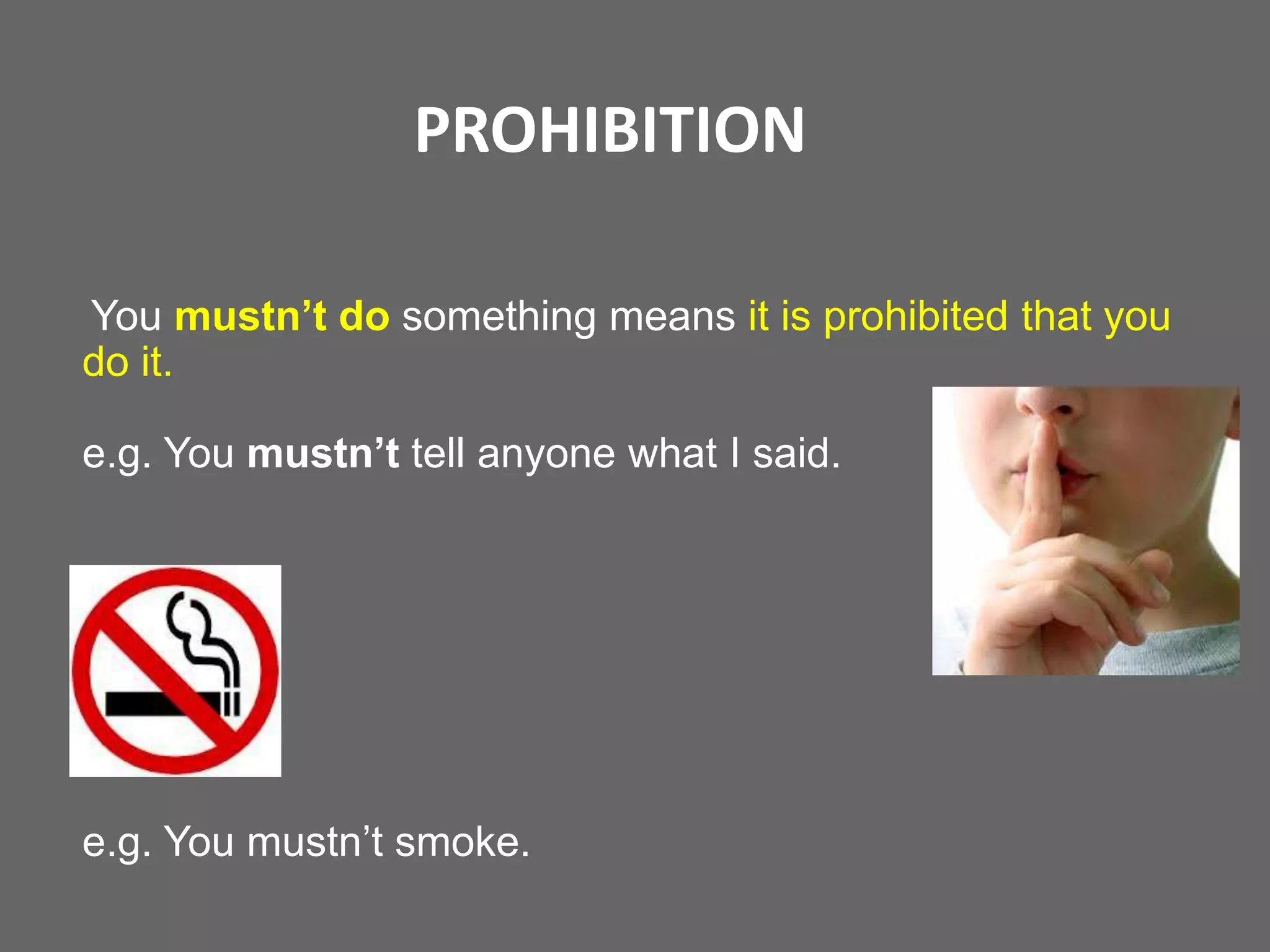
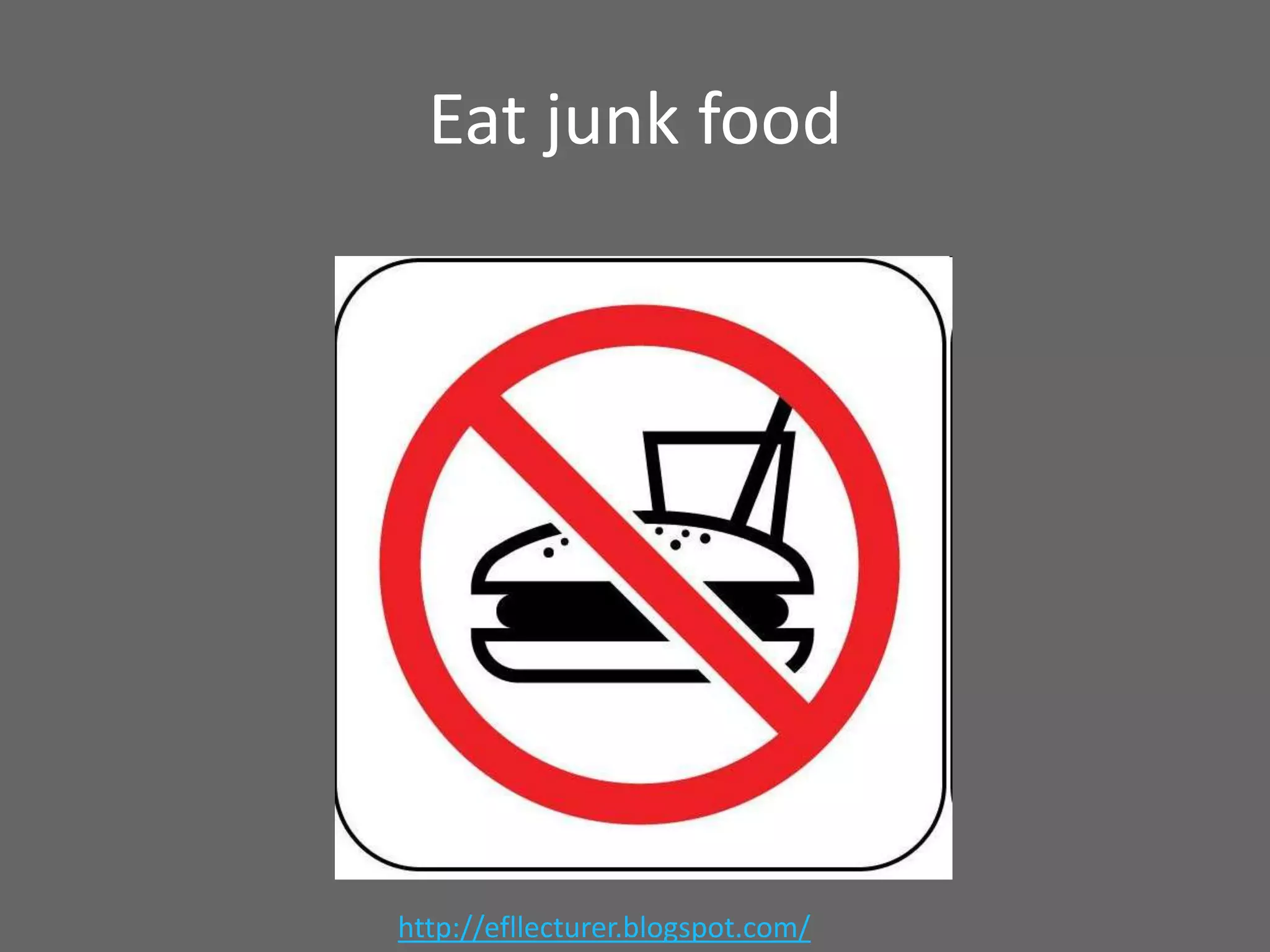
The document discusses different modals of obligation in English including must, have to, should, and ought to. It explains that must and have to express obligation or strong recommendation, with must expressing the speaker's own feelings and have to stating facts. Must can only be used for present and future tense while have to can be used in all tenses. Should and ought to are used to give advice or opinion. You mustn't indicates prohibition. You don't have to means there is no obligation. Examples are provided to illustrate the usage of each modal.




























![5.[41 45]impact of implied organizational support on organizational commitment](https://cdn.slidesharecdn.com/ss_thumbnails/5-41-45impactofimpliedorganizationalsupportonorganizationalcommitment-111125091154-phpapp01-thumbnail.jpg?width=640&height=640&fit=bounds)


