Modal Verbs
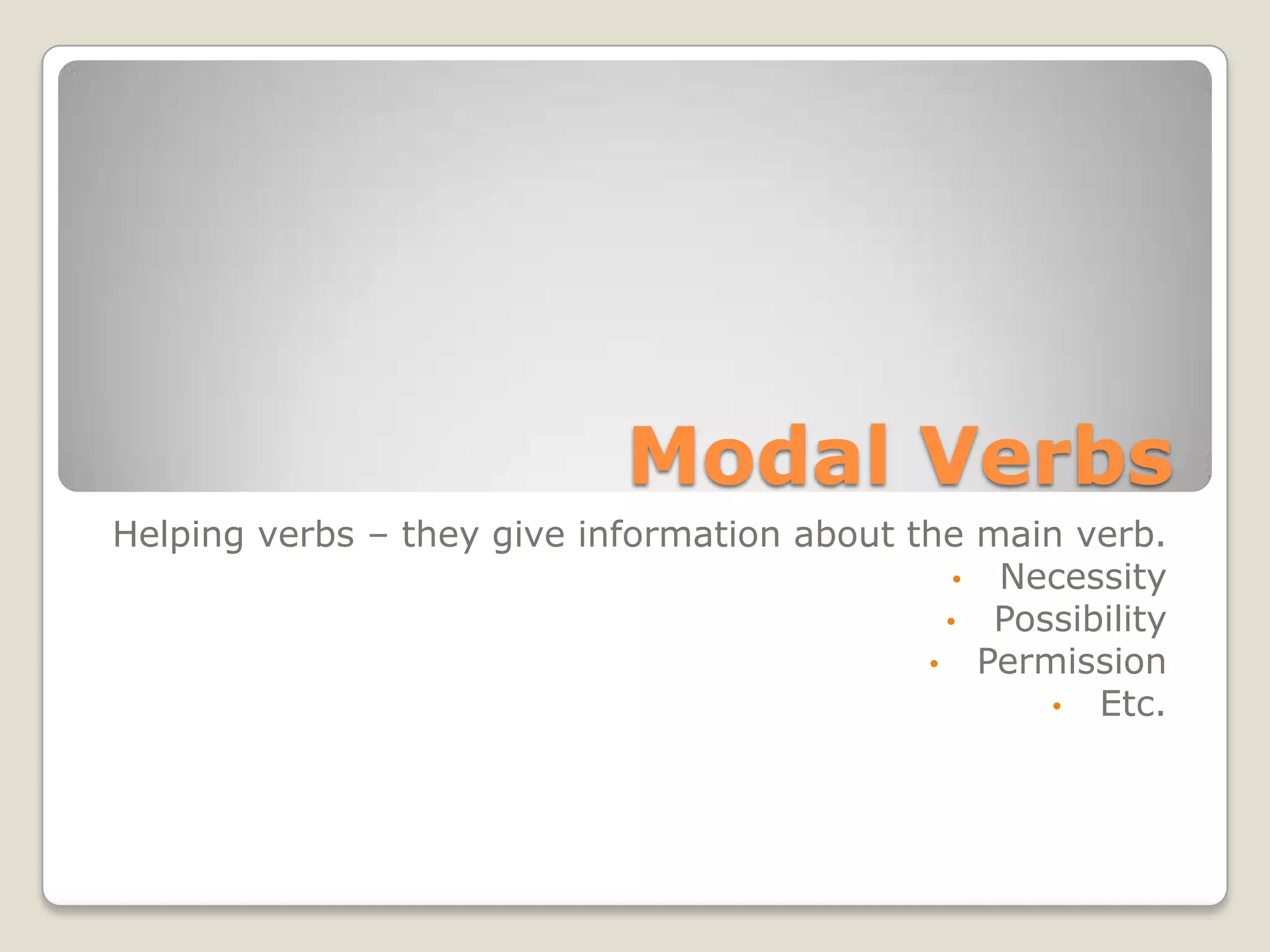
Helping verbs – they give information about the main verb.
                                               • Necessity
                                              • Possibility
                                             • Permission
                                                   • Etc.
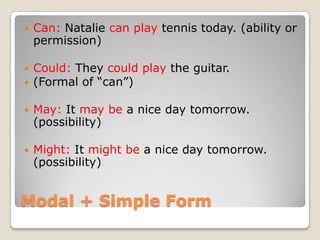
   Can: Natalie can play tennis today. (ability or
    permission)

   Could: They could play the guitar.
   (Formal of “can”)

   May: It may be a nice day tomorrow.
    (possibility)

   Might: It might be a nice day tomorrow.
    (possibility)


Modal + Simple Form
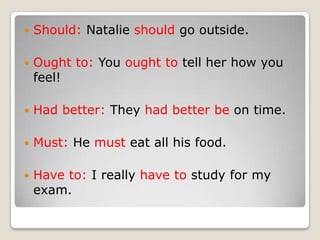
   Should: Natalie should go outside.

   Ought to: You ought to tell her how you
    feel!

   Had better: They had better be on time.

   Must: He must eat all his food.

   Have to: I really have to study for my
    exam.
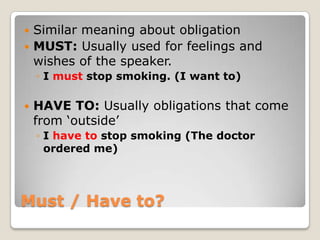
 Similar meaning about obligation
 MUST: Usually used for feelings and
  wishes of the speaker.
    ◦ I must stop smoking. (I want to)

   HAVE TO: Usually obligations that come
    from „outside‟
    ◦ I have to stop smoking (The doctor
      ordered me)


Must / Have to?
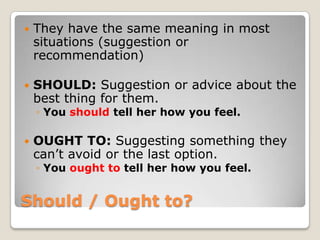
   They have the same meaning in most
    situations (suggestion or
    recommendation)

   SHOULD: Suggestion or advice about the
    best thing for them.
    ◦ You should tell her how you feel.

   OUGHT TO: Suggesting something they
    can‟t avoid or the last option.
    ◦ You ought to tell her how you feel.


Should / Ought to?
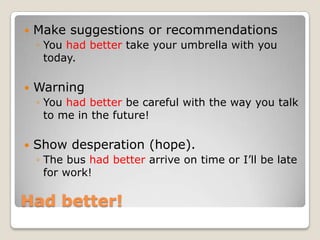
   Make suggestions or recommendations
    ◦ You had better take your umbrella with you
      today.

   Warning
    ◦ You had better be careful with the way you talk
      to me in the future!

   Show desperation (hope).
    ◦ The bus had better arrive on time or I‟ll be late
      for work!

Had better!
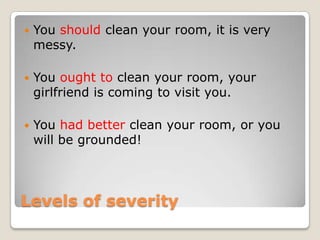
   You should clean your room, it is very
    messy.

   You ought to clean your room, your
    girlfriend is coming to visit you.

   You had better clean your room, or you
    will be grounded!


Levels of severity

Modal verbs...

  • 1.
    Modal Verbs Helping verbs– they give information about the main verb. • Necessity • Possibility • Permission • Etc.
  • 2.
    Can: Natalie can play tennis today. (ability or permission)  Could: They could play the guitar.  (Formal of “can”)  May: It may be a nice day tomorrow. (possibility)  Might: It might be a nice day tomorrow. (possibility) Modal + Simple Form
  • 3.
    Should: Natalie should go outside.  Ought to: You ought to tell her how you feel!  Had better: They had better be on time.  Must: He must eat all his food.  Have to: I really have to study for my exam.
  • 4.
     Similar meaningabout obligation  MUST: Usually used for feelings and wishes of the speaker. ◦ I must stop smoking. (I want to)  HAVE TO: Usually obligations that come from „outside‟ ◦ I have to stop smoking (The doctor ordered me) Must / Have to?
  • 5.
    They have the same meaning in most situations (suggestion or recommendation)  SHOULD: Suggestion or advice about the best thing for them. ◦ You should tell her how you feel.  OUGHT TO: Suggesting something they can‟t avoid or the last option. ◦ You ought to tell her how you feel. Should / Ought to?
  • 6.
    Make suggestions or recommendations ◦ You had better take your umbrella with you today.  Warning ◦ You had better be careful with the way you talk to me in the future!  Show desperation (hope). ◦ The bus had better arrive on time or I‟ll be late for work! Had better!
  • 7.
    You should clean your room, it is very messy.  You ought to clean your room, your girlfriend is coming to visit you.  You had better clean your room, or you will be grounded! Levels of severity