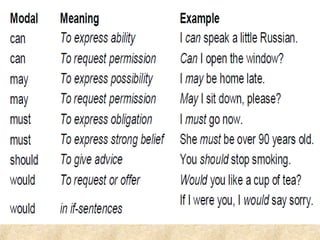
The modal verbs include can, must, may,
might, will, would, should have to and
ought to. They are used with other verbs
to express ability, obligation, possibility,
and so on.
Could expresses general ability in the past.
Was/Were able to express ability in a
particular situation in past.
Might, may and could are more formal than
can when used for asking for permission.
Would and could are more formal than will
and can when used for making request.
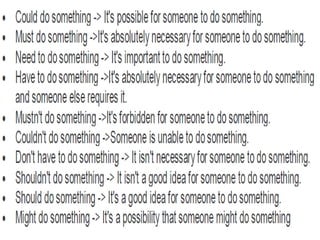
Had better is stronger than should and ought
to.
Must expresses obligation coming from how
the speaker fells, while have to expresses
obligation coming from external factors.
She can study english
Ella pude estudiar inglés
They can learn french
Ellos pueden aprender francès
Can Yulissa speak english?
Puede Yulissa hablar inglés?
German can’t work in the factory
German no puede trabajar en la fabrica
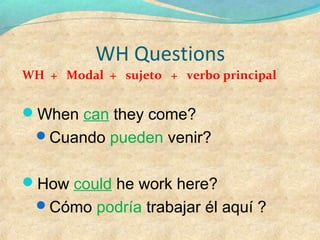
WH Questions
WH + Modal + sujeto + verbo principal
When can they come?
Cuando pueden venir?
How could he work here?
Cómo podría trabajar él aquí ?
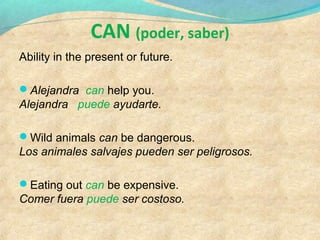
CAN (poder, saber)
Ability in the present or future.
Alejandra can help you.
Alejandra puede ayudarte.
Wild animals can be dangerous.
Los animales salvajes pueden ser peligrosos.
Eating out can be expensive.
Comer fuera puede ser costoso.
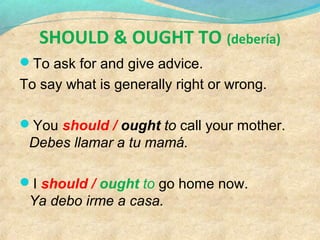
SHOULD & OUGHT TO (debería)
To ask for and give advice.
To say what is generally right or wrong.
You should / ought to call your mother.
Debes llamar a tu mamá.
I should / ought to go home now.
Ya debo irme a casa.
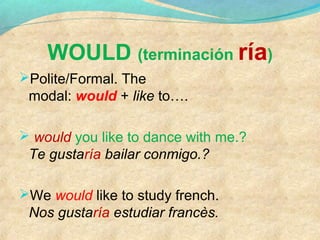
WOULD (terminación ría)
Polite/Formal. The
modal: would + like to….
 would you like to dance with me.?
Te gustaría bailar conmigo.?
We would like to study french.
Nos gustaría estudiar francès.
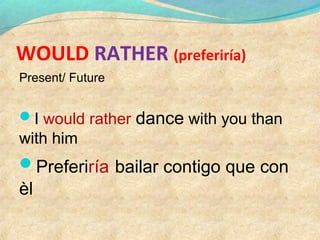
WOULD RATHER (preferiría)
Present/ Future
I would rather dance with you than
with him
Preferiría bailar contigo que con
èl
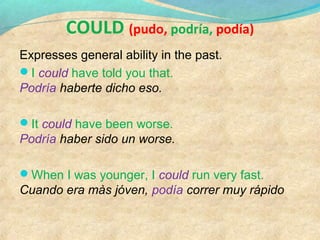
COULD (pudo, podría, podía)
Expresses general ability in the past.
I could have told you that.
Podría haberte dicho eso.
It could have been worse.
Podría haber sido un worse.
When I was younger, I could run very fast.
Cuando era màs jóven, podía correr muy rápido
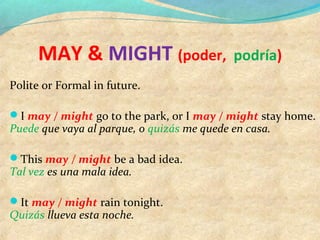
MAY & MIGHT (poder, podría)
Polite or Formal in future.
I may / might go to the park, or I may / might stay home.
Puede que vaya al parque, o quizás me quede en casa.
This may / might be a bad idea.
Tal vez es una mala idea.
It may / might rain tonight.
Quizás llueva esta noche.
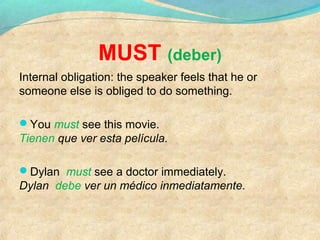
MUST (deber)
Internal obligation: the speaker feels that he or
someone else is obliged to do something.
You must see this movie.
Tienen que ver esta película.
Dylan must see a doctor immediately.
Dylan debe ver un médico inmediatamente.
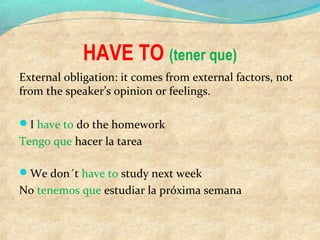
HAVE TO (tener que)
External obligation: it comes from external factors, not
from the speaker’s opinion or feelings.
I have to do the homework
Tengo que hacer la tarea
We don´t have to study next week
No tenemos que estudiar la próxima semana
SHALL & WILL (seré )
Informal in future.
I will / shall close the door for you.
Cerraré la puerta por ti.
Yessica will / shall meet us at the train station.
Yessica nos encontrará en la estación de tren.
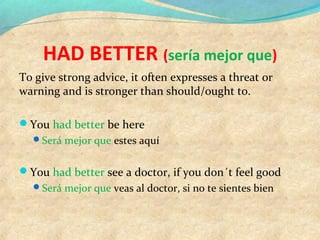
HAD BETTER (sería mejor que)
To give strong advice, it often expresses a threat or
warning and is stronger than should/ought to.
You had better be here
Será mejor que estes aquí
You had better see a doctor, if you don´t feel good
Será mejor que veas al doctor, si no te sientes bien
Modal verbs can be confusing for many students. This quick
guide will help you understand the basics of modal verbs.

Modal Verbs, English B2

  • 2.
    The modal verbsinclude can, must, may, might, will, would, should have to and ought to. They are used with other verbs to express ability, obligation, possibility, and so on.
  • 3.
    Could expresses generalability in the past. Was/Were able to express ability in a particular situation in past. Might, may and could are more formal than can when used for asking for permission. Would and could are more formal than will and can when used for making request. Had better is stronger than should and ought to. Must expresses obligation coming from how the speaker fells, while have to expresses obligation coming from external factors.
  • 4.
    She can studyenglish Ella pude estudiar inglés They can learn french Ellos pueden aprender francès Can Yulissa speak english? Puede Yulissa hablar inglés? German can’t work in the factory German no puede trabajar en la fabrica
  • 5.
    WH Questions WH +Modal + sujeto + verbo principal When can they come? Cuando pueden venir? How could he work here? Cómo podría trabajar él aquí ?
  • 6.
    CAN (poder, saber) Abilityin the present or future. Alejandra can help you. Alejandra puede ayudarte. Wild animals can be dangerous. Los animales salvajes pueden ser peligrosos. Eating out can be expensive. Comer fuera puede ser costoso.
  • 7.
    SHOULD & OUGHTTO (debería) To ask for and give advice. To say what is generally right or wrong. You should / ought to call your mother. Debes llamar a tu mamá. I should / ought to go home now. Ya debo irme a casa.
  • 8.
    WOULD (terminación ría) Polite/Formal.The modal: would + like to….  would you like to dance with me.? Te gustaría bailar conmigo.? We would like to study french. Nos gustaría estudiar francès.
  • 9.
    WOULD RATHER (preferiría) Present/Future I would rather dance with you than with him Preferiría bailar contigo que con èl
  • 10.
    COULD (pudo, podría,podía) Expresses general ability in the past. I could have told you that. Podría haberte dicho eso. It could have been worse. Podría haber sido un worse. When I was younger, I could run very fast. Cuando era màs jóven, podía correr muy rápido
  • 11.
    MAY & MIGHT(poder, podría) Polite or Formal in future. I may / might go to the park, or I may / might stay home. Puede que vaya al parque, o quizás me quede en casa. This may / might be a bad idea. Tal vez es una mala idea. It may / might rain tonight. Quizás llueva esta noche.
  • 12.
    MUST (deber) Internal obligation:the speaker feels that he or someone else is obliged to do something. You must see this movie. Tienen que ver esta película. Dylan must see a doctor immediately. Dylan debe ver un médico inmediatamente.
  • 13.
    HAVE TO (tenerque) External obligation: it comes from external factors, not from the speaker’s opinion or feelings. I have to do the homework Tengo que hacer la tarea We don´t have to study next week No tenemos que estudiar la próxima semana
  • 14.
    SHALL & WILL(seré ) Informal in future. I will / shall close the door for you. Cerraré la puerta por ti. Yessica will / shall meet us at the train station. Yessica nos encontrará en la estación de tren.
  • 15.
    HAD BETTER (seríamejor que) To give strong advice, it often expresses a threat or warning and is stronger than should/ought to. You had better be here Será mejor que estes aquí You had better see a doctor, if you don´t feel good Será mejor que veas al doctor, si no te sientes bien
  • 17.
    Modal verbs canbe confusing for many students. This quick guide will help you understand the basics of modal verbs.