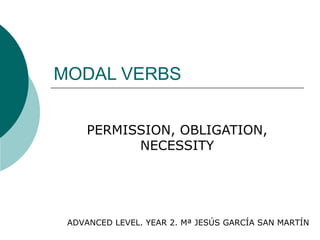
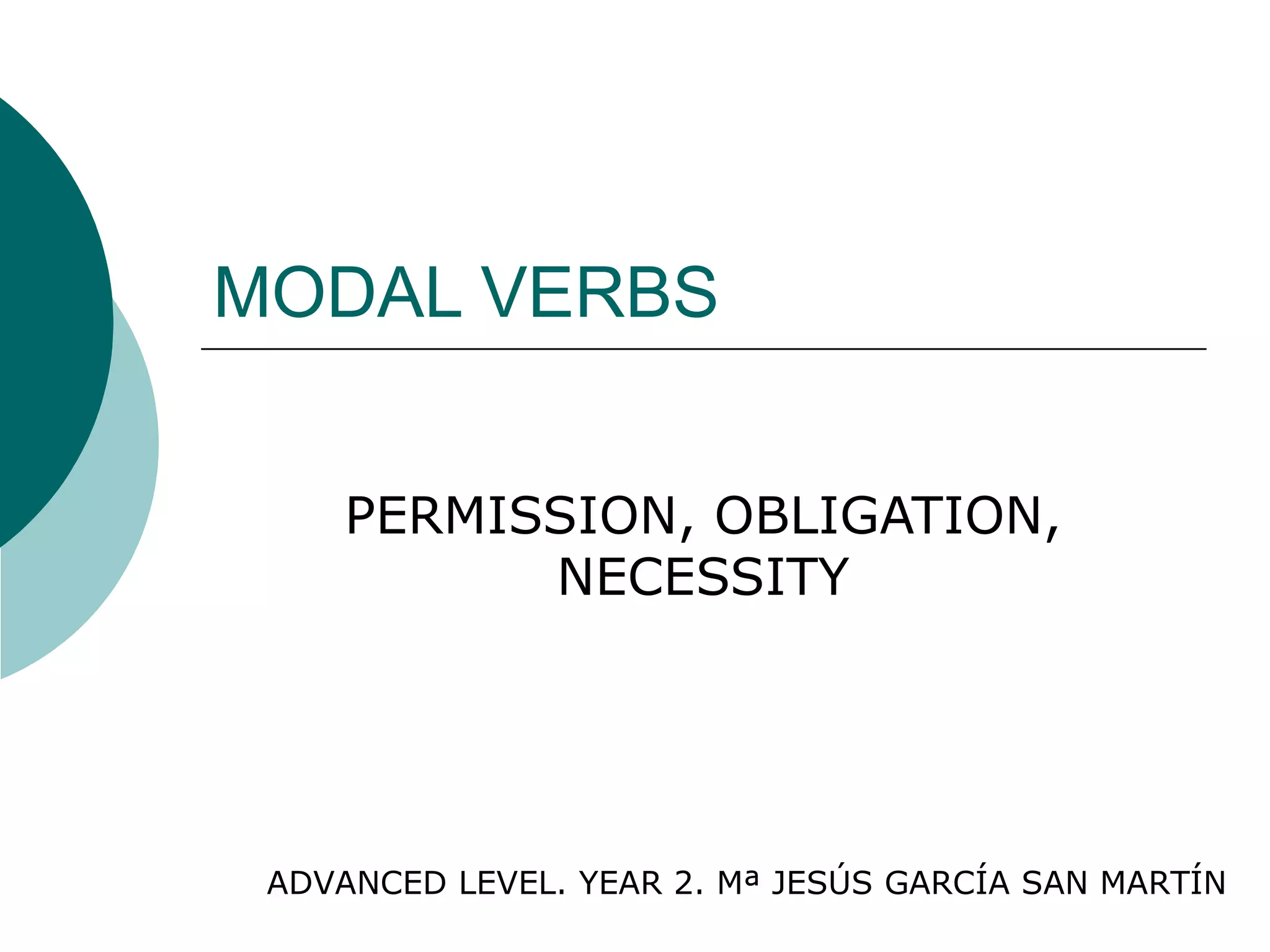
MODAL VERBS PERMISSION, OBLIGATION, NECESSITY ADVANCED LEVEL. YEAR 2. Mª JESÚS GARCÍA SAN MARTÍN
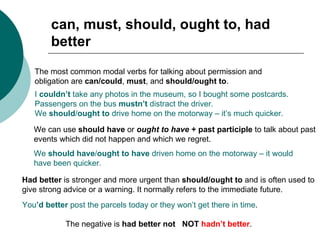
can, must, should, ought to, had better The negative is  had better   not   NOT  hadn’t better . The most common modal verbs for talking about permission and obligation are  can/could ,  must , and  should/ought to .  I  couldn’t  take any photos in the museum, so I bought some postcards. Passengers on the bus  mustn’t  distract the driver.  We  should / ought to  drive home on the motorway – it’s much quicker. We can use  should have  or  ought to have  + past participle  to talk about past events which did not happen and which we regret. We  should have / ought to have  driven home on the motorway – it would have been quicker. Had better  is stronger and more urgent than  should/ought to  and is often used to give strong advice or a warning. It normally refers to the immediate future. You ’d   better  post the parcels today or they won’t get there in time .
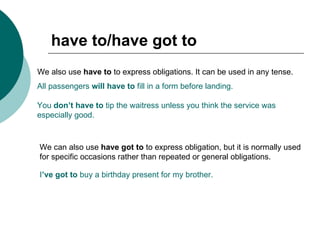
have to/have got to We also use  have to  to express obligations. It can be used in any tense.  All passengers  will have to  fill in a form before landing. You  don’t have to  tip the waitress unless you think the service was  especially good. We can also use  have got to  to express obligation, but it is normally used for specific occasions rather than repeated or general obligations. I ’ve got to  buy a birthday present for my brother.
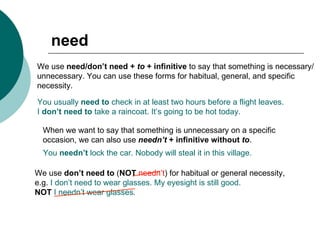
need We use  need/don’t need   +  to  + infinitive  to say that something is necessary/ unnecessary. You can use these forms for habitual, general, and specific  necessity. You usually  need to  check in at least two hours before a flight leaves. I  don’t need to  take a raincoat. It’s going to be hot today. When we want to say that something is unnecessary on a specific occasion, we can also use  needn’t  + infinitive without  to .  You  needn’t  lock the car. Nobody will steal it in this village. We use  don’t need to  ( NOT  needn’t ) for habitual or general necessity, e.g.  I don’t need to wear glasses. My eyesight is still good. NOT   I needn’t wear glasses .
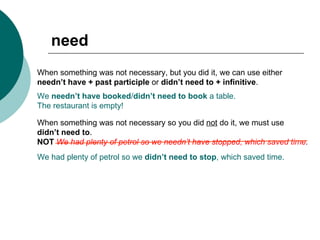
need When something was not necessary, but you did it, we can use either  needn’t have + past participle  or  didn’t need to + infinitive . We  needn’t have booked / didn’t need to book  a table.  The restaurant is empty! When something was not necessary so you did  not  do it, we must use didn’t need to . NOT   We had plenty of petrol so we needn’t have stopped, which saved time . We had plenty of petrol so we  didn’t need to stop , which saved time.
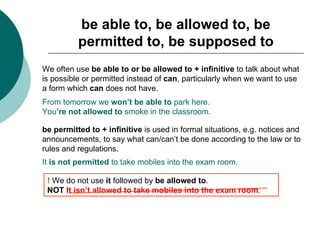
be able to, be allowed to, be permitted to, be supposed to We often use  be able to or be allowed to + infinitive  to talk about what is possible or permitted instead of  can , particularly when we want to use a form which  can  does not have. From tomorrow we  won’t be able to  park here. You ’re   not allowed to  smoke in the classroom.   be permitted to + infinitive  is used in formal situations, e.g. notices and announcements, to say what can/can’t be done according to the law or to rules and regulations. It  is not permitted  to take mobiles into the exam room. !  We do not use  it  followed by  be allowed to . NOT   It isn’t allowed to take mobiles into the exam room .
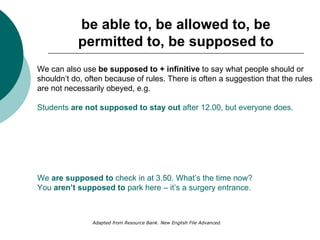
be able to, be allowed to, be permitted to, be supposed to Adapted from Resource Bank. New English File Advanced. We can also use  be supposed to + infinitive  to say what people should or shouldn’t do, often because of rules. There is often a suggestion that the rules are not necessarily obeyed, e.g. Students  are not supposed to stay out  after 12.00, but everyone does. We  are supposed to  check in at 3.50. What’s the time now? You  aren’t supposed to  park here – it’s a surgery entrance.

Modal verbs: permission, necessity, obligation

  • 1.
    MODAL VERBS PERMISSION,OBLIGATION, NECESSITY ADVANCED LEVEL. YEAR 2. Mª JESÚS GARCÍA SAN MARTÍN
  • 2.
    can, must, should,ought to, had better The negative is had better not NOT hadn’t better . The most common modal verbs for talking about permission and obligation are can/could , must , and should/ought to . I couldn’t take any photos in the museum, so I bought some postcards. Passengers on the bus mustn’t distract the driver. We should / ought to drive home on the motorway – it’s much quicker. We can use should have or ought to have + past participle to talk about past events which did not happen and which we regret. We should have / ought to have driven home on the motorway – it would have been quicker. Had better is stronger and more urgent than should/ought to and is often used to give strong advice or a warning. It normally refers to the immediate future. You ’d better post the parcels today or they won’t get there in time .
  • 3.
    have to/have gotto We also use have to to express obligations. It can be used in any tense. All passengers will have to fill in a form before landing. You don’t have to tip the waitress unless you think the service was especially good. We can also use have got to to express obligation, but it is normally used for specific occasions rather than repeated or general obligations. I ’ve got to buy a birthday present for my brother.
  • 4.
    need We use need/don’t need + to + infinitive to say that something is necessary/ unnecessary. You can use these forms for habitual, general, and specific necessity. You usually need to check in at least two hours before a flight leaves. I don’t need to take a raincoat. It’s going to be hot today. When we want to say that something is unnecessary on a specific occasion, we can also use needn’t + infinitive without to . You needn’t lock the car. Nobody will steal it in this village. We use don’t need to ( NOT needn’t ) for habitual or general necessity, e.g. I don’t need to wear glasses. My eyesight is still good. NOT I needn’t wear glasses .
  • 5.
    need When somethingwas not necessary, but you did it, we can use either needn’t have + past participle or didn’t need to + infinitive . We needn’t have booked / didn’t need to book a table. The restaurant is empty! When something was not necessary so you did not do it, we must use didn’t need to . NOT We had plenty of petrol so we needn’t have stopped, which saved time . We had plenty of petrol so we didn’t need to stop , which saved time.
  • 6.
    be able to,be allowed to, be permitted to, be supposed to We often use be able to or be allowed to + infinitive to talk about what is possible or permitted instead of can , particularly when we want to use a form which can does not have. From tomorrow we won’t be able to park here. You ’re not allowed to smoke in the classroom. be permitted to + infinitive is used in formal situations, e.g. notices and announcements, to say what can/can’t be done according to the law or to rules and regulations. It is not permitted to take mobiles into the exam room. ! We do not use it followed by be allowed to . NOT It isn’t allowed to take mobiles into the exam room .
  • 7.
    be able to,be allowed to, be permitted to, be supposed to Adapted from Resource Bank. New English File Advanced. We can also use be supposed to + infinitive to say what people should or shouldn’t do, often because of rules. There is often a suggestion that the rules are not necessarily obeyed, e.g. Students are not supposed to stay out after 12.00, but everyone does. We are supposed to check in at 3.50. What’s the time now? You aren’t supposed to park here – it’s a surgery entrance.