DO VS. MAKE
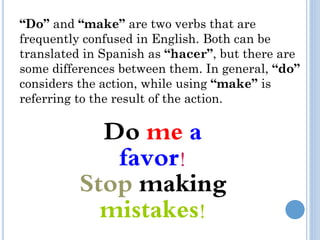
“Do” and “make” are two verbs that are
frequently confused in English. Both can be
translated in Spanish as “hacer”, but there are
some differences between them. In general, “do”
considers the action, while using “make” is
referring to the result of the action.
DO
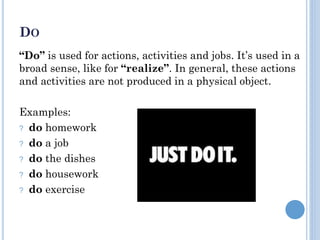
“Do” is used for actions, activities and jobs. It’s used in a
broad sense, like for “realize”. In general, these actions
and activities are not produced in a physical object.
Examples:
? do homework
? do a job
? do the dishes
? do housework
? do exercise
We use “do” when we talk about things in general, when
we are not specifying the activity. In this way, we can
use some indefinite pronouns like “something”,
“anything”, “nothing”, etc.
Examples:
? What are you doing today? I’m not doing anything.
? He’s always doing nice things for his girlfriend.
? Are you doing anything important right now?
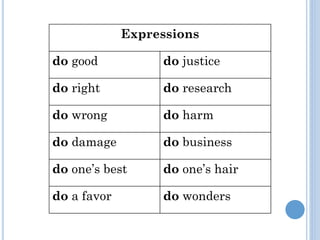
Expressions
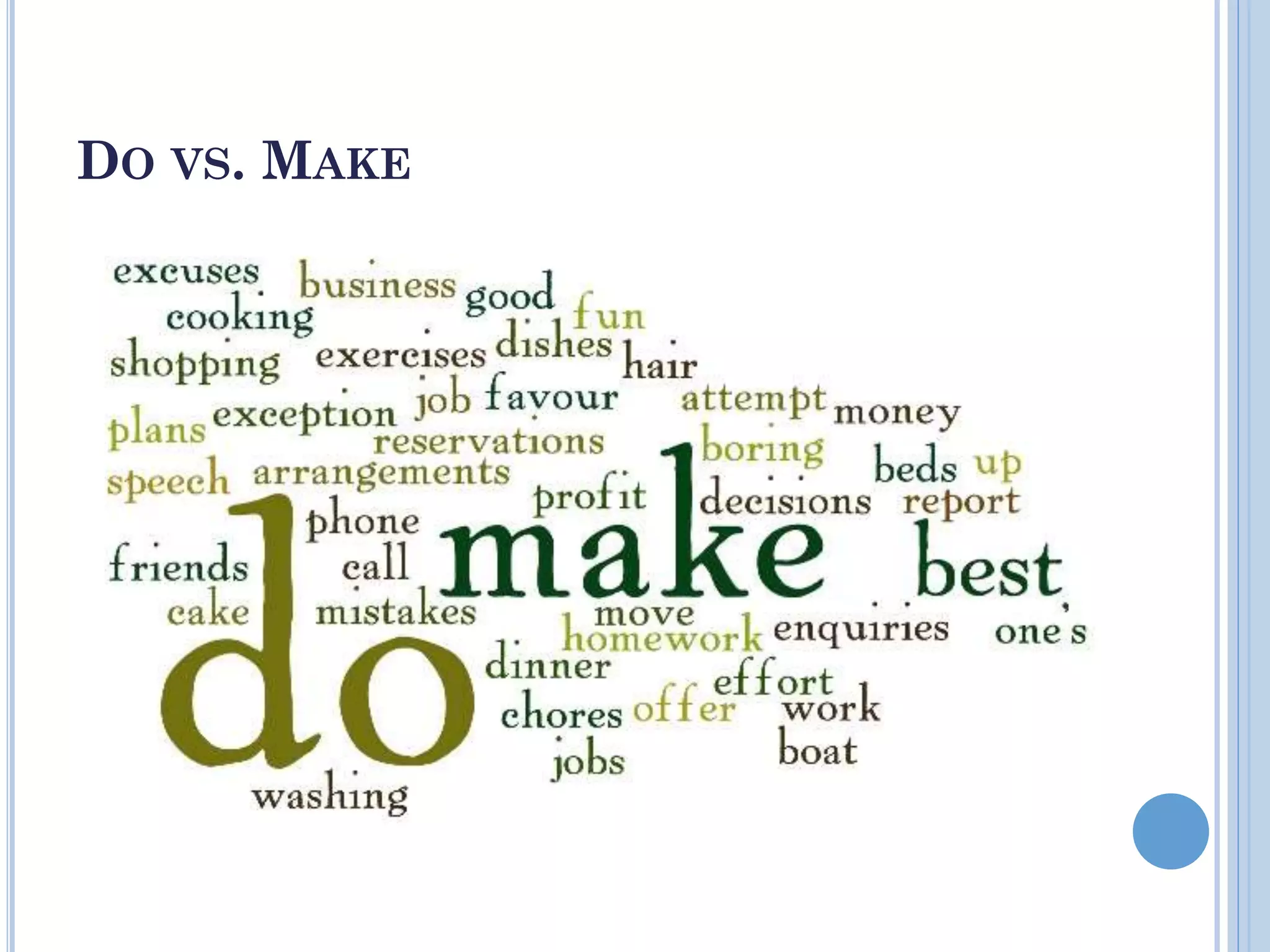
do good do justice
do right do research
do wrong do harm
do damage do business
do one’s best do one’s hair
do a favor do wonders
MAKE
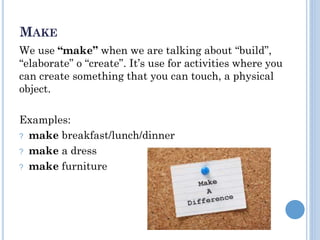
We use “make” when we are talking about “build”,
“elaborate” o “create”. It’s use for activities where you
can create something that you can touch, a physical
object.
Examples:
? make breakfast/lunch/dinner
? make a dress
? make furniture
Expressions
Note: There are a lot of expressions that use “make”. In
a lot of these, the sense of “make” is neither “fabricate”,
nor “create” and more often “do” seems to be more
appropriate, but they are established expressions, so we
have to memorize them.
Examples
make a decision make an offer make a speech
make a choice make [a] noise make a difference
make a plan make peace make friends
make arrangements make war make love
make an appointment make a phone call make a fire
make a mistake make an exception make an impression
make money make a confession make a mess
make an excuse make a discovery make a point
make an effort make a change make a promise
make an attempt make amends make a suggestion
make fun of make a comment make time
make progress make a statement make the bed

Do vs. Make

  • 1.
  • 2.
    “Do” and “make”are two verbs that are frequently confused in English. Both can be translated in Spanish as “hacer”, but there are some differences between them. In general, “do” considers the action, while using “make” is referring to the result of the action.
  • 3.
    DO “Do” is usedfor actions, activities and jobs. It’s used in a broad sense, like for “realize”. In general, these actions and activities are not produced in a physical object. Examples: ? do homework ? do a job ? do the dishes ? do housework ? do exercise
  • 4.
    We use “do”when we talk about things in general, when we are not specifying the activity. In this way, we can use some indefinite pronouns like “something”, “anything”, “nothing”, etc. Examples: ? What are you doing today? I’m not doing anything. ? He’s always doing nice things for his girlfriend. ? Are you doing anything important right now?
  • 5.
    Expressions do good dojustice do right do research do wrong do harm do damage do business do one’s best do one’s hair do a favor do wonders
  • 6.
    MAKE We use “make”when we are talking about “build”, “elaborate” o “create”. It’s use for activities where you can create something that you can touch, a physical object. Examples: ? make breakfast/lunch/dinner ? make a dress ? make furniture
  • 7.
    Expressions Note: There area lot of expressions that use “make”. In a lot of these, the sense of “make” is neither “fabricate”, nor “create” and more often “do” seems to be more appropriate, but they are established expressions, so we have to memorize them.
  • 8.
    Examples make a decisionmake an offer make a speech make a choice make [a] noise make a difference make a plan make peace make friends make arrangements make war make love make an appointment make a phone call make a fire make a mistake make an exception make an impression make money make a confession make a mess make an excuse make a discovery make a point make an effort make a change make a promise make an attempt make amends make a suggestion make fun of make a comment make time make progress make a statement make the bed