Modal verbs
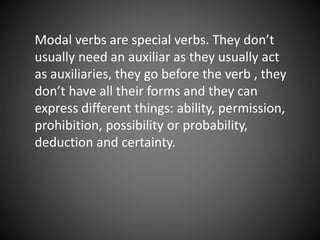
Modal verbs are special verbs. They don’t 
usually need an auxiliar as they usually act 
as auxiliaries, they go before the verb , they 
don’t have all their forms and they can 
express different things: ability, permission, 
prohibition, possibility or probability, 
deduction and certainty.
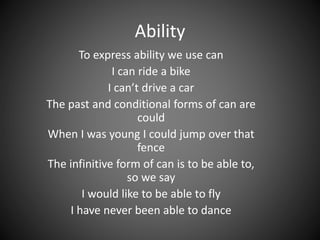
Ability 
To express ability we use can 
I can ride a bike 
I can’t drive a car 
The past and conditional forms of can are 
could 
When I was young I could jump over that 
fence 
The infinitive form of can is to be able to, 
so we say 
I would like to be able to fly 
I have never been able to dance
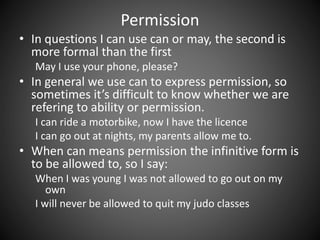
Permission 
• In questions I can use can or may, the second is 
more formal than the first 
May I use your phone, please? 
• In general we use can to express permission, so 
sometimes it’s difficult to know whether we are 
refering to ability or permission. 
I can ride a motorbike, now I have the licence 
I can go out at nights, my parents allow me to. 
• When can means permission the infinitive form is 
to be allowed to, so I say: 
When I was young I was not allowed to go out on my 
own 
I will never be allowed to quit my judo classes
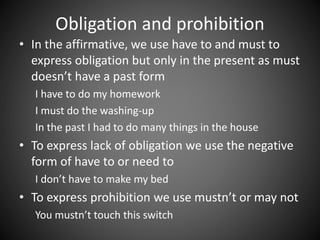
Obligation and prohibition 
• In the affirmative, we use have to and must to 
express obligation but only in the present as must 
doesn’t have a past form 
I have to do my homework 
I must do the washing-up 
In the past I had to do many things in the house 
• To express lack of obligation we use the negative 
form of have to or need to 
I don’t have to make my bed 
• To express prohibition we use mustn’t or may not 
You mustn’t touch this switch
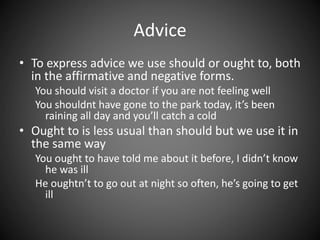
Advice 
• To express advice we use should or ought to, both 
in the affirmative and negative forms. 
You should visit a doctor if you are not feeling well 
You shouldnt have gone to the park today, it’s been 
raining all day and you’ll catch a cold 
• Ought to is less usual than should but we use it in 
the same way 
You ought to have told me about it before, I didn’t know 
he was ill 
He oughtn’t to go out at night so often, he’s going to get 
ill
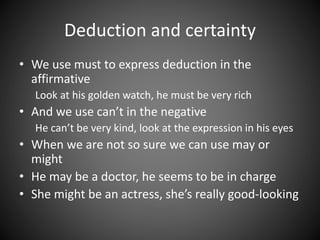
Deduction and certainty 
• We use must to express deduction in the 
affirmative 
Look at his golden watch, he must be very rich 
• And we use can’t in the negative 
He can’t be very kind, look at the expression in his eyes 
• When we are not so sure we can use may or 
might 
• He may be a doctor, he seems to be in charge 
• She might be an actress, she’s really good-looking
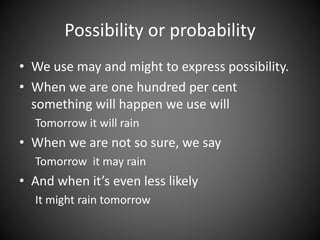
Possibility or probability 
• We use may and might to express possibility. 
• When we are one hundred per cent 
something will happen we use will 
Tomorrow it will rain 
• When we are not so sure, we say 
Tomorrow it may rain 
• And when it’s even less likely 
It might rain tomorrow

Modal verbs

  • 1.
  • 2.
    Modal verbs arespecial verbs. They don’t usually need an auxiliar as they usually act as auxiliaries, they go before the verb , they don’t have all their forms and they can express different things: ability, permission, prohibition, possibility or probability, deduction and certainty.
  • 3.
    Ability To expressability we use can I can ride a bike I can’t drive a car The past and conditional forms of can are could When I was young I could jump over that fence The infinitive form of can is to be able to, so we say I would like to be able to fly I have never been able to dance
  • 4.
    Permission • Inquestions I can use can or may, the second is more formal than the first May I use your phone, please? • In general we use can to express permission, so sometimes it’s difficult to know whether we are refering to ability or permission. I can ride a motorbike, now I have the licence I can go out at nights, my parents allow me to. • When can means permission the infinitive form is to be allowed to, so I say: When I was young I was not allowed to go out on my own I will never be allowed to quit my judo classes
  • 5.
    Obligation and prohibition • In the affirmative, we use have to and must to express obligation but only in the present as must doesn’t have a past form I have to do my homework I must do the washing-up In the past I had to do many things in the house • To express lack of obligation we use the negative form of have to or need to I don’t have to make my bed • To express prohibition we use mustn’t or may not You mustn’t touch this switch
  • 6.
    Advice • Toexpress advice we use should or ought to, both in the affirmative and negative forms. You should visit a doctor if you are not feeling well You shouldnt have gone to the park today, it’s been raining all day and you’ll catch a cold • Ought to is less usual than should but we use it in the same way You ought to have told me about it before, I didn’t know he was ill He oughtn’t to go out at night so often, he’s going to get ill
  • 7.
    Deduction and certainty • We use must to express deduction in the affirmative Look at his golden watch, he must be very rich • And we use can’t in the negative He can’t be very kind, look at the expression in his eyes • When we are not so sure we can use may or might • He may be a doctor, he seems to be in charge • She might be an actress, she’s really good-looking
  • 8.
    Possibility or probability • We use may and might to express possibility. • When we are one hundred per cent something will happen we use will Tomorrow it will rain • When we are not so sure, we say Tomorrow it may rain • And when it’s even less likely It might rain tomorrow