Mobilising business
(processes)
By
Amna naseem
Sumrah karamat
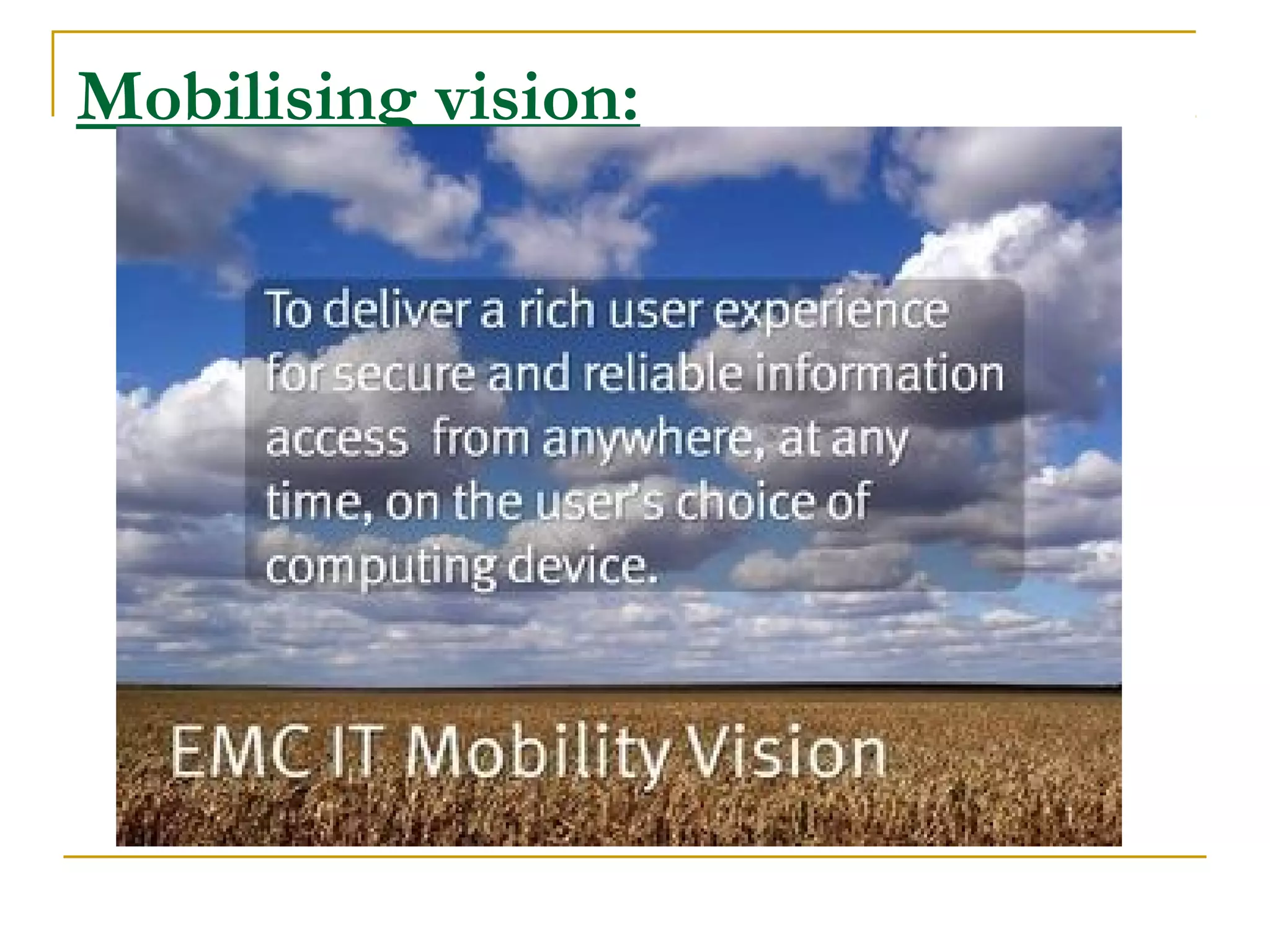
Mobilising vision:
Mobilising business:
 Throughout the 2012 mobile seemed as most
influential trend in many technology areas; as
the voice president of Gartner inc,put it this
way at the company’s ITxpo conference :
“ Mobile has outweighed impact in
terms of disruption”
What is mobilising business?
 The word mobilisation
was first used in a
military context
 “To organize or adopt
for service in time of
war or other
emergency” i.e to
mobilise industry
Mobilising process
 Companies are reformatting themselves to
leverage mobility and that includes mobilizing
the business process.
 This process includes 4 steps:
1. Deciding what to mobilise.
2. Build a foundation with a network service.
3. Provide security and standards.
4. Mobile process; reality v/s hype
Step.1 deciding what to do?
According to Richardson:
 “A lot of people even don’t have a clue about where
to begin”
 Expert says: one key to mastering mobile trend
setting the top priorities.
 Using the mobile capability for right reason.
 Implementing mobility for mobility's sake.
 Design their work around the tool. (It could be
costly)
 Select the process whose benefits seem obvious
 Look at two dimensions to decide whether a
business be mobilized or not
 Level of urgency
 If the process is urgent would be getting
done faster
 Need for context
 Real time access of information or context
would improve the outcomes of the process.
Step.2 Build a foundation with network
service.
 Connect the Internet of things, not
just laptops.
 Function globally using a wide
range of wireless networks.
 Integrate with Cloud and SaaS
service (software as a service)
Step.3 Provide security and standards.
 Security.
 Security is also a high priority as Wissman says:
“You have to think about security extra deeply”
 Update mobile policies.( what policy change need to take
place).
 Without security, policies lead to the horrible experience.
 Secure corporate data.
 Need to protect the actual connection between content and the
device.
 educate mobile workers on securing their devices.
 Without security policies, its only the wastage of money.
 It is important for the ease of use and customer satisfaction.
 Standards.
 It is important to have a set of standards:
What's the expected look and feel?
 Says sinur; “you don’t want to confuse
people on their mobile devices”
 For example companies set the standard
for users SOPA (stop online piracy act)
Step4:Mobile processes: reality vs.
hype: Industries have taken lead
with mobilisation process
service, utility hospitality
company quickly adopt the
mobile trend.
 Whose workers aren't in the
office all time
 company allow flexible work
hours represent departure
from traditional work.
For What type of businesses suitable?
 it is not suitable for every type of businesses
 It is suitable for short term businesses
 It is not suitable for the long term businesses
1: Emc use the mobilisation business
(2011):
2:Blackberry World 2012 for Enterprise
Customers Mobilizing Apps: Q&A
about the App-Focused Sessions
1. Mobility Planning Phases: Discover, Develop and
Deploy
2. Segment Your Users
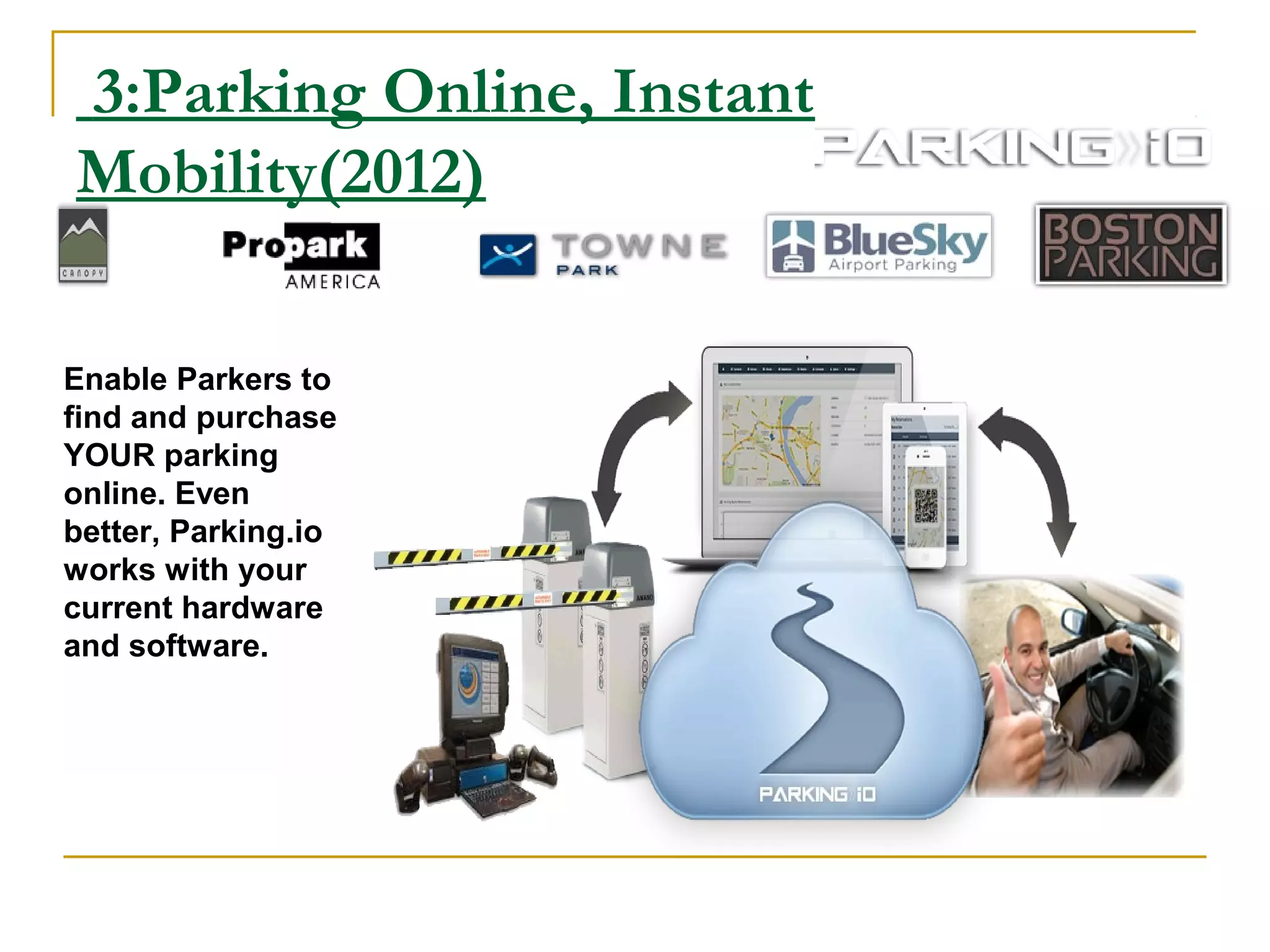
3:Parking Online, Instant
Mobility(2012)
Enable Parkers to
find and purchase
YOUR parking
online. Even
better, Parking.io
works with your
current hardware
and software.
4:mobile healthcare hospitality:
 Mobile health
that is used in
the outside
area of the
city where is
not instantly
healthcare
facilities
available.
mobile app usage worldwide for
mobilising:
 $52b 44b 41b
WW apps market in
2016
Mobile app downloads
by 2016
Average # of apps
per device
Challenges of mobilising business:
 Device diversity
 Data partitioning and
distribution of mobile
application
 Application ,device security,
and data transport security
 Lack of bandwidth, and
seamless connectivity issues
 Application life cycle
management and device
management
Pros of mobilising
business:
 Enhance productivity of the workforce.
 Increase customer satisfaction.
 Increase flexibility.
 Increase efficiency of operations.
Con’s of mobilising business:
 Keeping up with browser upgrades user
experience.
 High development costs, long lead times.
 Keeping up with changing devices limited
expandability.
Conclusion:
 Companies concluded:
 We should take a black pen and cross the
word “mobile”.
 Connected on what you already know.
 We should need to think about how to run the
business process.
Mobilising  business

Mobilising business

  • 1.
  • 2.
  • 3.
    Mobilising business:  Throughoutthe 2012 mobile seemed as most influential trend in many technology areas; as the voice president of Gartner inc,put it this way at the company’s ITxpo conference : “ Mobile has outweighed impact in terms of disruption”
  • 4.
    What is mobilisingbusiness?  The word mobilisation was first used in a military context  “To organize or adopt for service in time of war or other emergency” i.e to mobilise industry
  • 5.
    Mobilising process  Companiesare reformatting themselves to leverage mobility and that includes mobilizing the business process.  This process includes 4 steps: 1. Deciding what to mobilise. 2. Build a foundation with a network service. 3. Provide security and standards. 4. Mobile process; reality v/s hype
  • 6.
    Step.1 deciding whatto do? According to Richardson:  “A lot of people even don’t have a clue about where to begin”  Expert says: one key to mastering mobile trend setting the top priorities.  Using the mobile capability for right reason.  Implementing mobility for mobility's sake.  Design their work around the tool. (It could be costly)  Select the process whose benefits seem obvious  Look at two dimensions to decide whether a business be mobilized or not
  • 7.
     Level ofurgency  If the process is urgent would be getting done faster  Need for context  Real time access of information or context would improve the outcomes of the process.
  • 8.
    Step.2 Build afoundation with network service.  Connect the Internet of things, not just laptops.  Function globally using a wide range of wireless networks.  Integrate with Cloud and SaaS service (software as a service)
  • 9.
    Step.3 Provide securityand standards.  Security.  Security is also a high priority as Wissman says: “You have to think about security extra deeply”  Update mobile policies.( what policy change need to take place).  Without security, policies lead to the horrible experience.  Secure corporate data.  Need to protect the actual connection between content and the device.  educate mobile workers on securing their devices.  Without security policies, its only the wastage of money.  It is important for the ease of use and customer satisfaction.
  • 10.
     Standards.  Itis important to have a set of standards: What's the expected look and feel?  Says sinur; “you don’t want to confuse people on their mobile devices”  For example companies set the standard for users SOPA (stop online piracy act)
  • 11.
    Step4:Mobile processes: realityvs. hype: Industries have taken lead with mobilisation process service, utility hospitality company quickly adopt the mobile trend.  Whose workers aren't in the office all time  company allow flexible work hours represent departure from traditional work.
  • 12.
    For What typeof businesses suitable?  it is not suitable for every type of businesses  It is suitable for short term businesses  It is not suitable for the long term businesses
  • 13.
    1: Emc usethe mobilisation business (2011):
  • 14.
    2:Blackberry World 2012for Enterprise Customers Mobilizing Apps: Q&A about the App-Focused Sessions 1. Mobility Planning Phases: Discover, Develop and Deploy 2. Segment Your Users
  • 15.
    3:Parking Online, Instant Mobility(2012) EnableParkers to find and purchase YOUR parking online. Even better, Parking.io works with your current hardware and software.
  • 16.
    4:mobile healthcare hospitality: Mobile health that is used in the outside area of the city where is not instantly healthcare facilities available.
  • 18.
    mobile app usageworldwide for mobilising:  $52b 44b 41b WW apps market in 2016 Mobile app downloads by 2016 Average # of apps per device
  • 19.
    Challenges of mobilisingbusiness:  Device diversity  Data partitioning and distribution of mobile application  Application ,device security, and data transport security  Lack of bandwidth, and seamless connectivity issues  Application life cycle management and device management
  • 20.
    Pros of mobilising business: Enhance productivity of the workforce.  Increase customer satisfaction.  Increase flexibility.  Increase efficiency of operations.
  • 21.
    Con’s of mobilisingbusiness:  Keeping up with browser upgrades user experience.  High development costs, long lead times.  Keeping up with changing devices limited expandability.
  • 22.
    Conclusion:  Companies concluded: We should take a black pen and cross the word “mobile”.  Connected on what you already know.  We should need to think about how to run the business process.