Using Mobile Apps to Drive 
Manufacturing Operational Excellence
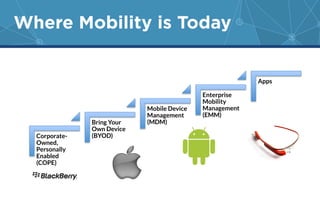
Where Mobility is Today 
Corporate- 
Owned, 
Personally 
Enabled 
(COPE) 
Bring Your 
Own Device 
(BYOD) 
Mobile Device 
Management 
(MDM) 
Enterprise 
Mobility 
Management 
(EMM) 
Apps
2003: Mobility as a Hybrid Device 
• In 2003, Blackberry devices were 
introduced with physical keyboards 
• COPE (Corporate-Owned, 
Personally Enabled) 
• Consumers had the ability to text 
message and e-mail from a mobile 
device for the first time
2007: The BYOD Revolution 
• In 2007, Apple introduced the first 
iPhone 
• One-to-two function apps were 
launched 
• Changed the way we viewed 
software—lighter, quicker and gets 
out of the way when you’re done 
with it
The Implementation of MDM 
• The introduction of Android 
devices saw the beginning of 
different operating systems 
• Unpredictable landscape for mobile 
device security 
• Corporate IT departments 
responded with implementing 
MDM to secure corporate data
The Shift Away from MDM 
• Forward thinking IT departments 
began to move away from MDM 
and towards EMM in the late 
2000’s 
• Management of data and apps 
began on corporate back ends, 
rather than on the user’s device
The Shift Towards Managing Apps 
• Today, the focus is shifting away 
from managing devices towards 
managing apps 
• By implementing apps, 
organizations provide new 
opportunities for maximizing 
operational excellence and 
modernizing business processes
Where is the Opportunity? 
• Mobility is the next opportunity for process 
improvements & enhanced operations 
• Drive faster, more rapid and informed decision making 
• Reducing the number of steps it takes to do one’s job 
• Added productivity both inside and outside of facilities 
• Utilize existing business processes & modernize them, 
making them more efficient & enjoyable to employees
Where to Start? 
• Think about manual, cumbersome or error prone 
processes 
• Usage of paper is a big indicator of potential for process 
improvement 
• Start small, but significant, get real results 
• Improve visibility for management using mobile apps to 
get real world results
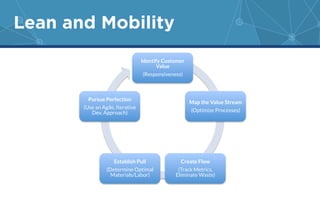
Lean and Mobility 
Identify Customer 
Value 
(Responsiveness) 
Map the Value Stream 
(Optimize Processes) 
Create Flow 
(Track Metrics, 
Eliminate Waste) 
Pursue Perfection 
(Use an Agile, Iterative 
Dev. Approach) 
Establish Pull 
(Determine Optimal 
Materials/Labor)
1. Identify Customer Value 
• Define value from the perspective of your final customer 
and meeting their needs 
• Focus on responsiveness and the need for high 
functionality 
• Analyze data to determine what your customers want and 
needs
2. Map the Value Stream 
• Optimize your current processes 
• Your value stream lists all the specific actions required to 
deliver 
• Create a map of your current state of operations and the 
desired future for your organization 
• Mapping the value stream is a crucial part of lean 
implementation of mobile apps
3. Create Flow 
• Tracking metrics from any place, at any time allows your 
managers to make operations decisions more quickly 
• Ensure your mobile apps flow smoothly through each step 
of your manufacturing process in the least lead-time 
possible 
• Eliminate unnecessary operational waste
4. Establish Pull 
• Determine optimal materials & eliminate labor costs 
• Let your team take a role in determining what is needed 
from your mobile apps 
• Use mobile analytics to locate orders and materials more 
easily 
• More closely track labor and materials costs
5. Pursue Perfection 
• Bring it all together 
• Maximize efficiencies in production, labor, cost and 
revenue 
• Make changes & innovate consistently to maintain a 
competitive advantage in the market 
• Use an agile, iterative development approach to 
implementing mobile apps in your organization
Success Story: PCMC 
• Company: Paper converting machinery 
manufacturer 
• Challenge: Increased sales stretching existing 
capacity, needed to automate communications 
with business partners
Success Story: PCMC 
• Answer: 
– Catavolt automated the supplier process for 
“pushing” manufacturing orders to suppliers 
• Results: 
– Eliminated need for phone calls 
– Minimized operating costs 
– Reduced quote to acceptance cycle from days to 
hours 
– On-time deliveries improved from 75% to 95% 
– Lower admin costs=an overall reduction in material 
costs
Success Story: Luverne Truck 
• Company: Designer and manufacturer of 
aftermarket truck parts, distributes via sales 
force operating from 17 warehouses 
• Challenge: Order processing through 
corporate delaying accurate inventory 
information
Success Story: Luverne Truck 
• Answer: 
– Catavolt gave sales reps real-time access to 
corporate data 
• Results: 
– More accurate inventory 
– Accurate invoicing, eliminating surprise payments 
– Real-time data, reps see YTD sales by week and 
orders reflected immediately 
– Small investment, big rewards-No new investments 
other than iPads and a few hours of instruction for 
IT
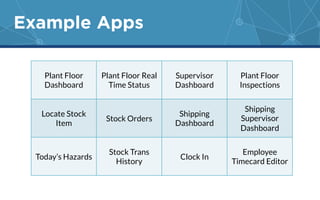
Example Apps 
Plant Floor 
Dashboard 
Plant Floor Real 
Time Status 
Supervisor 
Dashboard 
Plant Floor 
Inspections 
Locate Stock 
Item 
Stock Orders 
Shipping 
Dashboard 
Shipping 
Supervisor 
Dashboard 
Today’s Hazards 
Stock Trans 
History 
Clock In 
Employee 
Timecard Editor
Learn More and Get Started 
Click here to Visit the Catavolt Resource Center for 
Demo Videos, White Papers and eBook Downloads

Using Mobile Apps to Drive Manufacturing Operational Excellence

  • 1.
    Using Mobile Appsto Drive Manufacturing Operational Excellence
  • 2.
    Where Mobility isToday Corporate- Owned, Personally Enabled (COPE) Bring Your Own Device (BYOD) Mobile Device Management (MDM) Enterprise Mobility Management (EMM) Apps
  • 3.
    2003: Mobility asa Hybrid Device • In 2003, Blackberry devices were introduced with physical keyboards • COPE (Corporate-Owned, Personally Enabled) • Consumers had the ability to text message and e-mail from a mobile device for the first time
  • 4.
    2007: The BYODRevolution • In 2007, Apple introduced the first iPhone • One-to-two function apps were launched • Changed the way we viewed software—lighter, quicker and gets out of the way when you’re done with it
  • 5.
    The Implementation ofMDM • The introduction of Android devices saw the beginning of different operating systems • Unpredictable landscape for mobile device security • Corporate IT departments responded with implementing MDM to secure corporate data
  • 6.
    The Shift Awayfrom MDM • Forward thinking IT departments began to move away from MDM and towards EMM in the late 2000’s • Management of data and apps began on corporate back ends, rather than on the user’s device
  • 7.
    The Shift TowardsManaging Apps • Today, the focus is shifting away from managing devices towards managing apps • By implementing apps, organizations provide new opportunities for maximizing operational excellence and modernizing business processes
  • 8.
    Where is theOpportunity? • Mobility is the next opportunity for process improvements & enhanced operations • Drive faster, more rapid and informed decision making • Reducing the number of steps it takes to do one’s job • Added productivity both inside and outside of facilities • Utilize existing business processes & modernize them, making them more efficient & enjoyable to employees
  • 9.
    Where to Start? • Think about manual, cumbersome or error prone processes • Usage of paper is a big indicator of potential for process improvement • Start small, but significant, get real results • Improve visibility for management using mobile apps to get real world results
  • 10.
    Lean and Mobility Identify Customer Value (Responsiveness) Map the Value Stream (Optimize Processes) Create Flow (Track Metrics, Eliminate Waste) Pursue Perfection (Use an Agile, Iterative Dev. Approach) Establish Pull (Determine Optimal Materials/Labor)
  • 11.
    1. Identify CustomerValue • Define value from the perspective of your final customer and meeting their needs • Focus on responsiveness and the need for high functionality • Analyze data to determine what your customers want and needs
  • 12.
    2. Map theValue Stream • Optimize your current processes • Your value stream lists all the specific actions required to deliver • Create a map of your current state of operations and the desired future for your organization • Mapping the value stream is a crucial part of lean implementation of mobile apps
  • 13.
    3. Create Flow • Tracking metrics from any place, at any time allows your managers to make operations decisions more quickly • Ensure your mobile apps flow smoothly through each step of your manufacturing process in the least lead-time possible • Eliminate unnecessary operational waste
  • 14.
    4. Establish Pull • Determine optimal materials & eliminate labor costs • Let your team take a role in determining what is needed from your mobile apps • Use mobile analytics to locate orders and materials more easily • More closely track labor and materials costs
  • 15.
    5. Pursue Perfection • Bring it all together • Maximize efficiencies in production, labor, cost and revenue • Make changes & innovate consistently to maintain a competitive advantage in the market • Use an agile, iterative development approach to implementing mobile apps in your organization
  • 16.
    Success Story: PCMC • Company: Paper converting machinery manufacturer • Challenge: Increased sales stretching existing capacity, needed to automate communications with business partners
  • 17.
    Success Story: PCMC • Answer: – Catavolt automated the supplier process for “pushing” manufacturing orders to suppliers • Results: – Eliminated need for phone calls – Minimized operating costs – Reduced quote to acceptance cycle from days to hours – On-time deliveries improved from 75% to 95% – Lower admin costs=an overall reduction in material costs
  • 18.
    Success Story: LuverneTruck • Company: Designer and manufacturer of aftermarket truck parts, distributes via sales force operating from 17 warehouses • Challenge: Order processing through corporate delaying accurate inventory information
  • 19.
    Success Story: LuverneTruck • Answer: – Catavolt gave sales reps real-time access to corporate data • Results: – More accurate inventory – Accurate invoicing, eliminating surprise payments – Real-time data, reps see YTD sales by week and orders reflected immediately – Small investment, big rewards-No new investments other than iPads and a few hours of instruction for IT
  • 20.
    Example Apps PlantFloor Dashboard Plant Floor Real Time Status Supervisor Dashboard Plant Floor Inspections Locate Stock Item Stock Orders Shipping Dashboard Shipping Supervisor Dashboard Today’s Hazards Stock Trans History Clock In Employee Timecard Editor
  • 21.
    Learn More andGet Started Click here to Visit the Catavolt Resource Center for Demo Videos, White Papers and eBook Downloads