Madison Leadership Intelligence Theory (MLIT)
Dr. Cliff Madison Jr.
Dr. Andree Swanson
IBAM, San Diego, CA
November 3-5, 2016
Background
How the Madison Leadership Intelligence Theory (MLIT) came to be
Dissertation Study
The combination of leadership attributes was
accurately named by MLIT and was the foundation
for this study.
✓ Identify the leadership traits and interdependence of each of
the leadership characteristics as applied to the MLIT.
✓ Importance of leadership and the theory of MLIT and the
Clinical Nurse Manager Leader (NM-L)
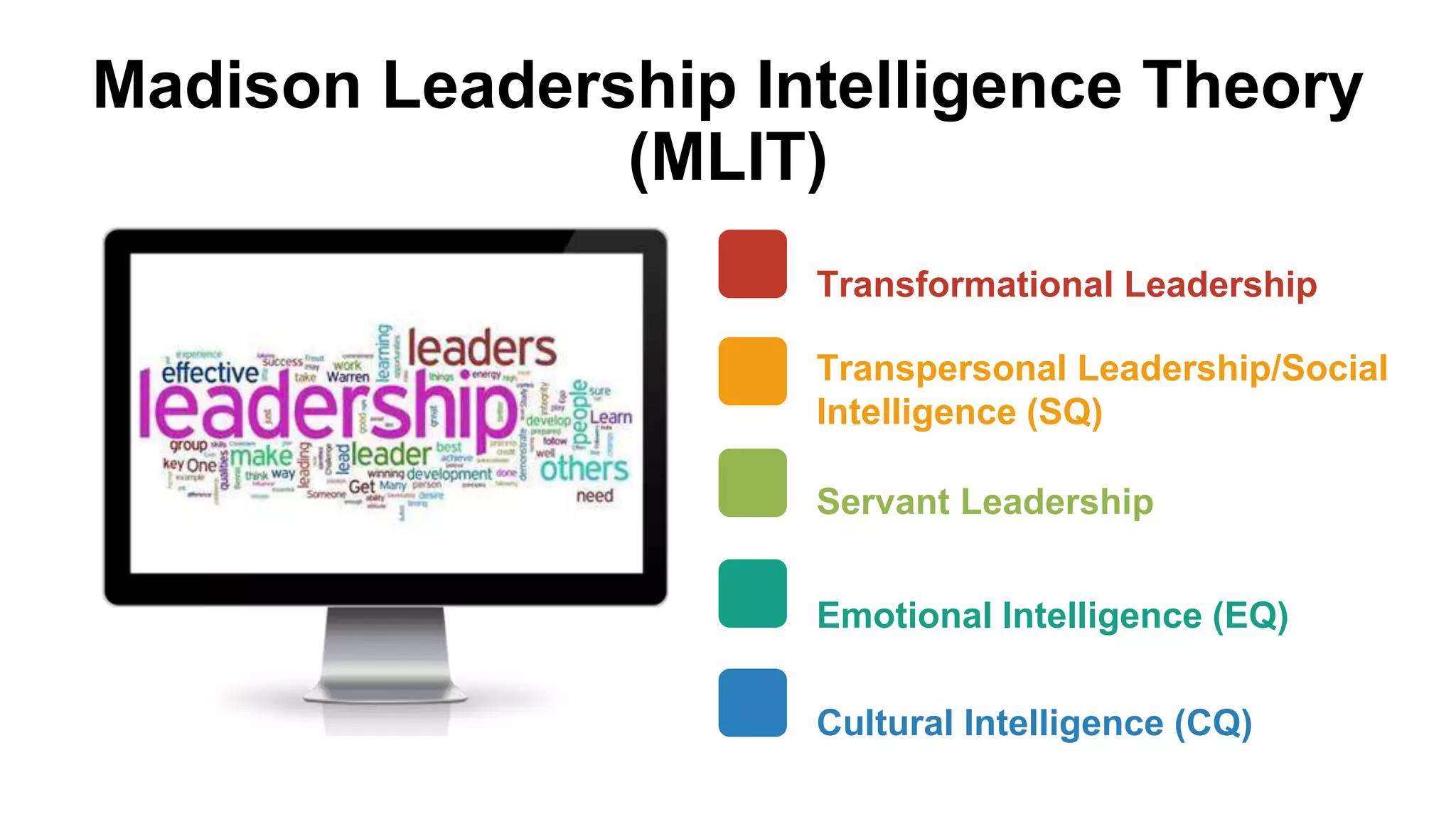
Madison Leadership Intelligence Theory
(MLIT)
Transformational Leadership
Transpersonal Leadership/Social
Intelligence (SQ)
Servant Leadership
Emotional Intelligence (EQ)
Cultural Intelligence (CQ)
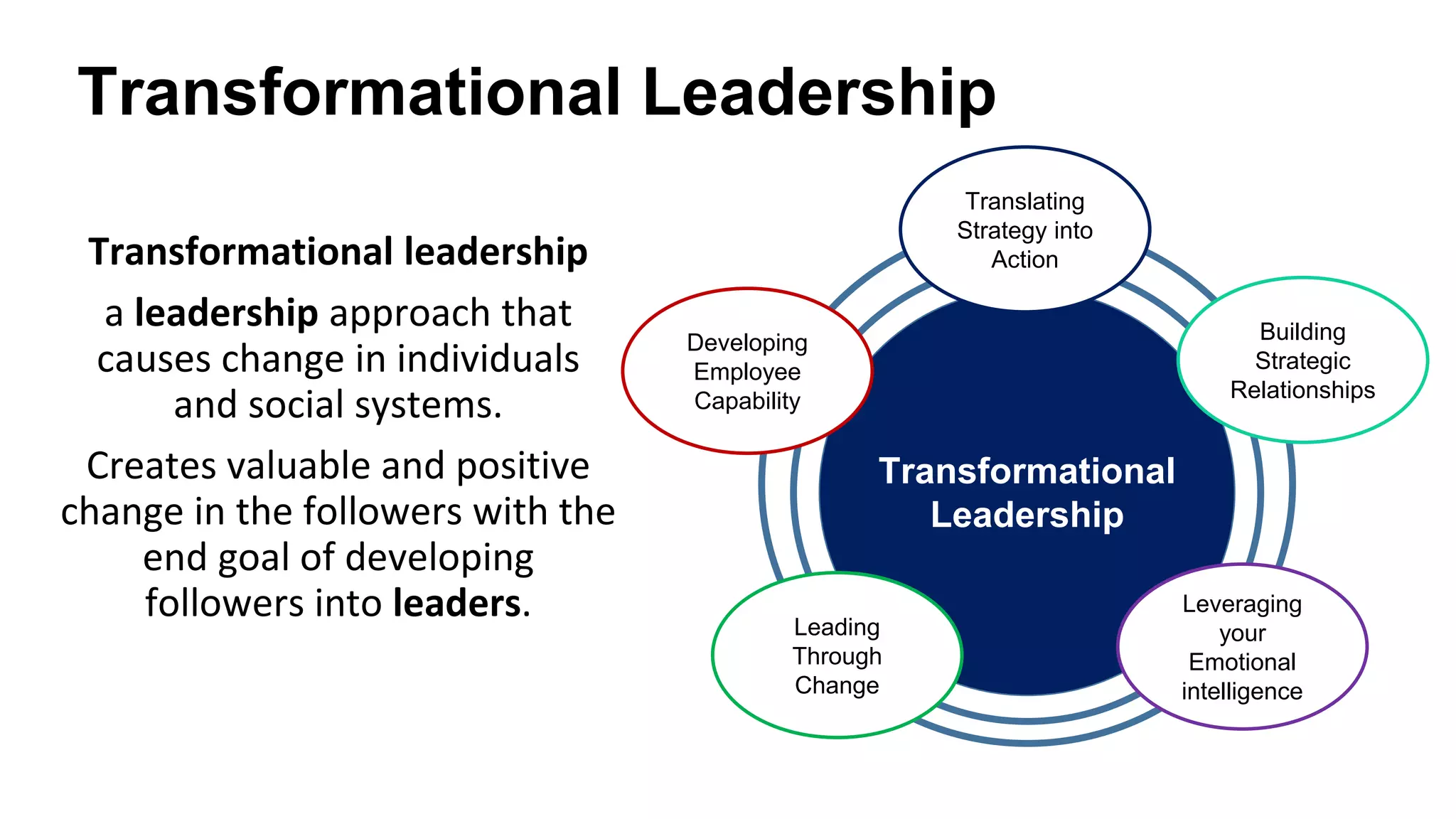
Transformational Leadership
Transformational leadership
a leadership approach that
causes change in individuals
and social systems.
Creates valuable and positive
change in the followers with the
end goal of developing
followers into leaders.
Transformational
Leadership
Translating
Strategy into
Action
Building
Strategic
Relationships
Leveraging
your
Emotional
intelligence
Leading
Through
Change
Developing
Employee
Capability
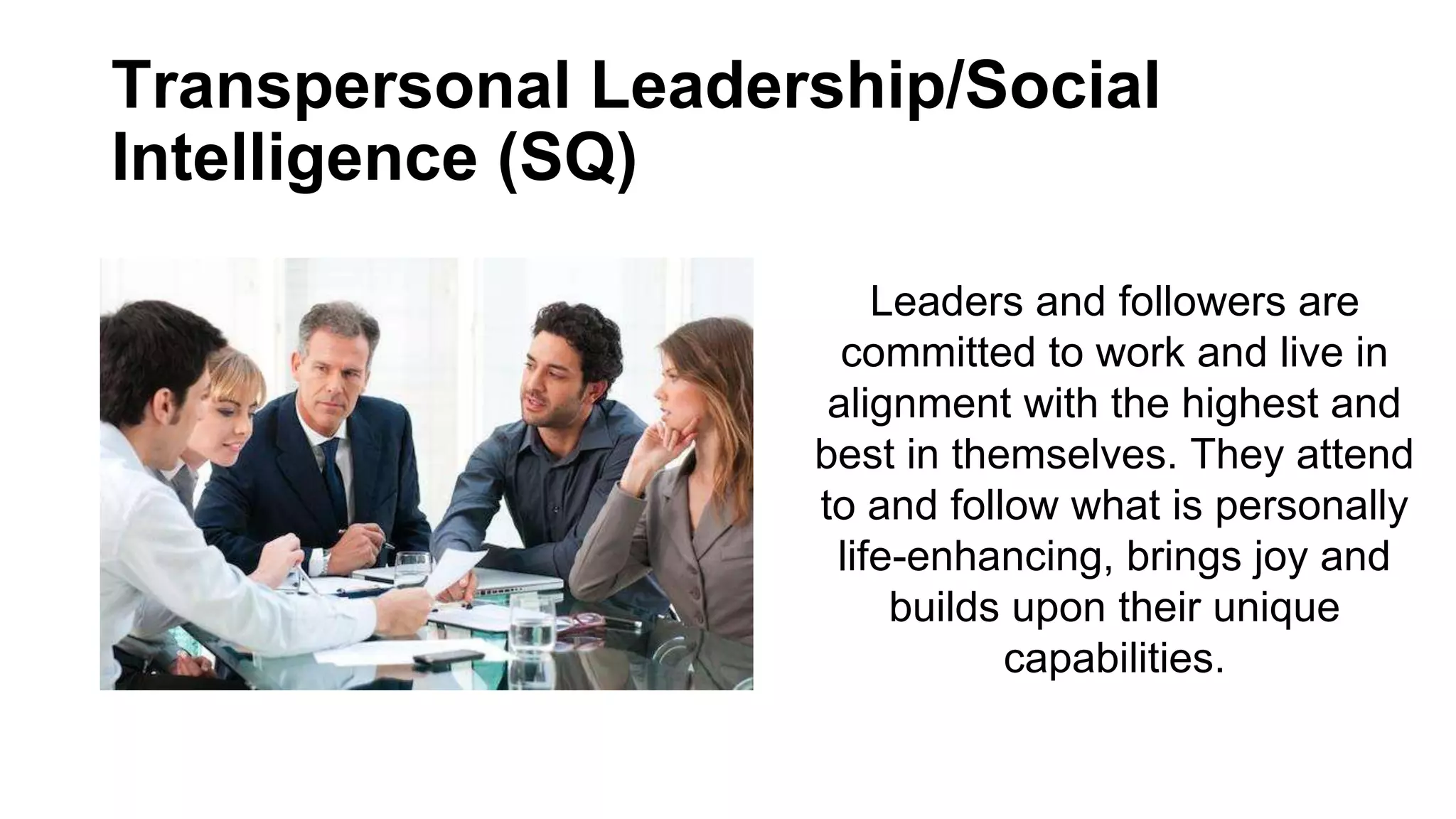
Transpersonal Leadership/Social
Intelligence (SQ)
Leaders and followers are
committed to work and live in
alignment with the highest and
best in themselves. They attend
to and follow what is personally
life-enhancing, brings joy and
builds upon their unique
capabilities.
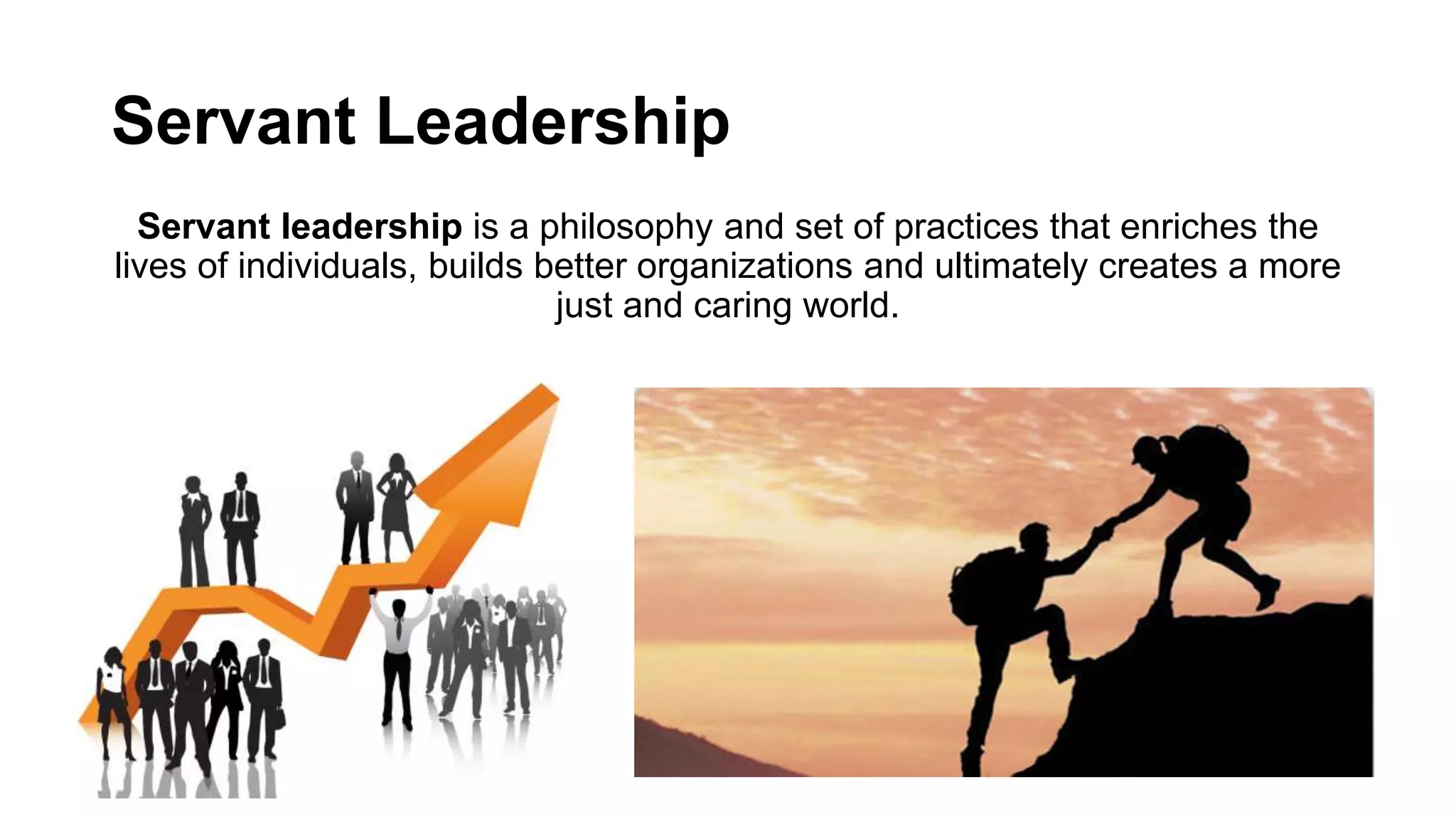
Servant Leadership
Servant leadership is a philosophy and set of practices that enriches the
lives of individuals, builds better organizations and ultimately creates a more
just and caring world.
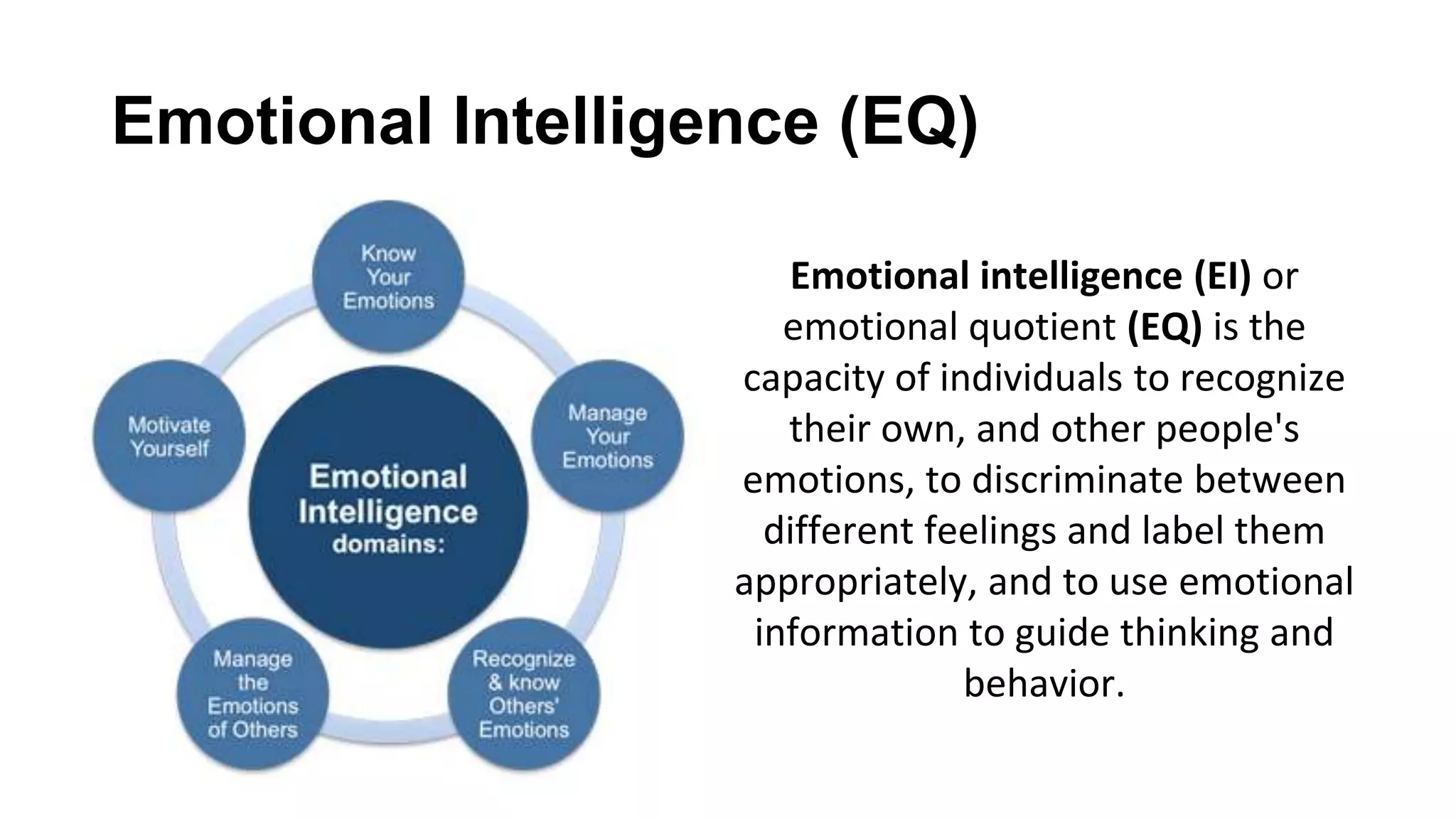
Emotional Intelligence (EQ)
Emotional intelligence (EI) or
emotional quotient (EQ) is the
capacity of individuals to recognize
their own, and other people's
emotions, to discriminate between
different feelings and label them
appropriately, and to use emotional
information to guide thinking and
behavior.
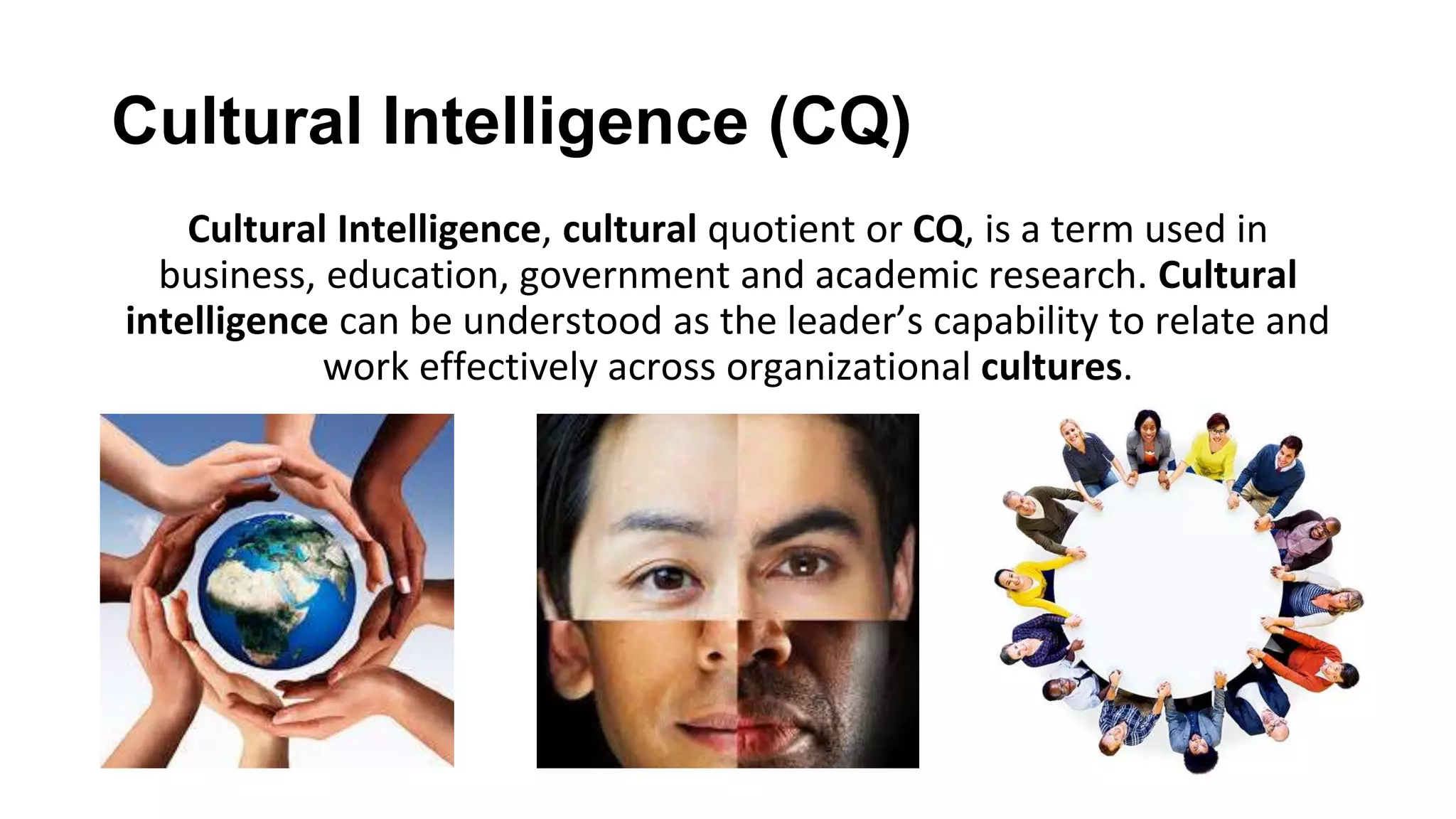
Cultural Intelligence (CQ)
Cultural Intelligence, cultural quotient or CQ, is a term used in
business, education, government and academic research. Cultural
intelligence can be understood as the leader’s capability to relate and
work effectively across organizational cultures.
Research Methodology
How was the dissertation study conducted
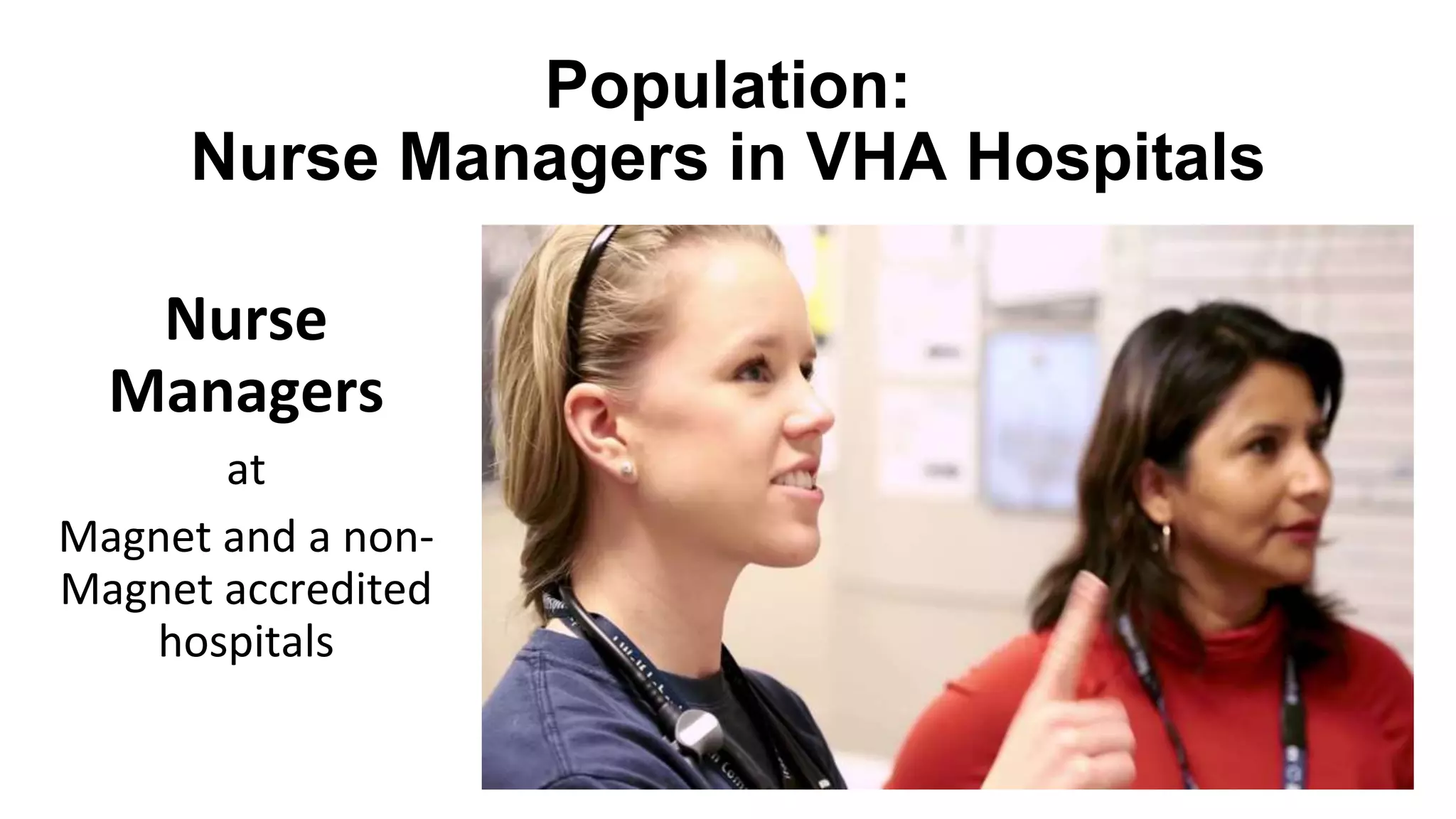
Population:
Nurse Managers in VHA Hospitals
Nurse
Managers
at
Magnet and a non-
Magnet accredited
hospitals
The Clinical Nurse Manager’s position changed and
movement over the past 5 years (2010 – 2015) in either VHA
hospitals.
✓ Demanding work environment.
✓ Required strong leadership at the clinical unit level.
✓ Ineffective leadership also created a gap in the quality of the
direction with the amount of change at the front level
leadership.
A lack of knowledge, self-confidence, self-awareness, and the
self-efficacy of Clinical Nurse Manager-leaders in healthcare
created an unstable, frustrated workforce, lower quality of care,
and unsafe environment for patient care.
(Kelly et al., 2012; Skagert et al., 2012; Trinkoff et al., 2010).
Nurse Managers Took Survey
Interpretation of the Findings
MLIT revealed the Nurse Managers from non-Magnet perceive
Transformational Leadership as more important than those
Magnet facility Nurse Managers surveyed.
Only two measurement areas within the Madison’s Leadership
Intelligence Theory (MLIT), Emotional Intelligence, and
Transformational Leadership illustrated a significant difference
of greater than two-point separation between the Magnet
accredited and non-magnet healthcare facilities.
Validating the Instrument
Forbes School of Business, Bachelors of Arts in Business Leadership
Took an interest in the instrument
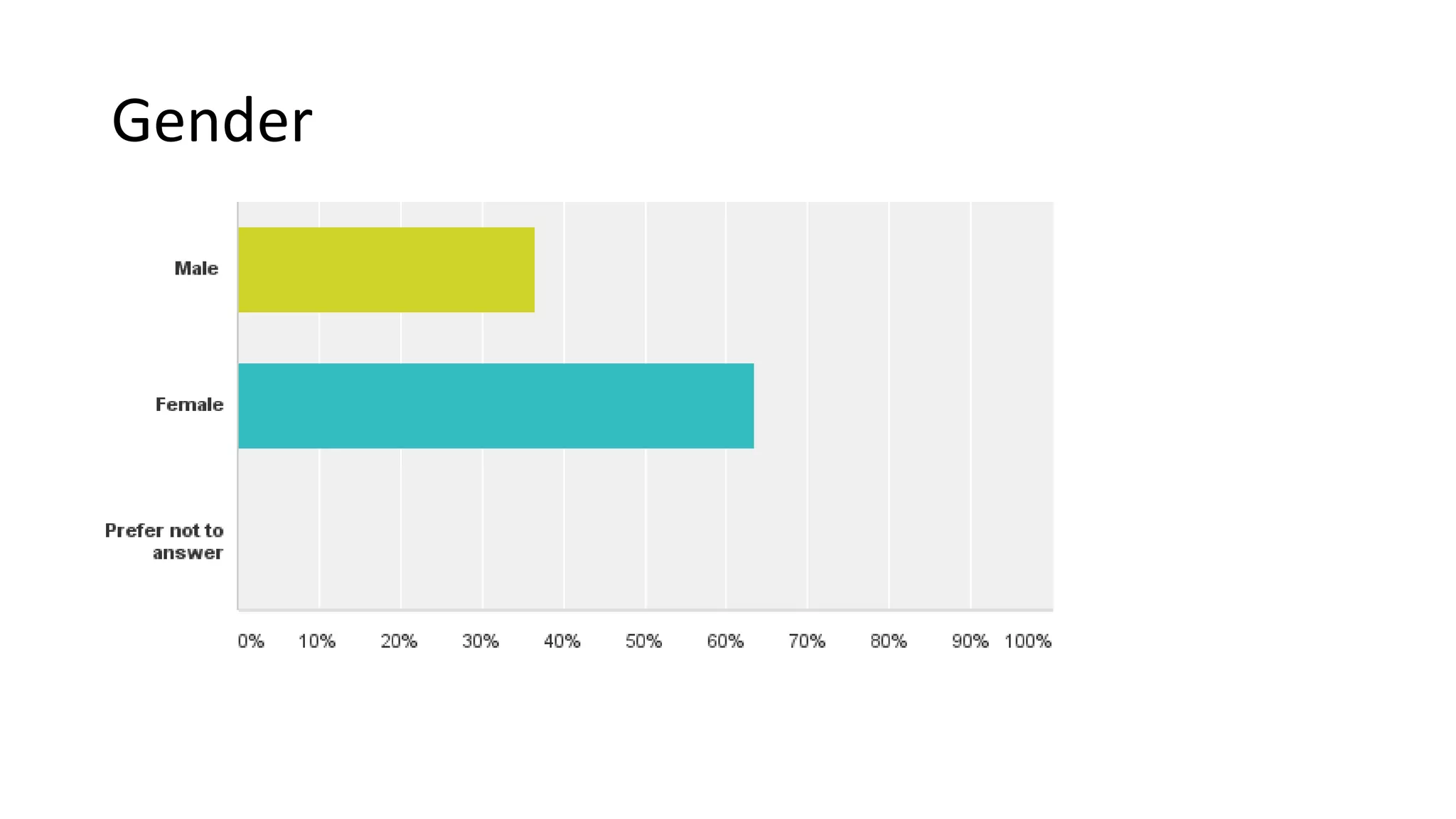
Gender
•Answered: 52 Skipped: 0
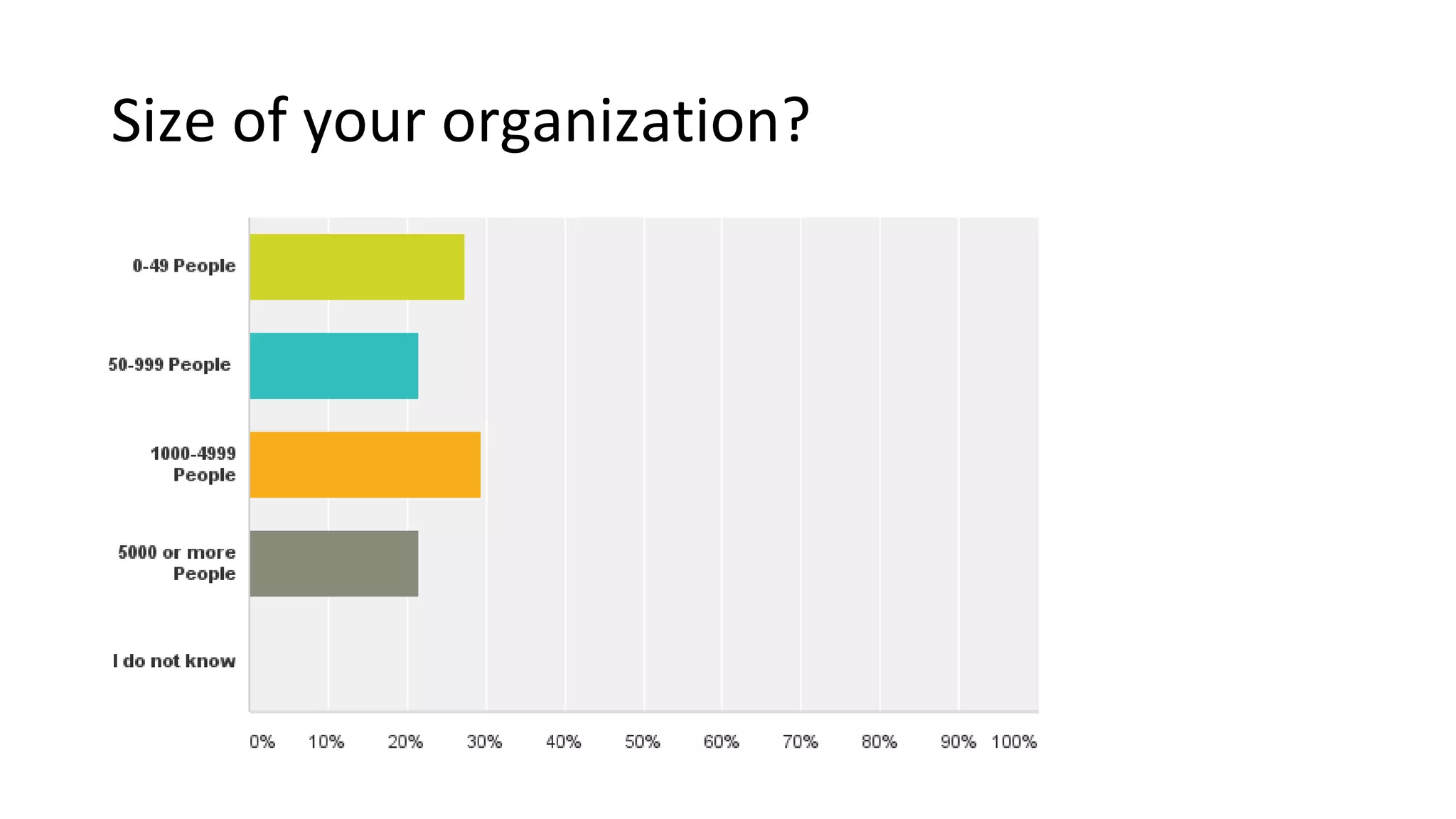
Size of your organization?
•Answered: 51 Skipped: 1
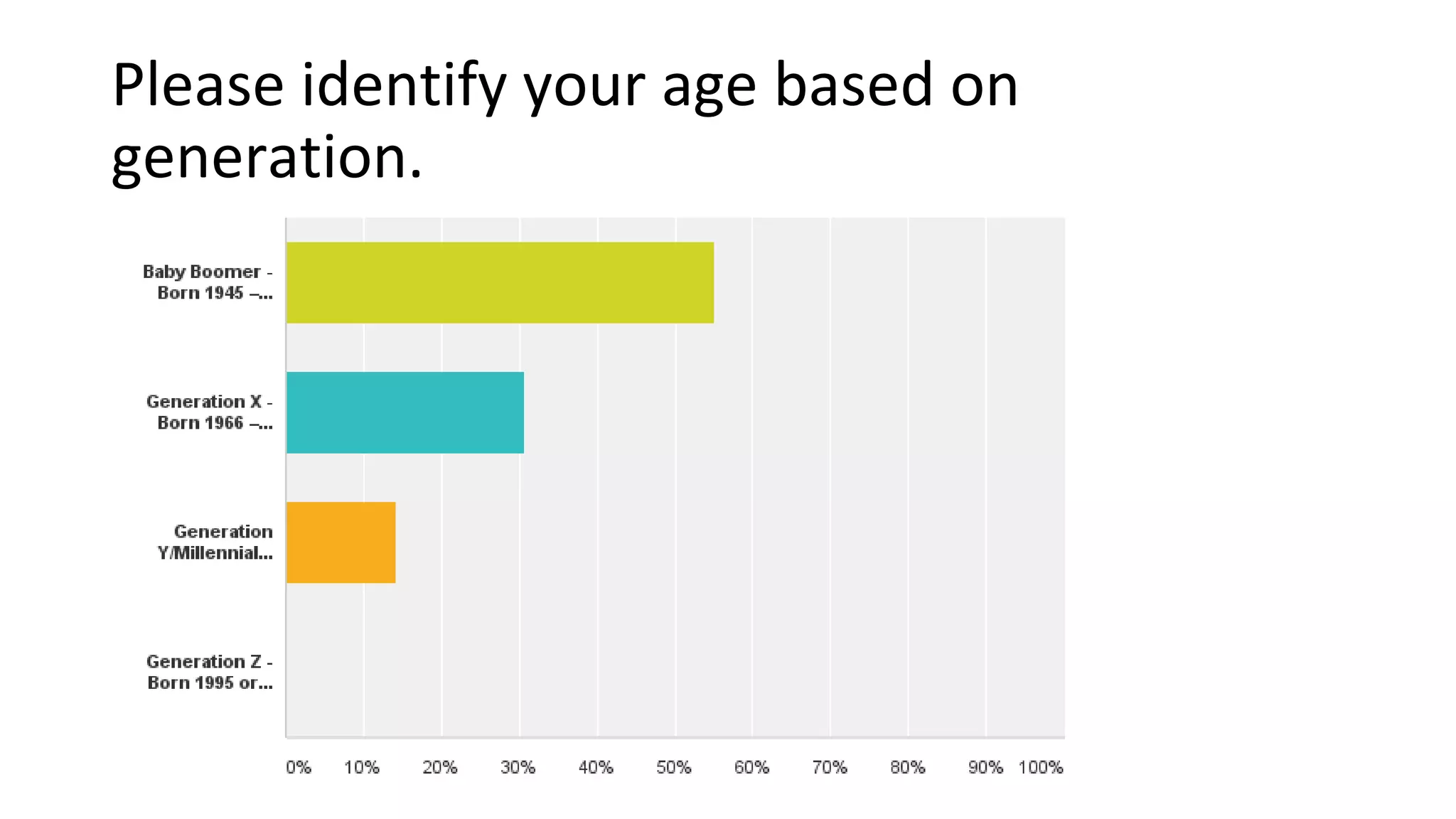
Please identify your age based on
generation.
•Answered: 49 Skipped: 3
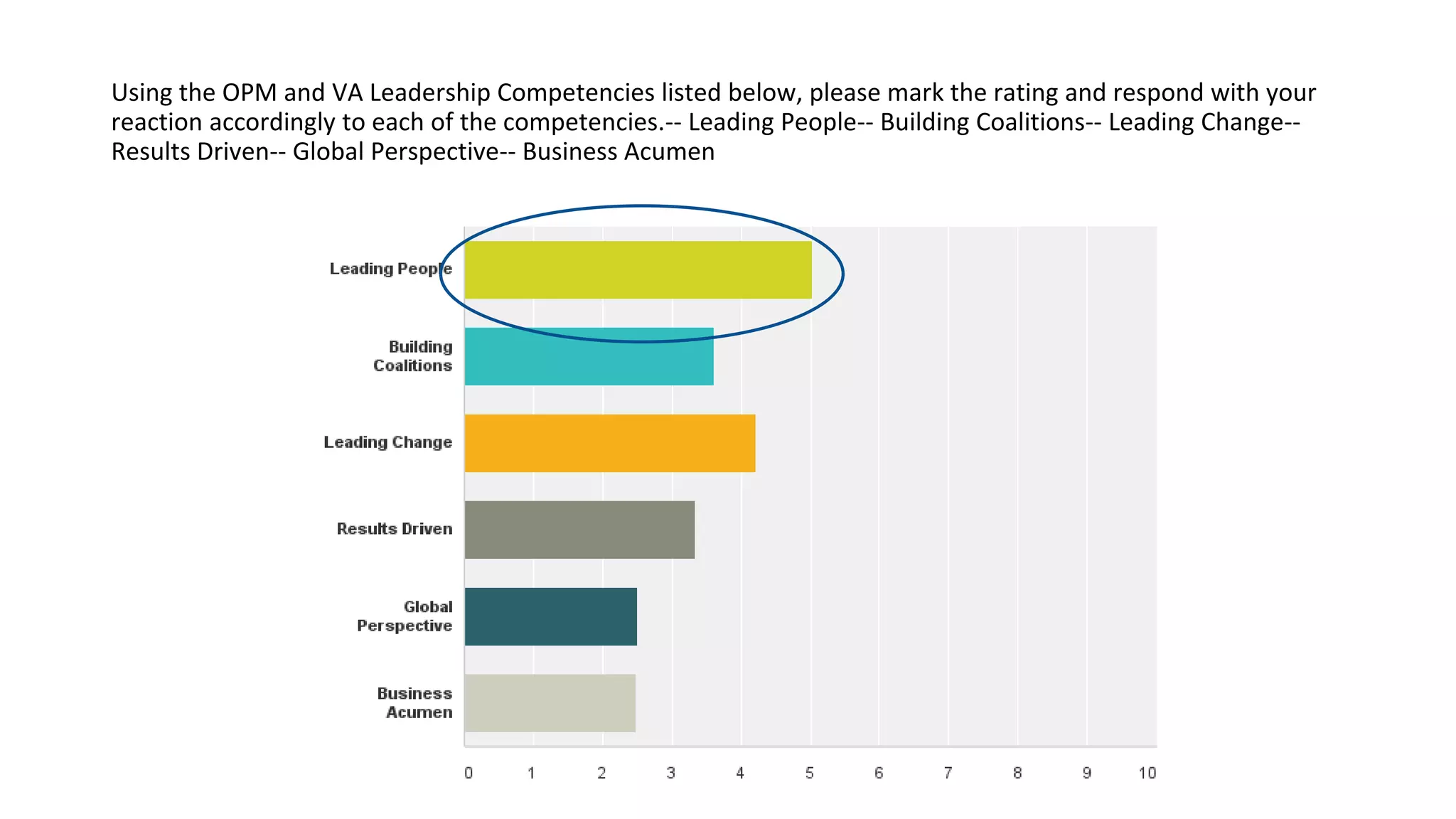
Using the OPM and VA Leadership Competencies listed below, please mark the rating and respond with your
reaction accordingly to each of the competencies.-- Leading People-- Building Coalitions-- Leading Change--
Results Driven-- Global Perspective-- Business Acumen
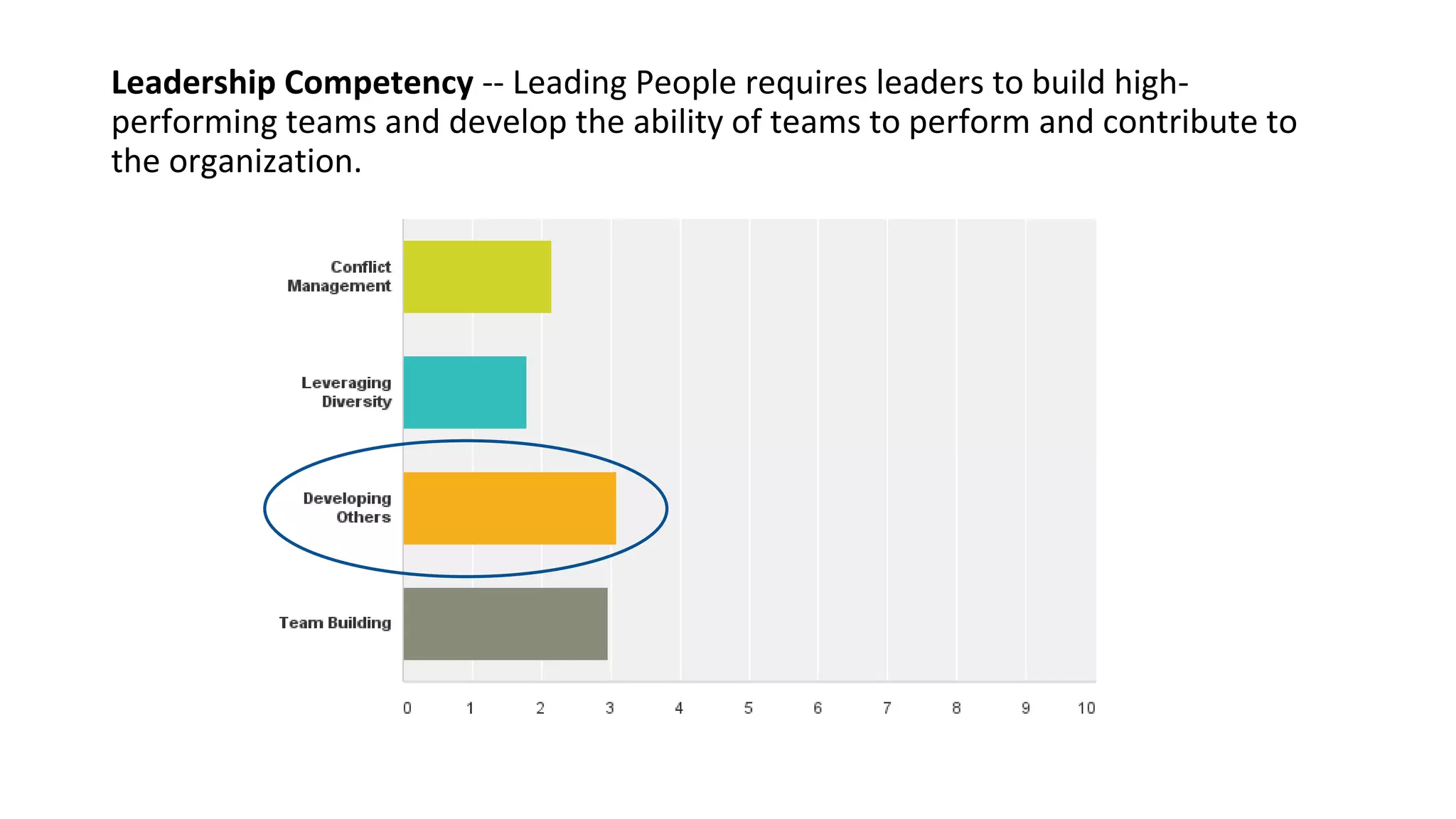
Leadership Competency -- Leading People requires leaders to build high-
performing teams and develop the ability of teams to perform and contribute to
the organization.
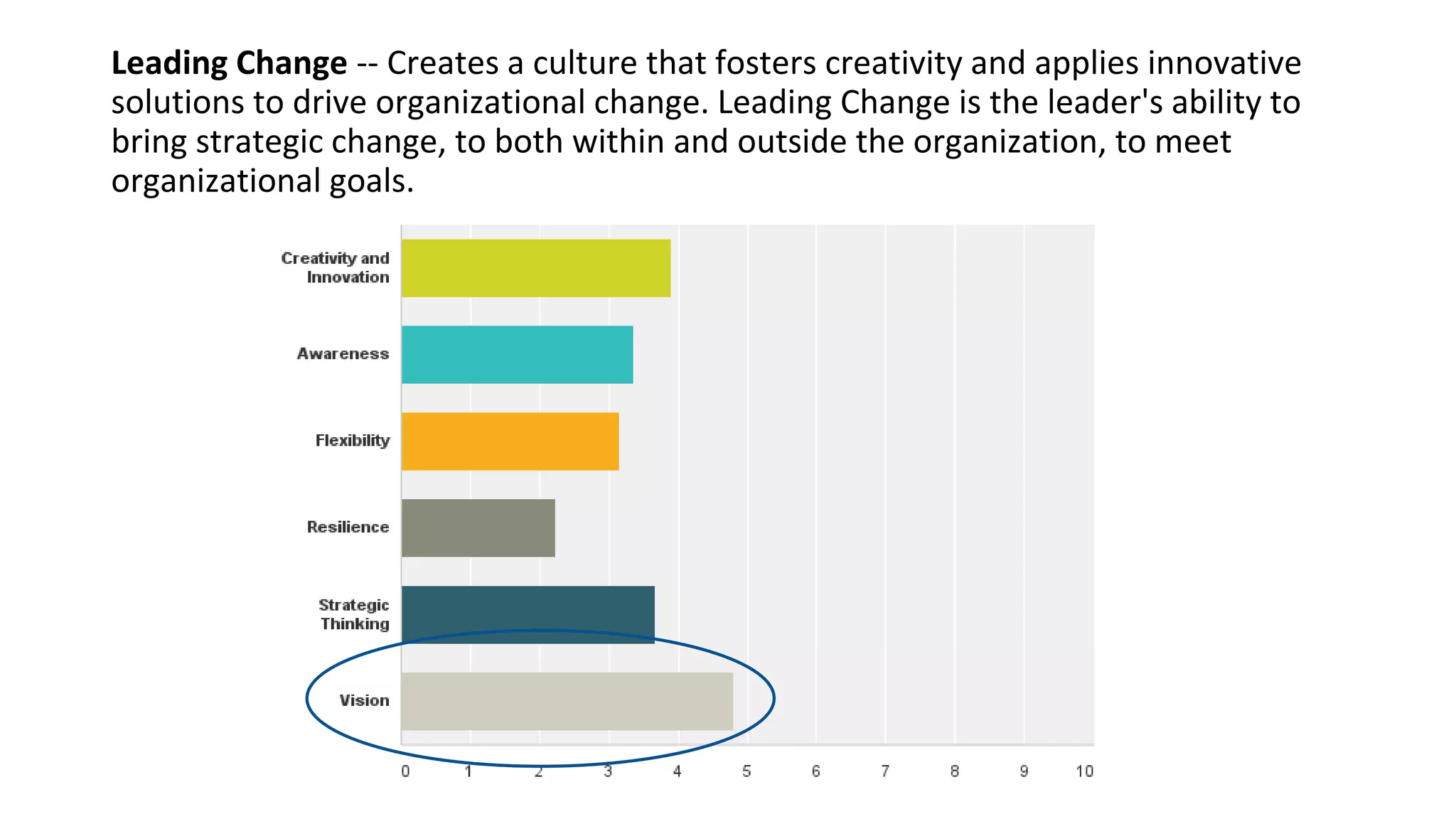
Leading Change -- Creates a culture that fosters creativity and applies innovative
solutions to drive organizational change. Leading Change is the leader's ability to
bring strategic change, to both within and outside the organization, to meet
organizational goals.
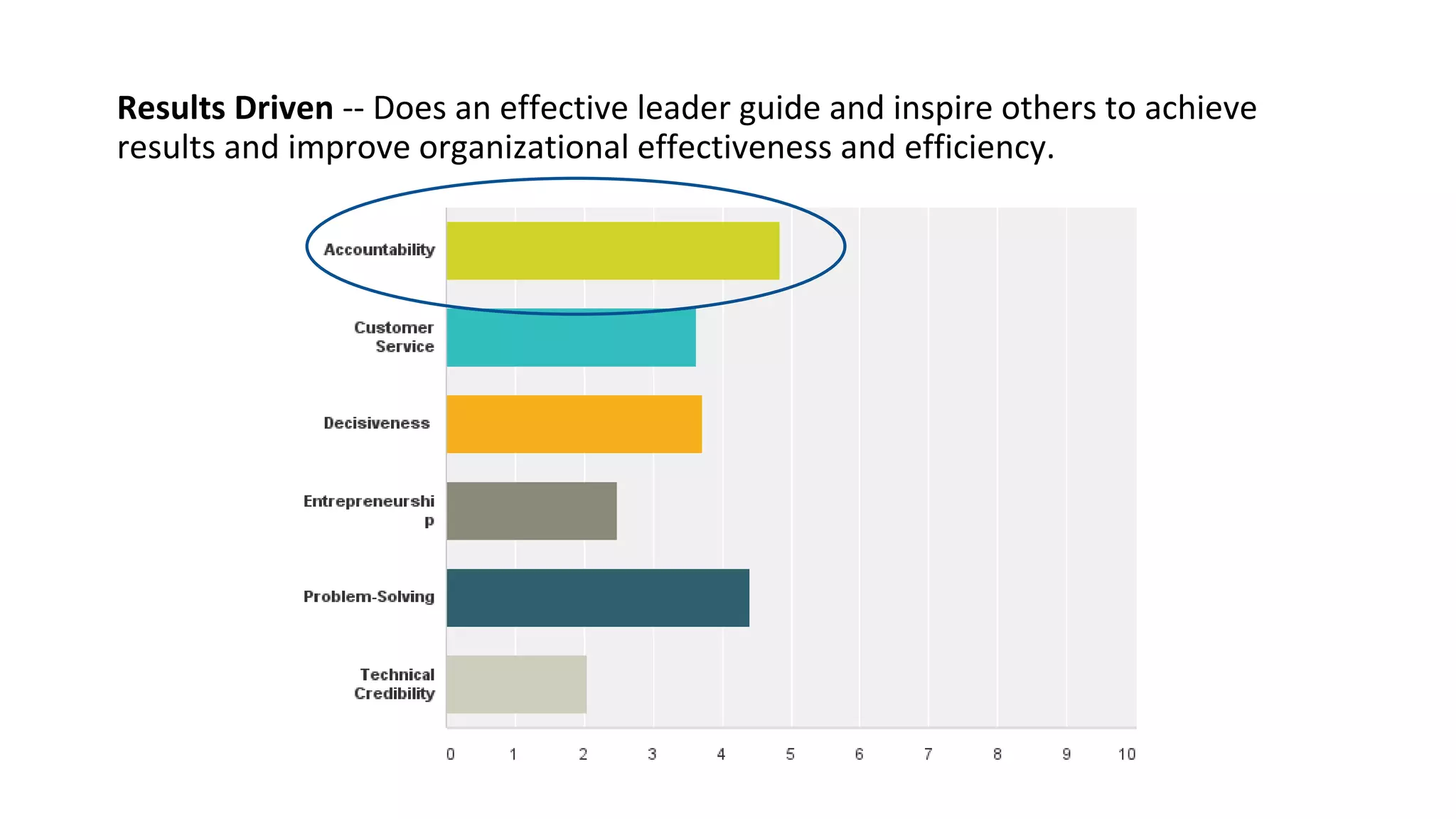
Results Driven -- Does an effective leader guide and inspire others to achieve
results and improve organizational effectiveness and efficiency.
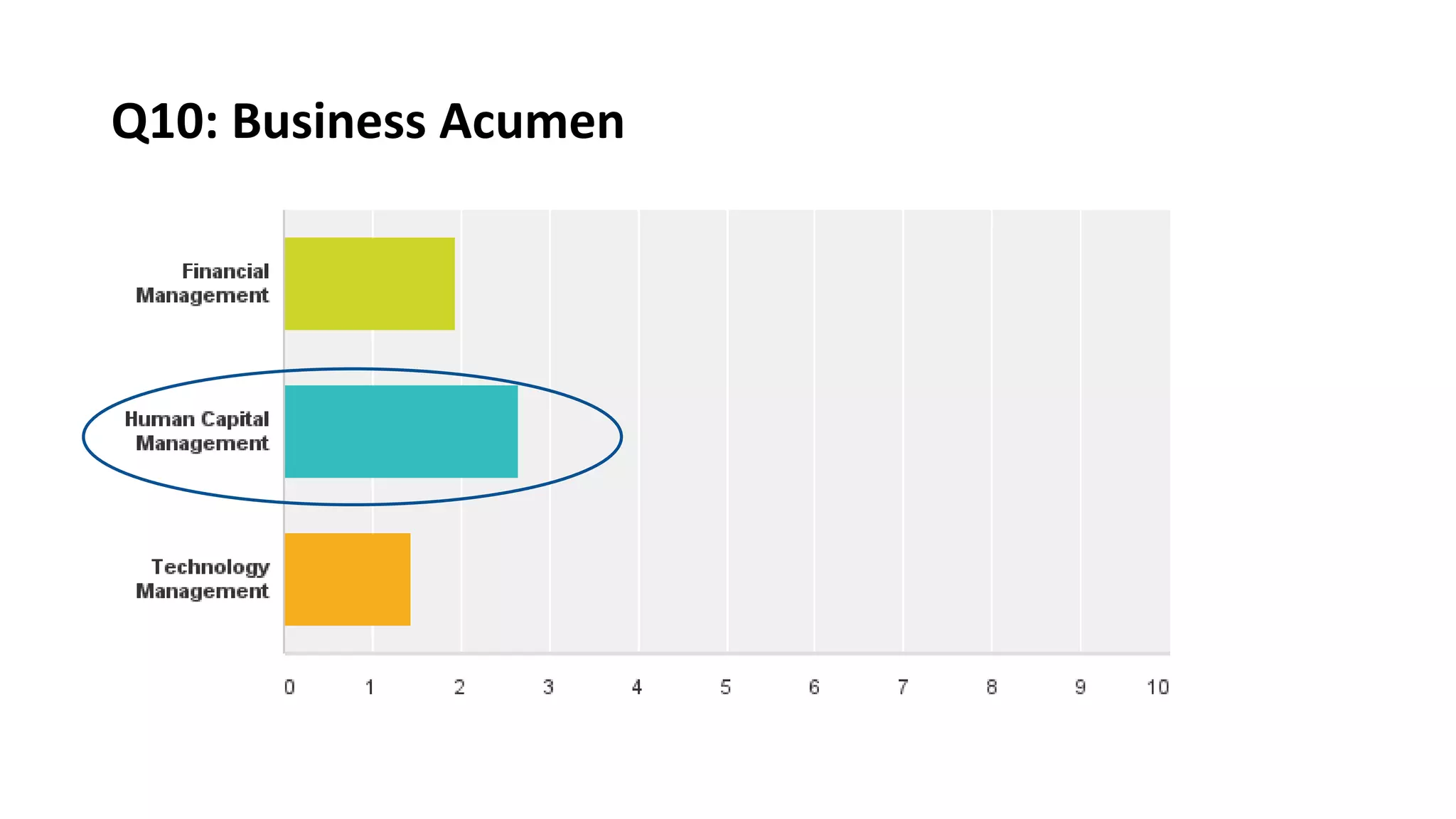
Q10: Business Acumen
•Answered: 51 Skipped: 1
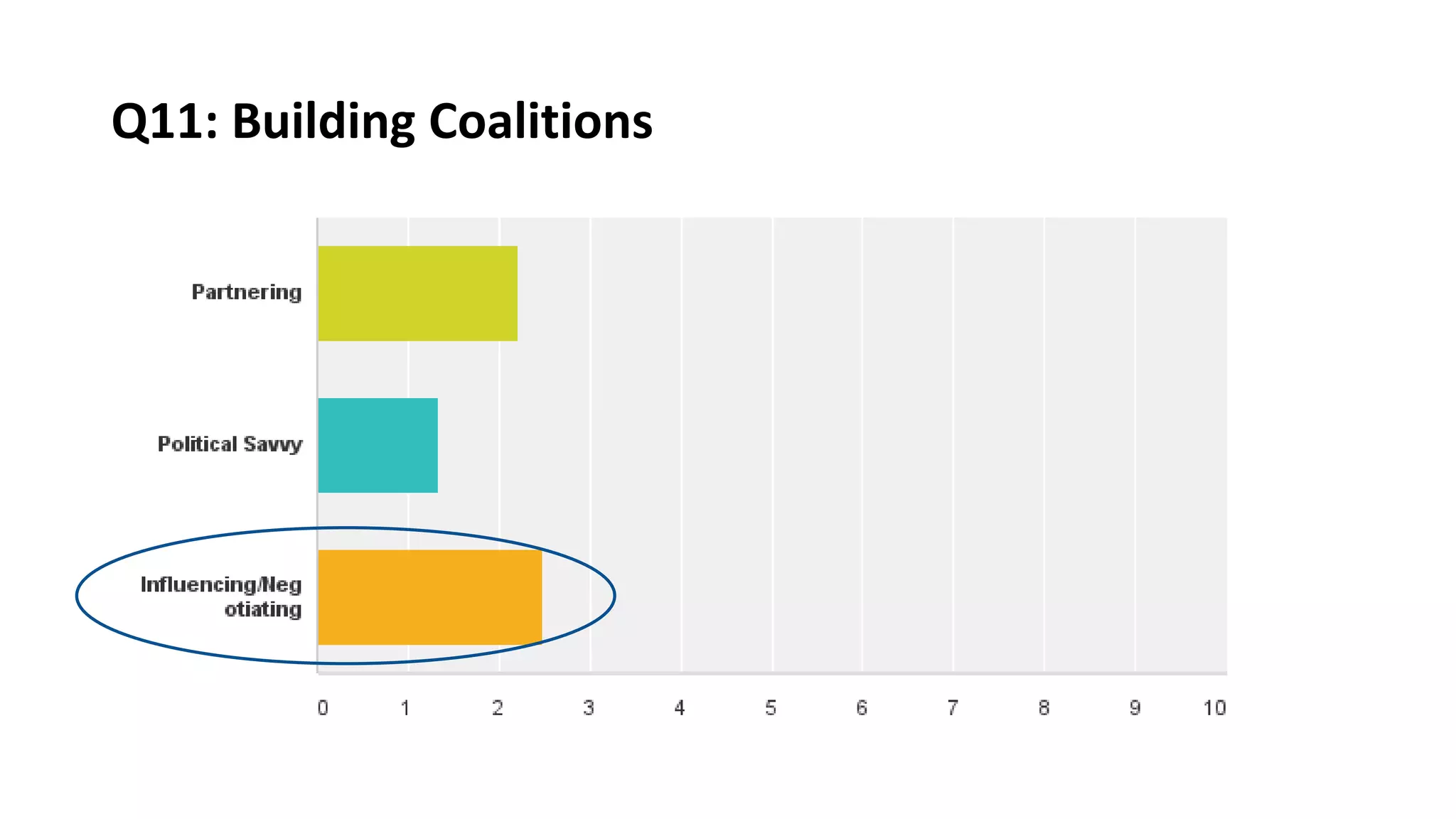
Q11: Building Coalitions
•Answered: 51 Skipped: 1
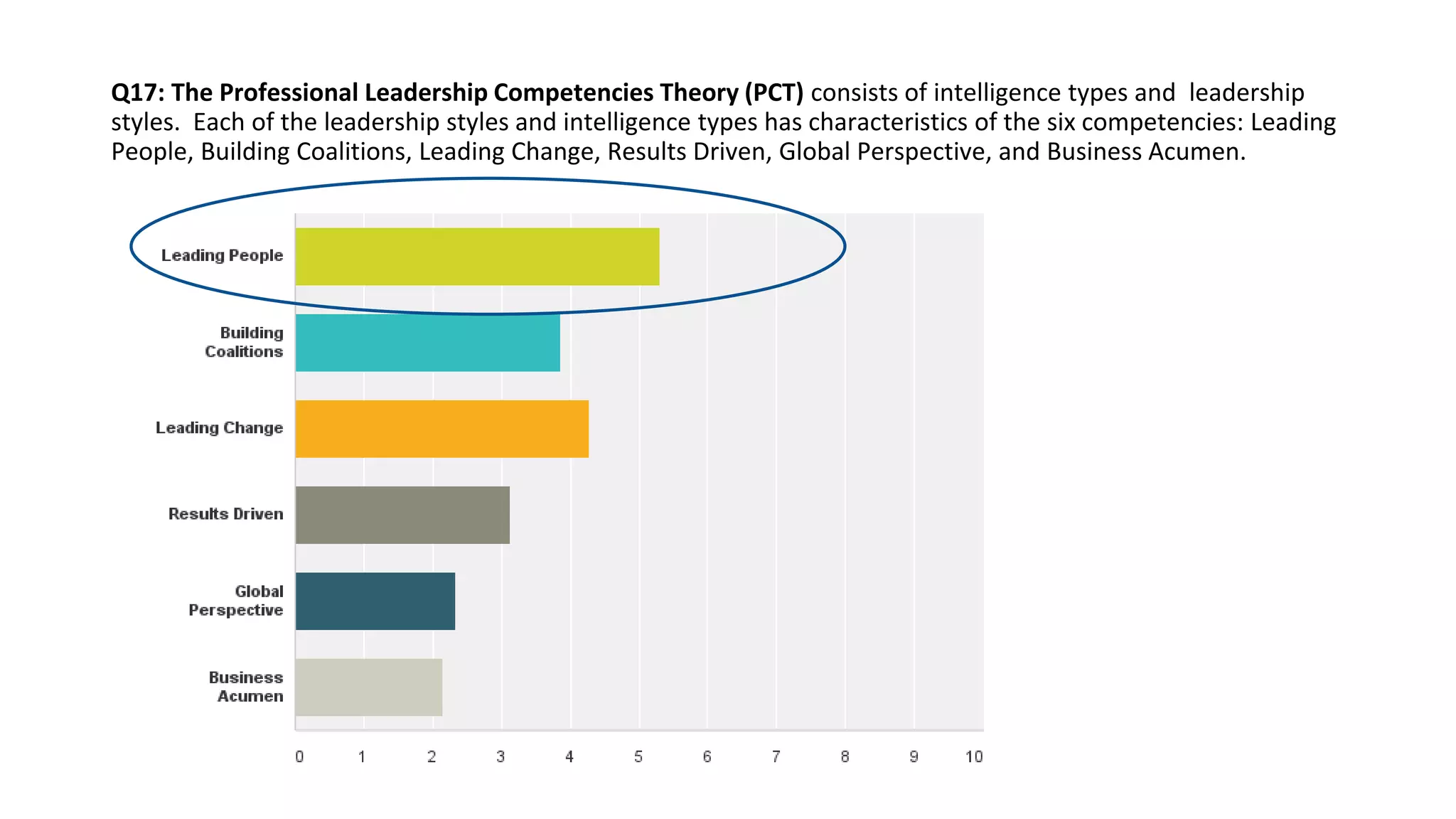
Q17: The Professional Leadership Competencies Theory (PCT) consists of intelligence types and leadership
styles. Each of the leadership styles and intelligence types has characteristics of the six competencies: Leading
People, Building Coalitions, Leading Change, Results Driven, Global Perspective, and Business Acumen.
•Answered: 52 Skipped: 0
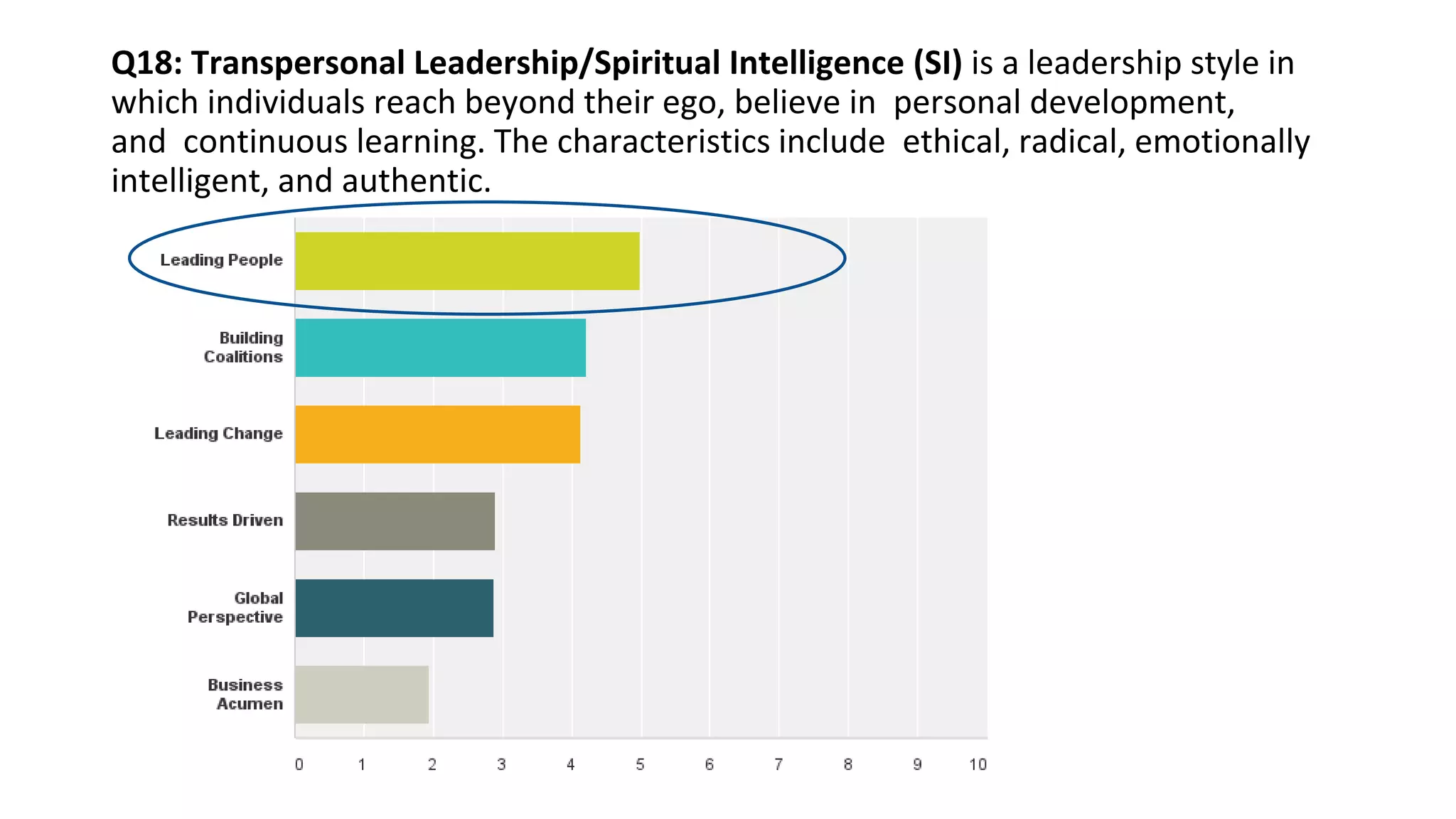
Q18: Transpersonal Leadership/Spiritual Intelligence (SI) is a leadership style in
which individuals reach beyond their ego, believe in personal development,
and continuous learning. The characteristics include ethical, radical, emotionally
intelligent, and authentic.
•Answered: 51 Skipped: 1
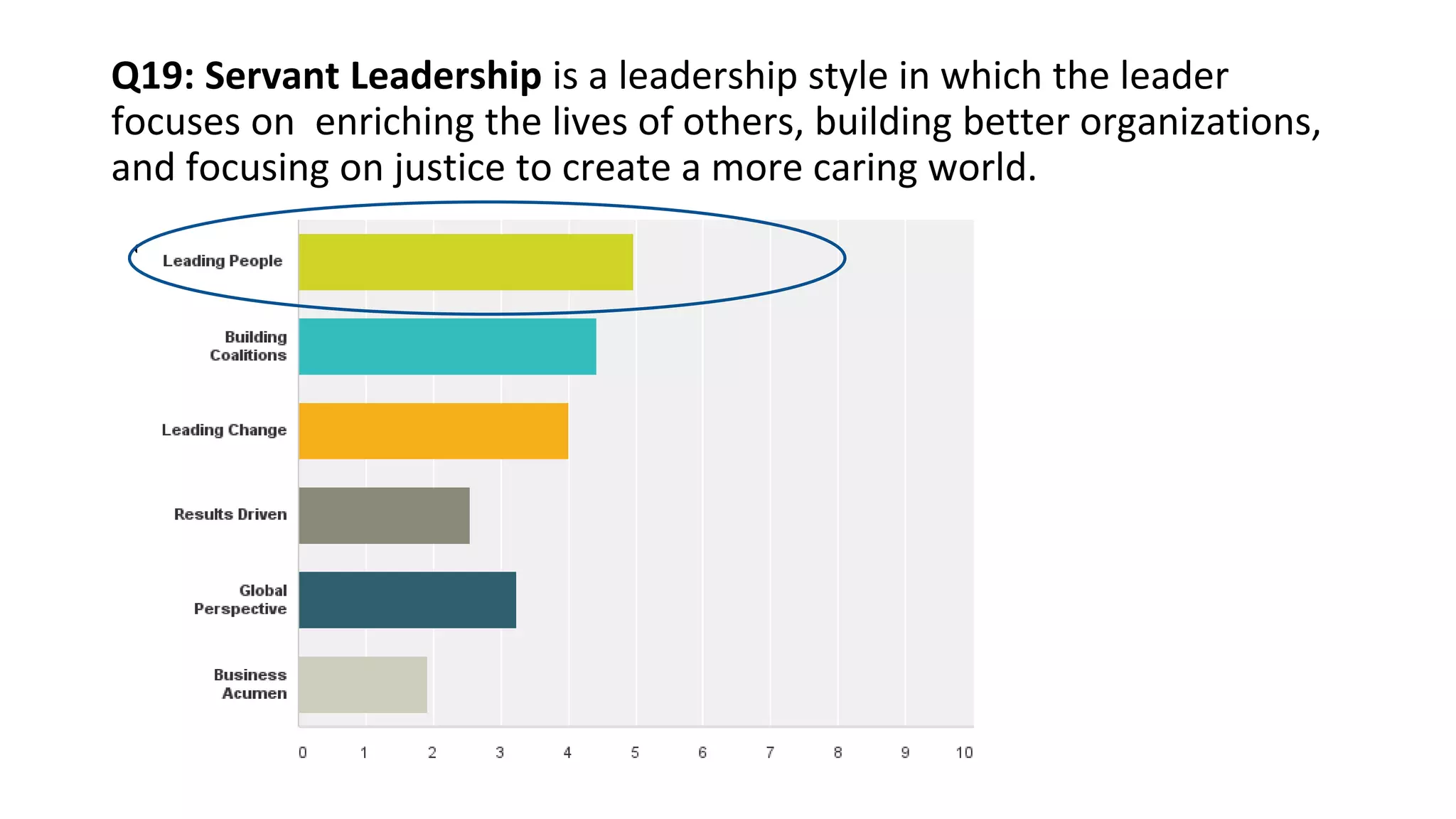
Q19: Servant Leadership is a leadership style in which the leader
focuses on enriching the lives of others, building better organizations,
and focusing on justice to create a more caring world.
•Answered: 51 Skipped: 1
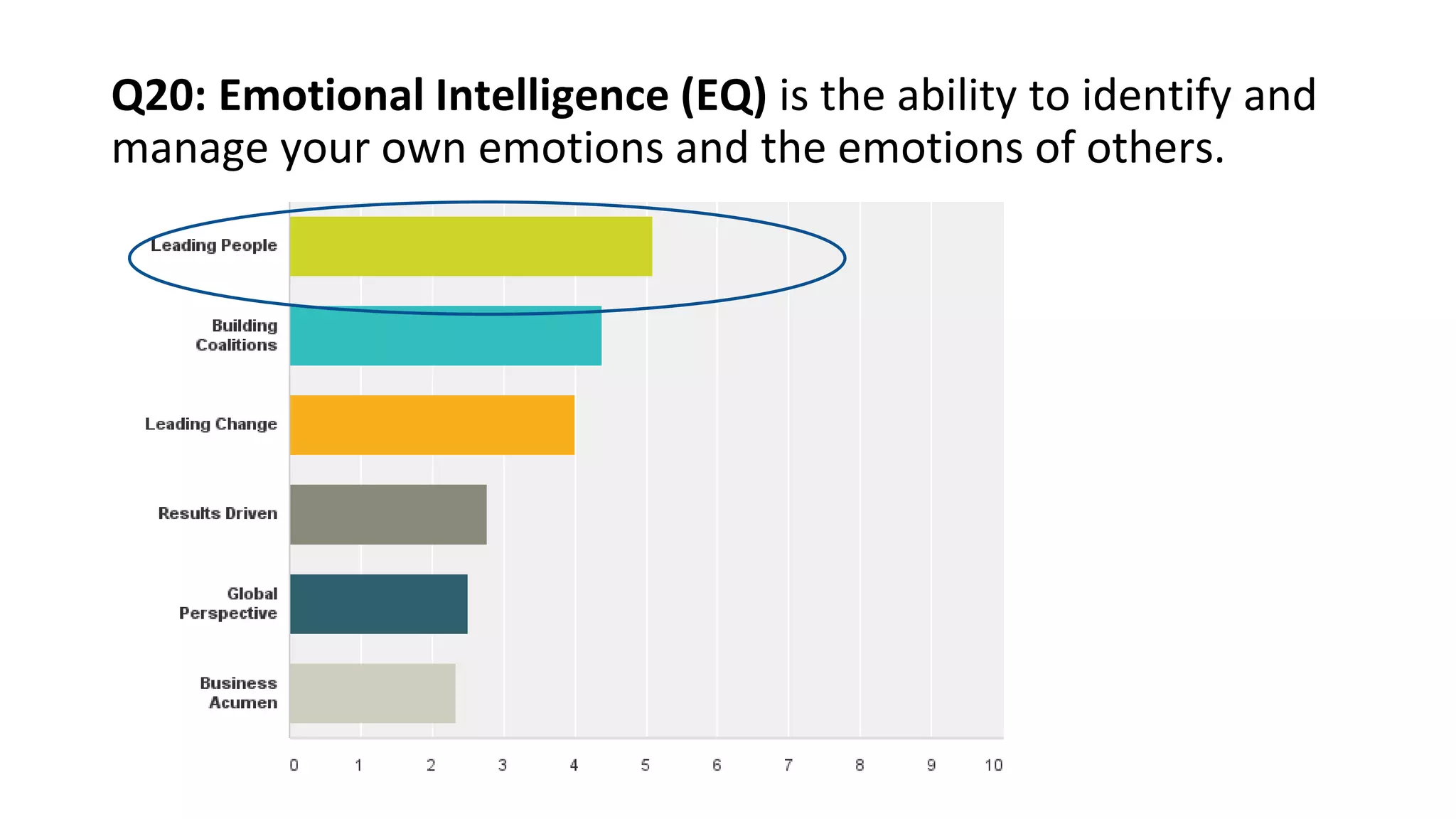
Q20: Emotional Intelligence (EQ) is the ability to identify and
manage your own emotions and the emotions of others.
•Answered: 51 Skipped: 1
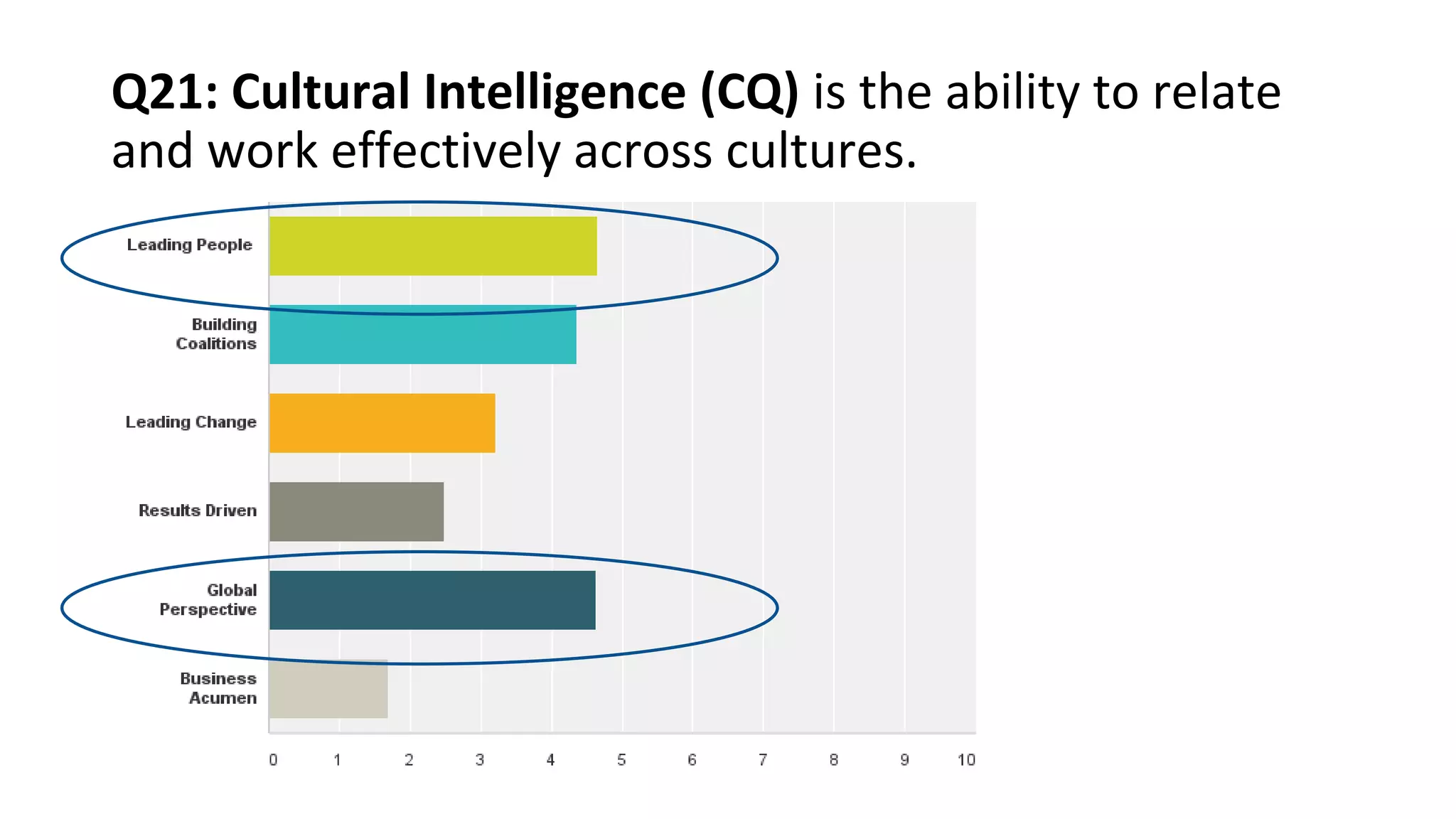
Q21: Cultural Intelligence (CQ) is the ability to relate
and work effectively across cultures.
•Answered: 51 Skipped: 1
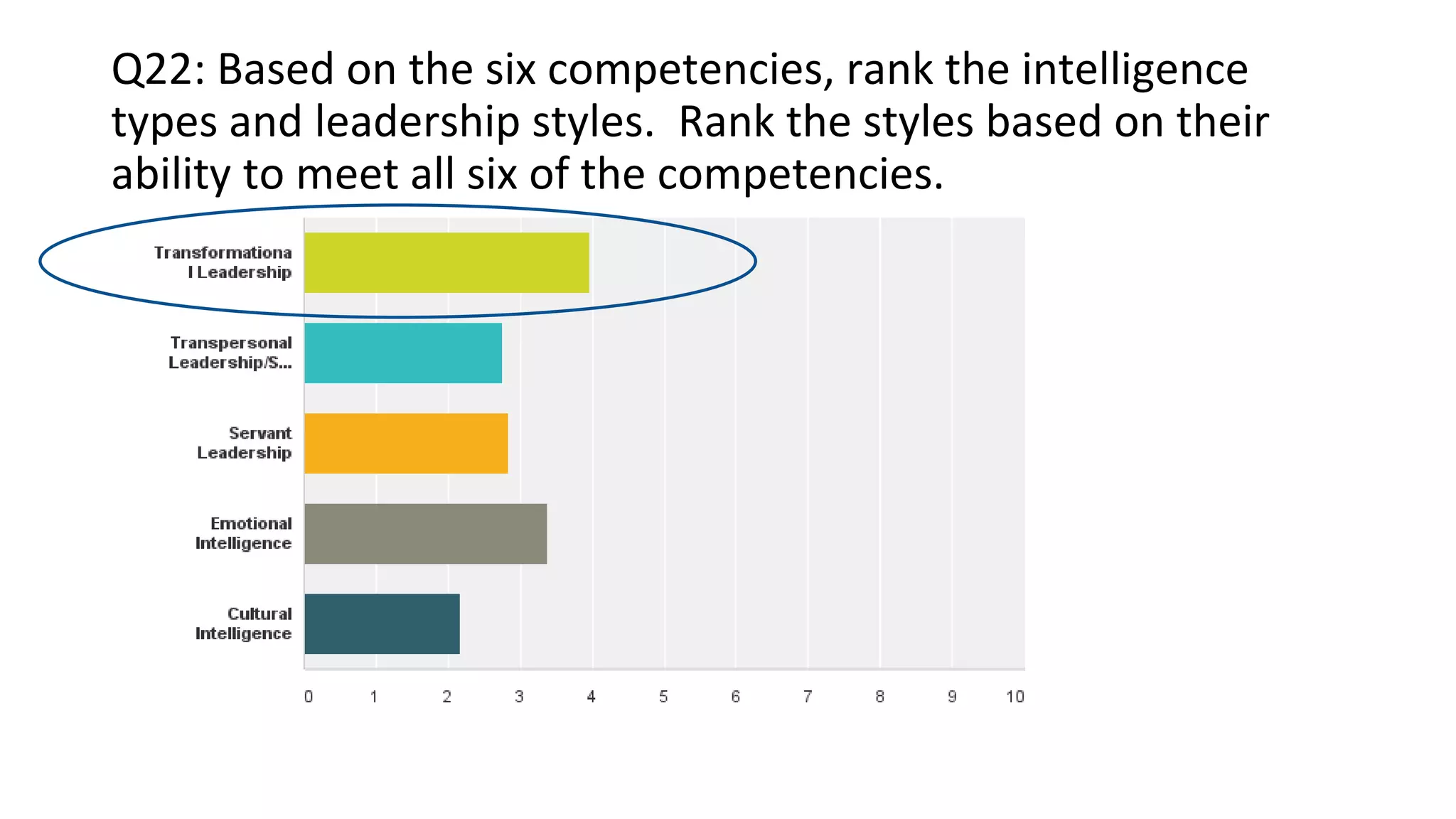
Q22: Based on the six competencies, rank the intelligence
types and leadership styles. Rank the styles based on their
ability to meet all six of the competencies.
•Answered: 50 Skipped: 2
Where do we go from here?
Future Research
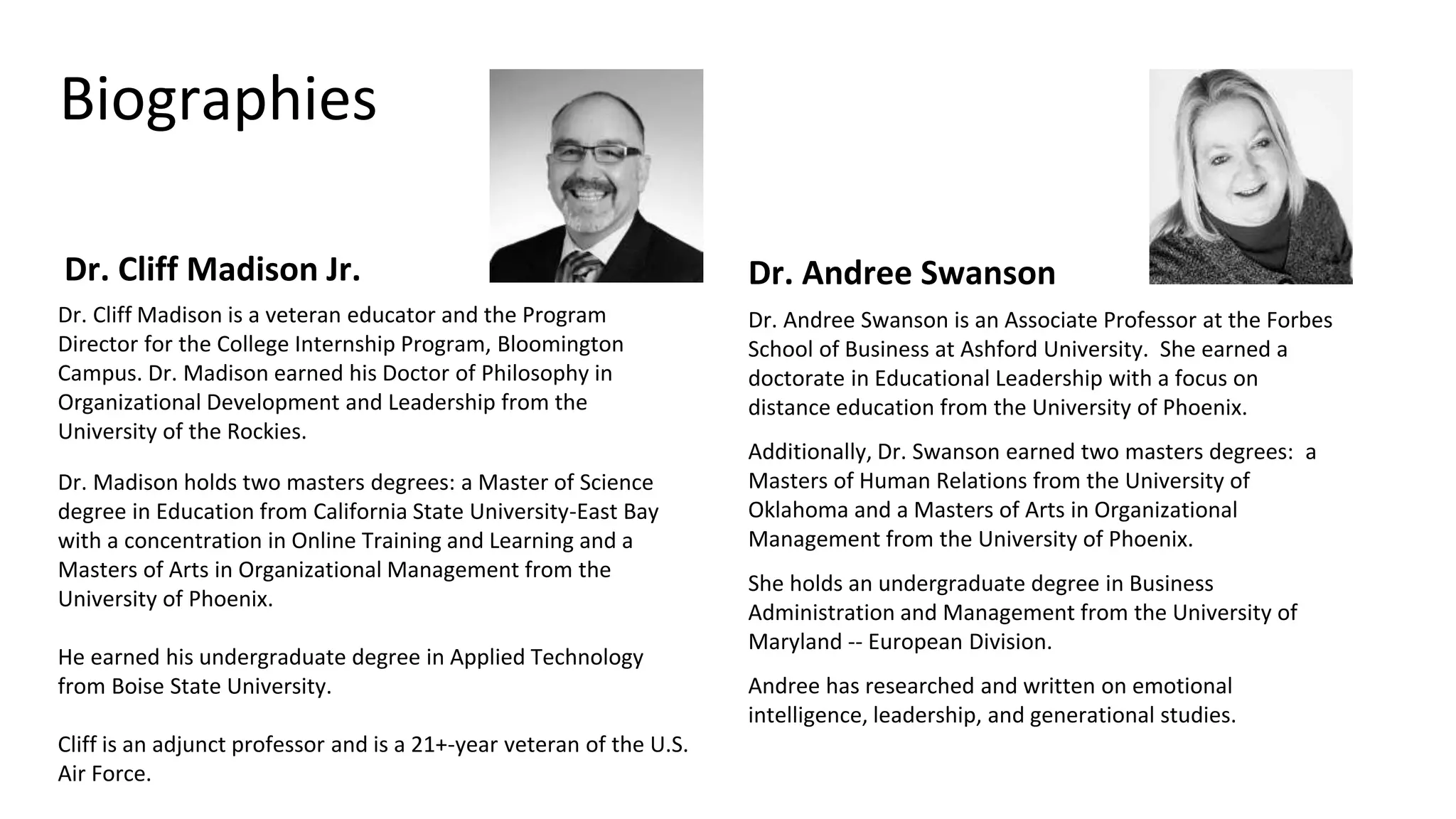
Biographies
Dr. Cliff Madison Jr. Dr. Andree Swanson
Dr. Andree Swanson is an Associate Professor at the Forbes
School of Business at Ashford University. She earned a
doctorate in Educational Leadership with a focus on
distance education from the University of Phoenix.
Additionally, Dr. Swanson earned two masters degrees: a
Masters of Human Relations from the University of
Oklahoma and a Masters of Arts in Organizational
Management from the University of Phoenix.
She holds an undergraduate degree in Business
Administration and Management from the University of
Maryland -- European Division.
Andree has researched and written on emotional
intelligence, leadership, and generational studies.
Dr. Cliff Madison is a veteran educator and the Program
Director for the College Internship Program, Bloomington
Campus. Dr. Madison earned his Doctor of Philosophy in
Organizational Development and Leadership from the
University of the Rockies.
Dr. Madison holds two masters degrees: a Master of Science
degree in Education from California State University-East Bay
with a concentration in Online Training and Learning and a
Masters of Arts in Organizational Management from the
University of Phoenix.
He earned his undergraduate degree in Applied Technology
from Boise State University.
Cliff is an adjunct professor and is a 21+-year veteran of the U.S.
Air Force.

Mlit presentation ibam nov 2016 v1

  • 1.
    Madison Leadership IntelligenceTheory (MLIT) Dr. Cliff Madison Jr. Dr. Andree Swanson IBAM, San Diego, CA November 3-5, 2016
  • 2.
    Background How the MadisonLeadership Intelligence Theory (MLIT) came to be
  • 3.
    Dissertation Study The combinationof leadership attributes was accurately named by MLIT and was the foundation for this study. ✓ Identify the leadership traits and interdependence of each of the leadership characteristics as applied to the MLIT. ✓ Importance of leadership and the theory of MLIT and the Clinical Nurse Manager Leader (NM-L)
  • 4.
    Madison Leadership IntelligenceTheory (MLIT) Transformational Leadership Transpersonal Leadership/Social Intelligence (SQ) Servant Leadership Emotional Intelligence (EQ) Cultural Intelligence (CQ)
  • 5.
    Transformational Leadership Transformational leadership aleadership approach that causes change in individuals and social systems. Creates valuable and positive change in the followers with the end goal of developing followers into leaders. Transformational Leadership Translating Strategy into Action Building Strategic Relationships Leveraging your Emotional intelligence Leading Through Change Developing Employee Capability
  • 6.
    Transpersonal Leadership/Social Intelligence (SQ) Leadersand followers are committed to work and live in alignment with the highest and best in themselves. They attend to and follow what is personally life-enhancing, brings joy and builds upon their unique capabilities.
  • 7.
    Servant Leadership Servant leadershipis a philosophy and set of practices that enriches the lives of individuals, builds better organizations and ultimately creates a more just and caring world.
  • 8.
    Emotional Intelligence (EQ) Emotionalintelligence (EI) or emotional quotient (EQ) is the capacity of individuals to recognize their own, and other people's emotions, to discriminate between different feelings and label them appropriately, and to use emotional information to guide thinking and behavior.
  • 9.
    Cultural Intelligence (CQ) CulturalIntelligence, cultural quotient or CQ, is a term used in business, education, government and academic research. Cultural intelligence can be understood as the leader’s capability to relate and work effectively across organizational cultures.
  • 10.
    Research Methodology How wasthe dissertation study conducted
  • 11.
    Population: Nurse Managers inVHA Hospitals Nurse Managers at Magnet and a non- Magnet accredited hospitals
  • 12.
    The Clinical NurseManager’s position changed and movement over the past 5 years (2010 – 2015) in either VHA hospitals. ✓ Demanding work environment. ✓ Required strong leadership at the clinical unit level. ✓ Ineffective leadership also created a gap in the quality of the direction with the amount of change at the front level leadership. A lack of knowledge, self-confidence, self-awareness, and the self-efficacy of Clinical Nurse Manager-leaders in healthcare created an unstable, frustrated workforce, lower quality of care, and unsafe environment for patient care. (Kelly et al., 2012; Skagert et al., 2012; Trinkoff et al., 2010).
  • 13.
  • 14.
    Interpretation of theFindings MLIT revealed the Nurse Managers from non-Magnet perceive Transformational Leadership as more important than those Magnet facility Nurse Managers surveyed. Only two measurement areas within the Madison’s Leadership Intelligence Theory (MLIT), Emotional Intelligence, and Transformational Leadership illustrated a significant difference of greater than two-point separation between the Magnet accredited and non-magnet healthcare facilities.
  • 15.
    Validating the Instrument ForbesSchool of Business, Bachelors of Arts in Business Leadership Took an interest in the instrument
  • 17.
  • 18.
    Size of yourorganization? •Answered: 51 Skipped: 1
  • 19.
    Please identify yourage based on generation. •Answered: 49 Skipped: 3
  • 20.
    Using the OPMand VA Leadership Competencies listed below, please mark the rating and respond with your reaction accordingly to each of the competencies.-- Leading People-- Building Coalitions-- Leading Change-- Results Driven-- Global Perspective-- Business Acumen
  • 21.
    Leadership Competency --Leading People requires leaders to build high- performing teams and develop the ability of teams to perform and contribute to the organization.
  • 22.
    Leading Change --Creates a culture that fosters creativity and applies innovative solutions to drive organizational change. Leading Change is the leader's ability to bring strategic change, to both within and outside the organization, to meet organizational goals.
  • 23.
    Results Driven --Does an effective leader guide and inspire others to achieve results and improve organizational effectiveness and efficiency.
  • 24.
  • 25.
  • 26.
    Q17: The ProfessionalLeadership Competencies Theory (PCT) consists of intelligence types and leadership styles. Each of the leadership styles and intelligence types has characteristics of the six competencies: Leading People, Building Coalitions, Leading Change, Results Driven, Global Perspective, and Business Acumen. •Answered: 52 Skipped: 0
  • 27.
    Q18: Transpersonal Leadership/SpiritualIntelligence (SI) is a leadership style in which individuals reach beyond their ego, believe in personal development, and continuous learning. The characteristics include ethical, radical, emotionally intelligent, and authentic. •Answered: 51 Skipped: 1
  • 28.
    Q19: Servant Leadershipis a leadership style in which the leader focuses on enriching the lives of others, building better organizations, and focusing on justice to create a more caring world. •Answered: 51 Skipped: 1
  • 29.
    Q20: Emotional Intelligence(EQ) is the ability to identify and manage your own emotions and the emotions of others. •Answered: 51 Skipped: 1
  • 30.
    Q21: Cultural Intelligence(CQ) is the ability to relate and work effectively across cultures. •Answered: 51 Skipped: 1
  • 31.
    Q22: Based onthe six competencies, rank the intelligence types and leadership styles. Rank the styles based on their ability to meet all six of the competencies. •Answered: 50 Skipped: 2
  • 32.
    Where do wego from here? Future Research
  • 33.
    Biographies Dr. Cliff MadisonJr. Dr. Andree Swanson Dr. Andree Swanson is an Associate Professor at the Forbes School of Business at Ashford University. She earned a doctorate in Educational Leadership with a focus on distance education from the University of Phoenix. Additionally, Dr. Swanson earned two masters degrees: a Masters of Human Relations from the University of Oklahoma and a Masters of Arts in Organizational Management from the University of Phoenix. She holds an undergraduate degree in Business Administration and Management from the University of Maryland -- European Division. Andree has researched and written on emotional intelligence, leadership, and generational studies. Dr. Cliff Madison is a veteran educator and the Program Director for the College Internship Program, Bloomington Campus. Dr. Madison earned his Doctor of Philosophy in Organizational Development and Leadership from the University of the Rockies. Dr. Madison holds two masters degrees: a Master of Science degree in Education from California State University-East Bay with a concentration in Online Training and Learning and a Masters of Arts in Organizational Management from the University of Phoenix. He earned his undergraduate degree in Applied Technology from Boise State University. Cliff is an adjunct professor and is a 21+-year veteran of the U.S. Air Force.