Ade Wijaya, MD – October 2022
Mitochondrial Neurogastrointestinal
Encephalomyopathy (MNGIE)
Introduction
 MNGIE is an autosomal recessive disease
caused by mutations in the thymidine
phosphorylase gene (TYMP)
 Ultra rare condition
 Progressive and fatal
Hirano, M., Carelli, V., De Giorgio, R., Pironi, L., Accarino, A., Cenacchi, G., ... & Zeviani, M. (2021). Mitochondrial neurogastrointestinal encephalomyopathy (MNGIE):
Position paper on diagnosis, prognosis, and treatment by the MNGIE International Network. Journal of inherited metabolic disease, 44(2), 376-387.
Pathophysiology
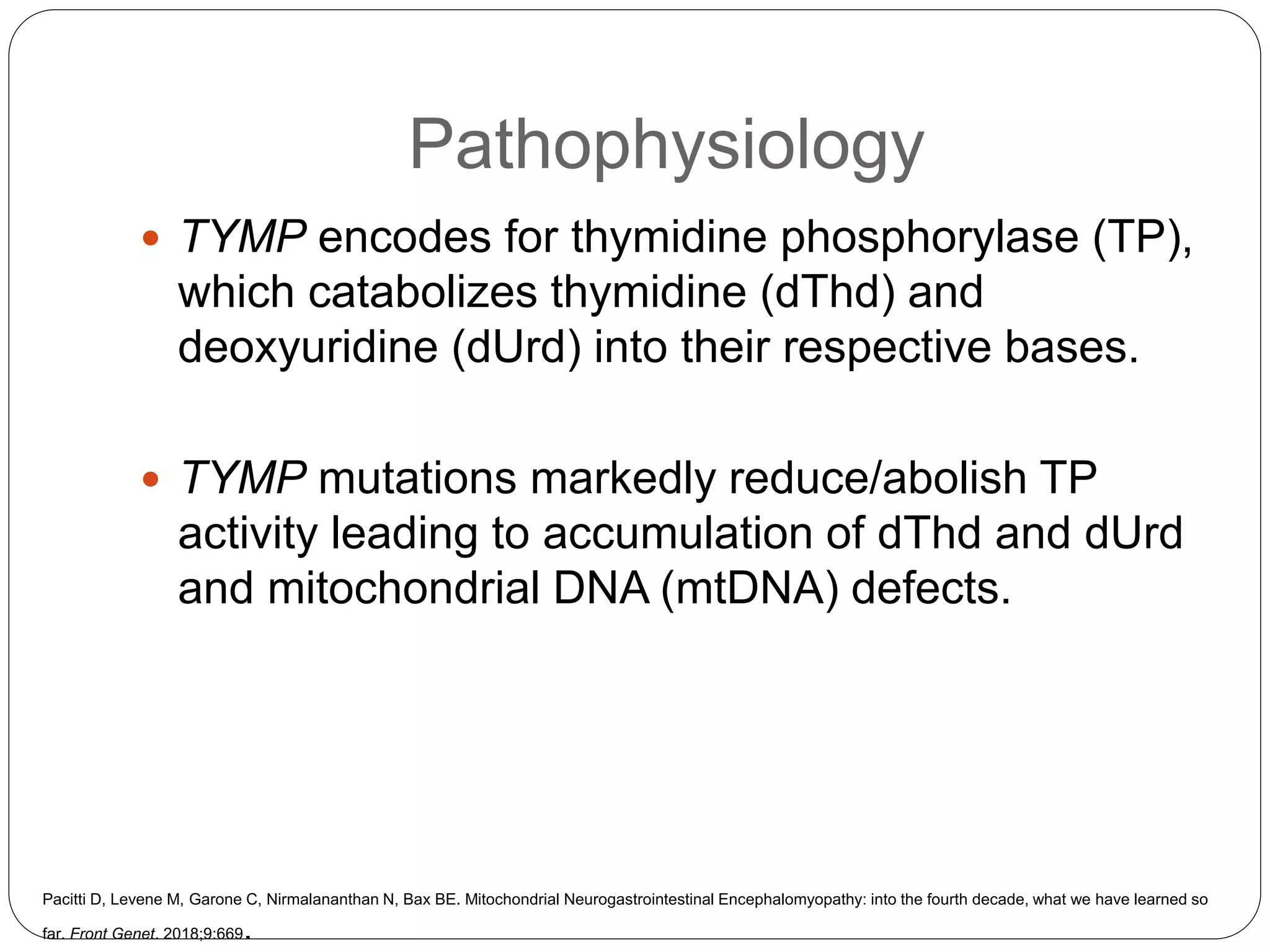
 TYMP encodes for thymidine phosphorylase (TP),
which catabolizes thymidine (dThd) and
deoxyuridine (dUrd) into their respective bases.
 TYMP mutations markedly reduce/abolish TP
activity leading to accumulation of dThd and dUrd
and mitochondrial DNA (mtDNA) defects.
Pacitti D, Levene M, Garone C, Nirmalananthan N, Bax BE. Mitochondrial Neurogastrointestinal Encephalomyopathy: into the fourth decade, what we have learned so
far. Front Genet. 2018;9:669.
Cardinal Manifestation
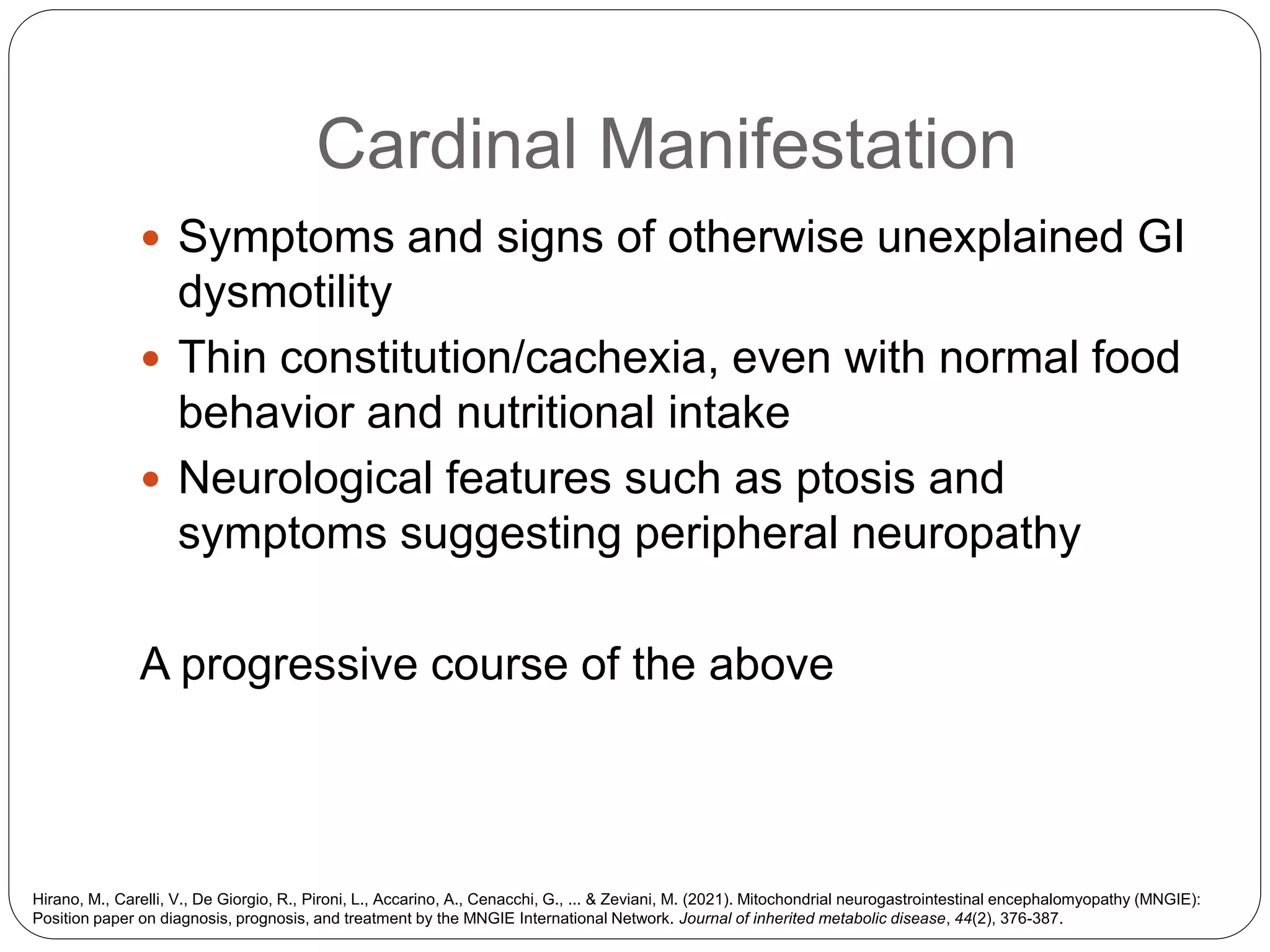
 Symptoms and signs of otherwise unexplained GI
dysmotility
 Thin constitution/cachexia, even with normal food
behavior and nutritional intake
 Neurological features such as ptosis and
symptoms suggesting peripheral neuropathy
A progressive course of the above
Hirano, M., Carelli, V., De Giorgio, R., Pironi, L., Accarino, A., Cenacchi, G., ... & Zeviani, M. (2021). Mitochondrial neurogastrointestinal encephalomyopathy (MNGIE):
Position paper on diagnosis, prognosis, and treatment by the MNGIE International Network. Journal of inherited metabolic disease, 44(2), 376-387.
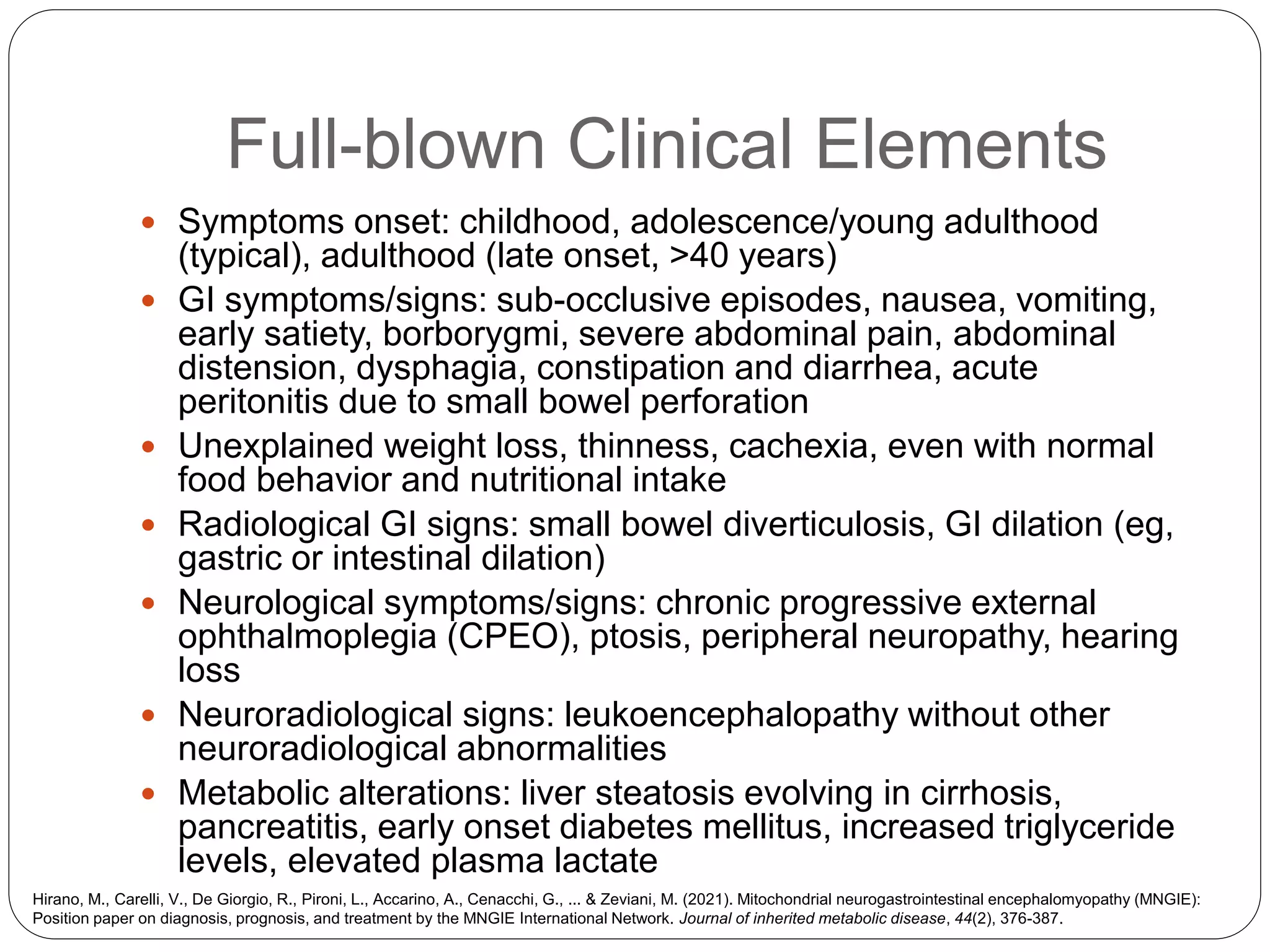
Full-blown Clinical Elements
 Symptoms onset: childhood, adolescence/young adulthood
(typical), adulthood (late onset, >40 years)
 GI symptoms/signs: sub-occlusive episodes, nausea, vomiting,
early satiety, borborygmi, severe abdominal pain, abdominal
distension, dysphagia, constipation and diarrhea, acute
peritonitis due to small bowel perforation
 Unexplained weight loss, thinness, cachexia, even with normal
food behavior and nutritional intake
 Radiological GI signs: small bowel diverticulosis, GI dilation (eg,
gastric or intestinal dilation)
 Neurological symptoms/signs: chronic progressive external
ophthalmoplegia (CPEO), ptosis, peripheral neuropathy, hearing
loss
 Neuroradiological signs: leukoencephalopathy without other
neuroradiological abnormalities
 Metabolic alterations: liver steatosis evolving in cirrhosis,
pancreatitis, early onset diabetes mellitus, increased triglyceride
levels, elevated plasma lactate
Hirano, M., Carelli, V., De Giorgio, R., Pironi, L., Accarino, A., Cenacchi, G., ... & Zeviani, M. (2021). Mitochondrial neurogastrointestinal encephalomyopathy (MNGIE):
Position paper on diagnosis, prognosis, and treatment by the MNGIE International Network. Journal of inherited metabolic disease, 44(2), 376-387.
Hirano, M., Carelli, V., De Giorgio, R., Pironi, L., Accarino, A., Cenacchi, G., ... & Zeviani, M. (2021). Mitochondrial neurogastrointestinal encephalomyopathy (MNGIE):
Position paper on diagnosis, prognosis, and treatment by the MNGIE International Network. Journal of inherited metabolic disease, 44(2), 376-387.
Natural History
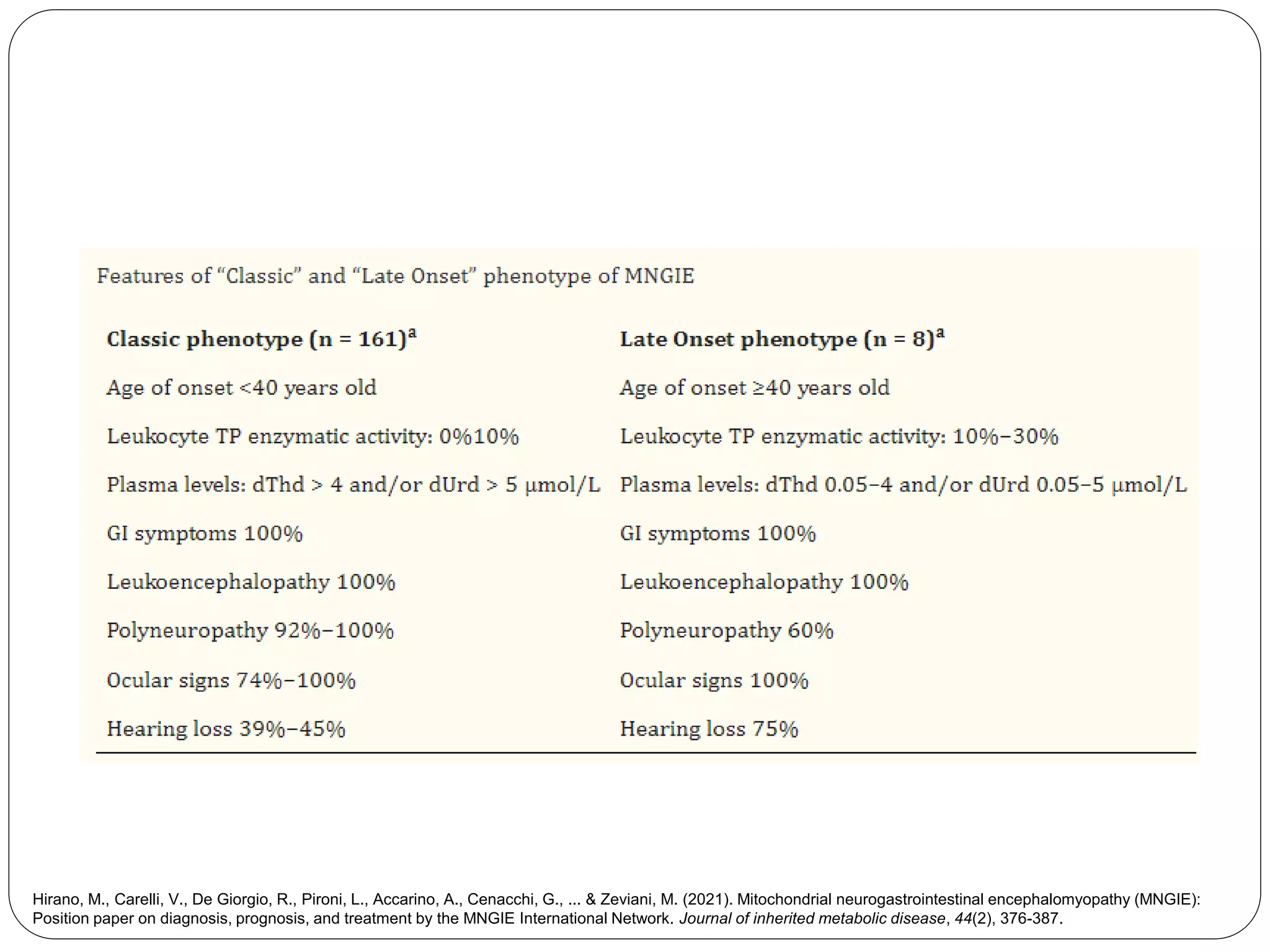
 Mean age at onset: 17.9 years (5 months to 43 years).
 GI symptoms (57% at onset; 100% at diagnosis);
onset/diagnosis: diarrhea, abdominal pain, borborygmi, vomiting,
pseudo-obstruction (32%−65%), weight loss/cachexia (100%);
evolution: diverticulosis/diverticulitis (67%), hepatopathy (22%).
 Neurological symptoms/signs (43% at onset; 100% at diagnosis);
onset/diagnosis/evolution: ocular signs (ptosis,
ophthalmoparesis) (74%−100%), polyneuropathy (92%−100%),
hearing loss (39%−45%), leucoencephalopathy (±100%);
cognitive impairment (20%).
 Symptoms are cumulative and progressive.
 Mean age at death is reported to range between 35 and 37
years; survival 100% before 19 years and <5% after 50 years.
 Death is mainly due to GI and liver complications (intestinal
perforation, intestinal bleeding, liver failure, aspiration
pneumonia, complications due to small intestinal bacterial
overgrowth [SIBO] or infection related to central venous catheter
for parenteral nutrition) and cachexia.
Hirano, M., Carelli, V., De Giorgio, R., Pironi, L., Accarino, A., Cenacchi, G., ... & Zeviani, M. (2021). Mitochondrial neurogastrointestinal encephalomyopathy (MNGIE):
Position paper on diagnosis, prognosis, and treatment by the MNGIE International Network. Journal of inherited metabolic disease, 44(2), 376-387.
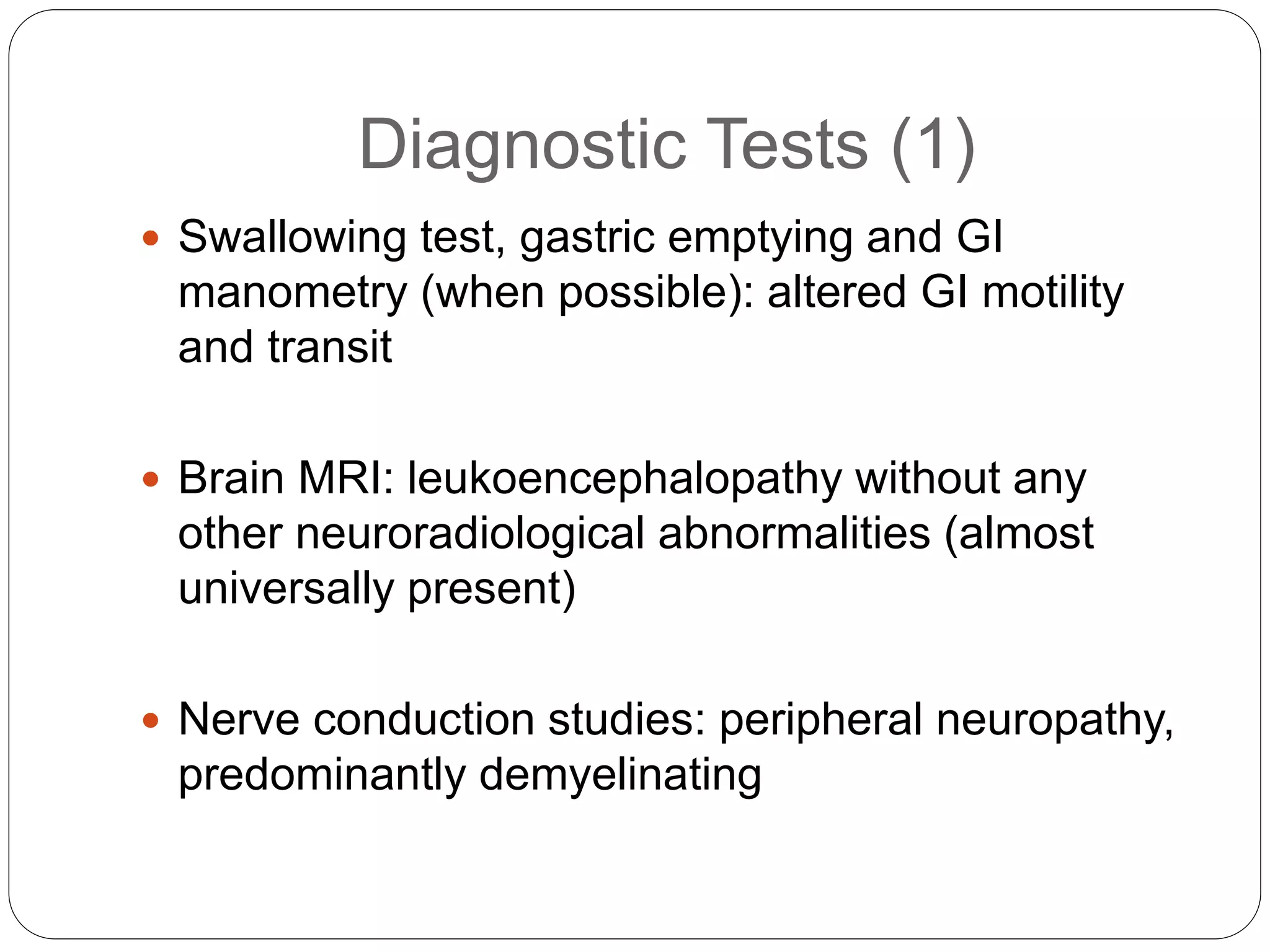
Diagnostic Tests (1)
 Swallowing test, gastric emptying and GI
manometry (when possible): altered GI motility
and transit
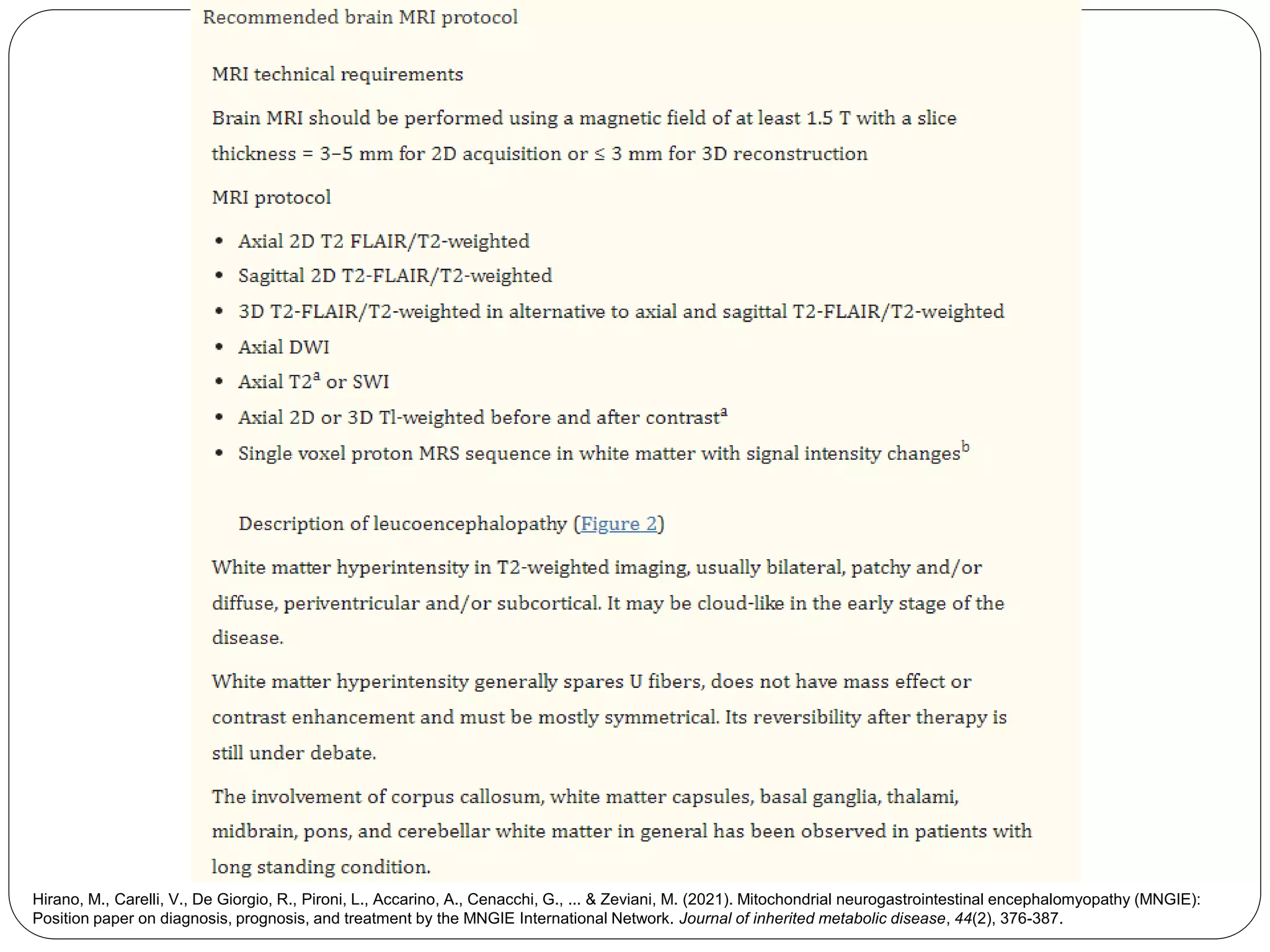
 Brain MRI: leukoencephalopathy without any
other neuroradiological abnormalities (almost
universally present)
 Nerve conduction studies: peripheral neuropathy,
predominantly demyelinating
Hirano, M., Carelli, V., De Giorgio, R., Pironi, L., Accarino, A., Cenacchi, G., ... & Zeviani, M. (2021). Mitochondrial neurogastrointestinal encephalomyopathy (MNGIE):
Position paper on diagnosis, prognosis, and treatment by the MNGIE International Network. Journal of inherited metabolic disease, 44(2), 376-387.
Hirano, M., Carelli, V., De Giorgio, R., Pironi, L., Accarino, A., Cenacchi, G., ... & Zeviani, M. (2021). Mitochondrial neurogastrointestinal encephalomyopathy (MNGIE):
Position paper on diagnosis, prognosis, and treatment by the MNGIE International Network. Journal of inherited metabolic disease, 44(2), 376-387.
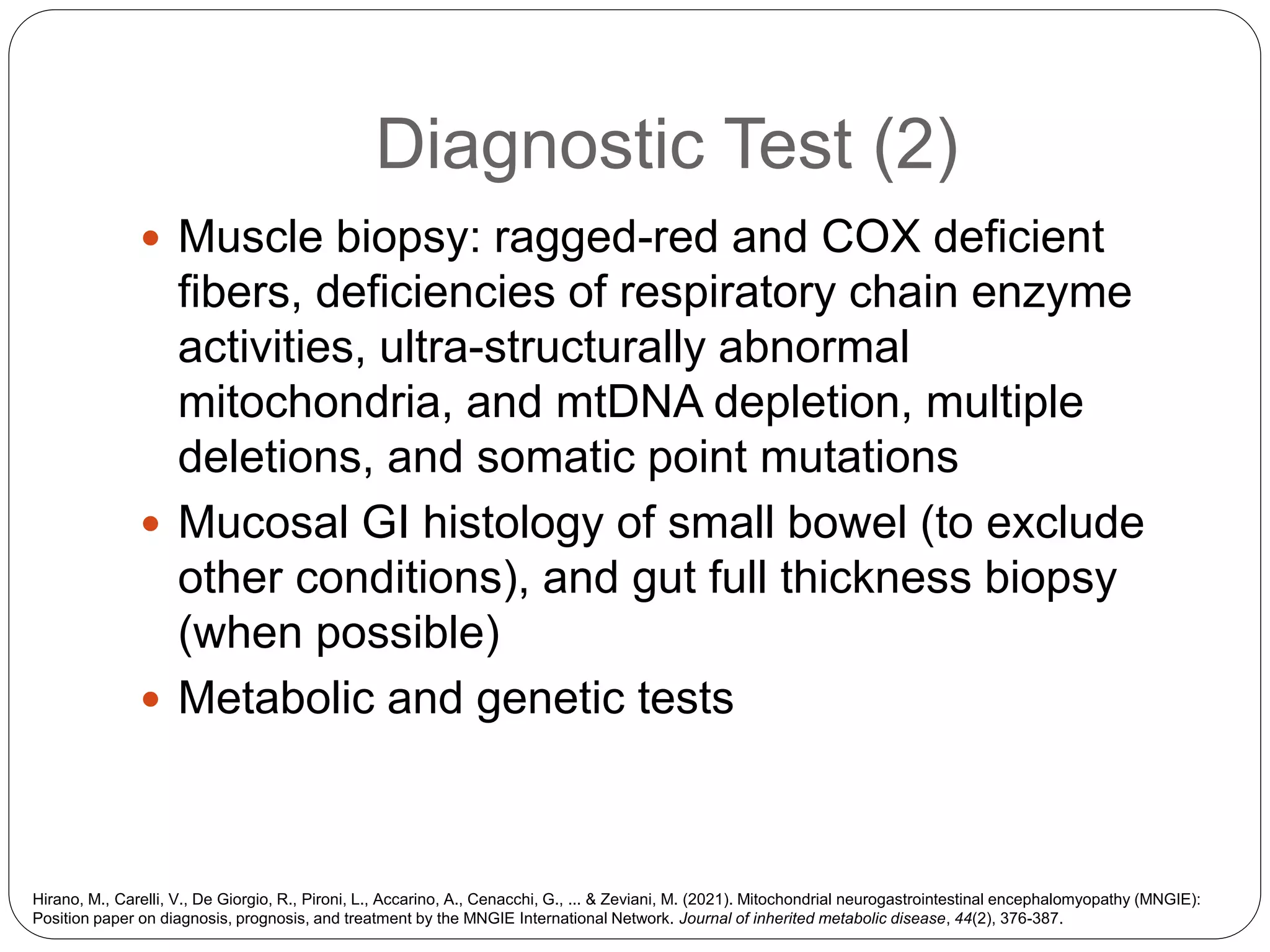
Diagnostic Test (2)
 Muscle biopsy: ragged-red and COX deficient
fibers, deficiencies of respiratory chain enzyme
activities, ultra-structurally abnormal
mitochondria, and mtDNA depletion, multiple
deletions, and somatic point mutations
 Mucosal GI histology of small bowel (to exclude
other conditions), and gut full thickness biopsy
(when possible)
 Metabolic and genetic tests
Hirano, M., Carelli, V., De Giorgio, R., Pironi, L., Accarino, A., Cenacchi, G., ... & Zeviani, M. (2021). Mitochondrial neurogastrointestinal encephalomyopathy (MNGIE):
Position paper on diagnosis, prognosis, and treatment by the MNGIE International Network. Journal of inherited metabolic disease, 44(2), 376-387.
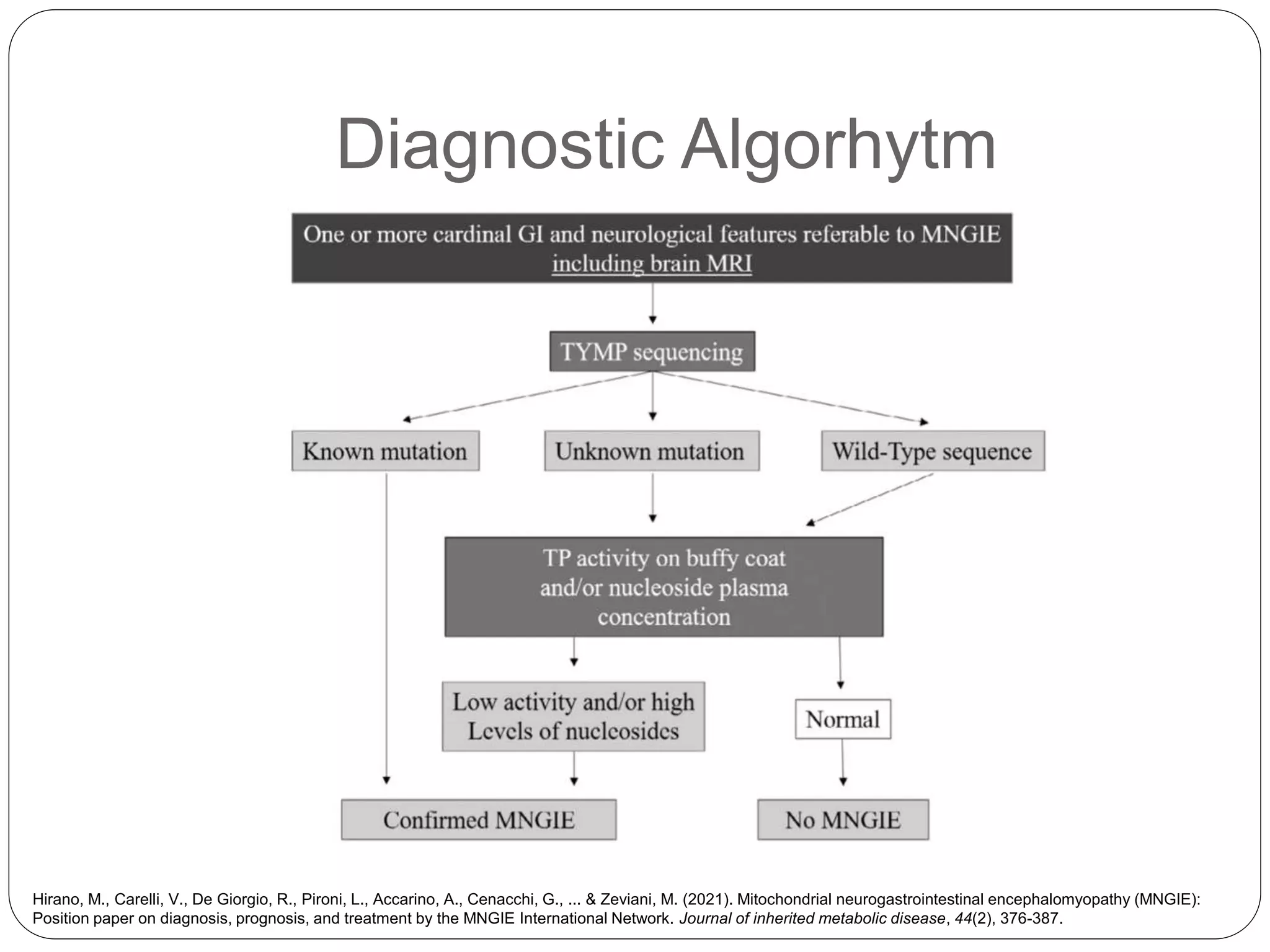
Diagnostic Algorhytm
Hirano, M., Carelli, V., De Giorgio, R., Pironi, L., Accarino, A., Cenacchi, G., ... & Zeviani, M. (2021). Mitochondrial neurogastrointestinal encephalomyopathy (MNGIE):
Position paper on diagnosis, prognosis, and treatment by the MNGIE International Network. Journal of inherited metabolic disease, 44(2), 376-387.
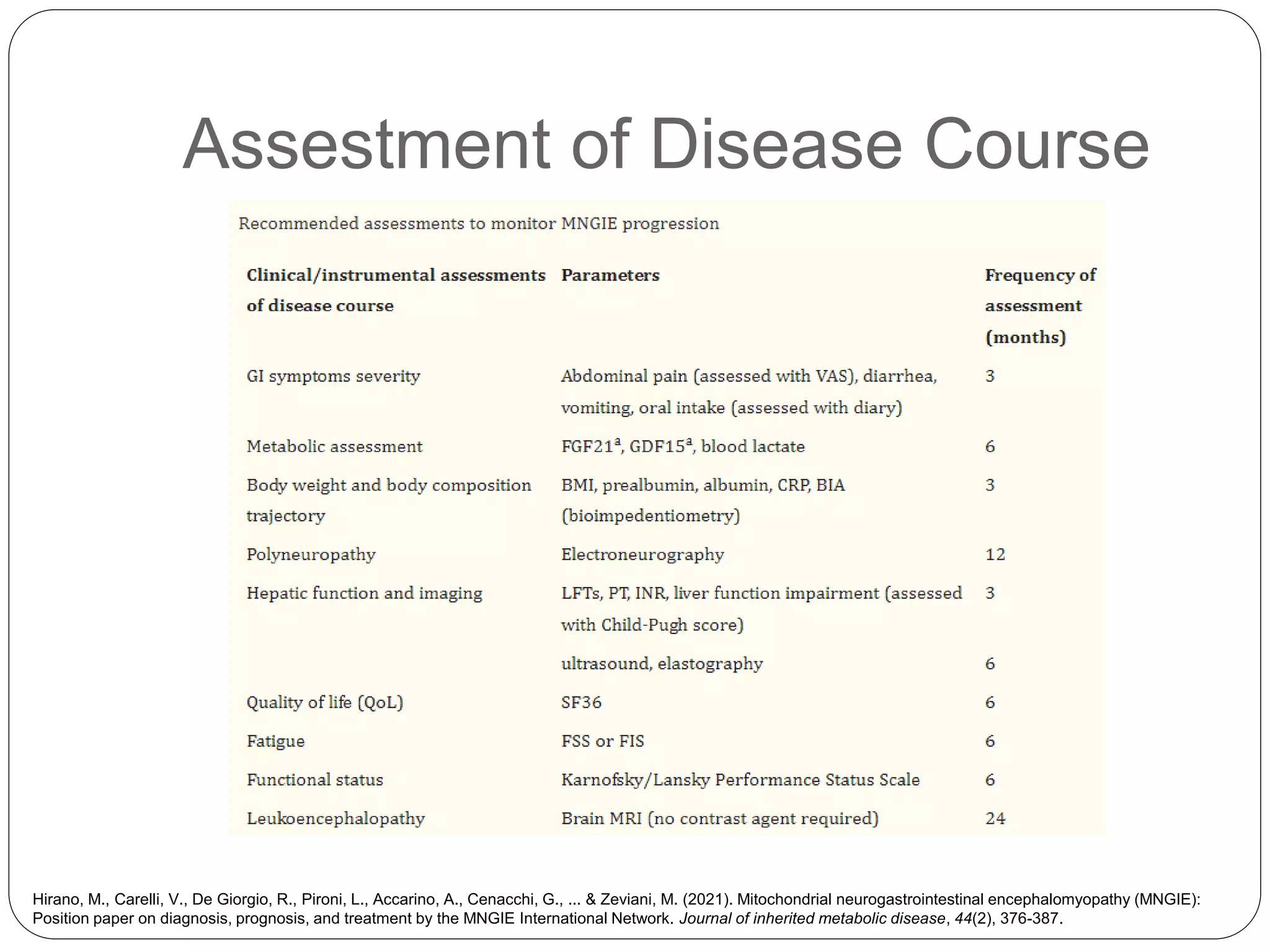
Assestment of Disease Course
Hirano, M., Carelli, V., De Giorgio, R., Pironi, L., Accarino, A., Cenacchi, G., ... & Zeviani, M. (2021). Mitochondrial neurogastrointestinal encephalomyopathy (MNGIE):
Position paper on diagnosis, prognosis, and treatment by the MNGIE International Network. Journal of inherited metabolic disease, 44(2), 376-387.
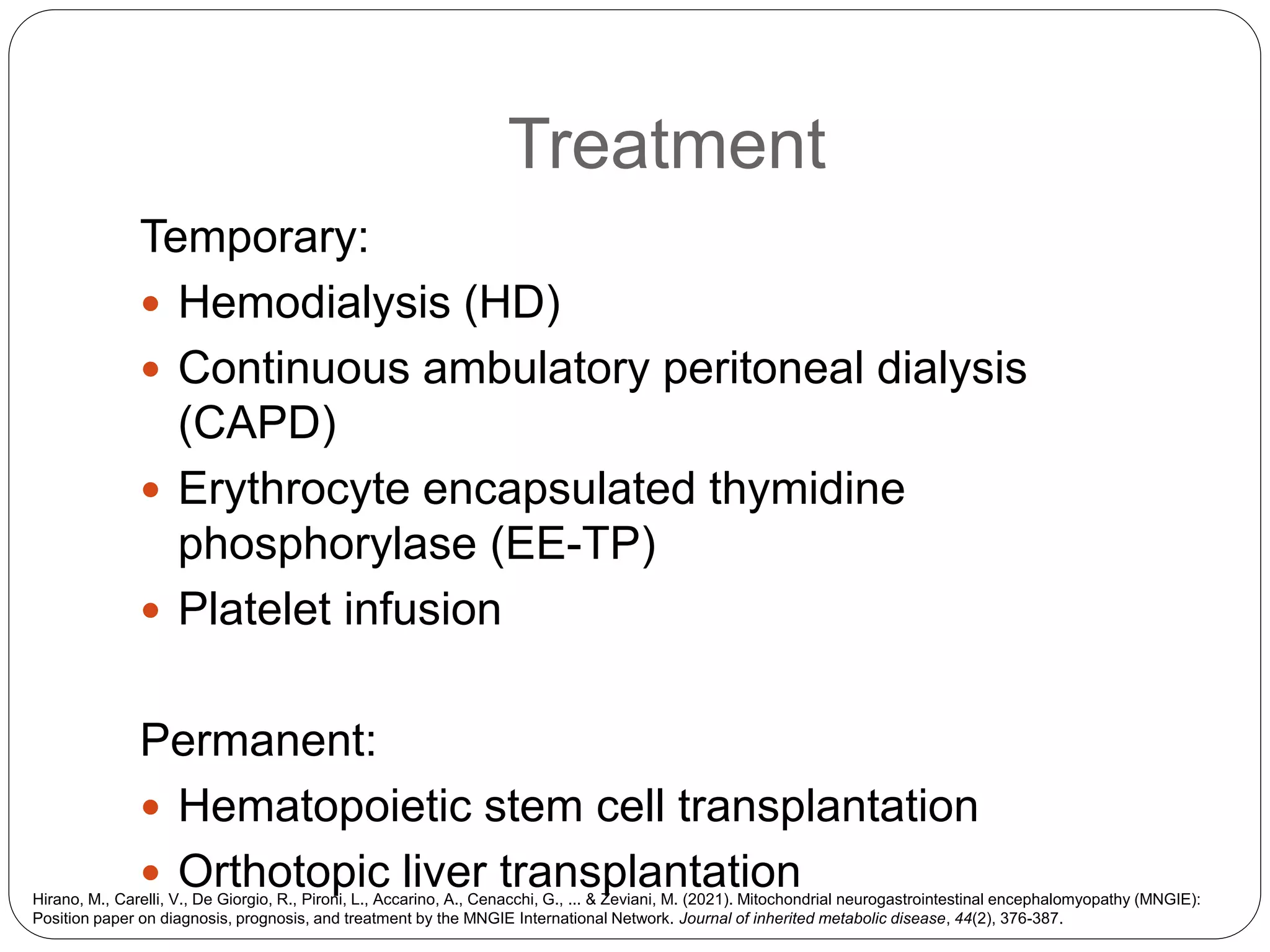
Treatment
Temporary:
 Hemodialysis (HD)
 Continuous ambulatory peritoneal dialysis
(CAPD)
 Erythrocyte encapsulated thymidine
phosphorylase (EE-TP)
 Platelet infusion
Permanent:
 Hematopoietic stem cell transplantation
 Orthotopic liver transplantation
Hirano, M., Carelli, V., De Giorgio, R., Pironi, L., Accarino, A., Cenacchi, G., ... & Zeviani, M. (2021). Mitochondrial neurogastrointestinal encephalomyopathy (MNGIE):
Position paper on diagnosis, prognosis, and treatment by the MNGIE International Network. Journal of inherited metabolic disease, 44(2), 376-387.
Summary
 Very rare disease
 autosomal recessive disease caused by
mutations in the thymidine phosphorylase gene
(TYMP)
 Progressive and fatal
 Gastrointestinal and neurological symptoms
 Brain MRI: leukoencephalopathy
 Nerve conduction study: demyelinating
neuropathies
 Treatment: temporary and permanent treatment
THANK YOU

Mitochondrial Neurogastrointestinal Encephalomyopathy (MNGIE).pptx

  • 1.
    Ade Wijaya, MD– October 2022 Mitochondrial Neurogastrointestinal Encephalomyopathy (MNGIE)
  • 2.
    Introduction  MNGIE isan autosomal recessive disease caused by mutations in the thymidine phosphorylase gene (TYMP)  Ultra rare condition  Progressive and fatal Hirano, M., Carelli, V., De Giorgio, R., Pironi, L., Accarino, A., Cenacchi, G., ... & Zeviani, M. (2021). Mitochondrial neurogastrointestinal encephalomyopathy (MNGIE): Position paper on diagnosis, prognosis, and treatment by the MNGIE International Network. Journal of inherited metabolic disease, 44(2), 376-387.
  • 3.
    Pathophysiology  TYMP encodesfor thymidine phosphorylase (TP), which catabolizes thymidine (dThd) and deoxyuridine (dUrd) into their respective bases.  TYMP mutations markedly reduce/abolish TP activity leading to accumulation of dThd and dUrd and mitochondrial DNA (mtDNA) defects. Pacitti D, Levene M, Garone C, Nirmalananthan N, Bax BE. Mitochondrial Neurogastrointestinal Encephalomyopathy: into the fourth decade, what we have learned so far. Front Genet. 2018;9:669.
  • 4.
    Cardinal Manifestation  Symptomsand signs of otherwise unexplained GI dysmotility  Thin constitution/cachexia, even with normal food behavior and nutritional intake  Neurological features such as ptosis and symptoms suggesting peripheral neuropathy A progressive course of the above Hirano, M., Carelli, V., De Giorgio, R., Pironi, L., Accarino, A., Cenacchi, G., ... & Zeviani, M. (2021). Mitochondrial neurogastrointestinal encephalomyopathy (MNGIE): Position paper on diagnosis, prognosis, and treatment by the MNGIE International Network. Journal of inherited metabolic disease, 44(2), 376-387.
  • 5.
    Full-blown Clinical Elements Symptoms onset: childhood, adolescence/young adulthood (typical), adulthood (late onset, >40 years)  GI symptoms/signs: sub-occlusive episodes, nausea, vomiting, early satiety, borborygmi, severe abdominal pain, abdominal distension, dysphagia, constipation and diarrhea, acute peritonitis due to small bowel perforation  Unexplained weight loss, thinness, cachexia, even with normal food behavior and nutritional intake  Radiological GI signs: small bowel diverticulosis, GI dilation (eg, gastric or intestinal dilation)  Neurological symptoms/signs: chronic progressive external ophthalmoplegia (CPEO), ptosis, peripheral neuropathy, hearing loss  Neuroradiological signs: leukoencephalopathy without other neuroradiological abnormalities  Metabolic alterations: liver steatosis evolving in cirrhosis, pancreatitis, early onset diabetes mellitus, increased triglyceride levels, elevated plasma lactate Hirano, M., Carelli, V., De Giorgio, R., Pironi, L., Accarino, A., Cenacchi, G., ... & Zeviani, M. (2021). Mitochondrial neurogastrointestinal encephalomyopathy (MNGIE): Position paper on diagnosis, prognosis, and treatment by the MNGIE International Network. Journal of inherited metabolic disease, 44(2), 376-387.
  • 6.
    Hirano, M., Carelli,V., De Giorgio, R., Pironi, L., Accarino, A., Cenacchi, G., ... & Zeviani, M. (2021). Mitochondrial neurogastrointestinal encephalomyopathy (MNGIE): Position paper on diagnosis, prognosis, and treatment by the MNGIE International Network. Journal of inherited metabolic disease, 44(2), 376-387.
  • 7.
    Natural History  Meanage at onset: 17.9 years (5 months to 43 years).  GI symptoms (57% at onset; 100% at diagnosis); onset/diagnosis: diarrhea, abdominal pain, borborygmi, vomiting, pseudo-obstruction (32%−65%), weight loss/cachexia (100%); evolution: diverticulosis/diverticulitis (67%), hepatopathy (22%).  Neurological symptoms/signs (43% at onset; 100% at diagnosis); onset/diagnosis/evolution: ocular signs (ptosis, ophthalmoparesis) (74%−100%), polyneuropathy (92%−100%), hearing loss (39%−45%), leucoencephalopathy (±100%); cognitive impairment (20%).  Symptoms are cumulative and progressive.  Mean age at death is reported to range between 35 and 37 years; survival 100% before 19 years and <5% after 50 years.  Death is mainly due to GI and liver complications (intestinal perforation, intestinal bleeding, liver failure, aspiration pneumonia, complications due to small intestinal bacterial overgrowth [SIBO] or infection related to central venous catheter for parenteral nutrition) and cachexia. Hirano, M., Carelli, V., De Giorgio, R., Pironi, L., Accarino, A., Cenacchi, G., ... & Zeviani, M. (2021). Mitochondrial neurogastrointestinal encephalomyopathy (MNGIE): Position paper on diagnosis, prognosis, and treatment by the MNGIE International Network. Journal of inherited metabolic disease, 44(2), 376-387.
  • 8.
    Diagnostic Tests (1) Swallowing test, gastric emptying and GI manometry (when possible): altered GI motility and transit  Brain MRI: leukoencephalopathy without any other neuroradiological abnormalities (almost universally present)  Nerve conduction studies: peripheral neuropathy, predominantly demyelinating
  • 9.
    Hirano, M., Carelli,V., De Giorgio, R., Pironi, L., Accarino, A., Cenacchi, G., ... & Zeviani, M. (2021). Mitochondrial neurogastrointestinal encephalomyopathy (MNGIE): Position paper on diagnosis, prognosis, and treatment by the MNGIE International Network. Journal of inherited metabolic disease, 44(2), 376-387.
  • 10.
    Hirano, M., Carelli,V., De Giorgio, R., Pironi, L., Accarino, A., Cenacchi, G., ... & Zeviani, M. (2021). Mitochondrial neurogastrointestinal encephalomyopathy (MNGIE): Position paper on diagnosis, prognosis, and treatment by the MNGIE International Network. Journal of inherited metabolic disease, 44(2), 376-387.
  • 11.
    Diagnostic Test (2) Muscle biopsy: ragged-red and COX deficient fibers, deficiencies of respiratory chain enzyme activities, ultra-structurally abnormal mitochondria, and mtDNA depletion, multiple deletions, and somatic point mutations  Mucosal GI histology of small bowel (to exclude other conditions), and gut full thickness biopsy (when possible)  Metabolic and genetic tests Hirano, M., Carelli, V., De Giorgio, R., Pironi, L., Accarino, A., Cenacchi, G., ... & Zeviani, M. (2021). Mitochondrial neurogastrointestinal encephalomyopathy (MNGIE): Position paper on diagnosis, prognosis, and treatment by the MNGIE International Network. Journal of inherited metabolic disease, 44(2), 376-387.
  • 12.
    Diagnostic Algorhytm Hirano, M.,Carelli, V., De Giorgio, R., Pironi, L., Accarino, A., Cenacchi, G., ... & Zeviani, M. (2021). Mitochondrial neurogastrointestinal encephalomyopathy (MNGIE): Position paper on diagnosis, prognosis, and treatment by the MNGIE International Network. Journal of inherited metabolic disease, 44(2), 376-387.
  • 13.
    Assestment of DiseaseCourse Hirano, M., Carelli, V., De Giorgio, R., Pironi, L., Accarino, A., Cenacchi, G., ... & Zeviani, M. (2021). Mitochondrial neurogastrointestinal encephalomyopathy (MNGIE): Position paper on diagnosis, prognosis, and treatment by the MNGIE International Network. Journal of inherited metabolic disease, 44(2), 376-387.
  • 14.
    Treatment Temporary:  Hemodialysis (HD) Continuous ambulatory peritoneal dialysis (CAPD)  Erythrocyte encapsulated thymidine phosphorylase (EE-TP)  Platelet infusion Permanent:  Hematopoietic stem cell transplantation  Orthotopic liver transplantation Hirano, M., Carelli, V., De Giorgio, R., Pironi, L., Accarino, A., Cenacchi, G., ... & Zeviani, M. (2021). Mitochondrial neurogastrointestinal encephalomyopathy (MNGIE): Position paper on diagnosis, prognosis, and treatment by the MNGIE International Network. Journal of inherited metabolic disease, 44(2), 376-387.
  • 15.
    Summary  Very raredisease  autosomal recessive disease caused by mutations in the thymidine phosphorylase gene (TYMP)  Progressive and fatal  Gastrointestinal and neurological symptoms  Brain MRI: leukoencephalopathy  Nerve conduction study: demyelinating neuropathies  Treatment: temporary and permanent treatment
  • 16.