Govt Engineering College Banswara
Submitted to:-
Department of civil engineering.
Submitted by :-
 Tejprakash Kumawat
Earthquake resistant design
A
Presentation on
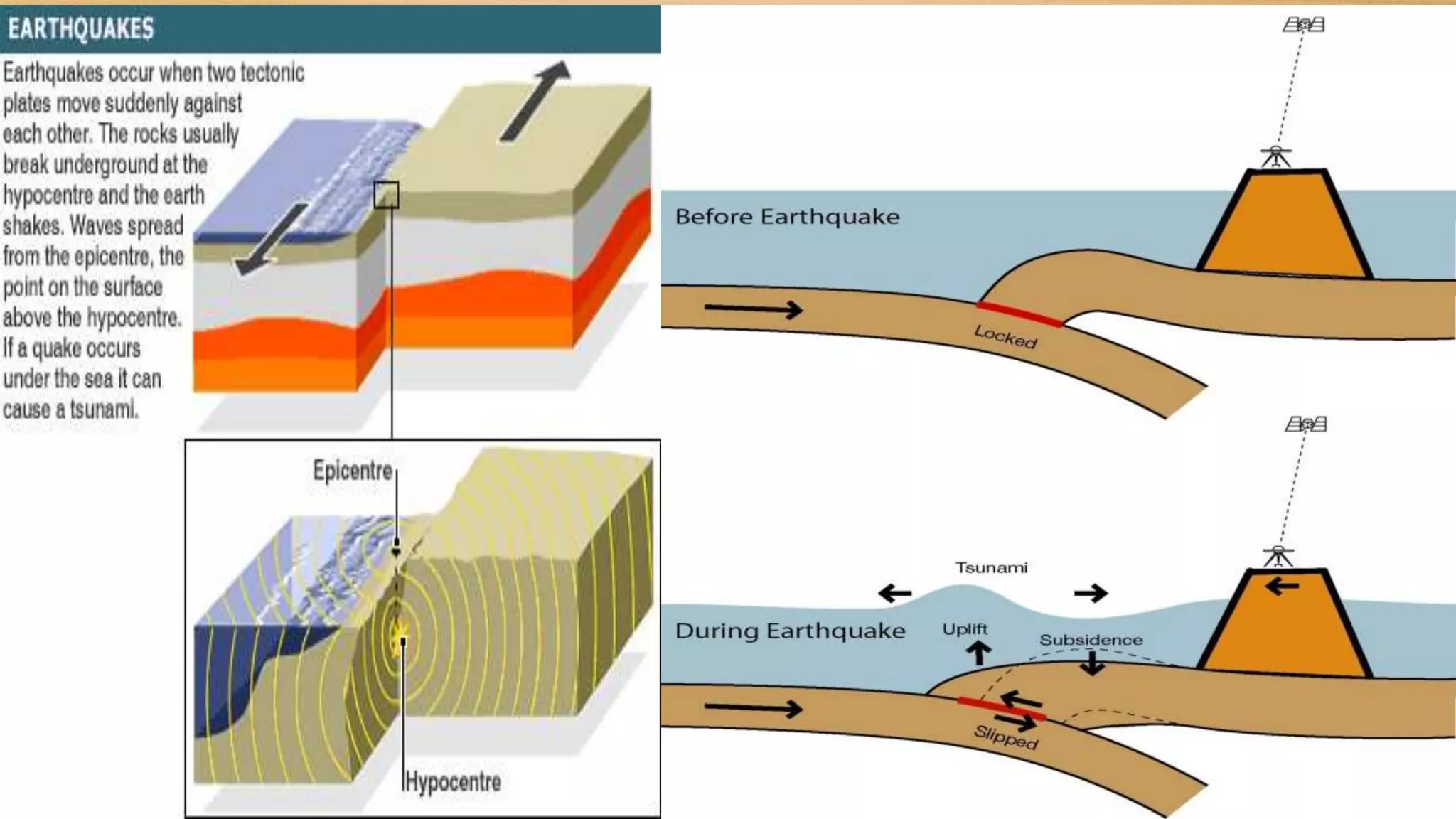
What is Earthquake?
 They are natural disasters of a genrally unpredictable
nature.
 sudden movement - surface of the earth - may be tiny or
several feet.
 A sudden, and rapid shaking of earth caused by the
breaking and shifting of rocks beneath the earth surface.
Seismology
When earthquakes occur, waves travel in Earth in form
of vibrations, such waves are called Seismic Waves.
Study of such waves - Seismology.
Instrument measuring seismic waves - Seismometer.
Graphs given by that seismometer - Seismic Graph.
 Shaking
Ground moves in the same place
 Land slides
Ground is moved to some another place
 Liquifaction
Strength of the ground is reduced
causing buildings to sink
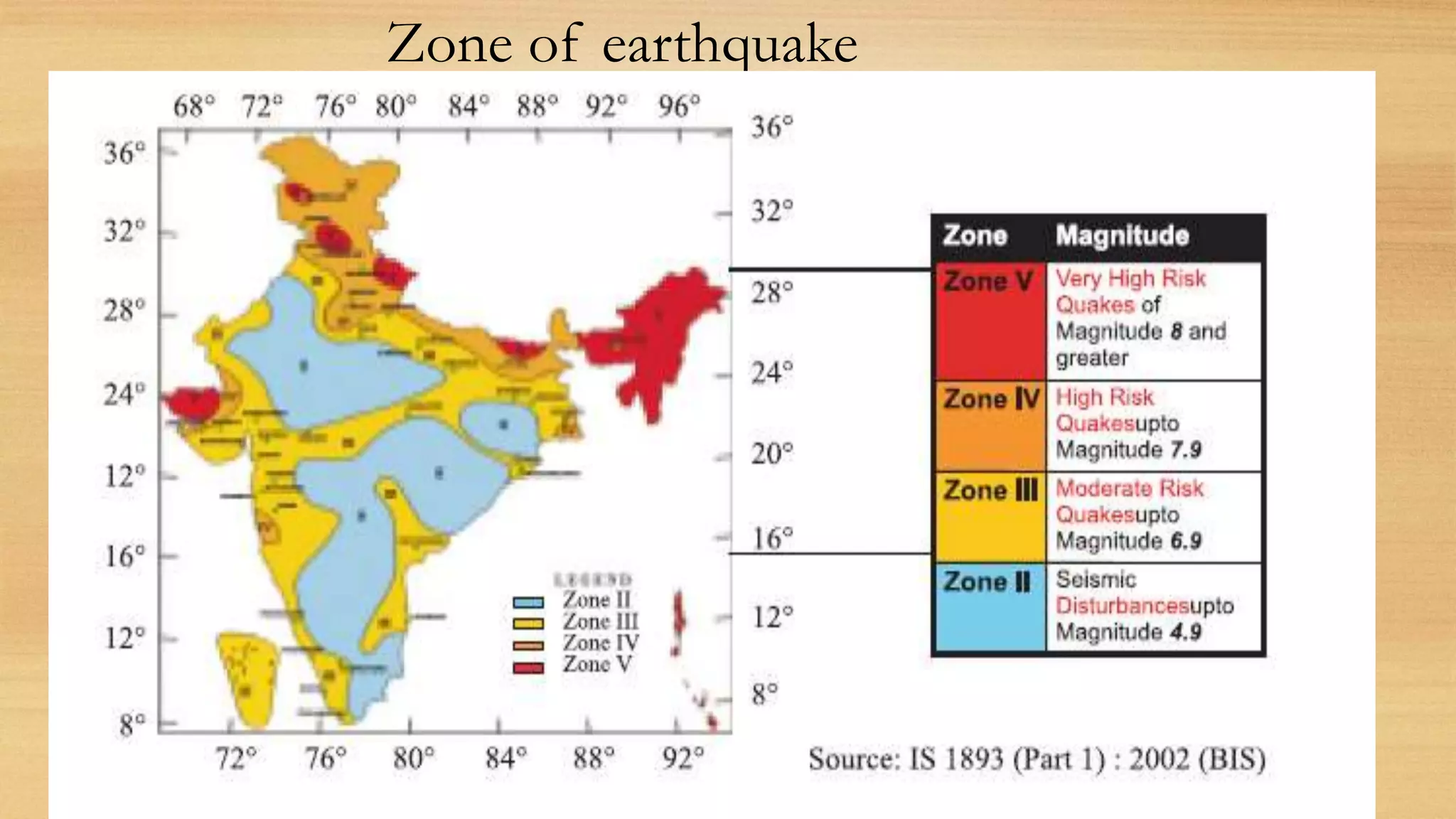
Zone of earthquake
Earthquake resistant designs
Design - it is analysis of forces - buildings due to loads acting on it.
If a building is enough to resist the earthquake, then such building is called
Earthquake resistant structure.
Such design is called Earthquake resistant designs
7
Popular Earthquake resistant Techniques
 Shear walls
 Bracing
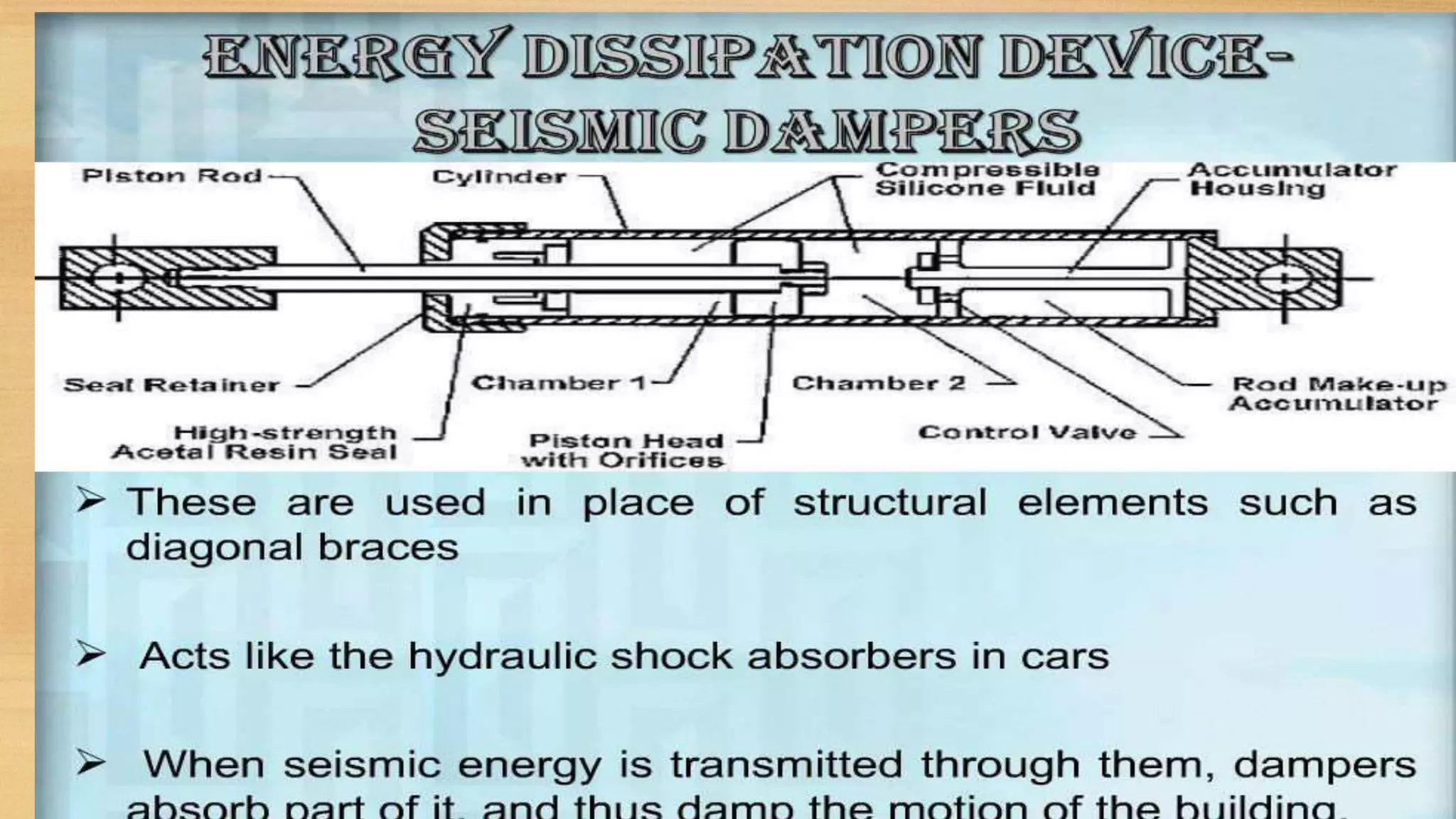
Seismic Dampers
Isolation
Bands
 Rollers
Light weight material
Others
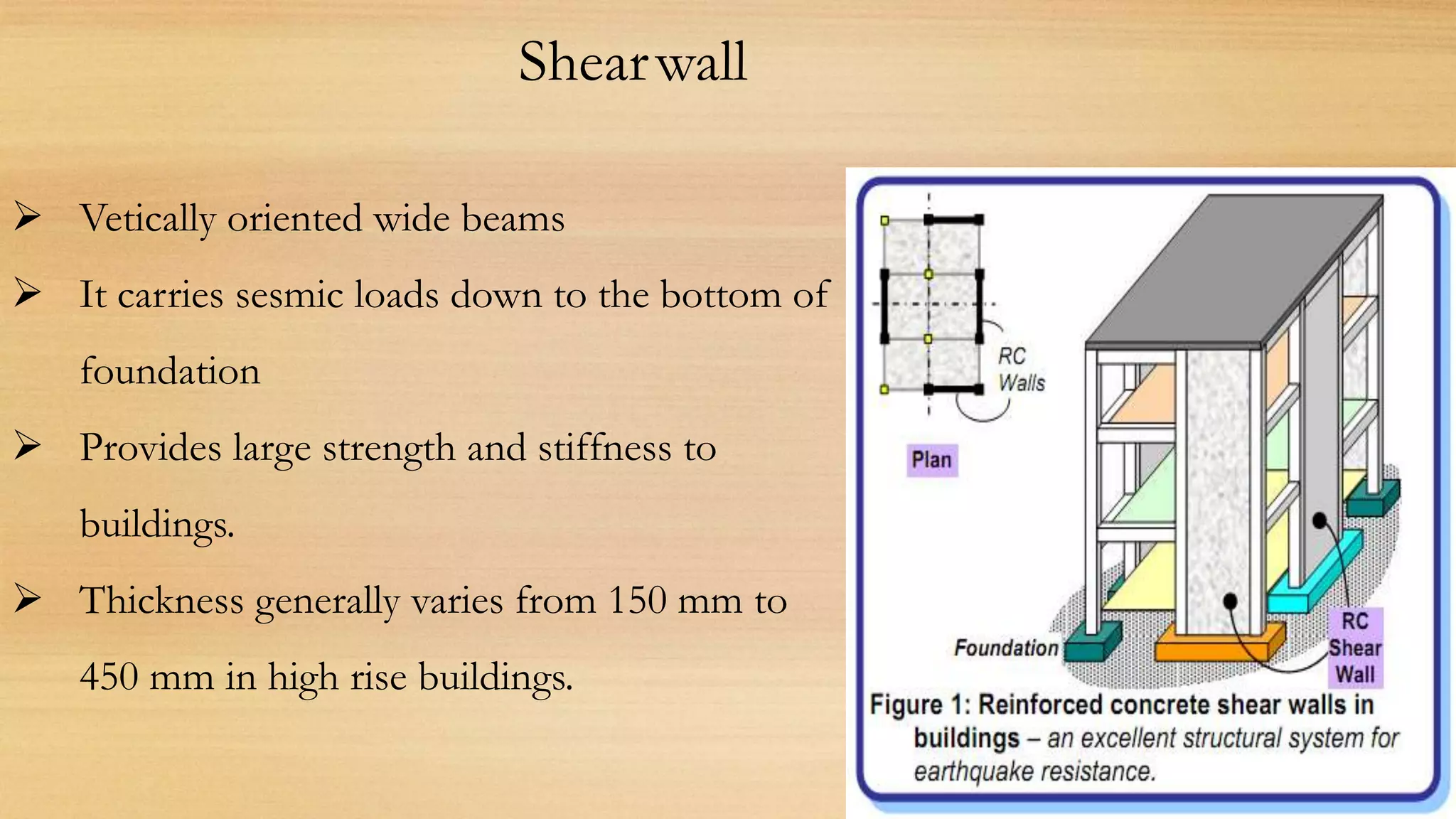
 Vetically oriented wide beams
 It carries sesmic loads down to the bottom of
foundation
 Provides large strength and stiffness to
buildings.
 Thickness generally varies from 150 mm to
450 mm in high rise buildings.
Shearwall
11
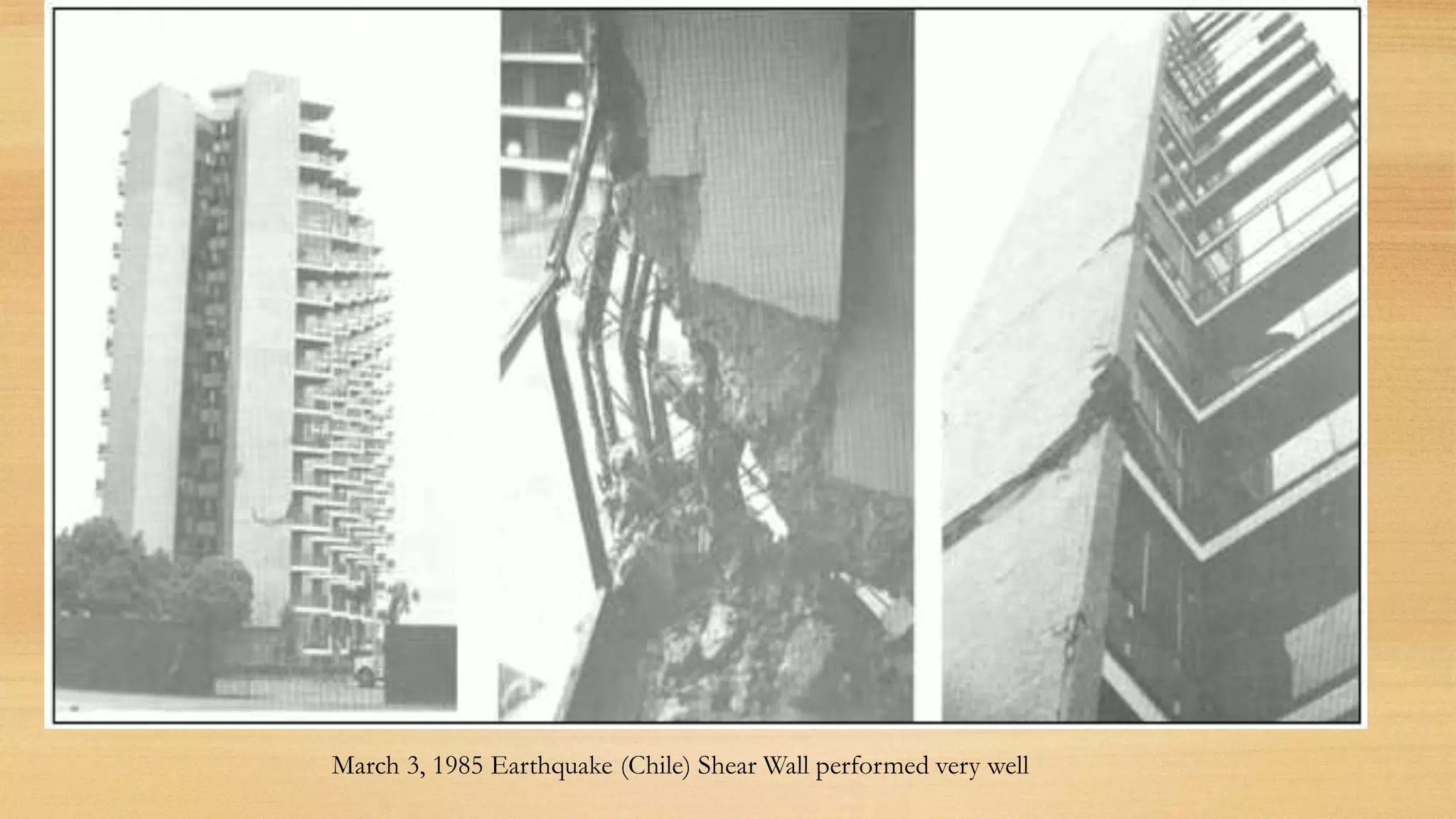
March 3, 1985 Earthquake (Chile) Shear Wall performed very well
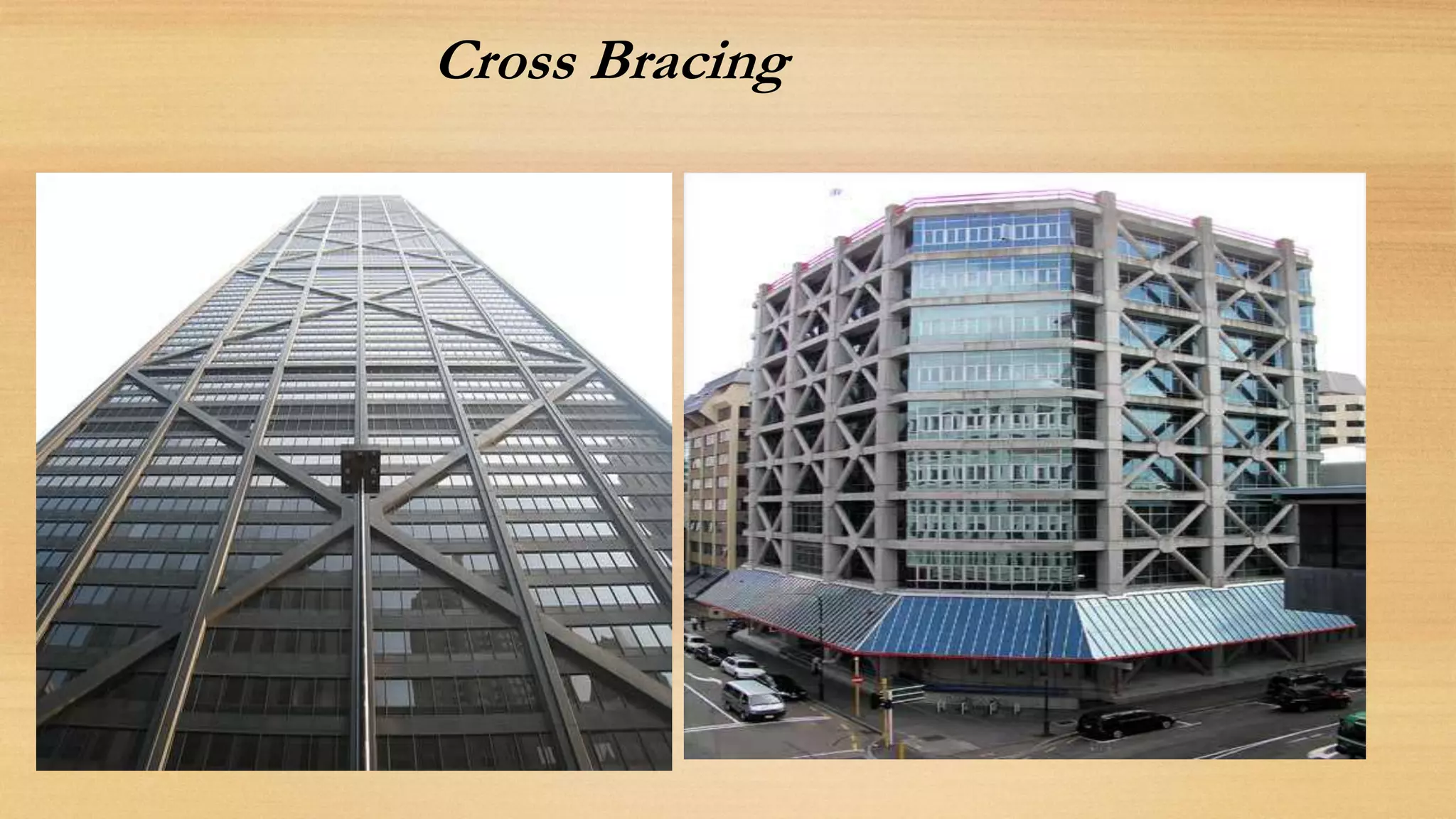
Bracing
Link Beams
Diagonal Cross Chevron Eccentric
Cross Bracing
15
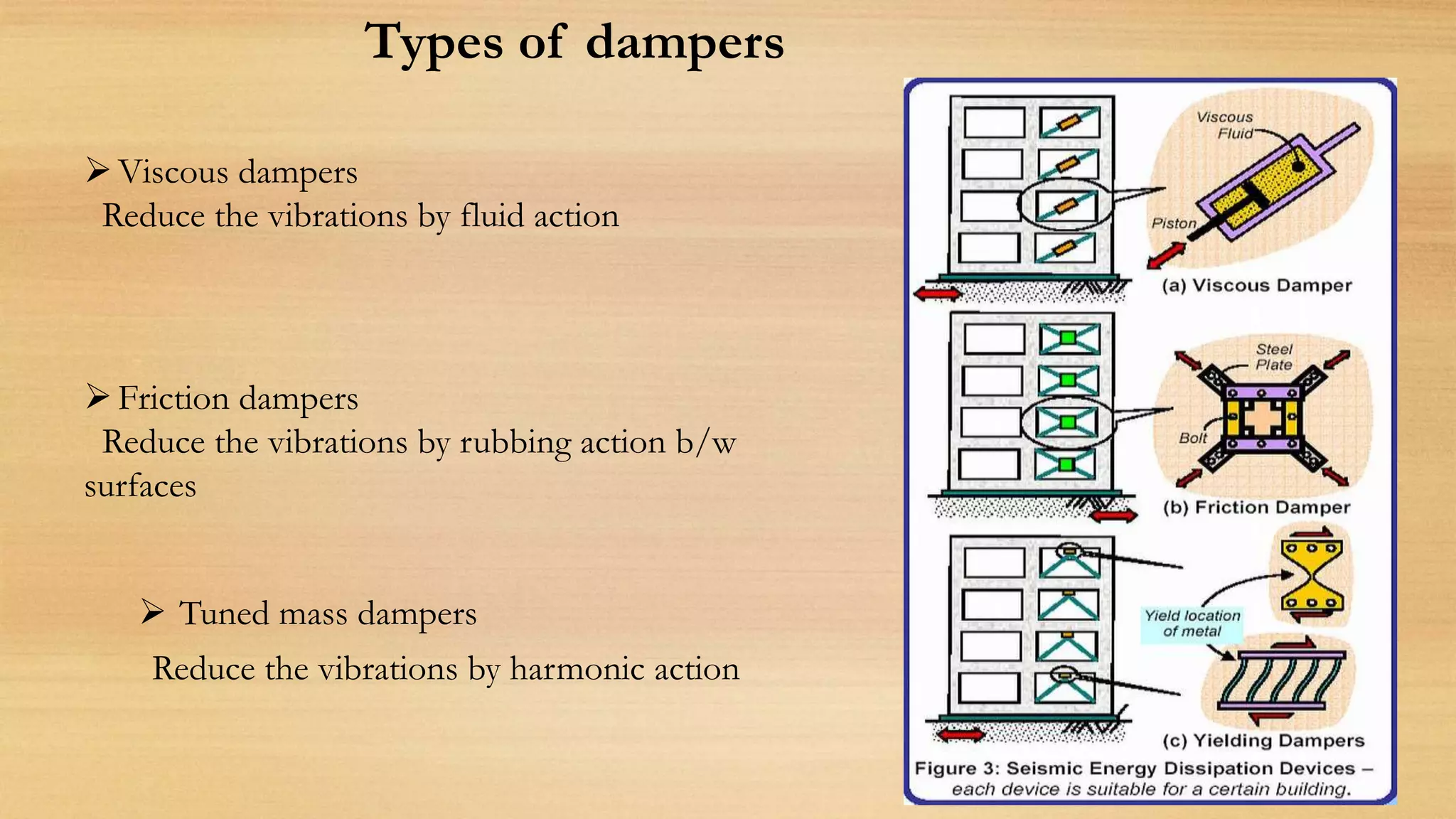
Viscous dampers
Reduce the vibrations by fluid action
Friction dampers
Reduce the vibrations by rubbing action b/w
surfaces
Types of dampers
 Tuned mass dampers
Reduce the vibrations by harmonic action
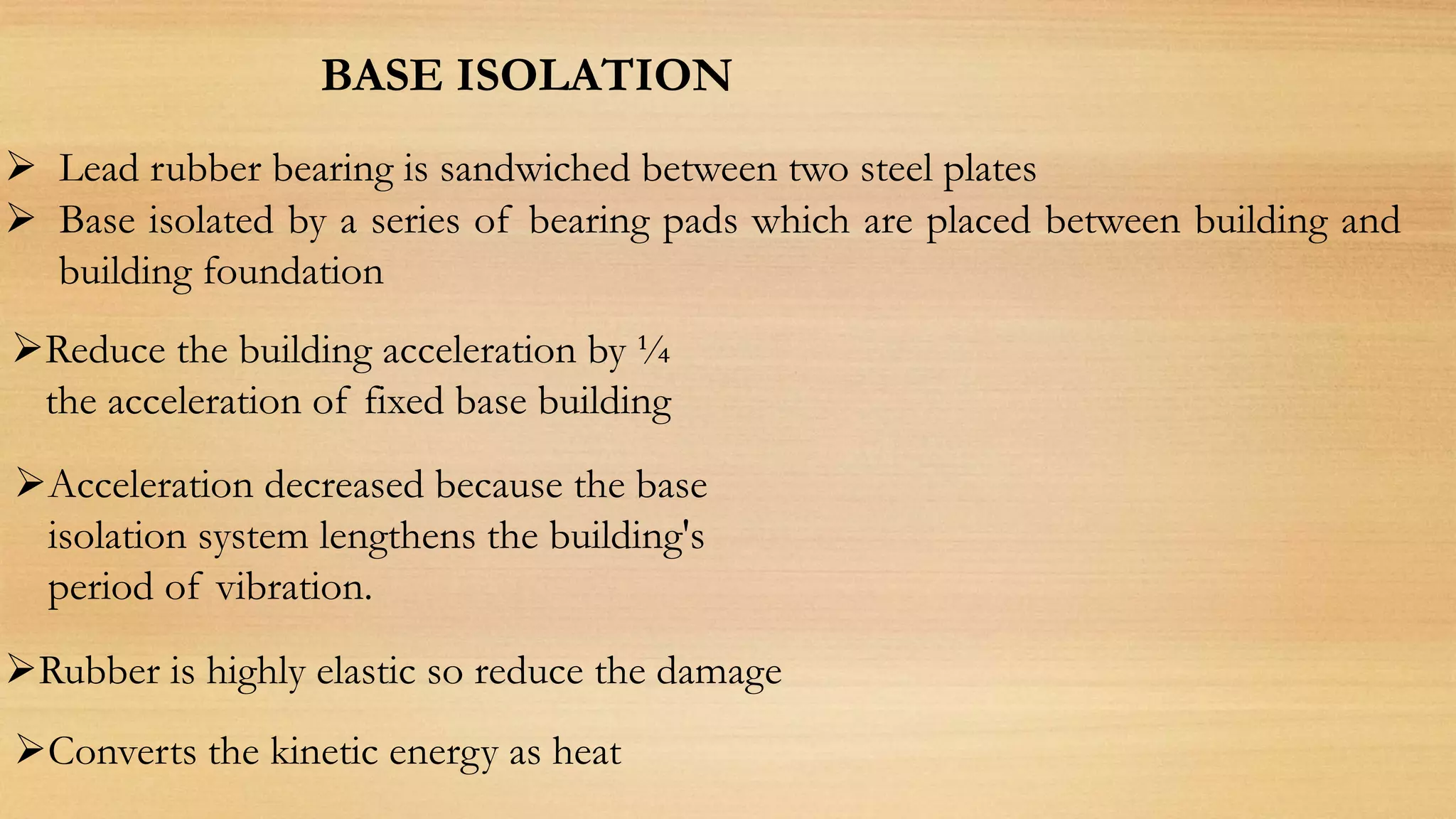
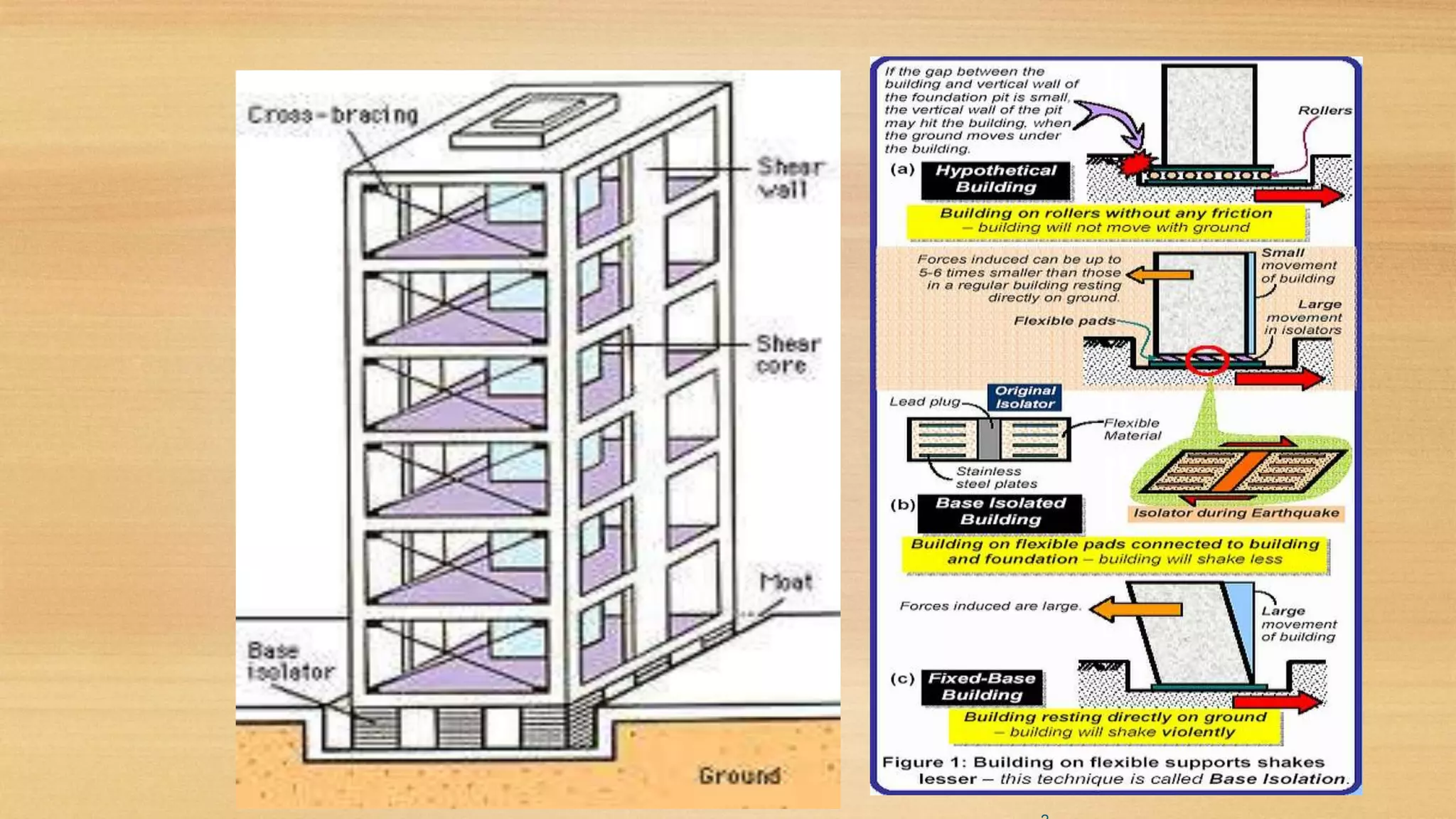
BASE ISOLATION
 Base isolated by a series of bearing pads which are placed between building and
building foundation
 Lead rubber bearing is sandwiched between two steel plates
Reduce the building acceleration by ¼
the acceleration of fixed base building
Acceleration decreased because the base
isolation system lengthens the building's
period of vibration.
Rubber is highly elastic so reduce the damage
Converts the kinetic energy as heat
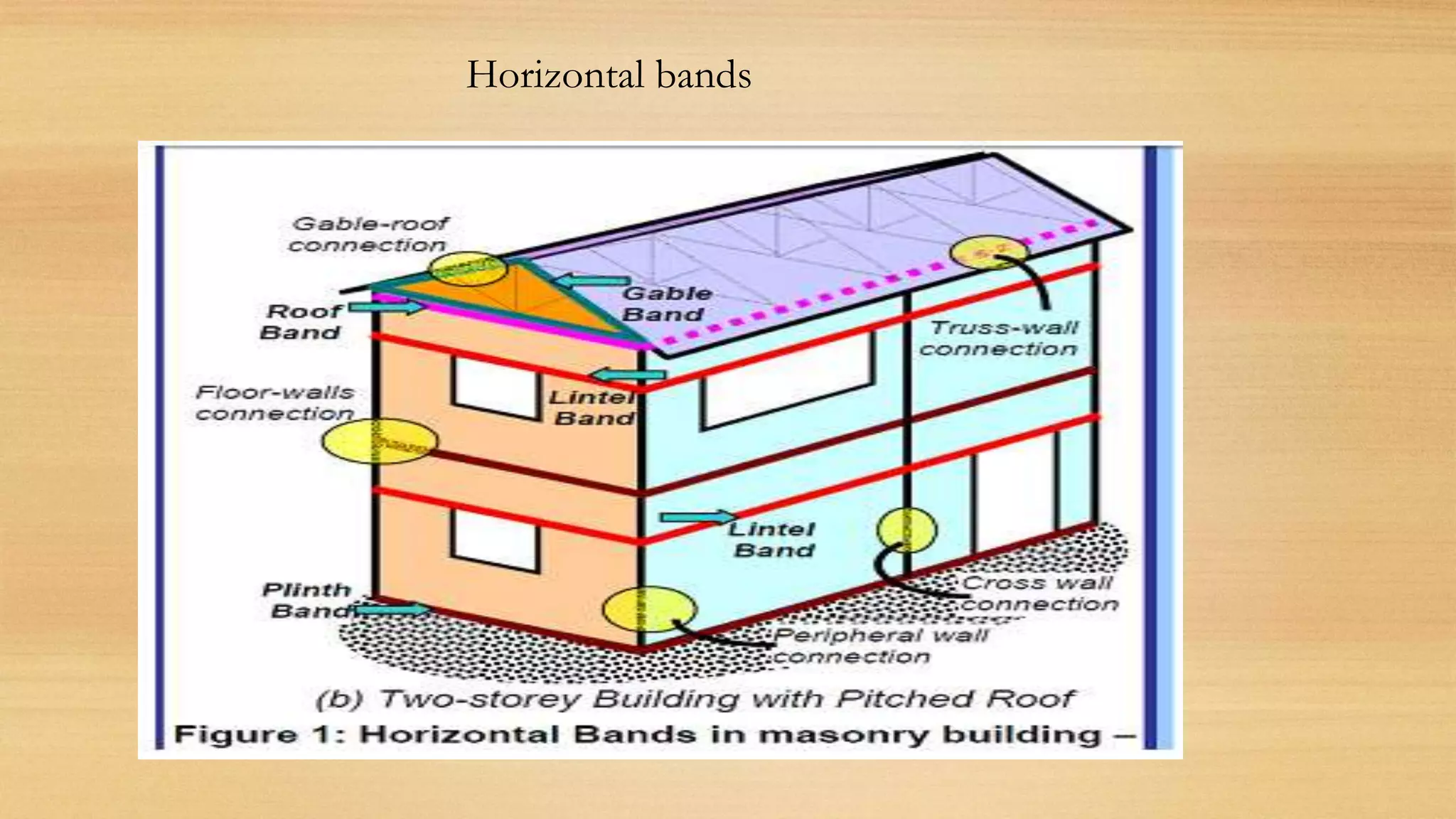
Horizontal bands
Increase In Seismic Performance
• Quality Control in Construction.
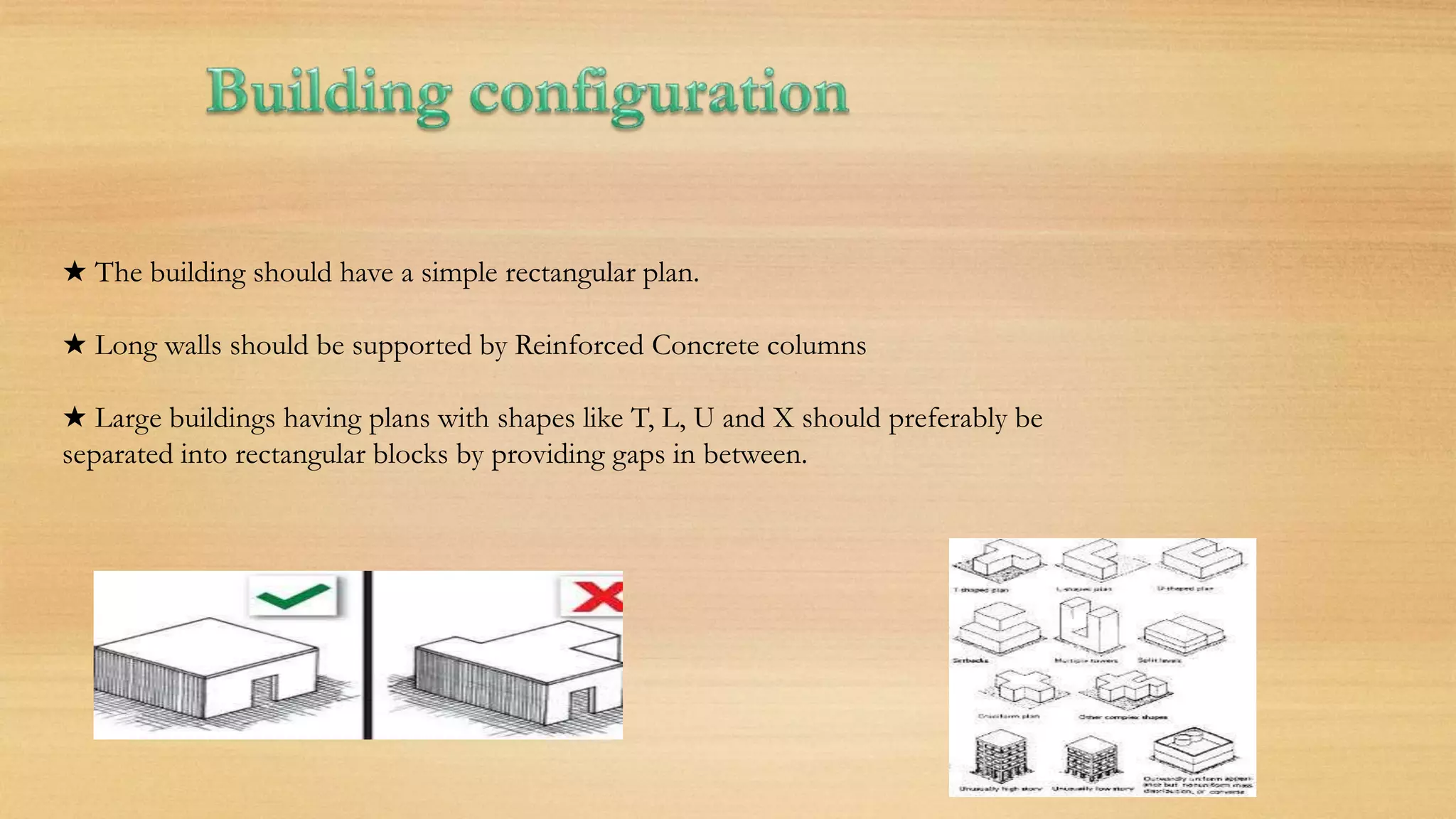
★ The building should have a simple rectangular plan.
★ Long walls should be supported by Reinforced Concrete columns
★ Large buildings having plans with shapes like T, L, U and X should preferably be
separated into rectangular blocks by providing gaps in between.
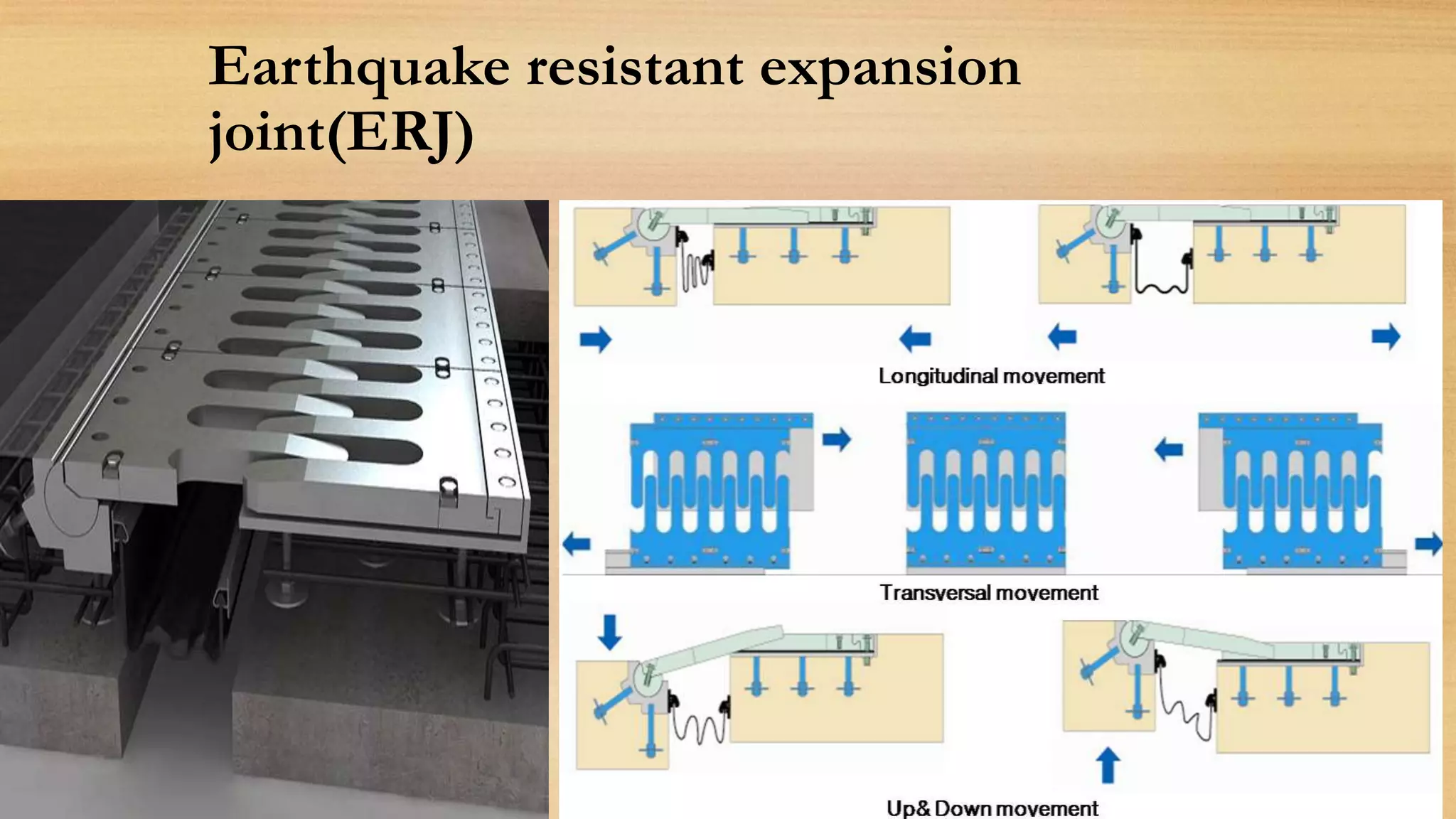
Earthquake resistant expansion
joint(ERJ)
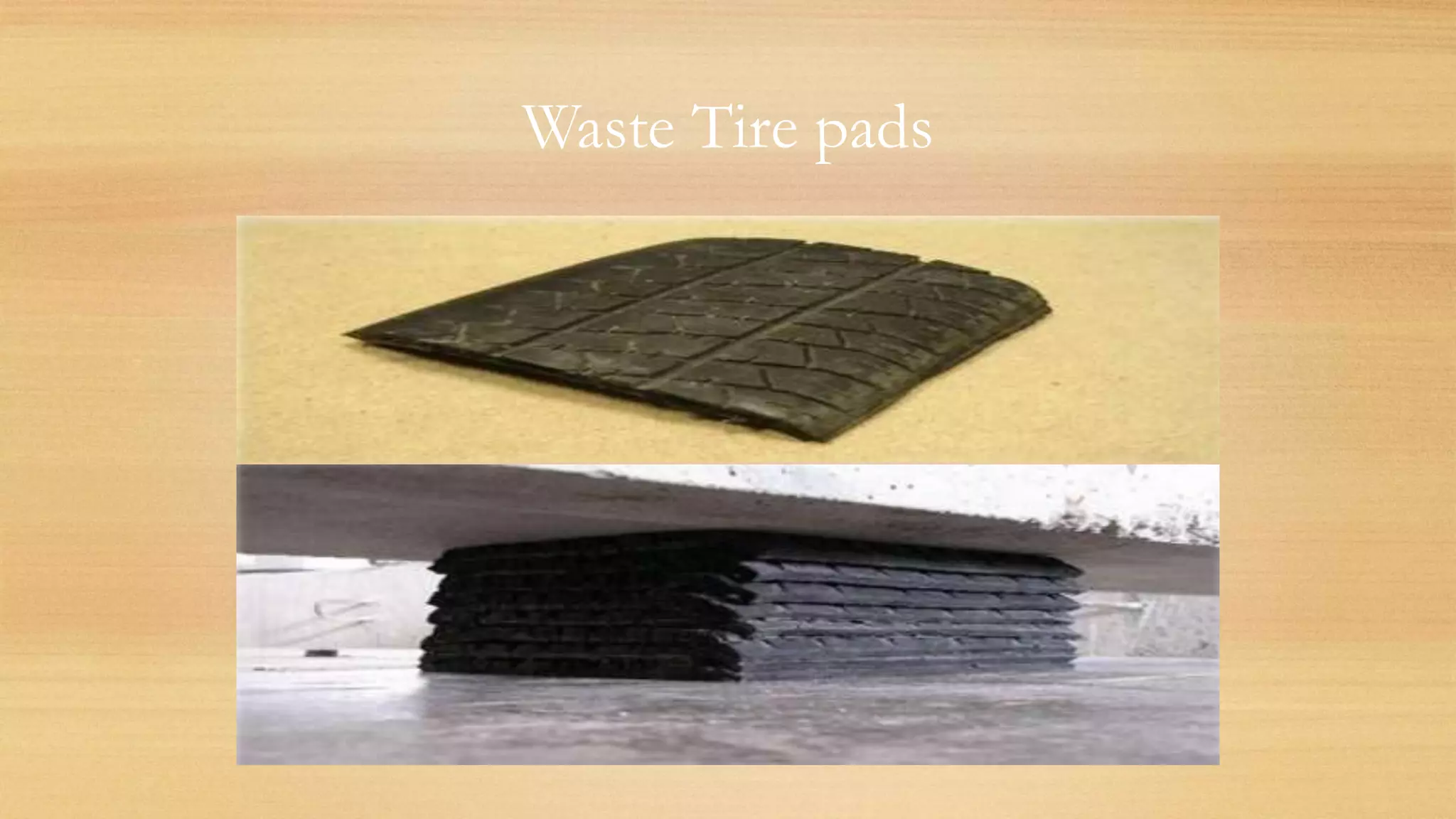
Waste Tire pads
Waste Tirs Pads
Suggestions
 Avoid weak column and strong beam design
 Provide thick slab which will help as a rigid diaphragm
 Provide cross walls which will stiffen the structures
 Provide shear walls in a symmetrical fashion
Increase in the transverse (Shear) reinforcement.
 Horizontal lintel band should be provided
 Revision/ updation of building code of INDIA
 The building must be regular and symmetrical in shape
 Reinforcing bars should be provided at the corners and the junctions of the walls
earthquake resistant ppt

earthquake resistant ppt

  • 1.
    Govt Engineering CollegeBanswara Submitted to:- Department of civil engineering. Submitted by :-  Tejprakash Kumawat Earthquake resistant design A Presentation on
  • 2.
    What is Earthquake? They are natural disasters of a genrally unpredictable nature.  sudden movement - surface of the earth - may be tiny or several feet.  A sudden, and rapid shaking of earth caused by the breaking and shifting of rocks beneath the earth surface.
  • 4.
    Seismology When earthquakes occur,waves travel in Earth in form of vibrations, such waves are called Seismic Waves. Study of such waves - Seismology. Instrument measuring seismic waves - Seismometer. Graphs given by that seismometer - Seismic Graph.
  • 5.
     Shaking Ground movesin the same place  Land slides Ground is moved to some another place  Liquifaction Strength of the ground is reduced causing buildings to sink
  • 6.
  • 7.
    Earthquake resistant designs Design- it is analysis of forces - buildings due to loads acting on it. If a building is enough to resist the earthquake, then such building is called Earthquake resistant structure. Such design is called Earthquake resistant designs 7
  • 8.
    Popular Earthquake resistantTechniques  Shear walls  Bracing Seismic Dampers Isolation Bands  Rollers Light weight material Others
  • 9.
     Vetically orientedwide beams  It carries sesmic loads down to the bottom of foundation  Provides large strength and stiffness to buildings.  Thickness generally varies from 150 mm to 450 mm in high rise buildings. Shearwall
  • 11.
    11 March 3, 1985Earthquake (Chile) Shear Wall performed very well
  • 12.
  • 14.
  • 15.
  • 16.
    Viscous dampers Reduce thevibrations by fluid action Friction dampers Reduce the vibrations by rubbing action b/w surfaces Types of dampers  Tuned mass dampers Reduce the vibrations by harmonic action
  • 19.
    BASE ISOLATION  Baseisolated by a series of bearing pads which are placed between building and building foundation  Lead rubber bearing is sandwiched between two steel plates Reduce the building acceleration by ¼ the acceleration of fixed base building Acceleration decreased because the base isolation system lengthens the building's period of vibration. Rubber is highly elastic so reduce the damage Converts the kinetic energy as heat
  • 23.
  • 28.
    Increase In SeismicPerformance • Quality Control in Construction.
  • 29.
    ★ The buildingshould have a simple rectangular plan. ★ Long walls should be supported by Reinforced Concrete columns ★ Large buildings having plans with shapes like T, L, U and X should preferably be separated into rectangular blocks by providing gaps in between.
  • 31.
  • 32.
  • 33.
  • 34.
    Suggestions  Avoid weakcolumn and strong beam design  Provide thick slab which will help as a rigid diaphragm  Provide cross walls which will stiffen the structures  Provide shear walls in a symmetrical fashion Increase in the transverse (Shear) reinforcement.  Horizontal lintel band should be provided  Revision/ updation of building code of INDIA  The building must be regular and symmetrical in shape  Reinforcing bars should be provided at the corners and the junctions of the walls